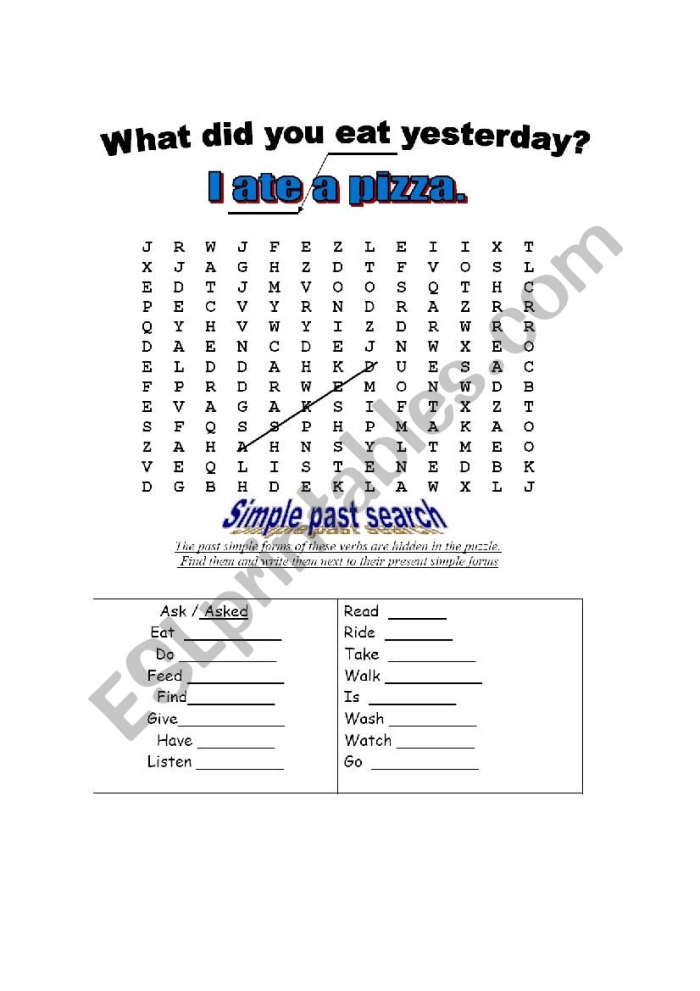
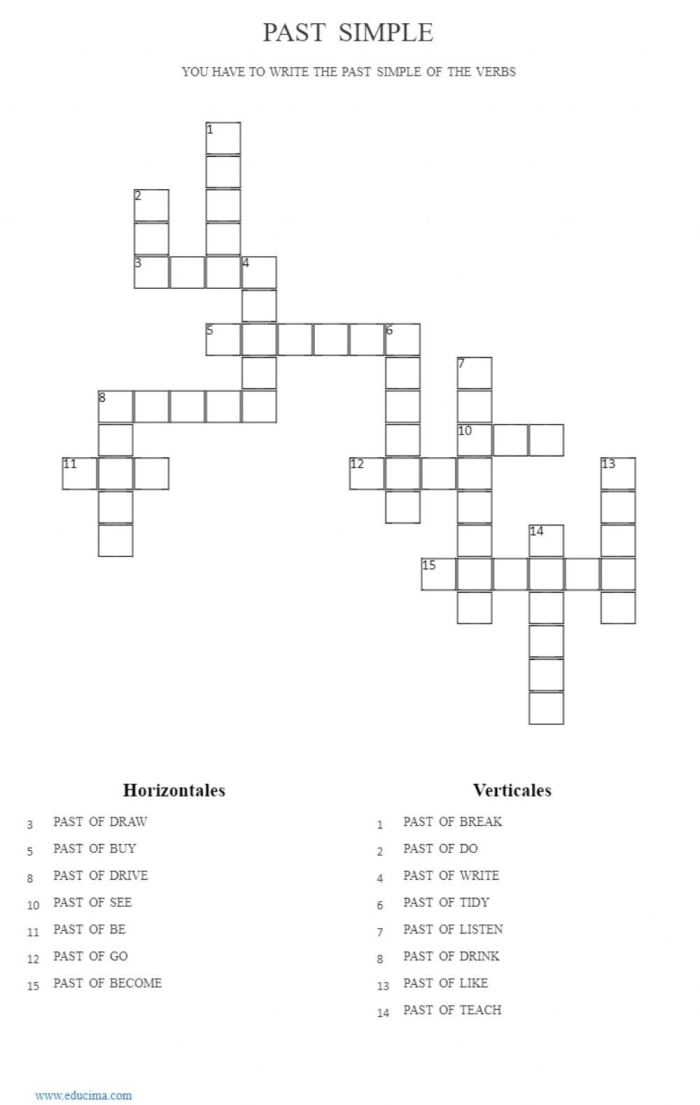
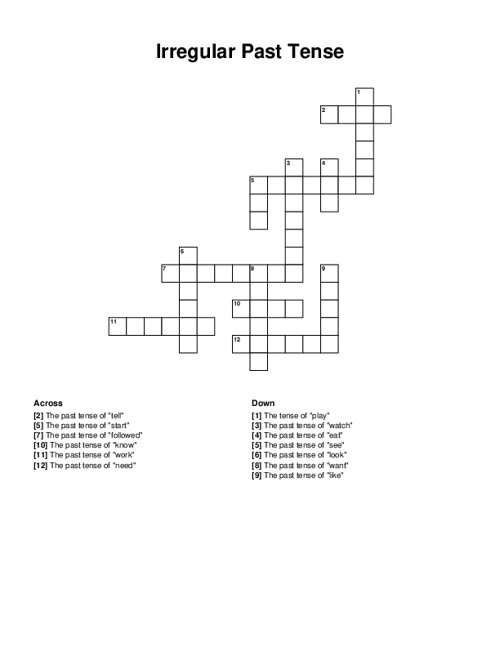
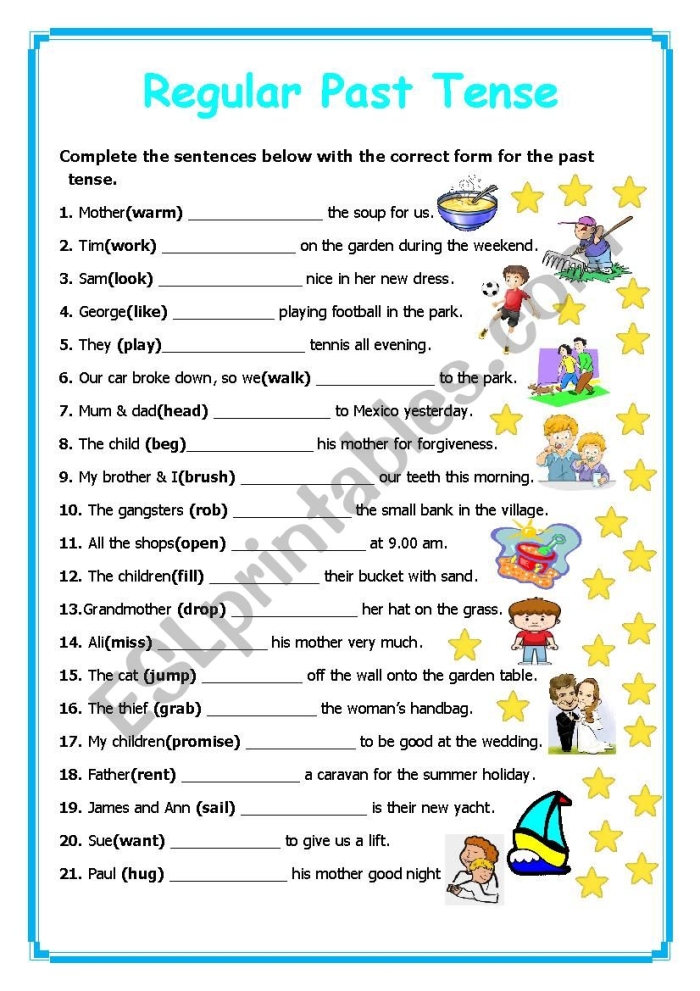
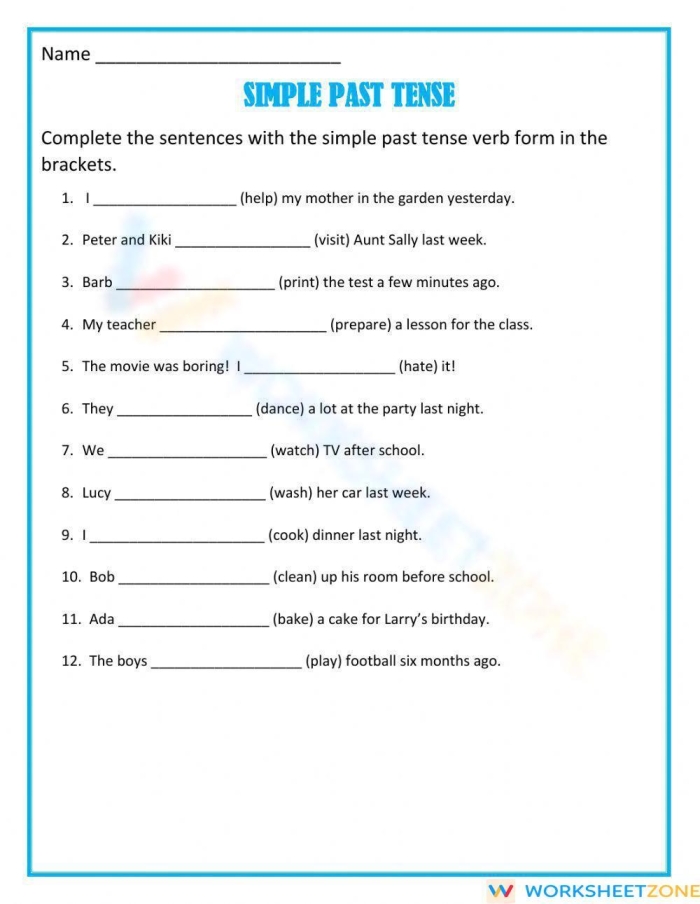
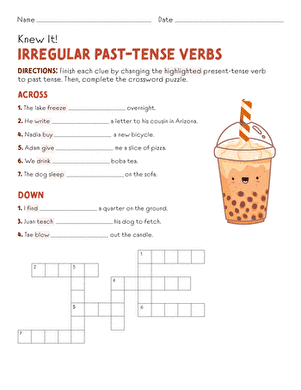
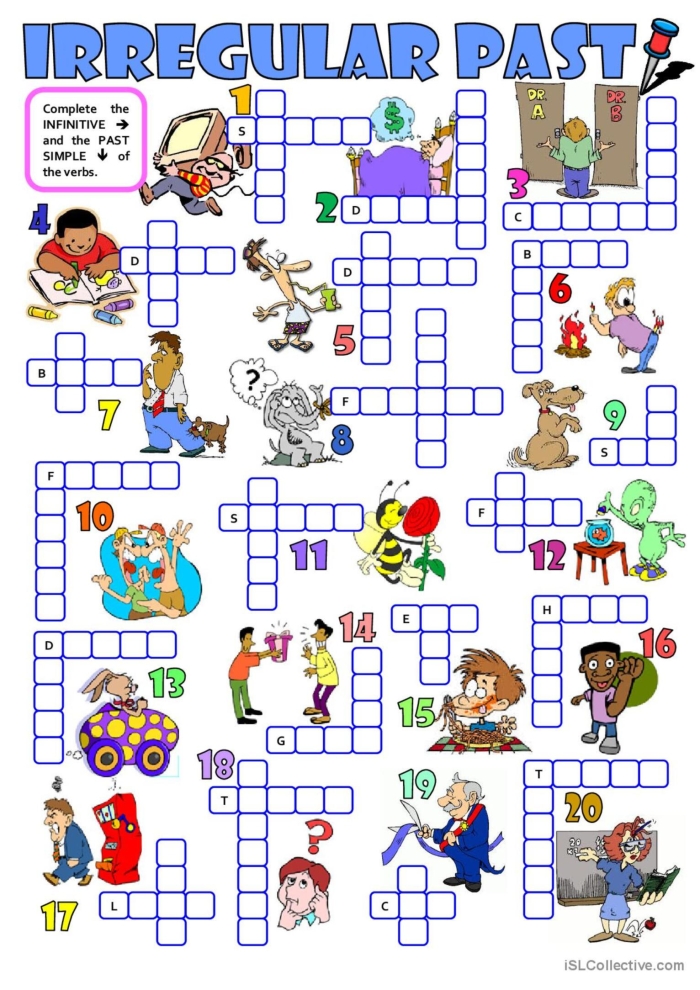
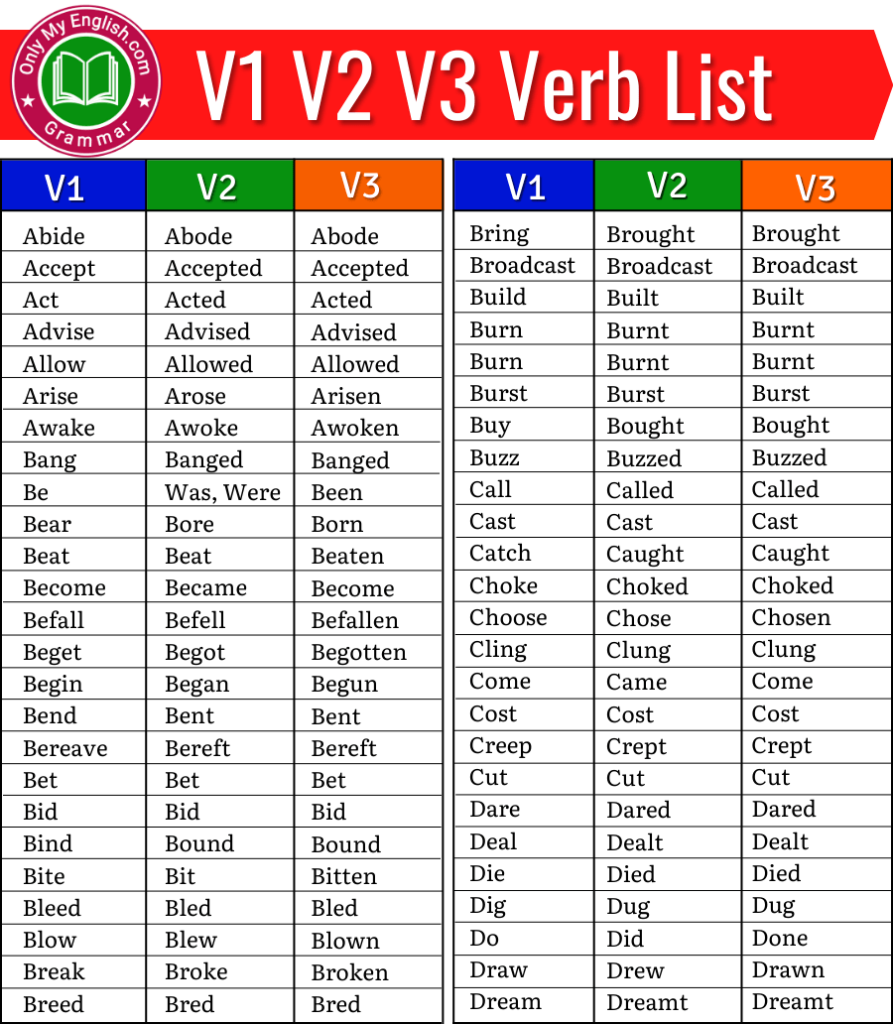
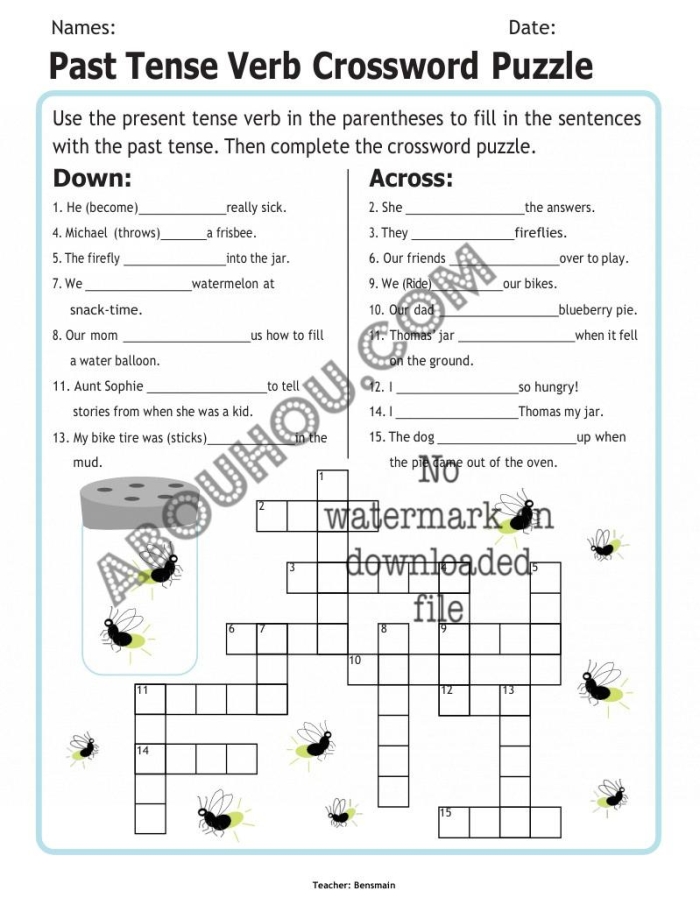
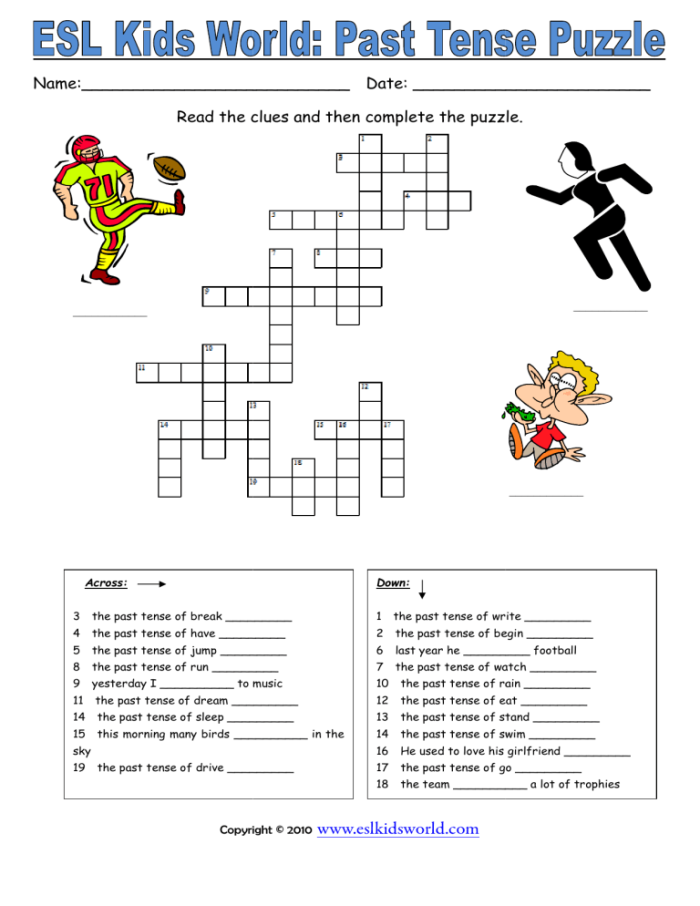
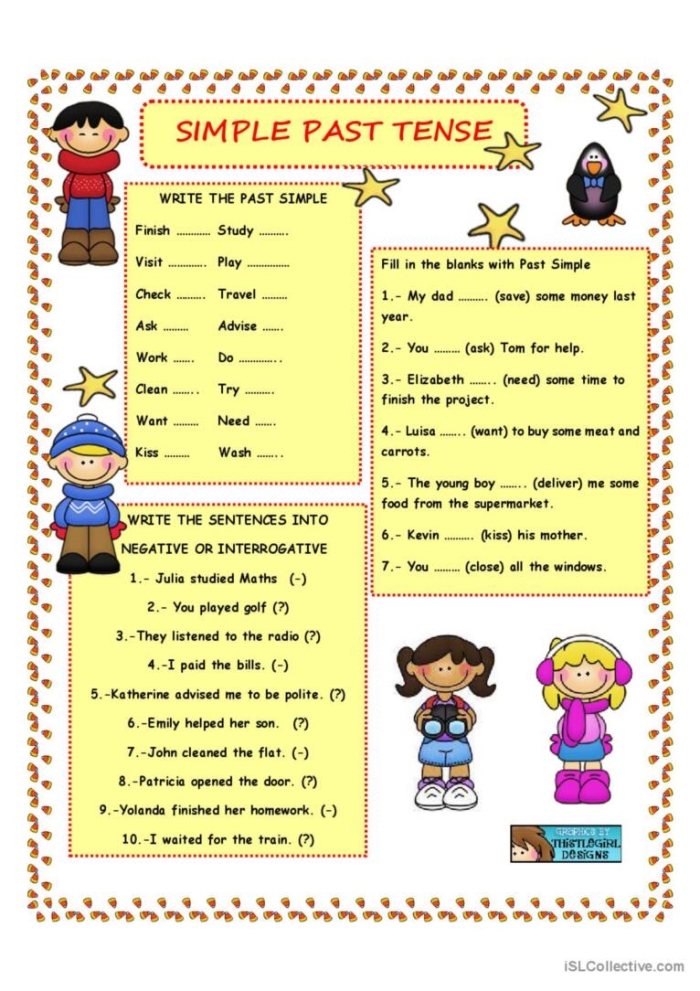
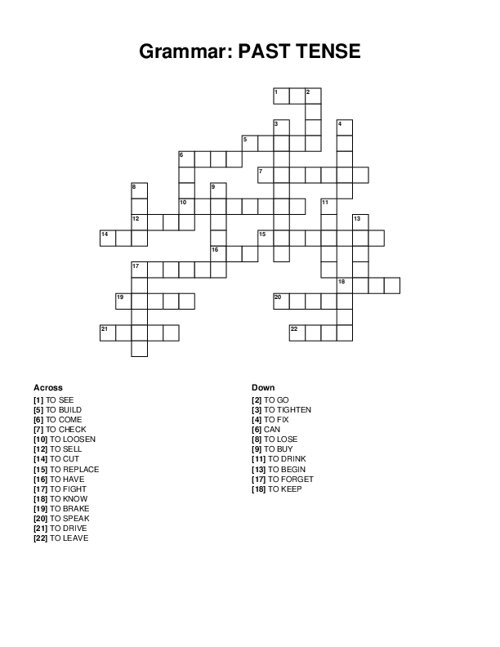
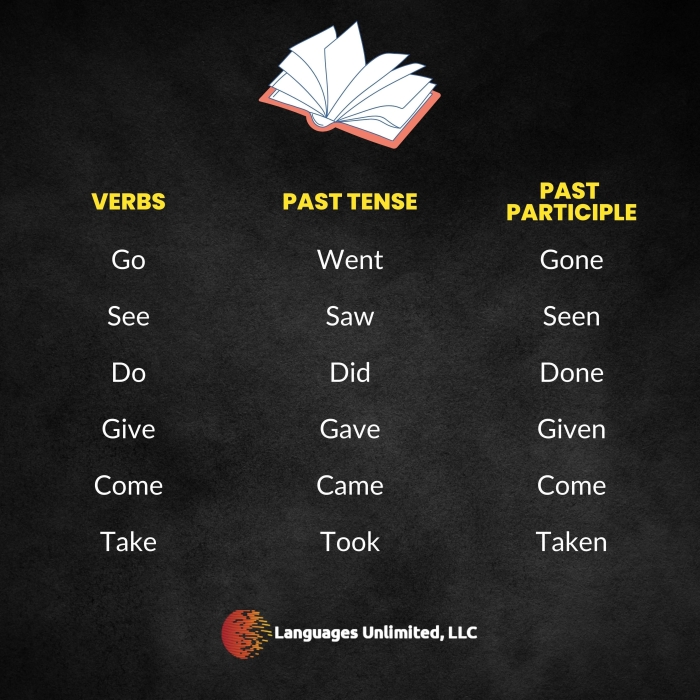
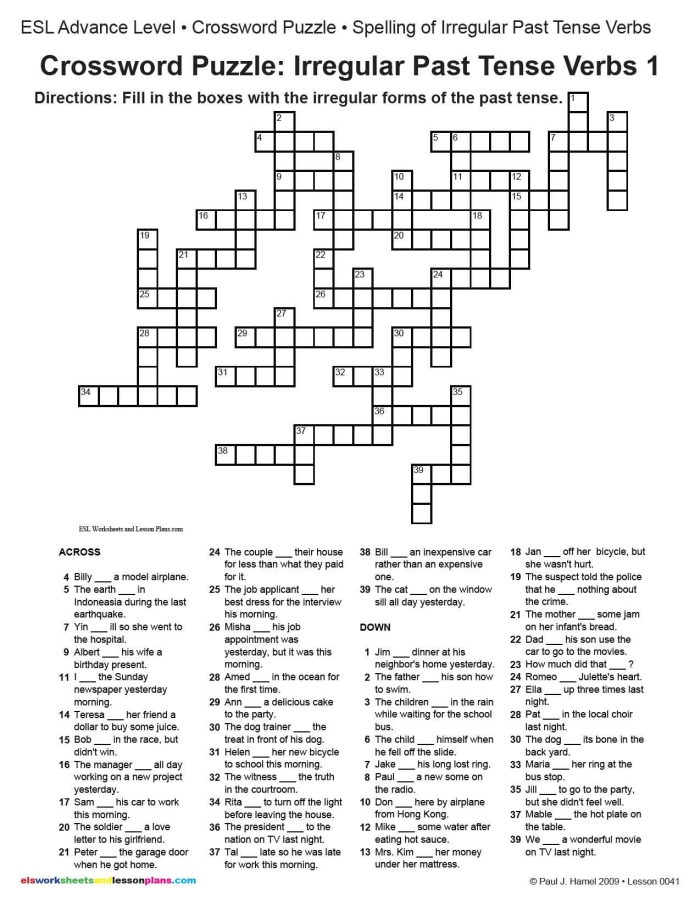
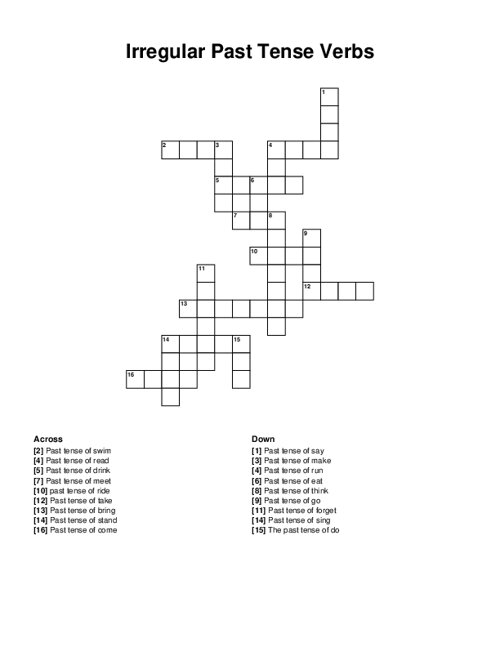
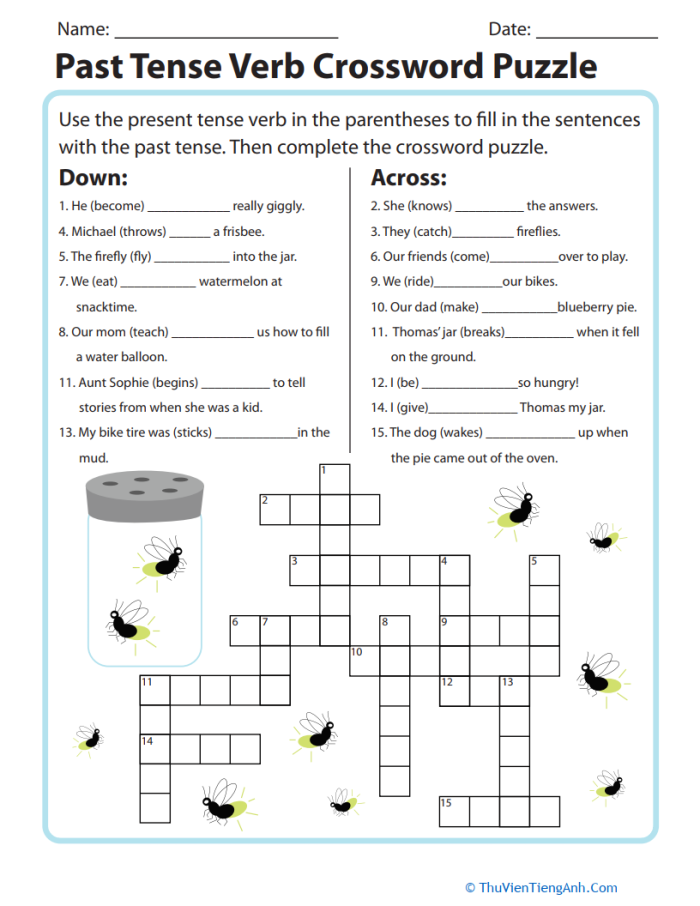
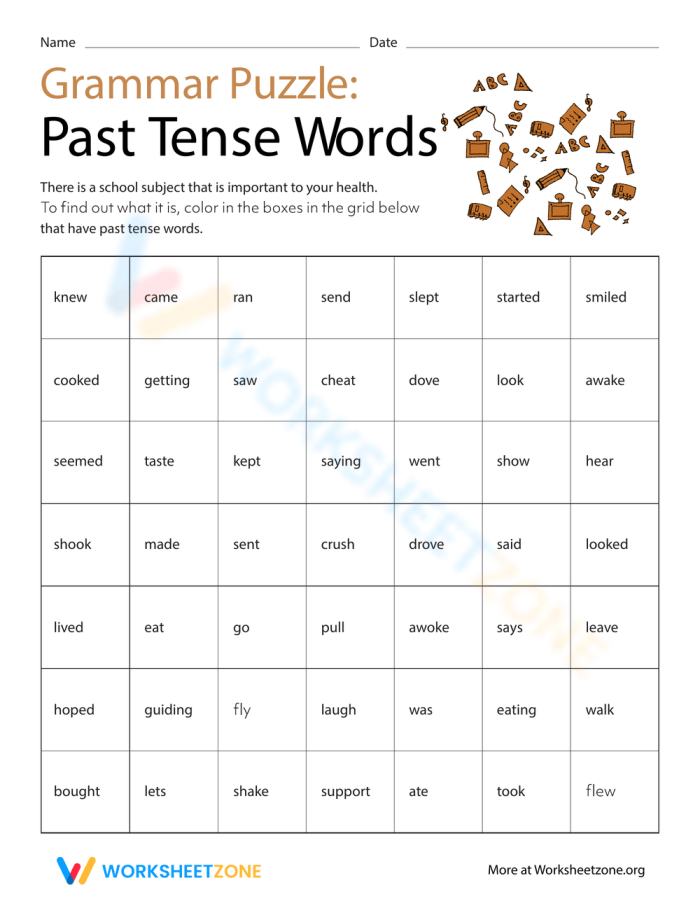
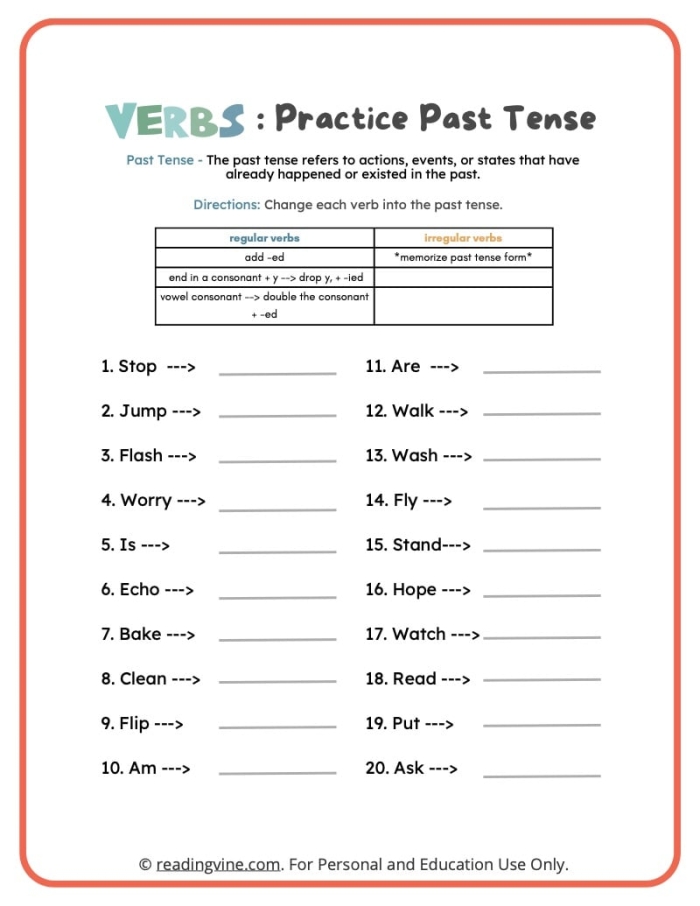
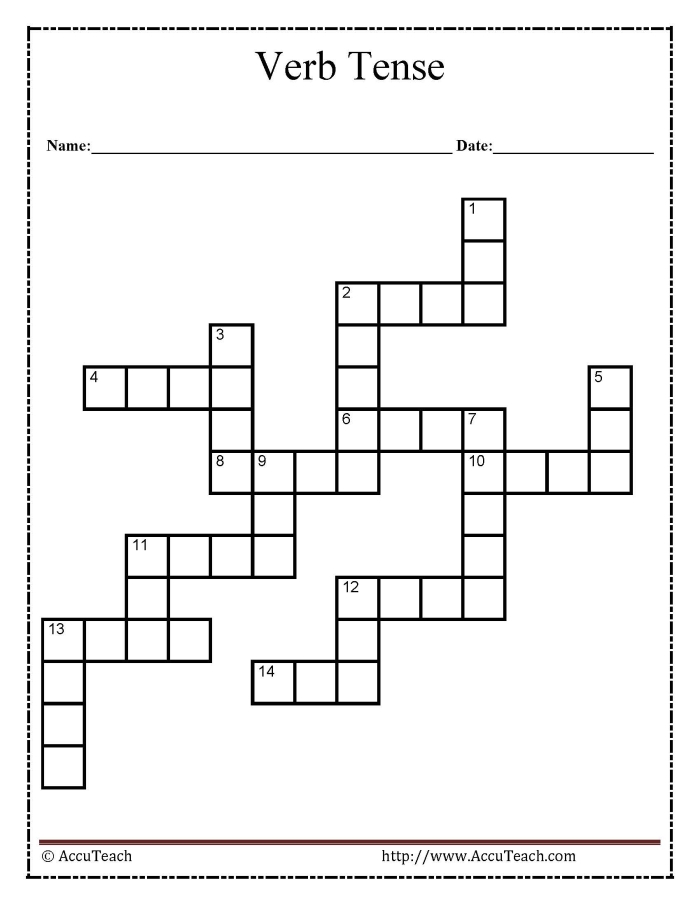
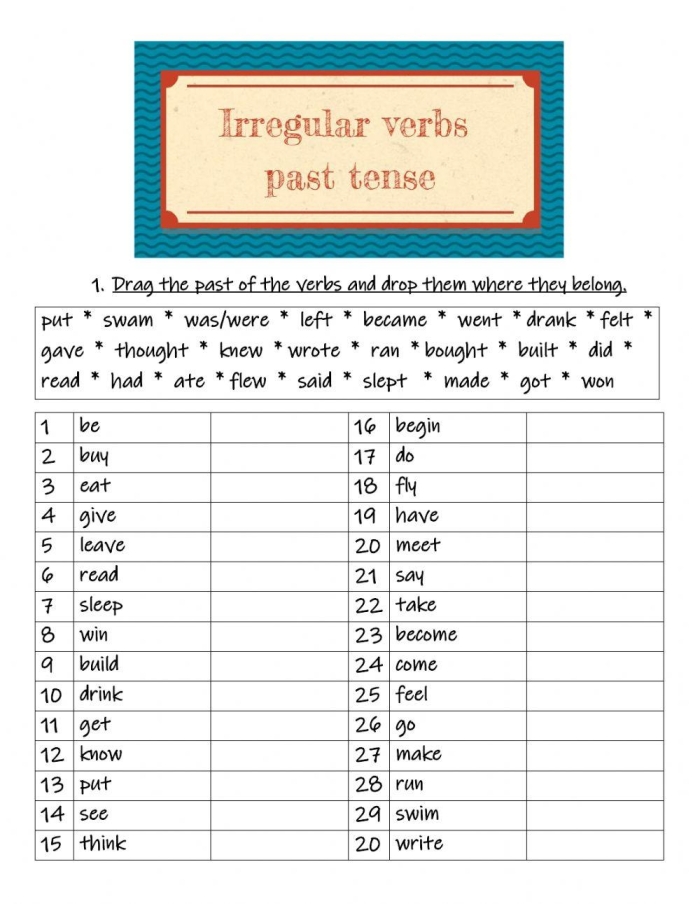
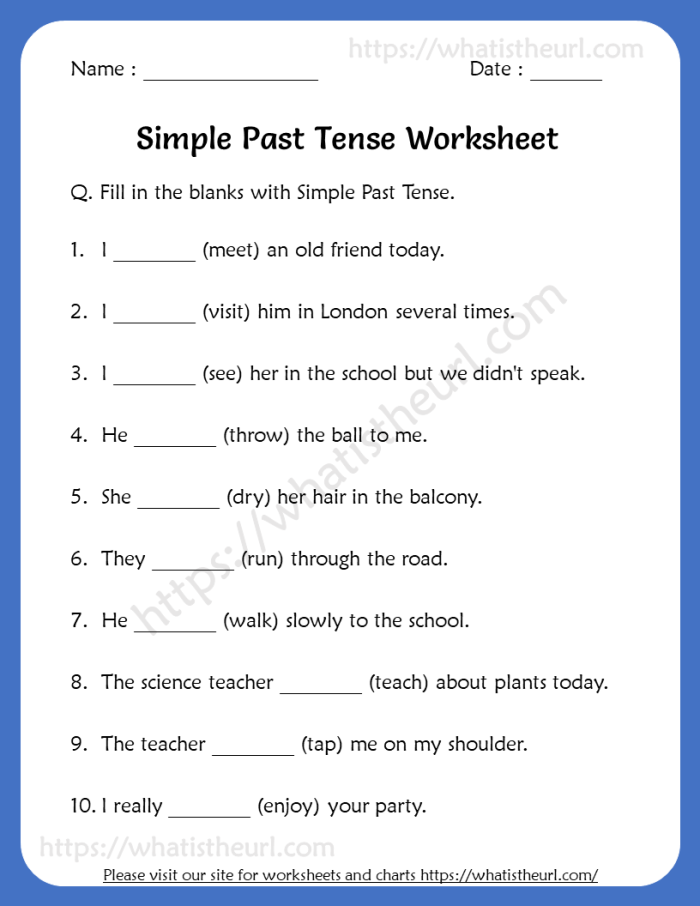
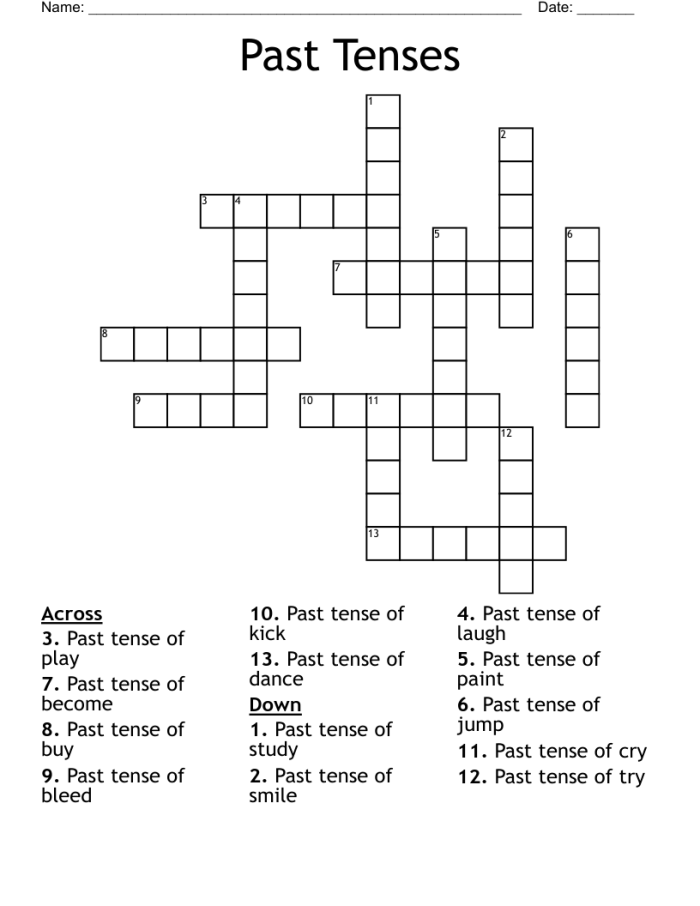
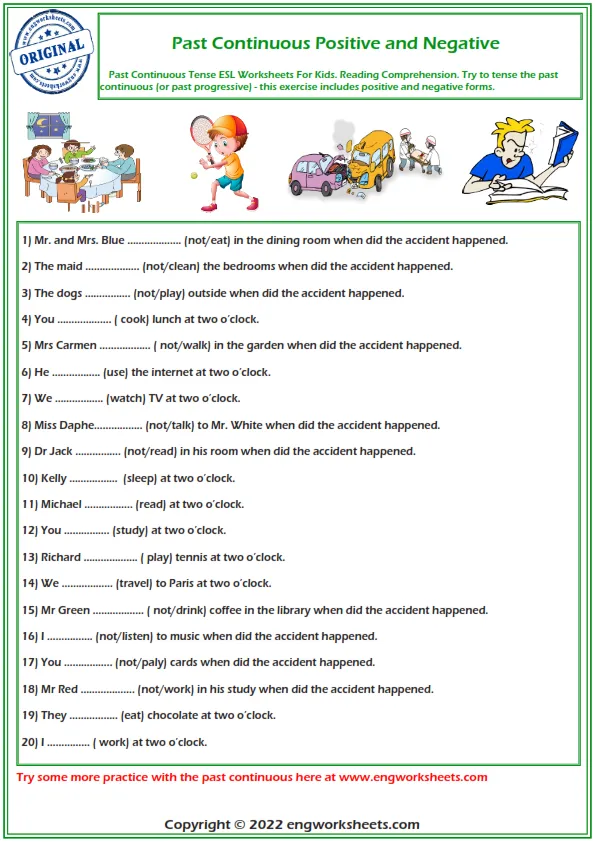
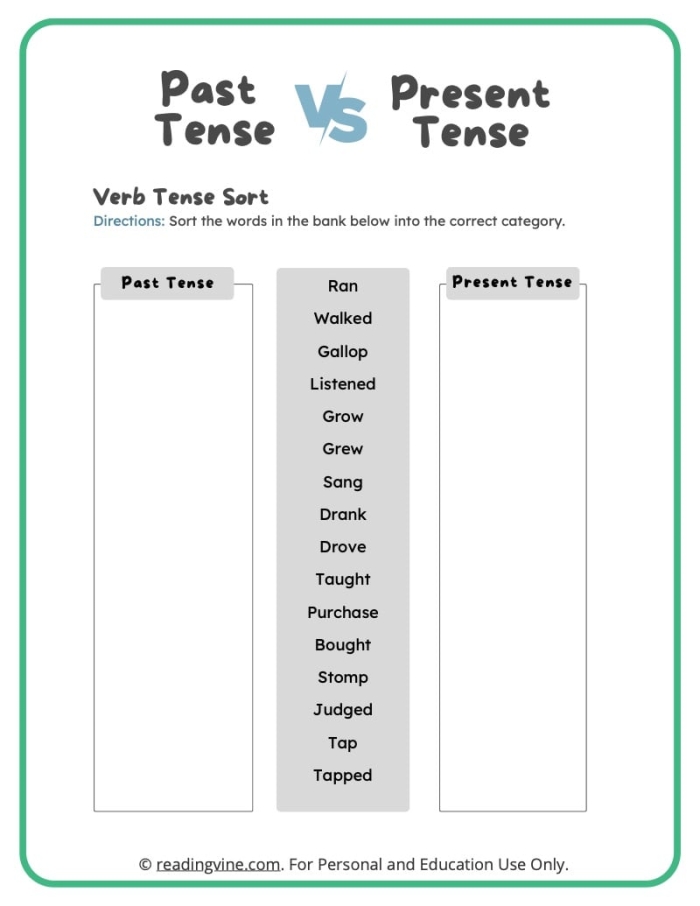
Verb tenses trip up fourth grade students more often than teachers expect. The shift between past, present, and future isn’t intuitive for young learners who are still building their grasp of how language works. A grammar puzzle focused on past tense words offers something traditional worksheets often miss: genuine engagement through play.
When students encounter past tense verbs embedded in a puzzle format rather than a list of fill-in-the-blank sentences, something shifts in their brains. The puzzle becomes a challenge to solve rather than a task to complete. They’re not just identifying whether a word is “walked” or “walks”—they’re hunting for it, connecting it to other clues, and experiencing a small victory when the answer clicks into place. This approach works because it taps into how children actually learn best: through discovery and problem-solving.
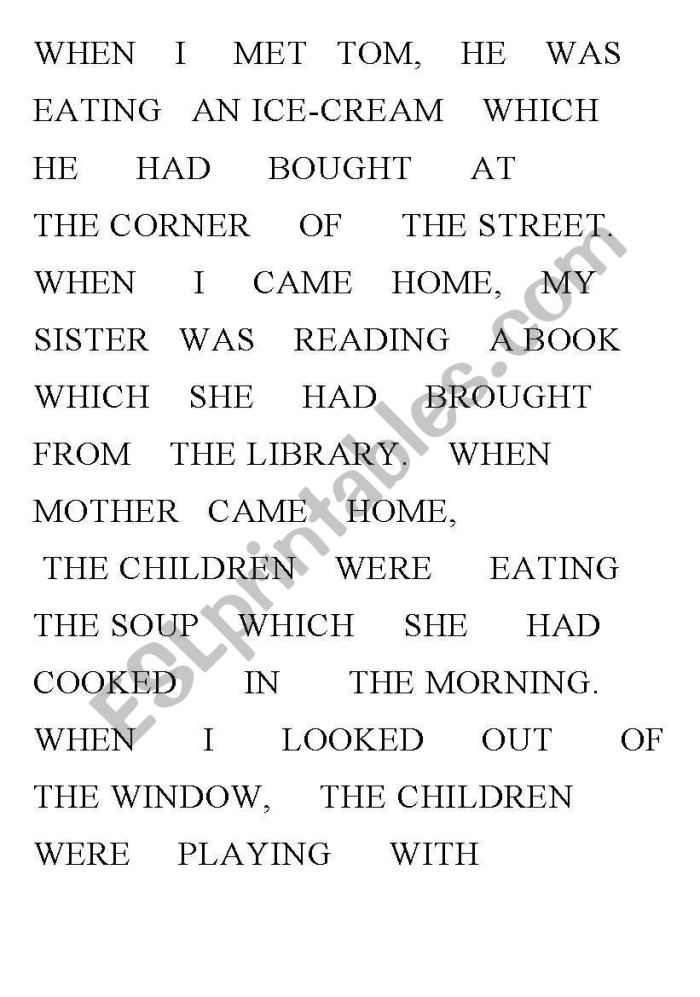
Fourth graders benefit from seeing verb tenses in context rather than isolation. A printable grammar puzzle with past tense words naturally shows how these verbs function in real sentences. When students see “jumped,” “painted,” or “discovered” within an actual narrative context, they begin understanding that tense isn’t just a grammar rule—it’s a tool for telling stories and sharing what happened.
The playful nature of puzzles also reduces the anxiety some students feel around grammar instruction. A worksheet can feel punitive, but a puzzle feels like a game. This distinction matters for building confidence in struggling readers and writers. As students work through the puzzle, they’re reinforcing their understanding without the pressure of being graded on every answer.
Teachers can extend this learning by pairing the puzzle with related activities. Combining it with dialogue and actions to show character traits helps students see how past tense verbs create vivid descriptions. Or explore figurative language through creative writing activities to show how verb choice enhances storytelling.
Past tense mastery opens doors for fourth graders to write more complex narratives and understand the texts they read more deeply. A puzzle approach makes that learning stick.
Use These Worksheets Today