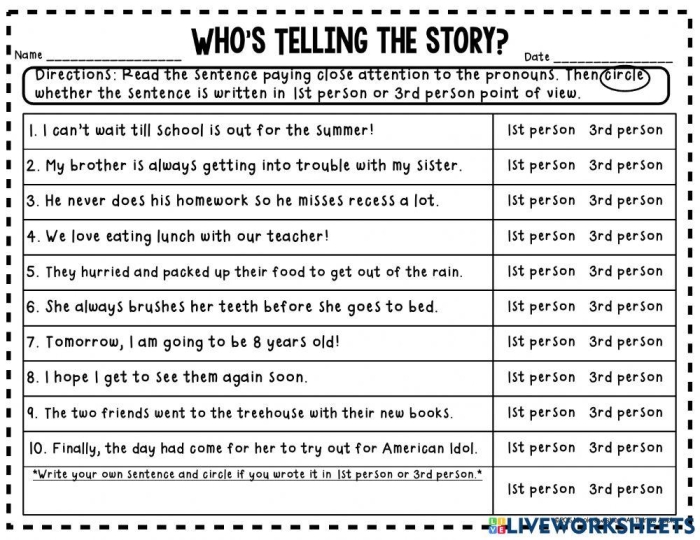
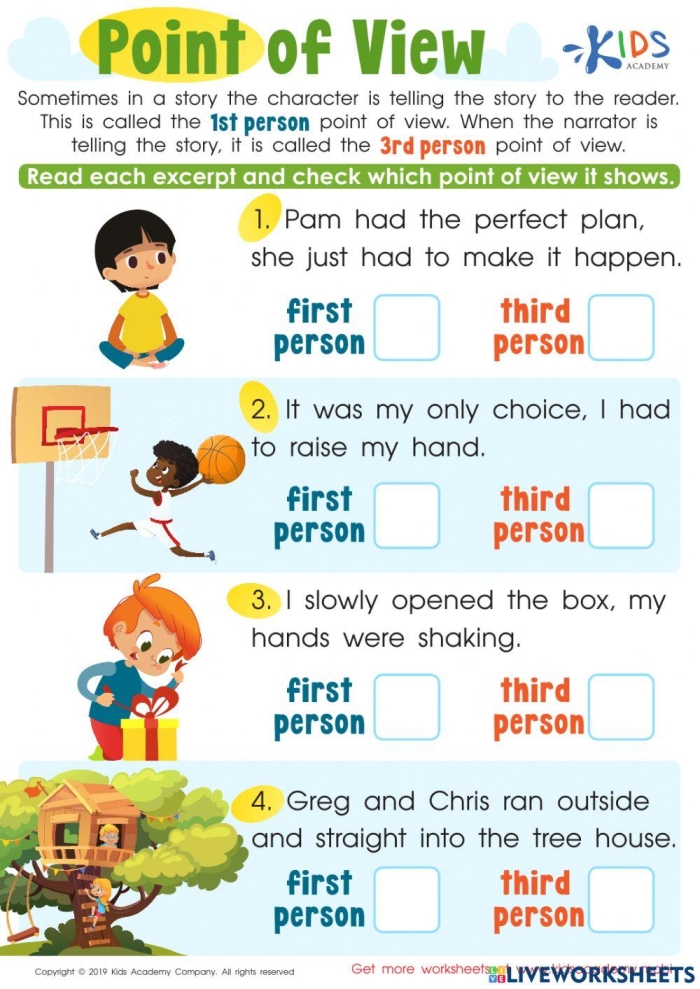
First vs. Third Person Narration Worksheets

Fourth grade worksheet comparing first and third person narration in civics and government texts
First vs Third Person Narration Worksheet for Fourth Grade Civics
Category: Civics and Government | Grade: Fourth Grade

Learning to spot the difference between first and third person narration shapes how fourth grade students understand the stories they read and write. This skill matters because it changes everything about how a reader experiences a narrative, from whose thoughts we access to how much distance exists between the narrator and the action.

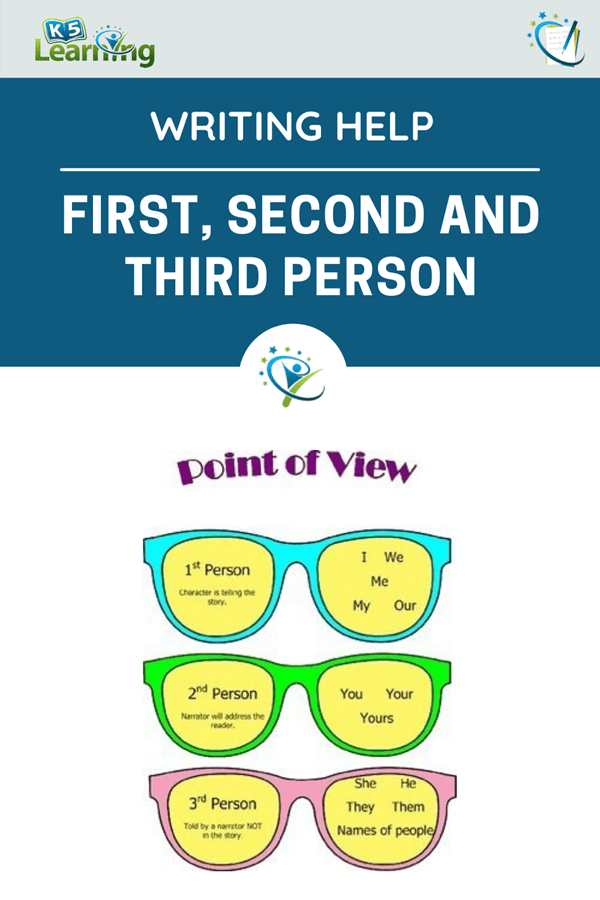
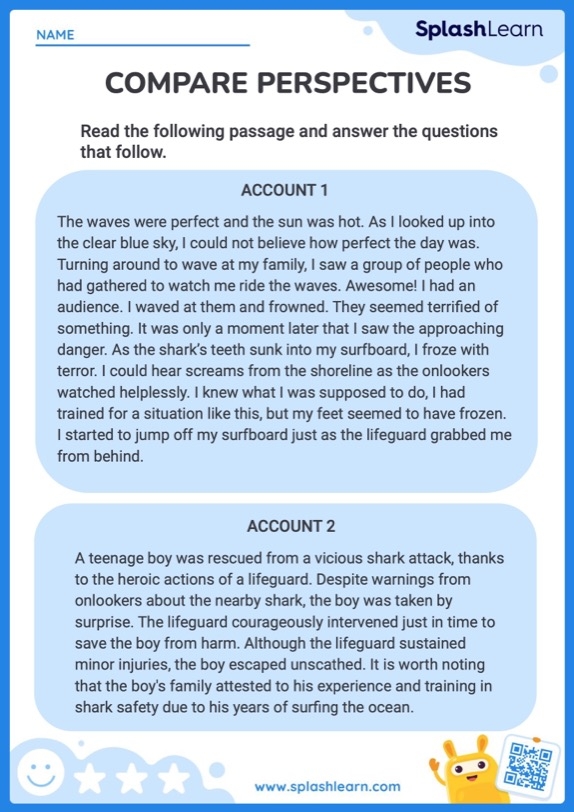
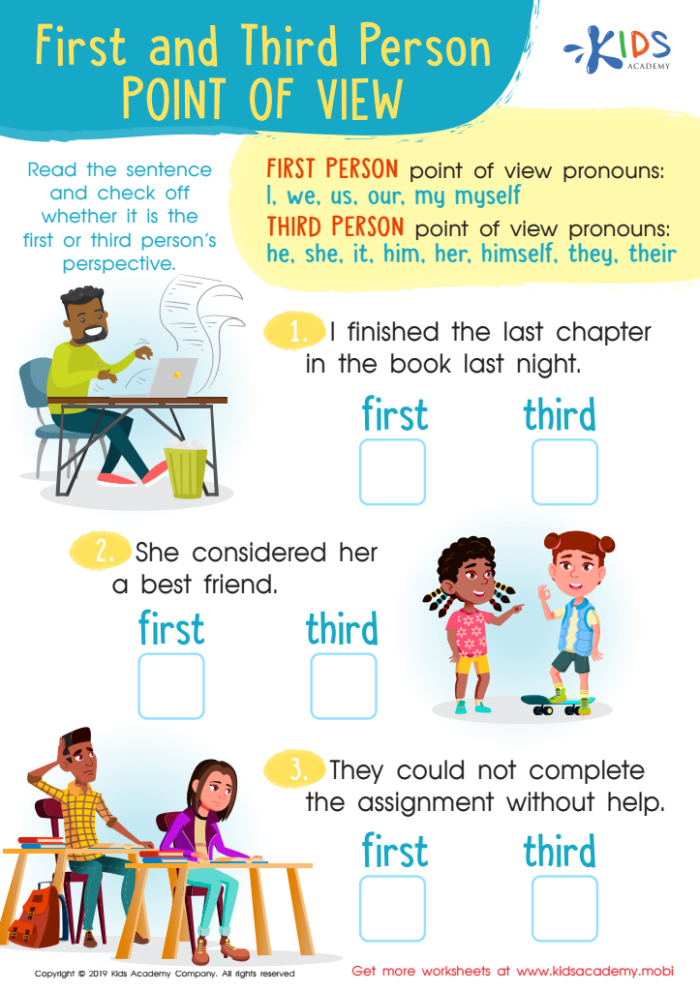
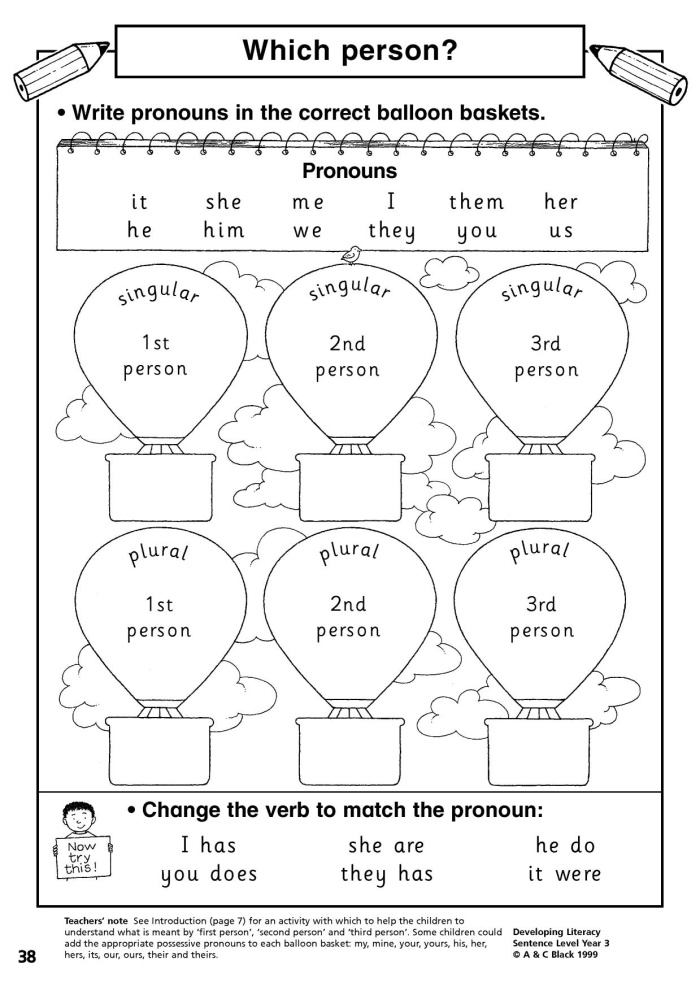
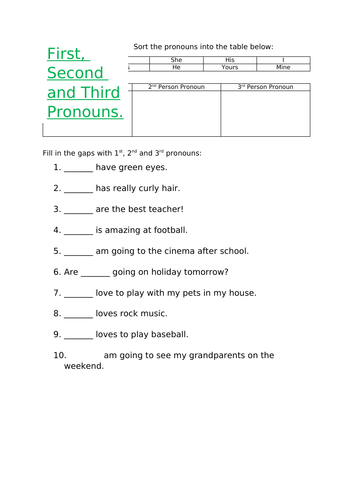
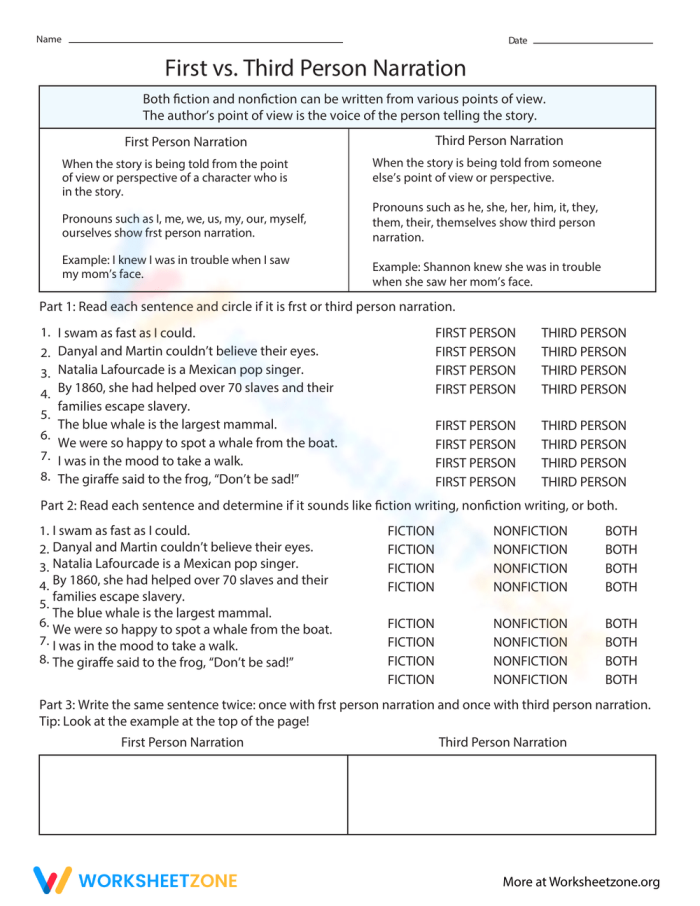
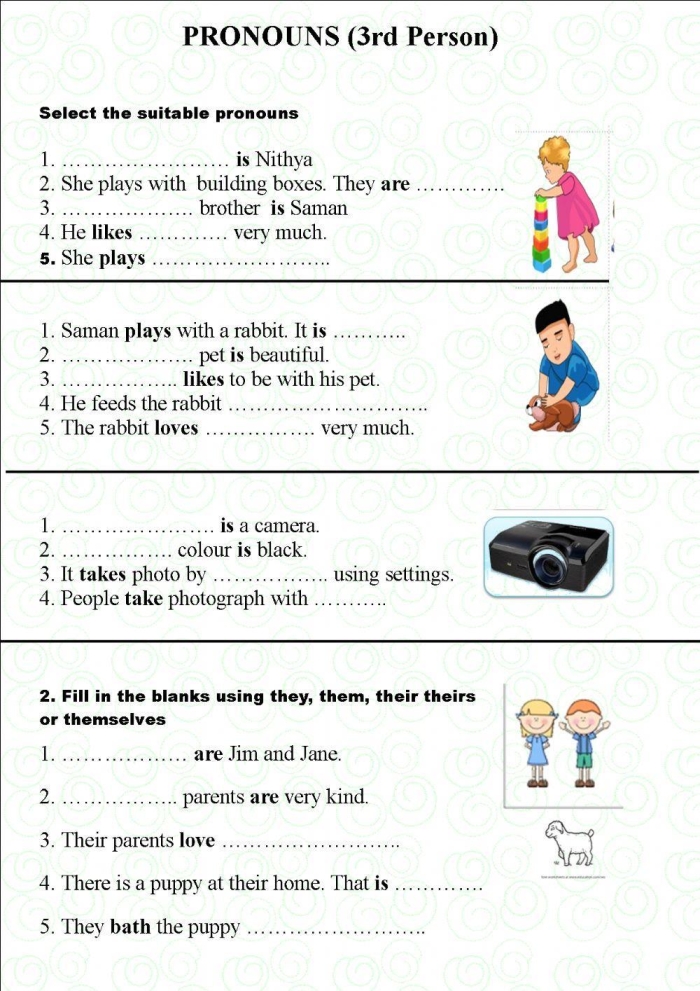
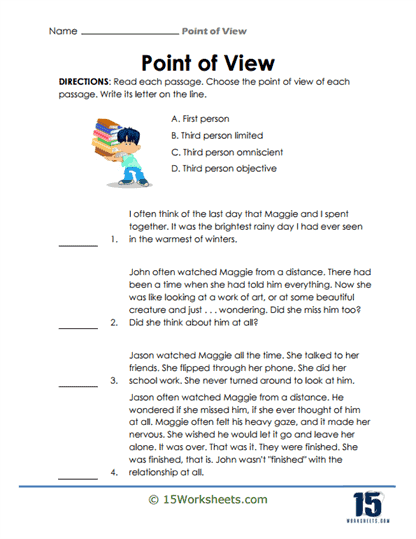
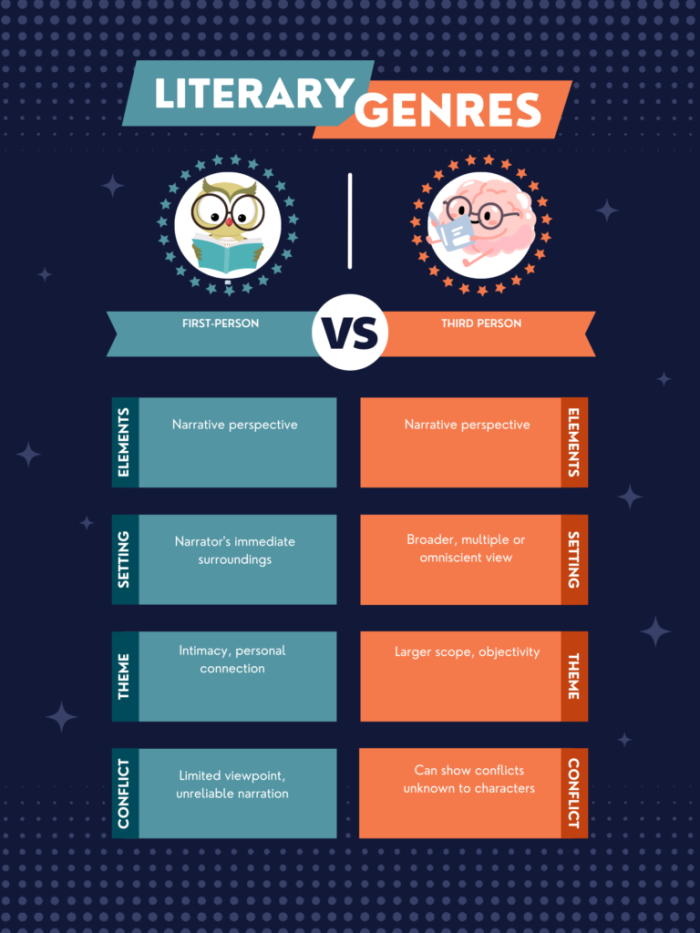
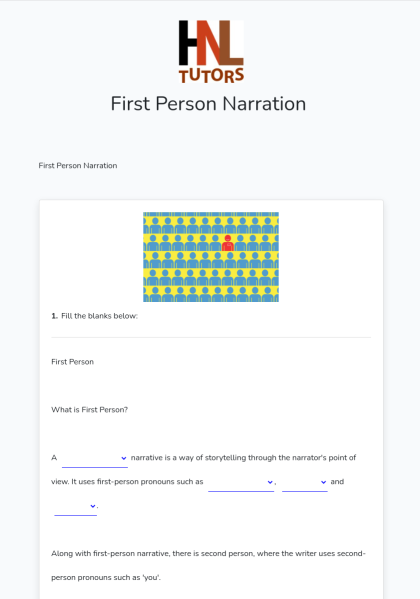
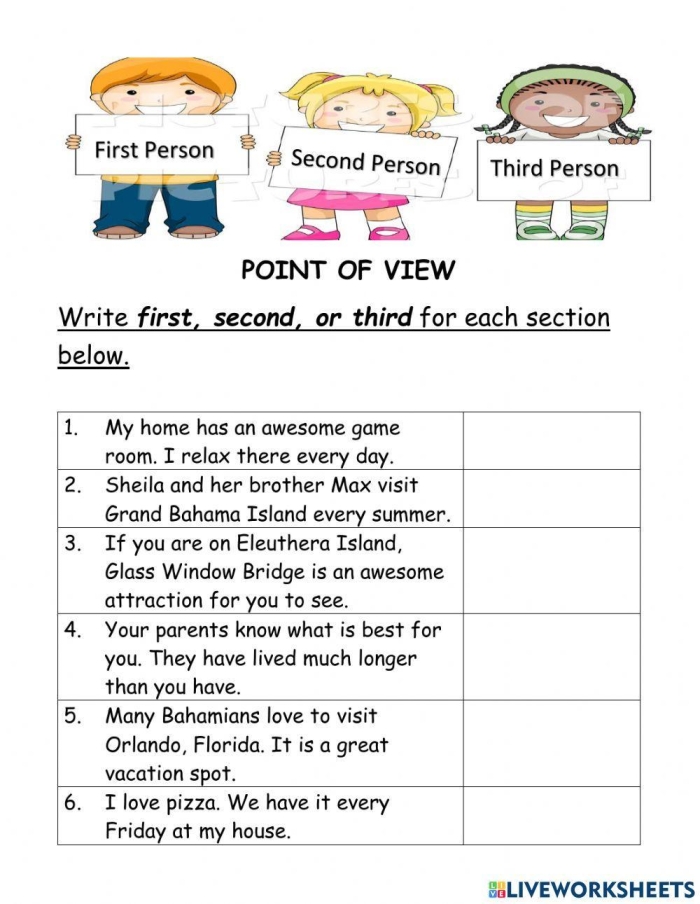
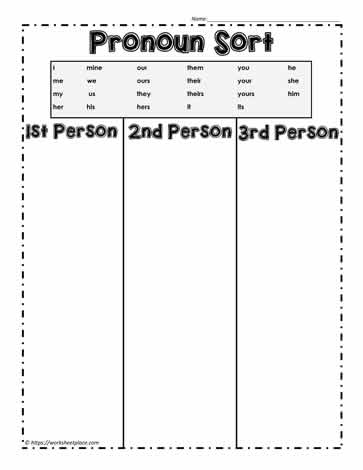
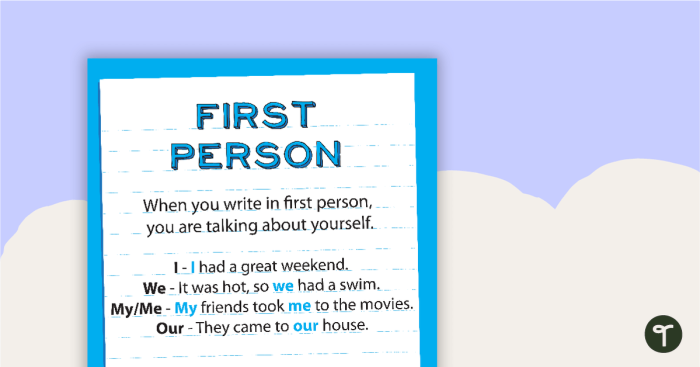
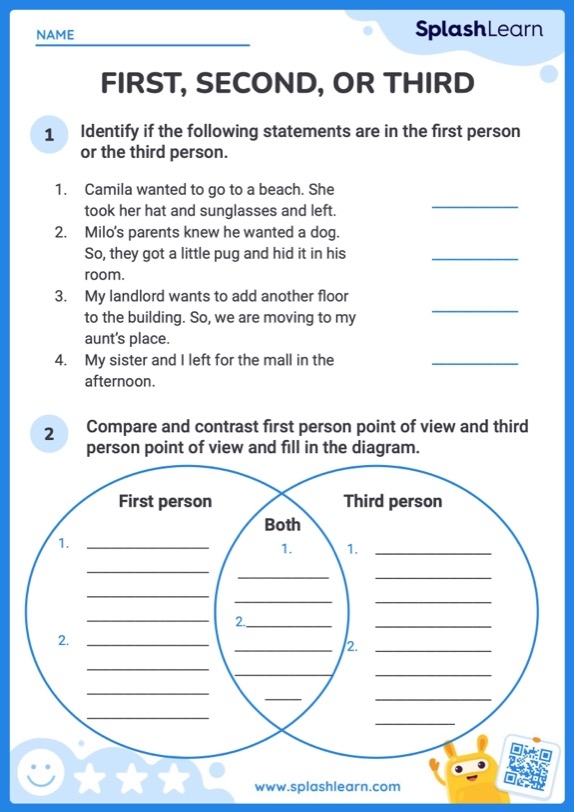
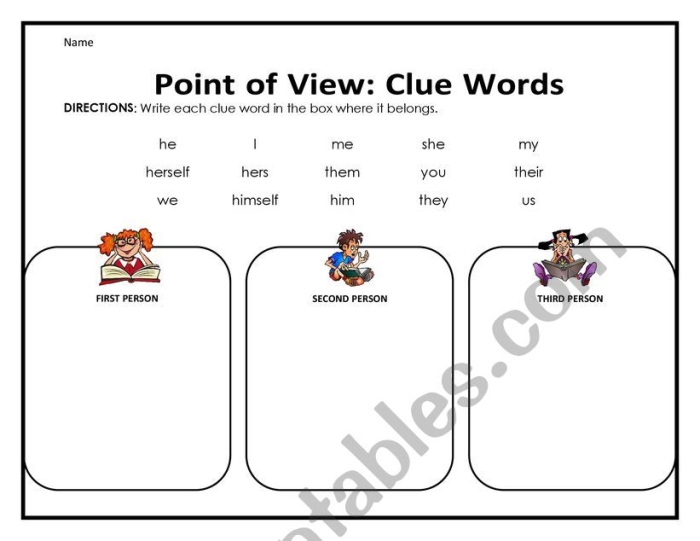
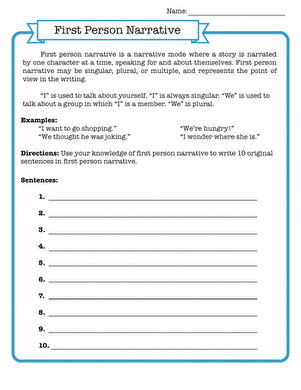
First person narration puts readers directly inside a character’s head. The narrator uses “I” and “we,” sharing their personal experiences and perspectives. When a student reads a first person story, they see the world through one character’s eyes only. This creates intimacy but also limits what the reader can know. In contrast, third person narration uses “he,” “she,” or “they,” allowing the narrator to describe multiple characters’ actions and sometimes their thoughts. Third person offers a wider view of the story’s world.

Understanding this distinction becomes even more important when students learn to identify fiction versus nonfiction. A fictional story in first person might describe a character’s imaginary adventure, while a nonfiction account in first person presents real events the author actually experienced. Fourth grade students in civics and government classes often encounter nonfiction texts about historical figures or community leaders, many written in third person to maintain an objective tone.

Teachers use targeted practice to help students recognize these patterns. When working on grammar fundamentals like identifying sentence structure, students naturally encounter different narrative voices. Worksheet activities that ask students to rewrite passages in different perspectives reinforce the concept. Some exercises have students convert a first person diary entry into a third person news report, making the differences concrete and memorable.

By mastering these distinctions, fourth graders develop stronger reading comprehension and become more intentional writers themselves, choosing the narrative voice that best serves their purpose.


Worksheet Practice Section
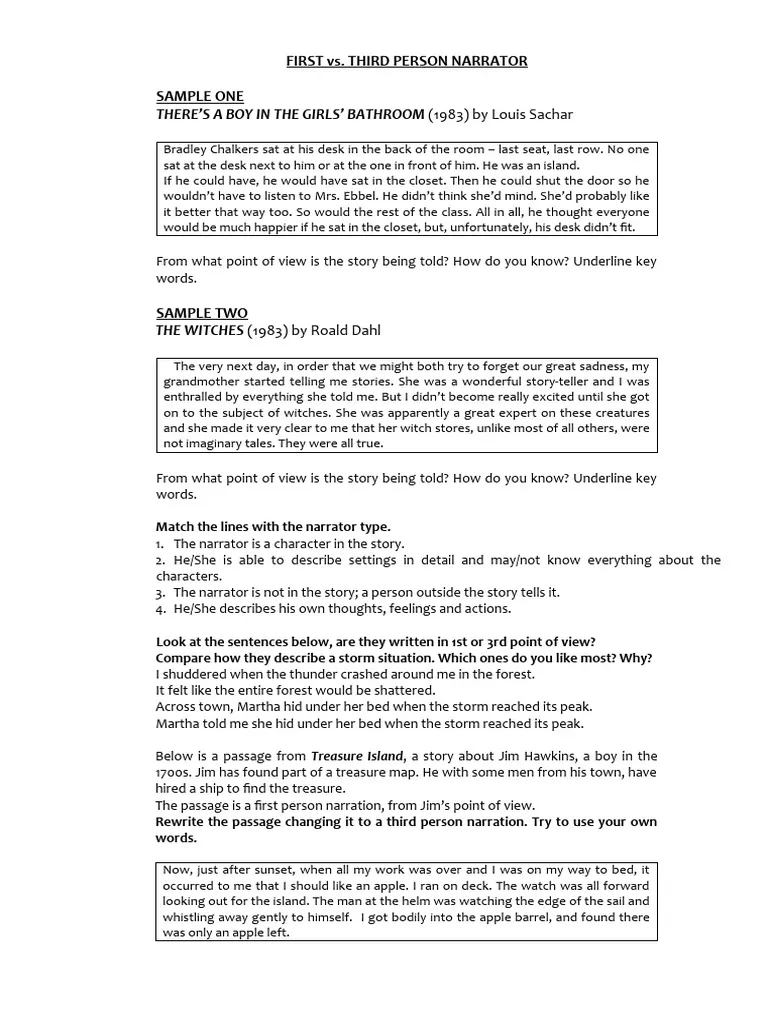
Fourth grade worksheet comparing first and third person narration in civics and government texts
Students analyzing first and third person narration on a worksheet
Worksheet illustrating first and third person narration for fourth graders
Worksheet illustrating first and third person narration concepts for fourth graders
Fourth grade worksheet focusing on identifying first person and third person points of view in literary texts
Fourth grade worksheet for identifying first and third person narration in civics texts
Fourth grade worksheet for identifying first and third person narration in civics passages
Worksheet for identifying first and third person narration in writing styles
Worksheet illustrating first and third person narration distinctions for fourth graders
Worksheet illustrating first and third person narration distinctions for fourth graders in civics.
Fourth grade worksheet helping students identify first and third person narration and fiction versus nonfiction
Worksheet illustrating first and third person narration for fourth graders
Worksheet focusing on identifying first and third person narration for fourth graders
Fourth grade worksheet helping students identify first and third person perspectives in civics and government texts
Fourth grade worksheet focusing on identifying first versus third person narration and fiction versus nonfiction in civics texts
Worksheet illustrating first and third person narration for fourth graders learning civics.
First vs. Third Person Narration worksheet for fourth graders focusing on fiction and nonfiction writing
Fourth grade worksheet for identifying first and third person narration in civics and government texts
Worksheet for identifying first and third person narration in writing styles
Worksheet illustrating first vs. third person narration for fourth graders in civics. Educational resource for distinguishing between fiction and nonfiction writing styles.
A fourth grade worksheet designed to help students identify first and third person perspectives in fiction and nonfiction texts.
Fourth grade worksheet comparing first and third person narration for civics and government studies
Fourth grade worksheet comparing first and third person narration with fiction and nonfiction examples

Leave a Reply

Your email address will not be published. Required fields are marked *