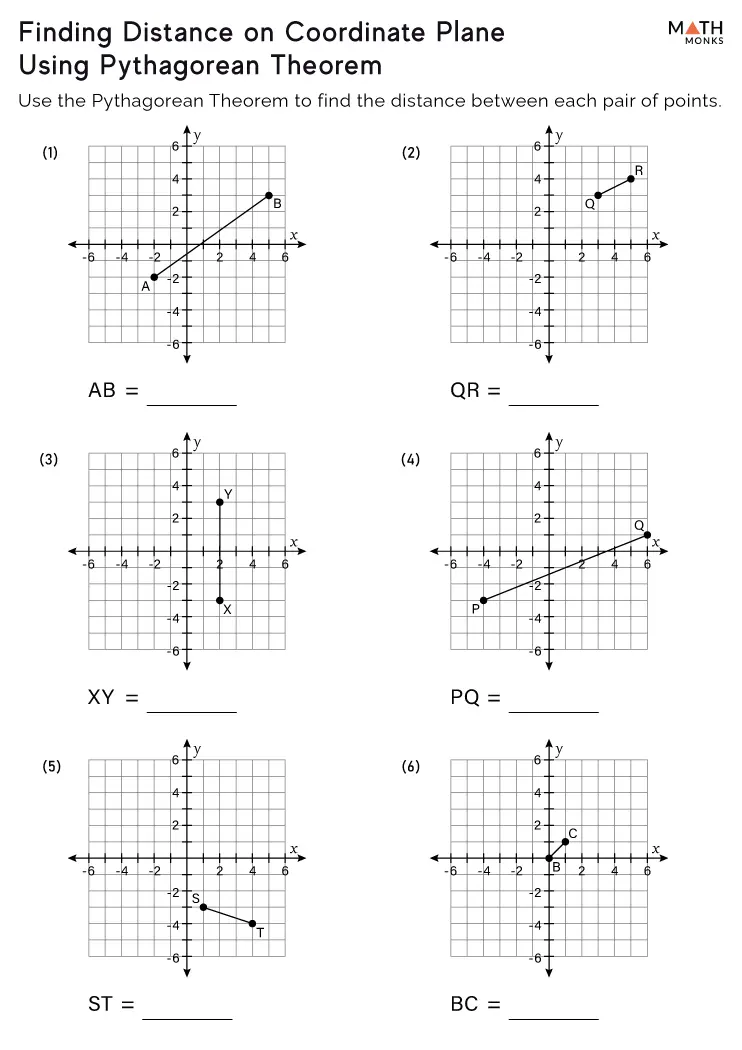
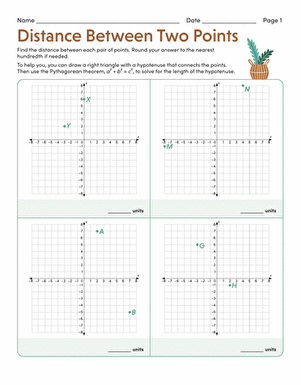
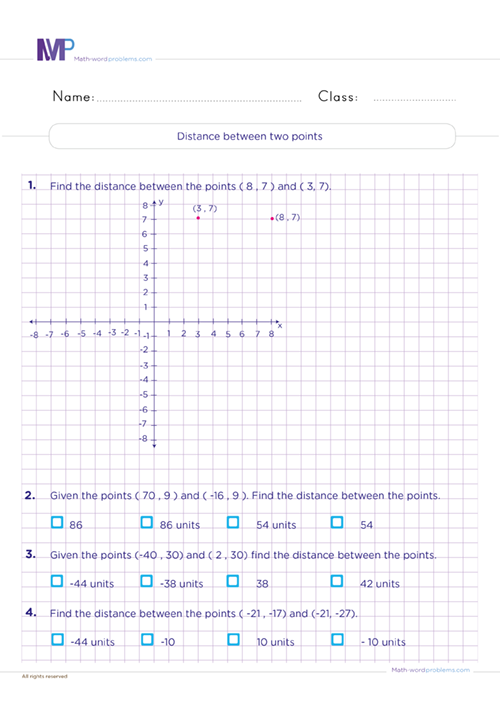
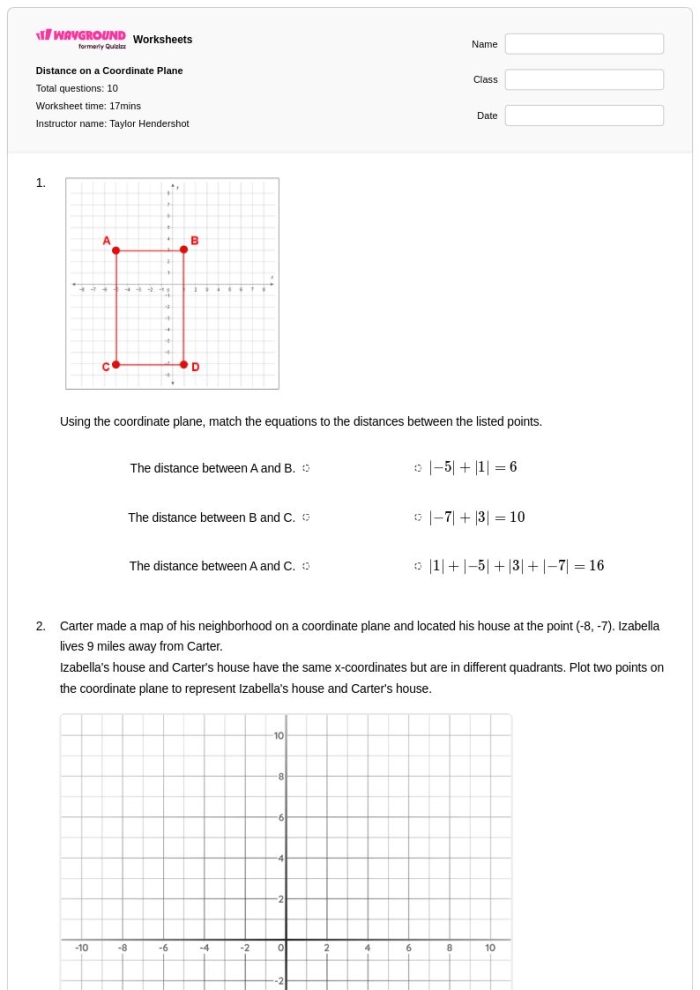
Did you know that you can use the Pythagorean theorem to find the distance between two points on the coordinate plane? This fundamental concept in geometry is not only essential for eighth-grade math but also has practical applications in various fields, including life science. Understanding how to apply the theorem can open doors to solving real-world problems.
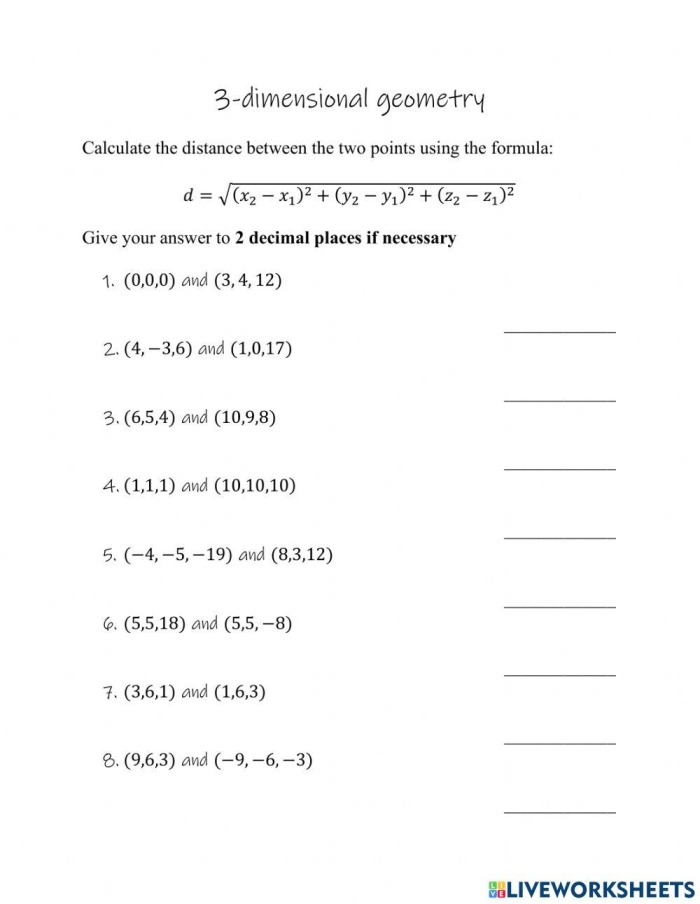
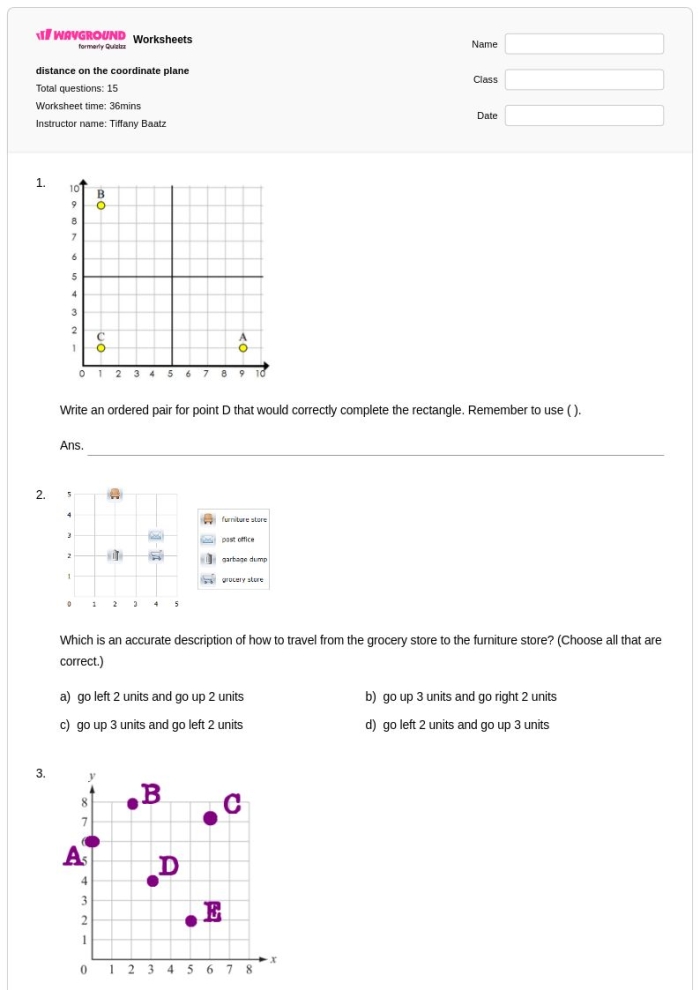
The Pythagorean theorem states that in a right triangle, the square of the length of the hypotenuse (the side opposite the right angle) is equal to the sum of the squares of the lengths of the other two sides. This relationship can be applied to the coordinate plane to calculate the distance between two points, say Point A (x1, y1) and Point B (x2, y2). The distance formula derived from the theorem is:
d = √((x2 – x1)² + (y2 – y1)²)
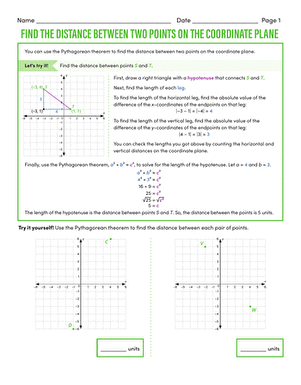
To see this in action, consider the points A(3, 4) and B(7, 1). Using the distance formula, you can plug in the values:
d = √((7 – 3)² + (1 – 4)²) = √(16 + 9) = √25 = 5
So, the distance between these two points is 5 units. This powerful tool not only helps in geometry but can also be useful in life science, for example, when calculating distances in ecological studies or mapping out data points in a research project.
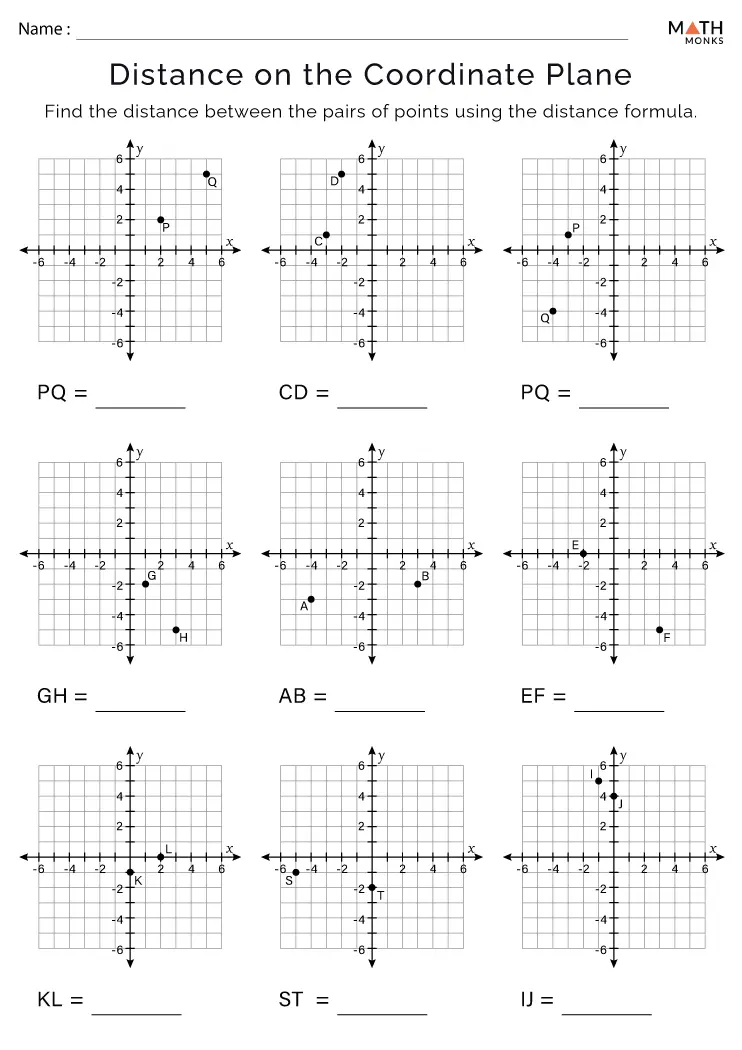
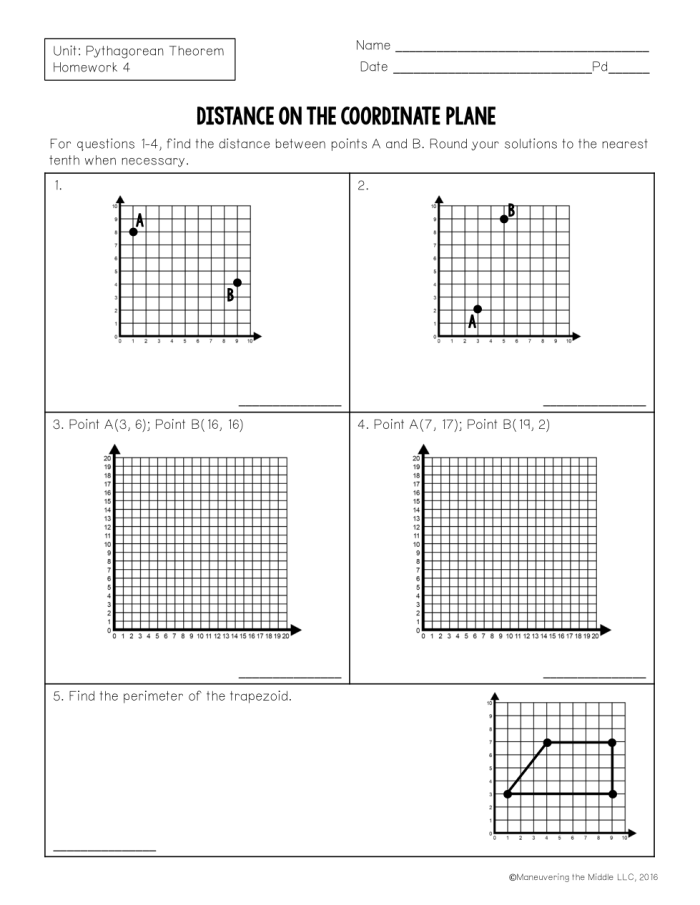
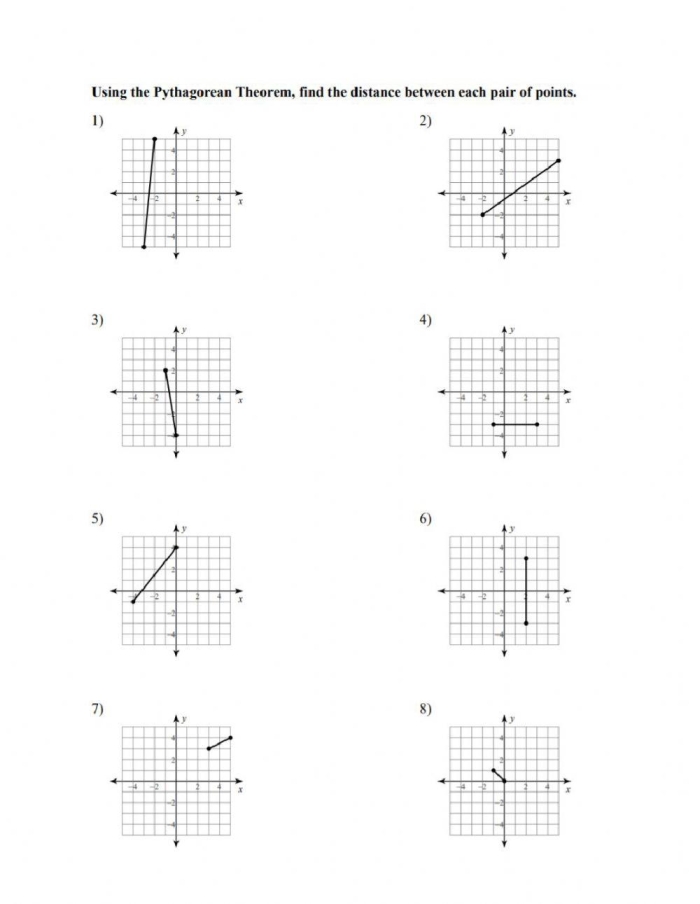
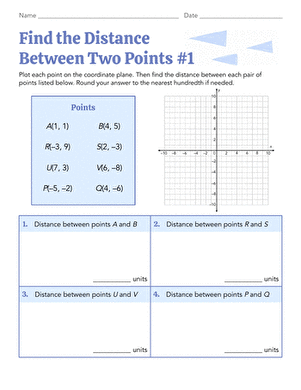
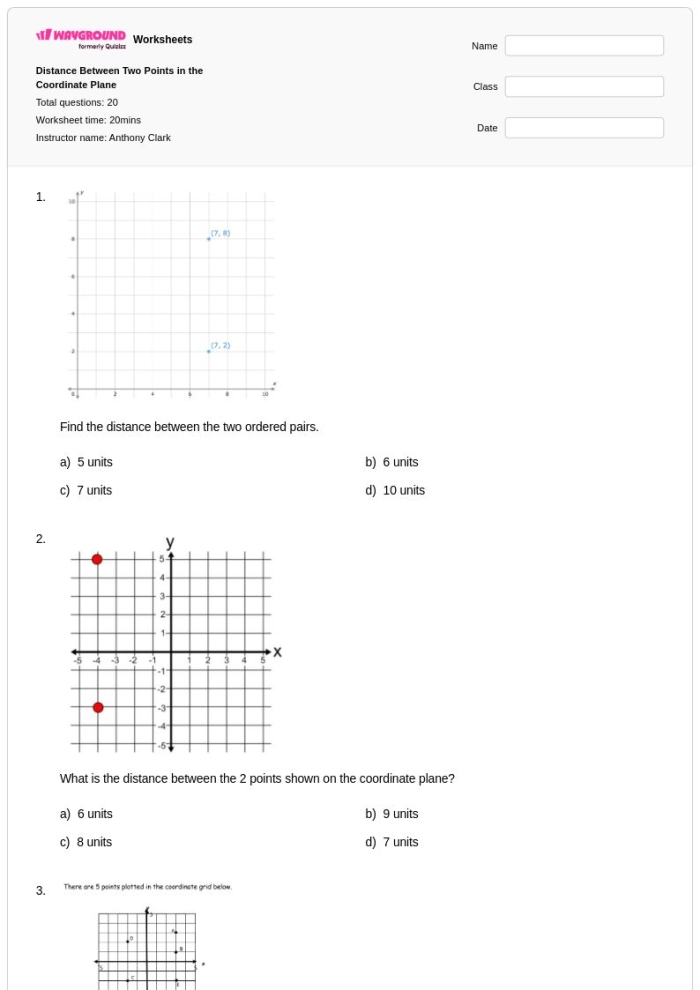
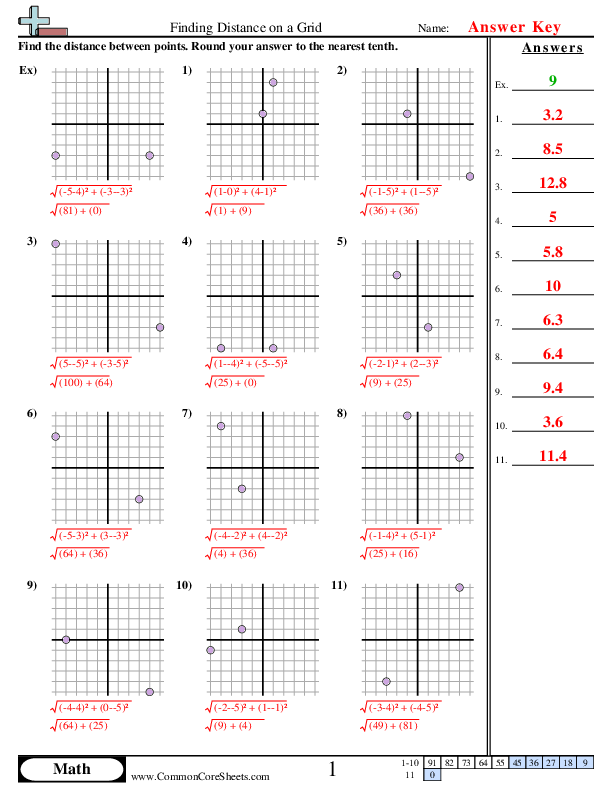
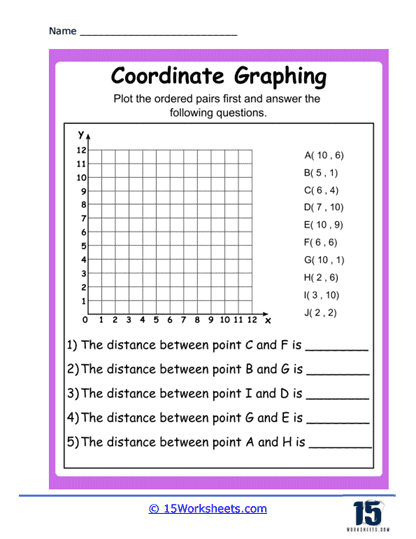
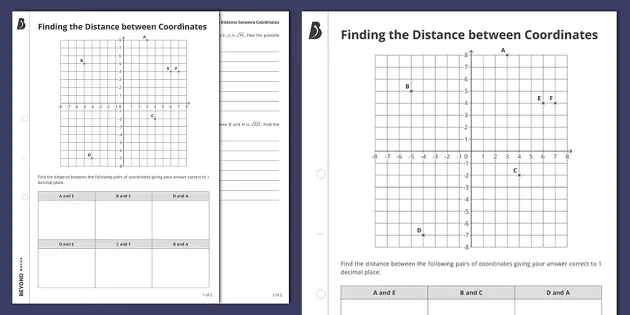
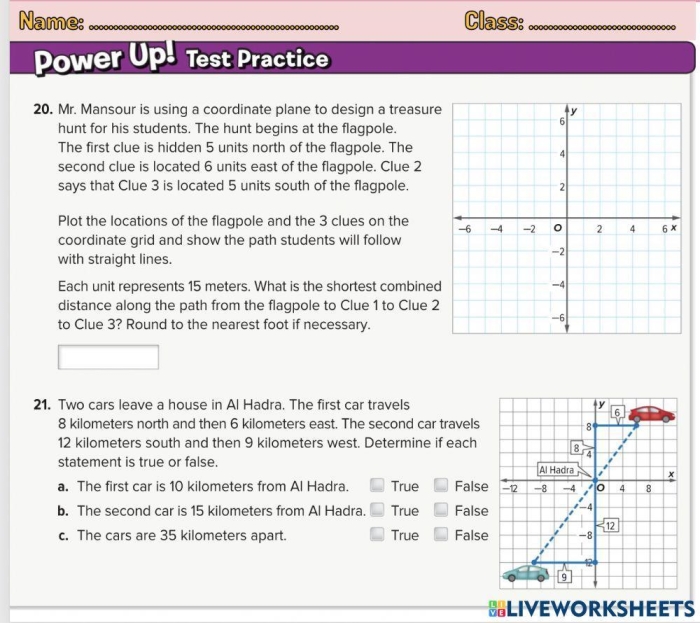
If you want to practice this concept further, check out our printable worksheets. They provide a great way to solidify your understanding and application of the Pythagorean theorem in finding distances. Mastering these skills can greatly enhance your mathematical capabilities and prepare you for more complex concepts in eighth-grade math and beyond.
Download These Worksheets for Practice