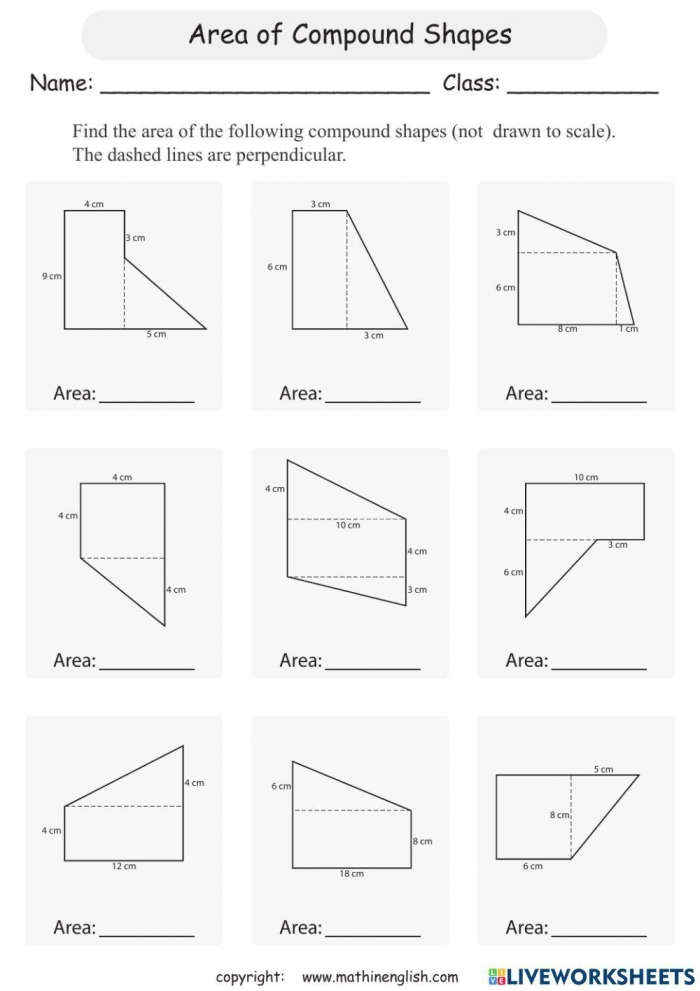
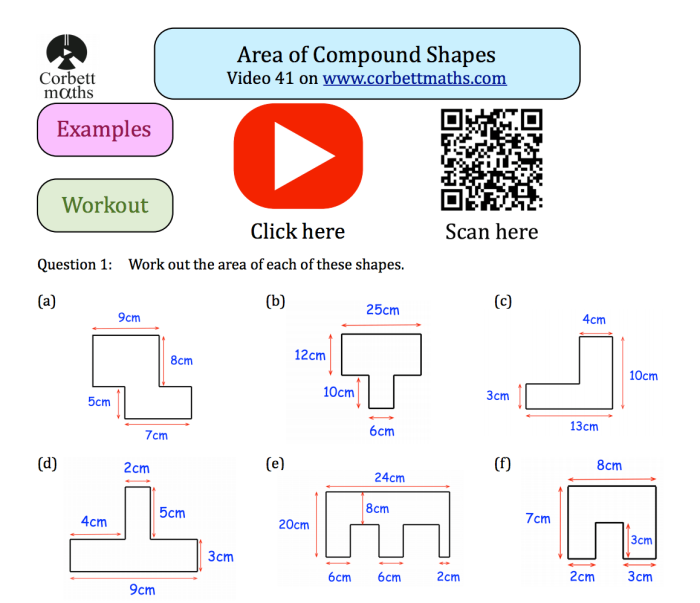
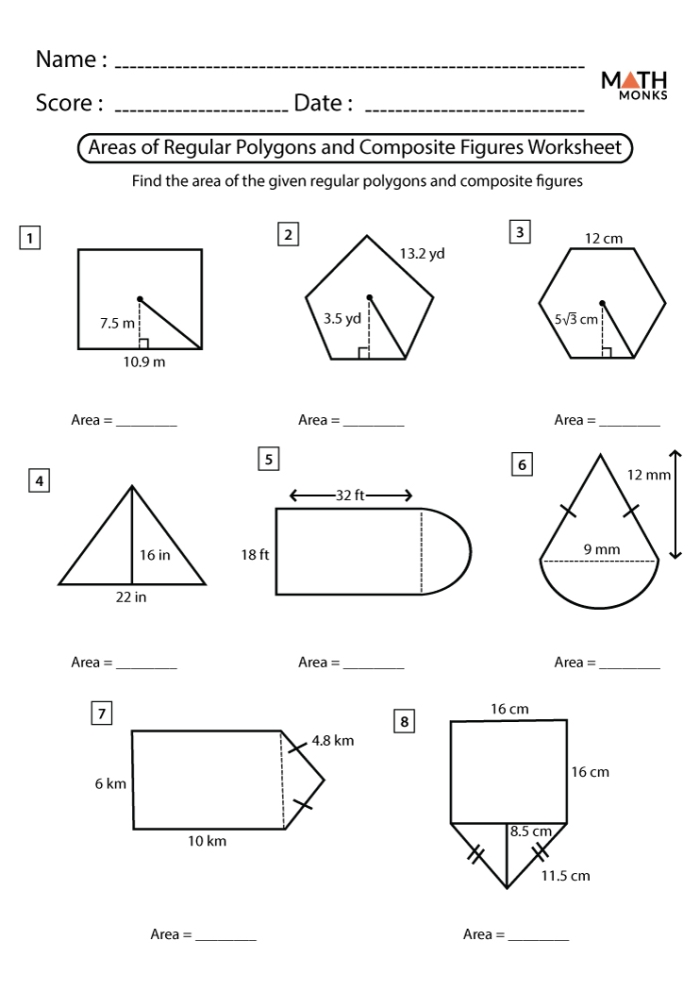
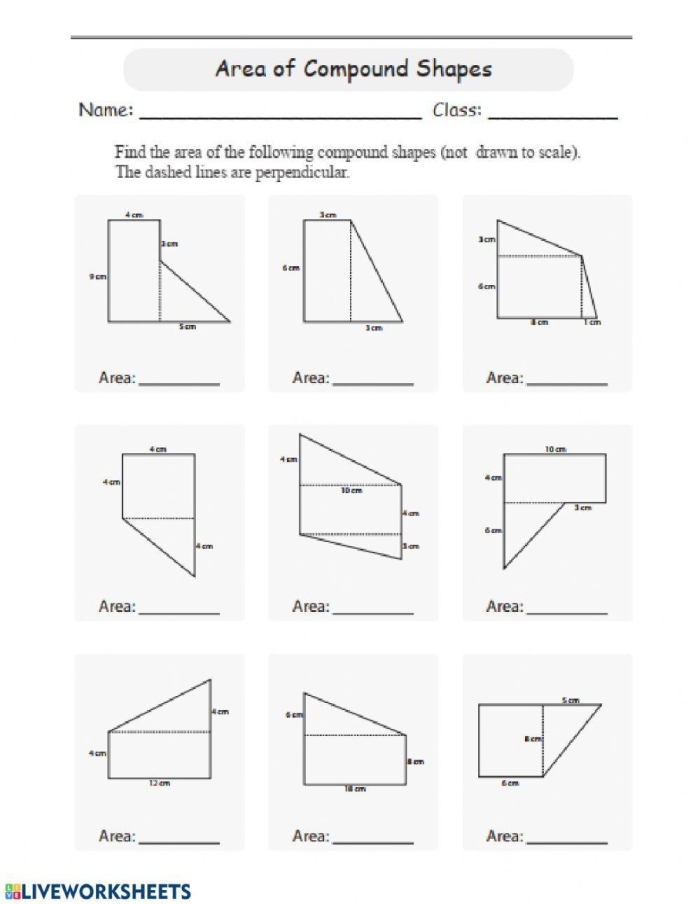
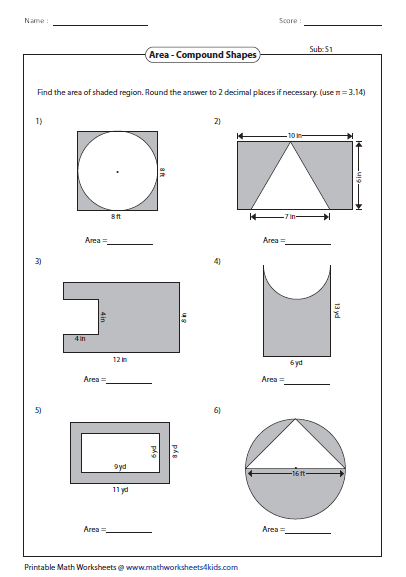
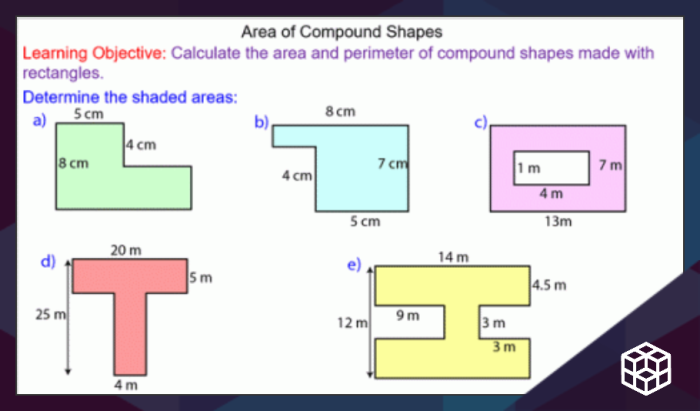
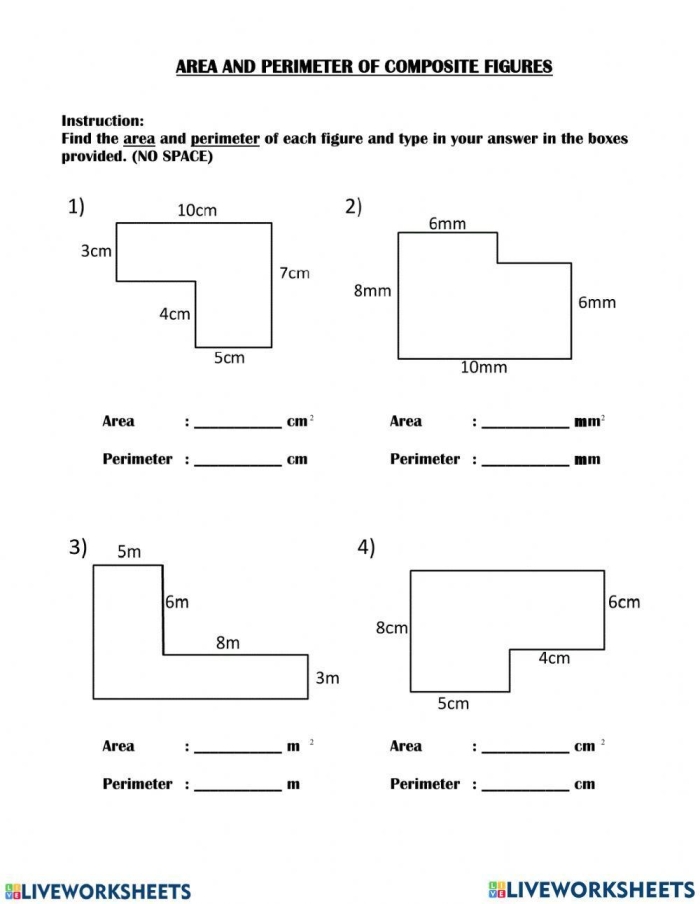
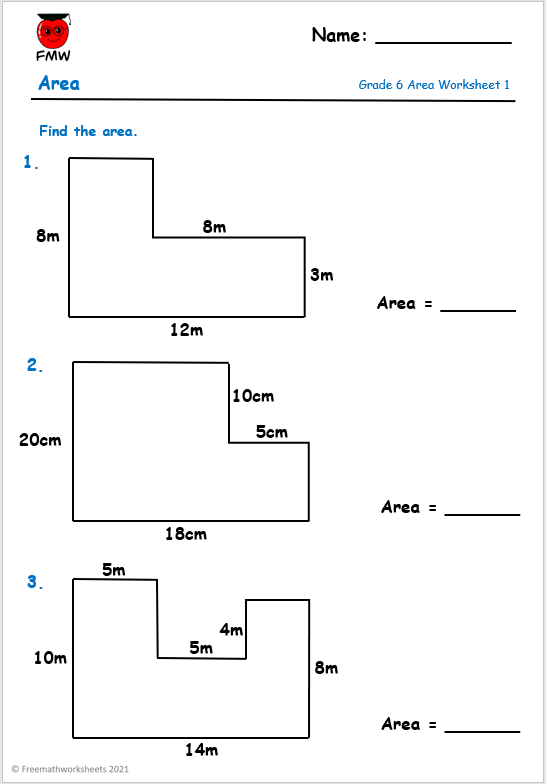
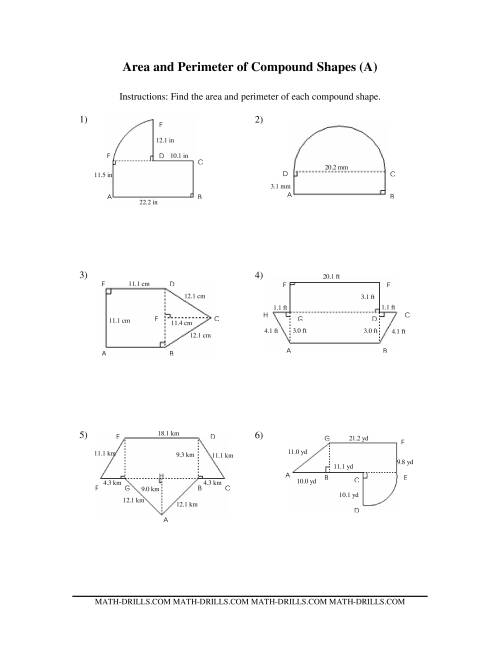
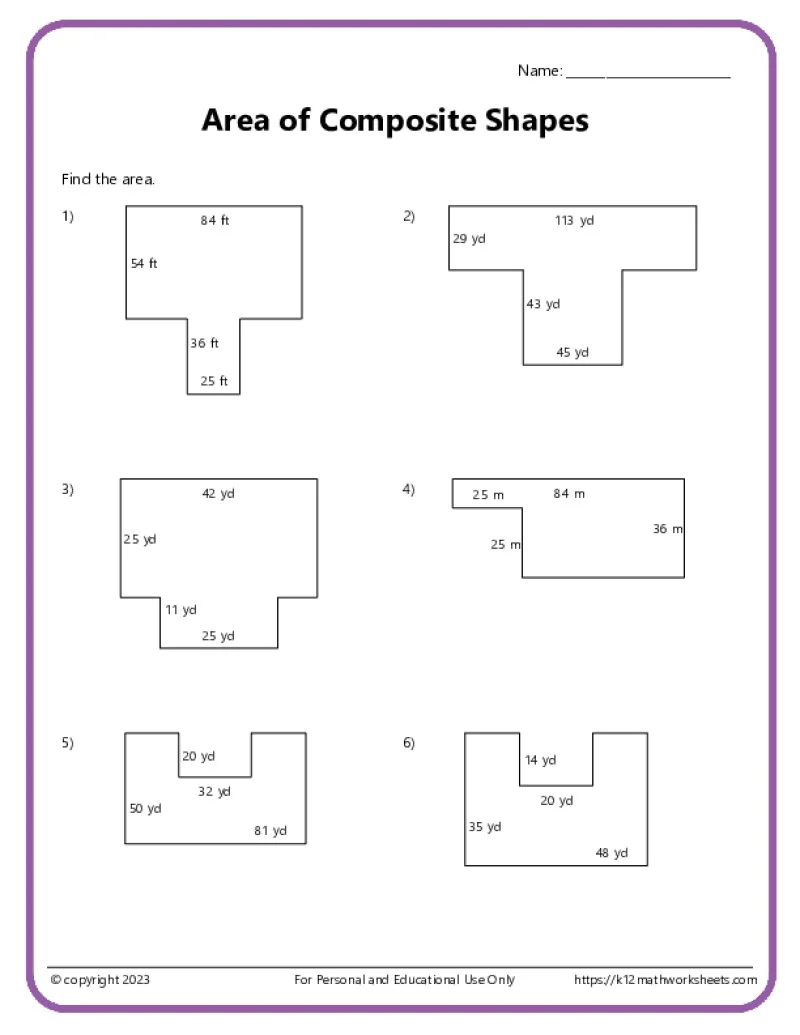
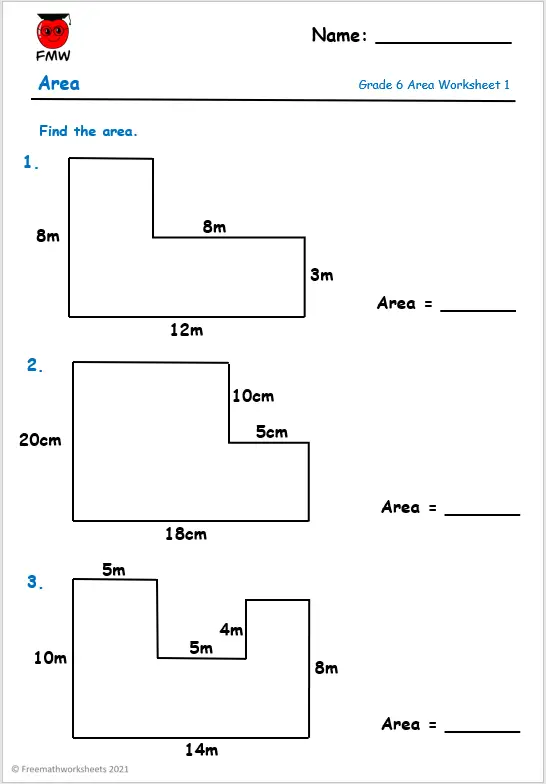
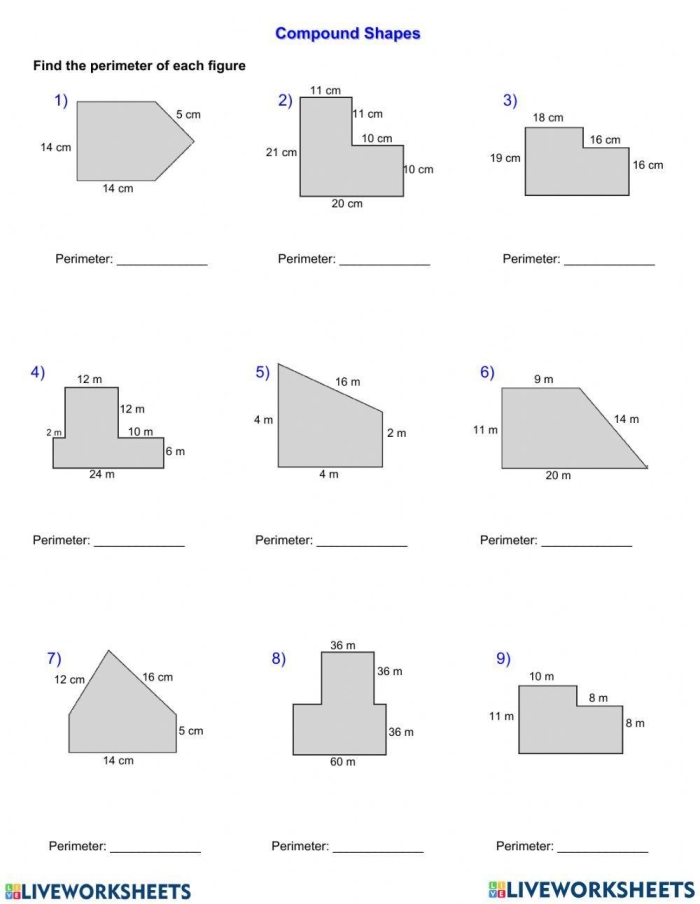
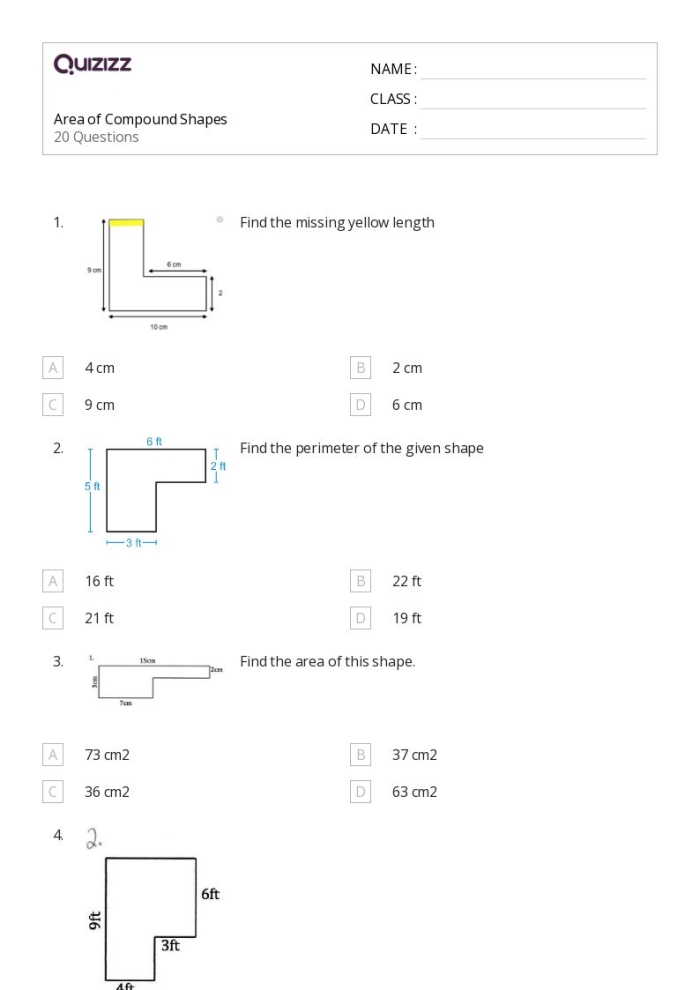
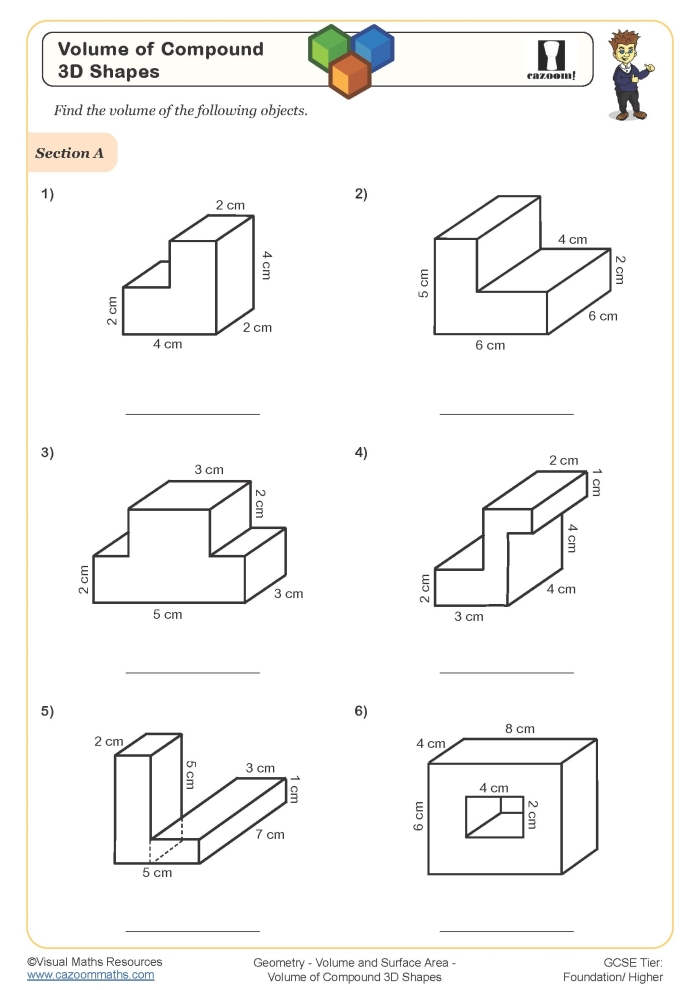
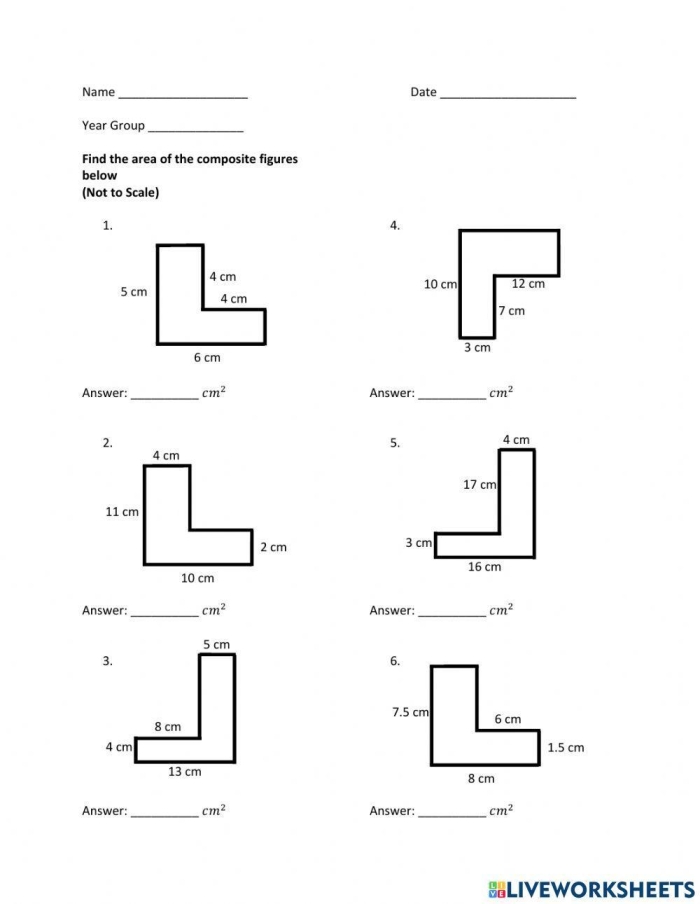
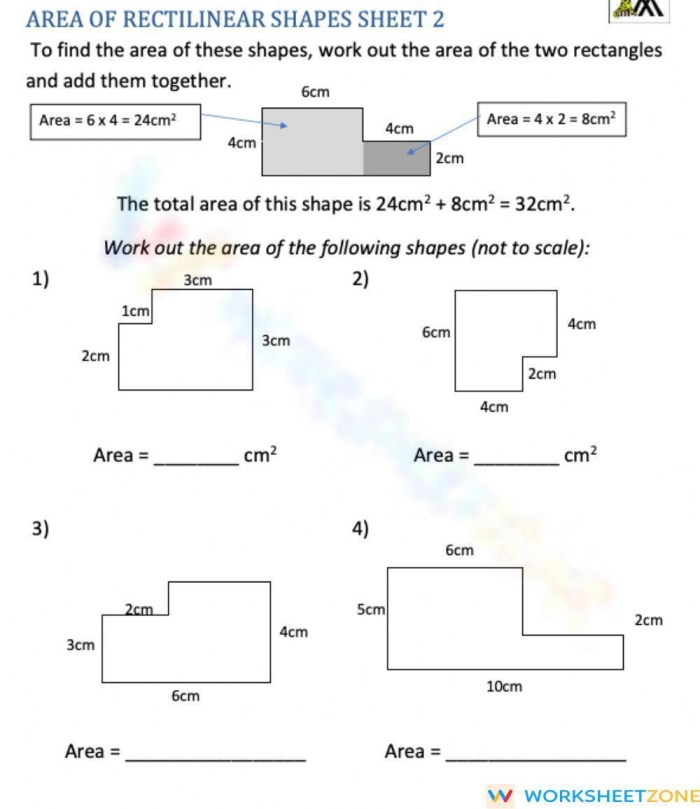
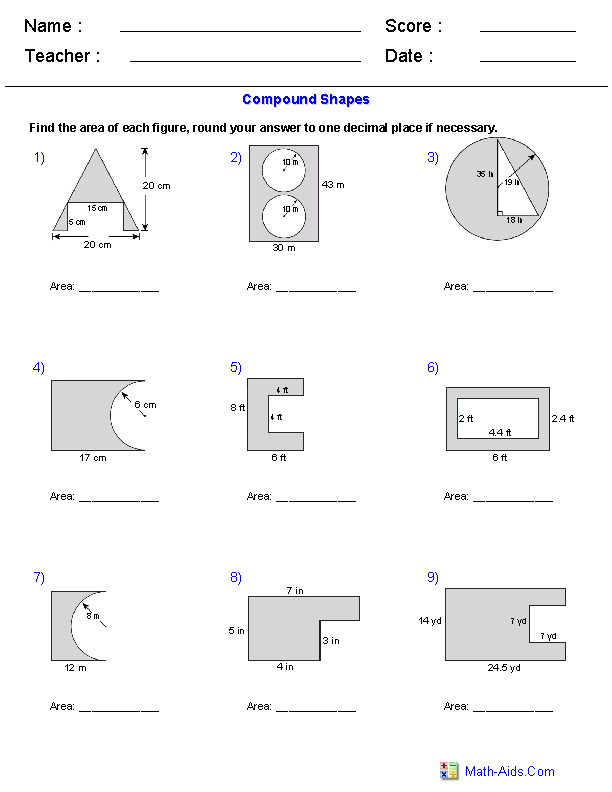
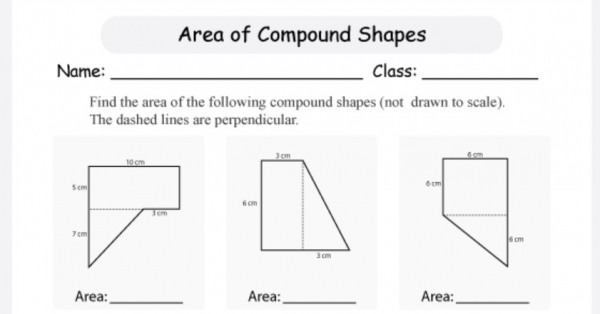
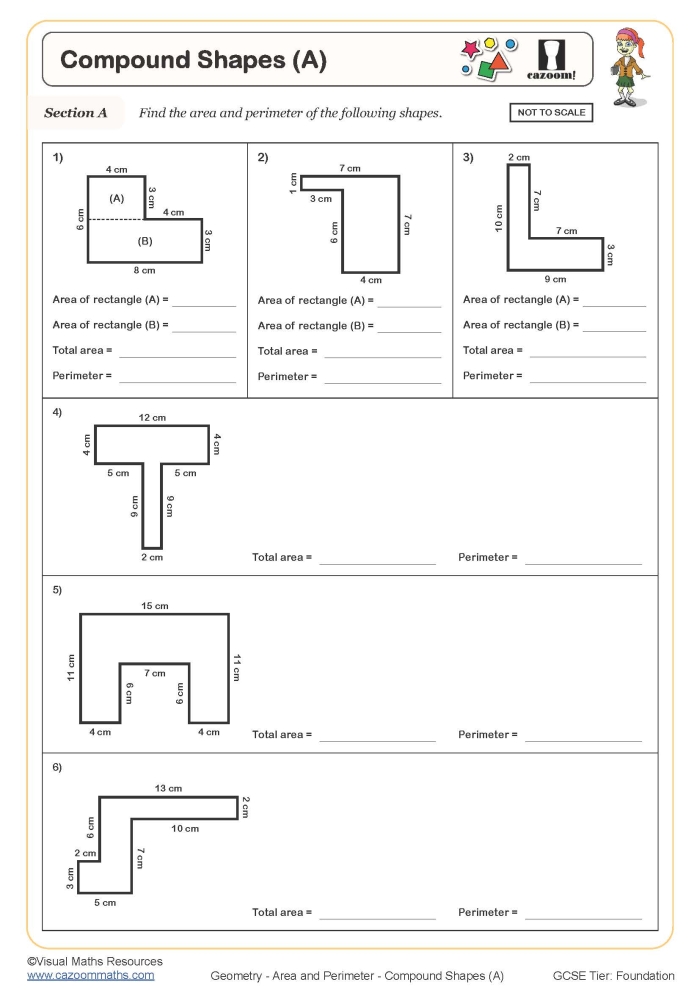
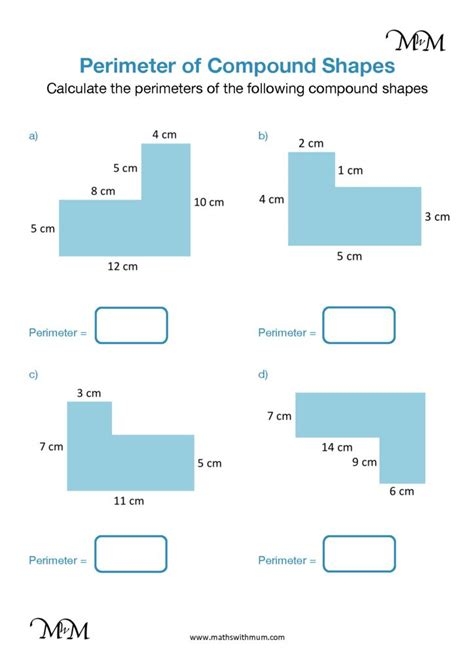
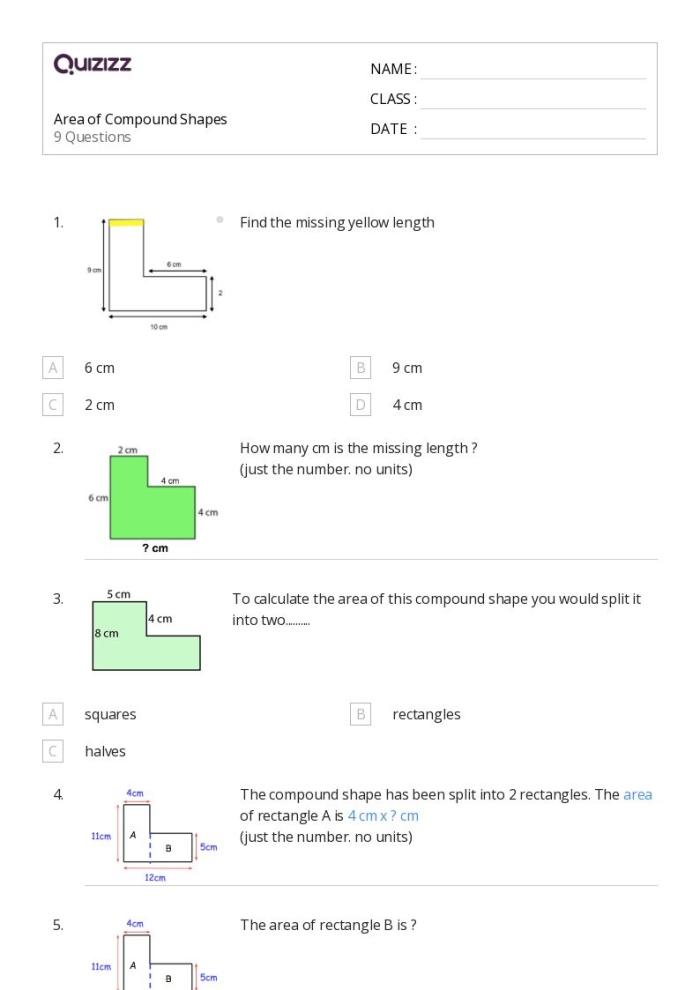
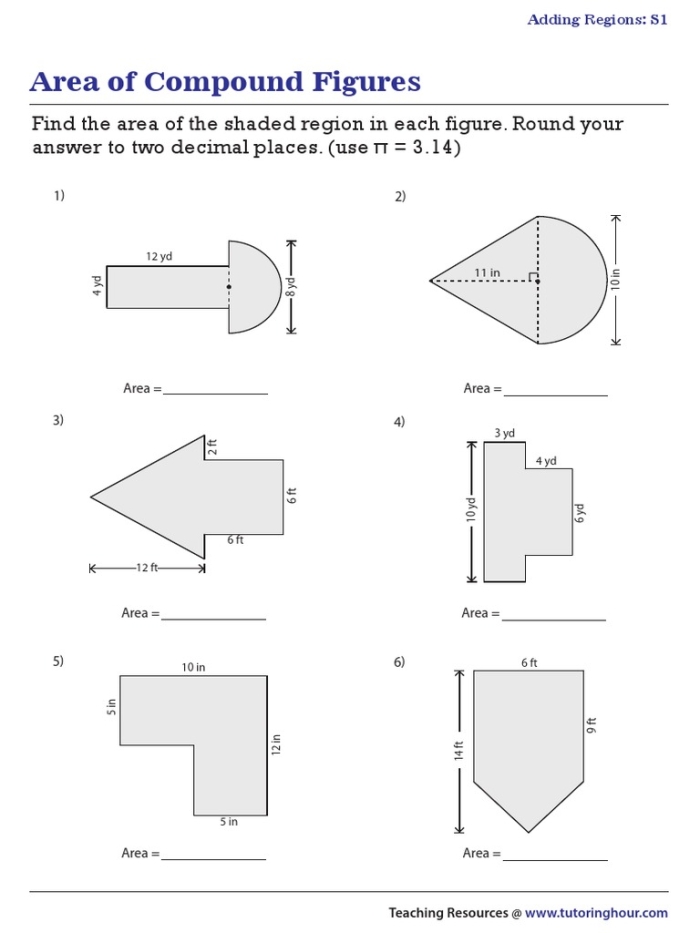
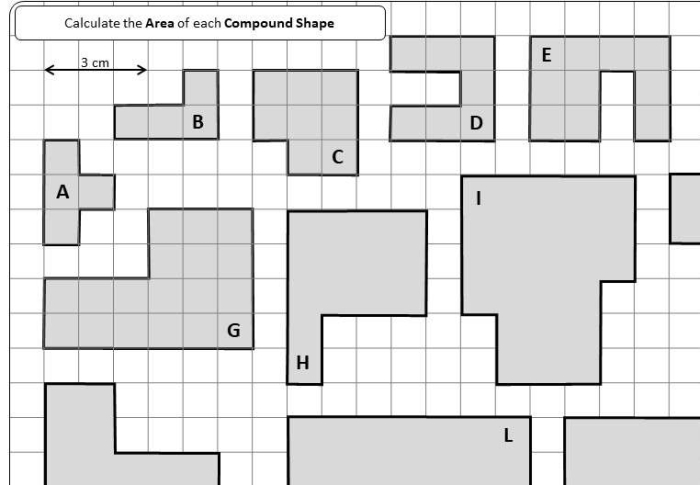
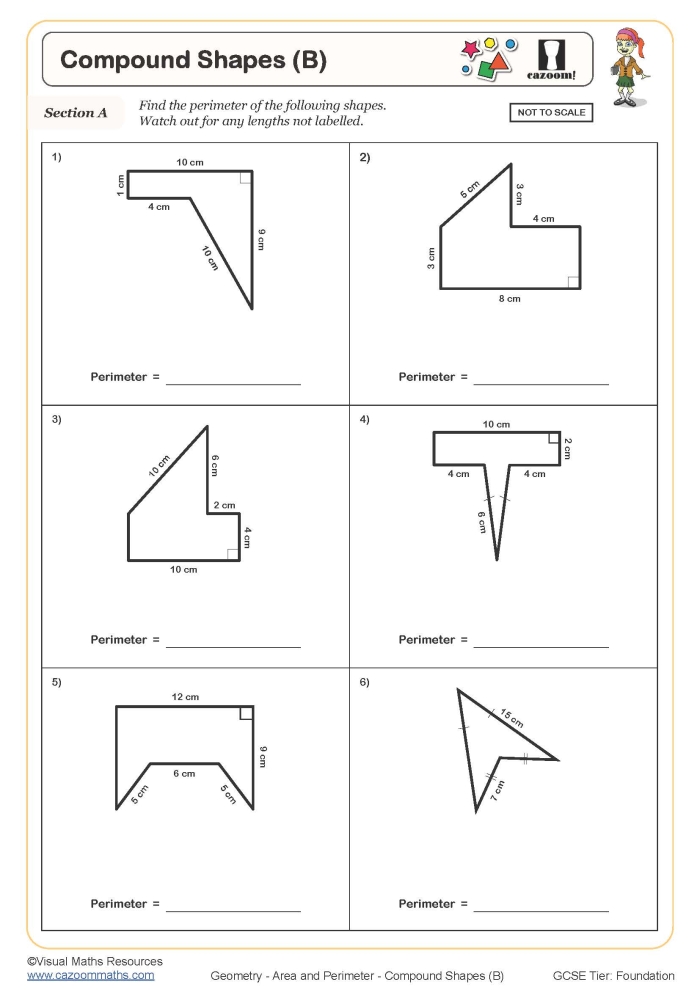
Most geometry worksheets stick to simple rectangles and triangles, but compound shapes break that mold entirely. These figures combine multiple shapes into one, forcing students to think differently about how area works. When your child encounters an L-shaped figure or a rectangle with a rectangular chunk cut out, they’re seeing something that actually appears in real life, from floor plans to pieces of land.
This worksheet gives your fourth grader a chance to tackle compound shapes head-on. Rather than just calculating the area of one simple figure, students learn to break complex shapes into smaller, manageable pieces. They might see an irregular polygon and realize they can split it into two rectangles, find the area of each one separately, then add them together. This approach builds problem-solving skills that go well beyond basic algebra.
The process itself teaches logical thinking. A student working through these problems learns to identify which shapes are hiding inside a compound figure, measure correctly, and perform accurate calculations. They develop the habit of checking their work by trying different decomposition methods and seeing if they get the same answer.
Compound shapes also connect to practical applications. Architects, engineers, and construction workers use these calculations daily. When someone needs to determine how much flooring to buy for an oddly-shaped room or how much paint covers an irregular wall section, they’re using the same skills your child practices here.
If your student is ready for more challenging material after mastering compound shapes, they might explore related concepts like working with decimals in the hundredths place or understanding different types of physical versus chemical properties. These worksheets provide the foundation for stronger mathematical reasoning throughout fourth grade and beyond.
Printable Worksheets for Practice