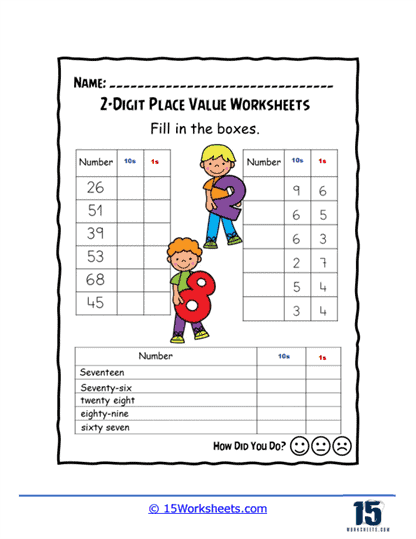
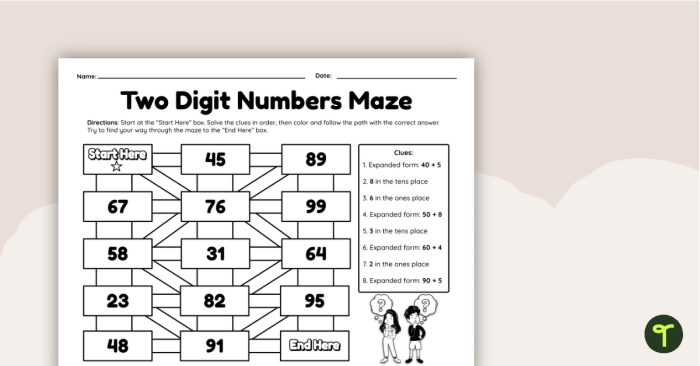
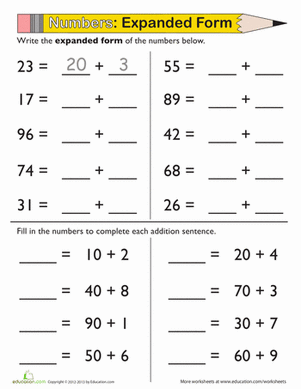
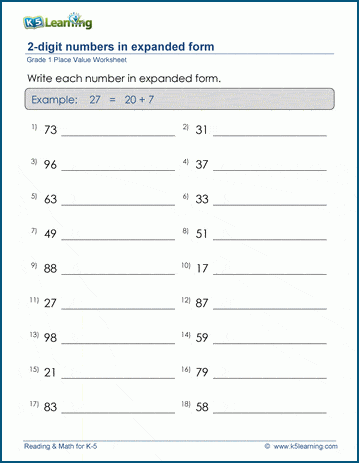
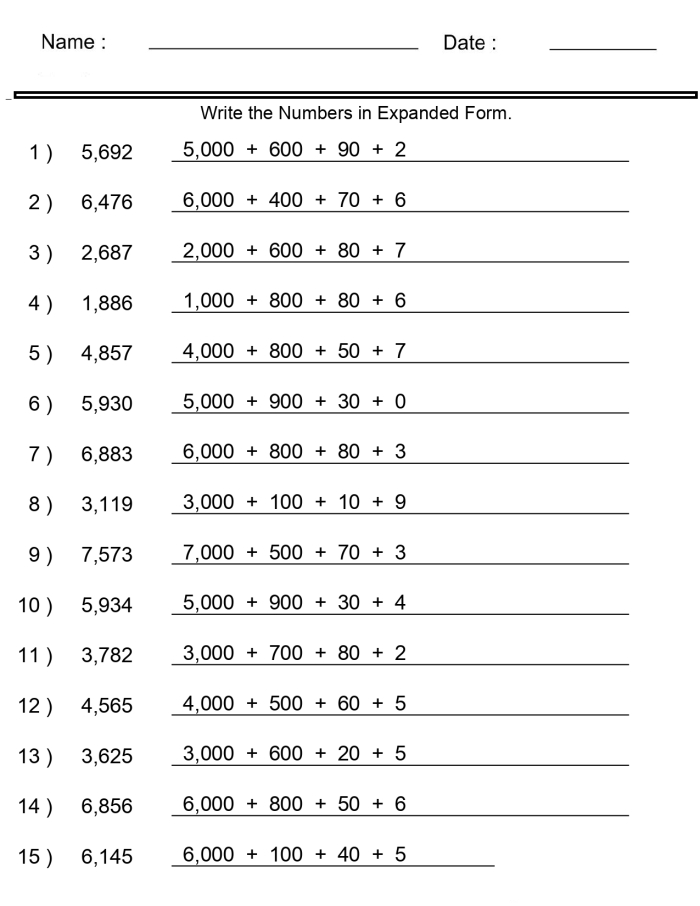
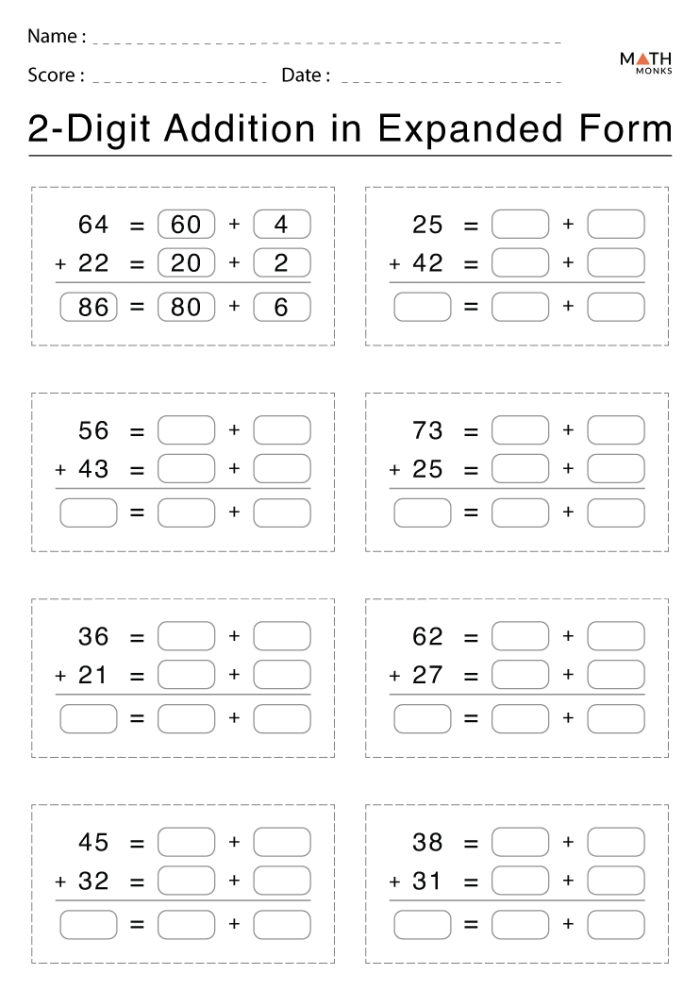
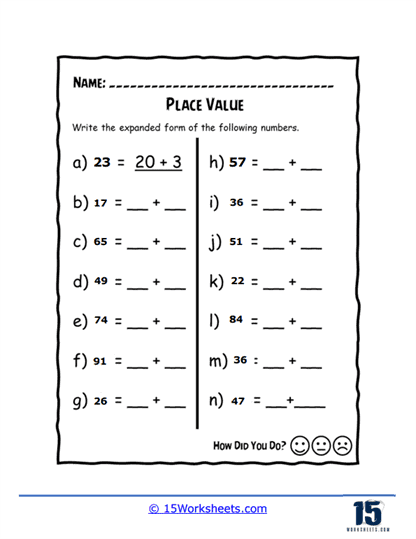
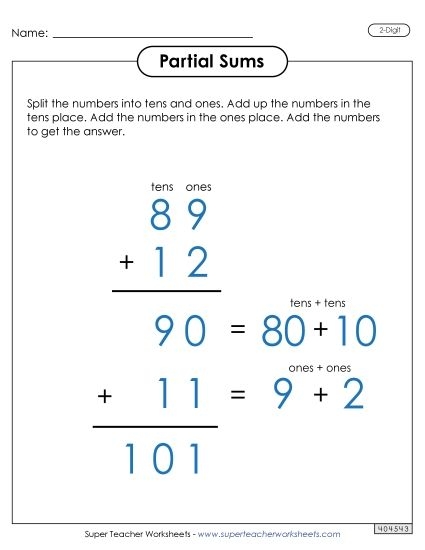
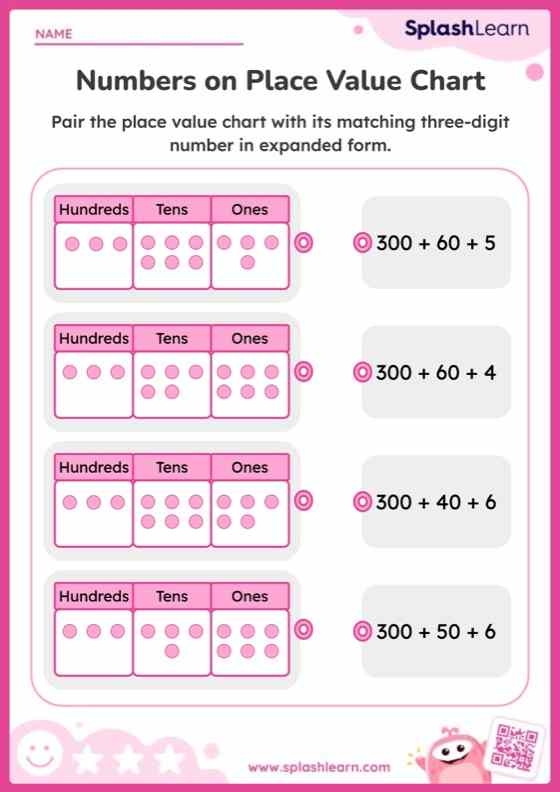
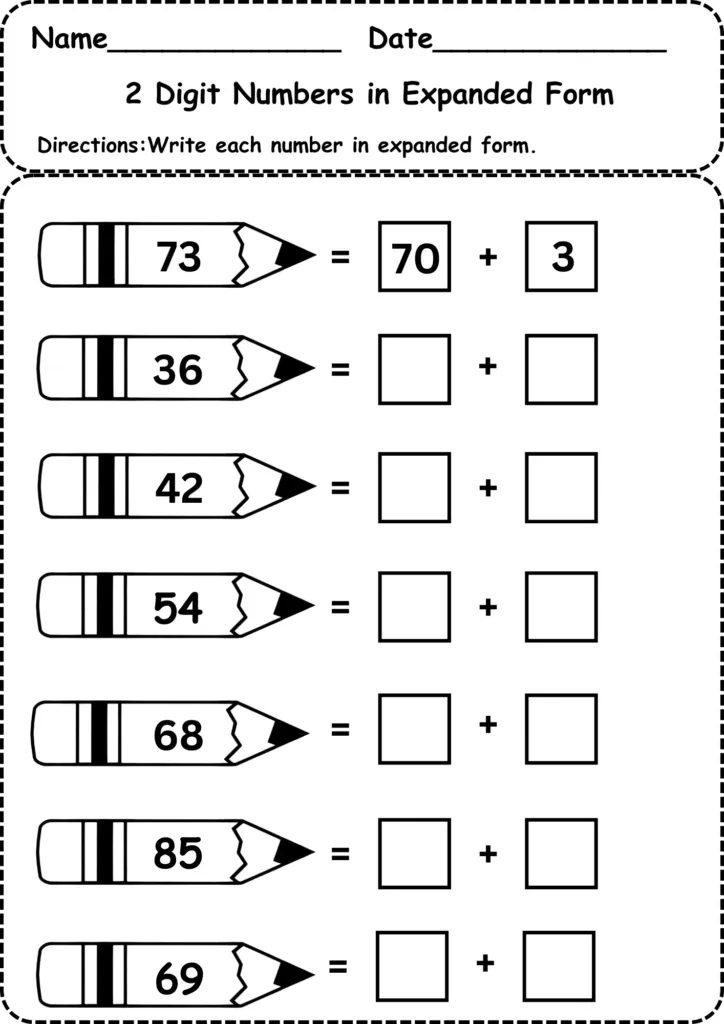
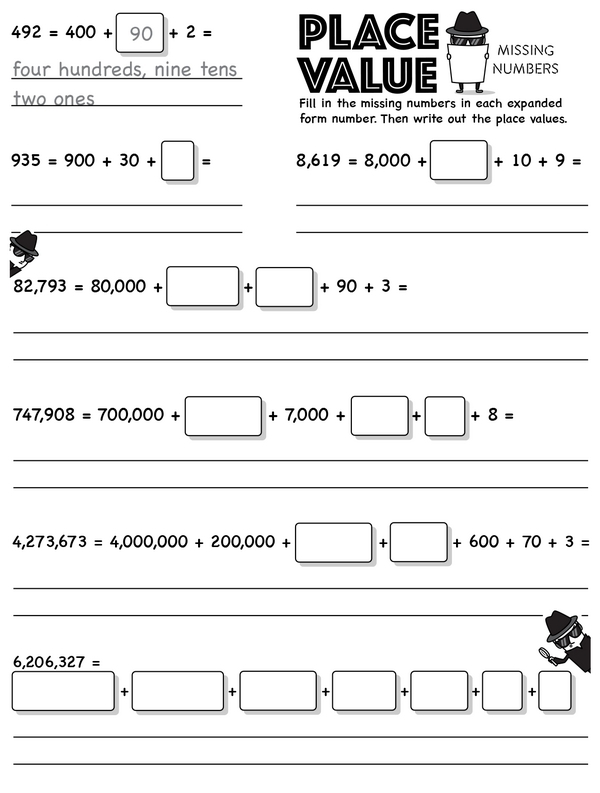
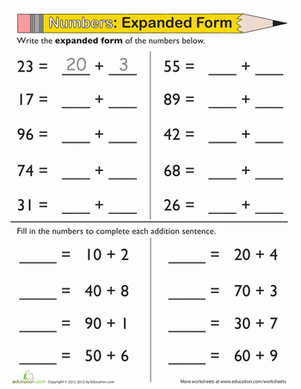
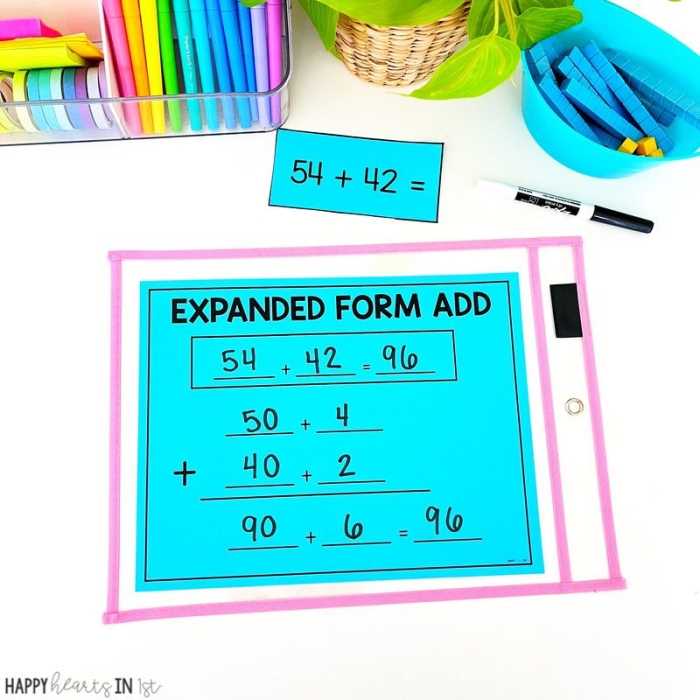
Breaking down two-digit numbers into tens and ones is one of the first real math skills your child needs to master. An expanded form worksheet does exactly this, giving kids a concrete way to see how numbers are actually built. Instead of just memorizing that 23 is twenty-three, they learn that it’s really 20 plus 3, which makes future math operations click into place naturally.
The beauty of these worksheets lies in their simplicity. A child sees a number like 47 and practices writing it as 40 and 7. They’re not just filling in blanks, they’re training their brain to recognize the value hiding inside each digit. This hands-on practice with place value becomes the foundation for addition, subtraction, and eventually multiplication. Without this understanding, kids often struggle later because they’re working with numbers they don’t truly comprehend.
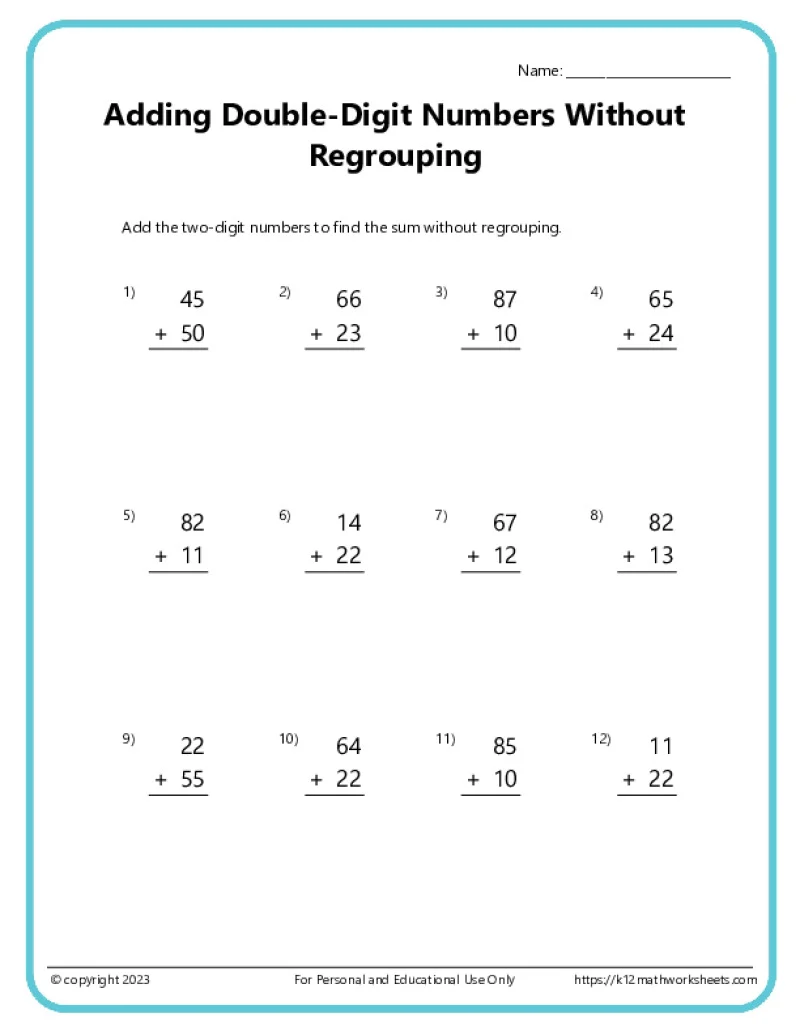
For first grade students, this is the perfect entry point into place value thinking. The worksheet format keeps things manageable, focusing only on ones and tens without overwhelming them with hundreds or thousands. Kids can complete these exercises in short bursts, building confidence as they go. The repetition helps cement the concept without feeling tedious.
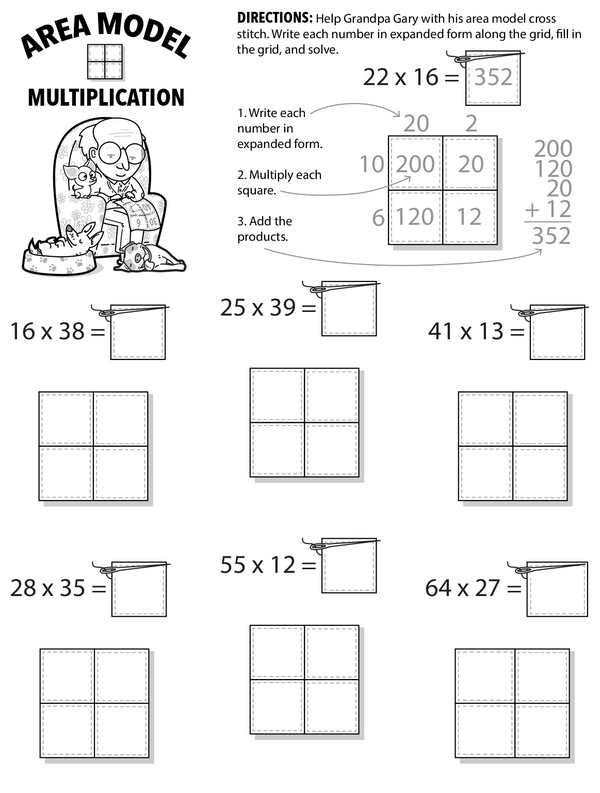
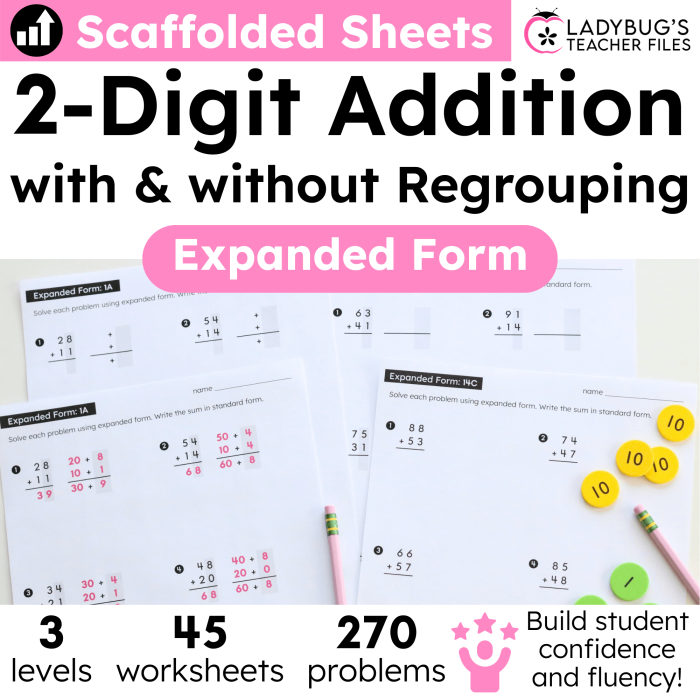
What makes these worksheets particularly effective is that they work alongside other first grade math concepts. A child learning expanded form can connect it to money work through printable money worksheets, where they count dimes and pennies. They can also explore how expanded form with double digits appears in everyday situations.
Starting with expanded form early means your child builds a genuine number sense rather than just memorizing facts. They understand the why behind the math, which changes everything about how they approach problem-solving going forward.
Practice with These Worksheets