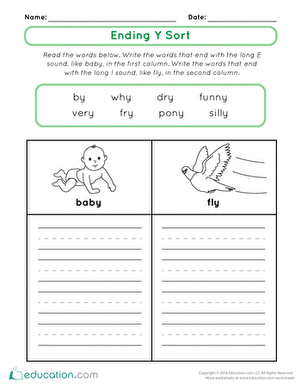
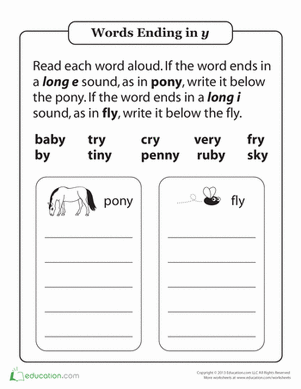
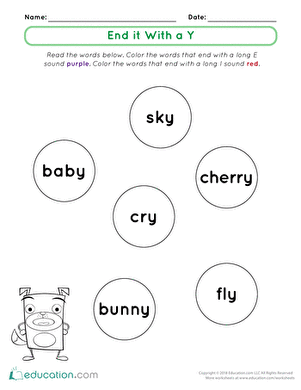
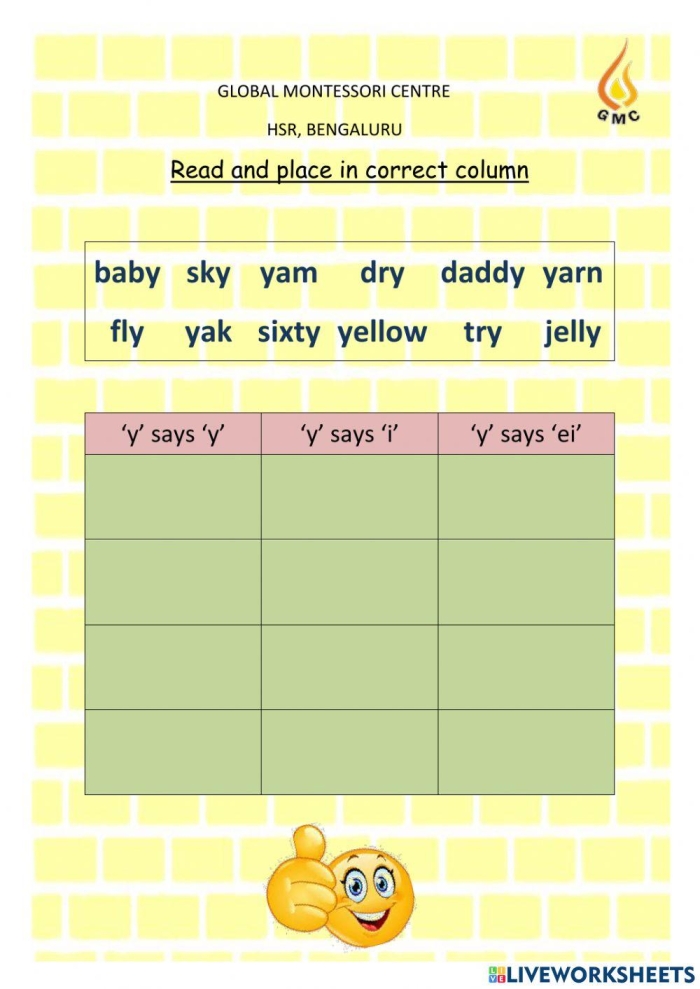
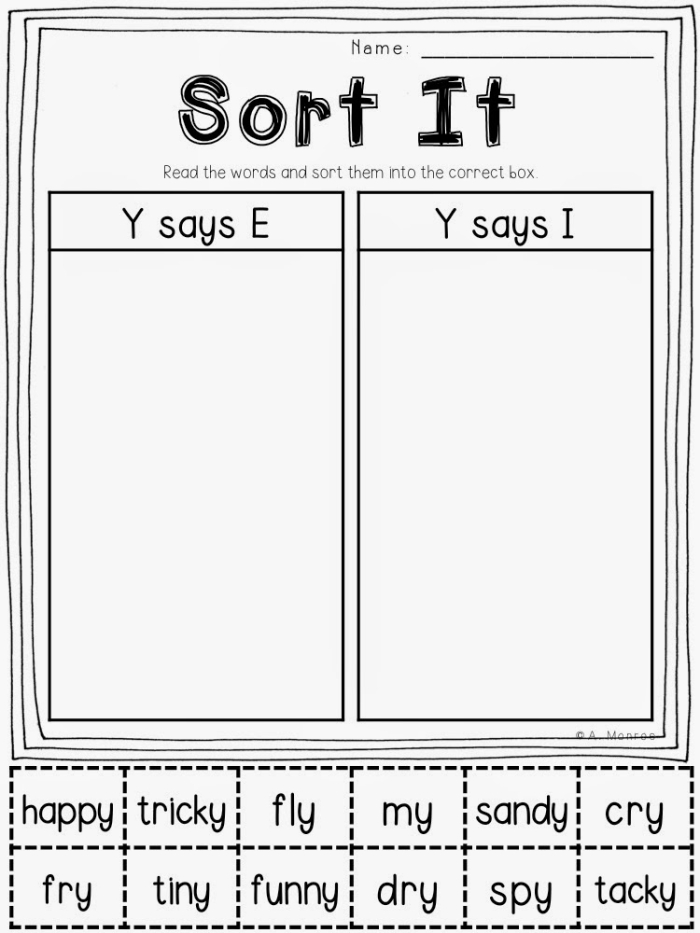
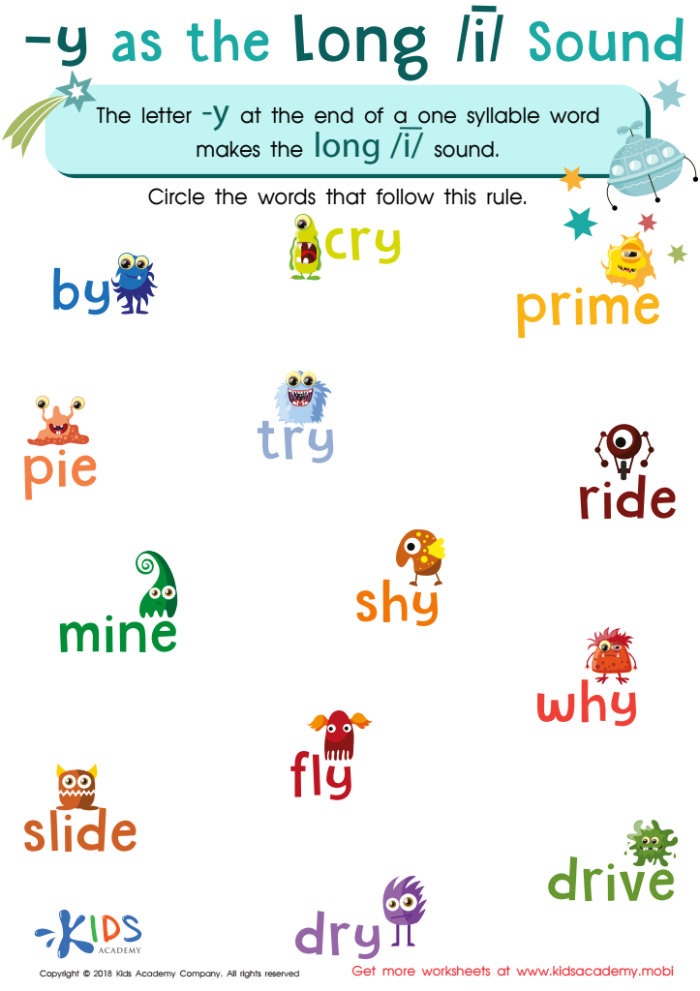
The ending Y sound trips up many first grade readers because it behaves in two completely different ways. One moment it sounds like the long E in “baby,” and the next it sounds like the long I in “fly.” This inconsistency confuses young learners who are still building their phonetic foundation, which is why a structured sorting activity makes such a difference in reading comprehension.
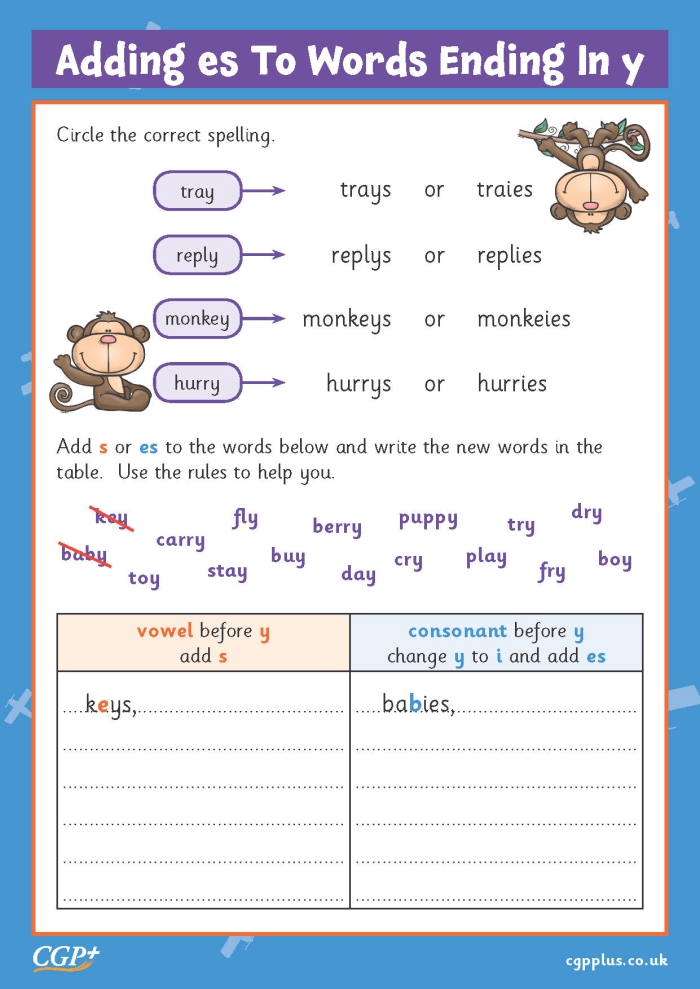
A printable ending Y sort worksheet gives students a hands-on way to recognize these two distinct sounds. Rather than simply memorizing rules, children physically sort words into two columns, reinforcing the pattern through repetition and visual organization. This tactile approach helps the sound distinction stick in their memory far better than passive instruction alone.
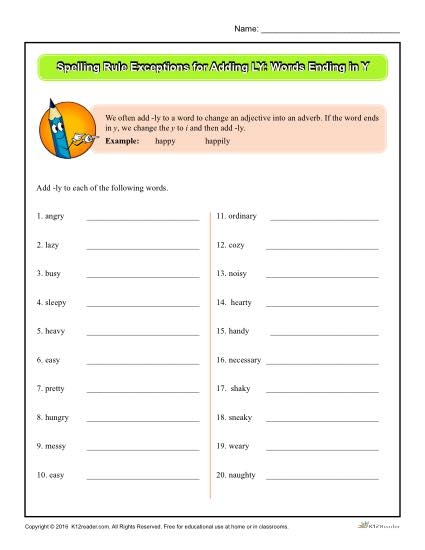
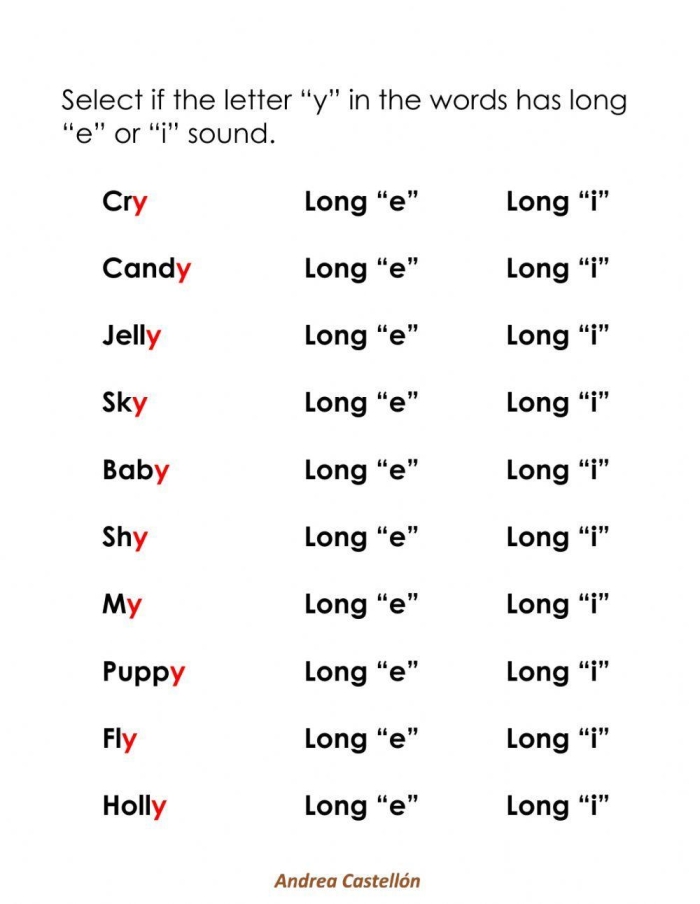
When students work through sorting activities like this, they begin noticing that words ending in Y after a consonant (like “fly,” “cry,” “sky”) typically make the long I sound. Conversely, words where Y follows a vowel or stands alone at the end (like “baby,” “happy,” “jelly”) usually make the long E sound. These patterns become clearer with practice, and students develop confidence in predicting how unfamiliar words will sound.
Beyond phonics, this type of worksheet builds foundational reading skills that support other learning areas. As students strengthen their word recognition, they’re better equipped to tackle more complex texts. Pairing this activity with related first grade materials, such as vocabulary practice through number bonds, creates a more well-rounded literacy program.
The beauty of a sorting worksheet is its simplicity. No elaborate setup is required, and teachers can use it during independent reading time, small group instruction, or literacy centers. Students find the activity engaging because it feels like a game rather than a drill, which keeps them motivated to complete the task and internalize the learning.
Printable Worksheets for Practice