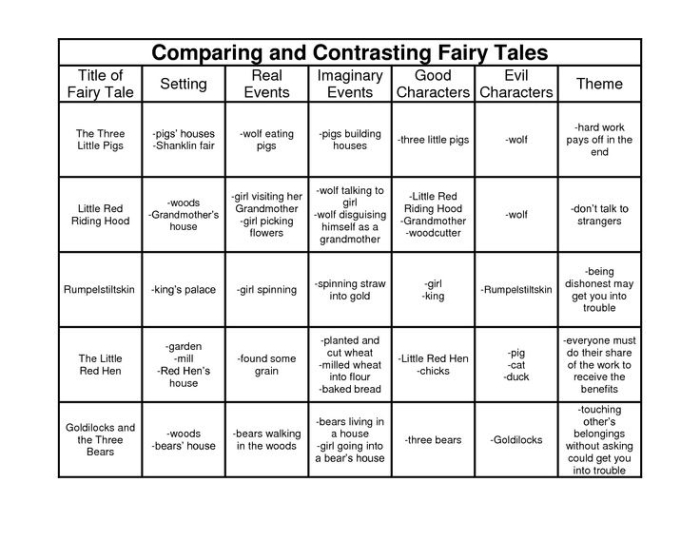
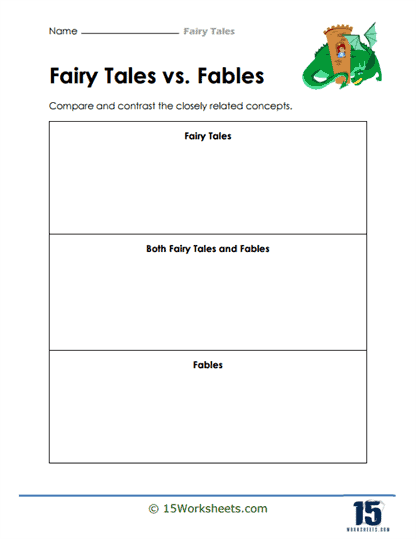
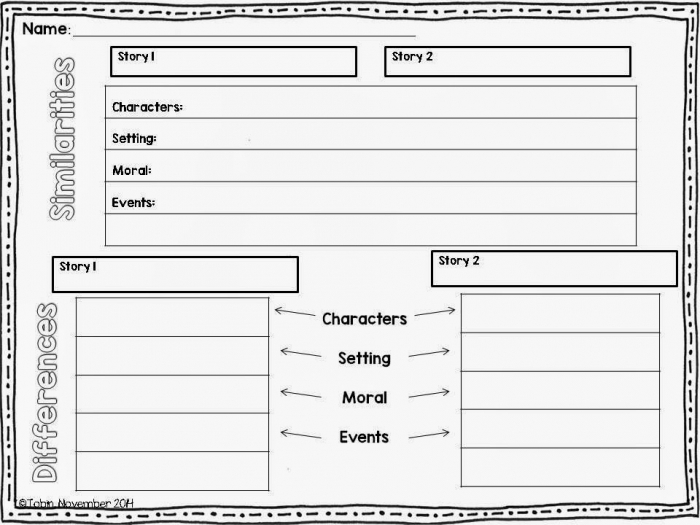
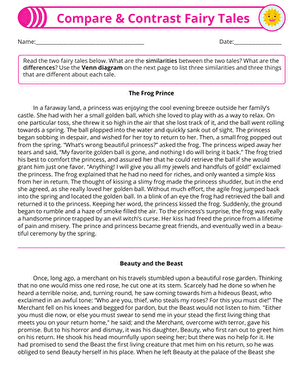
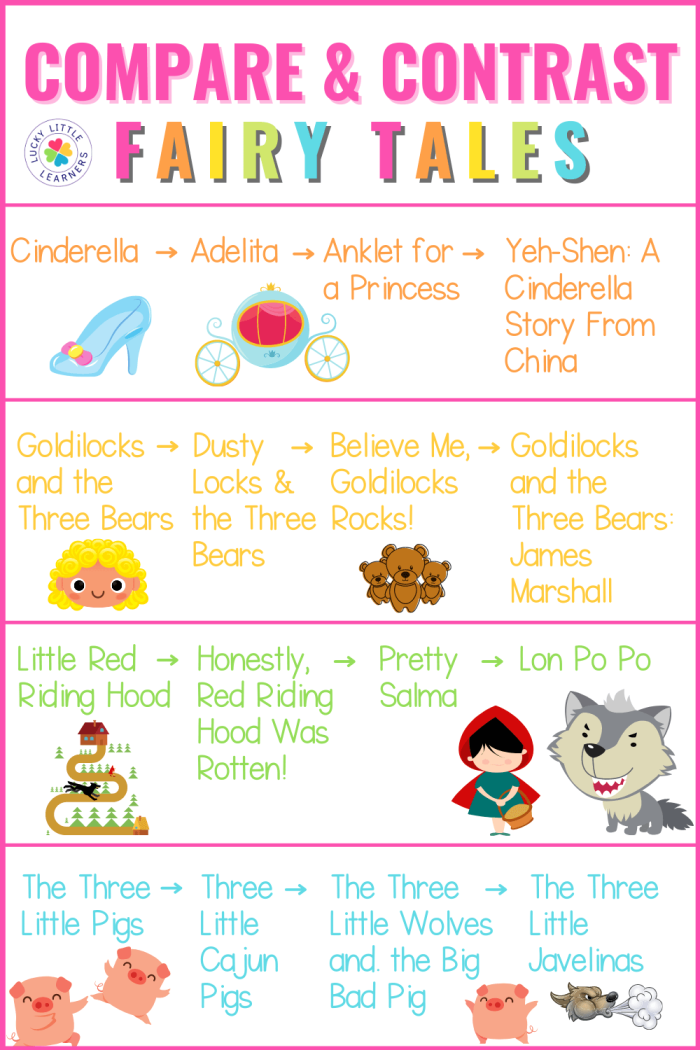
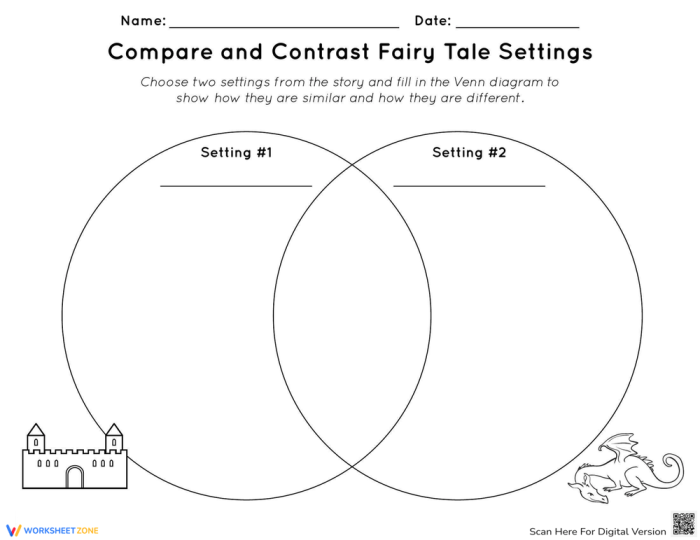
When fourth grade students engage with fairy tales through a compare and contrast activity, they develop critical thinking and writing skills in a meaningful way. Using a Venn diagram to analyze two famous fairy tales provides a clear, visual method for kids to identify similarities and differences between stories. This approach encourages them to focus on key story elements such as characters, settings, plot points, and morals, which are essential components in the writing curriculum at this level.
For example, comparing Cinderella and Sleeping Beauty using a Venn diagram helps students notice that both stories feature princesses and magical interventions, yet they differ in their challenges and resolutions. Placing these details in overlapping and separate sections of the diagram organizes thoughts logically, making it easier for kids to write coherent paragraphs afterward. This method supports the development of clear, structured writing by laying out ideas before drafting.
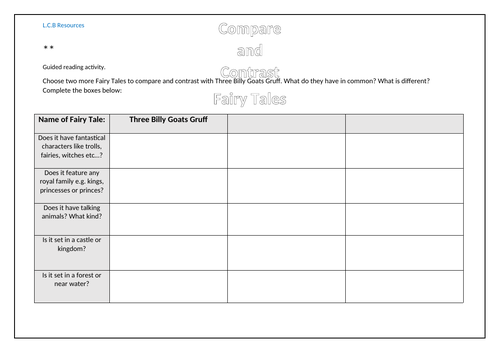
Printable compare and contrast fairy tales worksheets tailored for fourth grade are especially helpful because they guide students through the process step-by-step. These worksheets often include prompts that ask questions about the characters’ motivations or the lessons learned, which deepens comprehension. Using such resources alongside writing exercises, like those focused on parts of speech or close reading annotations, strengthens multiple literacy skills simultaneously.
Teachers who have incorporated Venn diagrams find that students not only improve their analytical abilities but also gain confidence in expressing their thoughts in writing. This hands-on activity is more than just a reading exercise; it bridges the gap between understanding story elements and crafting well-organized written responses. For additional practice, students can explore related exercises such as map grid writing or opinion pieces, which complement the narrative analysis skills built through comparing fairy tales.
Boost Skills with These Worksheets