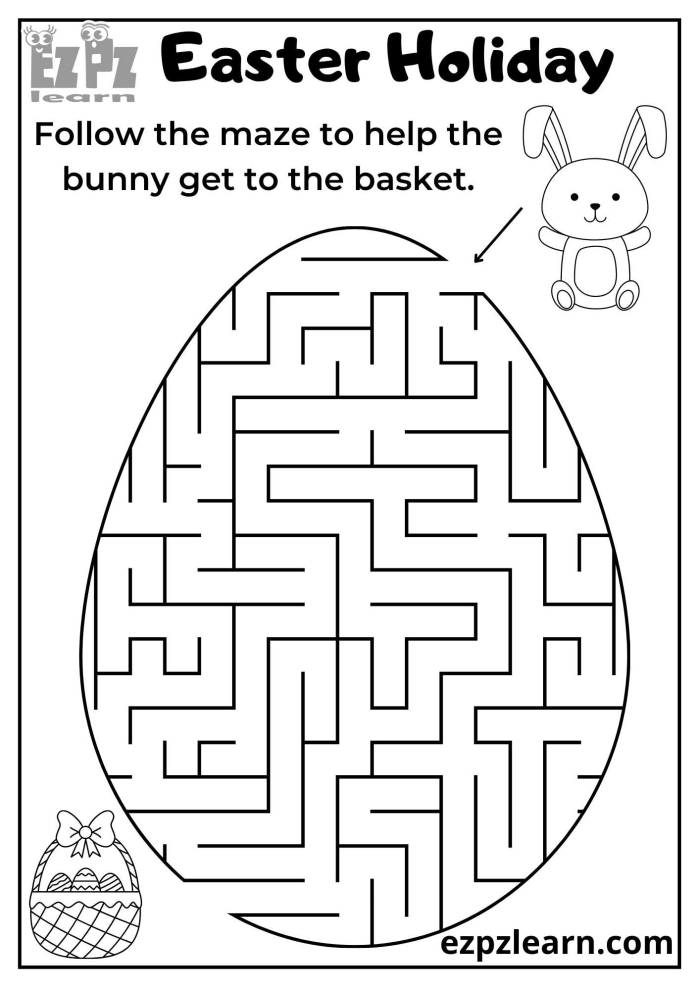
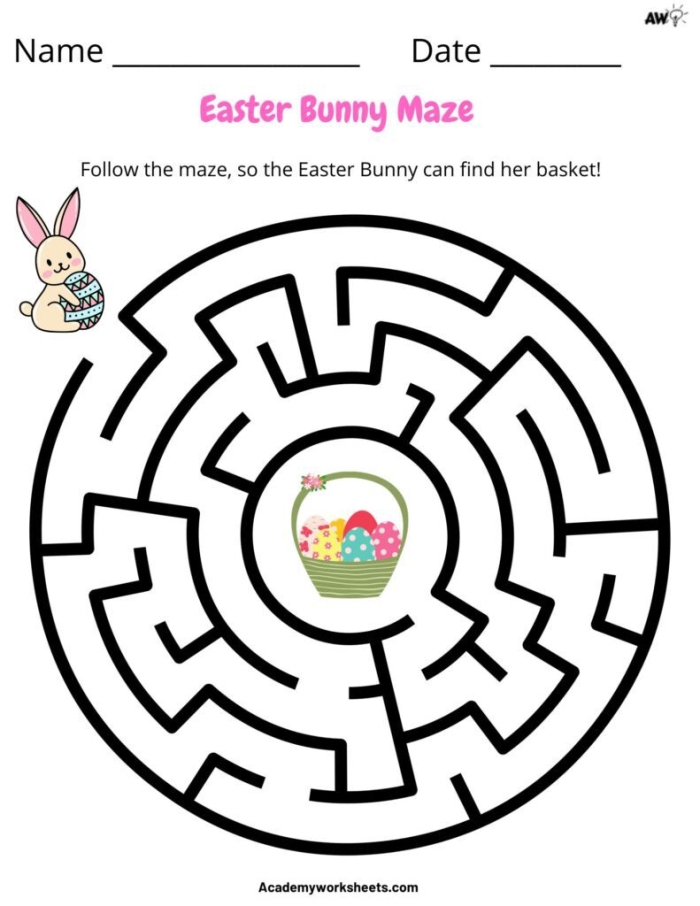
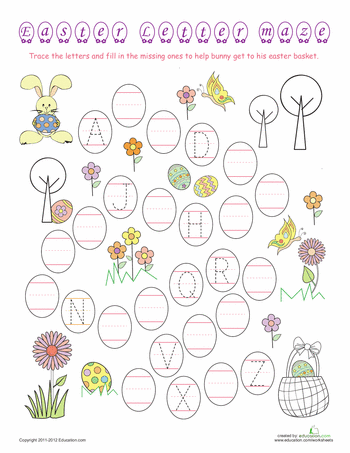
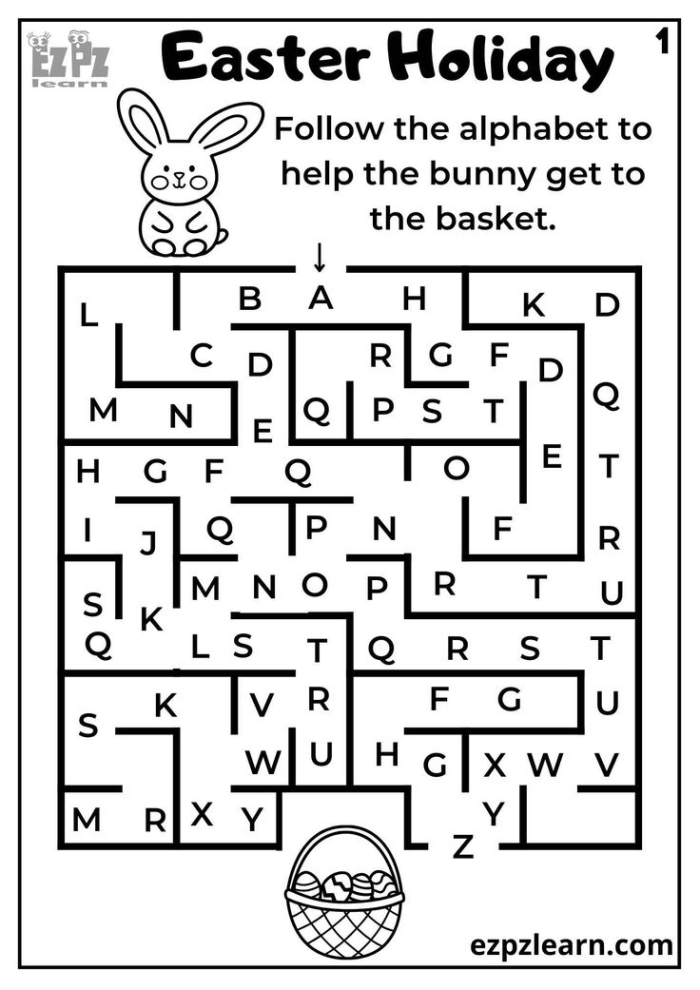
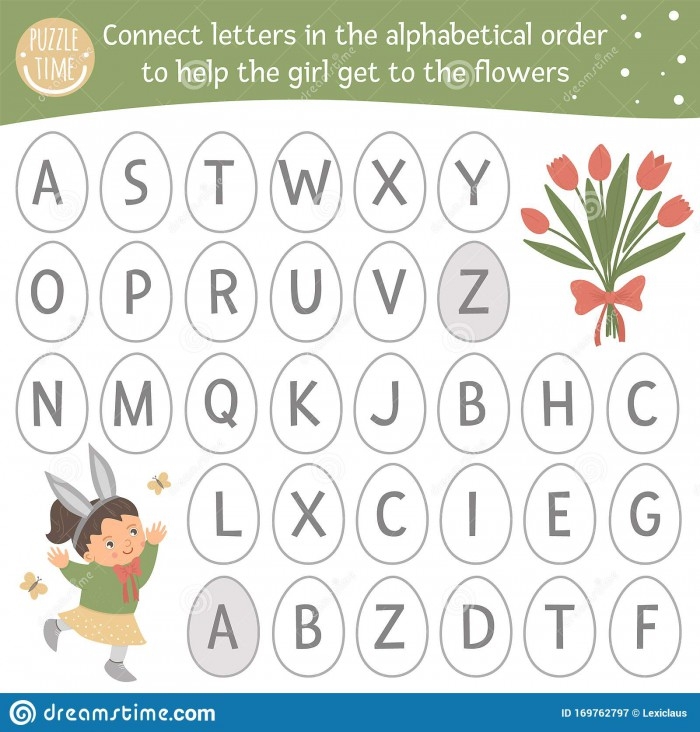
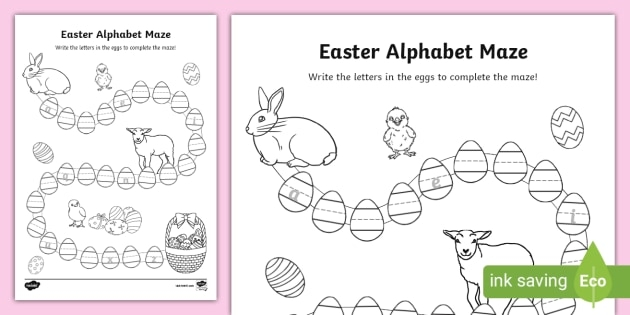
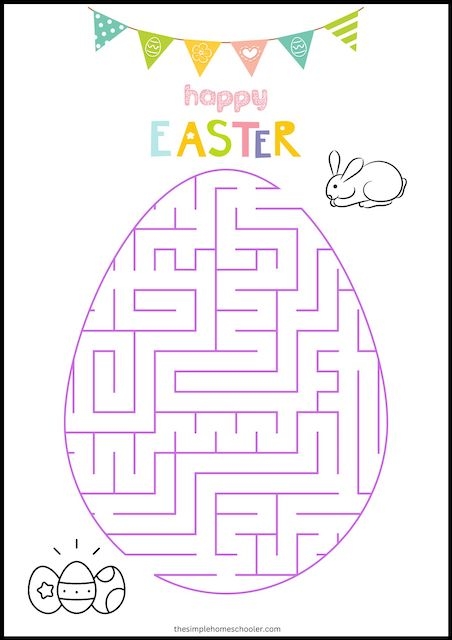
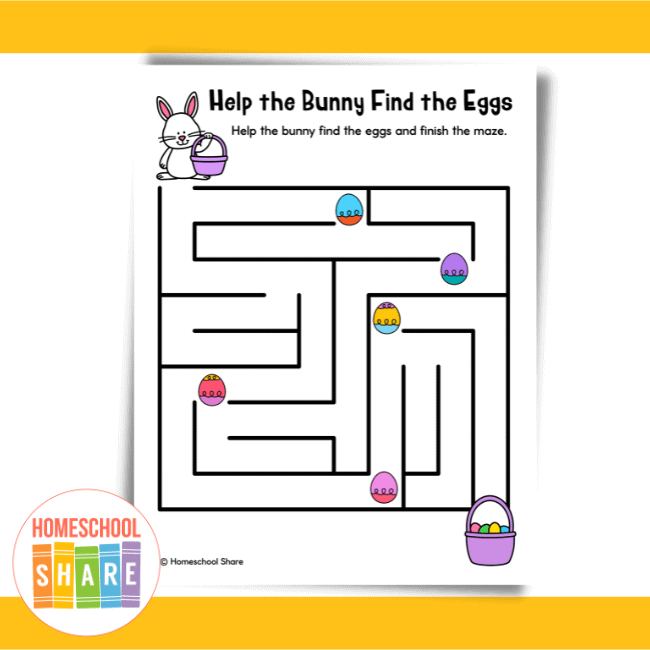
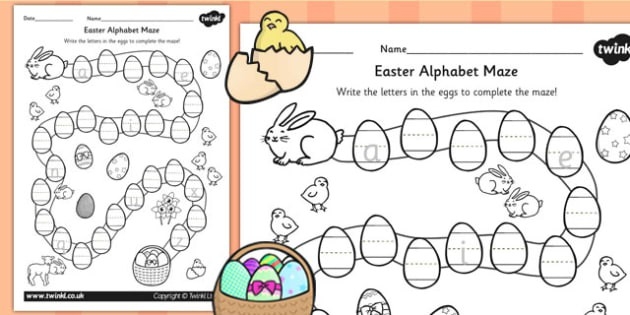
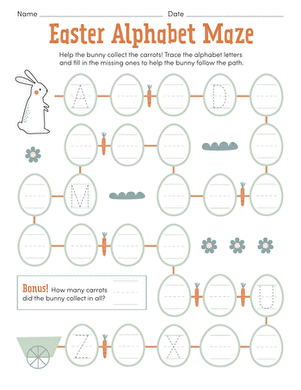
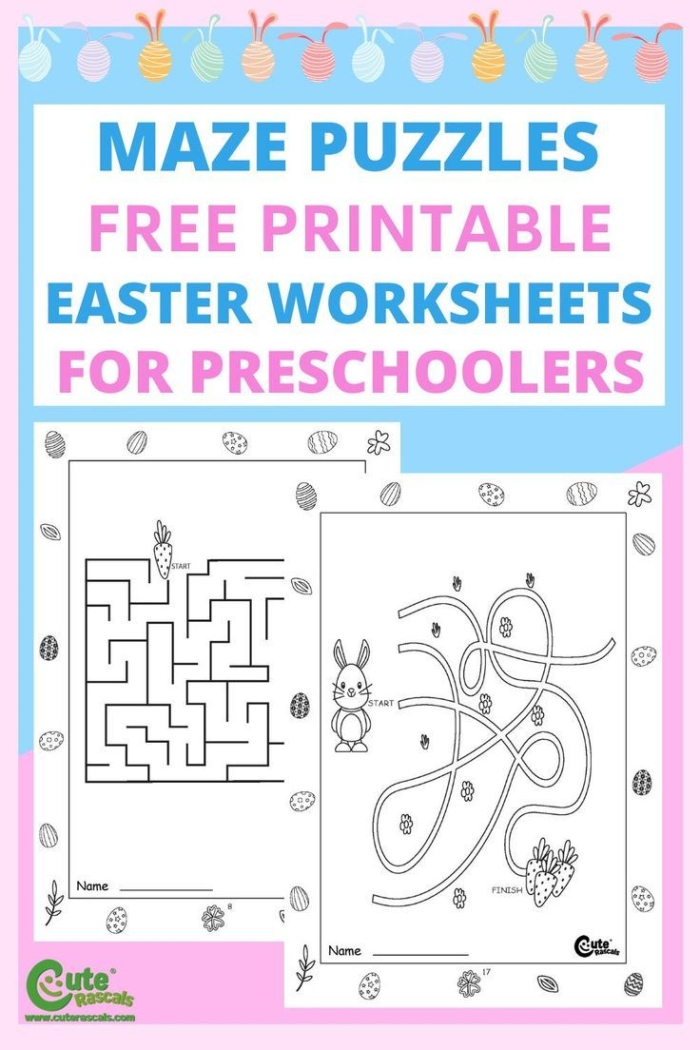
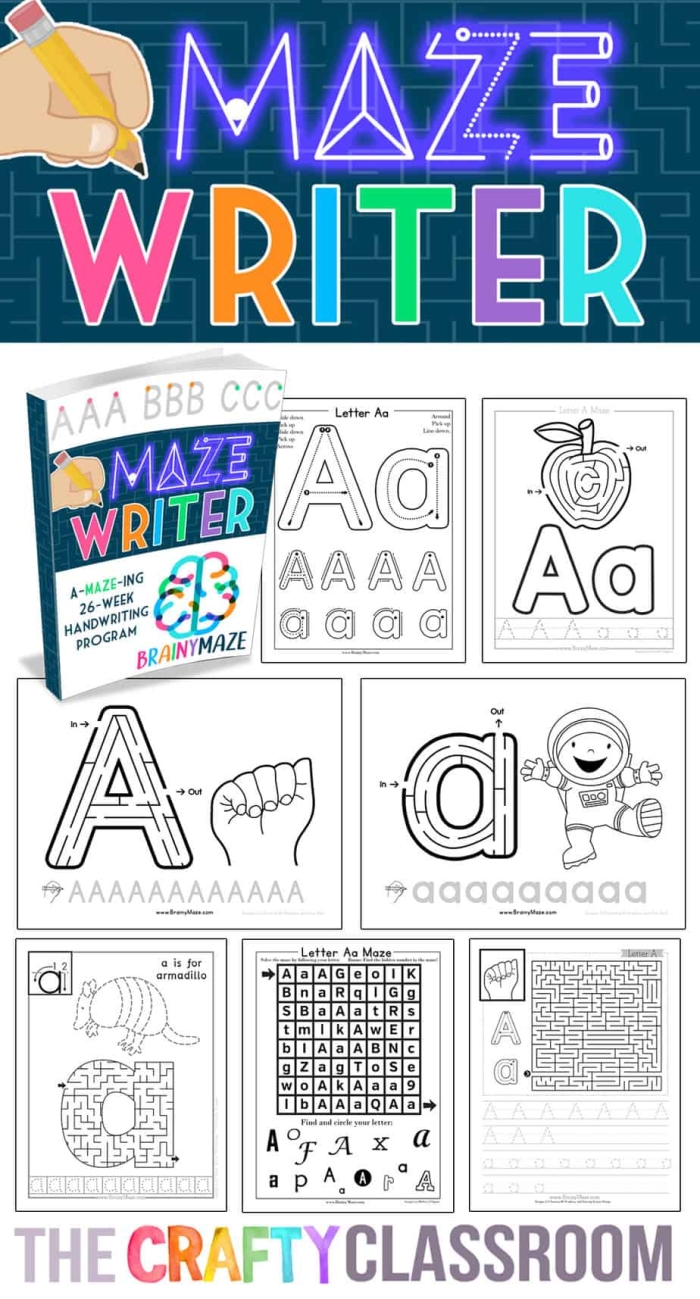
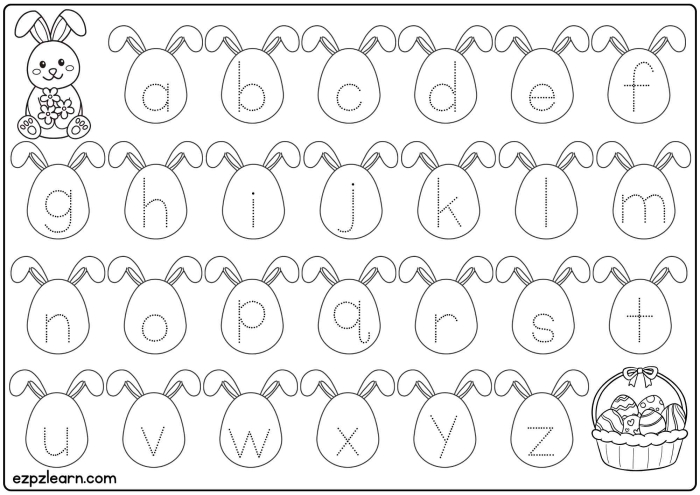
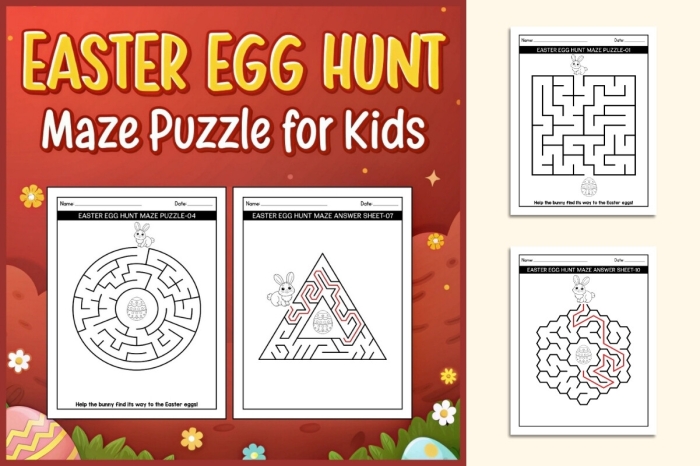
An Easter-themed alphabet maze worksheet combines seasonal fun with foundational letter recognition, making it an engaging tool for Pre-K learners just beginning their phonics journey. The activity works by having children trace dotted alphabet letters while simultaneously filling in missing letters along a path that guides a bunny toward an Easter destination. This dual approach reinforces letter formation and sequence recognition at the same time.
The mechanics of the worksheet are straightforward but effective. Children start by tracing each letter of the alphabet in order, which builds muscle memory for letter shapes and improves fine motor control. As they trace, they encounter gaps in the sequence where letters are missing. They must identify which letter should come next and write it in, strengthening their understanding of alphabetical order. The bunny character serves as both a visual reward and a motivational element, giving the activity a narrative purpose beyond pure skill practice.
For Pre-K teachers and parents, this type of worksheet offers several practical benefits. It works well as a standalone activity or as part of a larger Easter unit. The seasonal theme makes it relevant during spring months, and many children find holiday-themed worksheets more motivating than standard practice sheets. The activity also naturally lends itself to extension work, such as having children draw their own Easter paths or create additional mazes using different animals.
This approach to phonics instruction aligns with how young learners develop letter knowledge most effectively. Rather than isolating letter practice, embedding it within a contextual activity like maze-solving keeps attention focused and makes the learning feel purposeful. Similar structured practice appears in other grade-level materials, such as advanced grammar and phonics work for fourth graders, which also combines skill-building with engaging contexts.
The Easter bunny path creates natural checkpoints throughout the activity, allowing children to see their progress as they complete each section. This visual feedback encourages persistence and gives them a sense of accomplishment when the bunny finally reaches its destination.
Start Practicing with These Worksheets