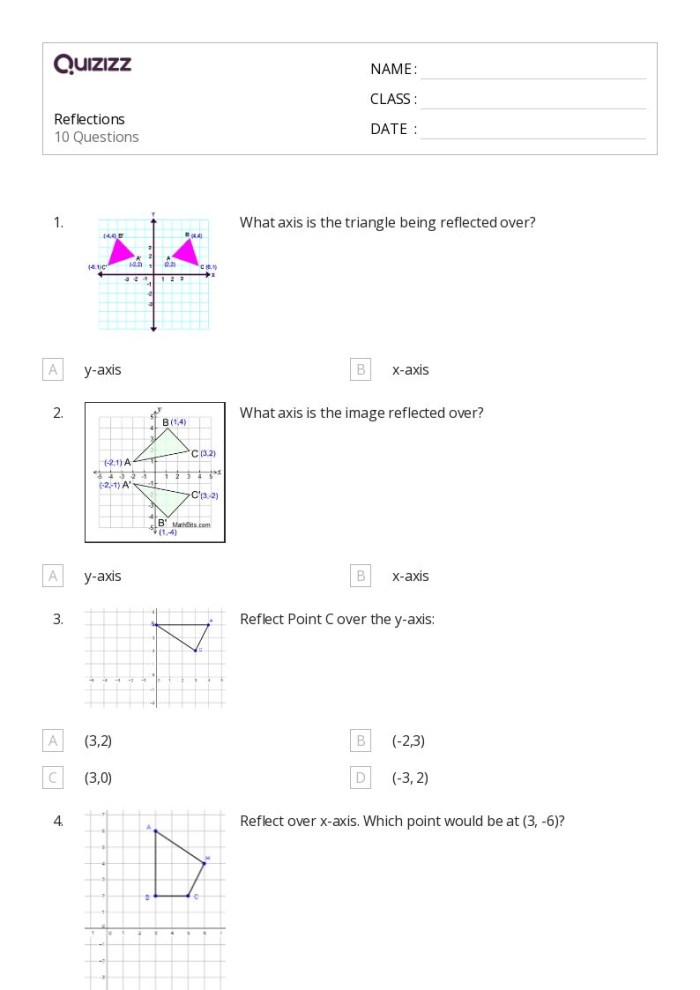
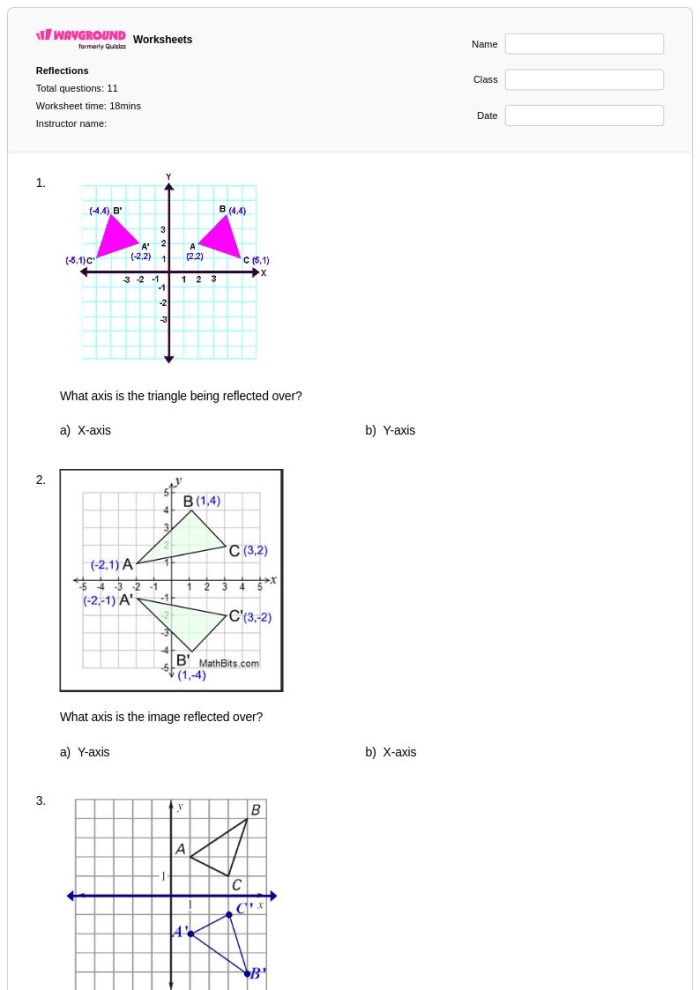
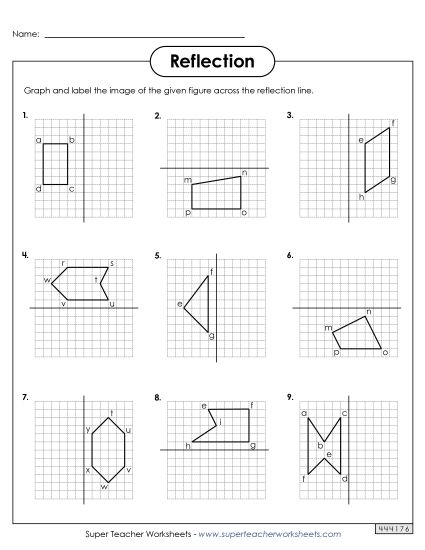
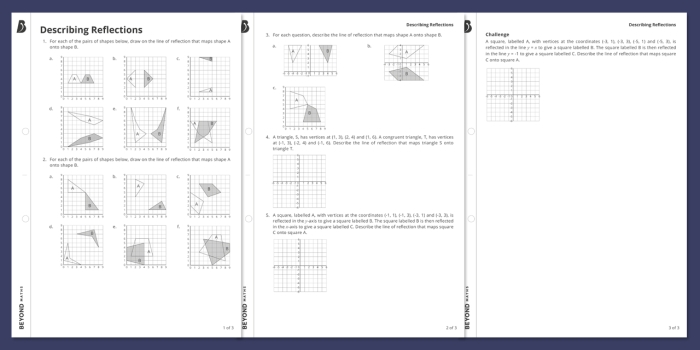
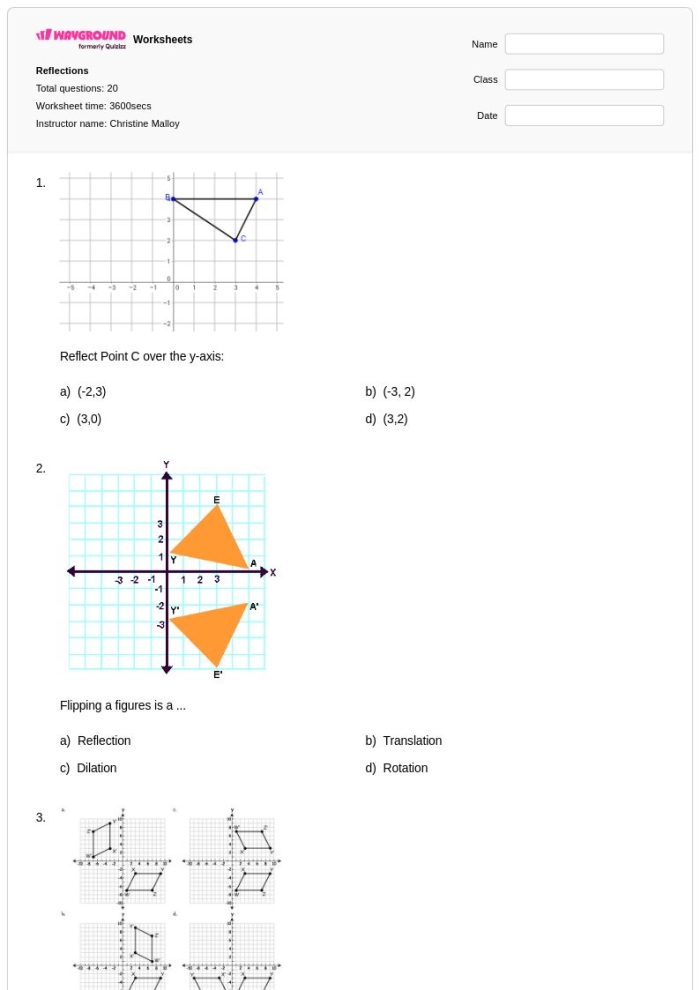
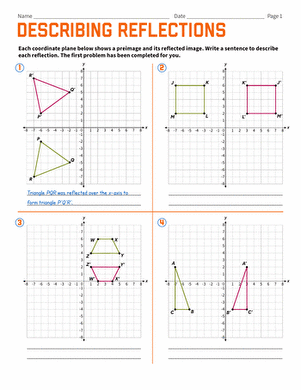
Reflections on the coordinate plane confuse many eighth-grade students because the concept requires them to visualize movement across a line rather than simply counting grid squares. This worksheet addresses that challenge by breaking down the mechanics of reflection in ways that stick with learners.
When students work with reflections, they’re essentially performing a geometric transformation where every point on a figure moves to a corresponding position on the opposite side of a line of reflection. The most common lines are the x-axis, y-axis, and the line y = x. What makes this tricky is that the distance from each original point to the line of reflection must equal the distance from that point’s image to the same line. Students need to count carefully and understand that reflection isn’t random—it follows precise rules.
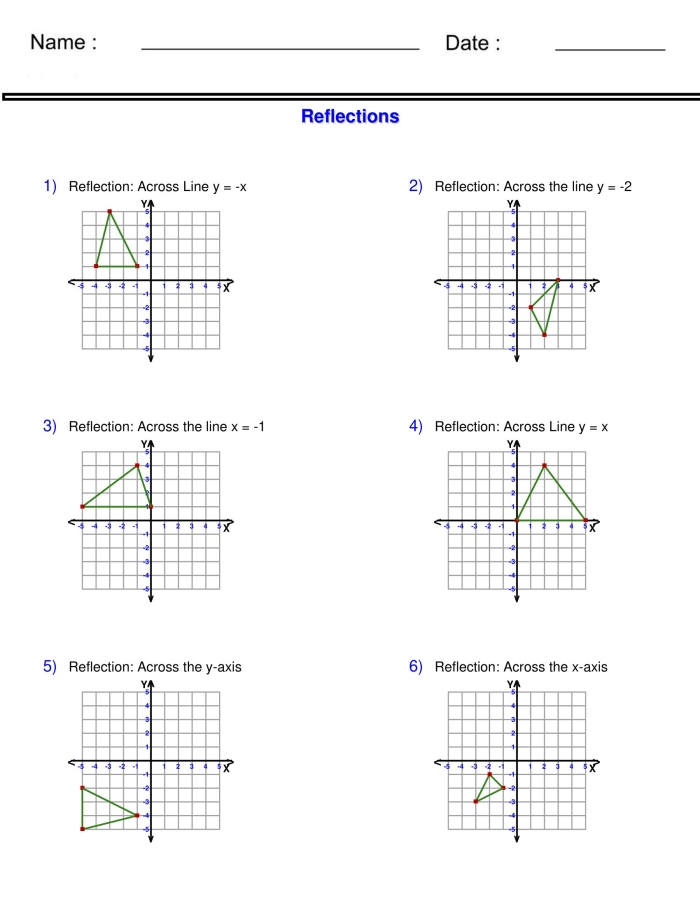
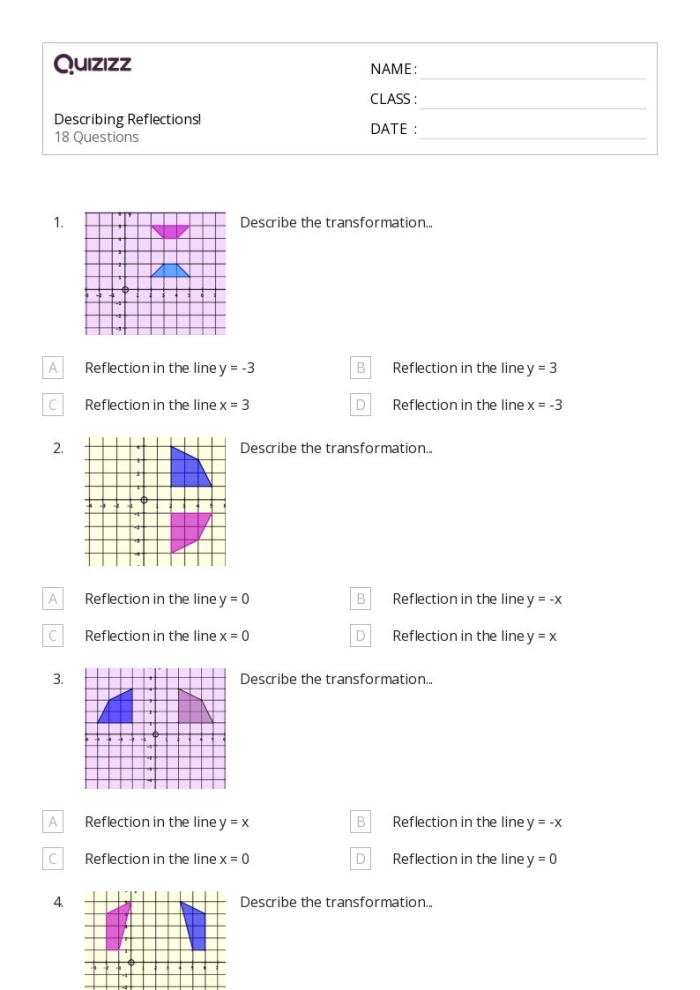
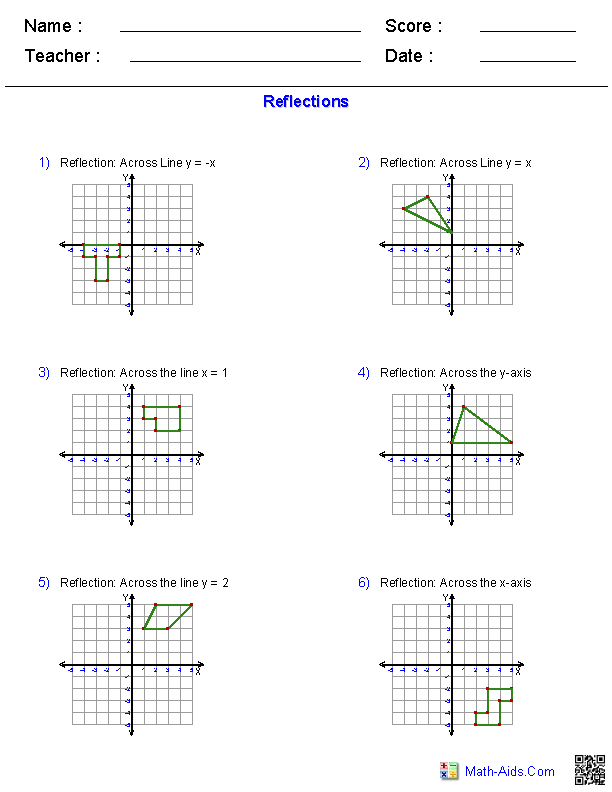
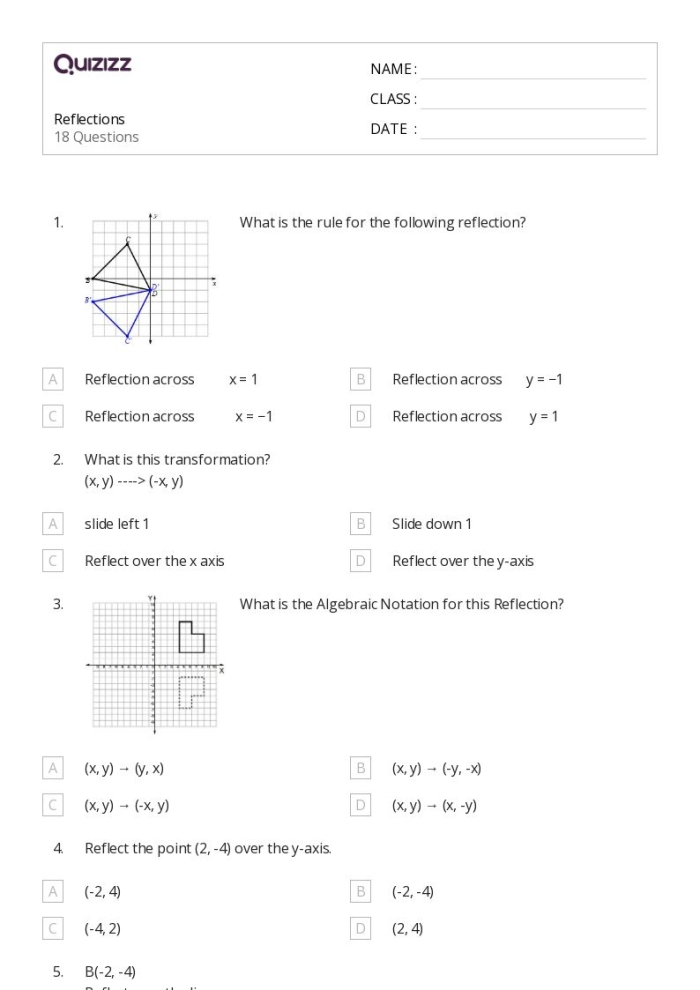
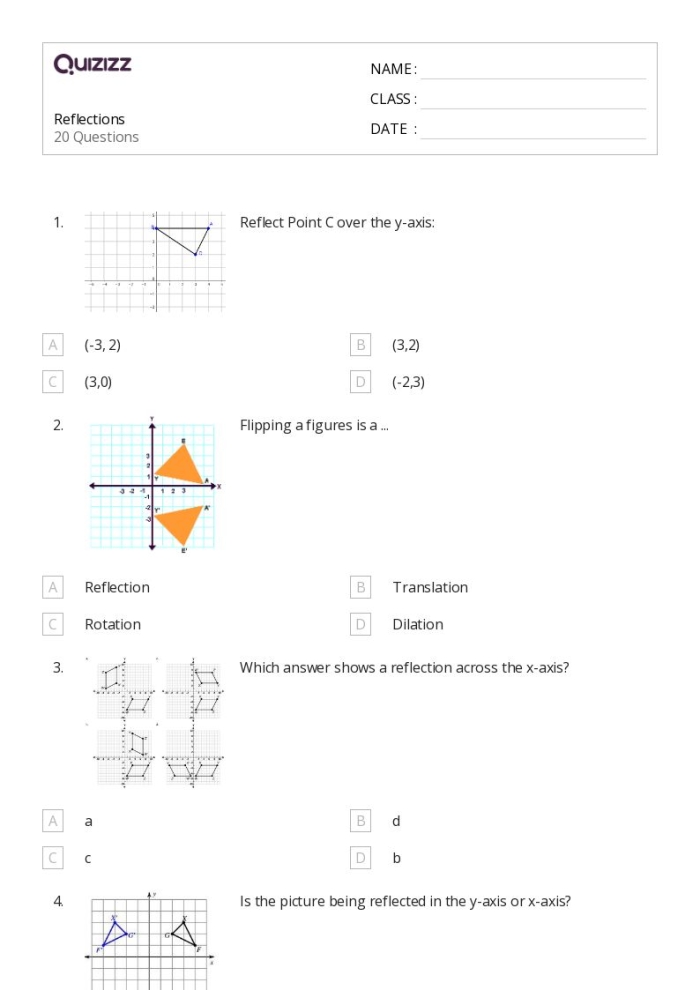
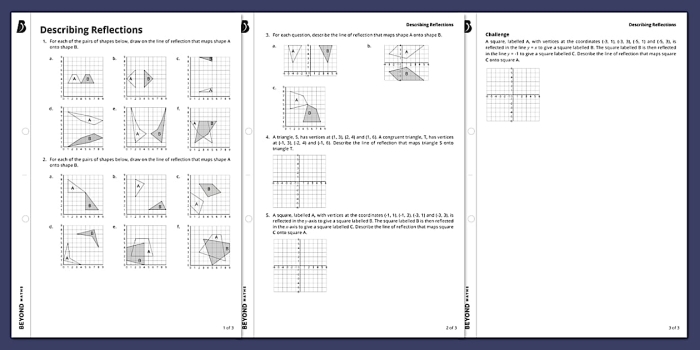
This eighth-grade geometry worksheet guides learners through identifying reflected figures and describing the transformations that created them. Rather than jumping straight to complex problems, the exercises start with simple reflections across the axes, where students can see the pattern clearly. A point at (3, 2) reflected across the x-axis becomes (3, -2). The x-coordinate stays the same while the y-coordinate flips sign. This predictability helps students build confidence before tackling diagonal lines of reflection.
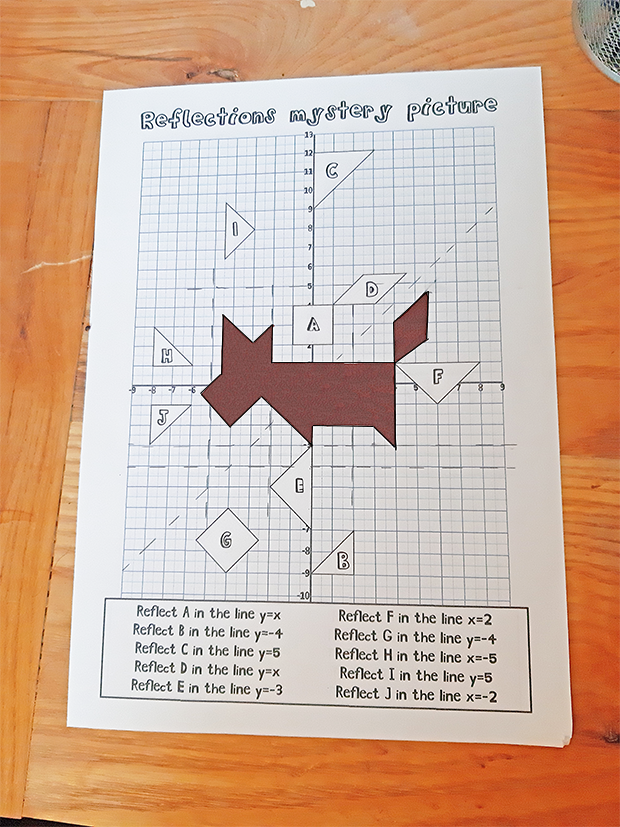
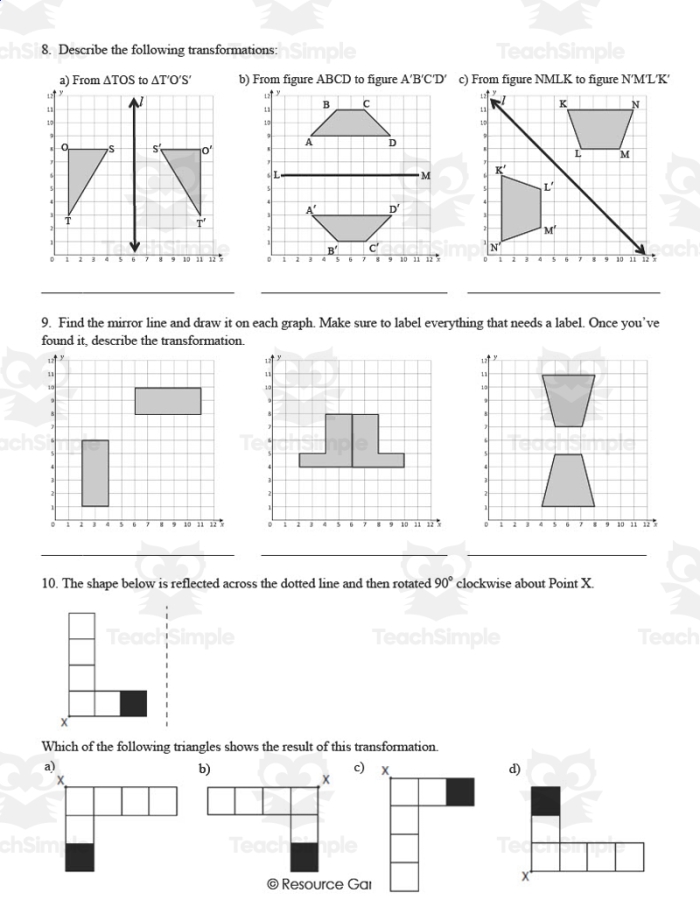
The worksheet includes practical tasks like plotting original figures, drawing their reflections, and writing descriptions of what happened during the transformation. This combination of visual and written work reinforces understanding from multiple angles. Students also practice using coordinate notation and directional language, skills that connect to other areas of geometry and algebra.
Teachers find that pairing this resource with hands-on activities, like folding paper to verify reflections, creates stronger retention. When students see that a fold line acts as a mirror, the abstract concept becomes concrete. Building these foundational skills in eighth grade prepares learners for more advanced transformations they’ll encounter in high school geometry.
Start Practicing with These Worksheets