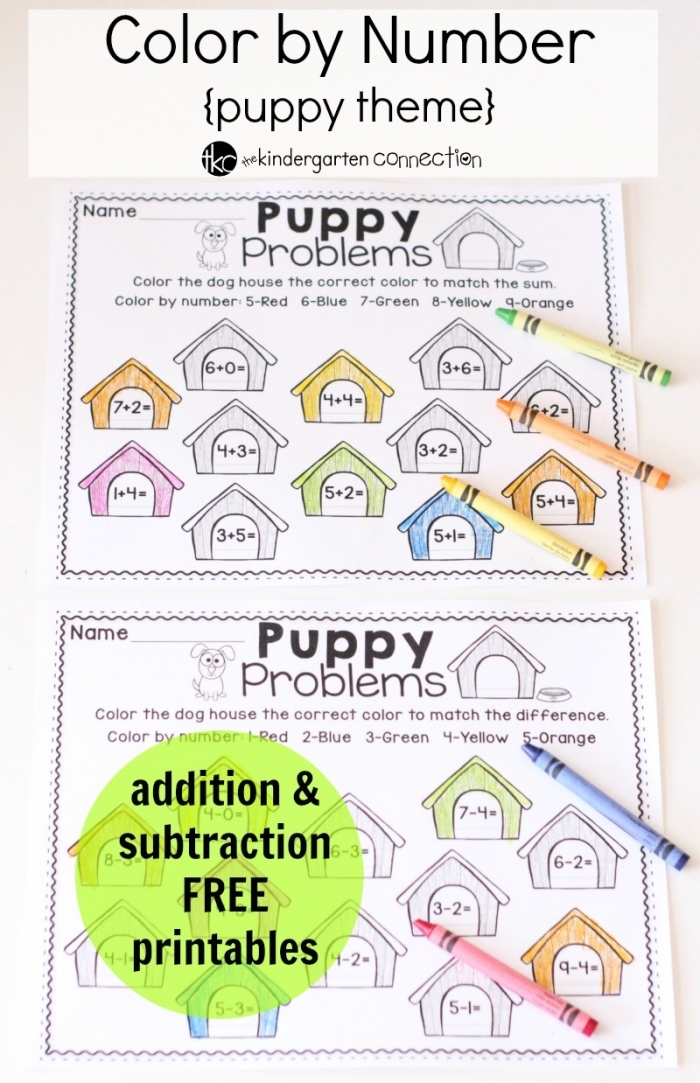
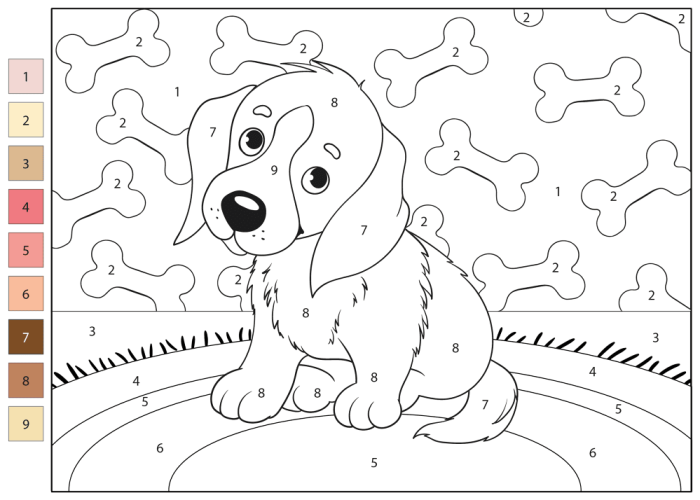
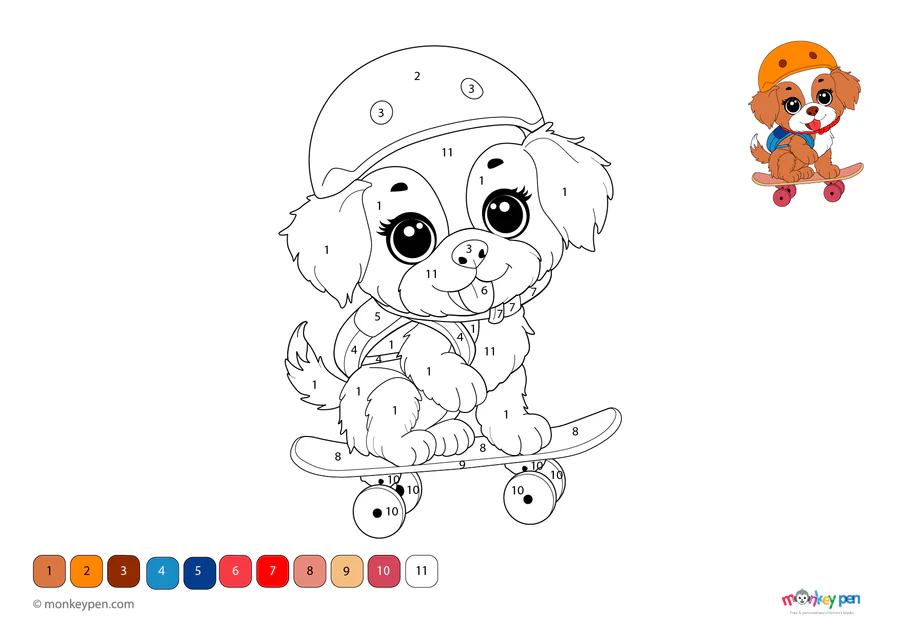
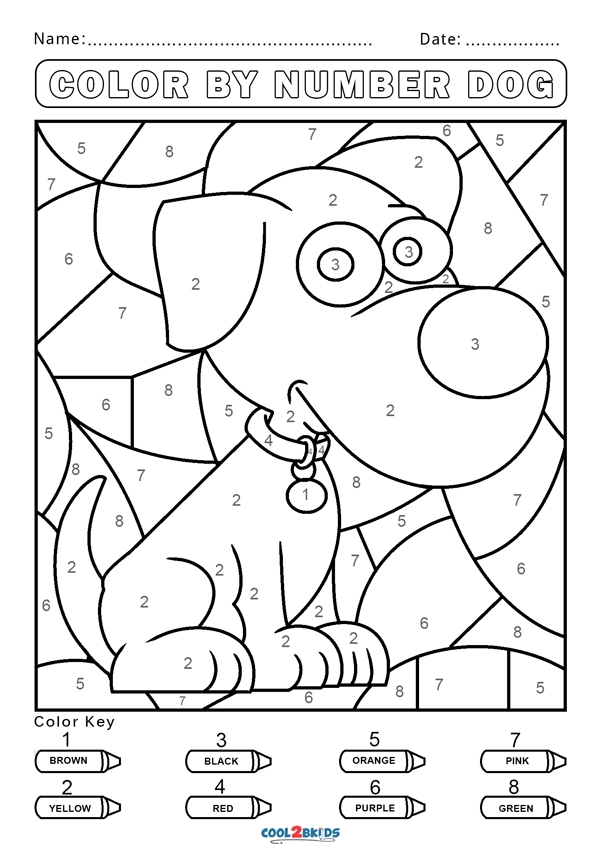
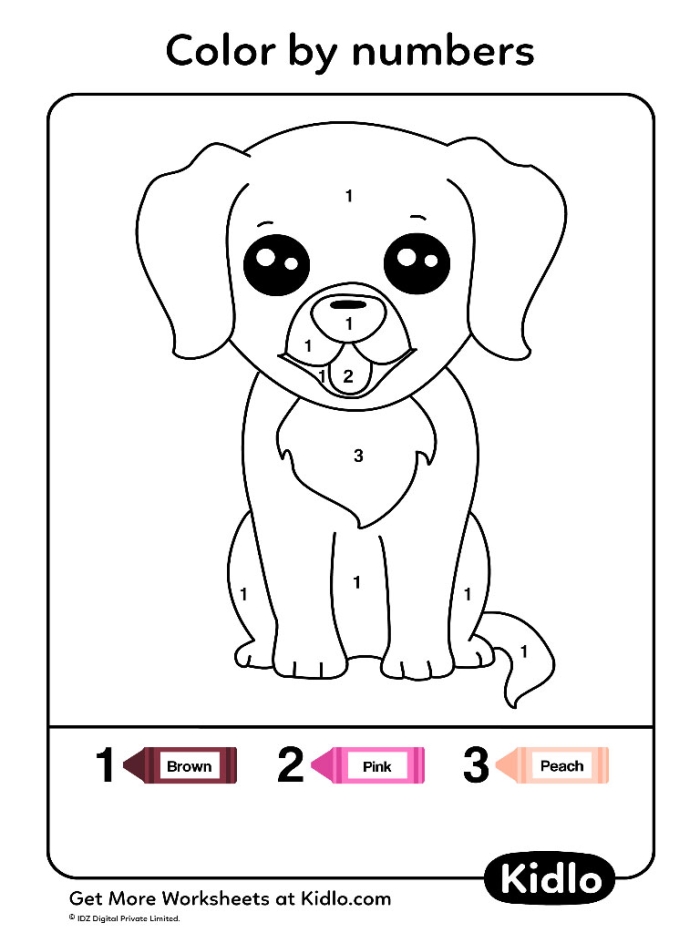
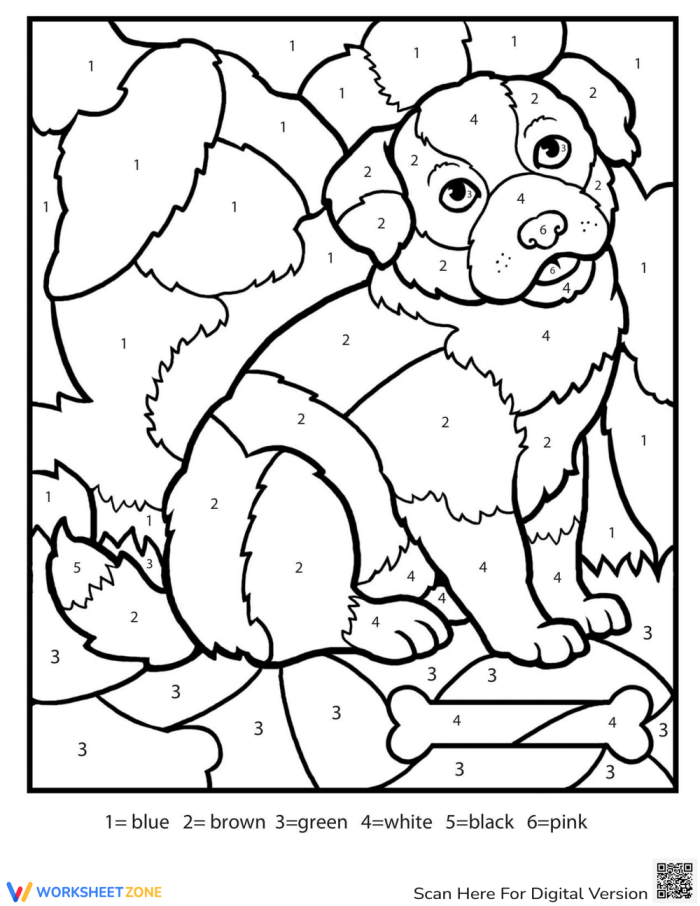
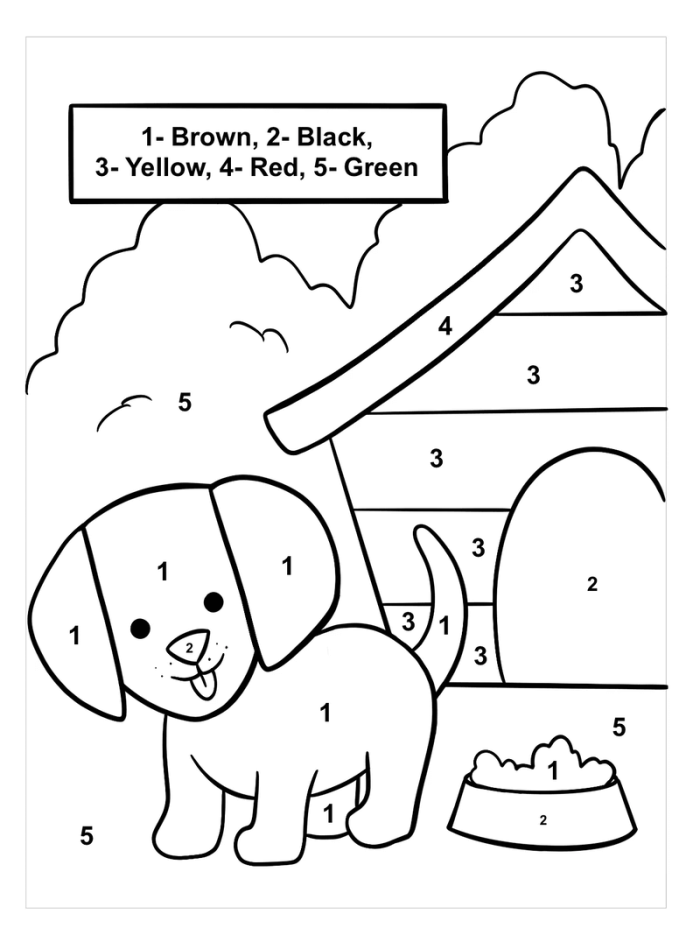
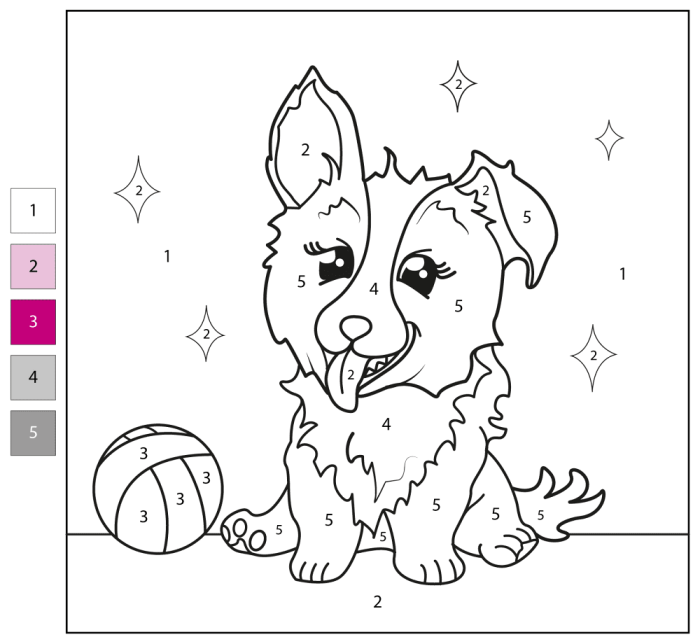
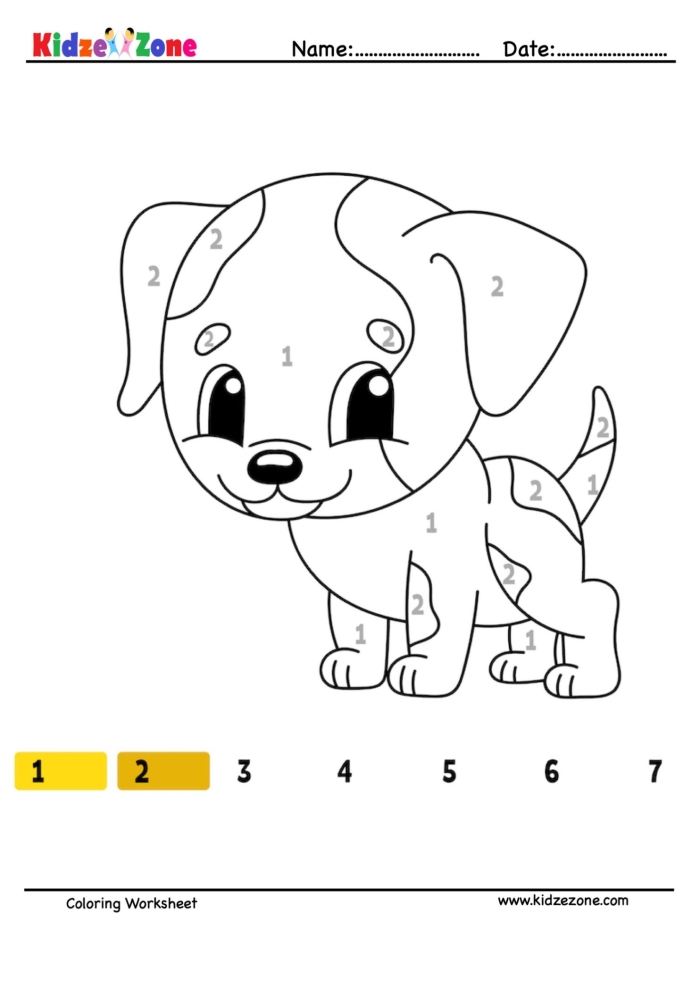
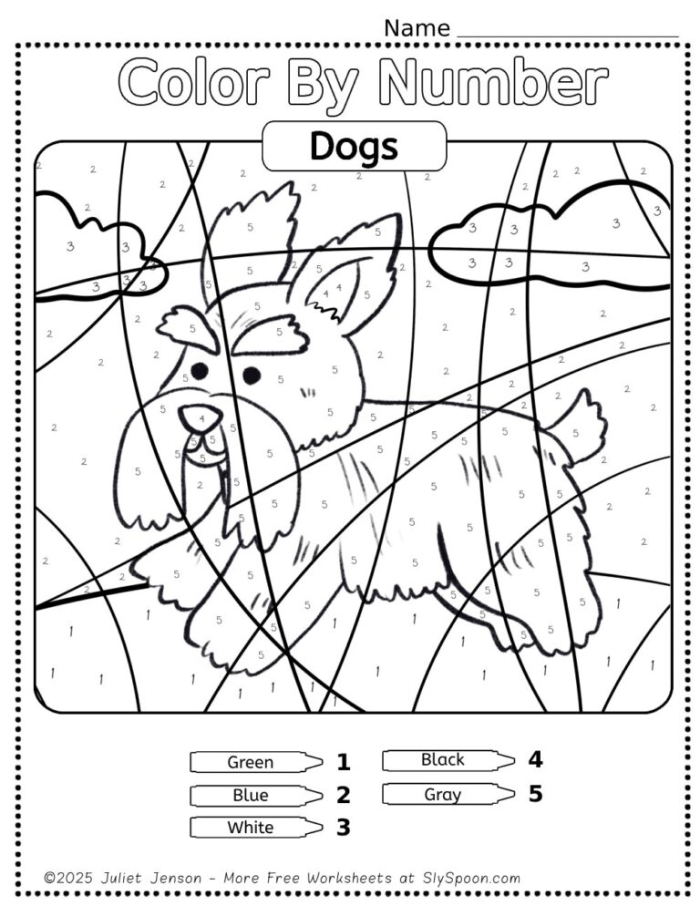
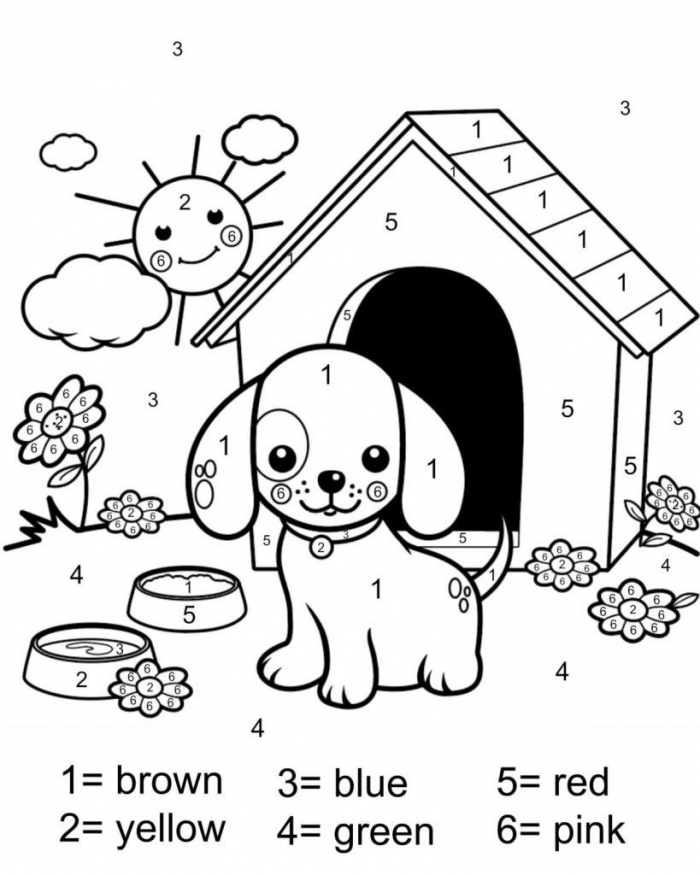
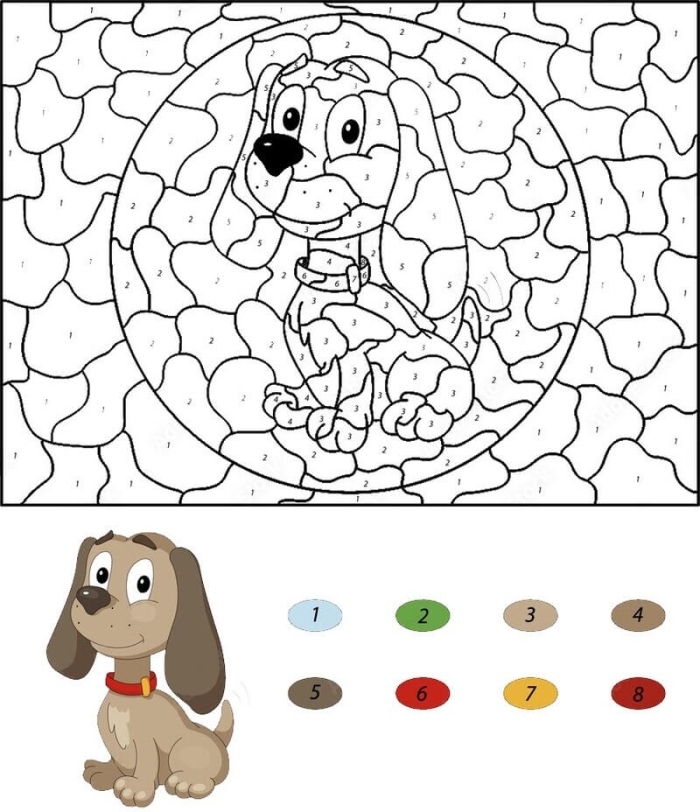
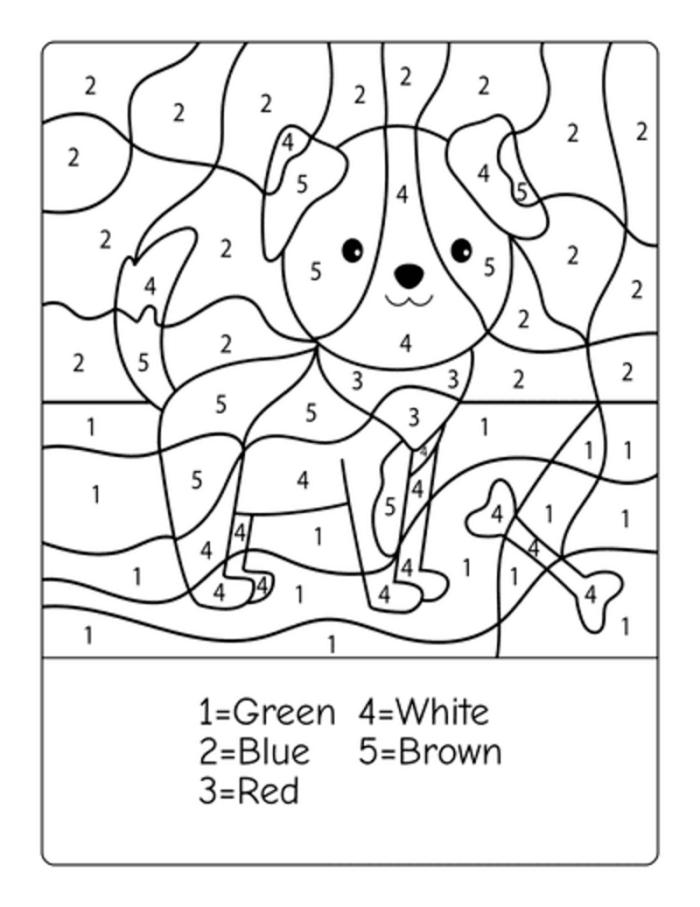
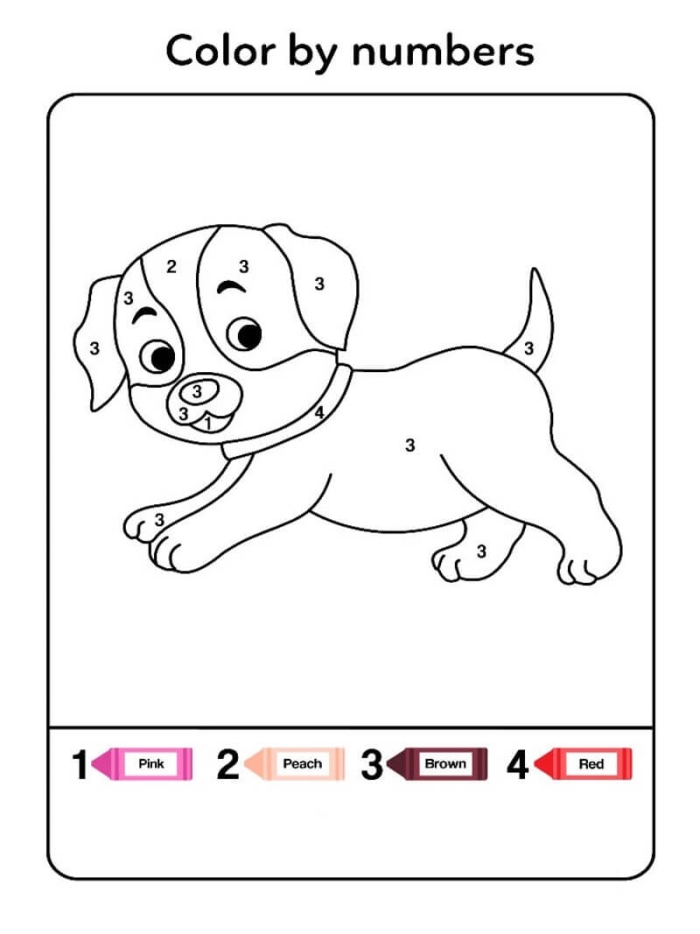
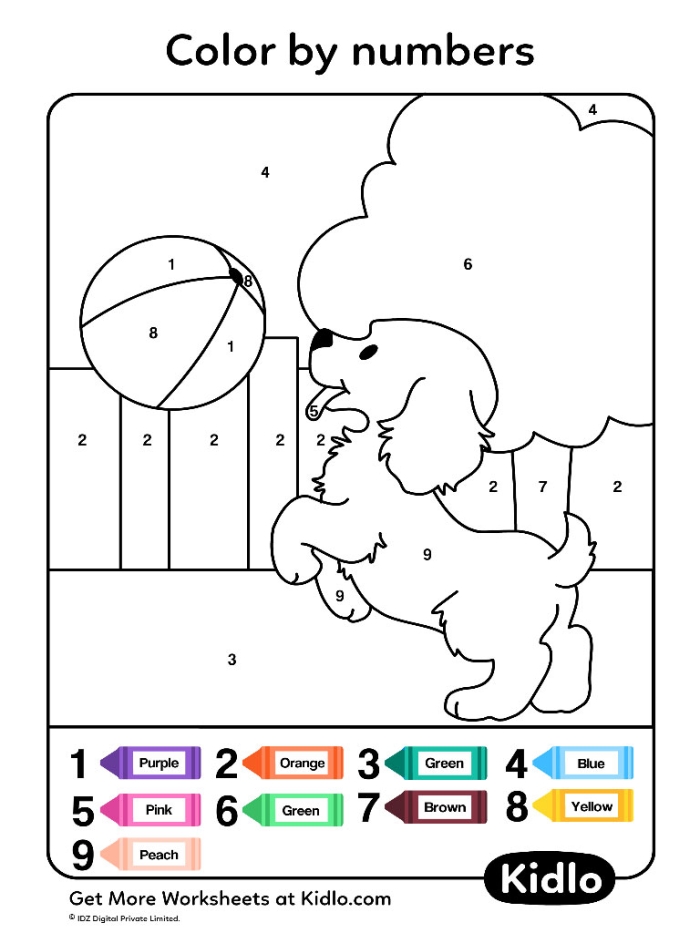
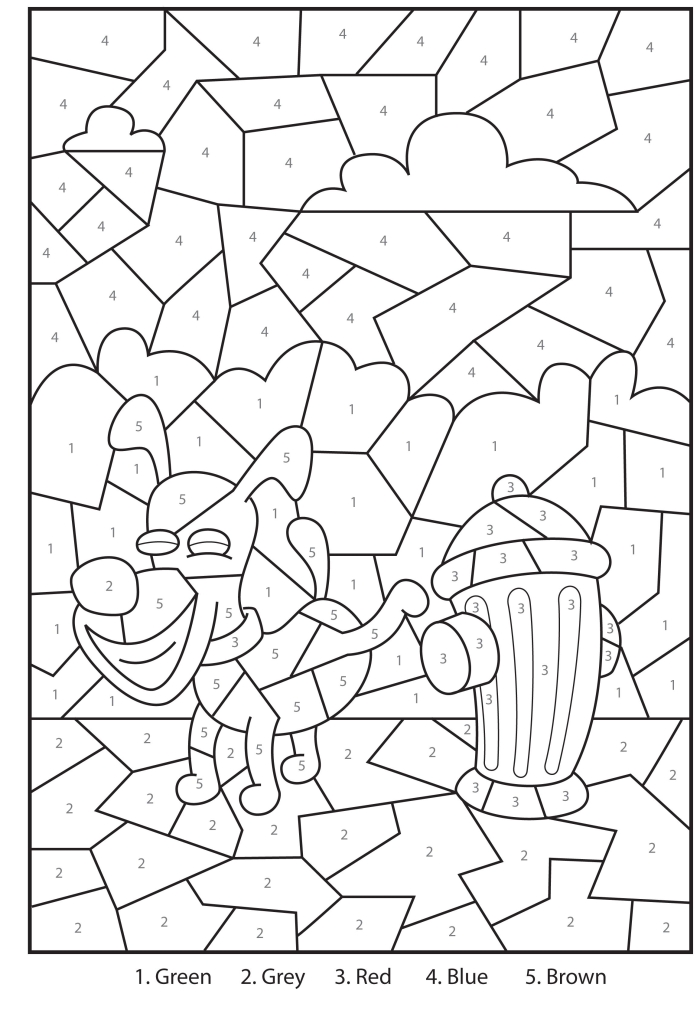
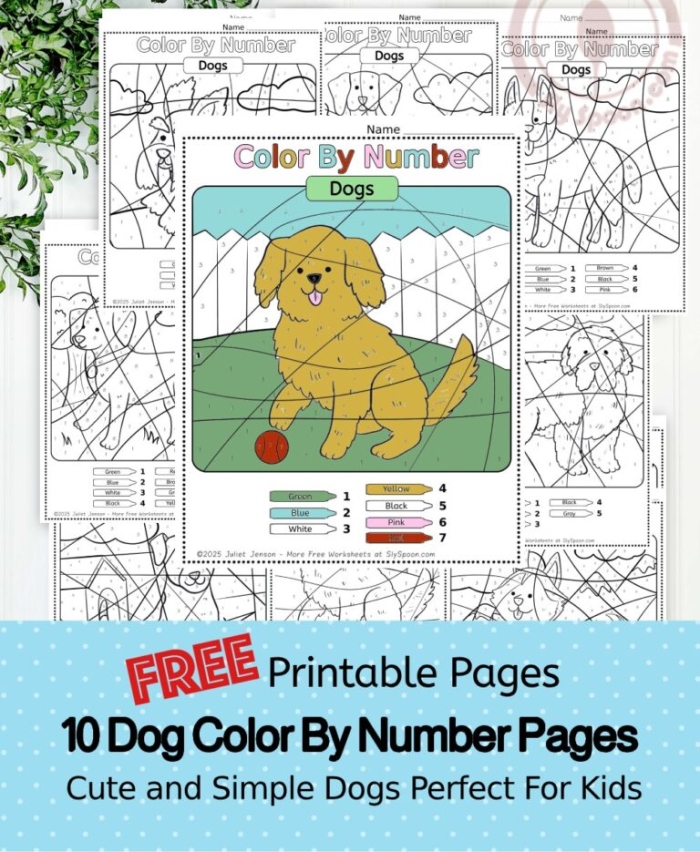
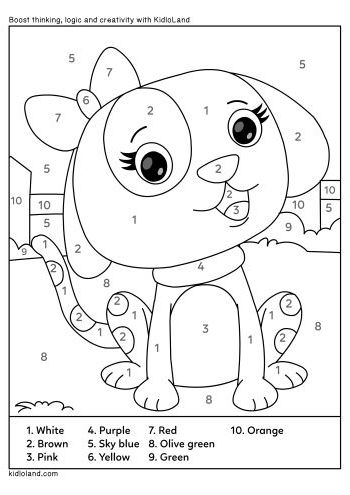
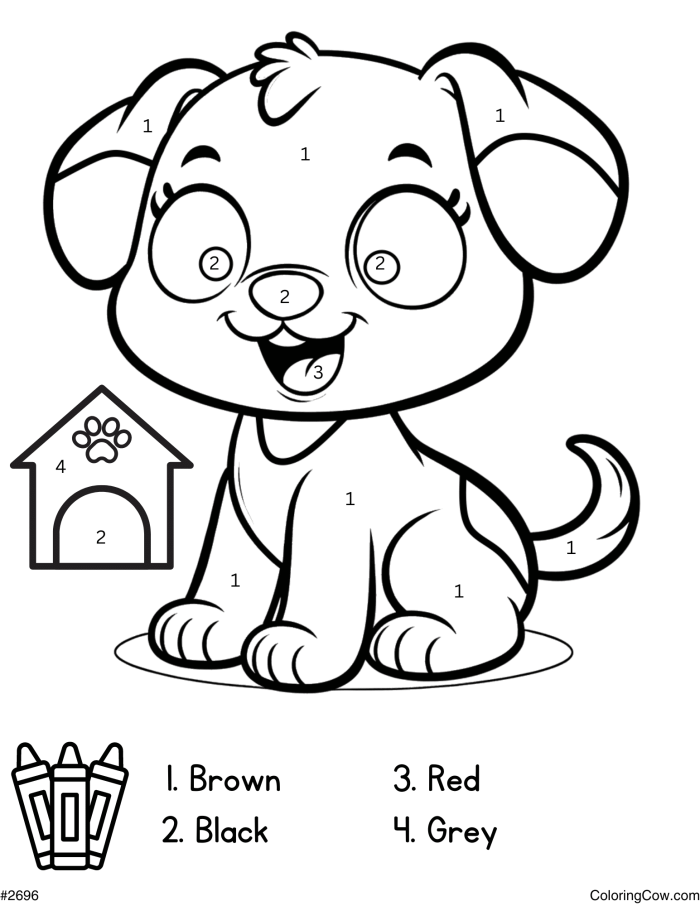
A simple coloring page with a puppy outline and numbered sections might seem like just another worksheet, but it’s actually doing real work in a kindergarten classroom or home learning space. When kids pick up their crayons to fill in a color by number puppy, they’re strengthening three essential skills at once: color recognition, number sequencing, and the ability to follow multi-step directions.
The mechanics are straightforward. Each section of the puppy drawing contains a number, and that number corresponds to a specific color. A child sees the number 1 and knows to use red. They spot a 3 and reach for blue. This simple matching process trains their brain to connect symbols with meanings, a foundational reading skill that extends far beyond the page. The repetition builds automaticity, meaning kids eventually recognize numbers and colors without conscious effort.
What makes this activity particularly effective is that it combines visual learning with motor skill development. Holding a crayon and staying within the lines strengthens the fine motor control needed for writing. At the same time, the act of choosing the right color for each number keeps their attention focused and builds concentration span, which matters tremendously in early reading instruction.
Kindergarten teachers often pair color by number activities with other hands-on learning. Some classrooms combine them with animal habitat matching activities or number-focused worksheets like the hungry caterpillar number maze to create a comprehensive learning experience.
The appeal for kids is clear too. A finished puppy picture feels like a real accomplishment. They’ve created something colorful and recognizable, which builds confidence and encourages them to tackle the next worksheet with enthusiasm rather than reluctance.
Worksheet Practice Section