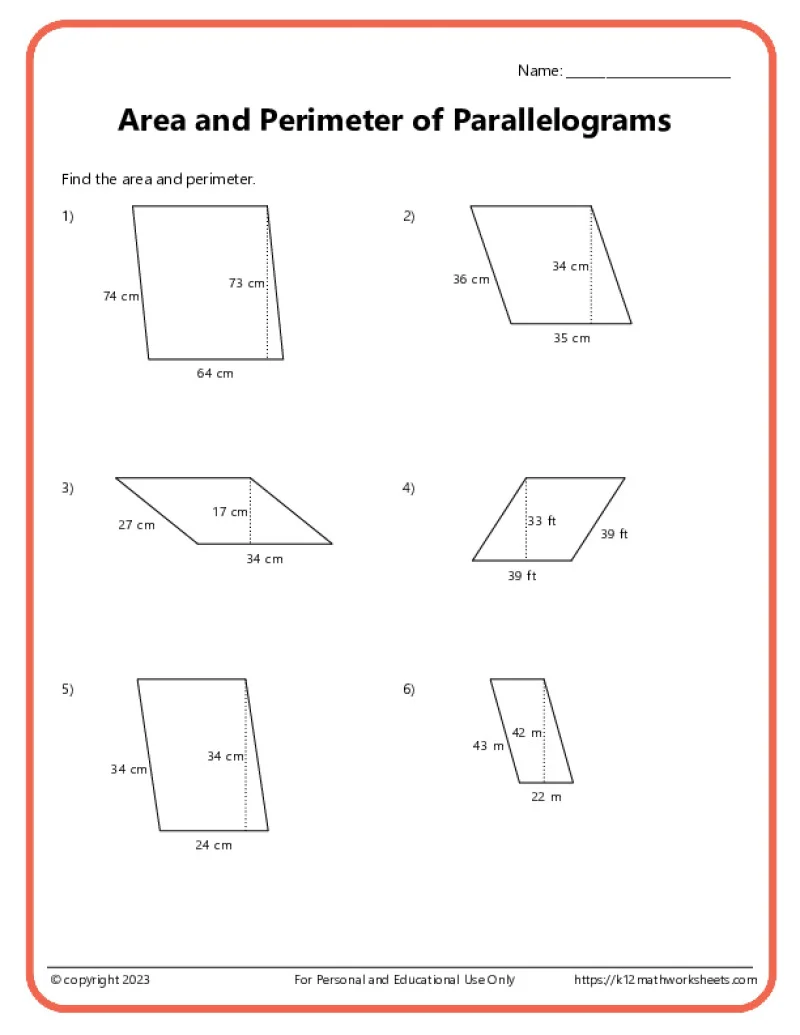
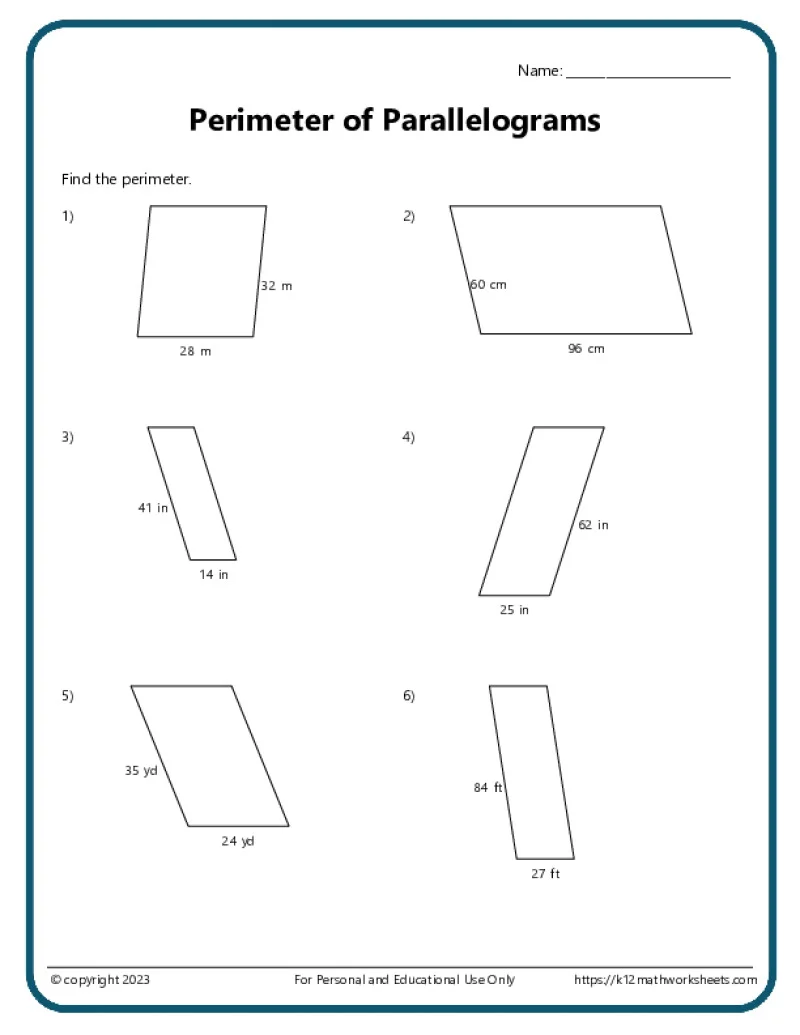
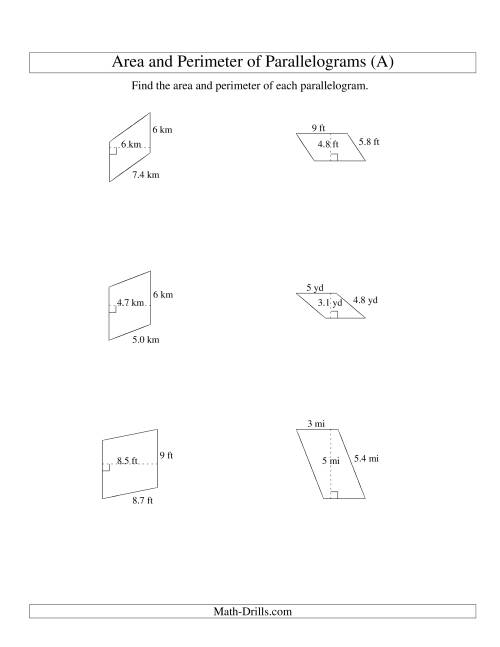
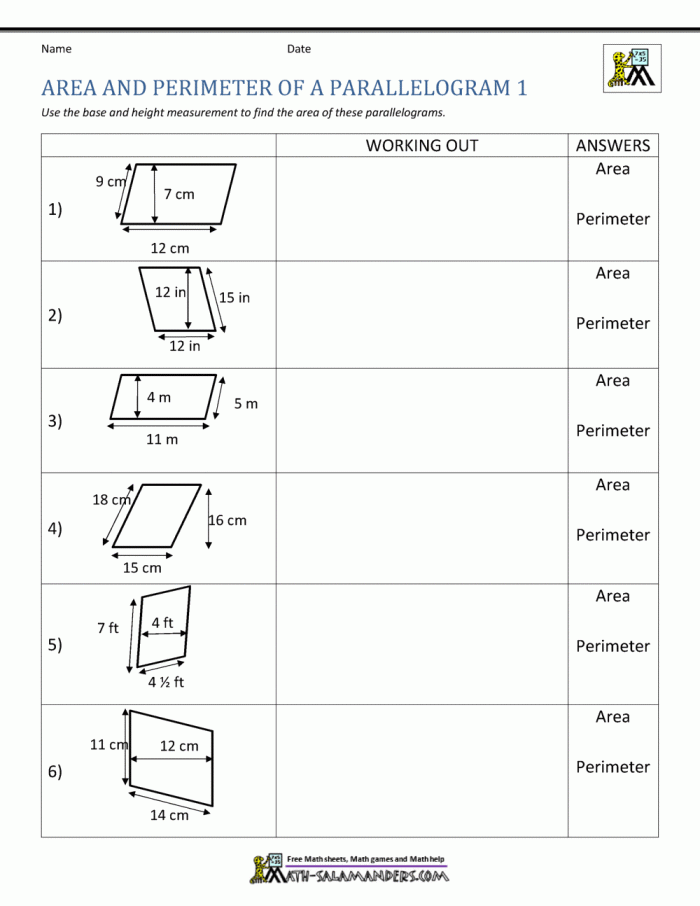
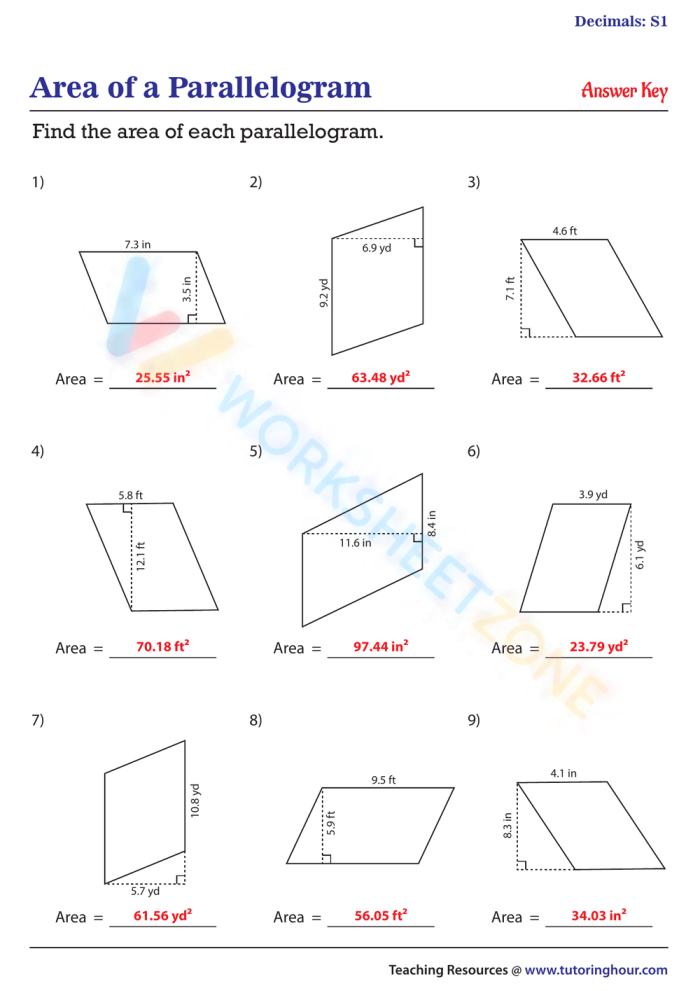
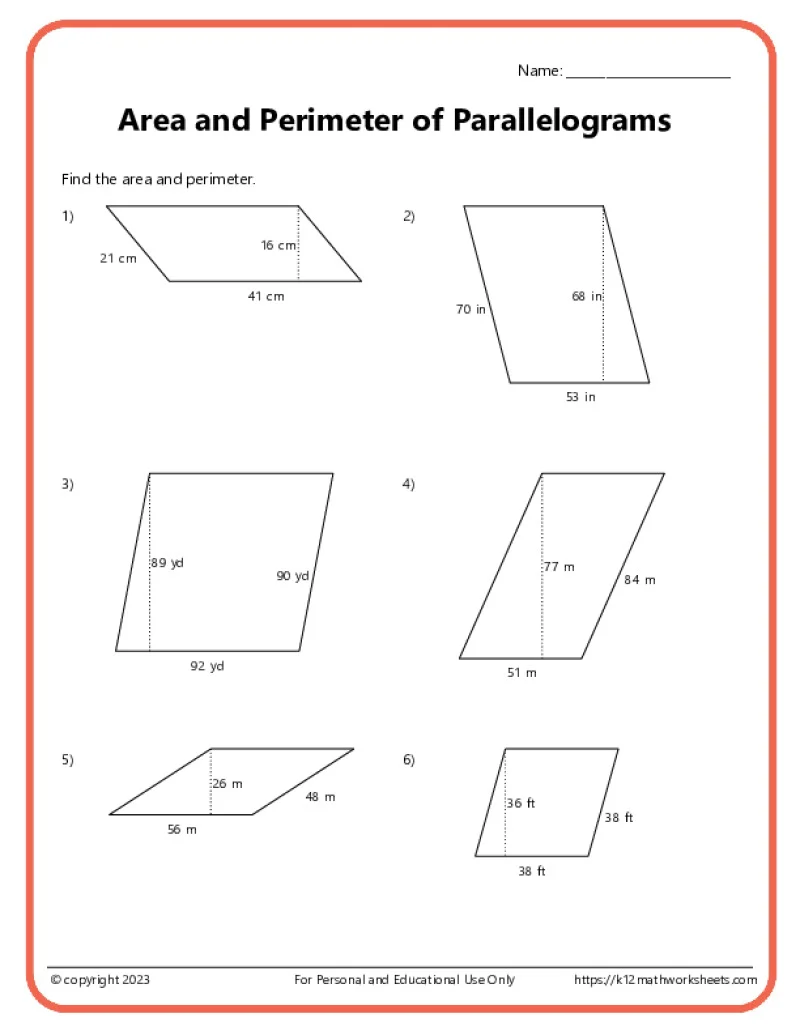
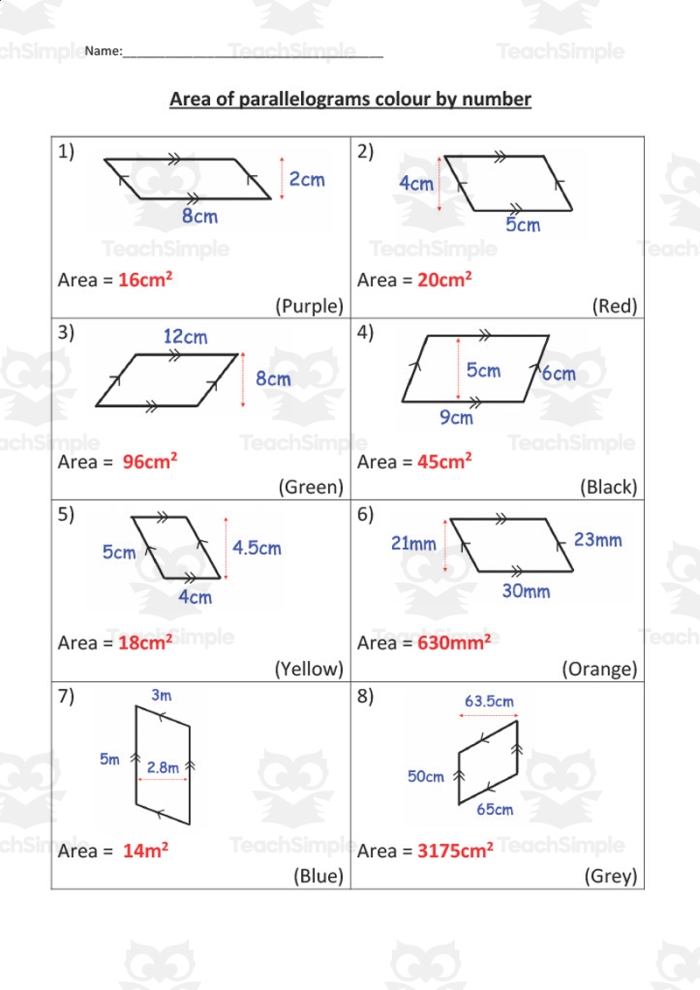
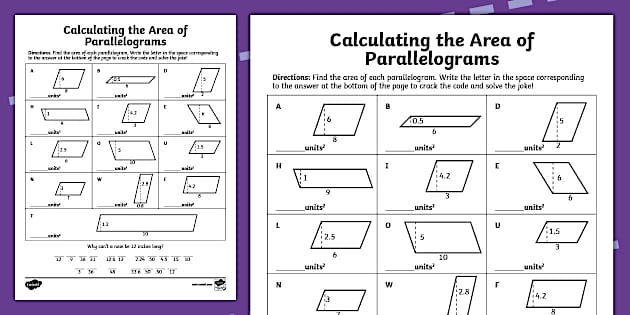
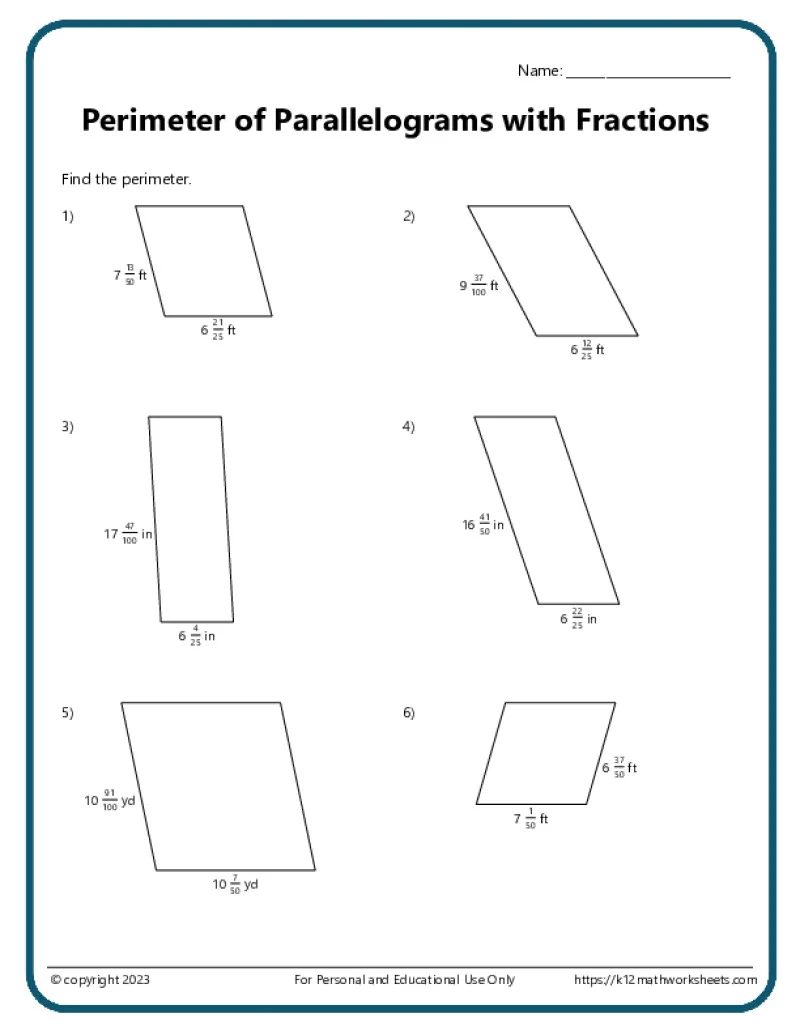
When sixth graders first encounter parallelograms, the shape often feels deceptively simple. It looks like a rectangle that’s been pushed to one side, and students naturally wonder if they can just multiply length by width the same way. That assumption breaks down quickly once they start working through actual problems and realize the slant changes everything about how area works.
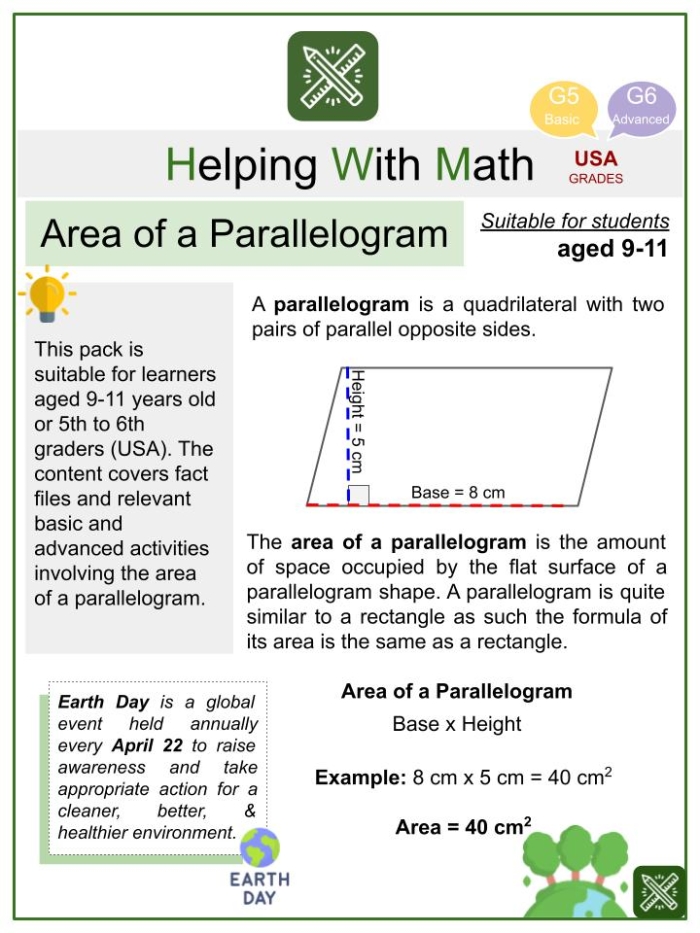
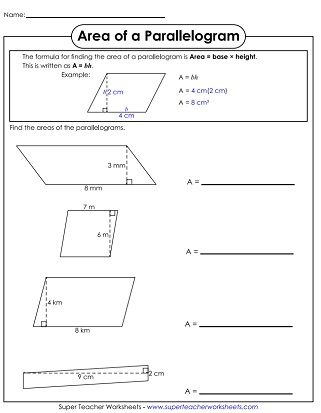
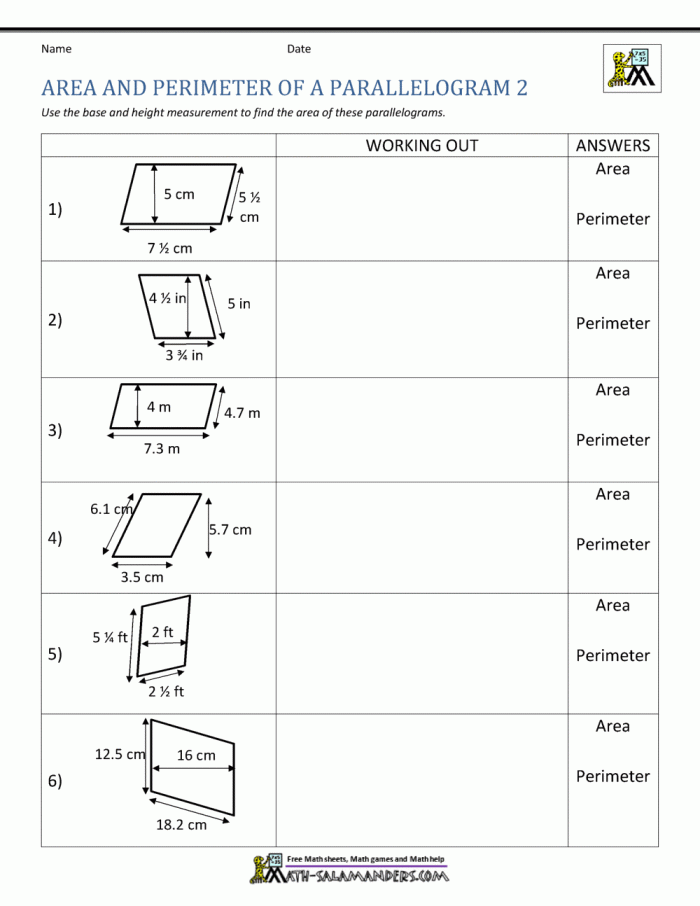
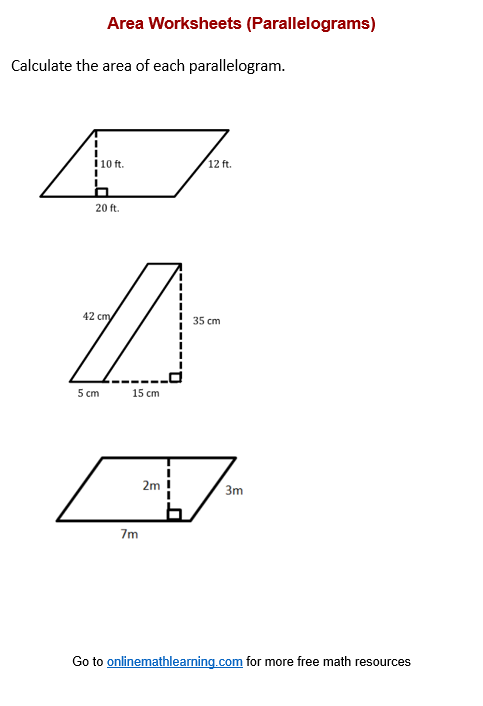
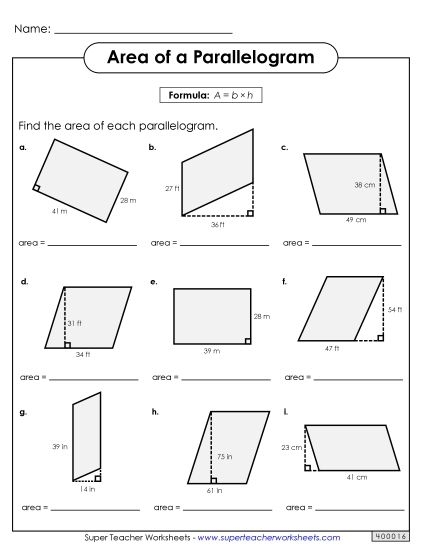
The key insight that makes parallelogram area problems click is understanding that the formula depends on two specific measurements: base and height. The height isn’t the slanted side, which trips up many geometry students. Instead, it’s the perpendicular distance between the two parallel bases, measured straight up and down. Once students grasp this distinction, the formula becomes straightforward: area equals base times height, or A = b × h.
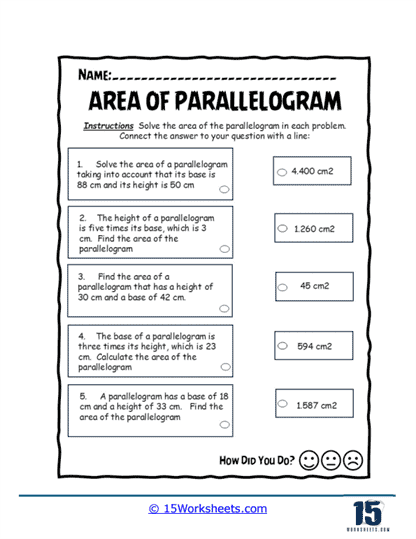
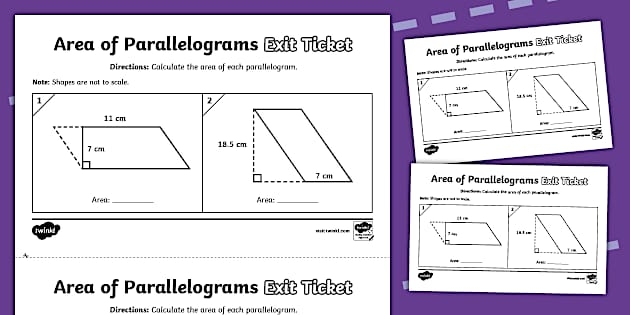
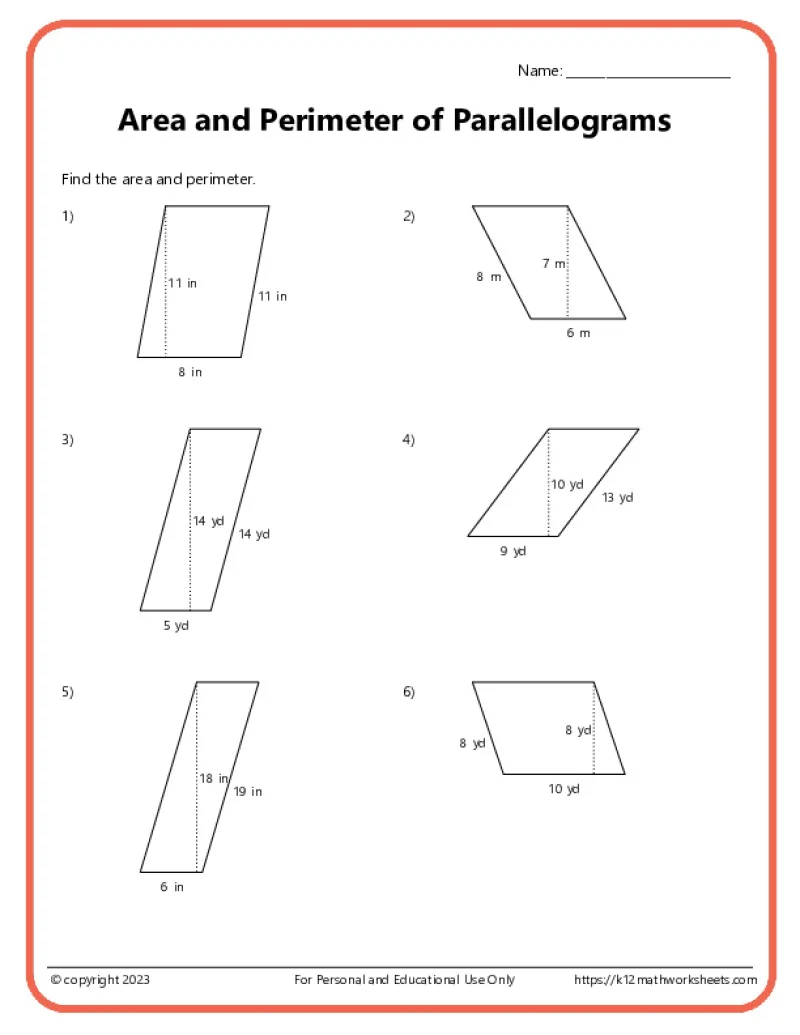
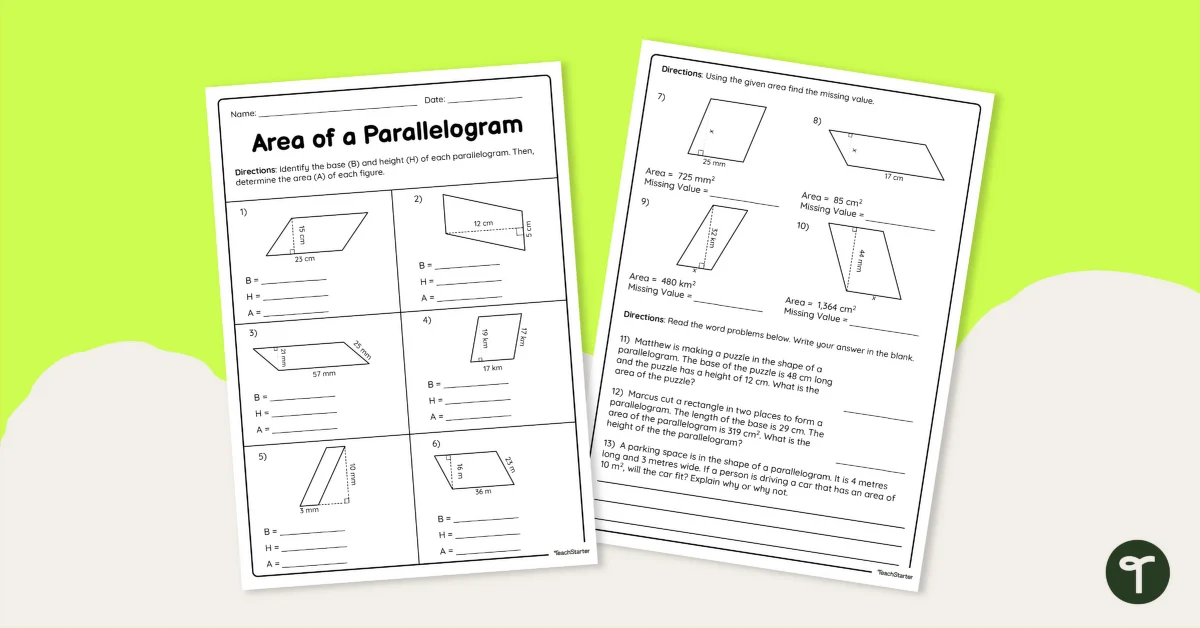
Working through a geometry worksheet focused on this concept gives students the repetition they need to build confidence. When they practice finding the area of parallelograms using the area formula, they’re not just memorizing steps. They’re developing spatial reasoning and learning to identify which measurements matter for each calculation. A parallelogram with a base of 8 units and a height of 5 units has an area of 40 square units, whether it leans left, right, or barely leans at all.
These printable area of parallelograms worksheets work best when paired with other geometry skills. Students who have already worked on finding surface area of cubes often find parallelogram problems feel more manageable, since they’re already comfortable thinking about two-dimensional measurements. Similarly, drafting outlines for informational writing about geometry helps students articulate their understanding of why the formula works the way it does.
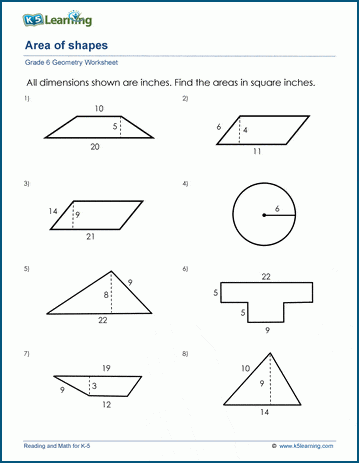
Sixth grade geometry moves quickly through different shapes, so having dedicated practice time with parallelograms ensures students don’t fall behind when the curriculum shifts to trapezoids and triangles later.
Use These Worksheets Today