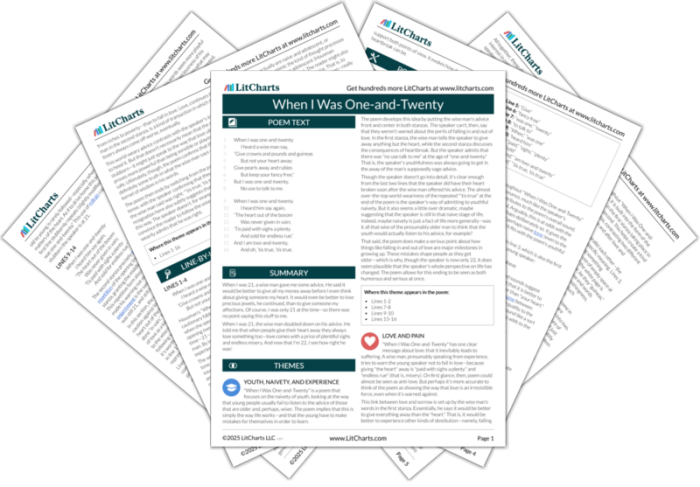
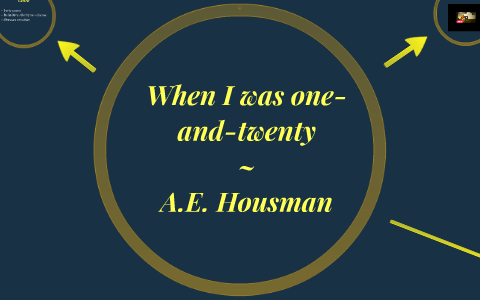
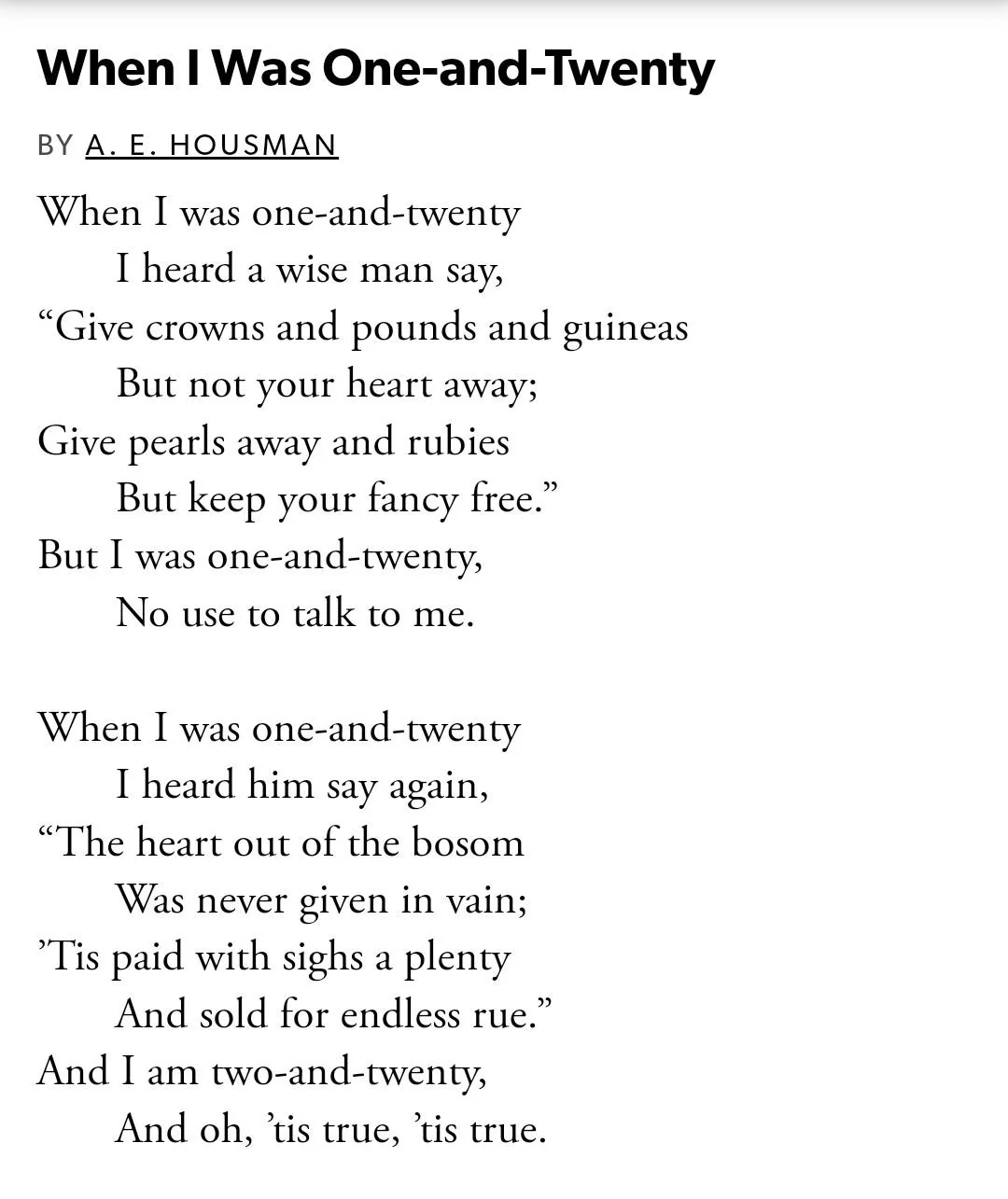
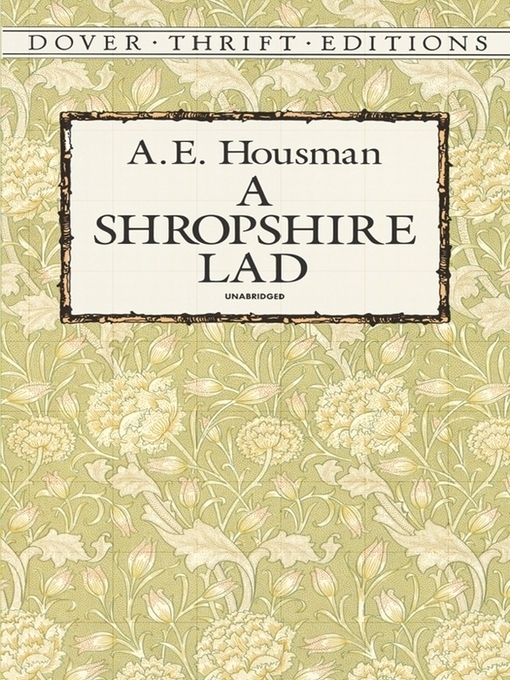
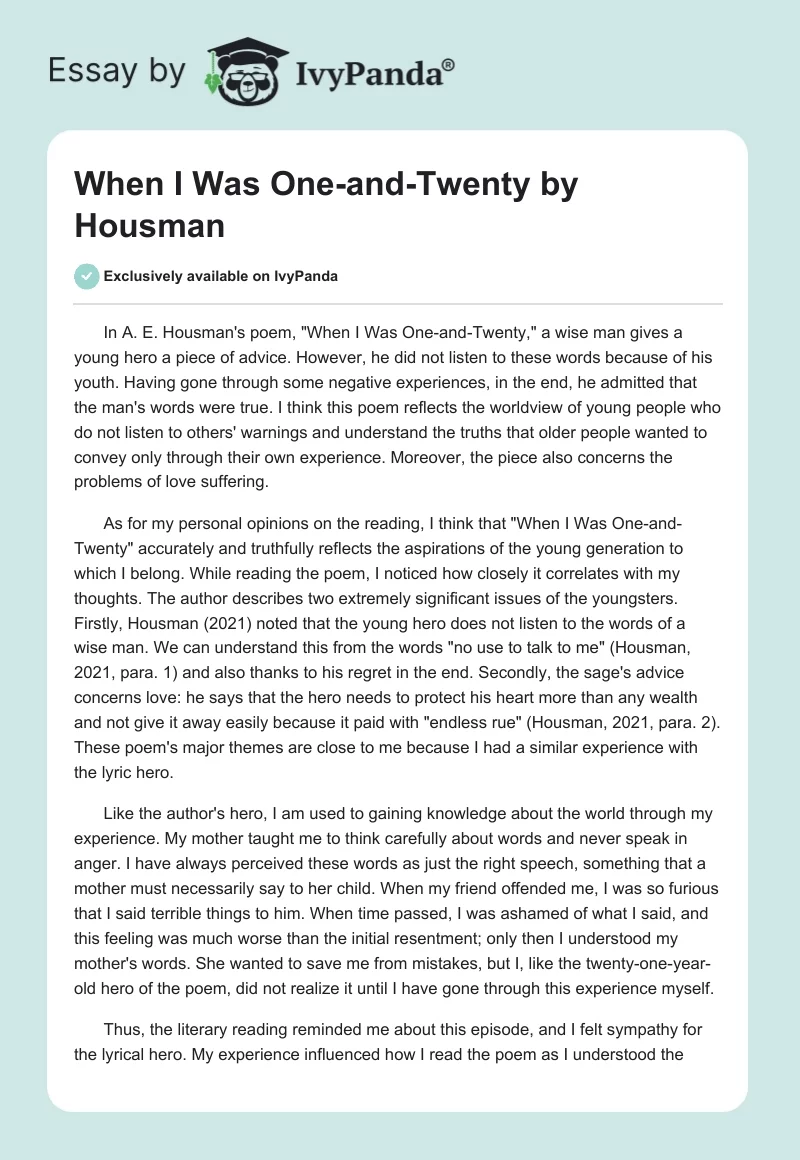
A. E. Housman’s poem “When I Was One-and-Twenty” offers a poignant reflection on the lessons of youth and the value of experience. For sixth graders studying poetry, this piece serves as an excellent starting point for exploring themes of wisdom and innocence. The poem conveys a personal narrative, where the speaker recalls advice given to him at the tender age of twenty-one. This simple yet profound message can lead to engaging discussions in the classroom.
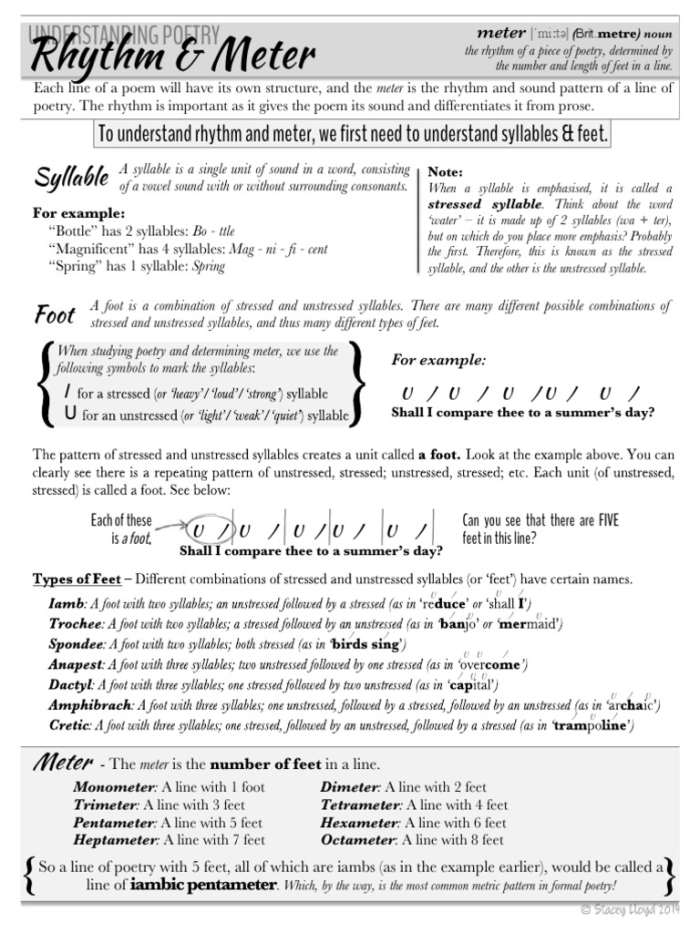
The poem’s structure is straightforward, making it accessible for young learners. It consists of two stanzas, each with a clear rhythm and rhyme scheme. The first stanza presents the advice given to the speaker, while the second reflects on the consequences of ignoring that wisdom. This duality can spark conversations about the importance of listening to guidance and the inevitable lessons learned through experience. Encouraging students to think about their own lives can help them connect with the poem’s message.
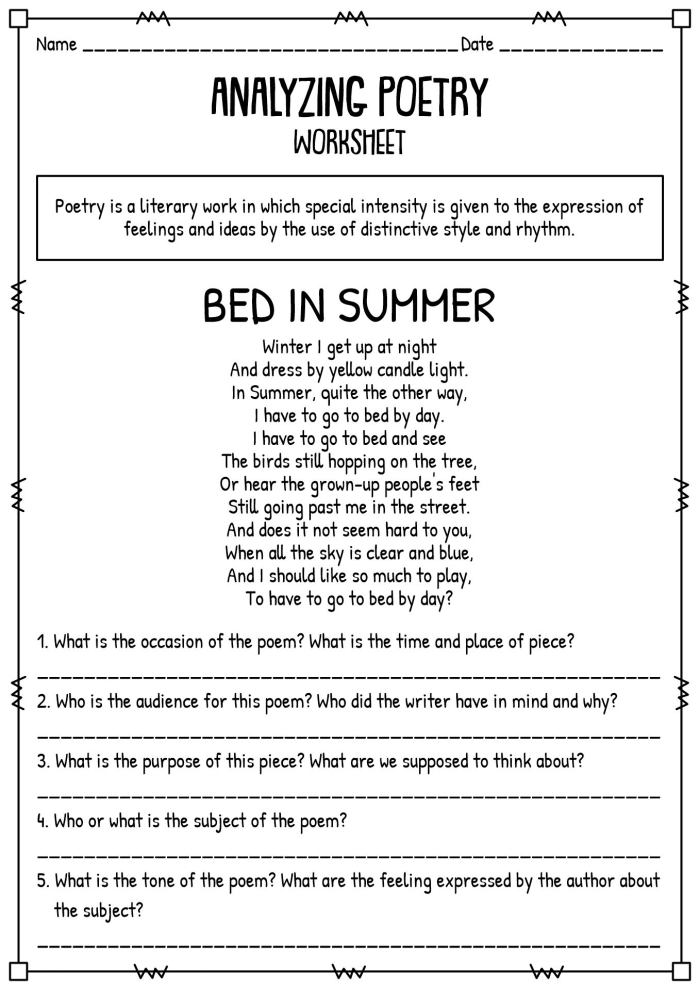
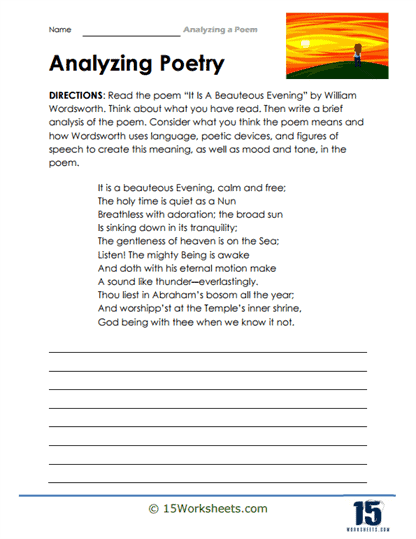
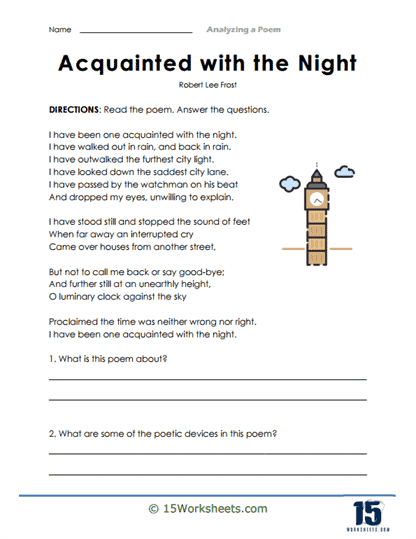
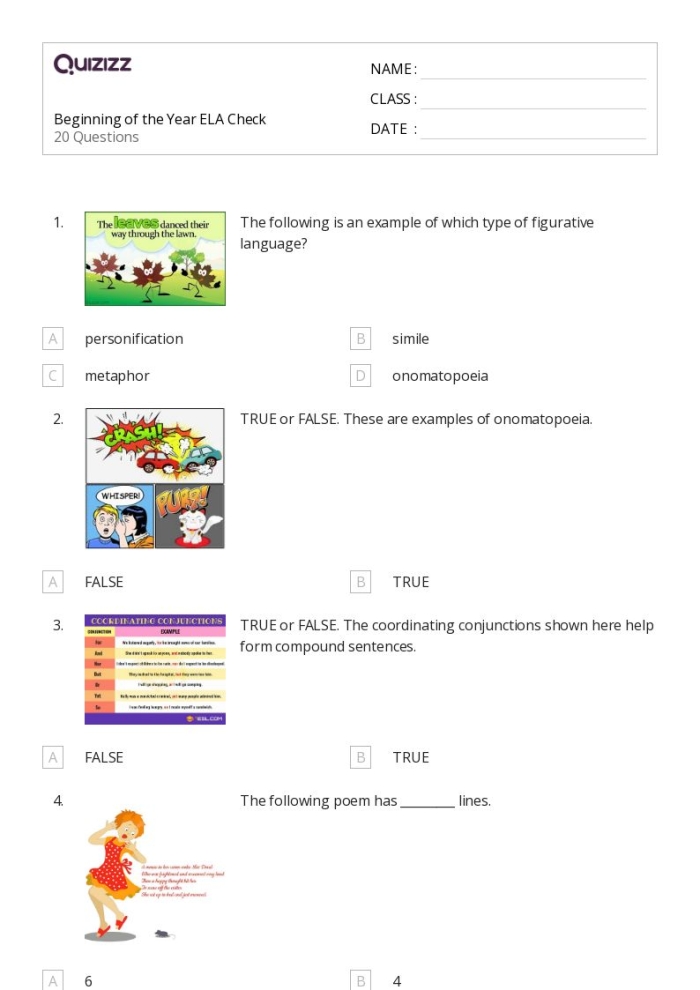
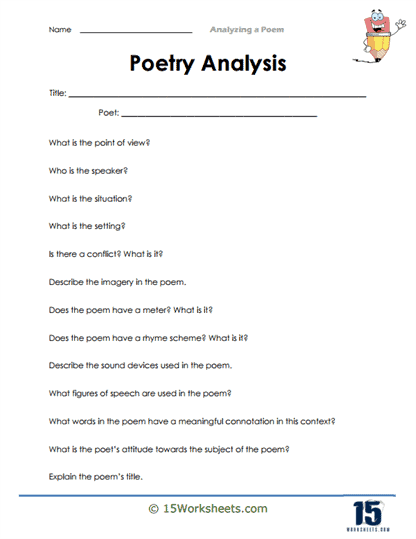
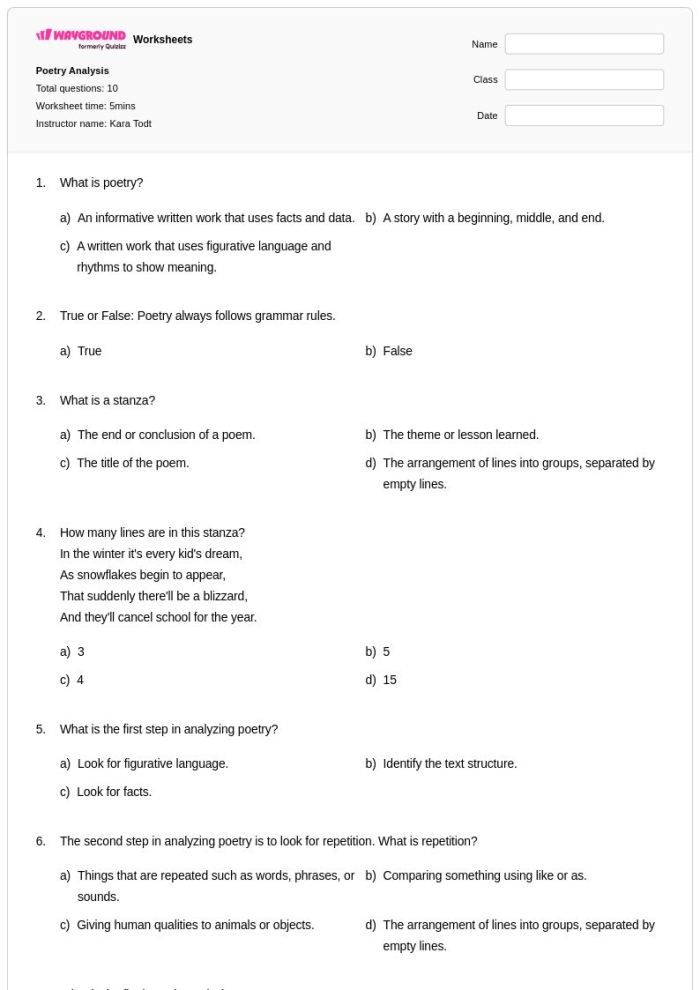
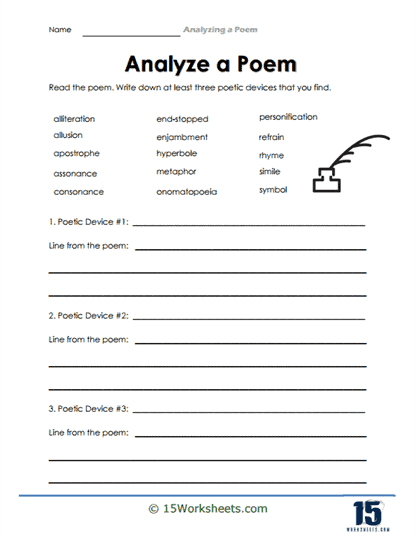
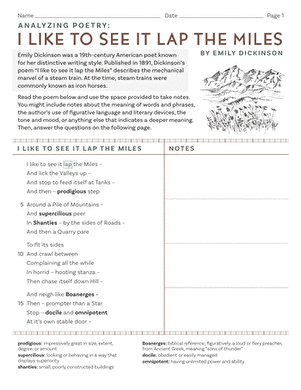
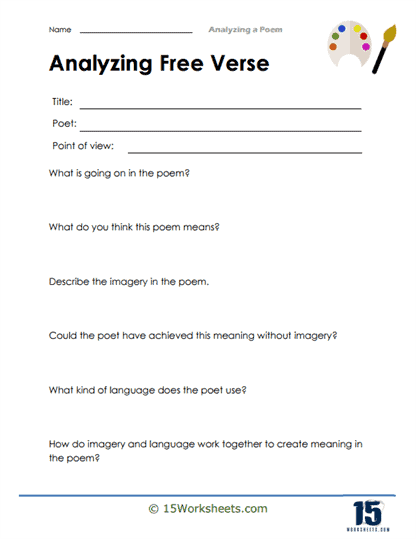
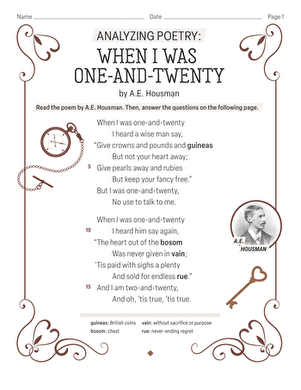
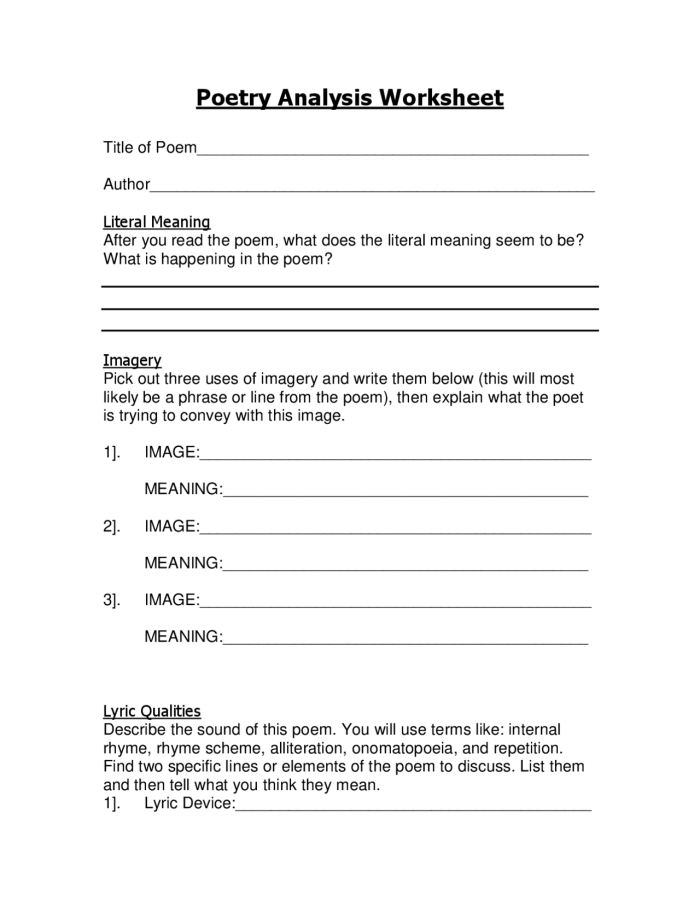
Using a worksheet designed for analyzing poetry can enhance understanding among sixth graders. Activities can include identifying literary devices, summarizing the main ideas, and discussing how the poem relates to their own experiences. For instance, students might reflect on advice they’ve received from parents or teachers and how it has influenced their choices. Such discussions can deepen their appreciation for poetry as a medium for expressing personal truths.
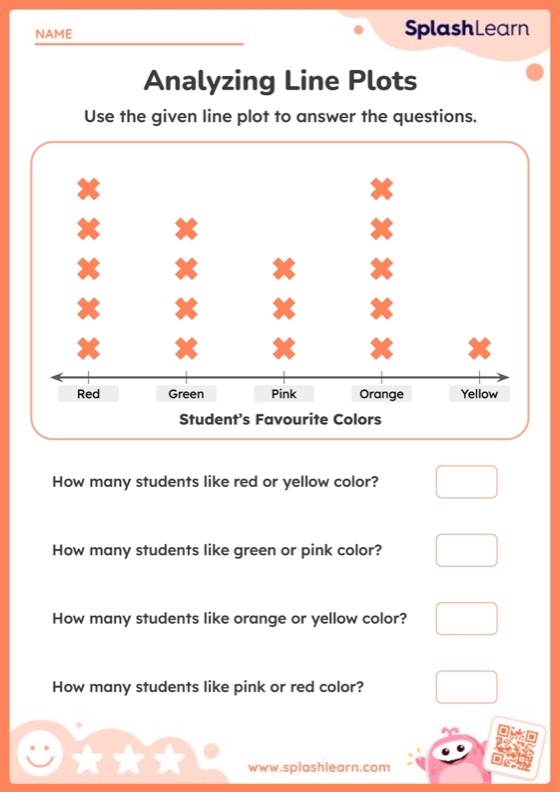
To complement this lesson, educators can incorporate other engaging resources. For example, worksheets that focus on data and graphing, like those found in the early colonial history writing worksheets, can provide valuable cross-curricular connections. This approach not only enhances students’ analytical skills but also allows them to see how different subjects can intersect in meaningful ways.
Ultimately, “When I Was One-and-Twenty” is more than just a poem; it’s a gateway for sixth graders to explore the nuances of life lessons through poetry. With the right tools, educators can facilitate rich discussions that resonate with young minds. By introducing this poem, you are not just teaching literature; you are fostering critical thinking and self-reflection in your students.
Download These Worksheets for Practice