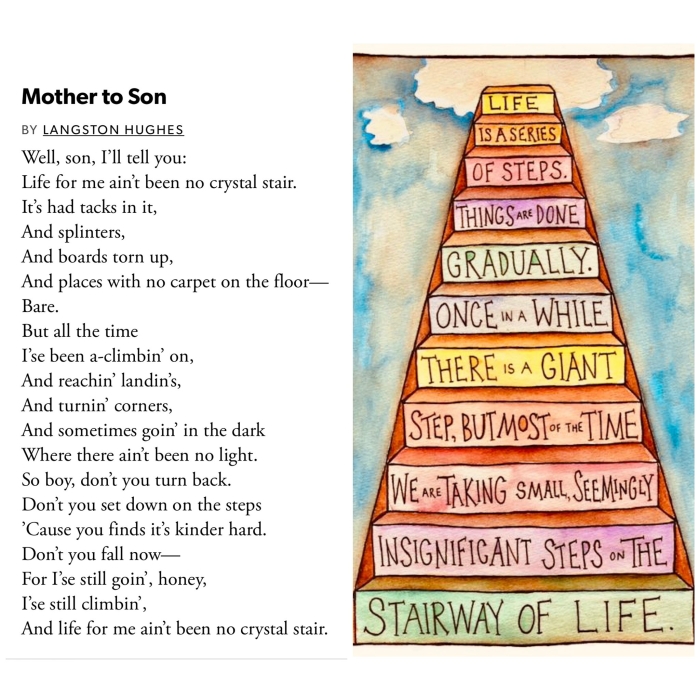
“Mother to Son” stands as one of the most accessible entry points for seventh grade readers to encounter the voice of Langston Hughes, a central figure of the Harlem Renaissance. The poem’s power lies not in complicated language or abstract imagery, but in its direct, honest conversation between a mother and her child about perseverance.
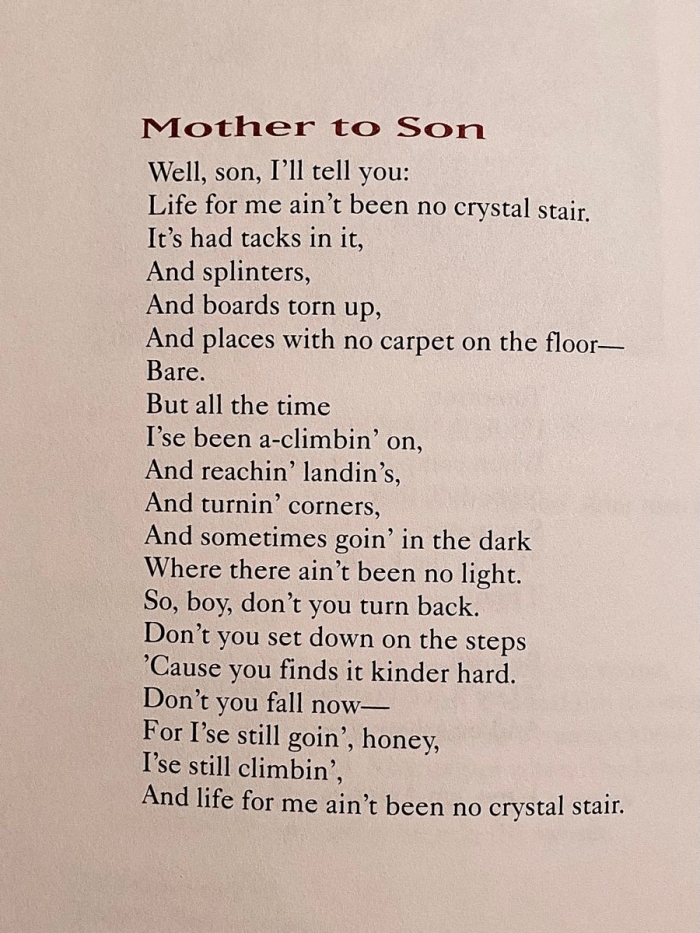
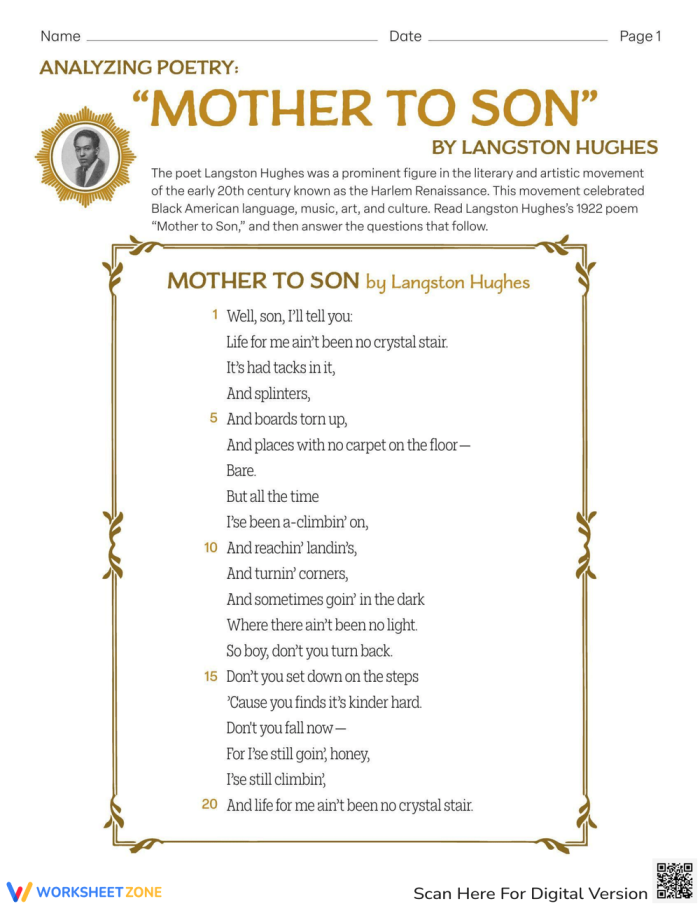
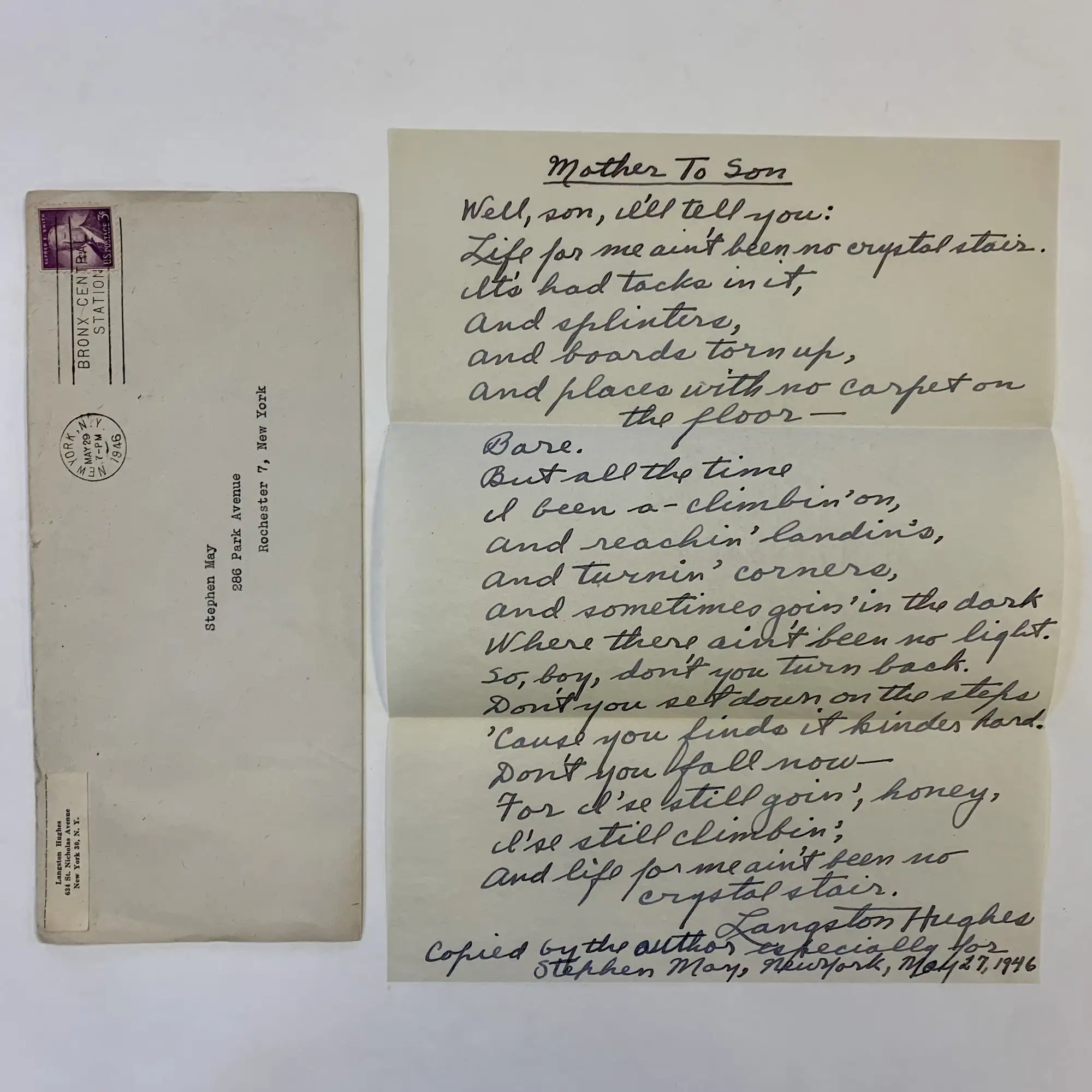
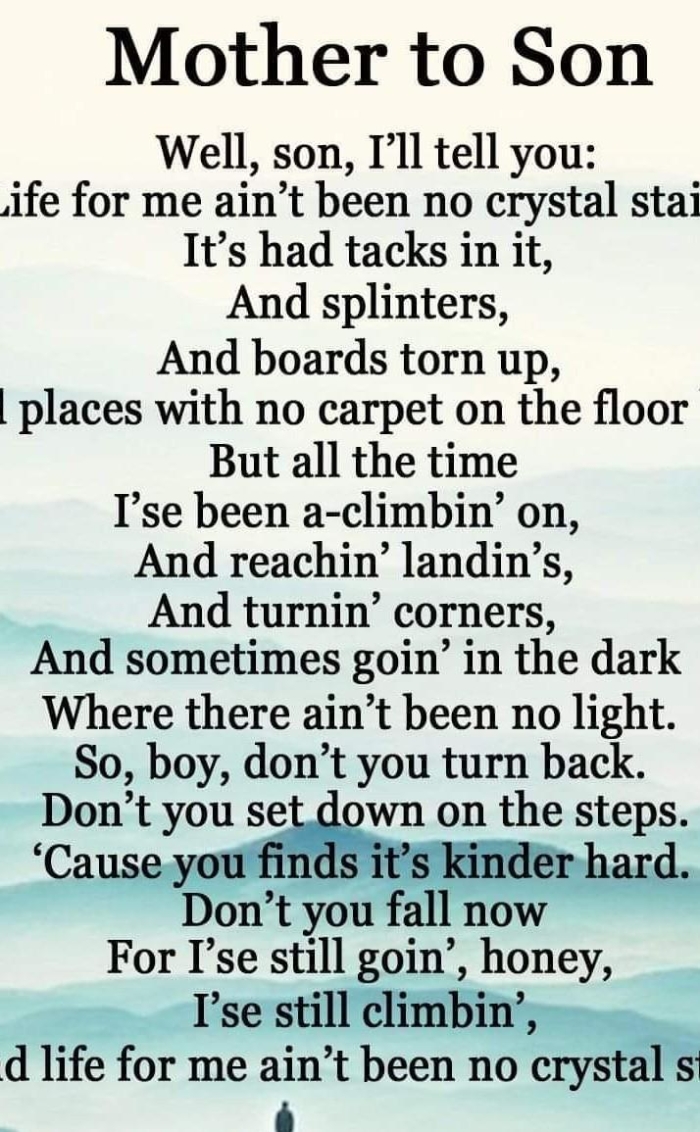
Hughes wrote this poem in 1922, during a period when African American writers were reshaping American literature from Harlem, New York. The poem captures something essential: a mother warning her son that life won’t be easy, that the path ahead contains obstacles and hardships. She doesn’t sugarcoat her message. Instead, she tells him she’s been climbing a staircase her whole life, one with splinters, broken boards, and dark landings. Despite these difficulties, she’s kept going, and she expects him to do the same.
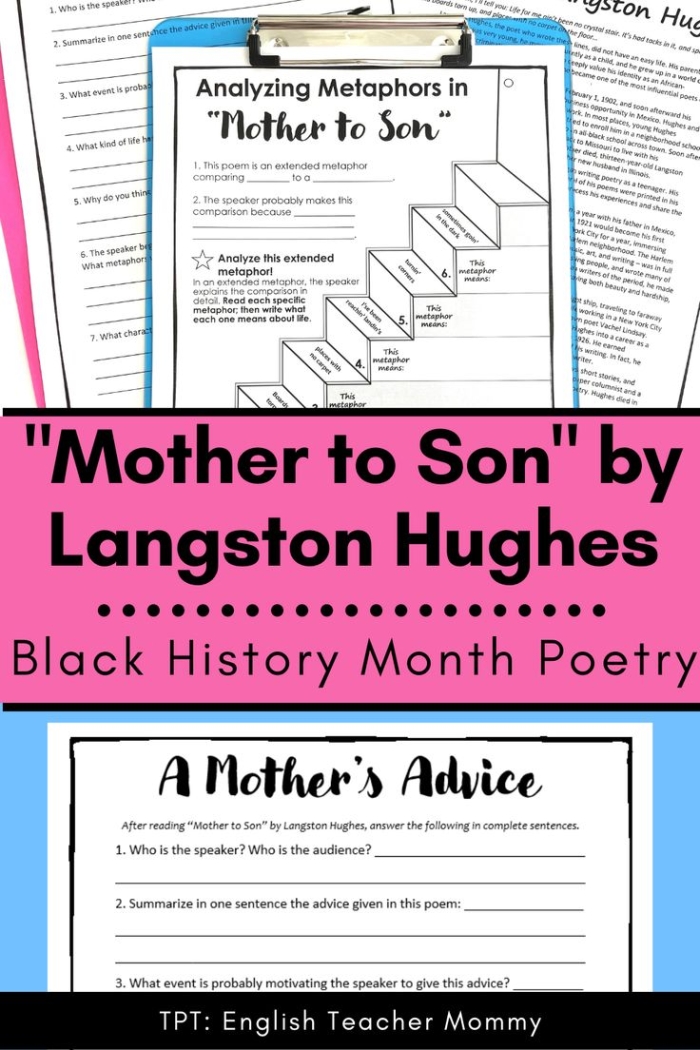
What makes this poem particularly valuable for middle school readers is how Hughes uses an extended metaphor. The staircase represents life’s journey, and by comparing struggle to climbing stairs, he makes an abstract concept concrete and relatable. Students can visualize what the mother describes without needing to decode complex symbolism.
The poem’s structure reinforces its message. Hughes uses vernacular speech, the way people actually talk, rather than formal literary language. This choice was deliberate and revolutionary for its time. He elevated everyday African American speech to the level of serious poetry, which challenged literary conventions that had excluded Black voices.
For seventh grade reading instruction, analyzing poetry through “Mother to Son” helps students develop critical reading skills while connecting with authentic human experience. The poem invites readers to consider their own obstacles and the resilience required to overcome them, making literature feel relevant to their lives rather than distant and academic.
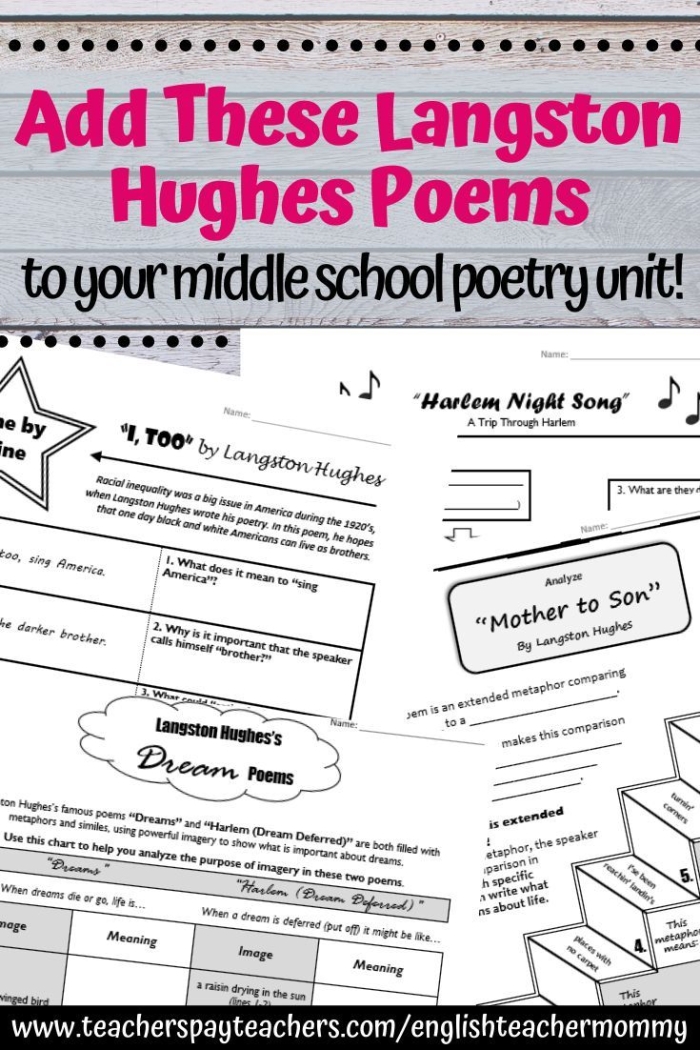
Try These Printable Worksheets