Engaging Worksheets on Analogous and Homologous Structures

Diagram comparing analogous and homologous structures across different animal species for sixth grade biology students
Evolutionary Relationships Through Body Structure Comparison
Category: Reading | Grade: Sixth Grade

Understanding the similarities and differences in the structures of various organisms is a fascinating way to explore the concept of evolution. By comparing these structures, students can gain insights into how different species have adapted to their environments over time. This process is at the heart of learning through worksheets focused on analogous and homologous structures, which are key elements in life science education.

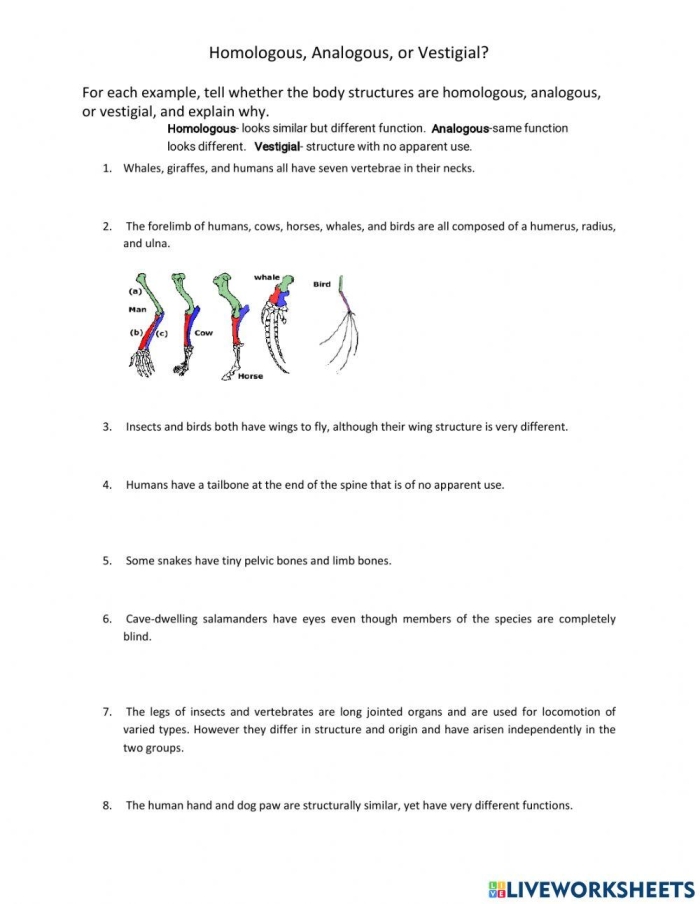
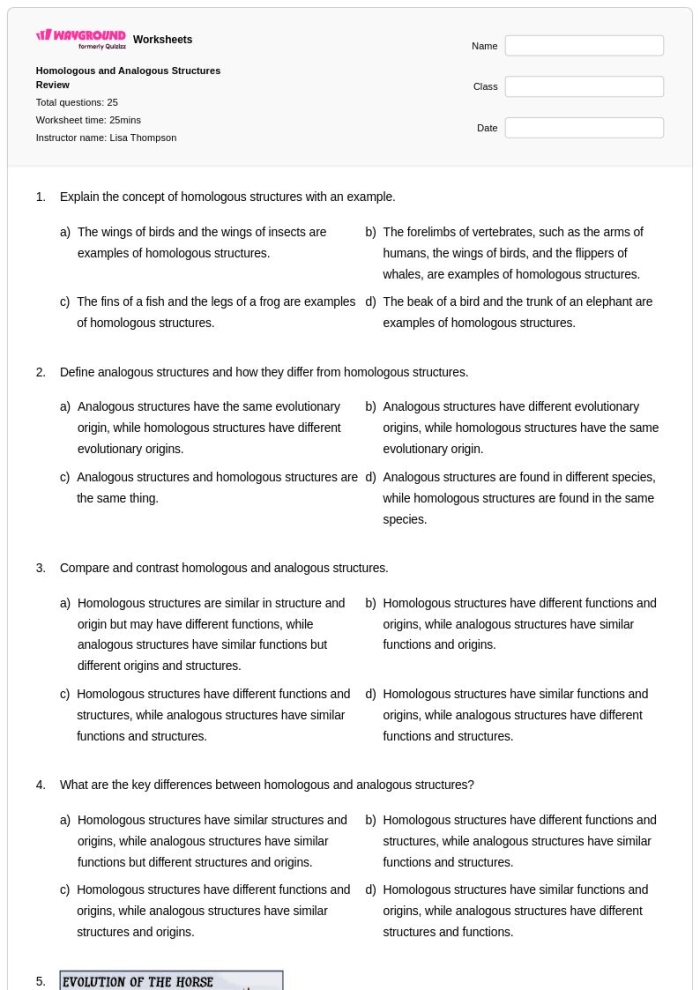
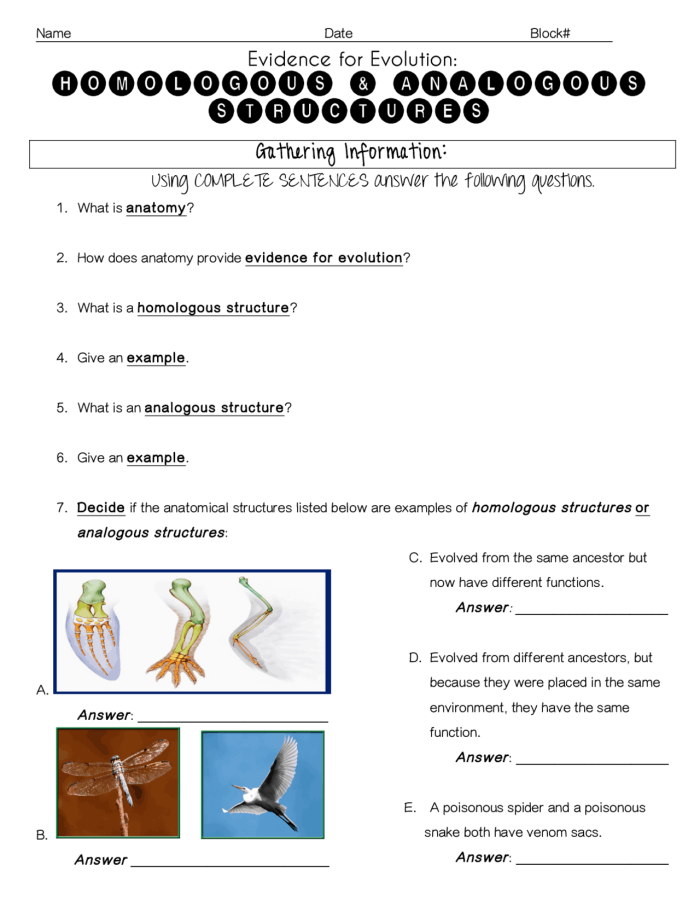
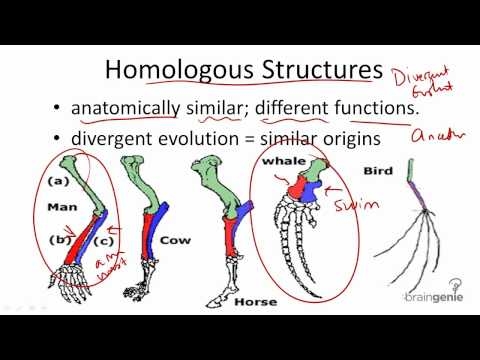
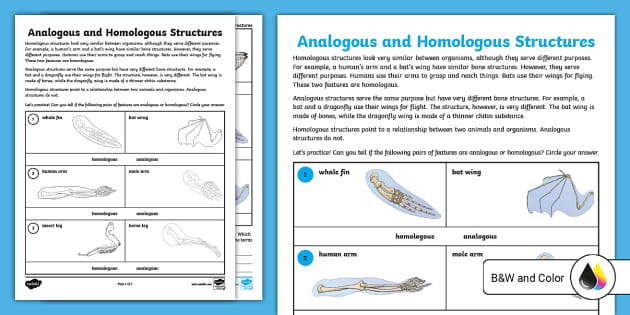
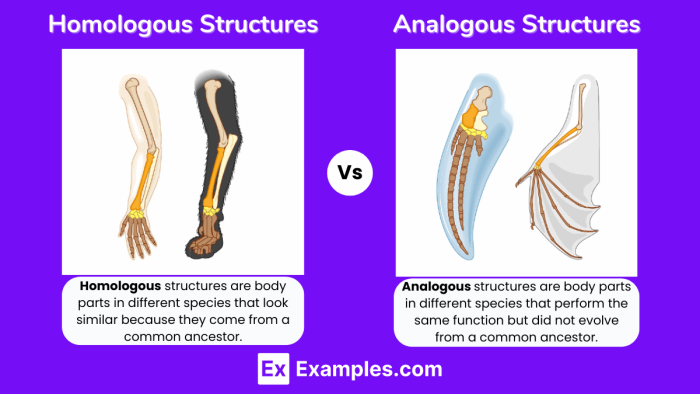
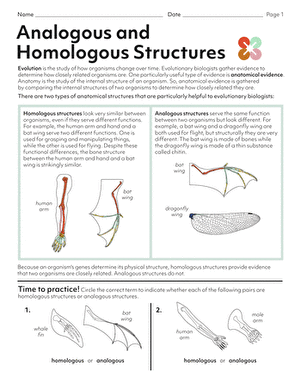
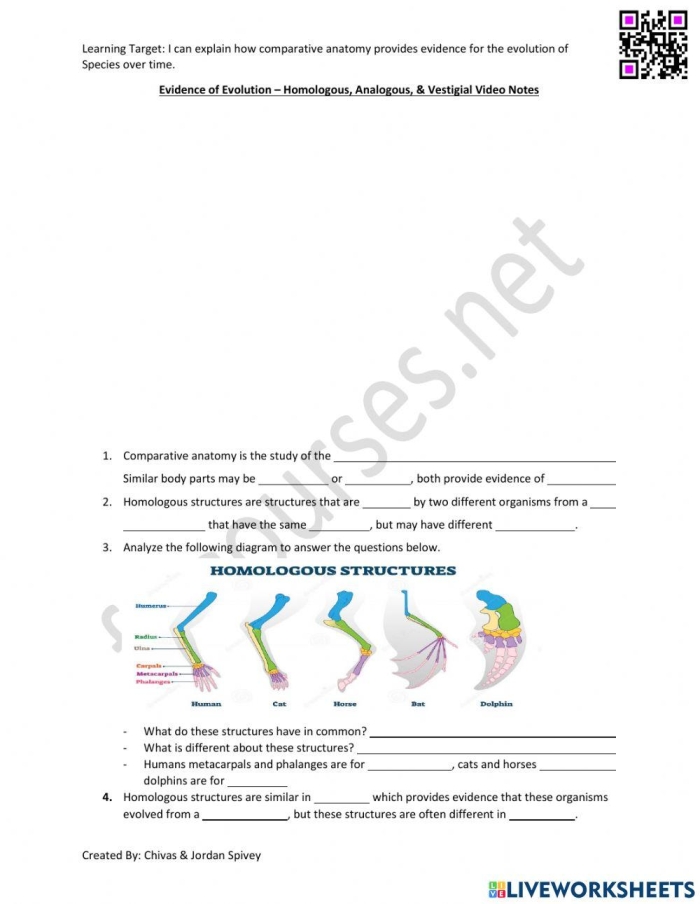
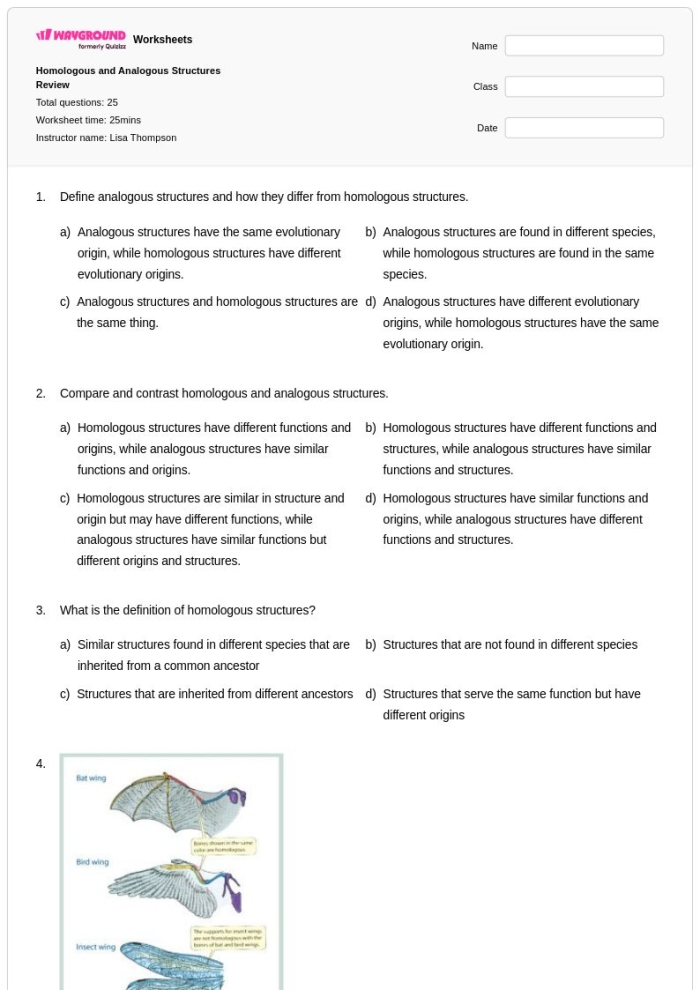
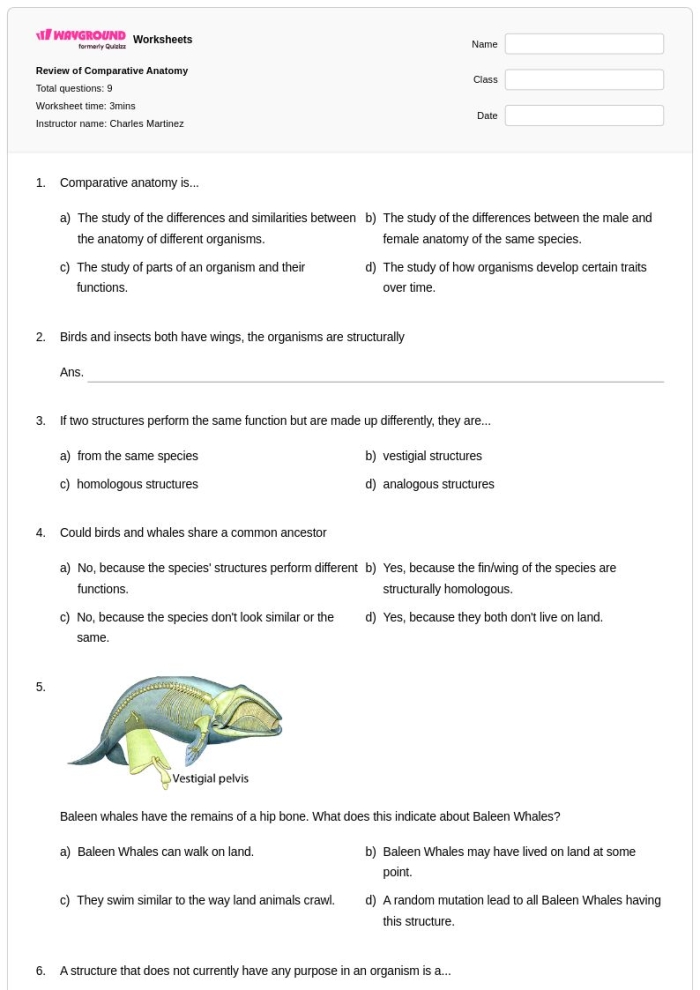
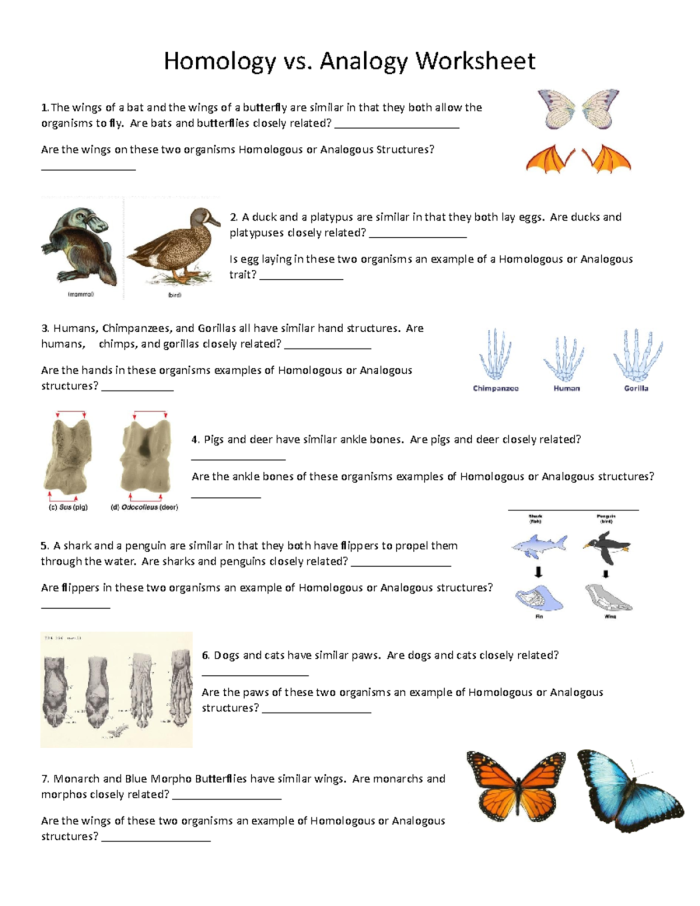
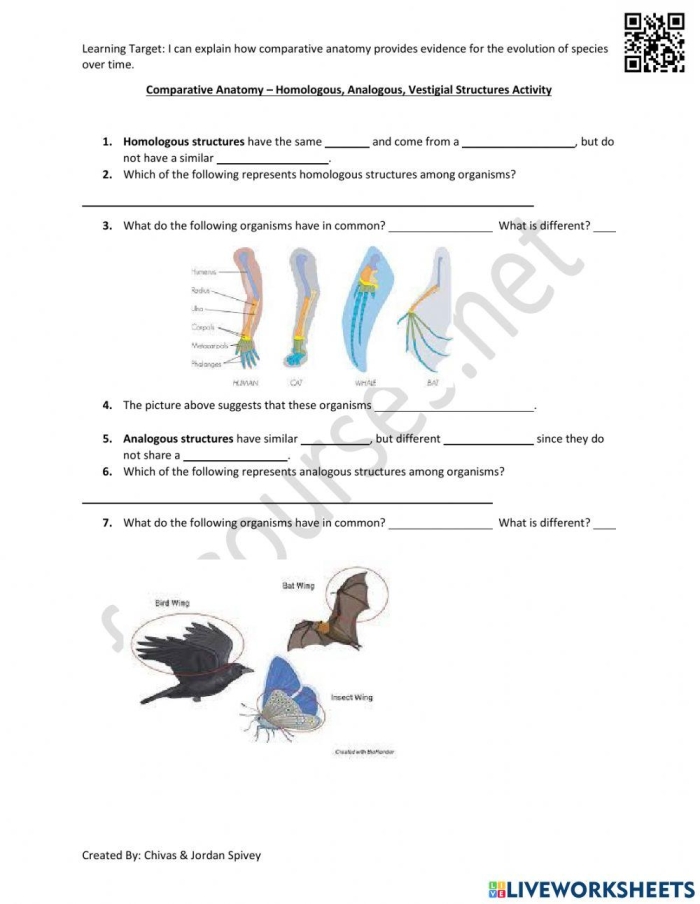
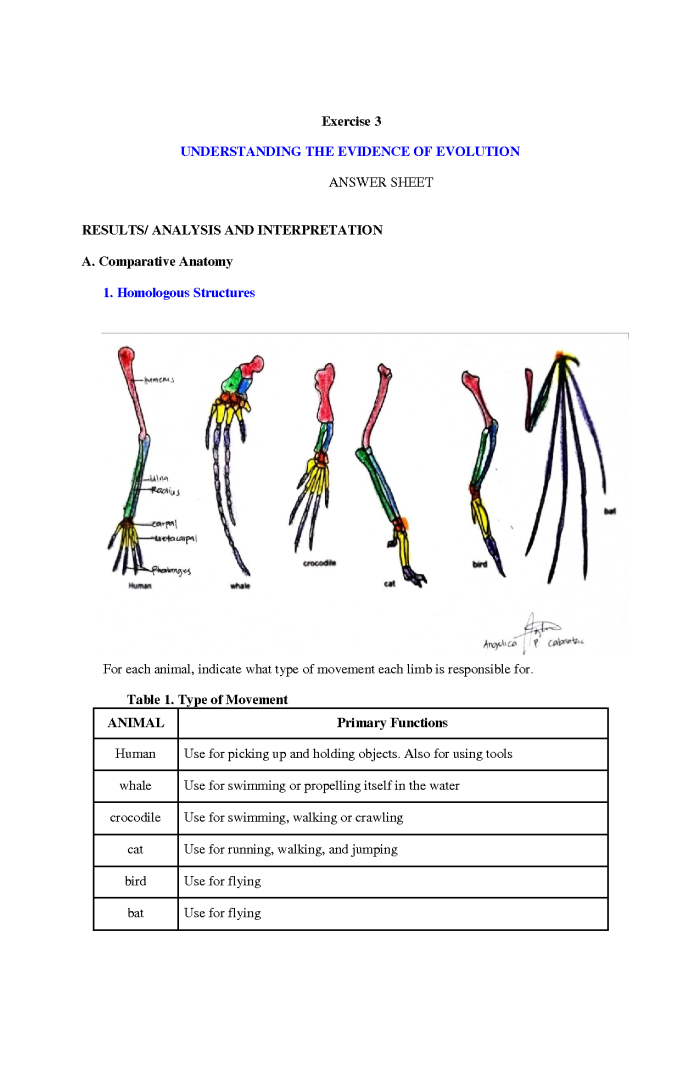
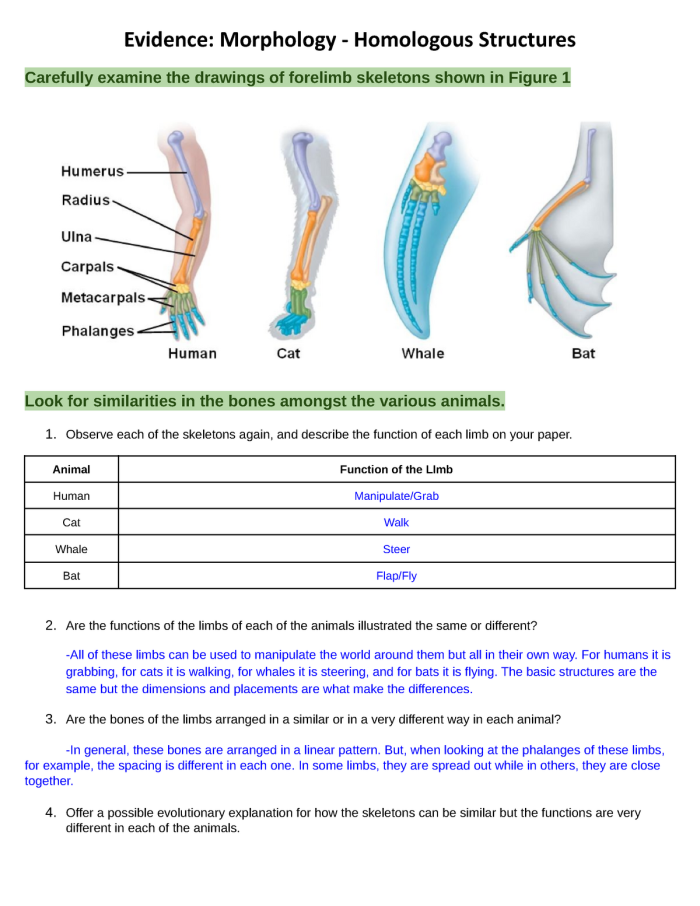
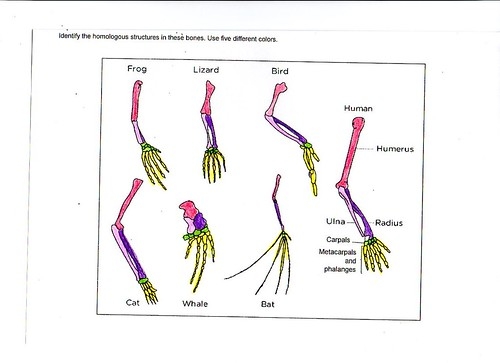
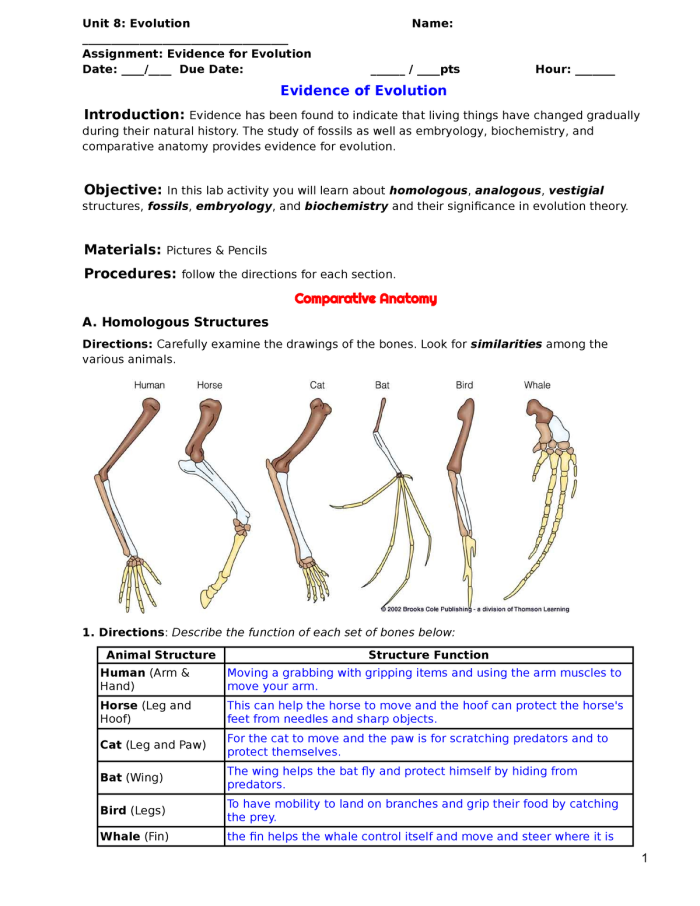
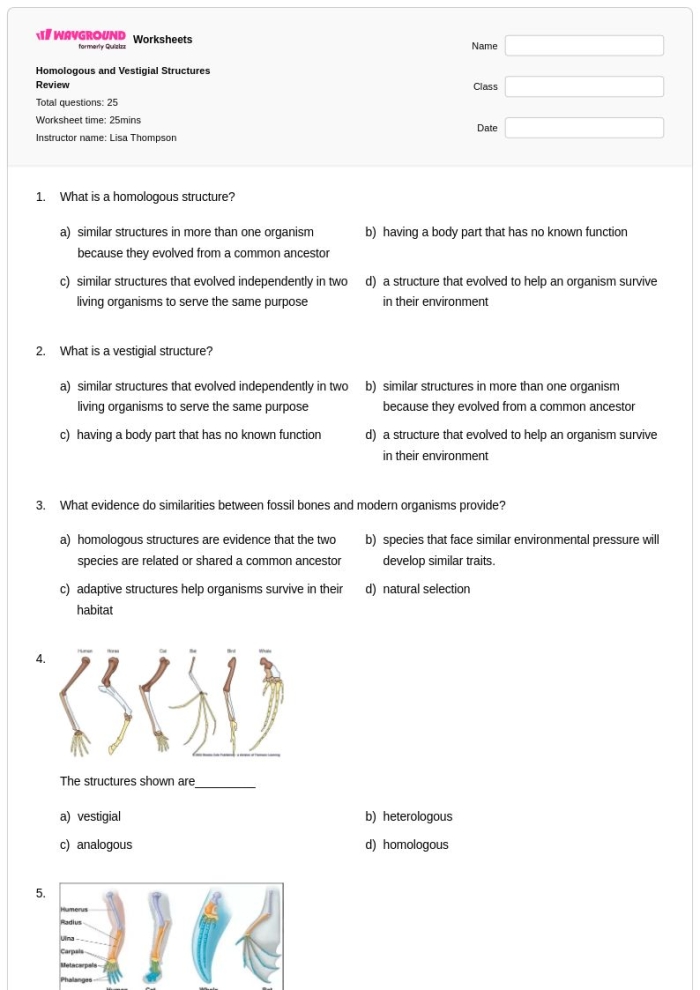
Analogous structures are features in different species that serve similar functions but do not share a common evolutionary origin. For example, the wings of a butterfly and the wings of a bird both enable flight, yet they evolved independently. In contrast, homologous structures, such as the forelimbs of humans and the flippers of whales, demonstrate a common ancestry despite serving different functions. By examining these structures, students can draw conclusions about how evolution shapes the diversity of life.

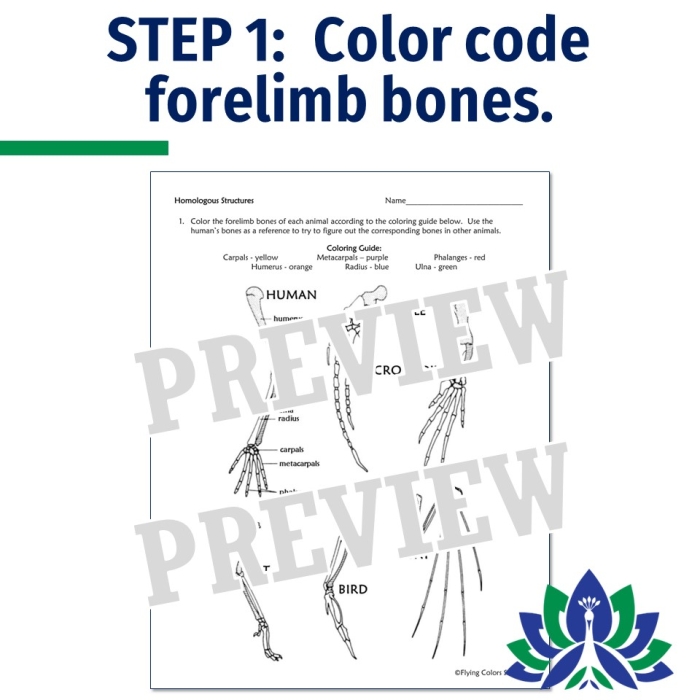
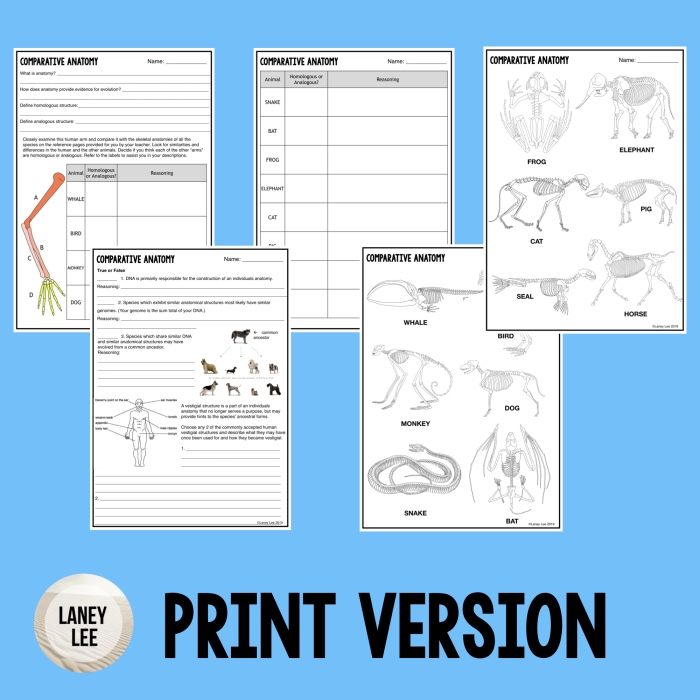
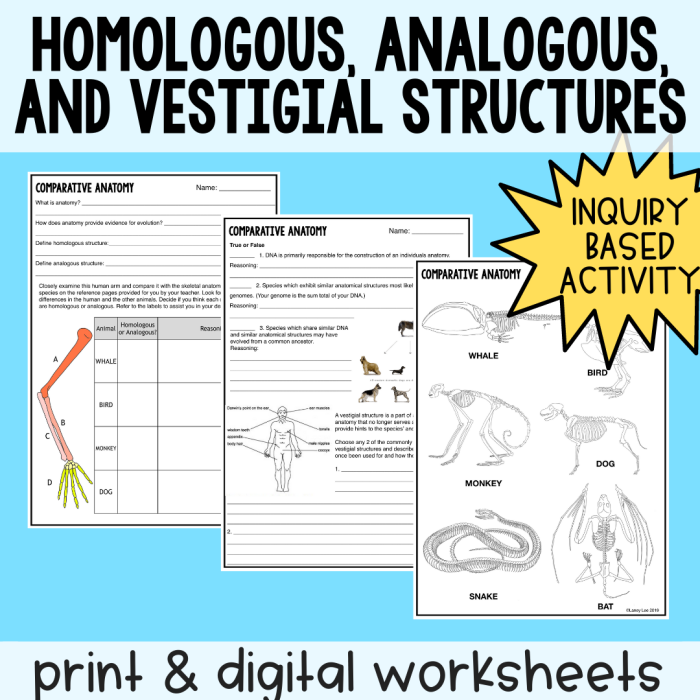
Using printable worksheets on analogous and homologous structures can enhance the learning experience for sixth graders. These resources often include diagrams and comparison charts that allow students to visually analyze the similarities and differences between various organisms. Through interactive activities, students can engage with the material, making it easier to grasp complex concepts. For instance, a worksheet might prompt students to identify and label homologous structures in different species, reinforcing their understanding of evolutionary relationships.

Furthermore, this approach to learning aligns with the broader goals of science education, encouraging curiosity and critical thinking. As students compare structures in the bodies of different organisms, they develop skills that are essential not just in science but in understanding the world around them. Incorporating worksheets that focus on these concepts can be a valuable addition to any sixth-grade reading curriculum, offering students practical tools to explore the intricacies of biology.

To further explore related topics, consider checking out resources like the Ancient Roman Aqueducts worksheet or the Equations from Word Problems worksheet. These materials can complement your understanding of how various subjects interconnect within the sixth-grade curriculum.


Worksheet Practice Section
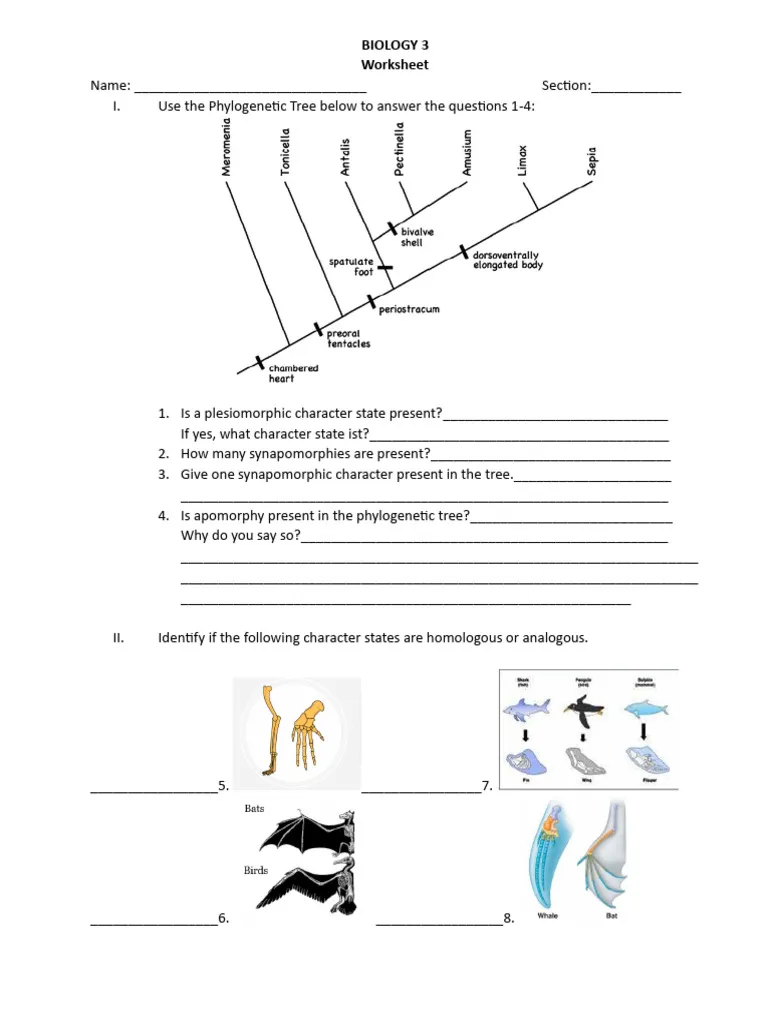
Diagram comparing analogous and homologous structures across different animal species for sixth grade biology students
Sixth grade life science worksheet displaying diagrams of analogous and homologous structures for evolutionary comparison
Diagram showing skeletal structures of different animals with labeled bones highlighting similar anatomical features across species
Sixth grade science students analyzing evolutionary patterns with an Analogous and Homologous Structures worksheet
Sixth grade students examining diagrams of similar bone structures in animal limbs to identify homologous features for evolution worksheet number five
Diagram showing skeletal structures of different animal limbs with labeled bones highlighting similar patterns in human arms, bat wings, and whale flippers
Diagram comparing bone structures of human arm, whale flipper, and bat wing showing similar skeletal patterns for analogous and homologous structures worksheet
Diagram showing analogous and homologous bone structures in animal limbs for comparing evolutionary relationships
Sixth grade science students analyzing evolutionary relationships on an analogous and homologous structures worksheet
Sixth grade science students analyzing evolutionary relationships on an Analogous and Homologous Structures worksheet
Diagram showing analogous and homologous bone structures comparing human arm, whale flipper, and bat wing for sixth grade evolution study
Sixth grade life science worksheet comparing biological structures to determine evolutionary connections
Diagram showing analogous and homologous structures found in different animal species for sixth grade life science comparison
Sixth grade science students analyzing diagrams of analogous and homologous body structures on a printable worksheet
Sixth grade students examining diagrams of similar bone structures in animal limbs to understand evolution and adaptation
Diagram showing analogous and homologous bone structures comparing human arm whale flipper and bat wing to demonstrate evolutionary relationships
Sixth grade science students analyzing evolutionary relationships with an Analogous and Homologous Structures worksheet
Sixth grade science students analyzing analogous and homologous structures on a comparative anatomy worksheet
Diagram showing analogous and homologous structures found in different animal species for sixth grade biology comparison
Sixth grade students completing a biology worksheet on analogous and homologous body structures
Sixth grade life science worksheet displaying diagrams for comparing analogous and homologous structures
Sixth grade worksheet showing anatomical diagrams of animal limbs for comparing analogous and homologous structures
Sixth grade science worksheet focused on identifying and comparing analogous and homologous biological structures
Sixth grade science worksheet focused on comparing analogous and homologous body structures in various organisms

Leave a Reply

Your email address will not be published. Required fields are marked *