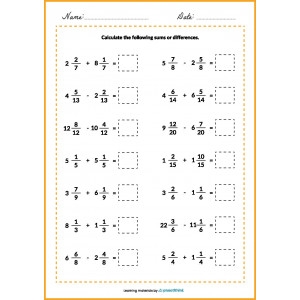
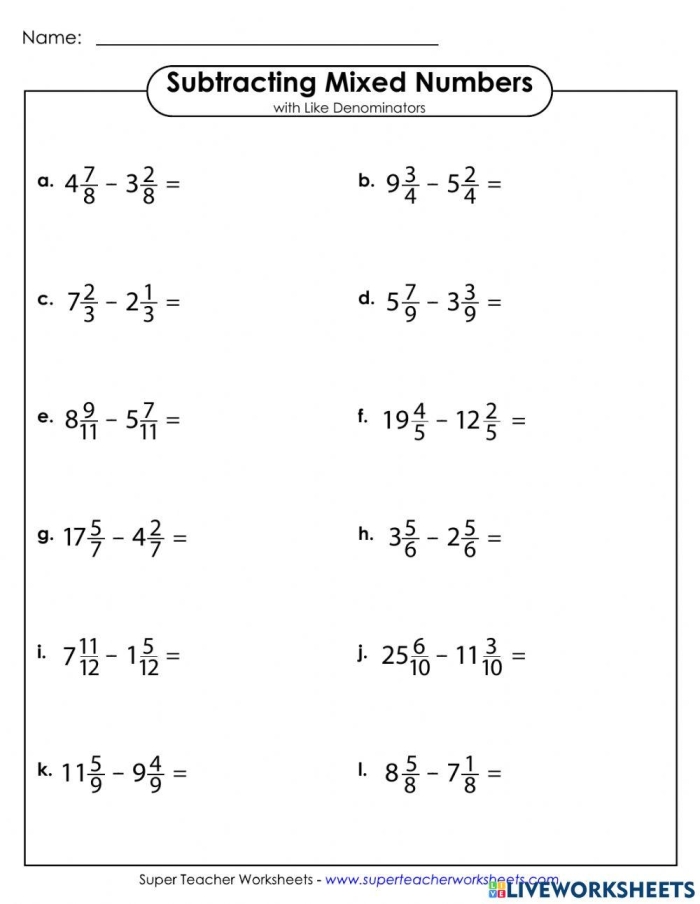
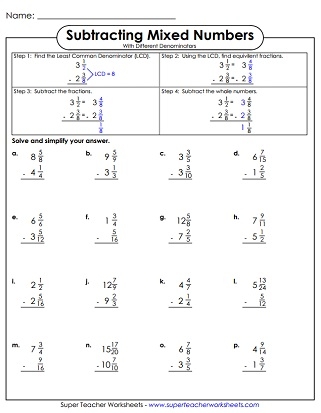
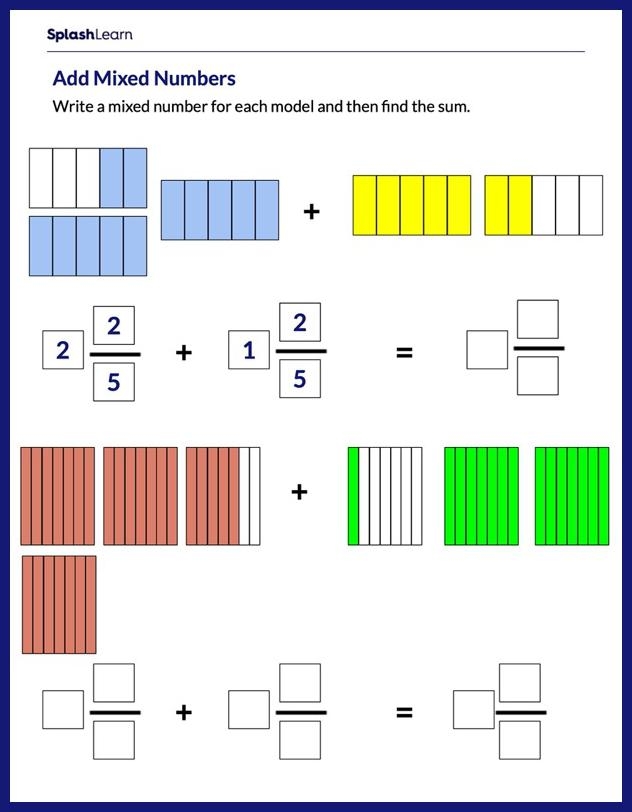
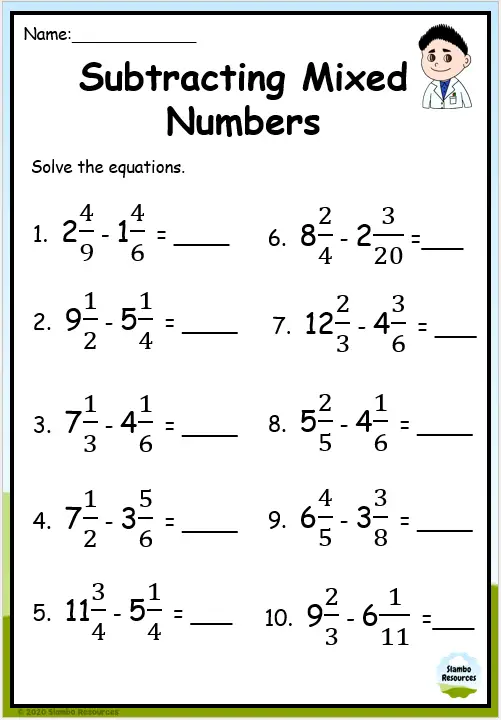
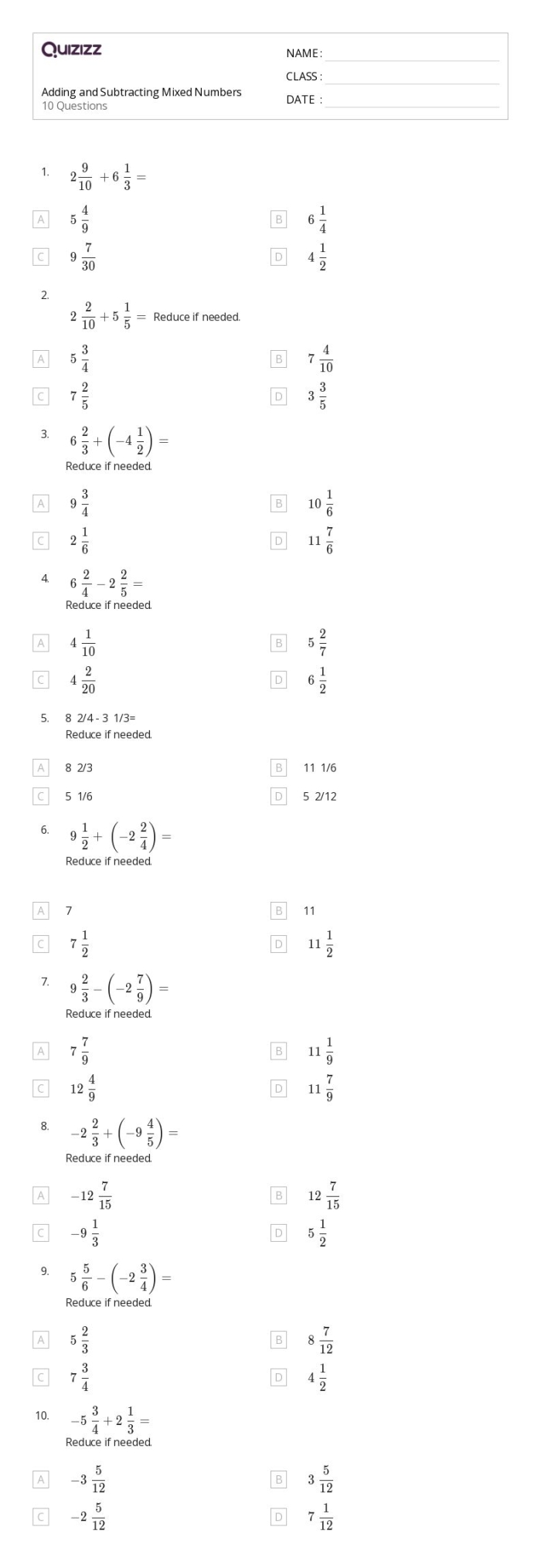
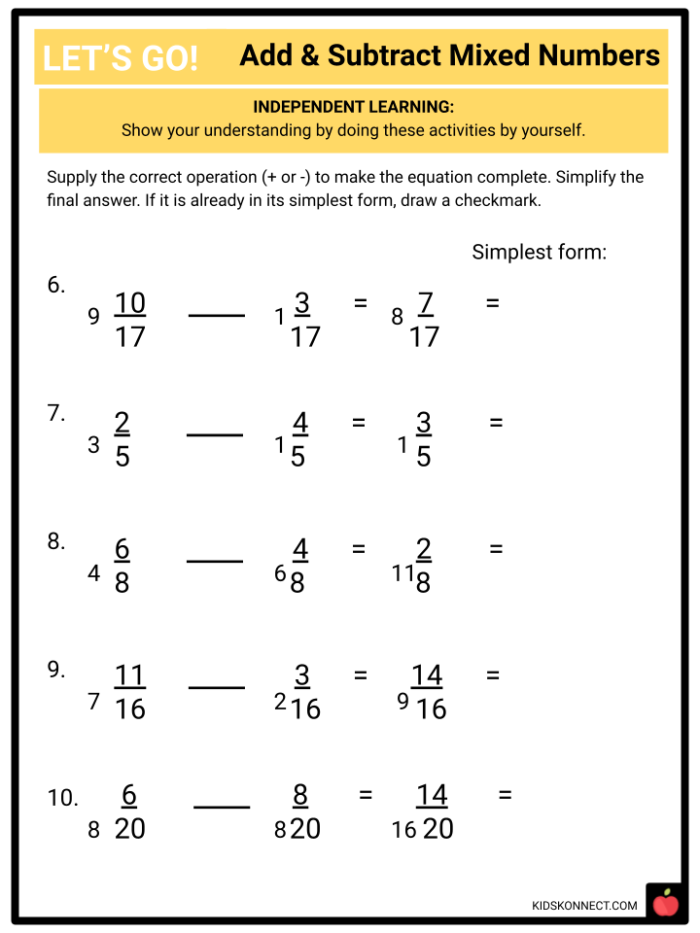
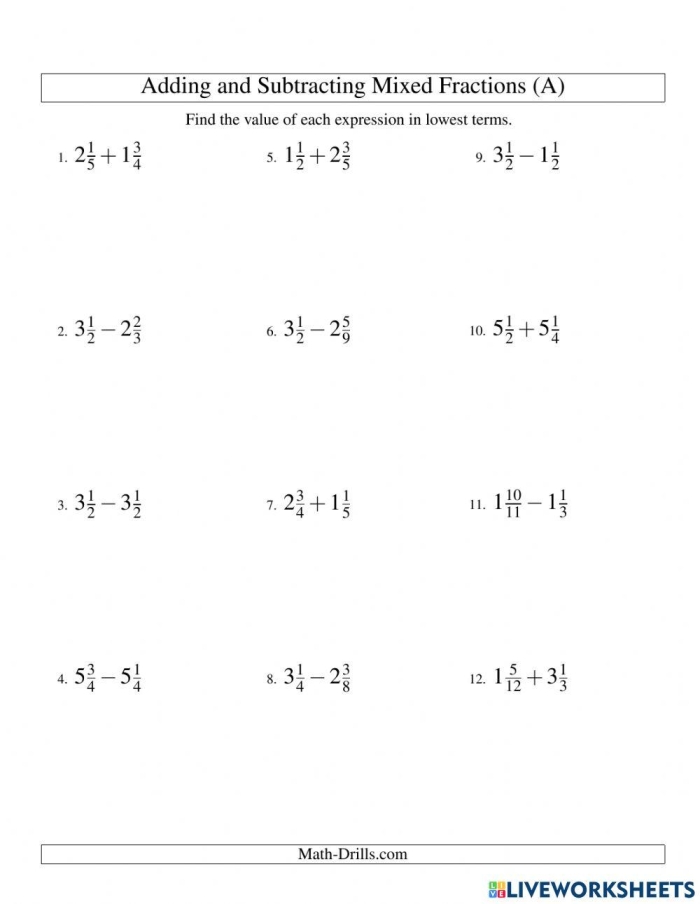
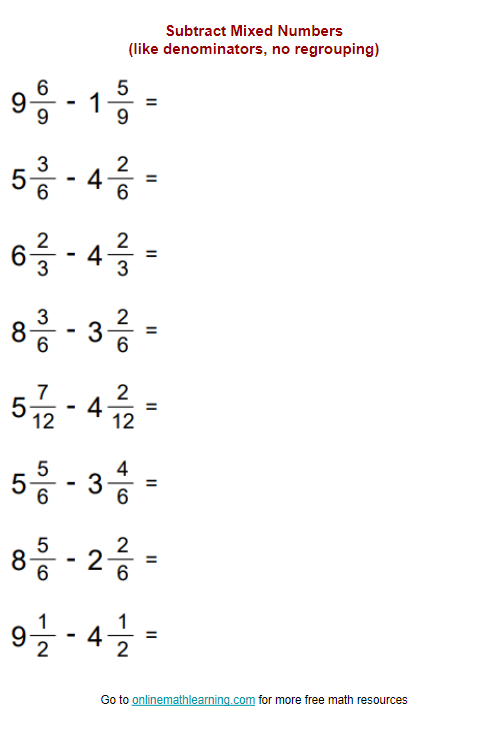
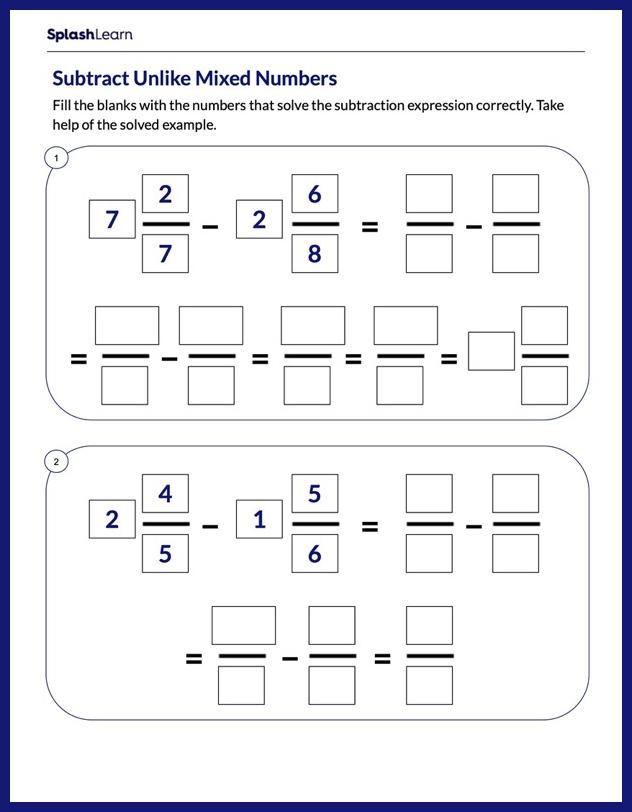
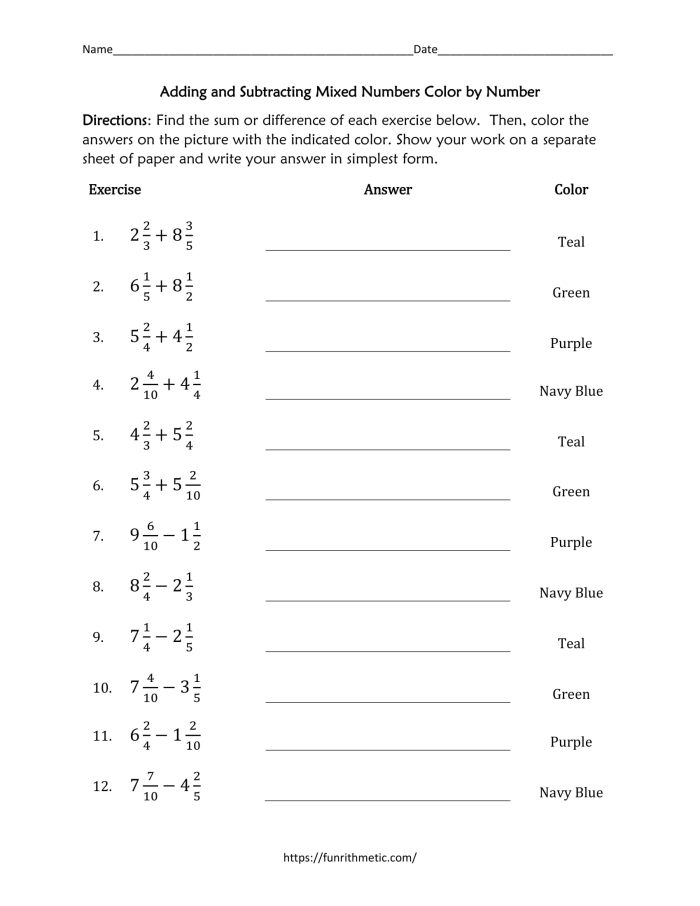
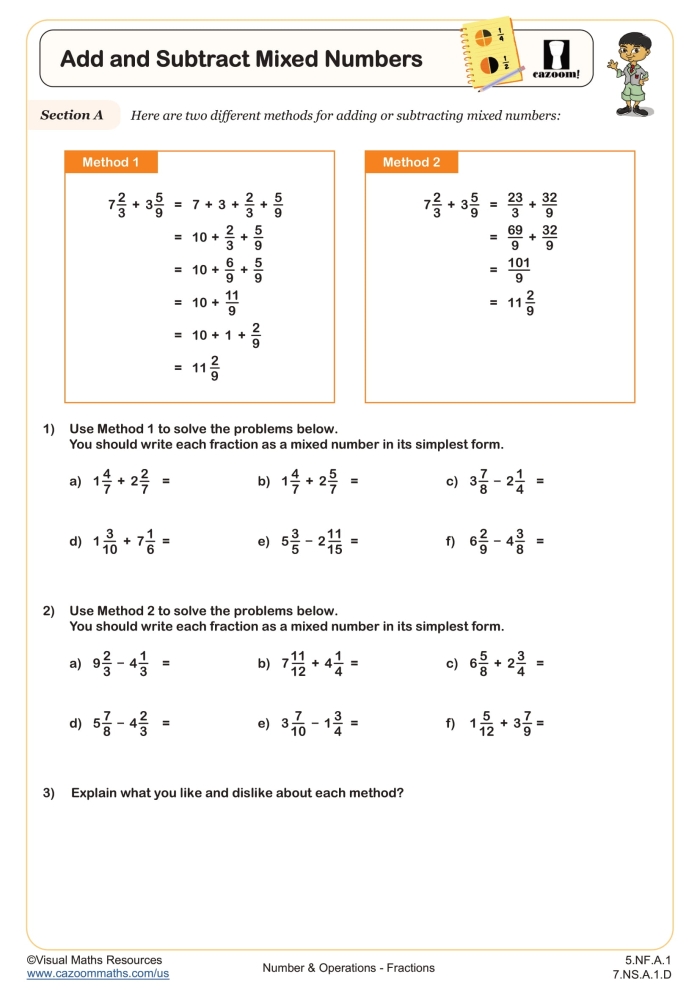
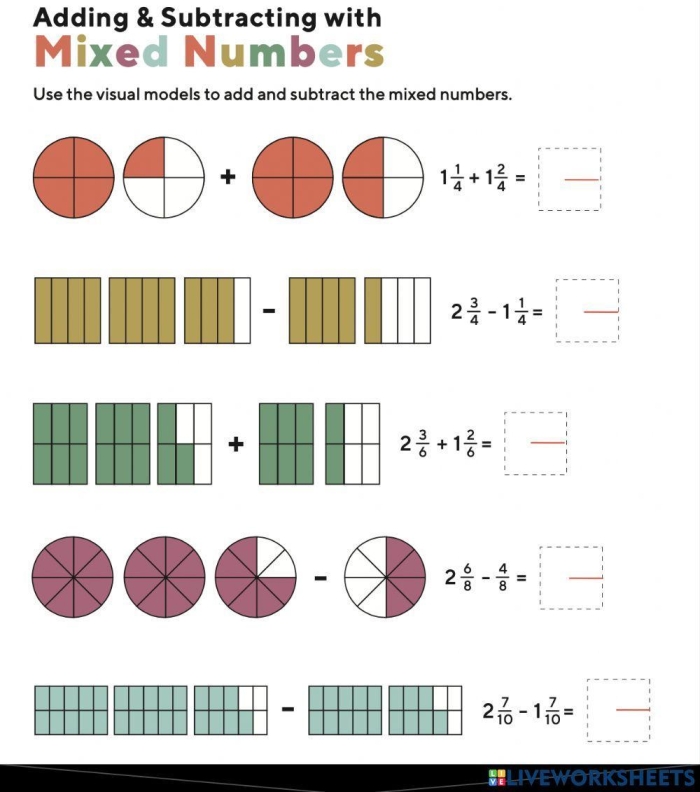
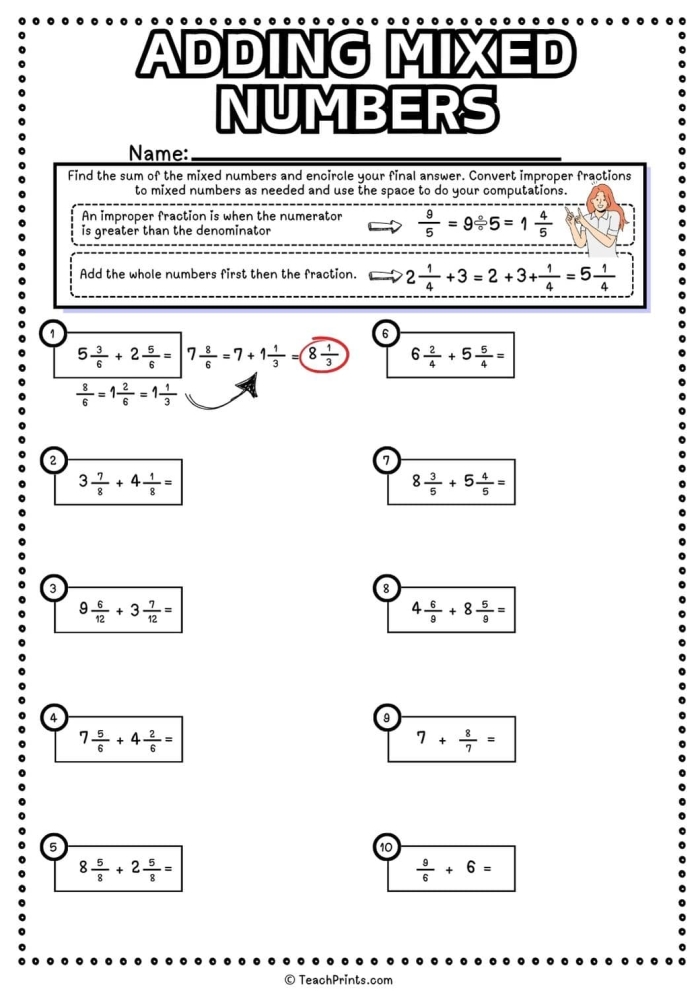
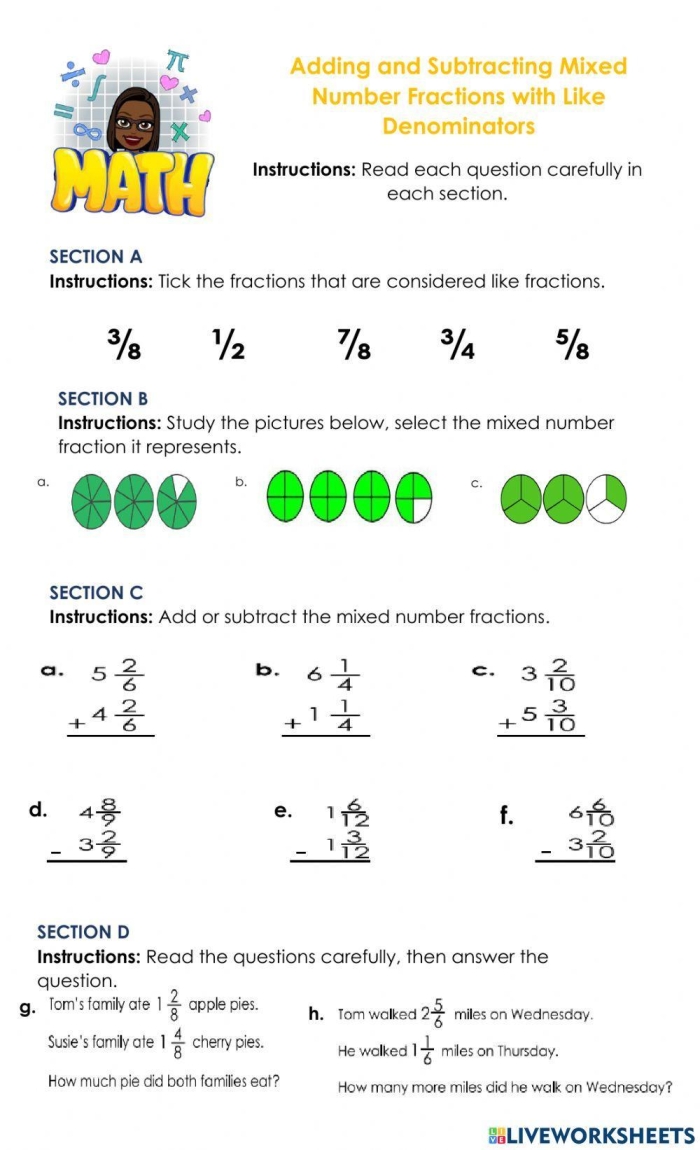
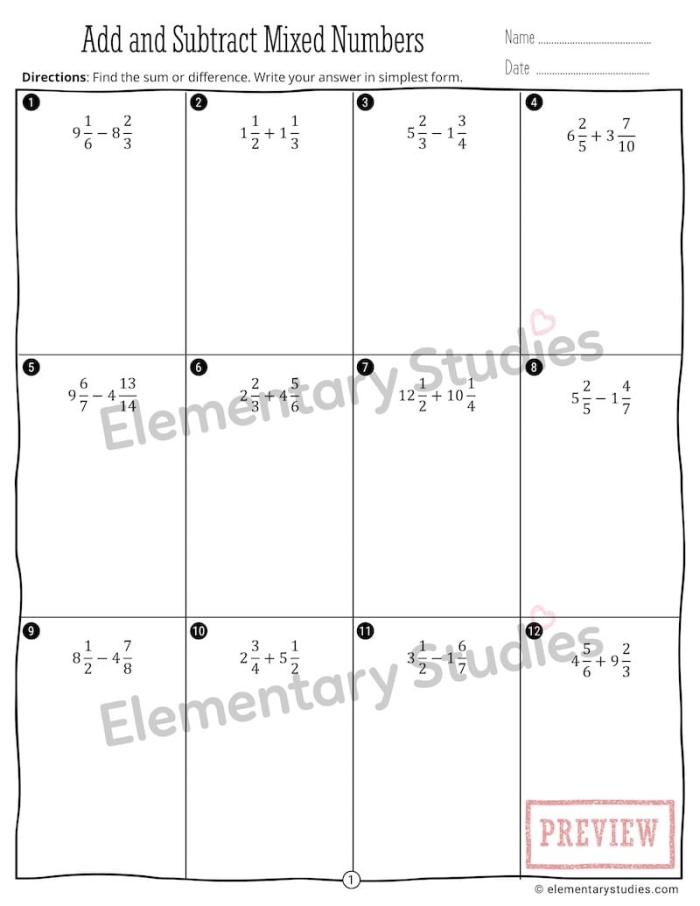
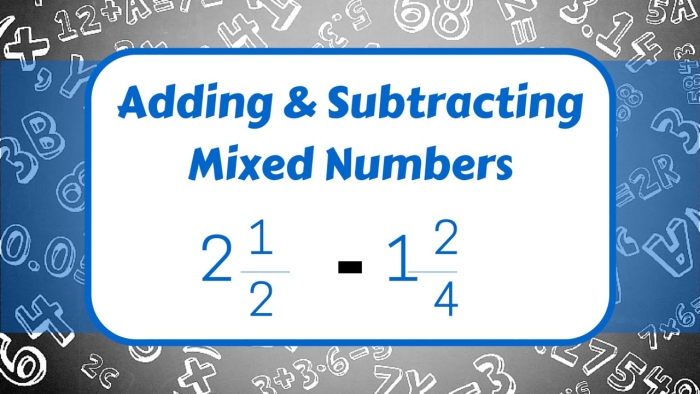
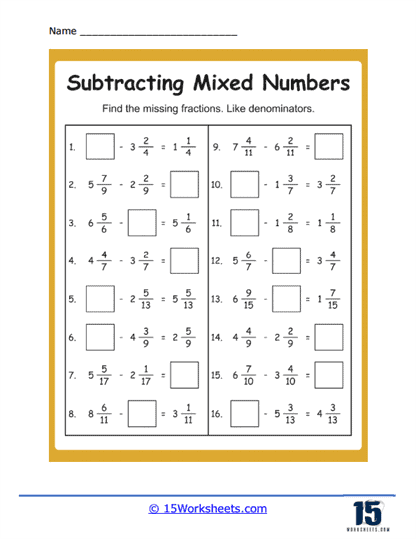
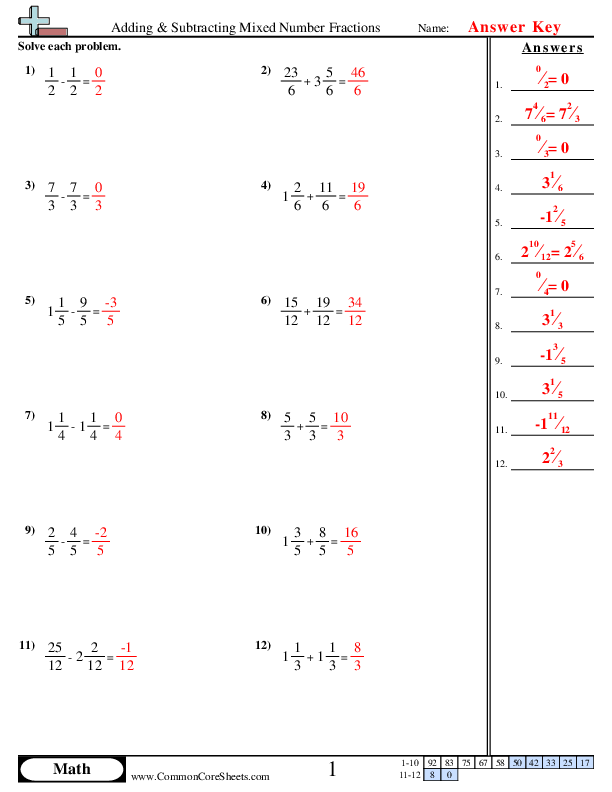
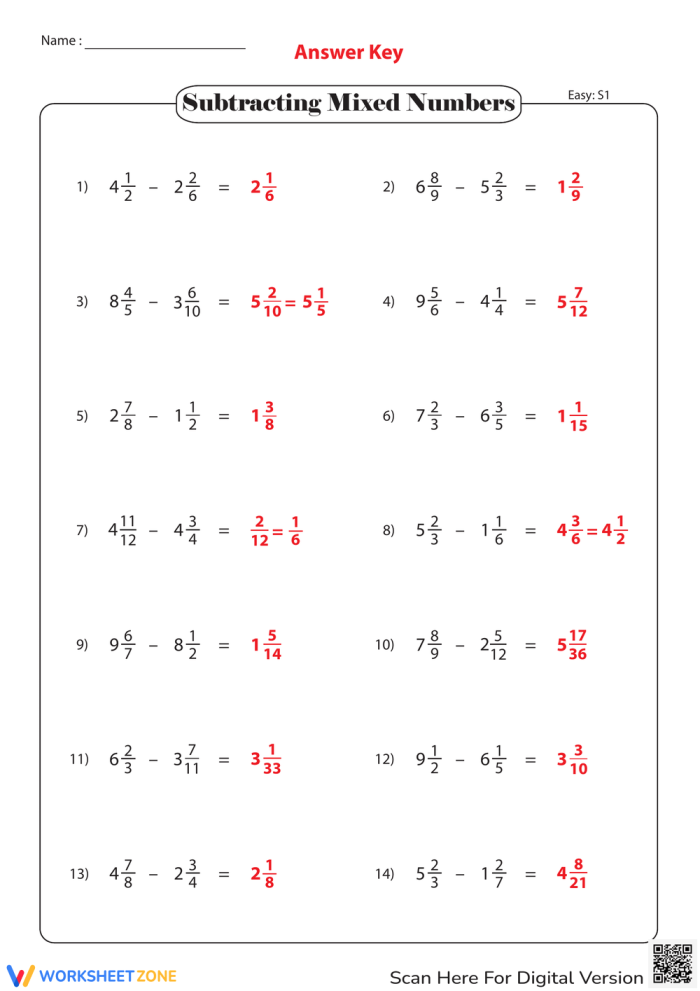
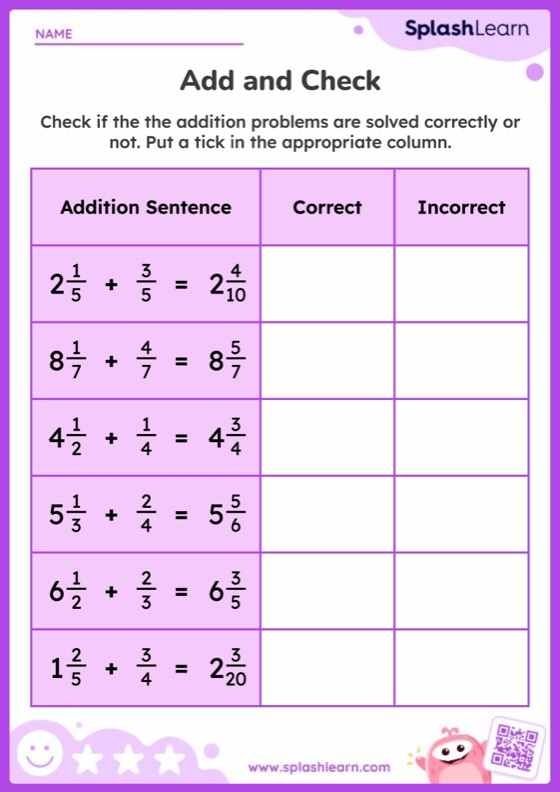
Children often find math more engaging when it involves visuals. This is particularly true in fourth grade, where students typically encounter the concept of adding and subtracting with mixed numbers. In this worksheet, children refer to the shaded shapes to help them solve the equations, making the learning process both interactive and enjoyable.
The use of shaded shapes serves a dual purpose. First, it offers a visual aid that can help students grasp the abstract concepts of mixed numbers. For instance, when children see a shape divided into sections, they can better understand how to add or subtract the fractional parts by counting the shaded areas. This method reinforces their comprehension of fractions while keeping them engaged with the task at hand.
Moreover, this approach can help alleviate some of the anxiety that often accompanies math for young learners. Instead of viewing numbers as mere symbols on a page, they can relate to the shapes, making the equations feel more tangible. When children successfully solve the equations by referencing the shaded shapes, they gain confidence in their abilities, fostering a more positive attitude towards math.
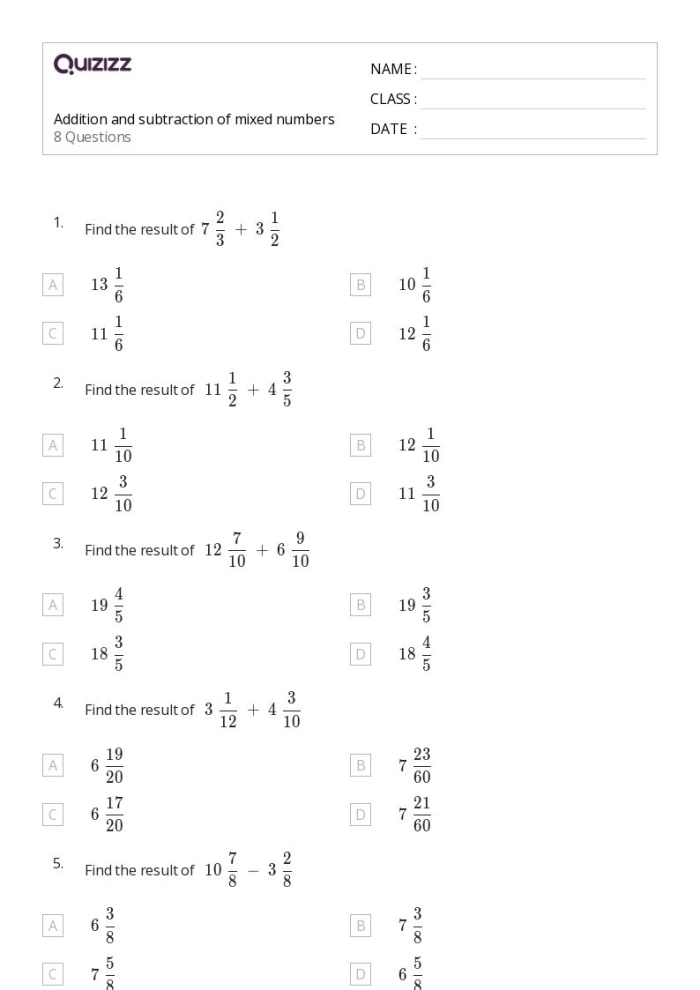
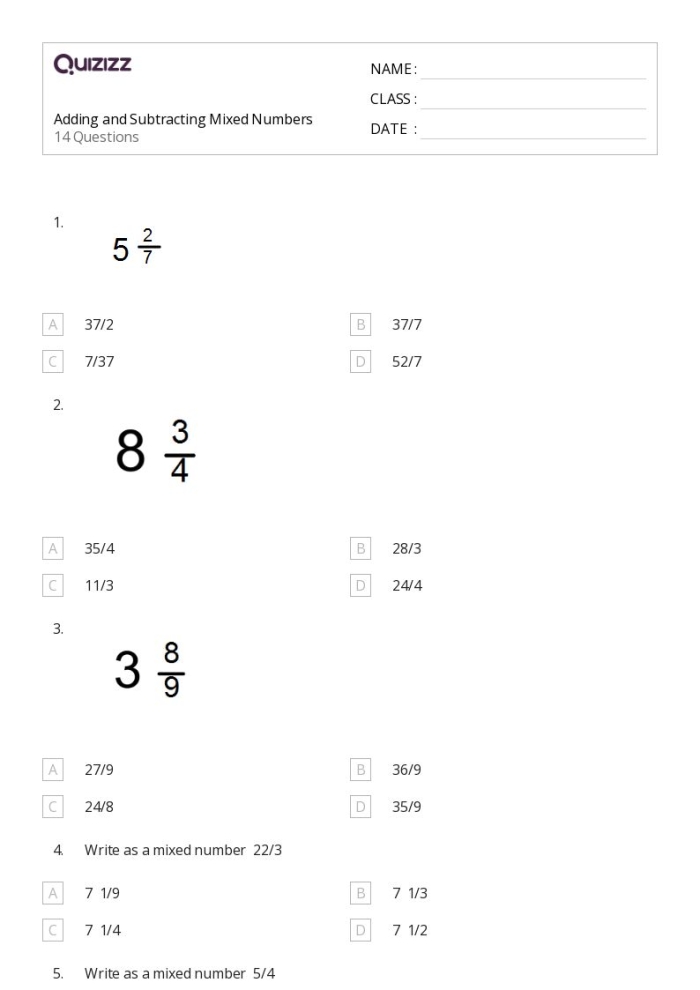
In addition to enhancing understanding, worksheets like these can also provide essential practice. As students work through problems involving mixed numbers, they develop their skills in addition and subtraction. This practice is crucial for their overall mathematical development, as these skills will be built upon in future lessons.
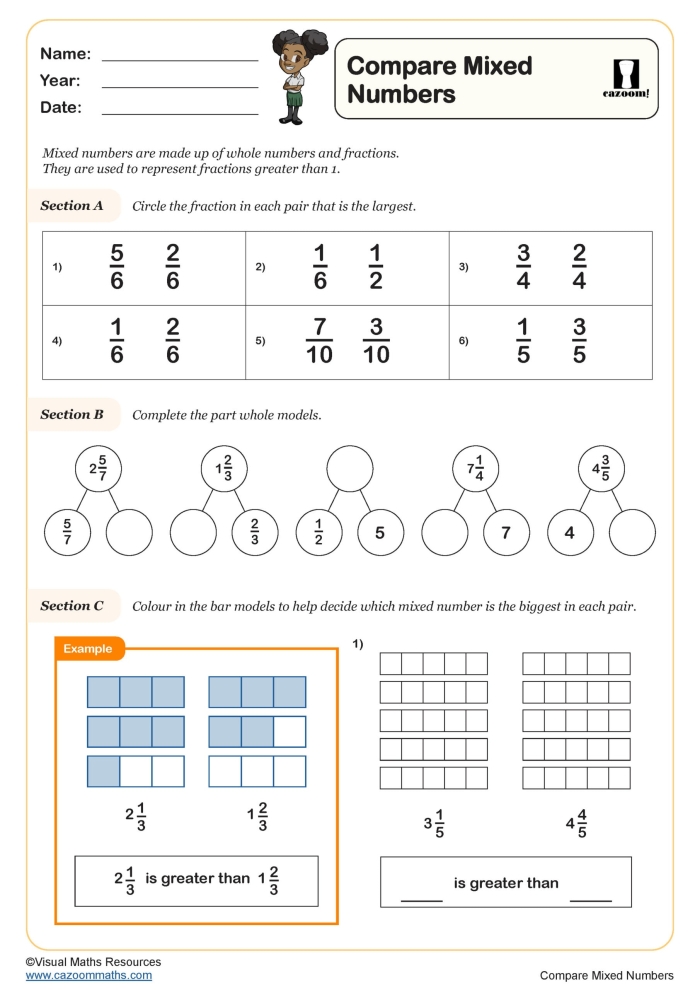
For parents and teachers looking for more resources, there are various printable worksheets available online. For example, you can explore worksheets focused on comparing and contrasting nonfiction texts or matching antonyms, which can complement the math practice. Incorporating different types of activities helps create a well-rounded educational experience.
Worksheet Practice Section