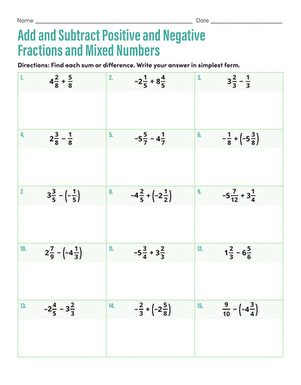
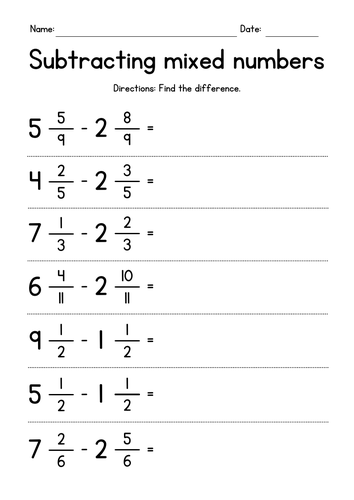
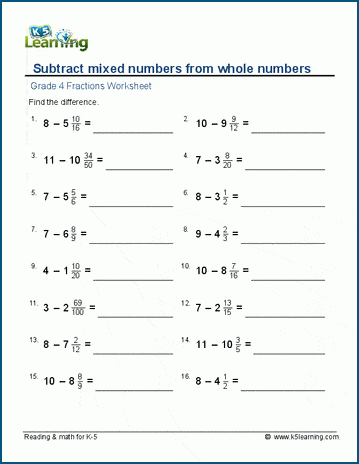
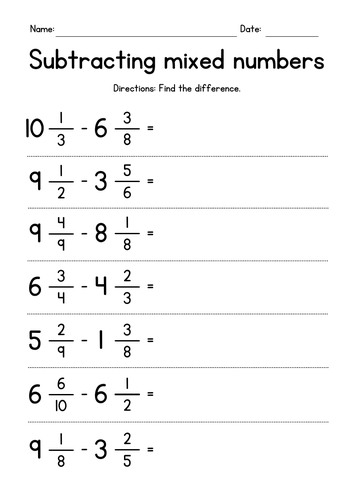
Mixed numbers trip up a lot of fifth grade students, and I understand why. When you’re working with whole numbers and fractions at the same time, the mental juggling gets real. The good news is that adding and subtracting mixed numbers follows a predictable pattern once you see it broken down properly.
The challenge most students face isn’t really the math itself, it’s keeping track of what goes where. A mixed number like 3 and 2/5 contains two separate parts that need attention. When you’re adding or subtracting, you can’t just throw all the numbers together and hope for the best. You need a system, and that’s where a structured worksheet becomes invaluable.
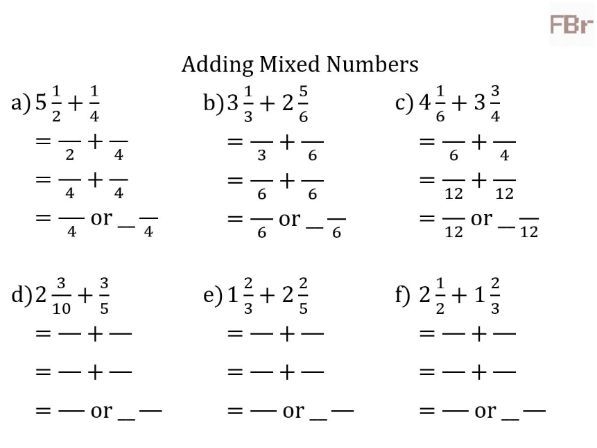
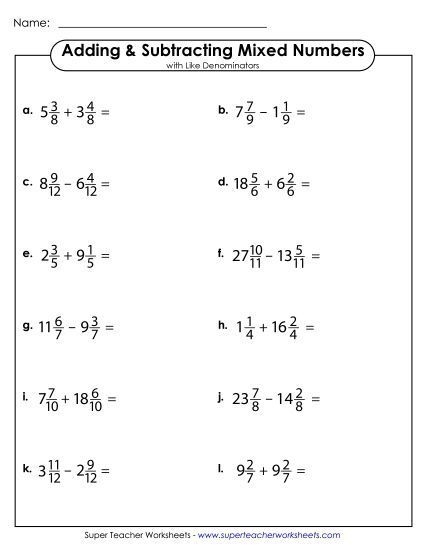
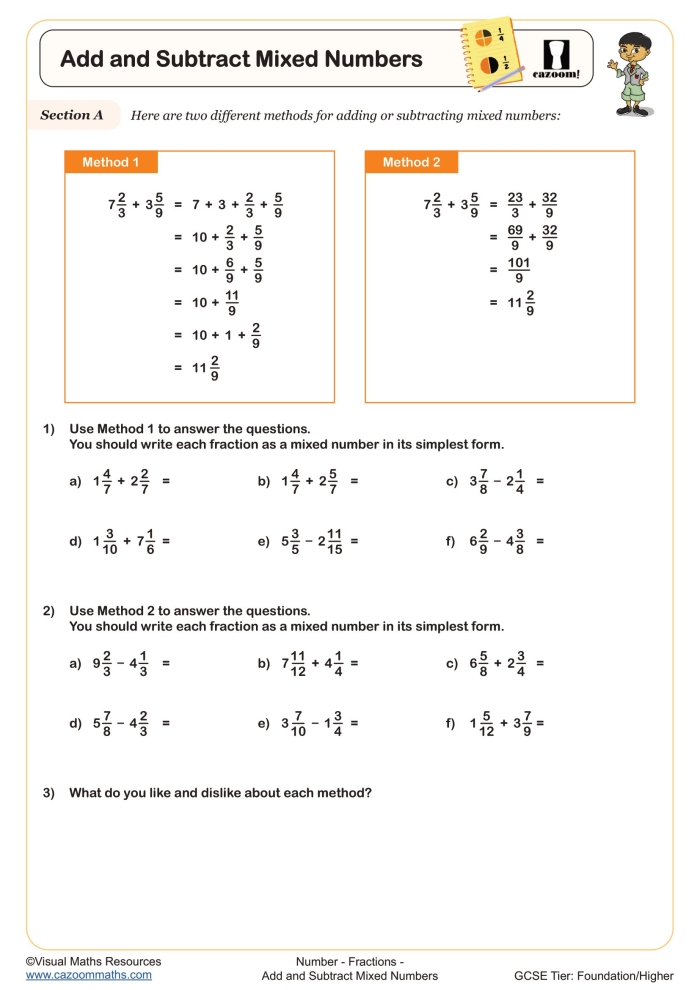
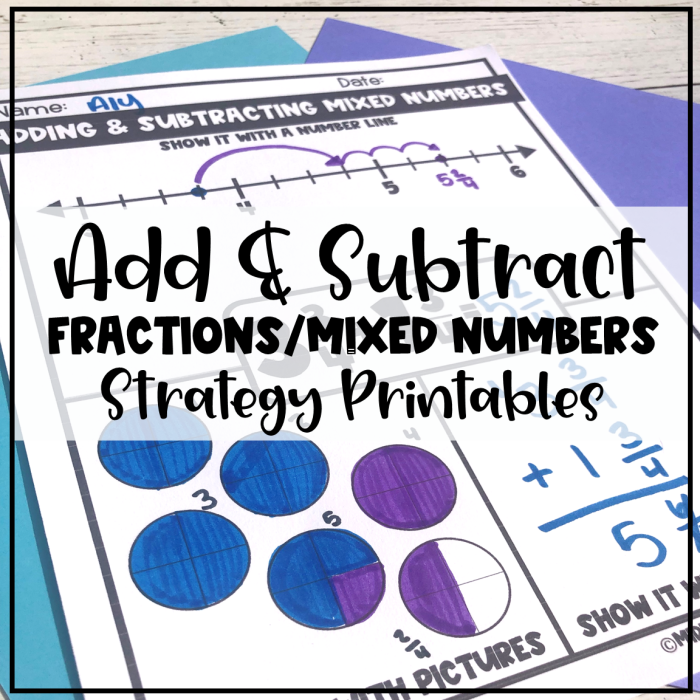
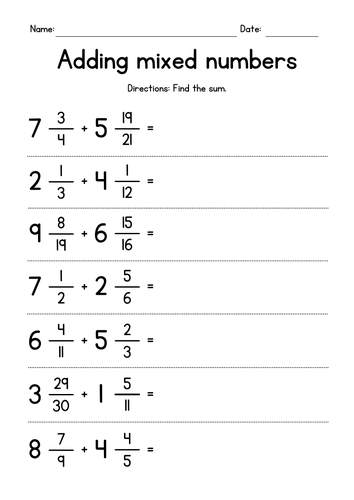
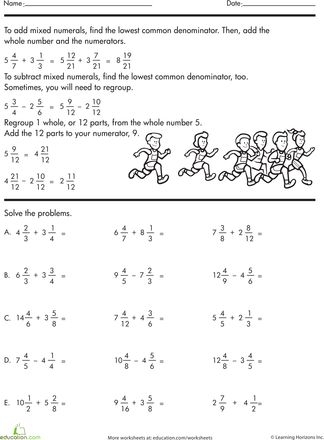
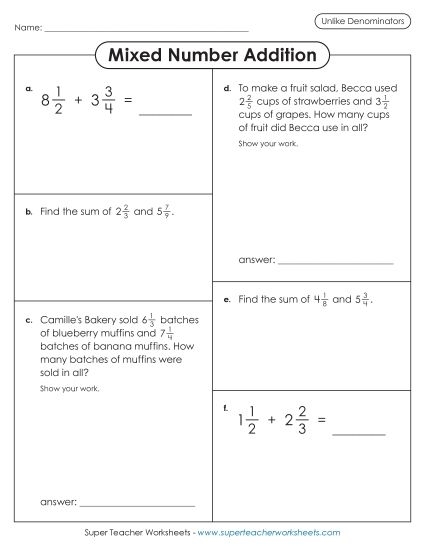
Here’s what makes the process manageable: you handle the whole numbers and fractions separately, then combine them at the end. If you’re adding 2 and 3/8 plus 1 and 1/8, you add the whole numbers first (2 plus 1 equals 3), then add the fractions (3/8 plus 1/8 equals 4/8, which simplifies to 1/2). Your answer becomes 3 and 1/2. When fractions have the same denominator, this part stays straightforward.
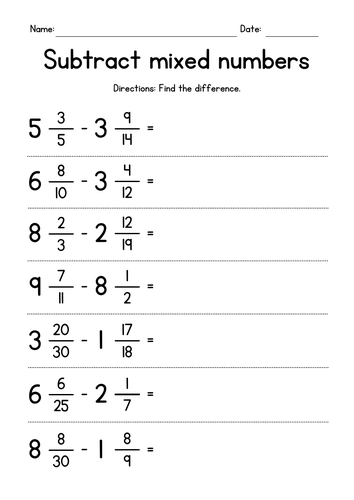
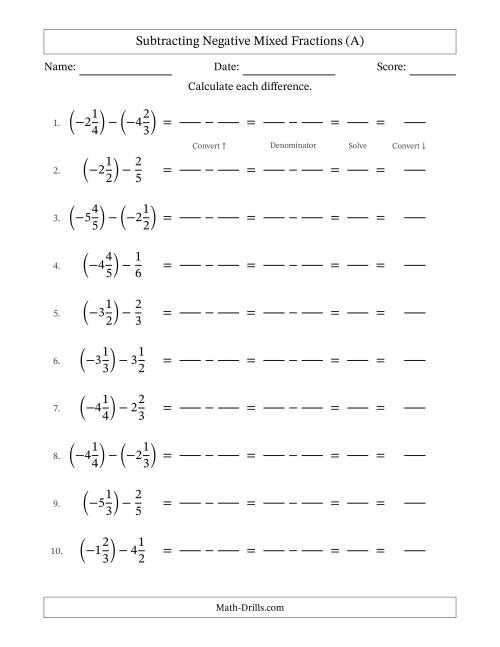
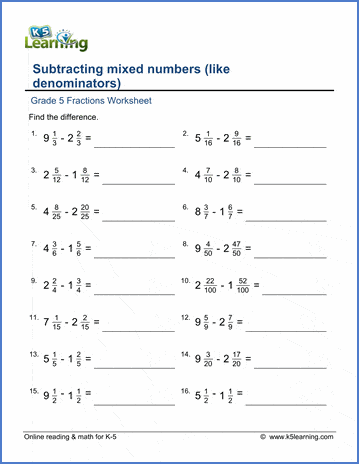
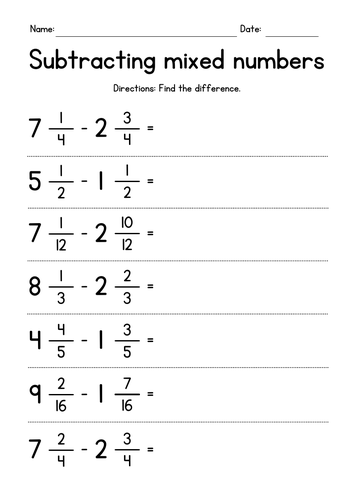
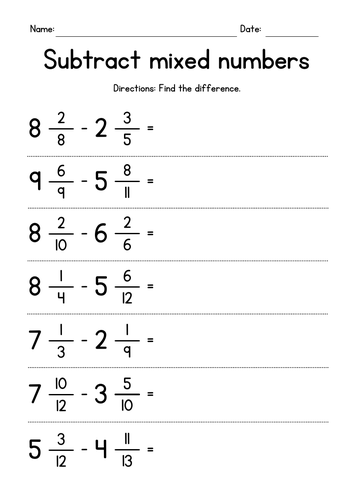
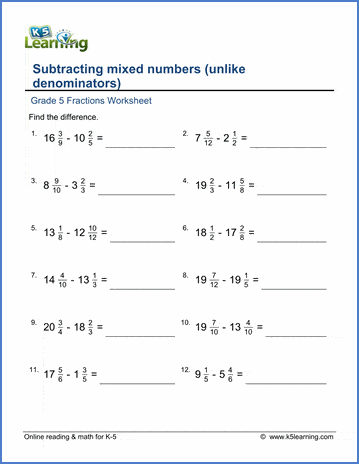
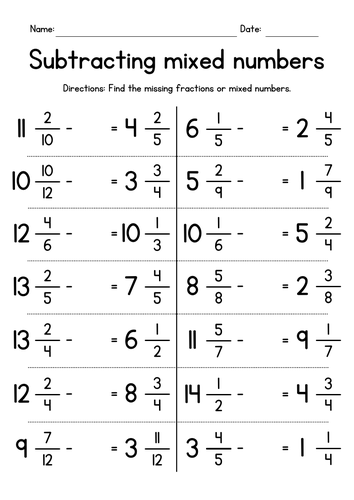
Subtraction works the same way, though it introduces a wrinkle when the fraction you’re subtracting is larger than the one you’re starting with. That’s when you need to borrow from the whole number, and this is exactly where a step-by-step worksheet shines. It walks you through the borrowing process without overwhelming you.
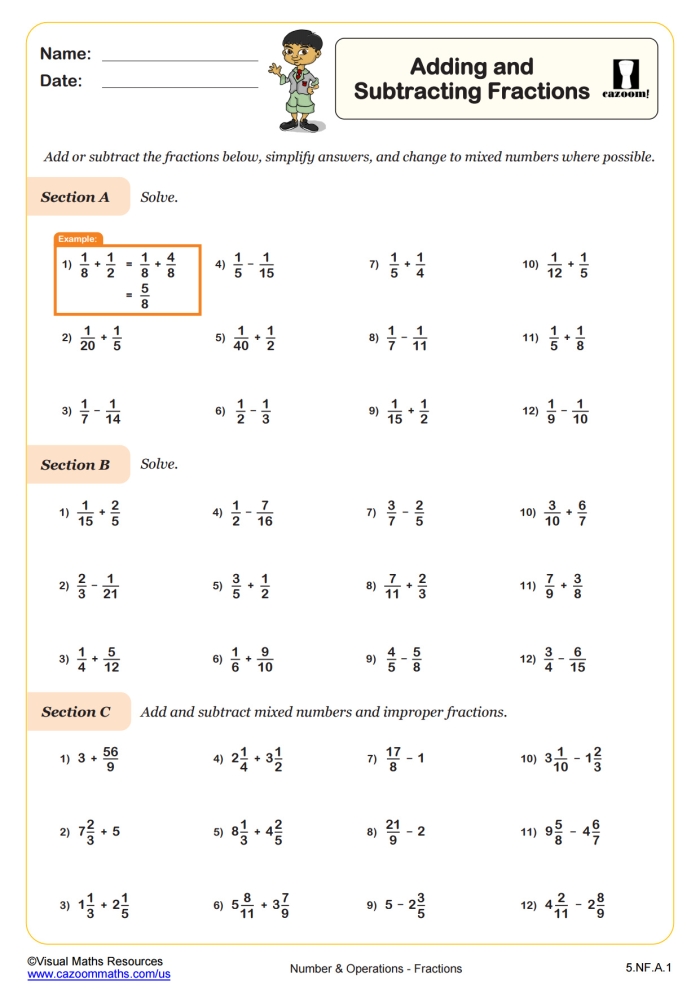
For fifth grade algebra practice, having a printable resource means students can work at their own pace and check their understanding repeatedly. Whether you’re reinforcing fraction fundamentals or preparing for more complex operations, a well-designed worksheet transforms what feels overwhelming into something manageable. Pairing this with other algebra fifth grade worksheets like finding the missing numerator or denominator gives students a complete foundation in fraction work.
Try These Printable Worksheets