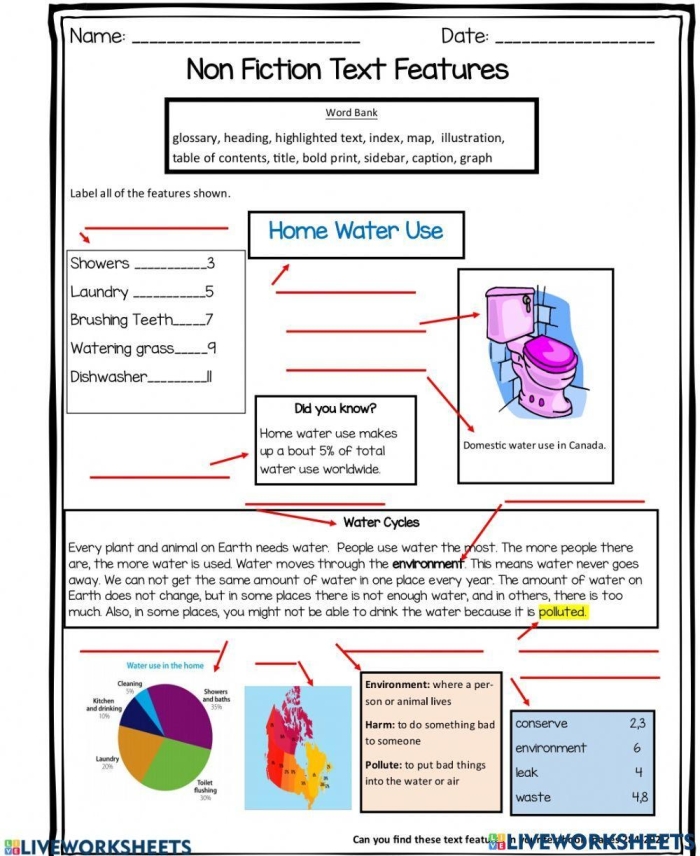
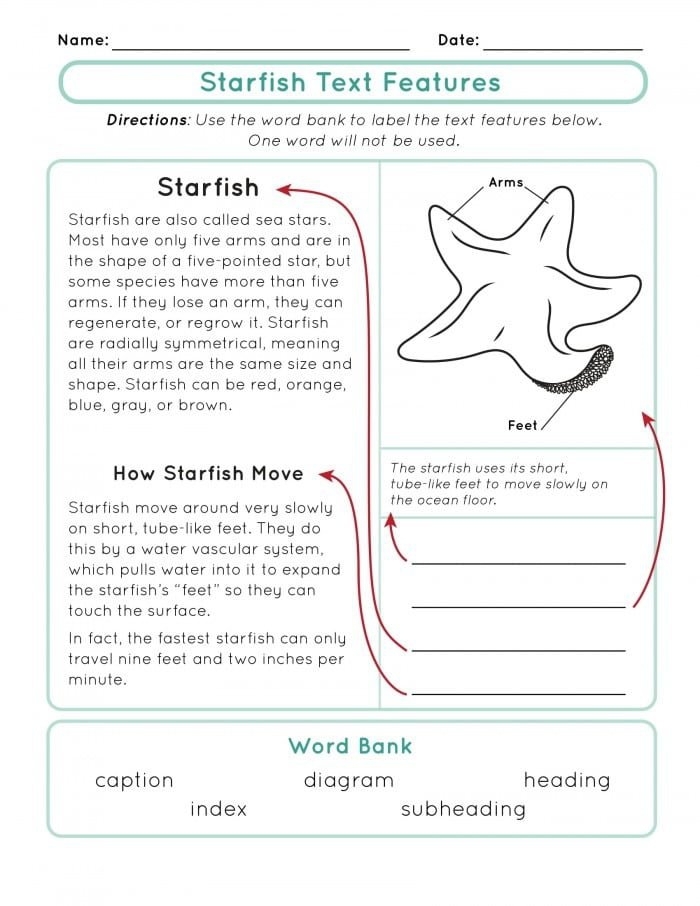
Teaching second grade students to read nonfiction requires more than just decoding words on a page. They need to understand how authors organize information using specific text features that make content easier to find and understand. Captions, diagrams, and headings serve as signposts that guide young readers through factual material.
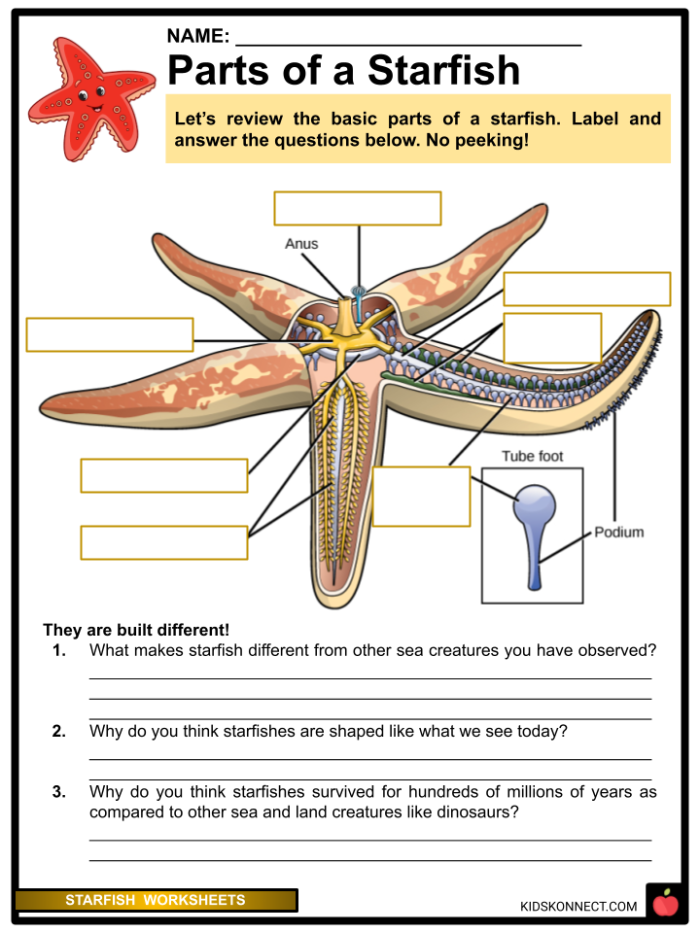
A vocabulary worksheet focused on nonfiction text features helps students identify and name these organizational tools. When students learn that a caption explains a picture, a diagram shows how something works, and a heading tells them what section comes next, they gain concrete strategies for approaching unfamiliar texts. This foundational knowledge builds confidence as they encounter more complex reading materials.
Consider how these features appear in real texts your students encounter. A worksheet about types of clouds uses diagrams to show different cloud formations alongside descriptive text. Similarly, materials covering the first all-female spacewalk rely on captions to explain photographs of astronauts in space. When second grade reading instruction incorporates these real examples, students see why text features matter beyond the worksheet itself.
The practice extends naturally to other subjects too. A lesson on local government for kids uses headings to organize information about community roles, while materials exploring fraction practice employ diagrams to represent mathematical concepts visually.
By completing a targeted vocabulary worksheet, your students move beyond passive reading. They actively notice and name the features authors use intentionally. This awareness transforms how they approach any nonfiction text, making them more independent and capable readers prepared for the demands of upper elementary grades.
Download These Worksheets for Practice