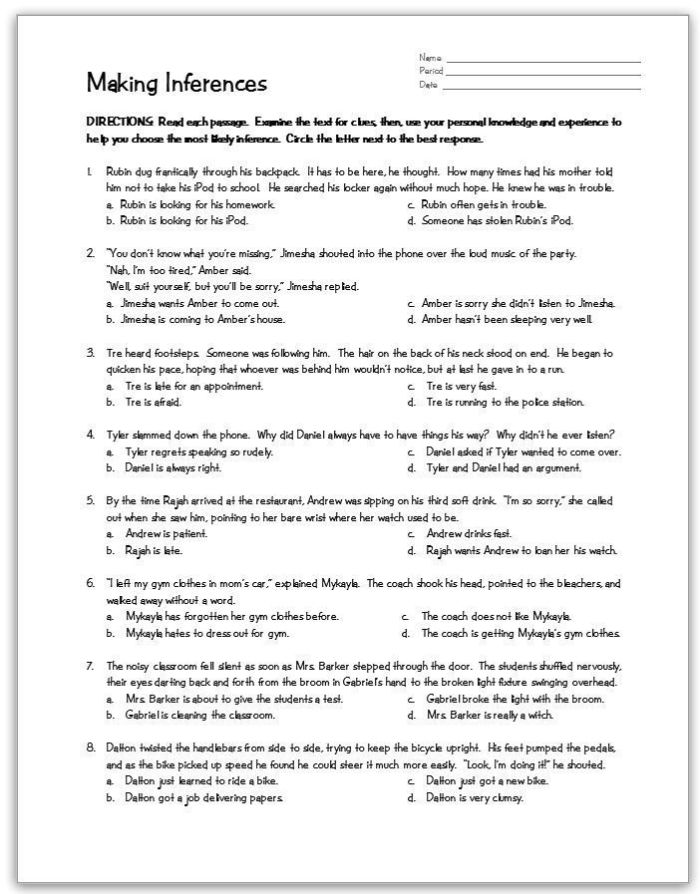
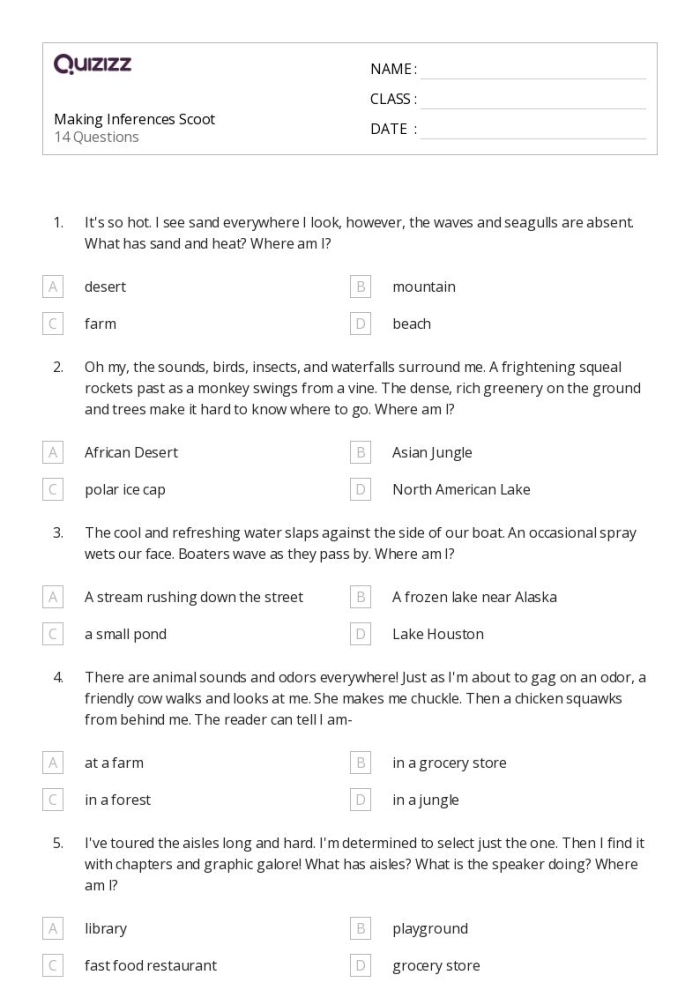
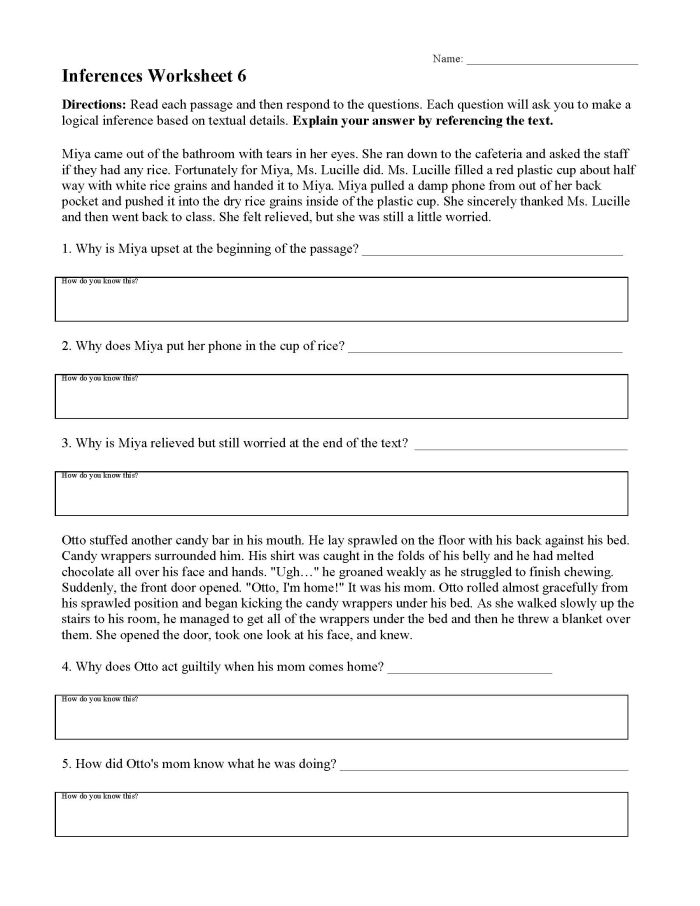
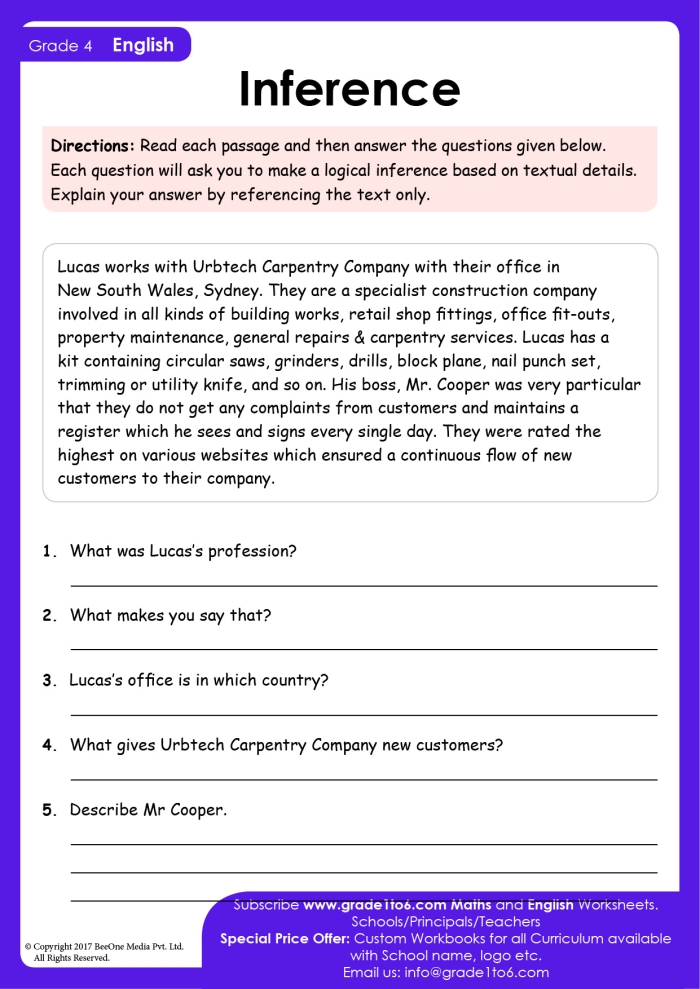
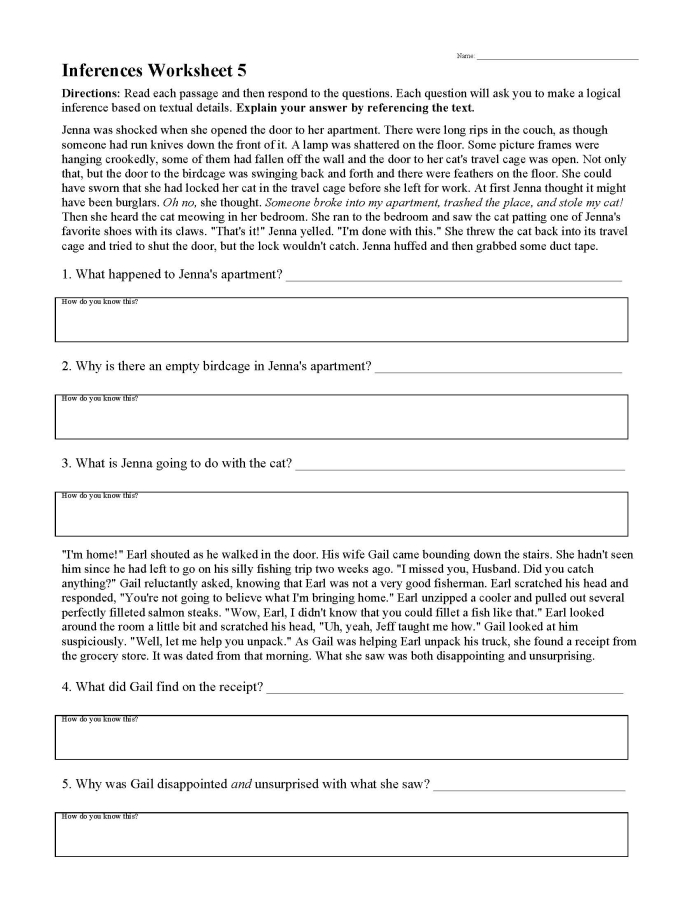
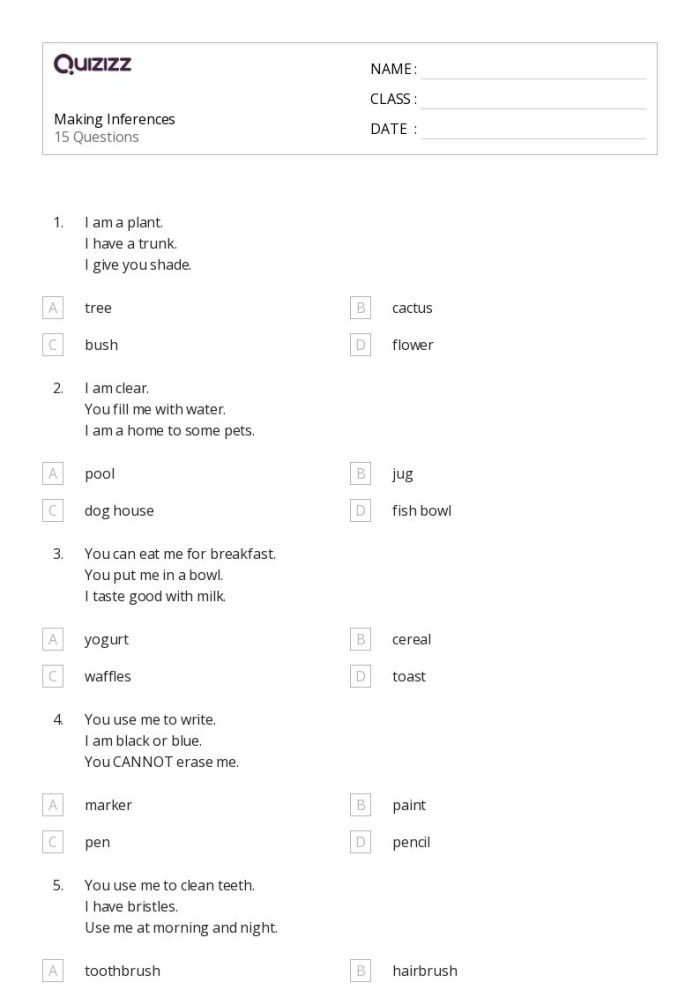
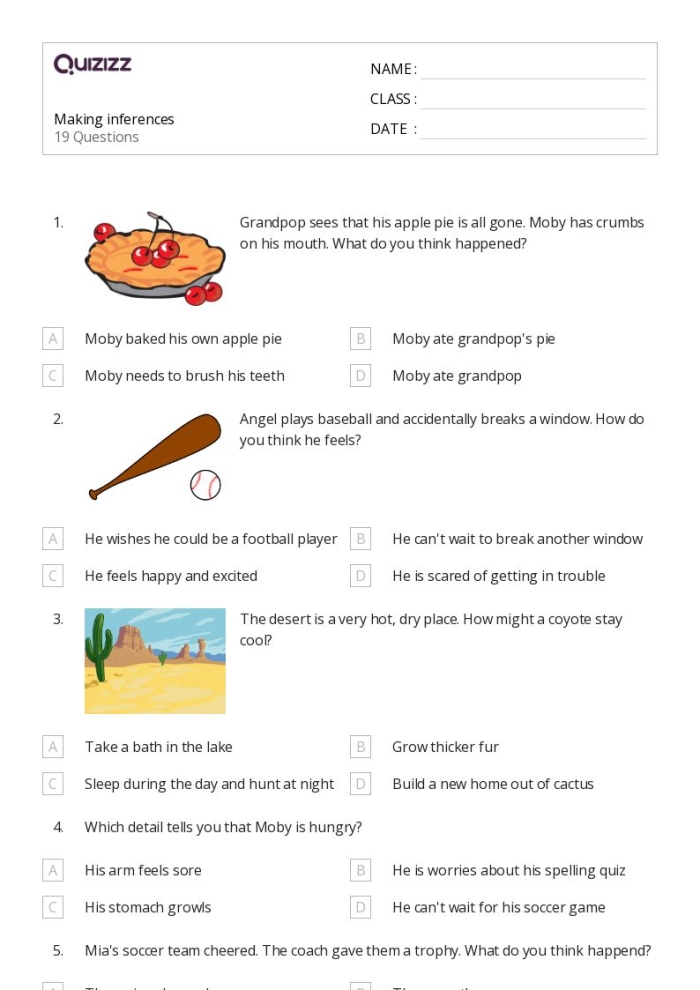
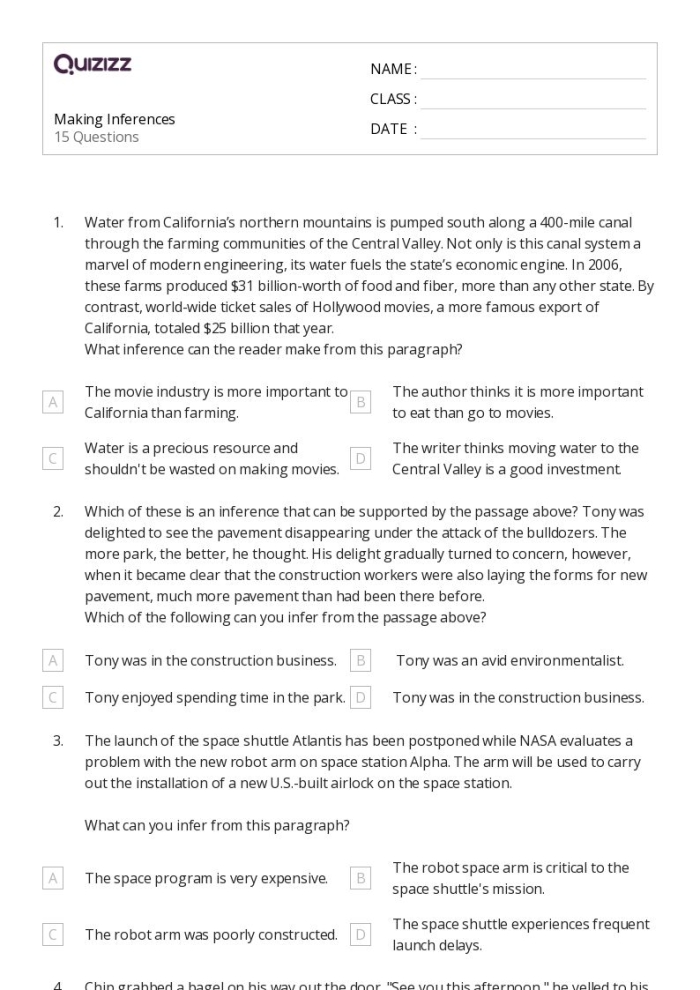
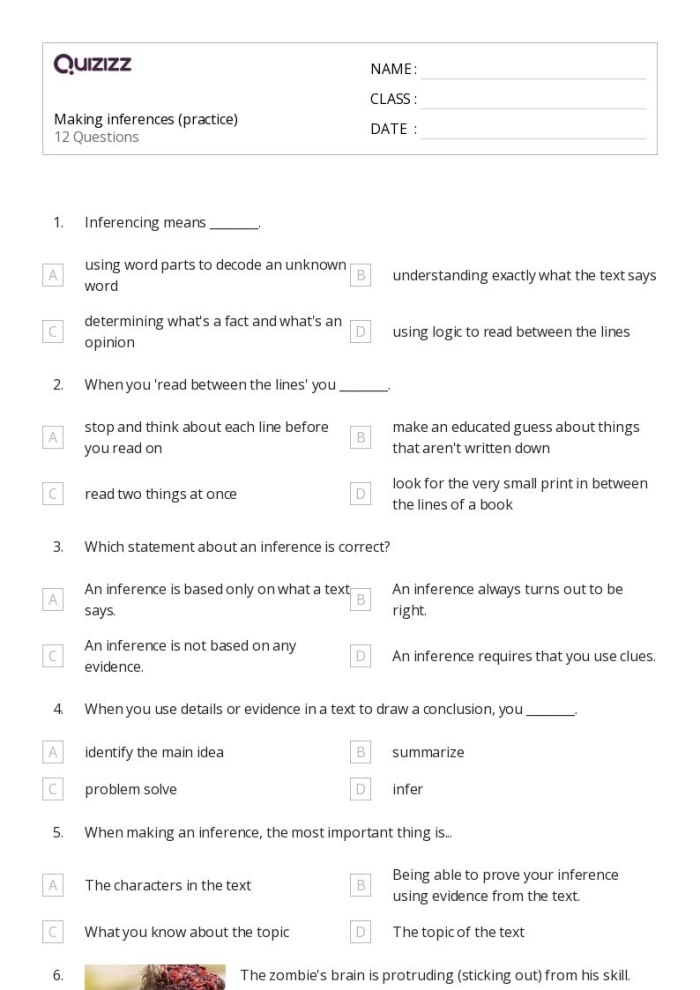
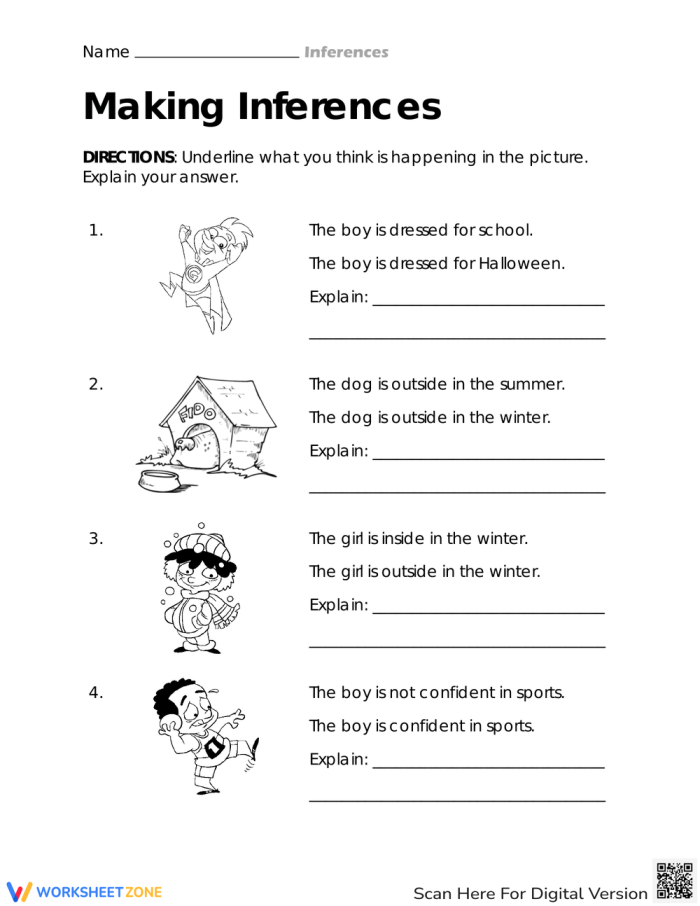
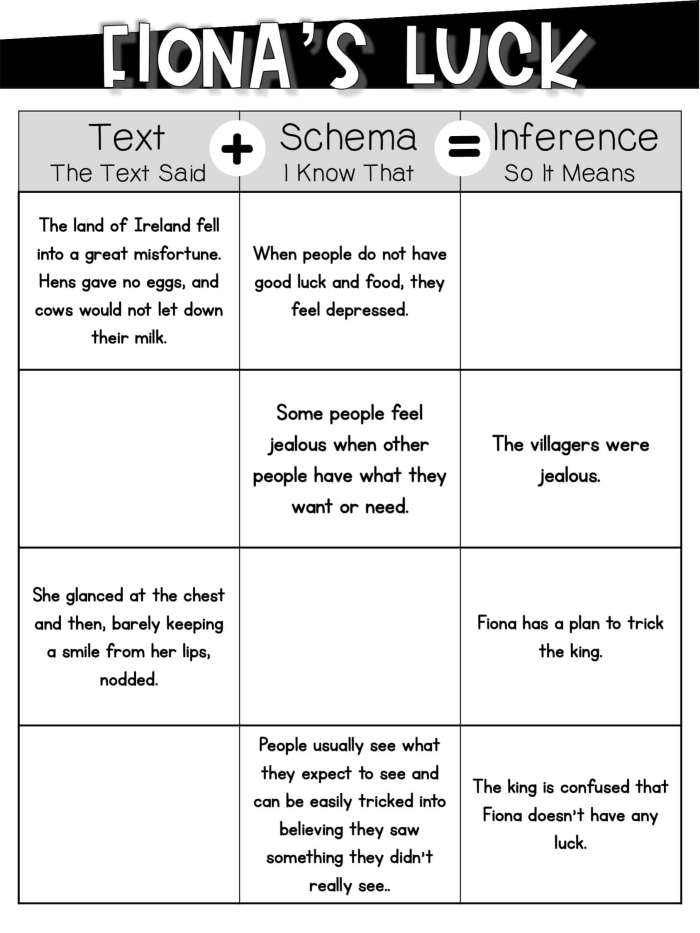
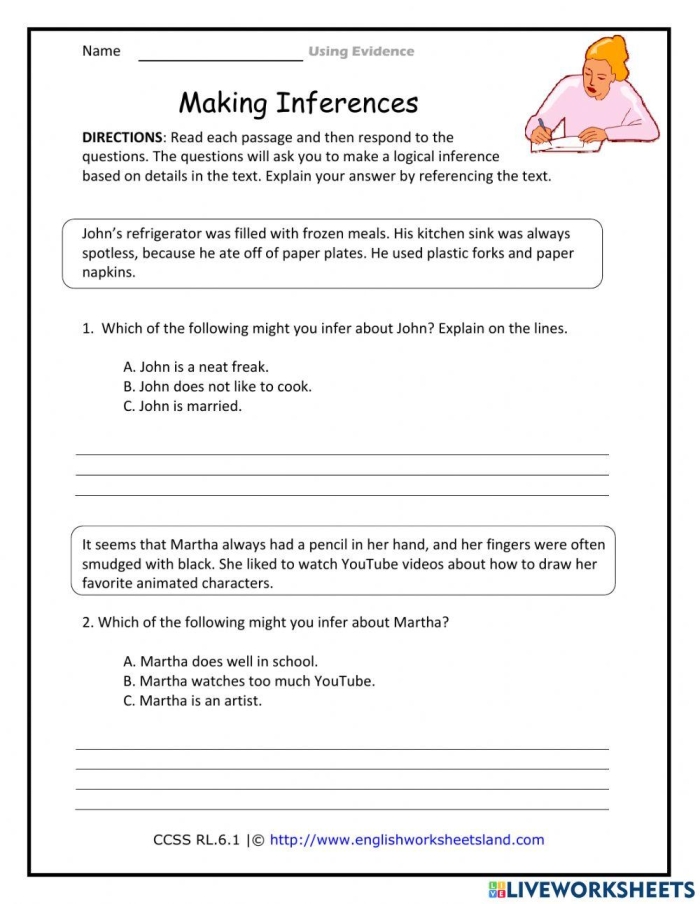
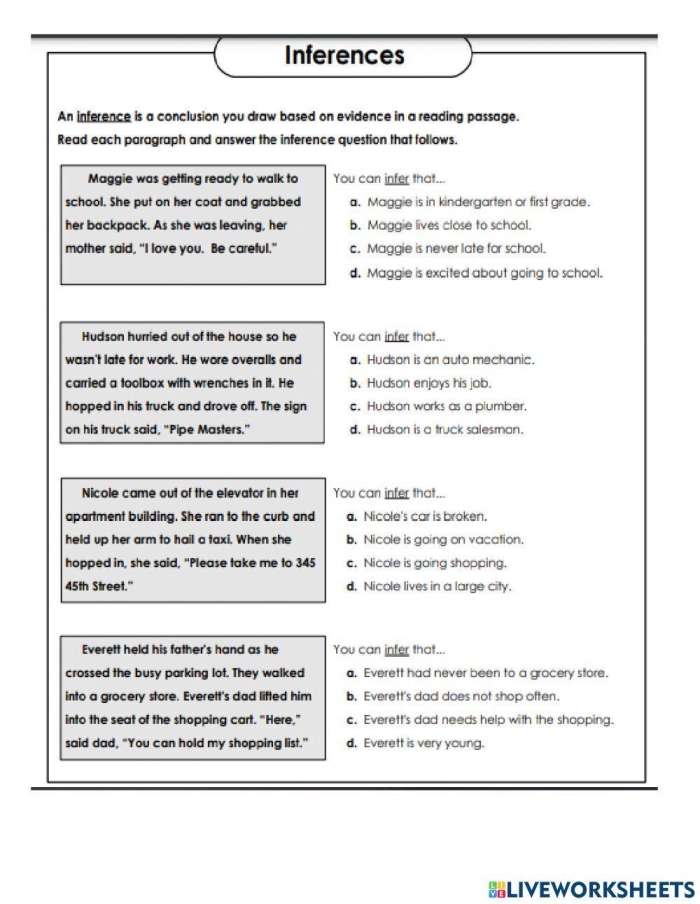
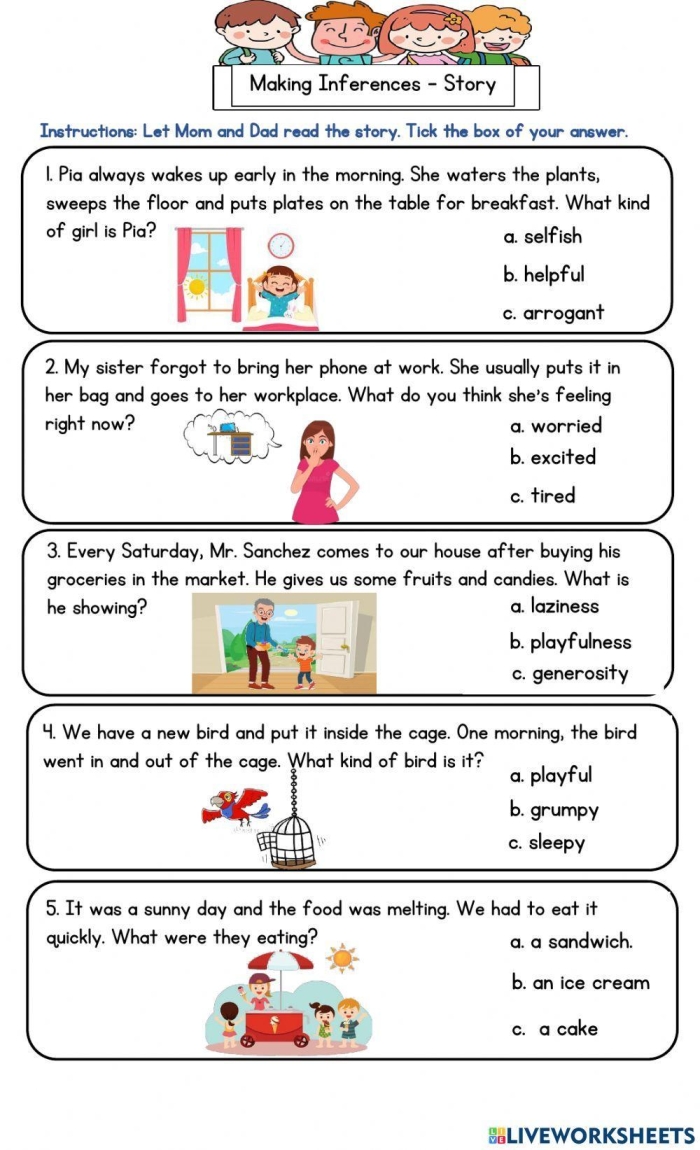
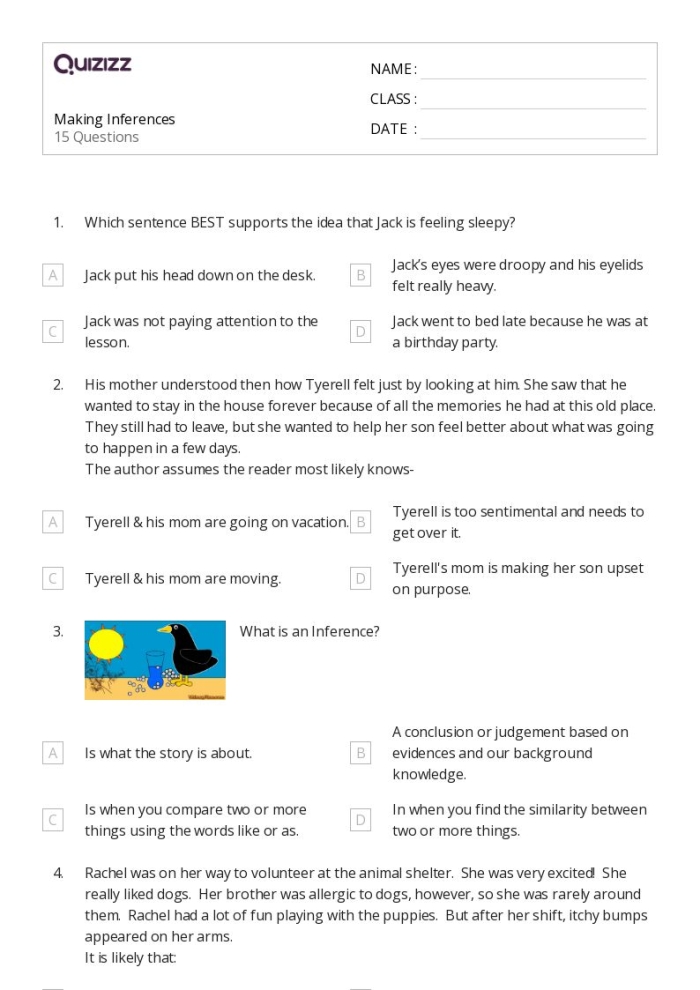
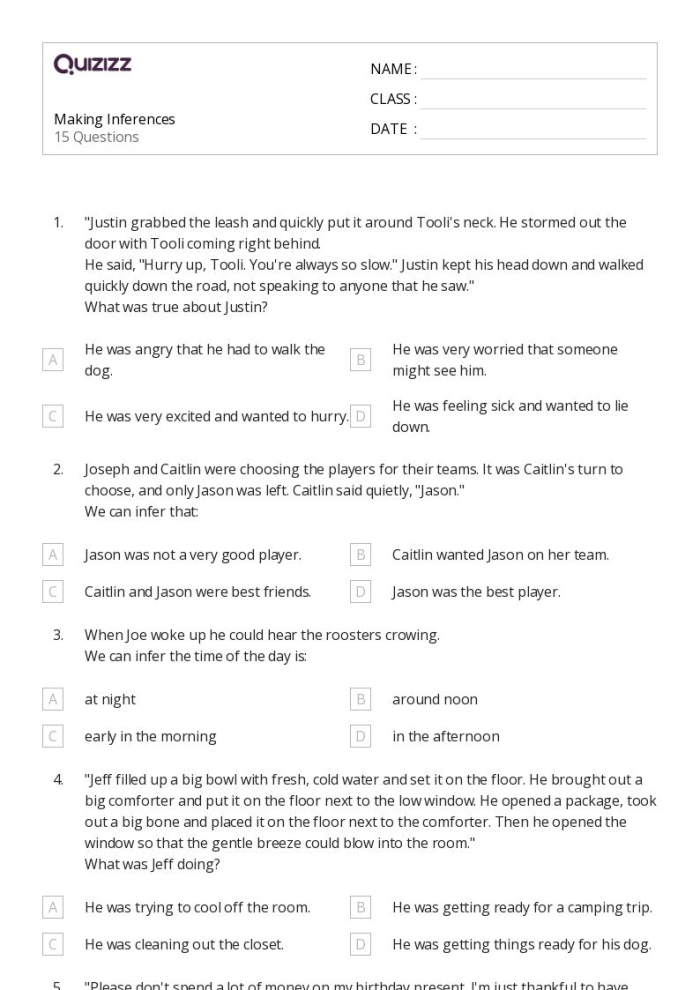
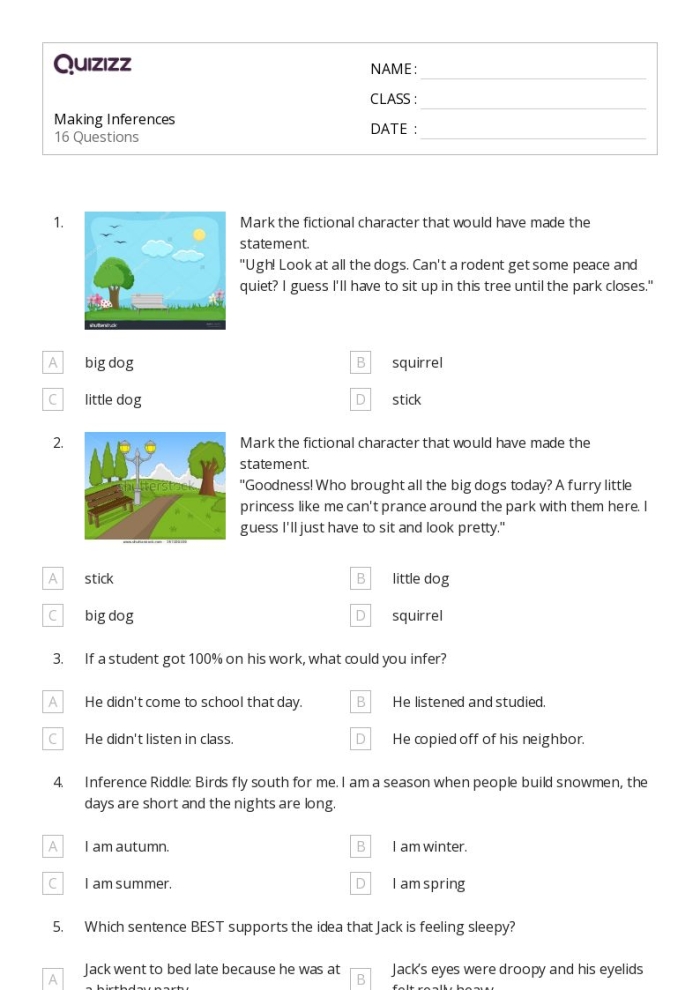
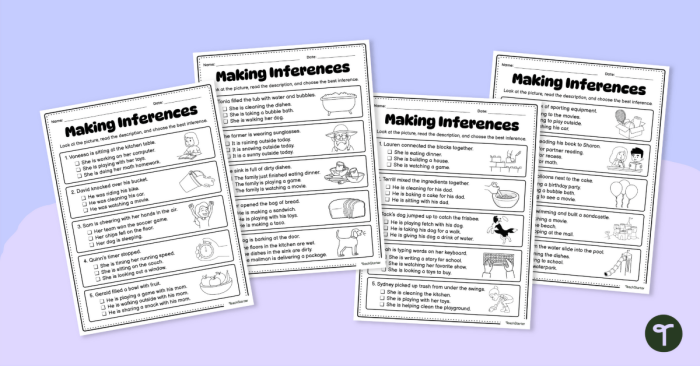
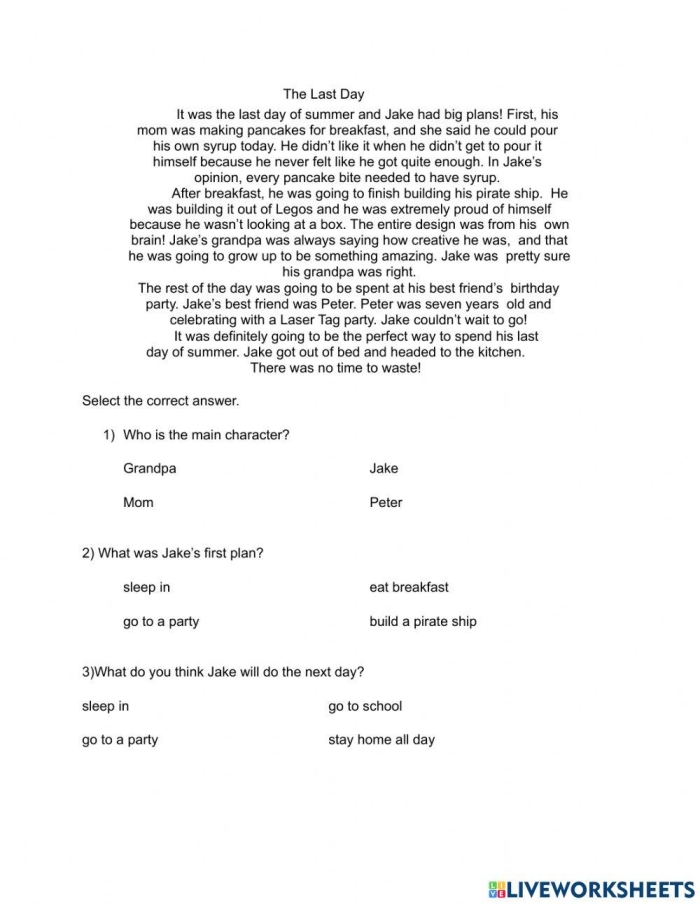
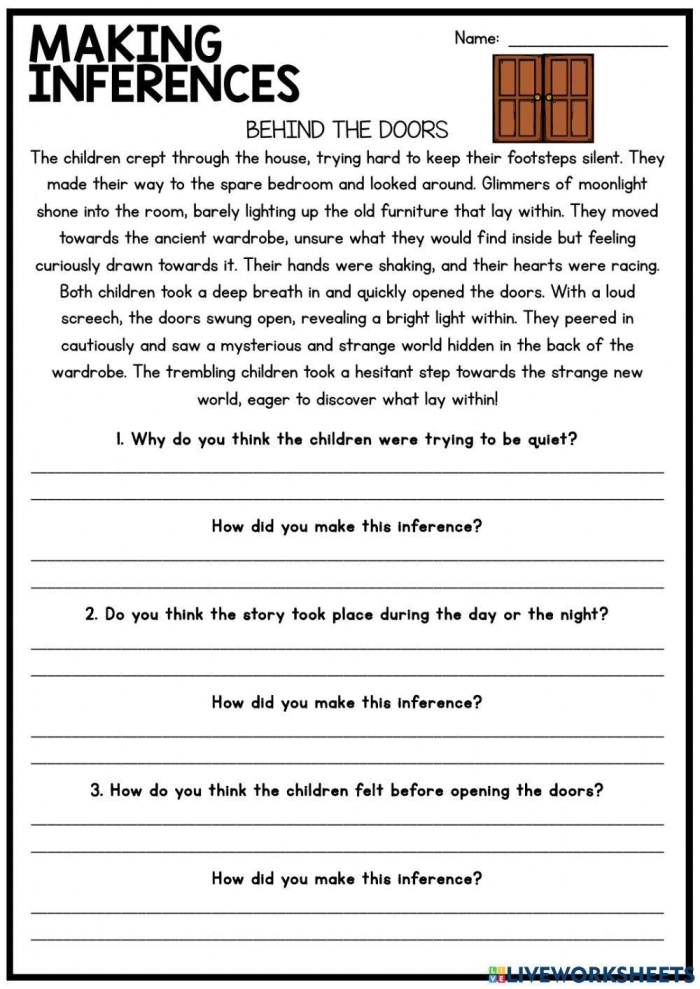
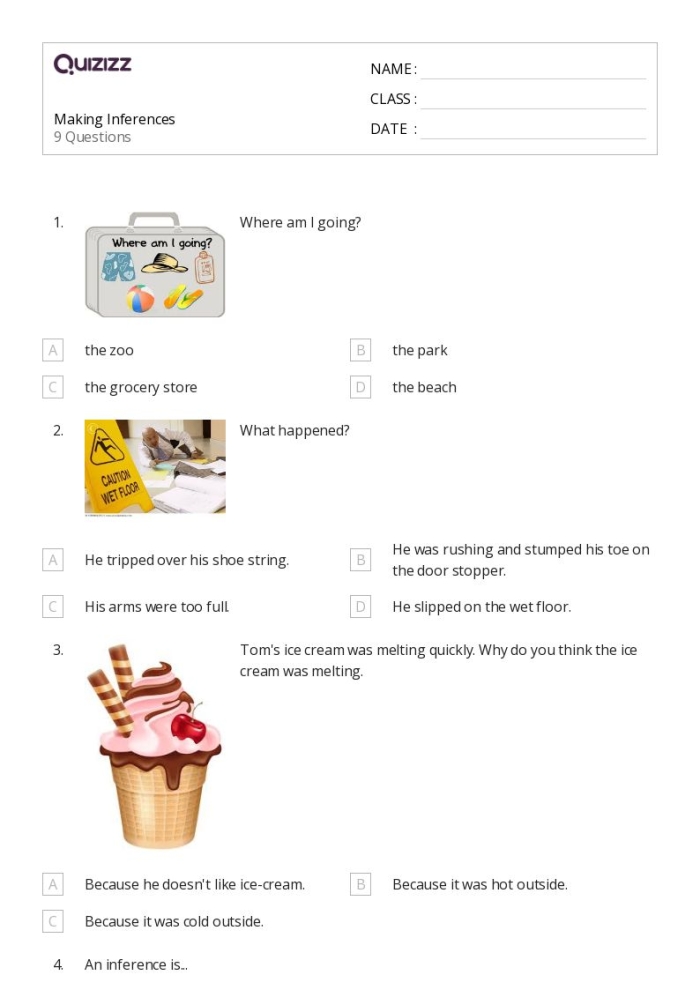
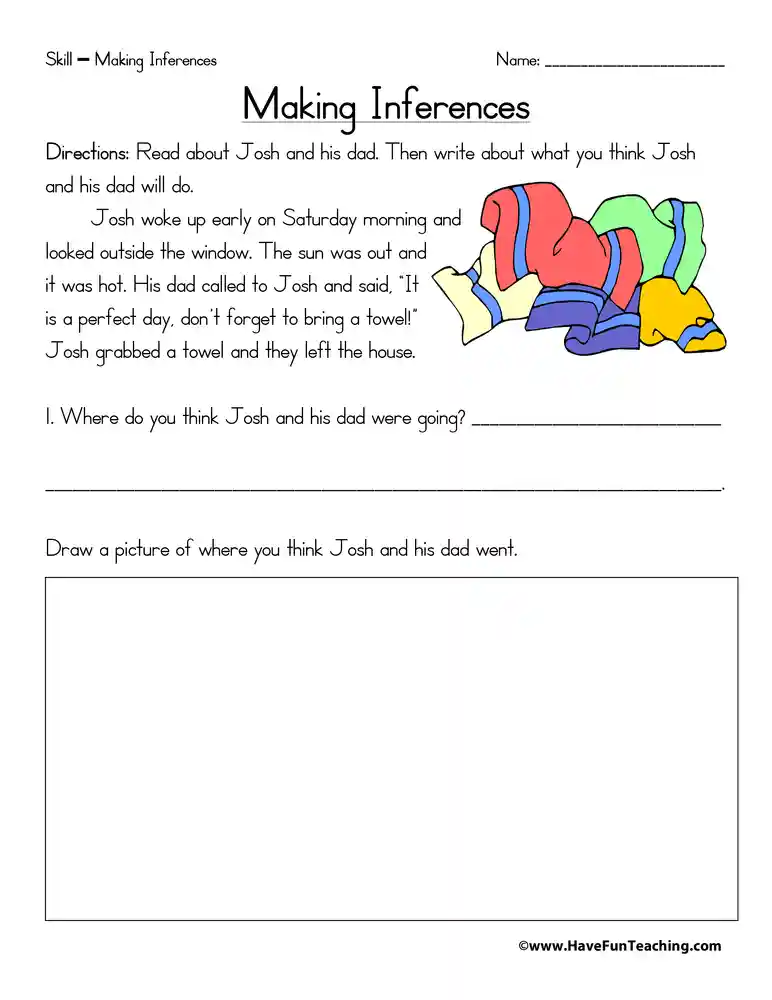
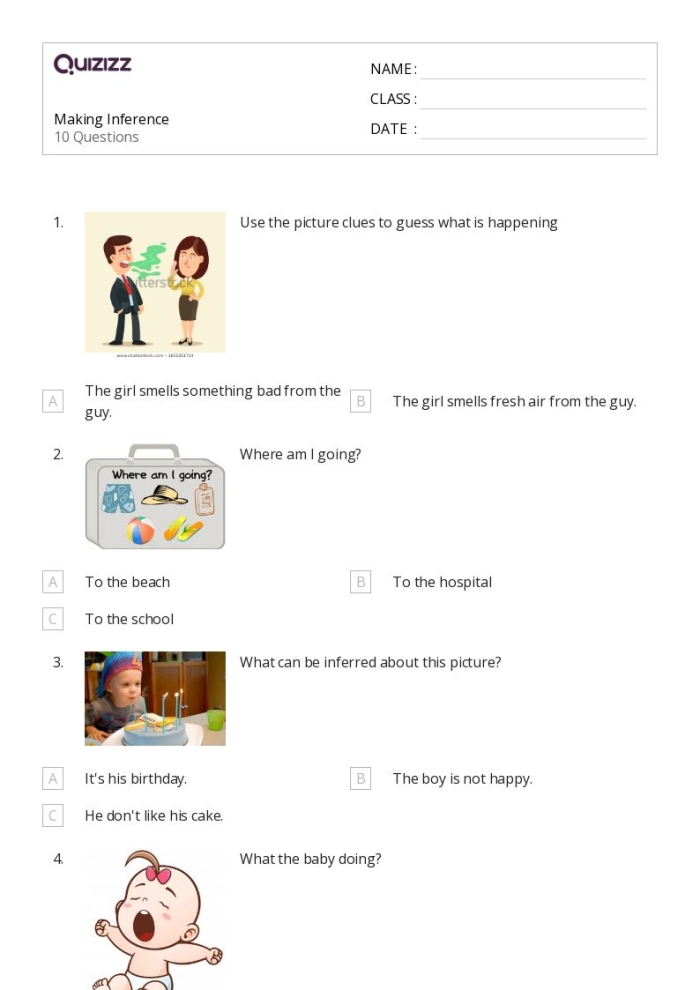
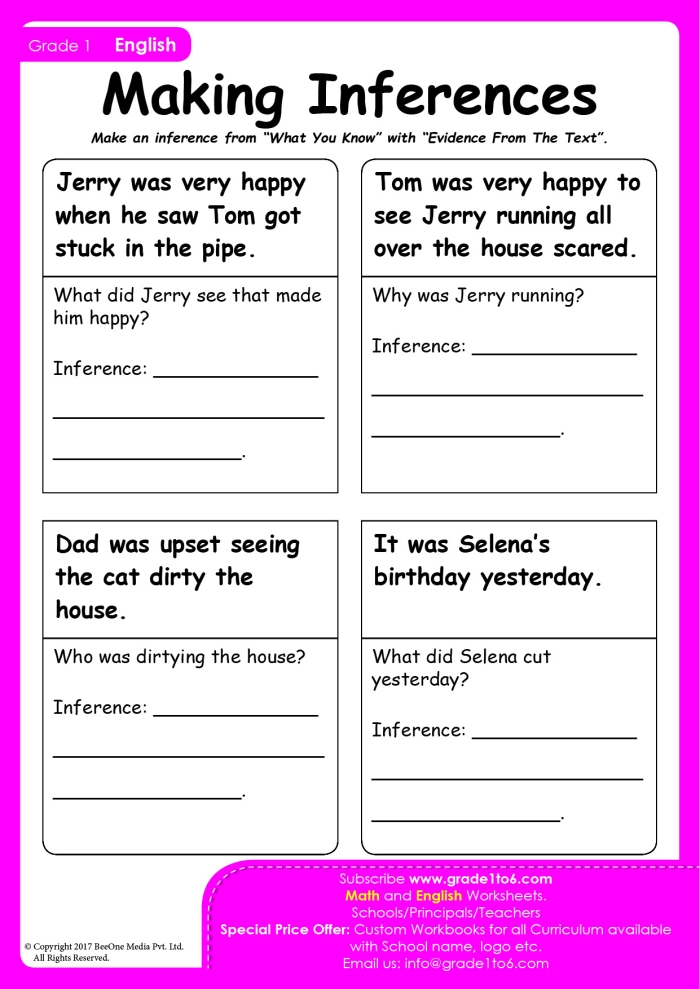
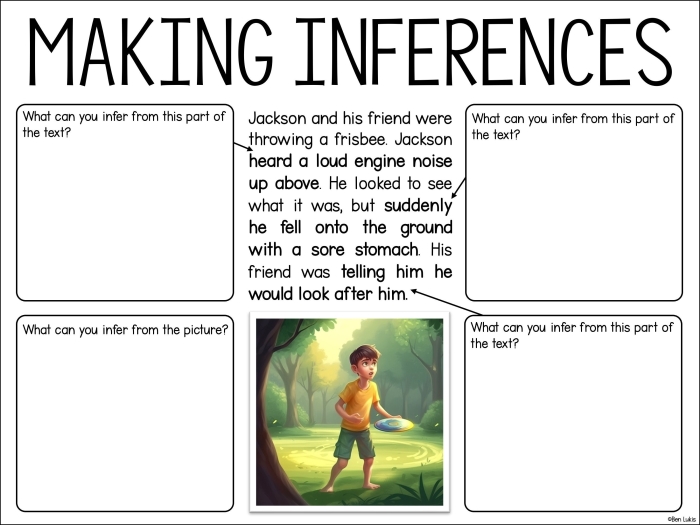
Making inferences with pictures is an engaging way for first graders to enhance their critical thinking skills. In a recent worksheet designed for young learners, students are tasked with using illustrations to determine which of two statements is true. This activity not only promotes observation but also encourages children to think deeply about visual cues.
Visual learning is particularly effective in life science education, where illustrations often depict complex concepts. For instance, a picture showing a plant can prompt students to infer whether a statement about its needs for sunlight or water is accurate. By closely examining the details in an illustration, children can connect what they see to the text provided, fostering a deeper understanding of the subject matter.
This approach aligns with the developmental stage of first graders, who are naturally curious and eager to explore their surroundings. Engaging with worksheets that require inference skills helps them make connections between their observations and the written word. For example, if a worksheet includes a picture of a sunny garden alongside statements about plant growth, a student might use the visual clues to decide which statement reflects reality. This process not only builds comprehension but also instills a sense of confidence in their ability to analyze information.
Using printable worksheets like these can be a valuable addition to any first-grade curriculum. Educators can find resources that combine illustrations with text, such as those available on Lumina Worksheets. Activities like photosynthesis for kids and missing numbers worksheets can further enrich students’ understanding of life science through visual learning.
Ultimately, worksheets that encourage making inferences with pictures serve as an effective tool in fostering critical thinking and comprehension skills in young learners, paving the way for more advanced learning experiences in the future.
Use These Worksheets Today