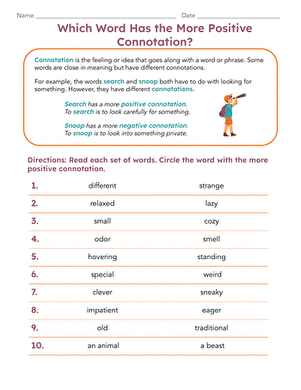
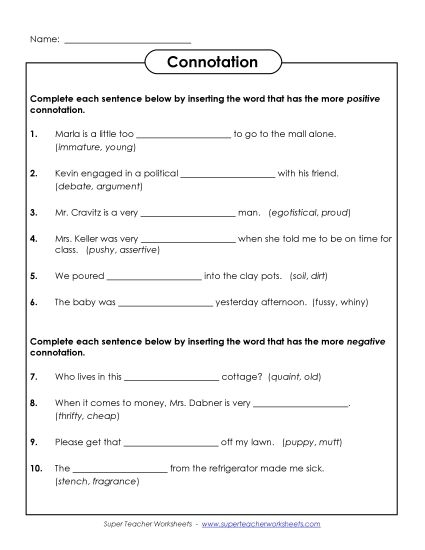
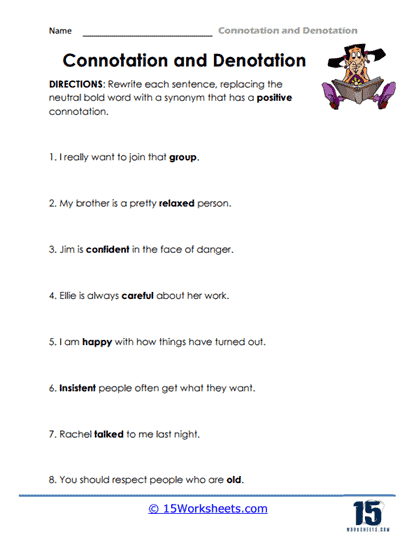
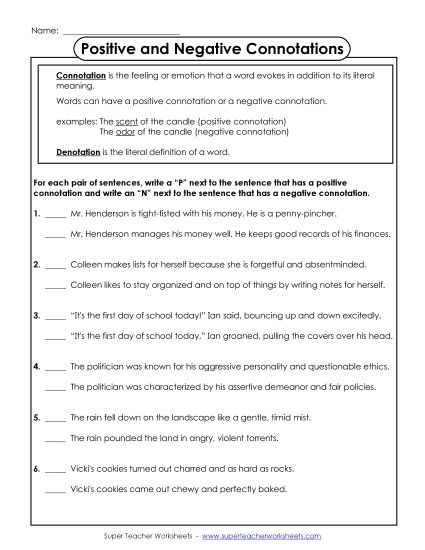
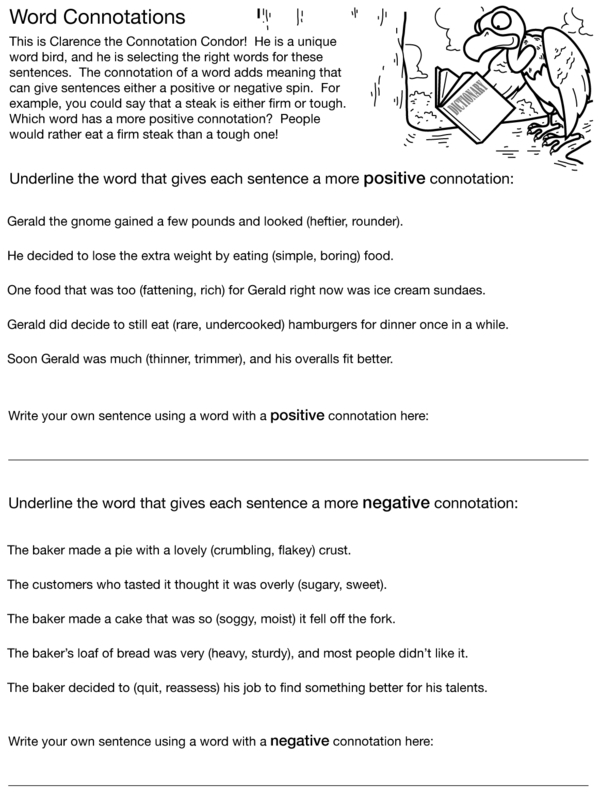
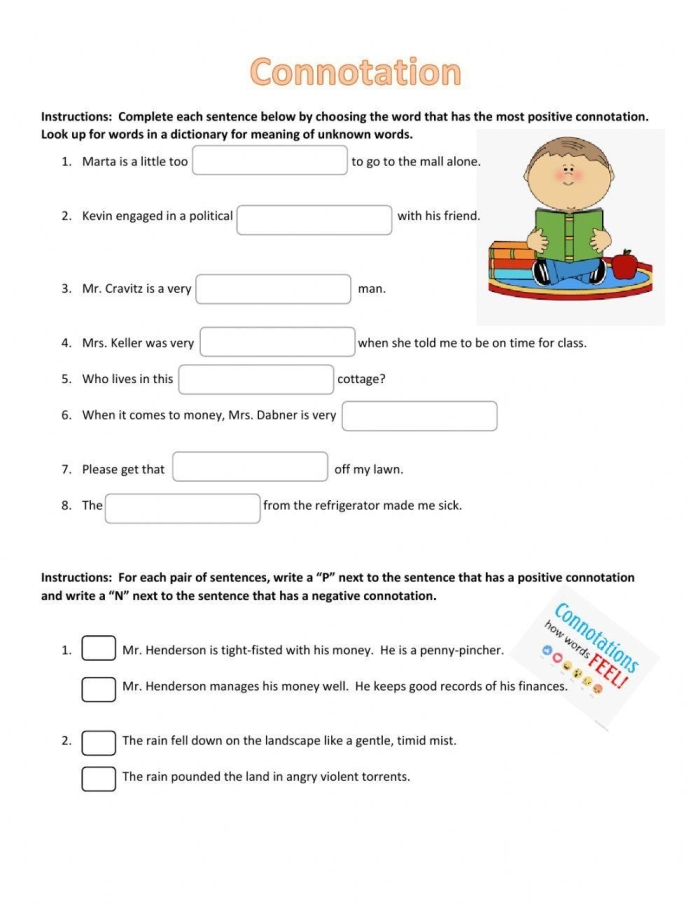
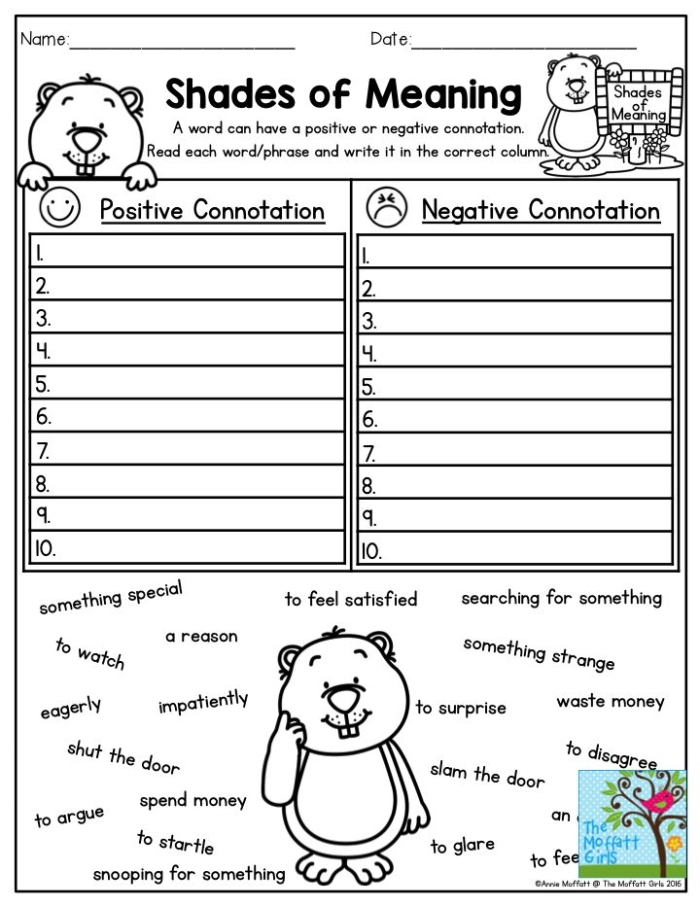
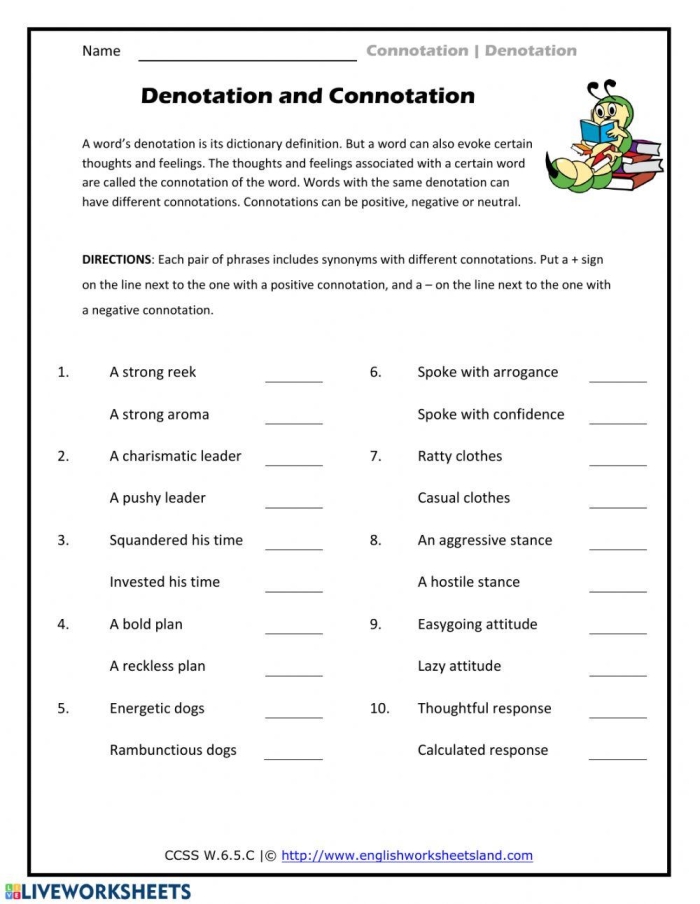
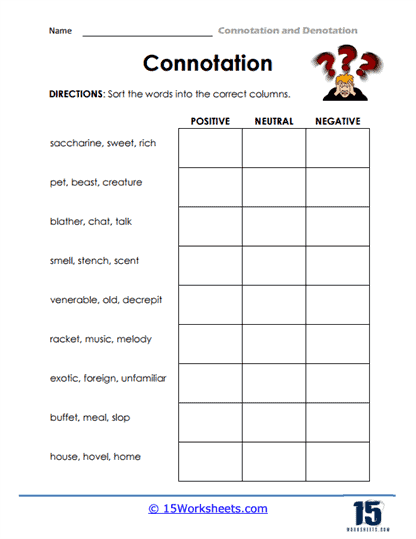
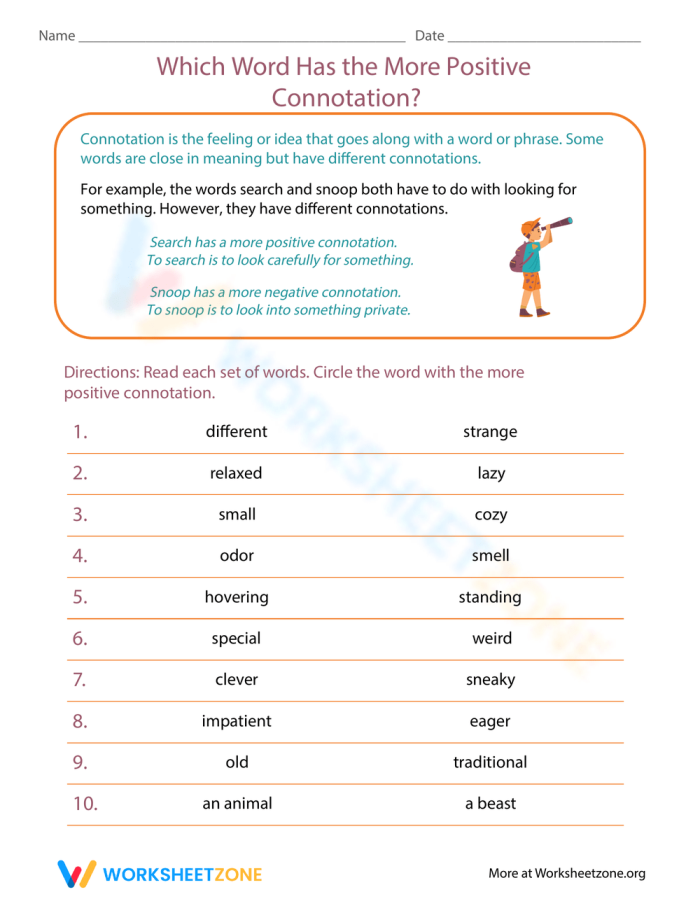
Grammar instruction often stops at identifying parts of speech, but sixth grade students benefit most when they start recognizing how word choice shapes meaning and tone. A worksheet that asks students to pick the word with the more positive connotation pushes them beyond surface-level grammar into the territory where language actually lives.
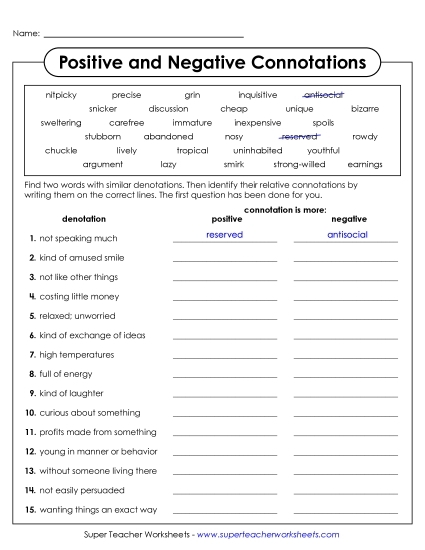
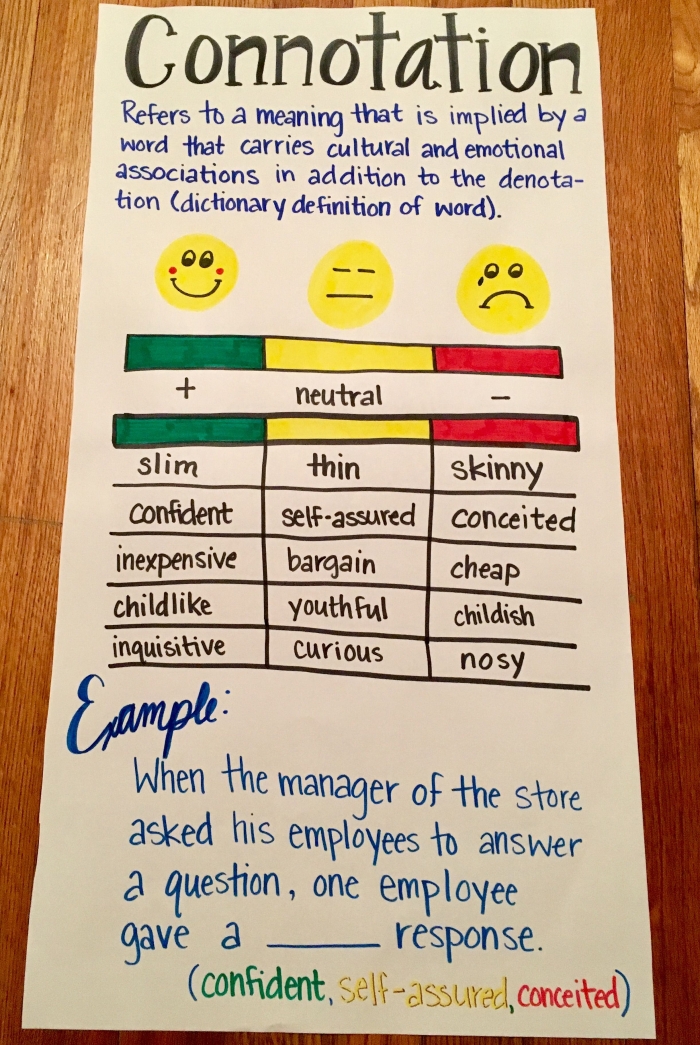
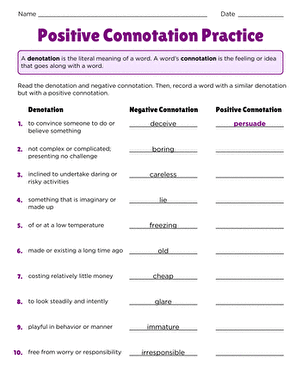
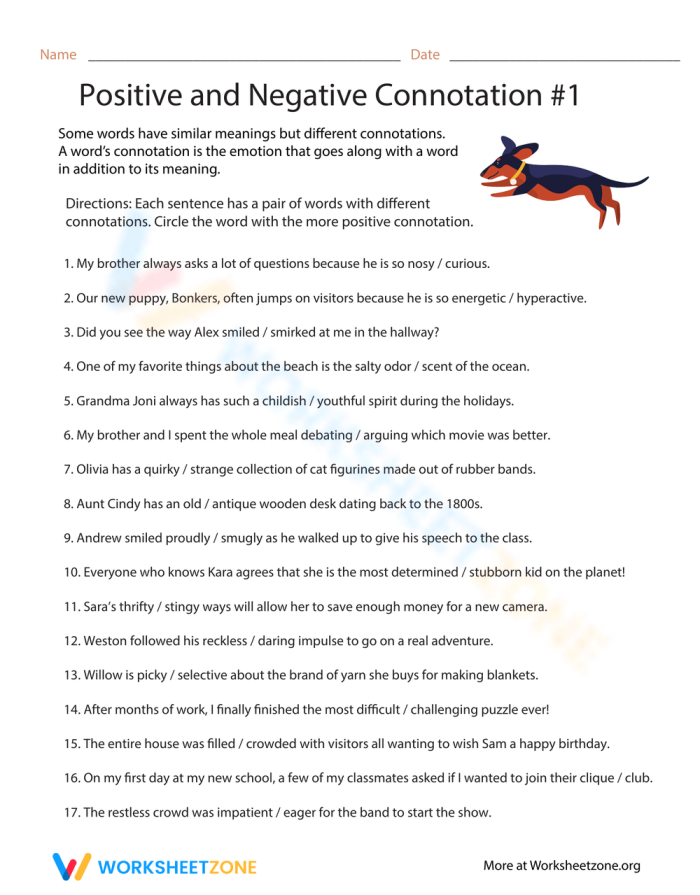
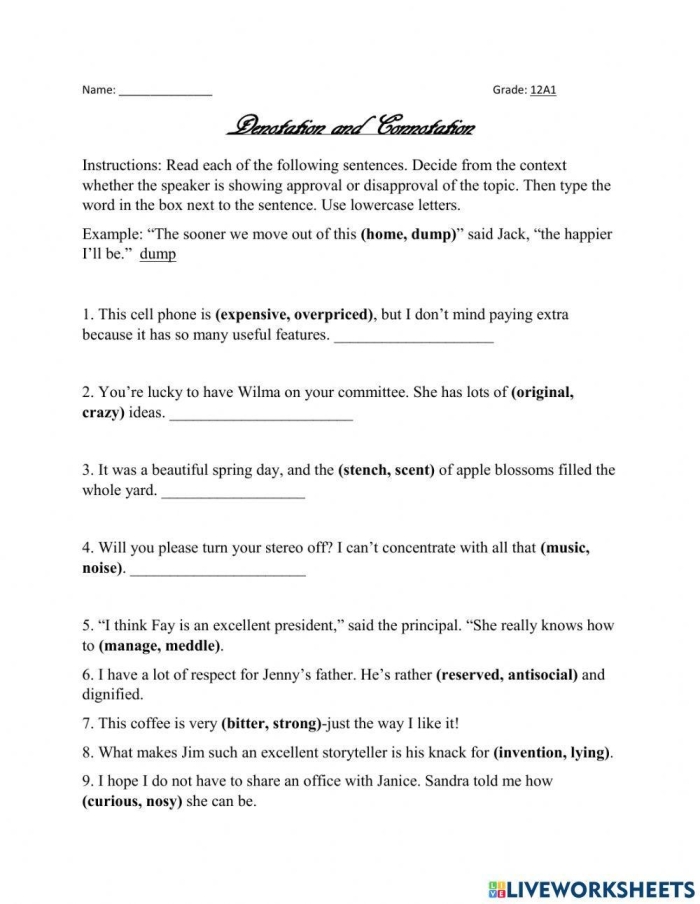
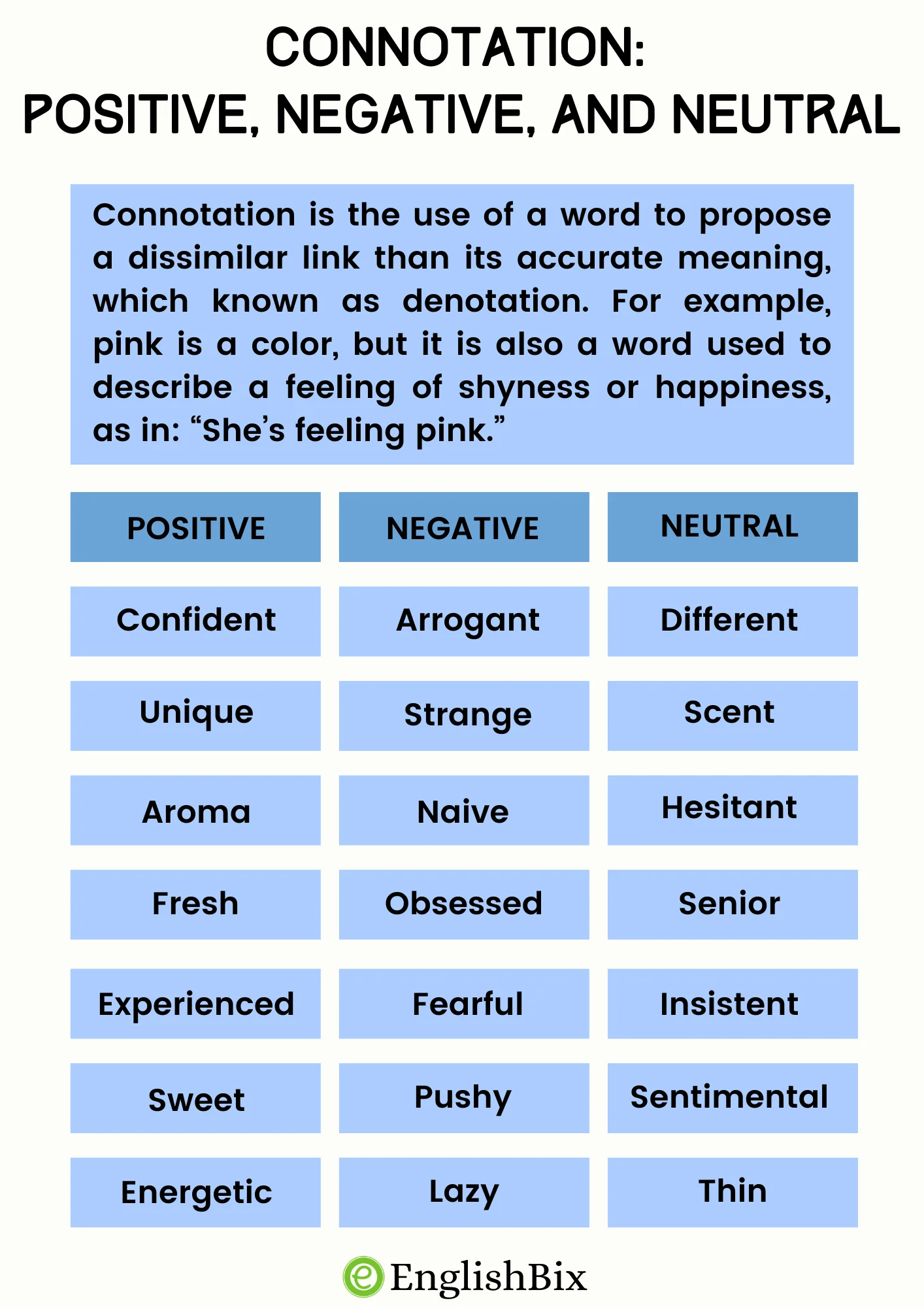
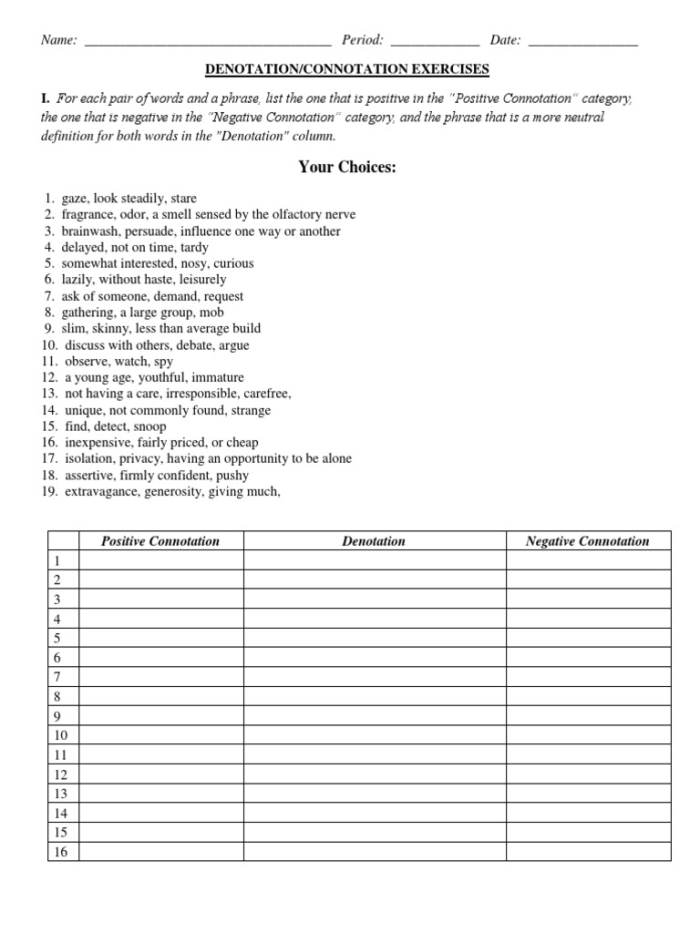
When students encounter pairs of words with similar definitions but different emotional weights, something clicks. Consider the difference between “stubborn” and “determined,” or “nosy” and “curious.” Both words in each pair convey persistence or interest, yet one carries approval while the other suggests judgment. This distinction matters because it teaches students that vocabulary isn’t just about definitions found in a dictionary. It’s about understanding how writers and speakers craft their messages to influence readers and listeners.
In sixth grade algebra and other subjects, this skill becomes practical. Students writing lab reports or essays need to choose language that reflects accuracy and appropriate tone. They’re learning to pick the word with the more positive connotation when describing results or arguments, which strengthens their academic writing across disciplines.
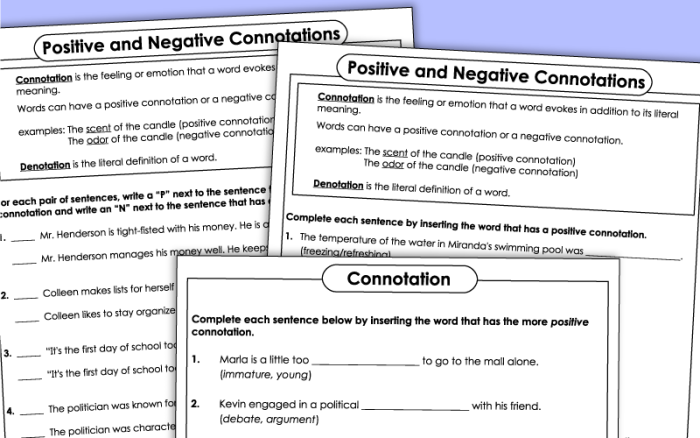
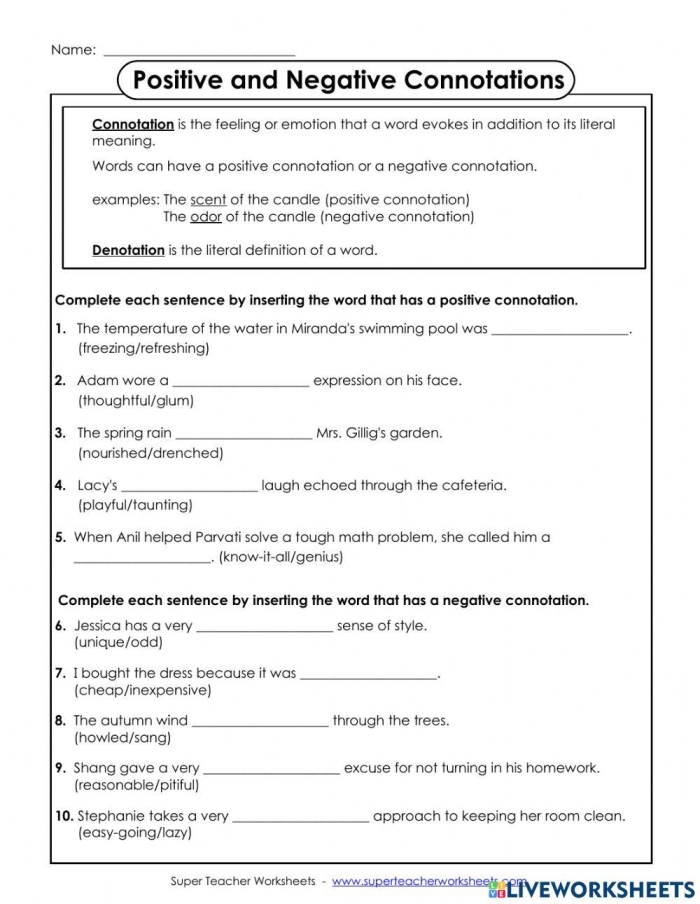
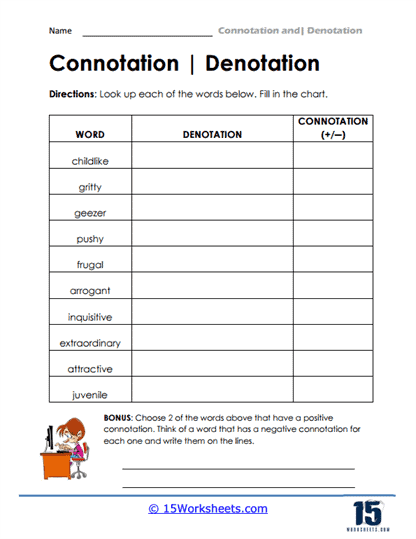
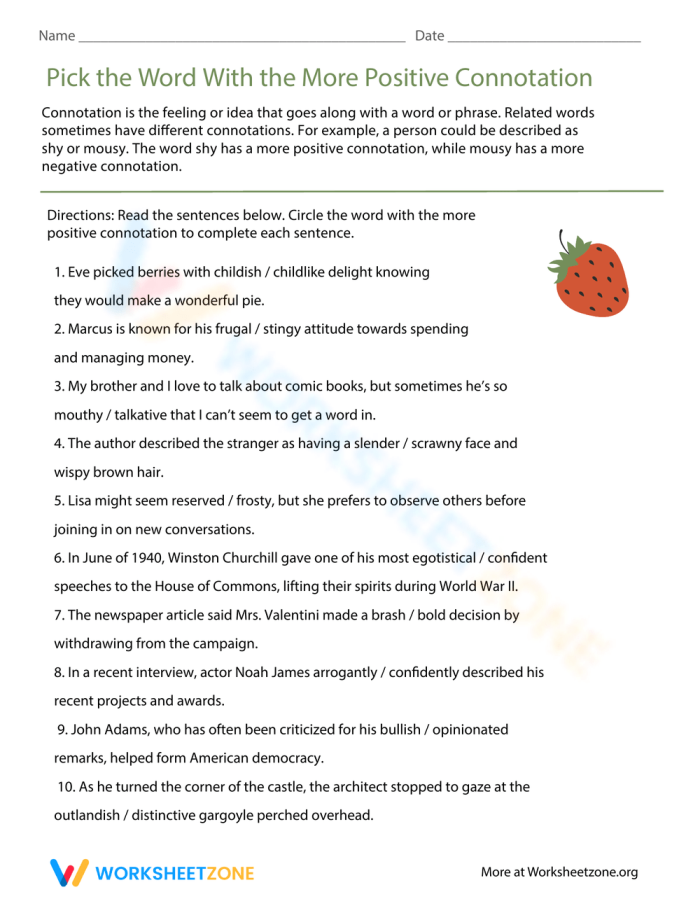
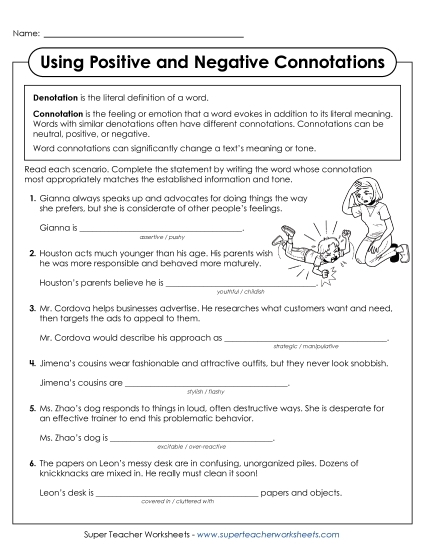
These worksheets typically present scenarios where context matters. A worksheet might show a sentence about a character and ask whether “frugal” or “cheap” fits better, depending on what the writer wants readers to believe. Students learn that the same action can be portrayed positively or negatively based purely on word selection.
Pairing this exercise with an editing checklist helps students apply their understanding to their own writing. They begin reviewing their work not just for grammar rules, but for whether their word choices match their intended meaning. This habit of examining connotation alongside other writing elements prepares them for stronger communication in every subject they encounter.
Use These Worksheets Today