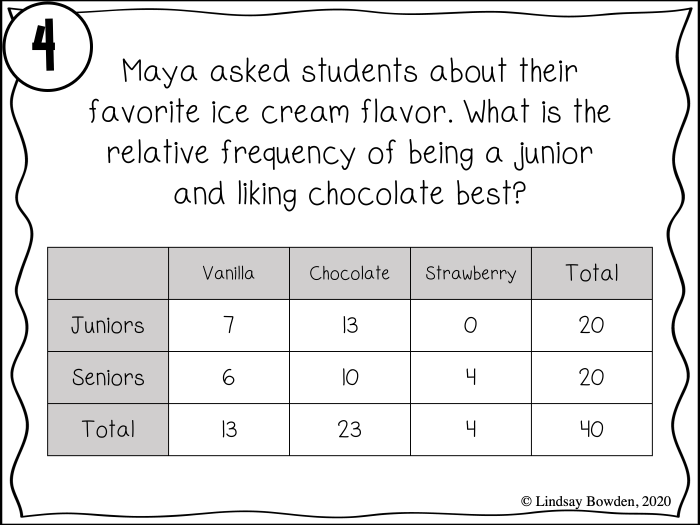
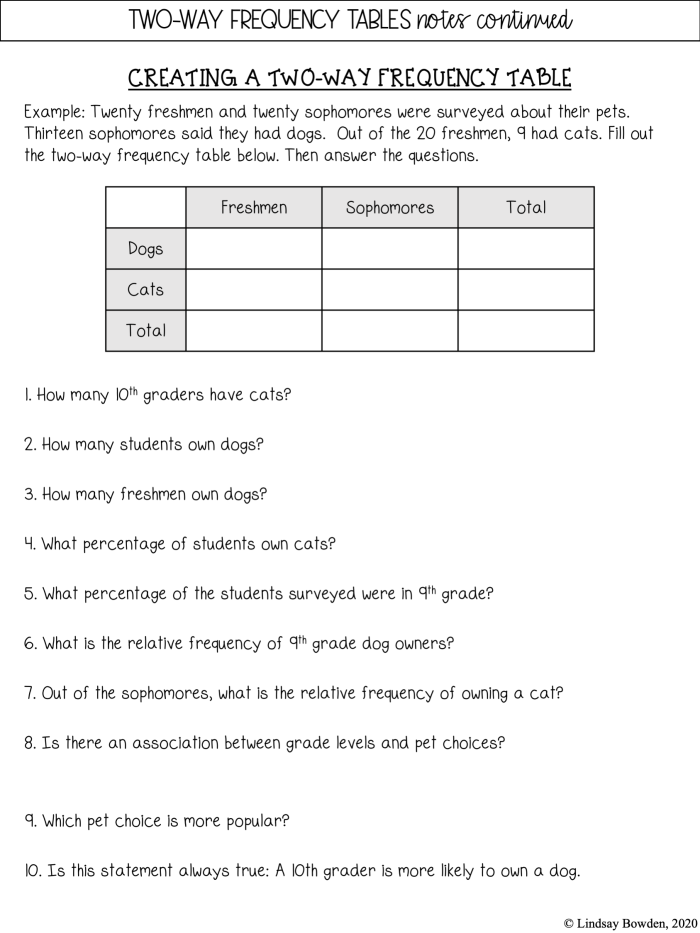
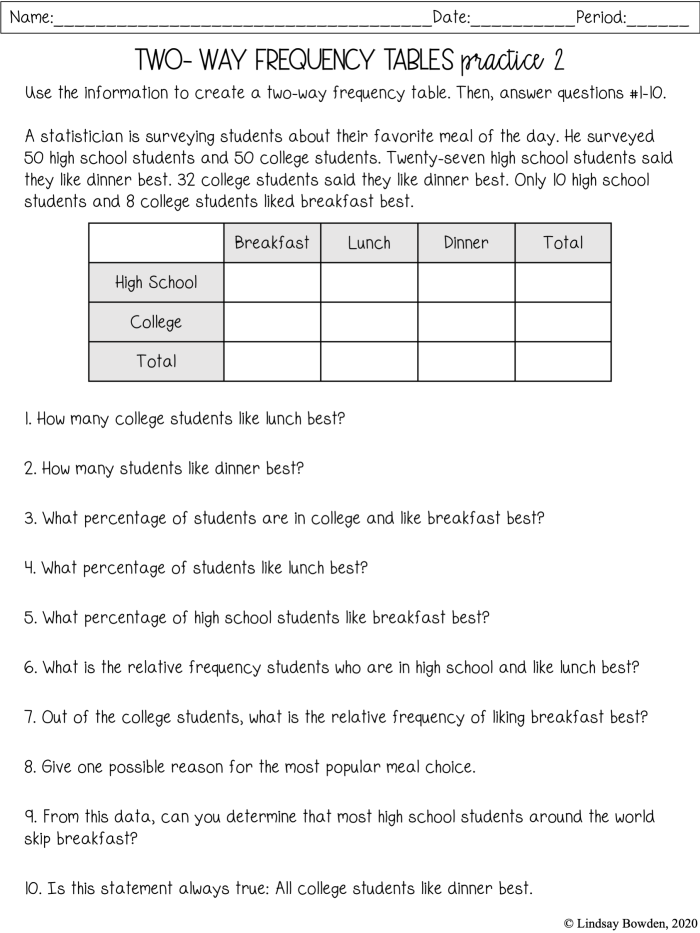
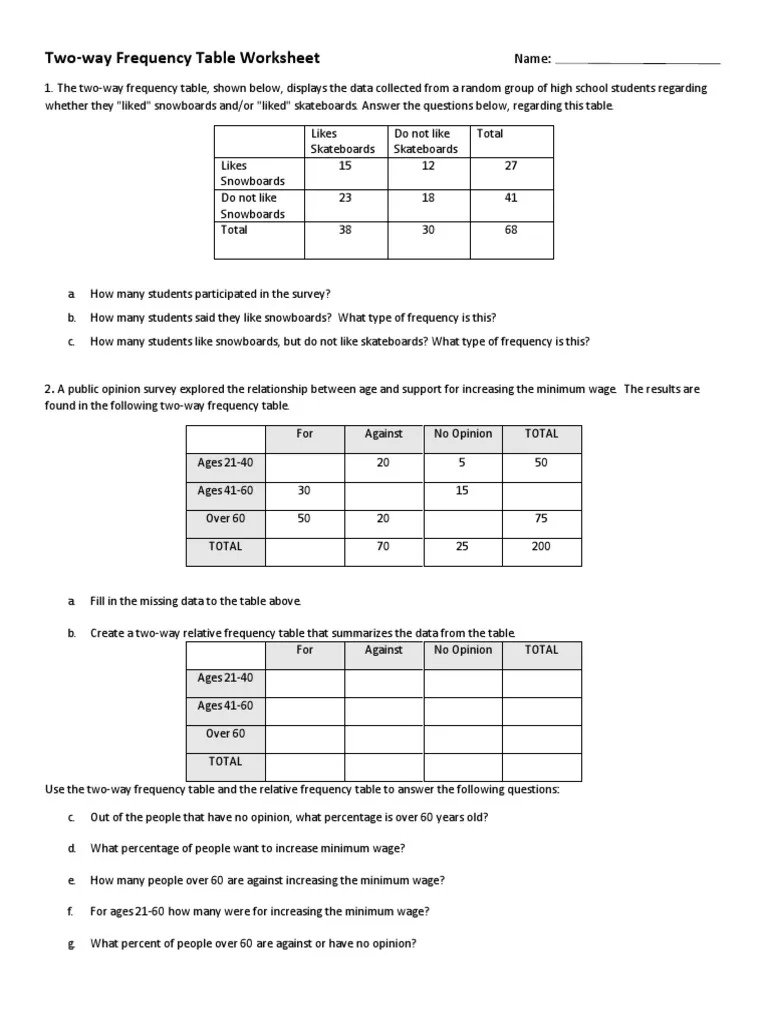
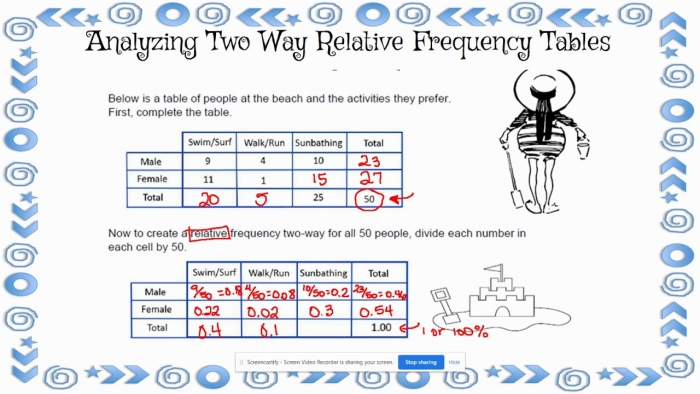
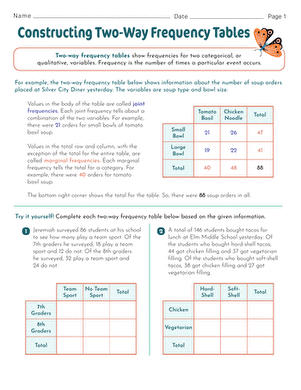
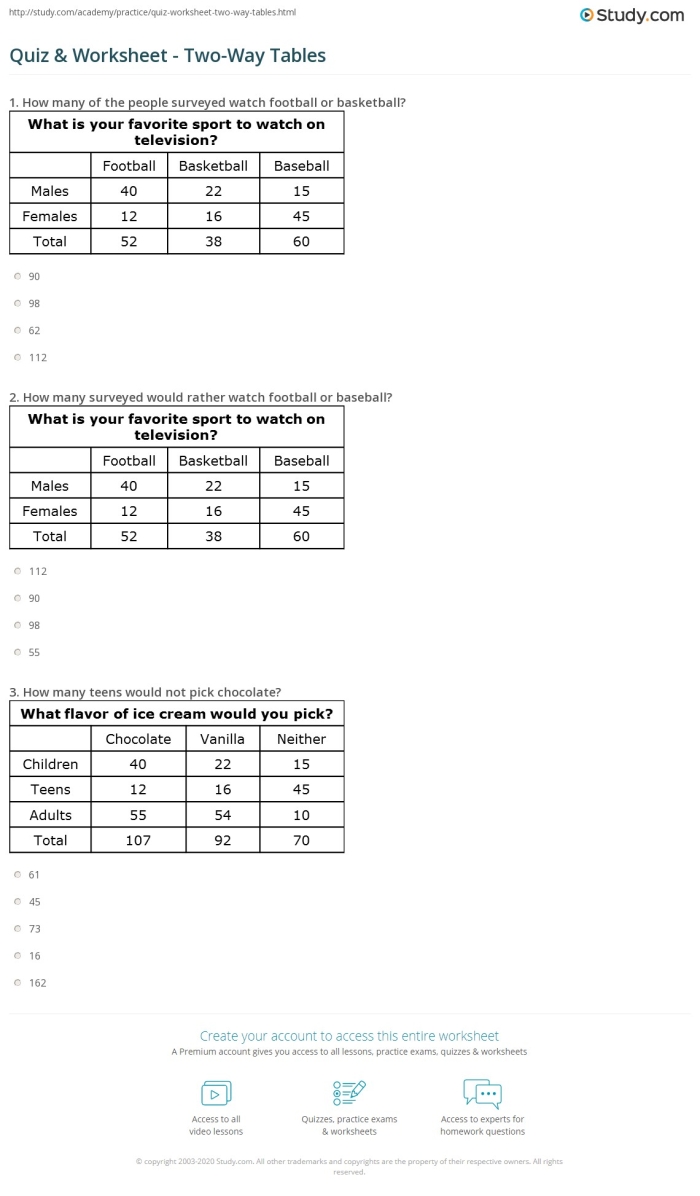
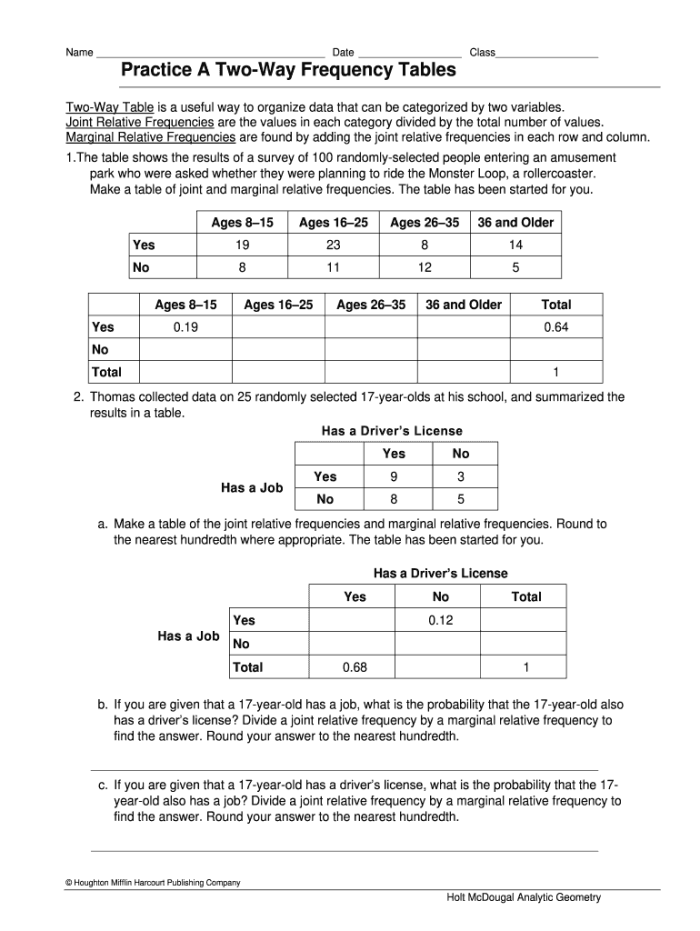
Two-way frequency tables often confuse eighth-grade students because they require translating messy, real-world descriptions into organized data. This worksheet bridges that gap by having learners take written scenarios and build tables from scratch rather than simply reading pre-made ones.
The skill matters because students encounter two-way tables everywhere once they leave the textbook. A school might survey students about lunch preferences and grade level. A sports team might track which players prefer morning versus afternoon practice. A clothing store might analyze customer age groups against purchase categories. These situations produce raw, unorganized information that needs structure.
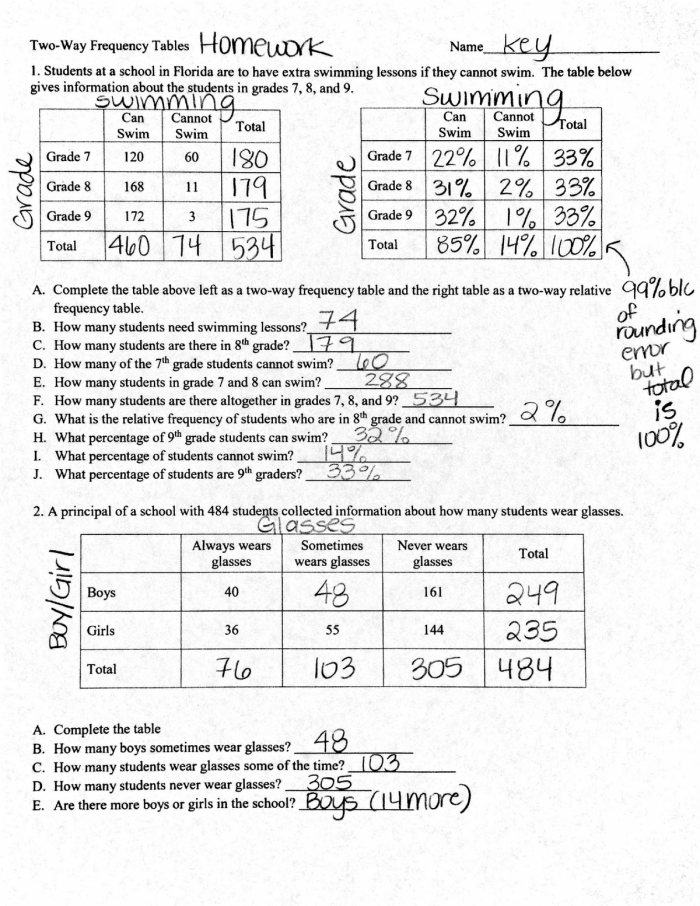
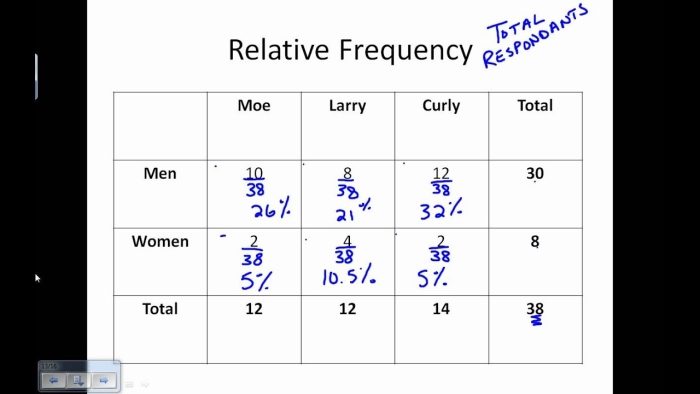
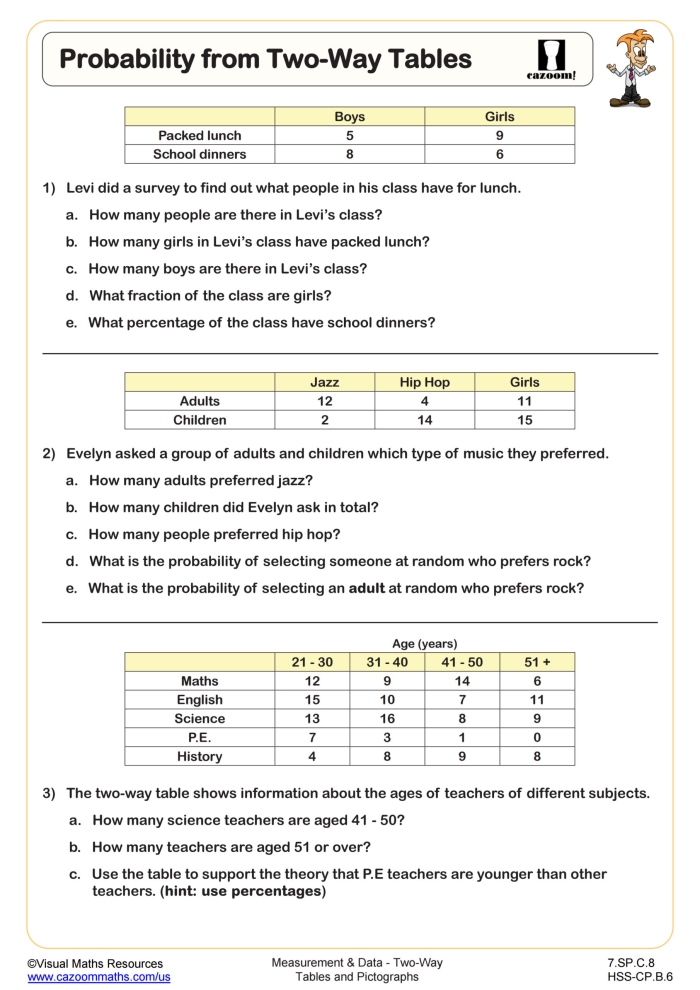
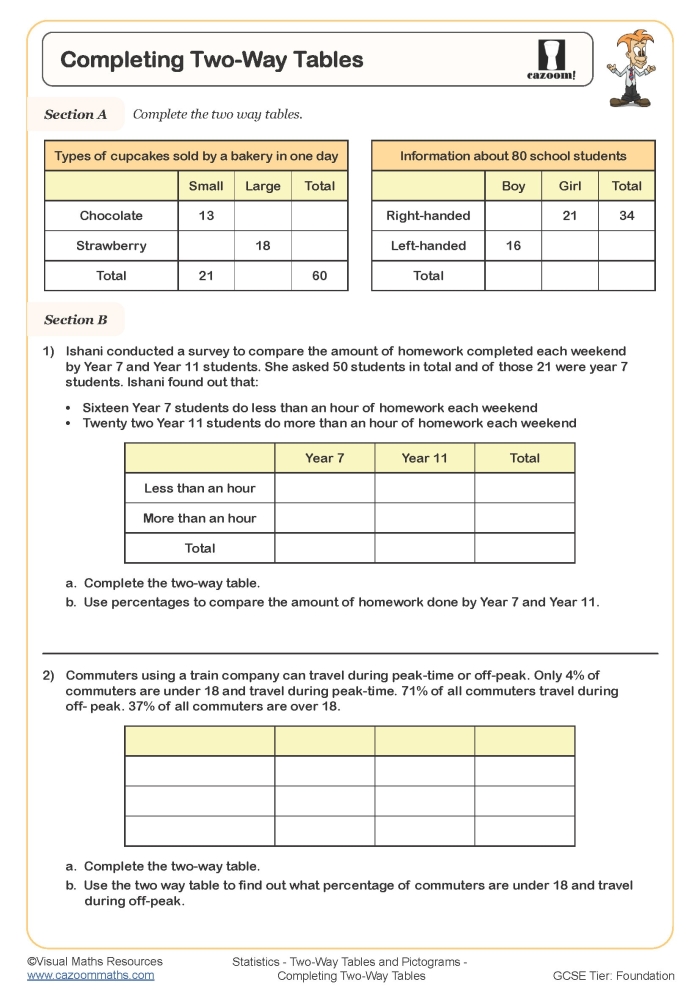
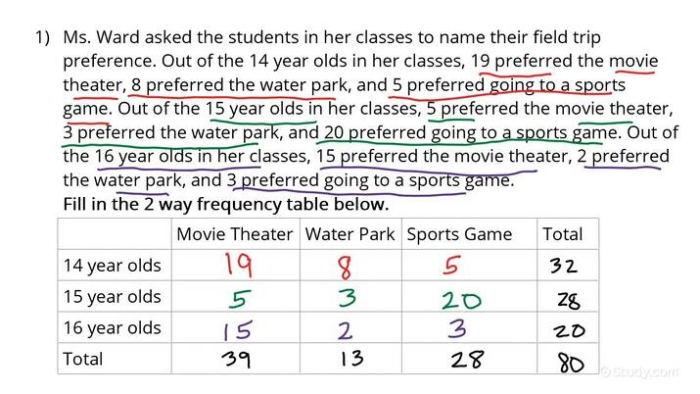
When eighth-grade students work through this type of exercise, they practice several interconnected abilities at once. First, they parse written descriptions carefully, identifying which variables matter and which details are irrelevant. Second, they organize categories logically across rows and columns. Third, they count or calculate frequencies accurately. Fourth, they verify their work by checking that row totals and column totals align correctly.
The French connection in this worksheet adds another layer. Rather than simply working with English text, learners read descriptions in French, which reinforces both language skills and mathematical thinking simultaneously. This integration helps students see math as a universal language tool rather than something isolated from their other subjects.
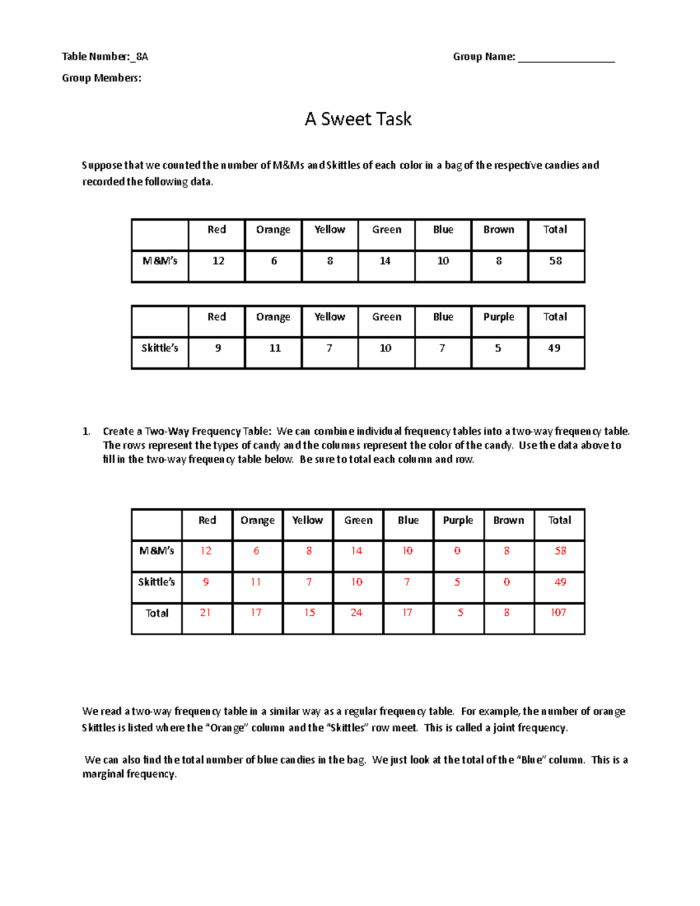
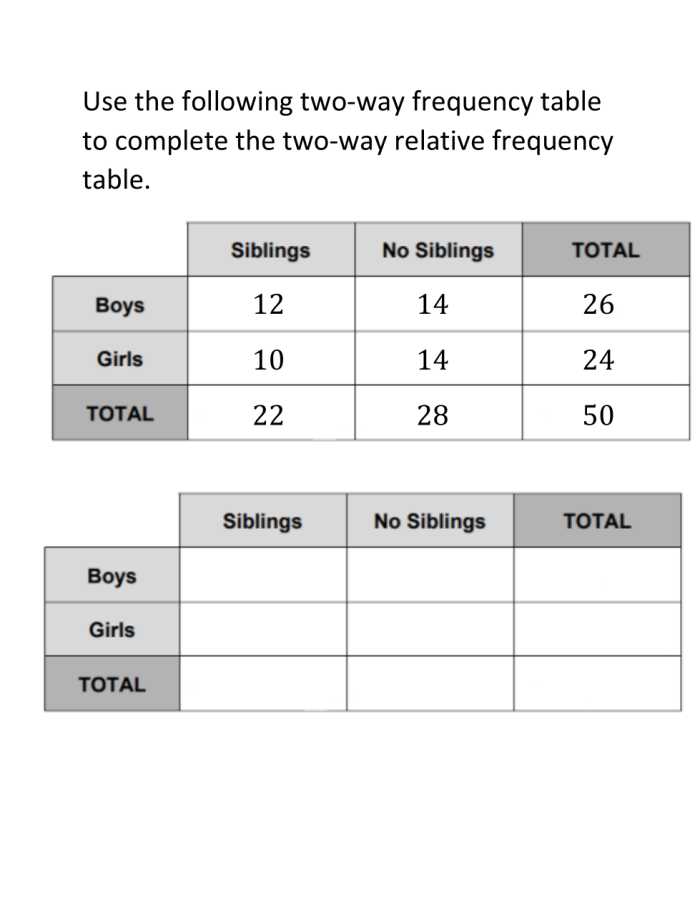
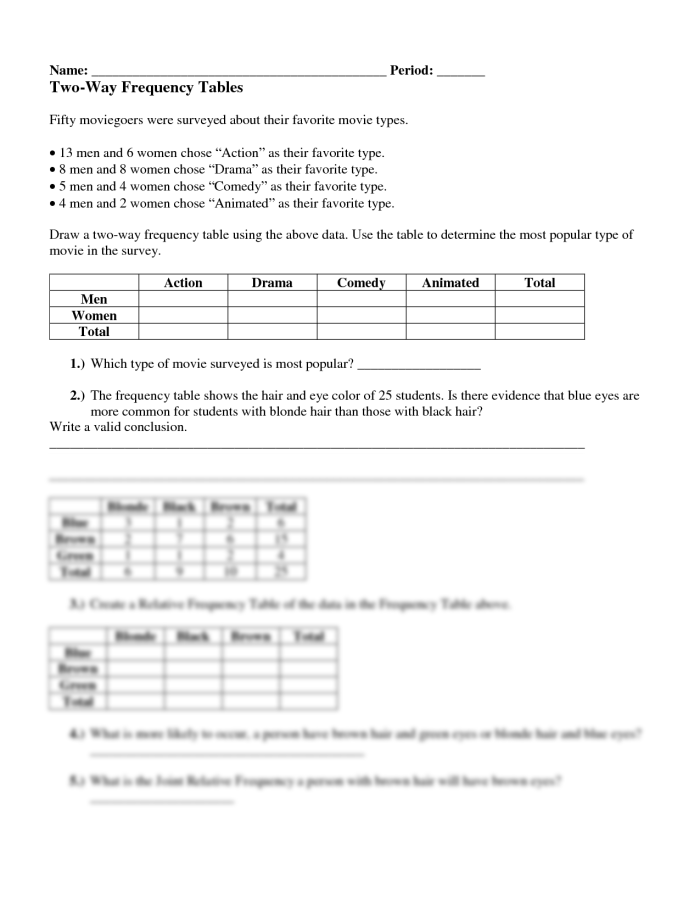
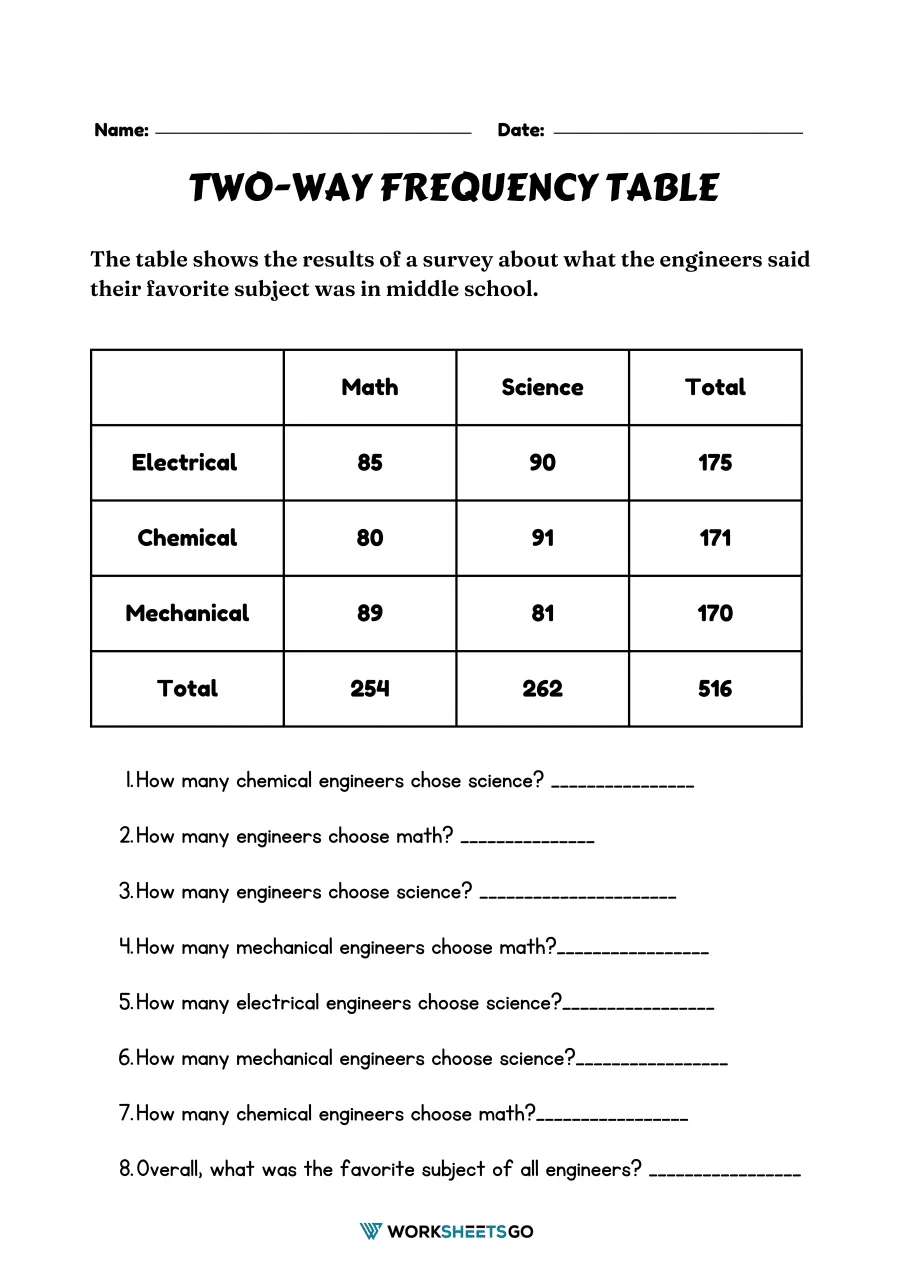
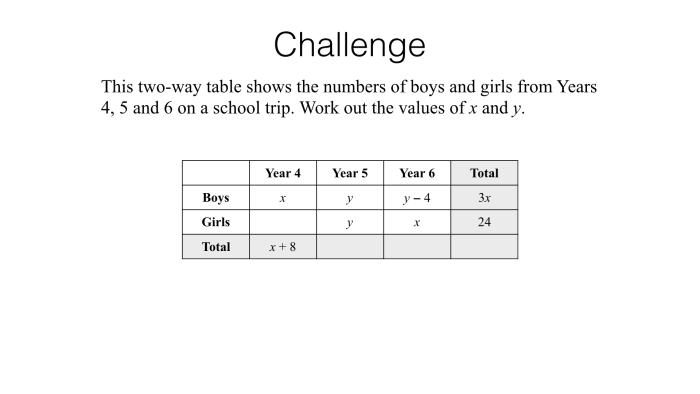
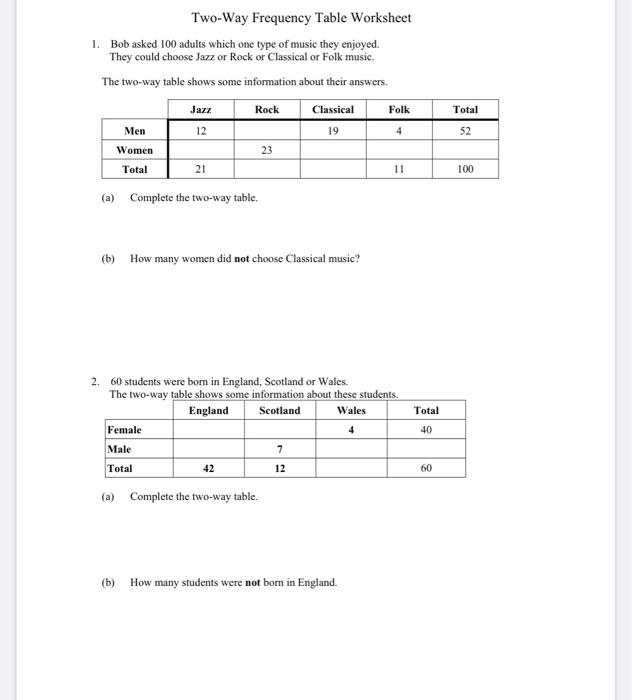
What makes this particular approach effective is the emphasis on construction rather than interpretation. Many worksheets ask students to answer questions about existing tables. This one asks them to build the table itself, which forces deeper engagement with the data structure. Students cannot skip steps or guess their way through. They must understand the relationship between the written description and the final organized table.
For teachers looking for resources that combine rigor with practical application, printable constructing two-way frequency tables worksheets offer exactly this balance, giving eighth-grade learners the practice they need to master this foundational statistical skill.
Download These Worksheets for Practice