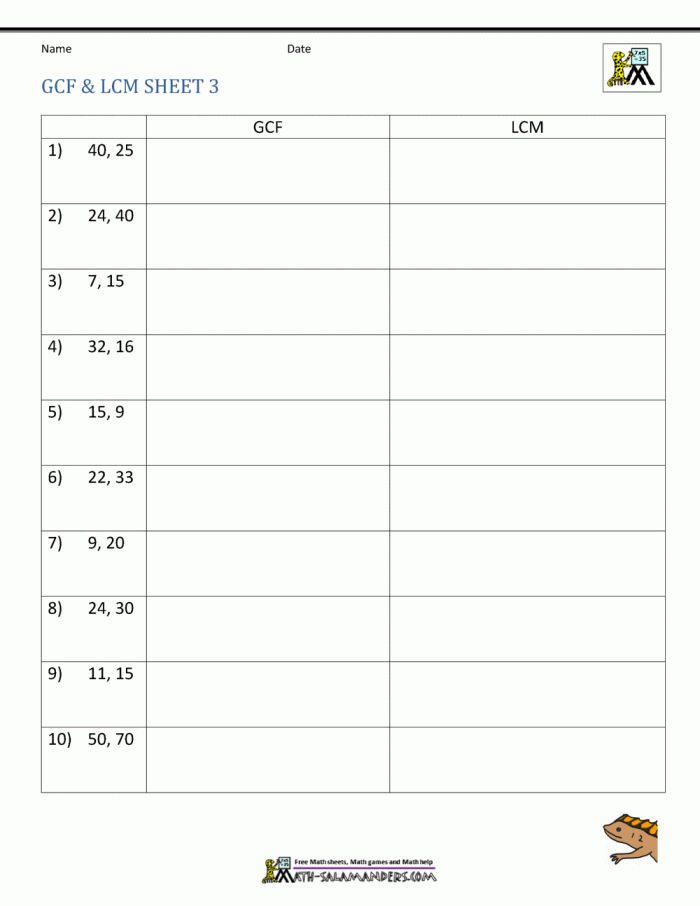
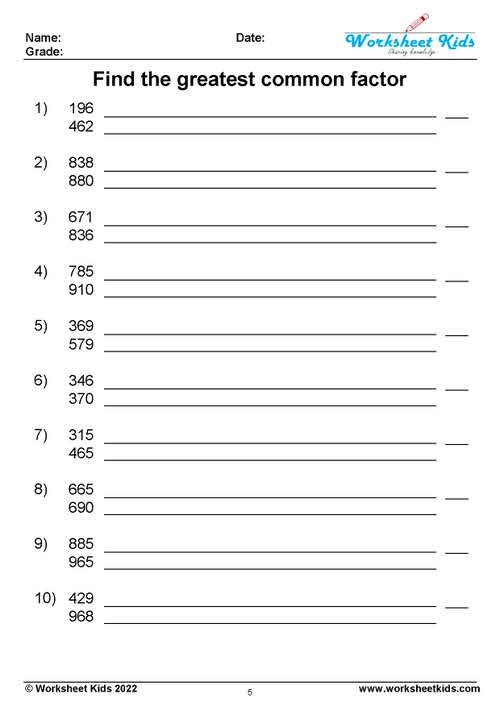
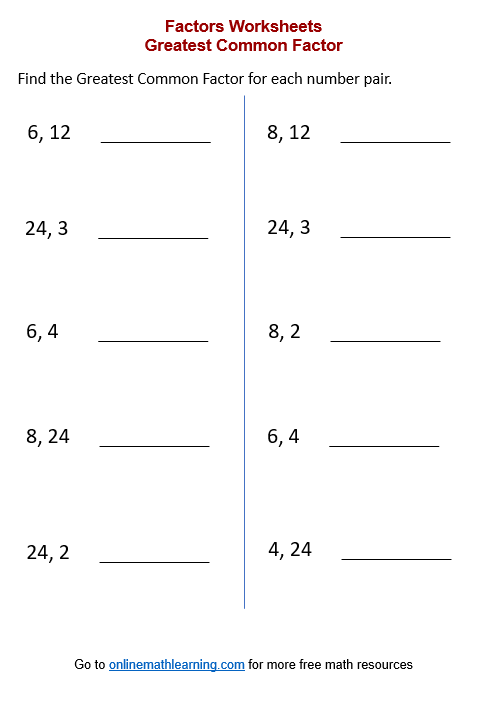
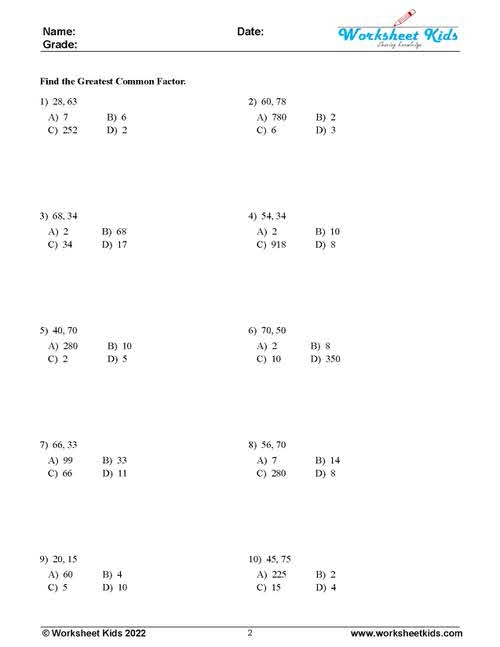
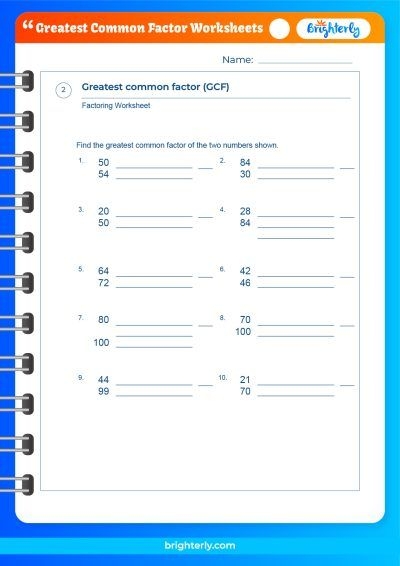
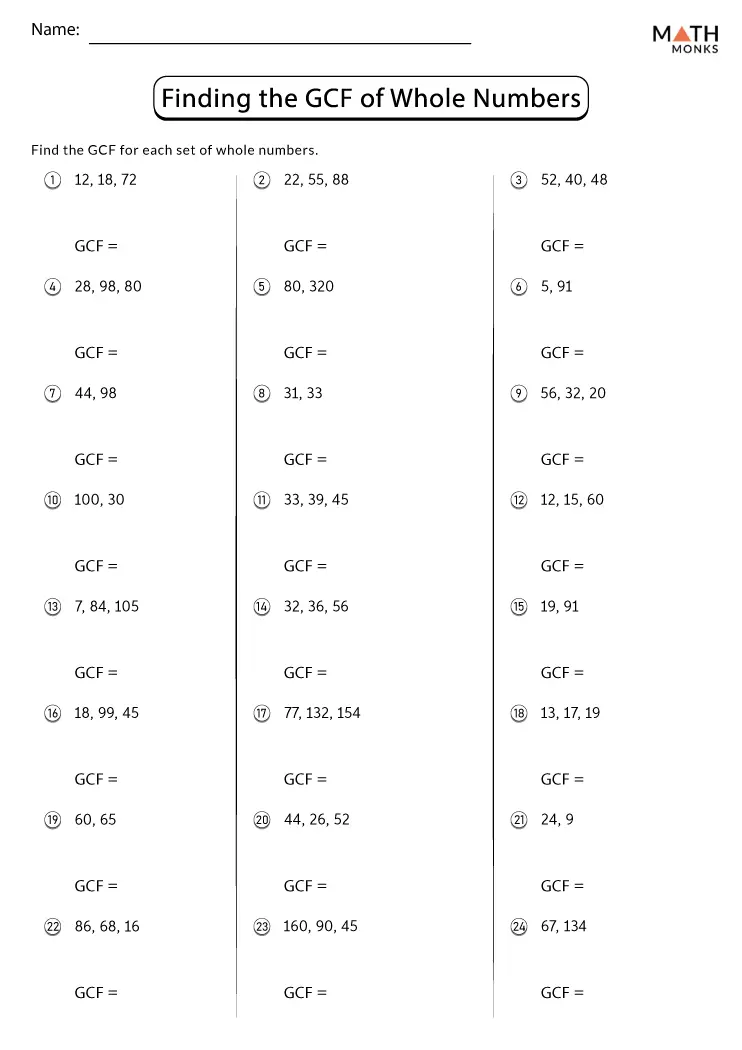
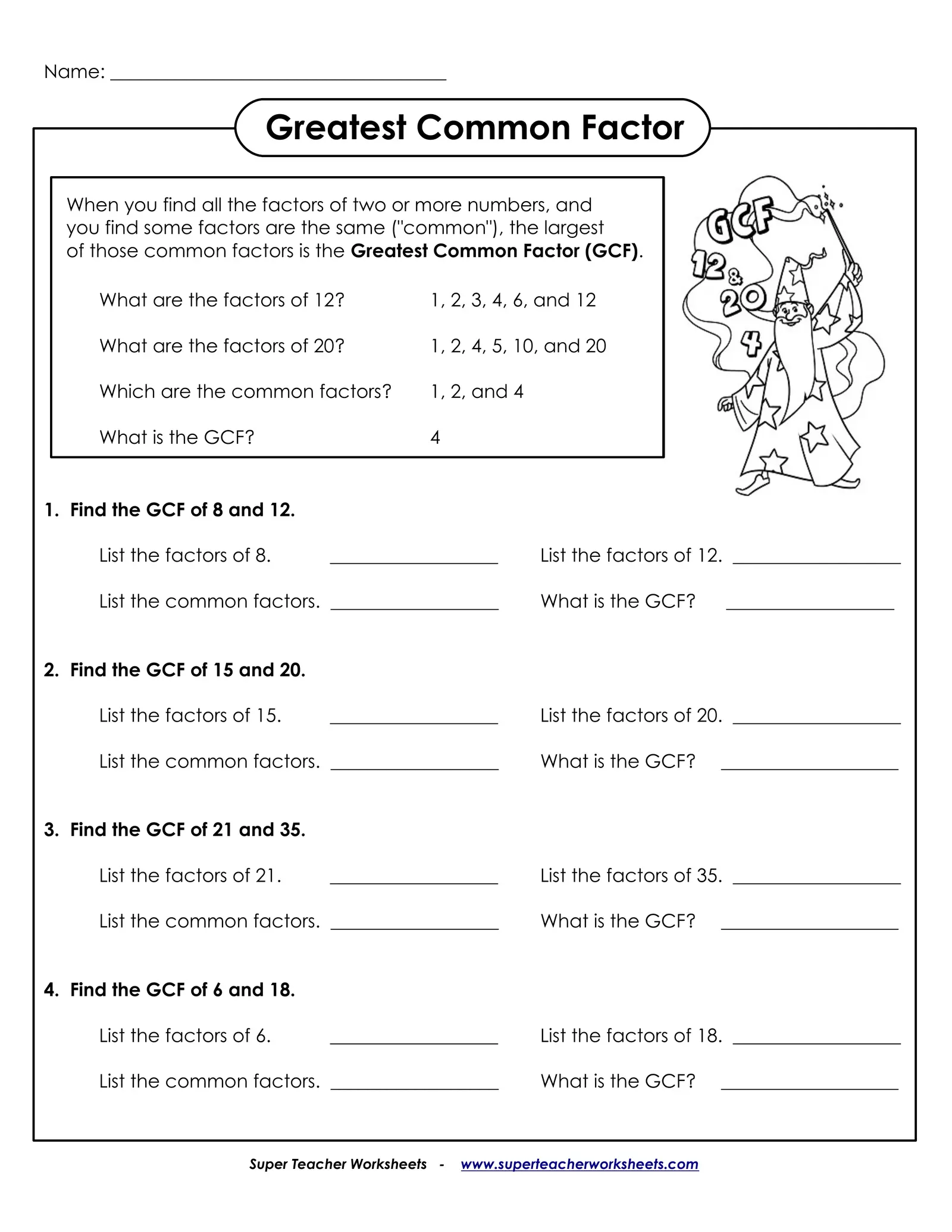
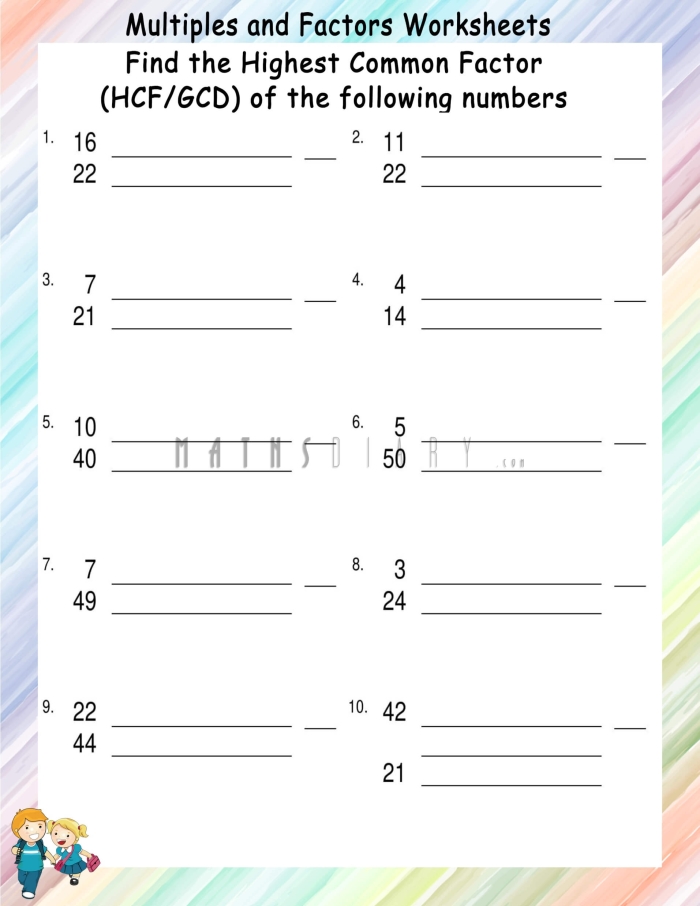
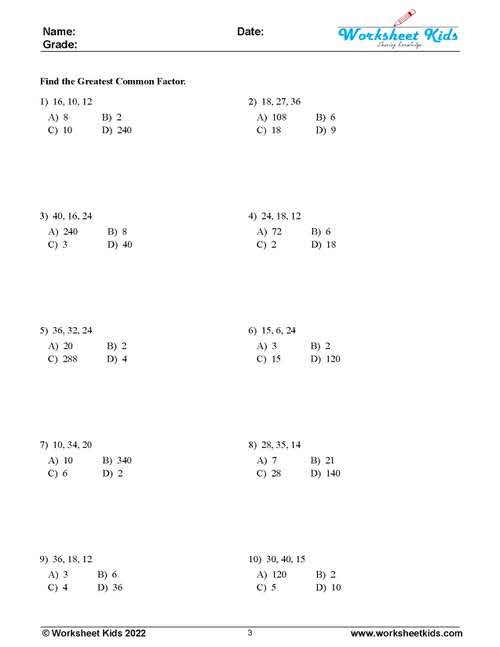
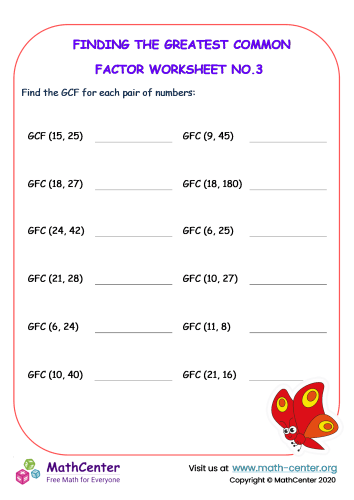
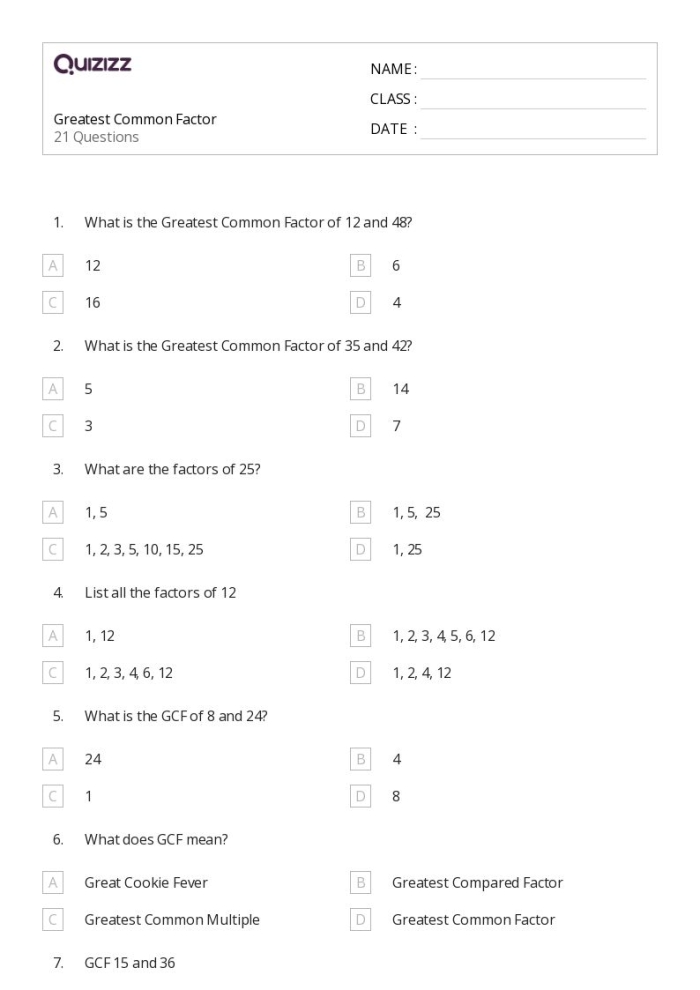
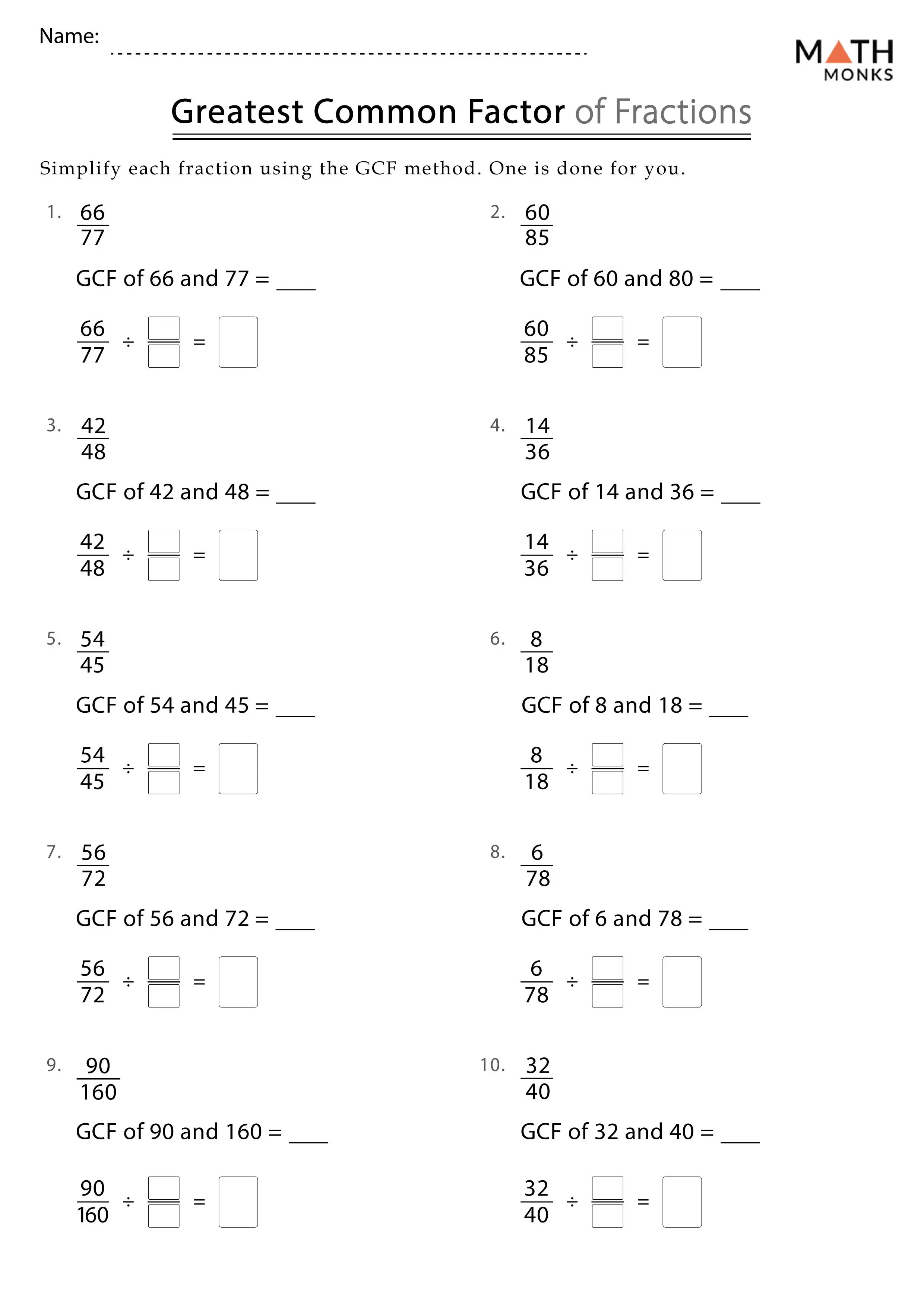
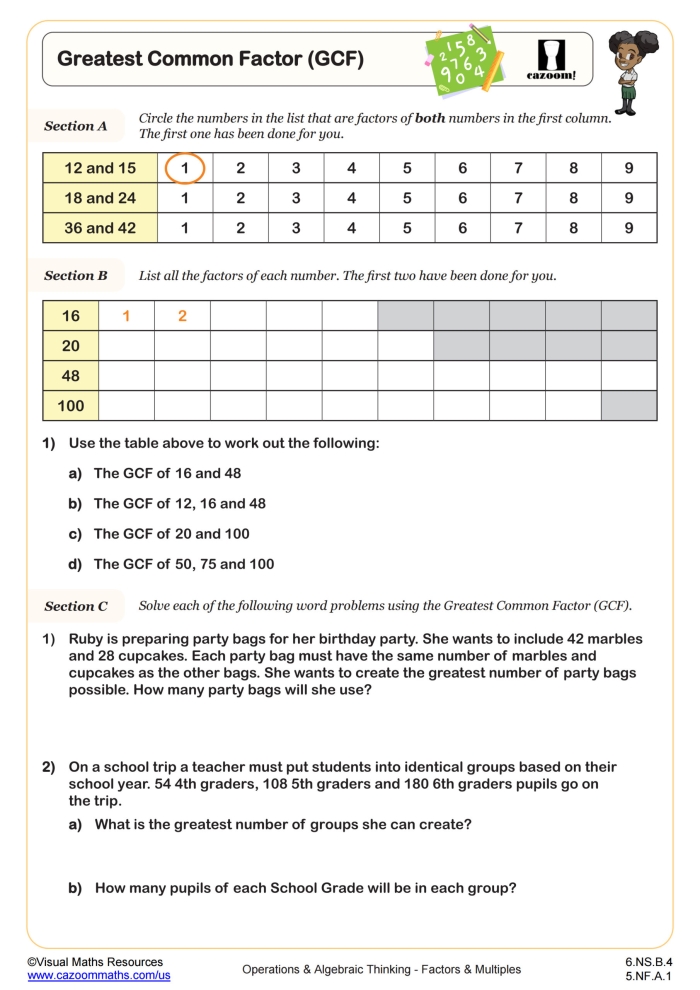
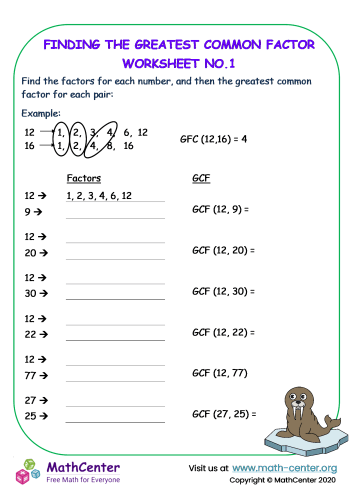
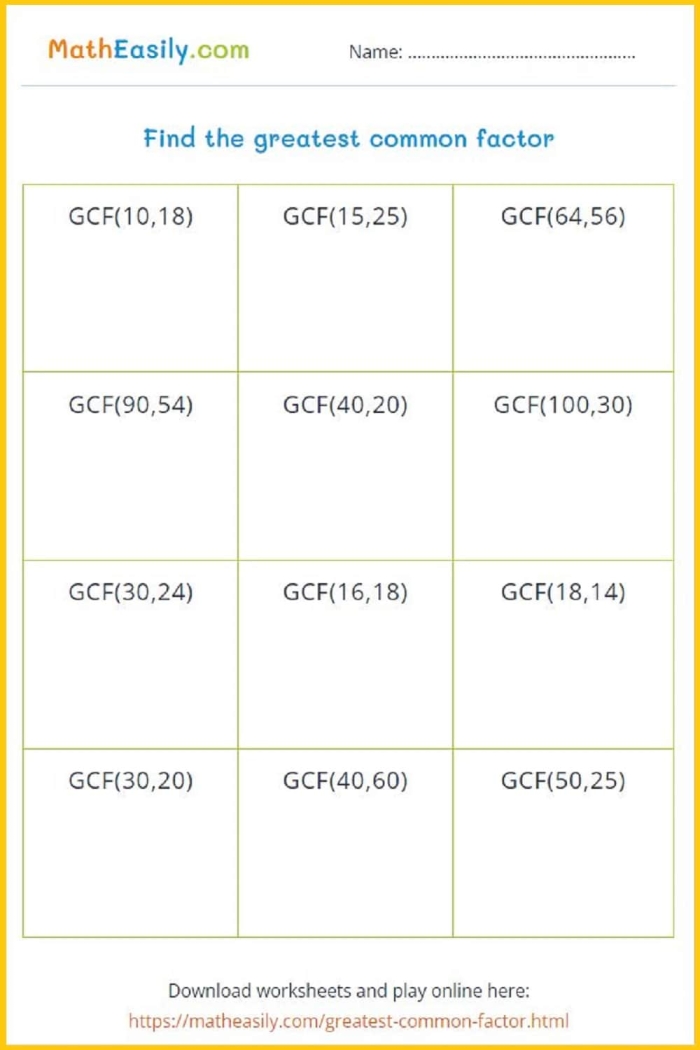
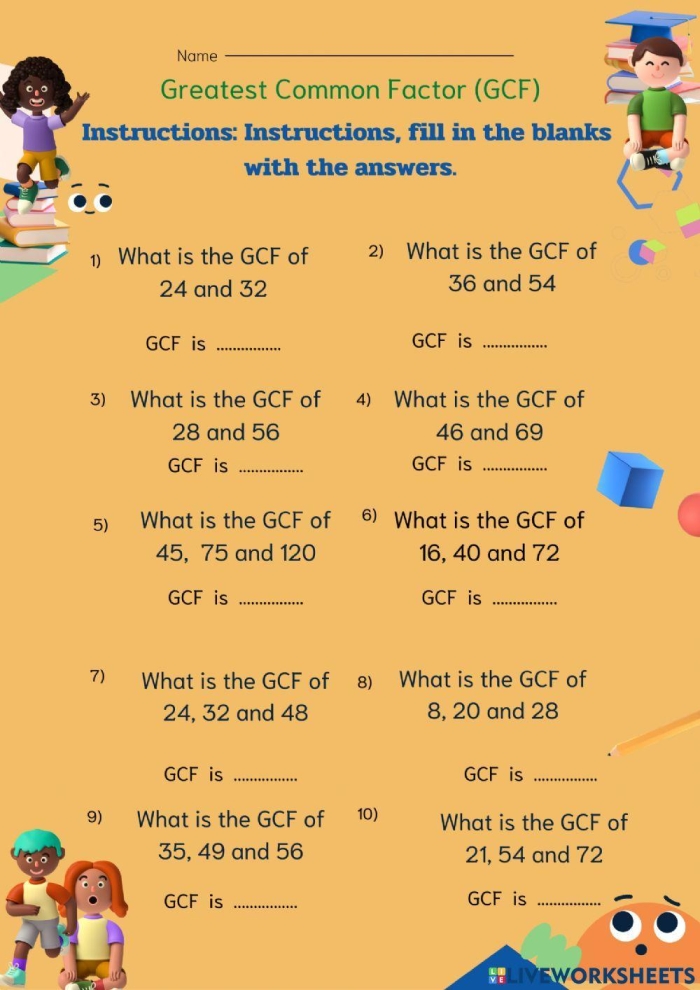
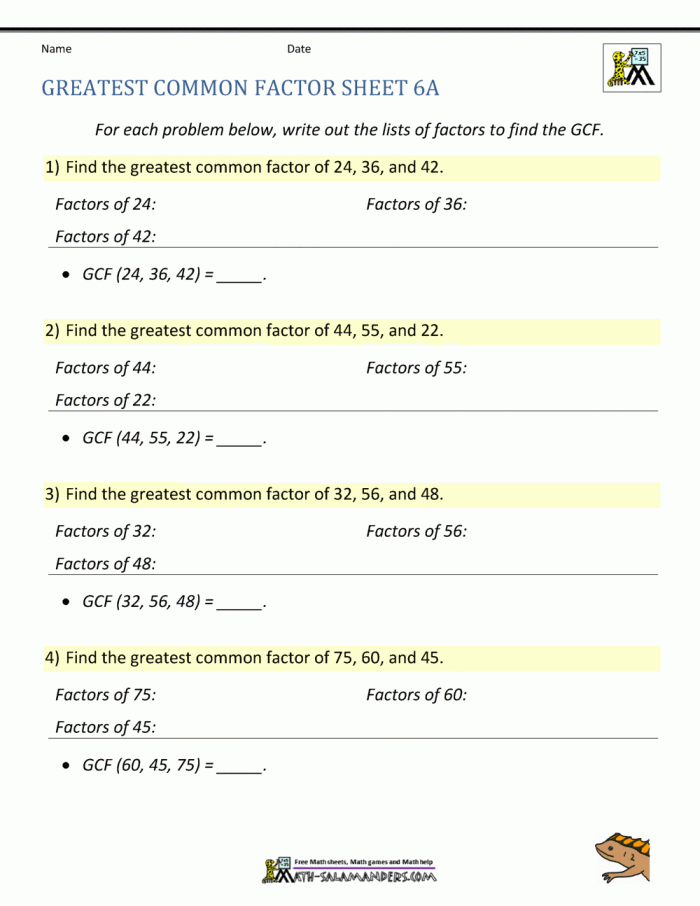
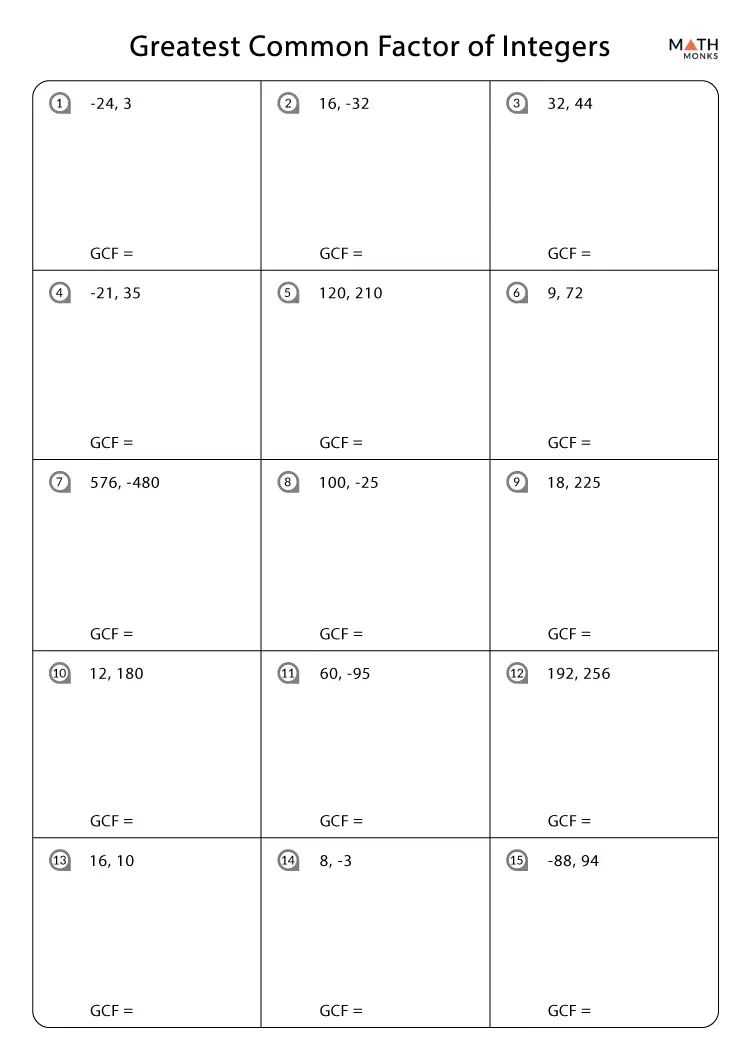
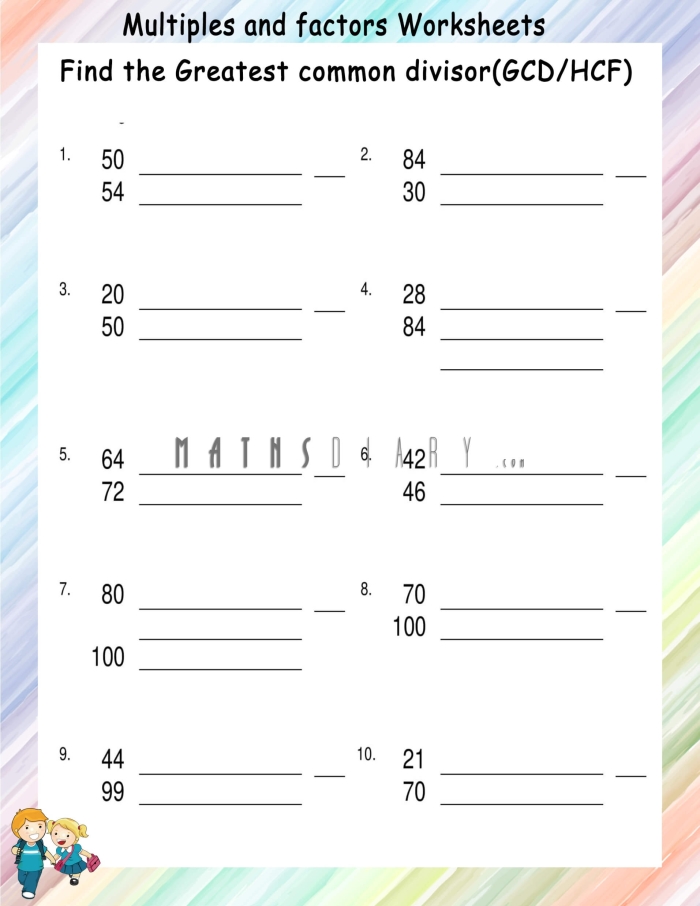
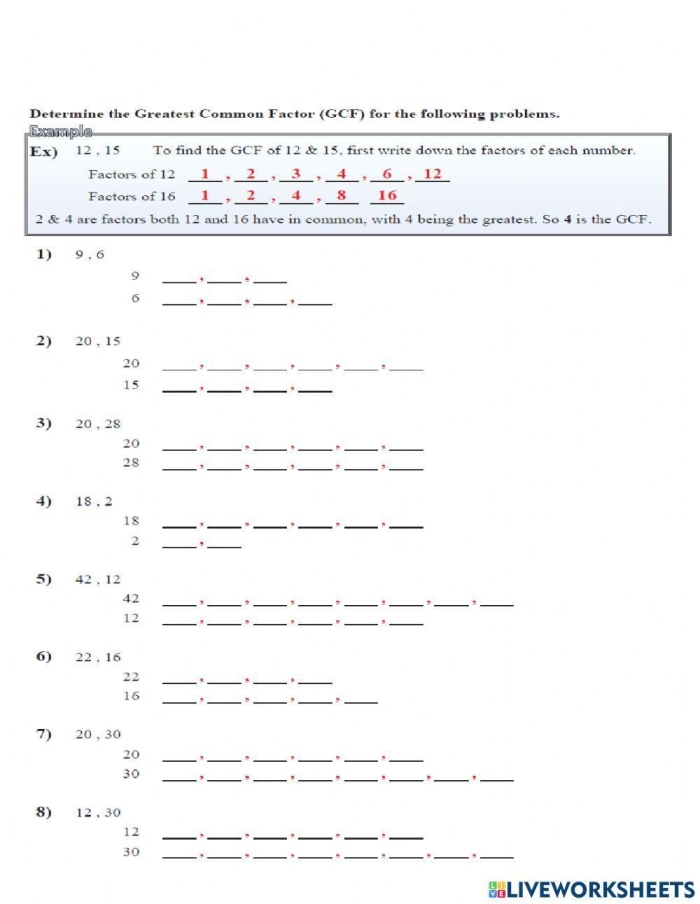
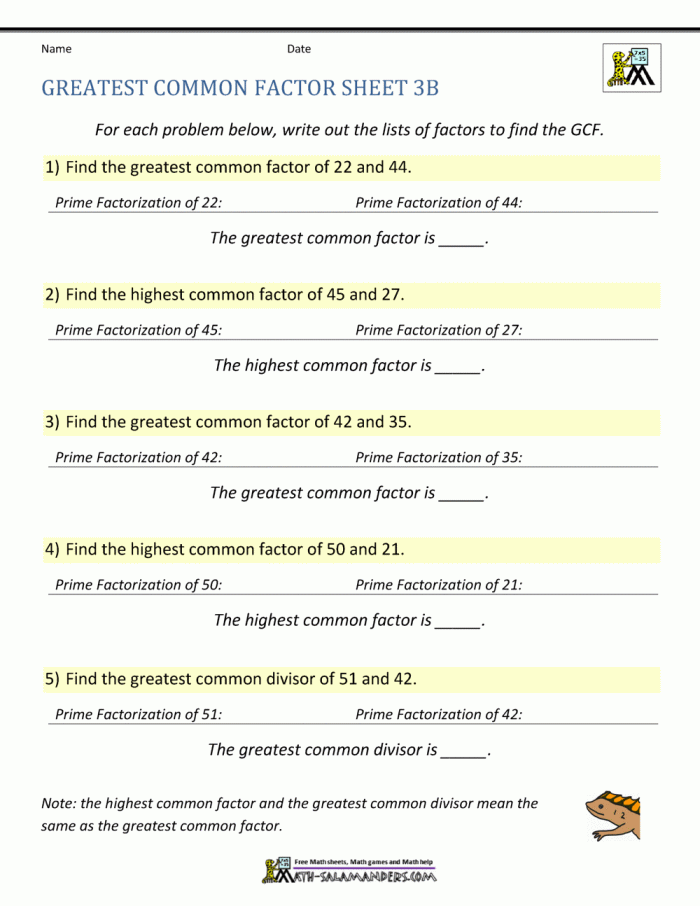
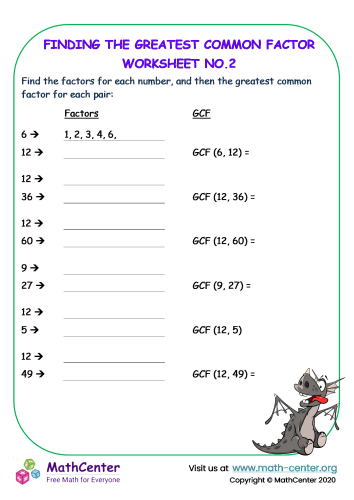
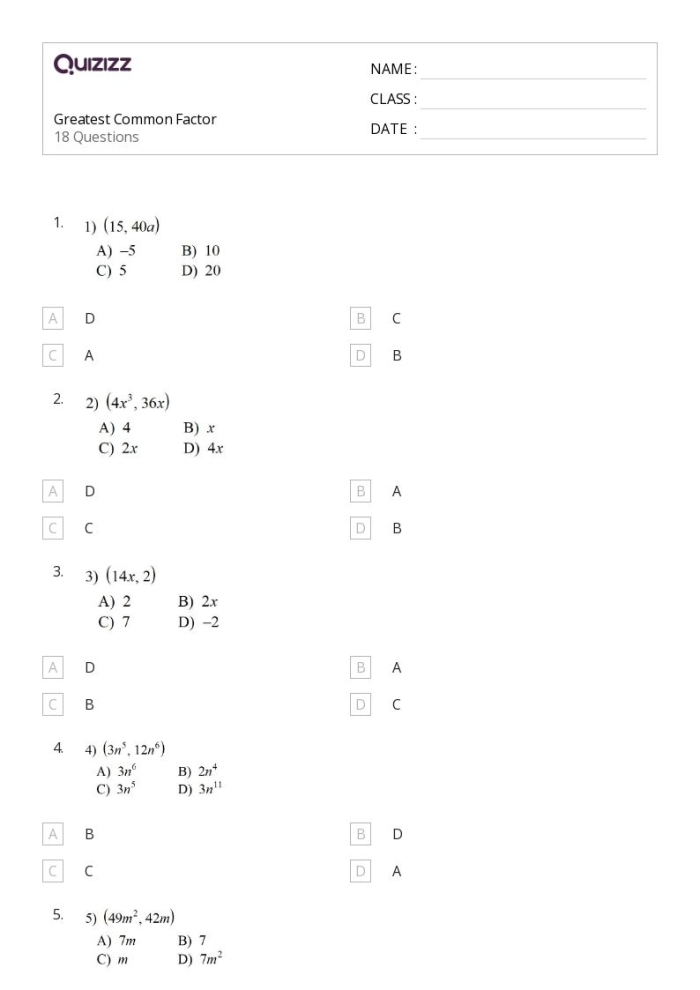
Finding the greatest common factor (GCF) is one of those foundational skills that students either click with immediately or struggle with for months. This math worksheet targets that exact challenge by giving sixth graders a structured way to practice GCF with pairs and groups of three numbers, working with values up to 100.
The GCF is simply the largest number that divides evenly into two or more numbers. For example, the GCF of 24 and 36 is 12, since 12 is the biggest factor they share. When you’re working with three numbers like 18, 24, and 30, the process stays the same in principle but requires a bit more tracking. This worksheet builds that skill progressively, so students aren’t overwhelmed by jumping straight to complex problems.
Why GCF Matters in Sixth Grade Math
Mastering GCF opens doors to simplifying fractions, solving ratio problems, and understanding number relationships more deeply. Students who can quickly identify the GCF of two numbers gain confidence in working with fractions, which becomes critical as math gets more advanced. The ability to break numbers down into their factors also strengthens overall number sense.
This worksheet approach works particularly well because it removes the guesswork. Rather than students randomly trying factors, they develop a systematic method. Some find the prime factorization approach easier, while others prefer listing all factors and finding the largest match. Either way, repeated practice with numbers in the 1-100 range gives them enough variety without becoming tedious.
Beyond isolated math practice, understanding factors and common multiples connects to real-world problem solving. When sixth graders work through problems involving ratios or organizing items into equal groups, they’re applying GCF concepts. Pairing this worksheet with other sixth grade math resources, such as ratio tables practice, helps students see how these skills build on each other.
Start with this worksheet when students are first learning GCF, then return to it periodically as a quick review. Consistency matters more than intensity when building mathematical fluency.
Use These Worksheets Today