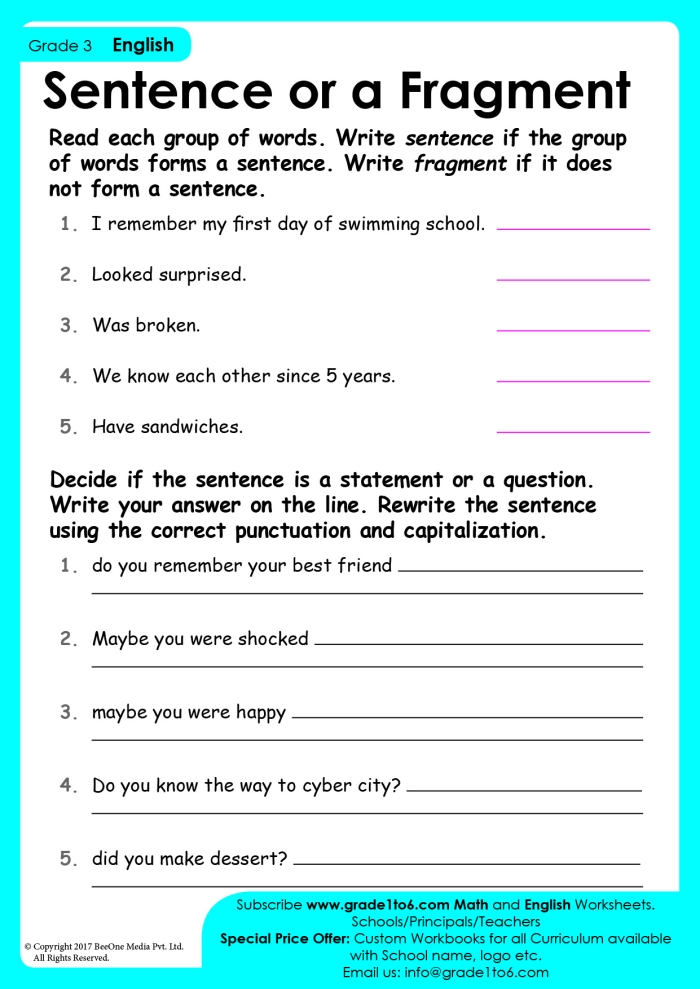
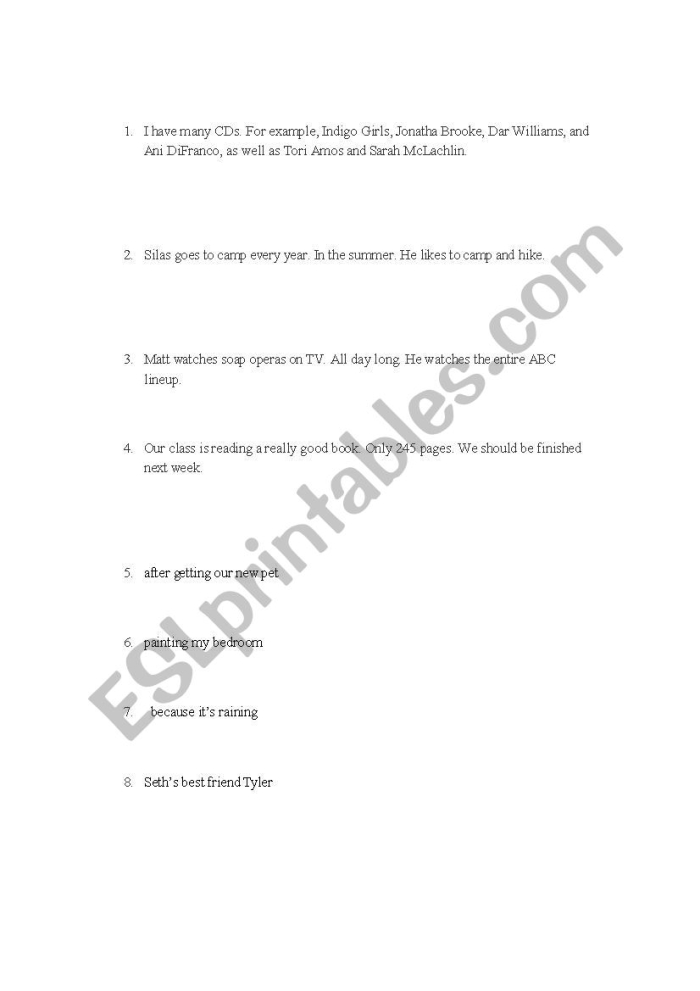
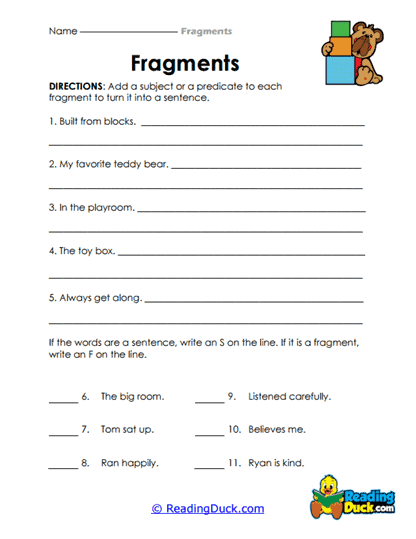
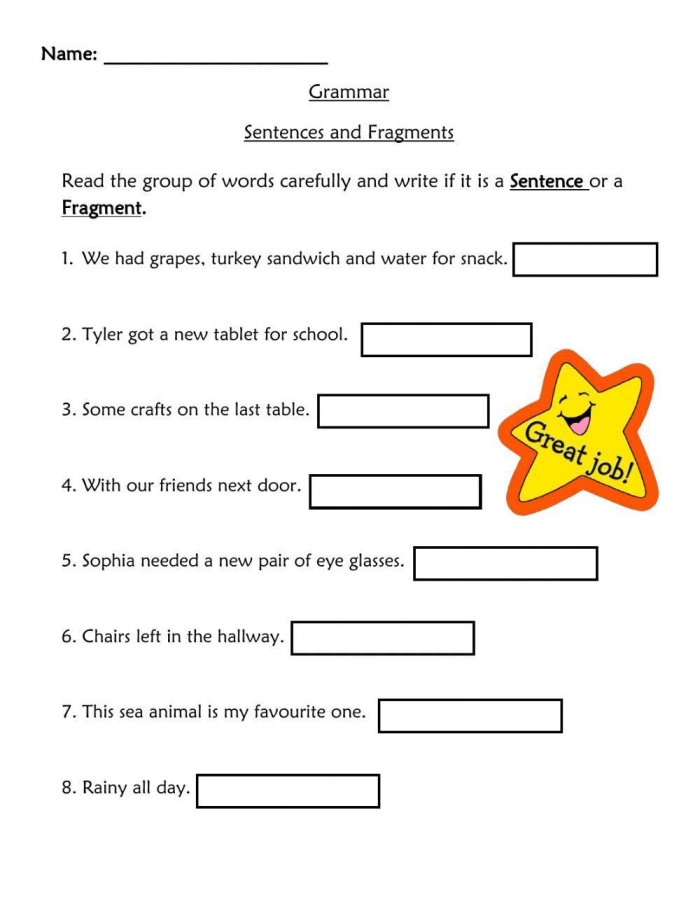
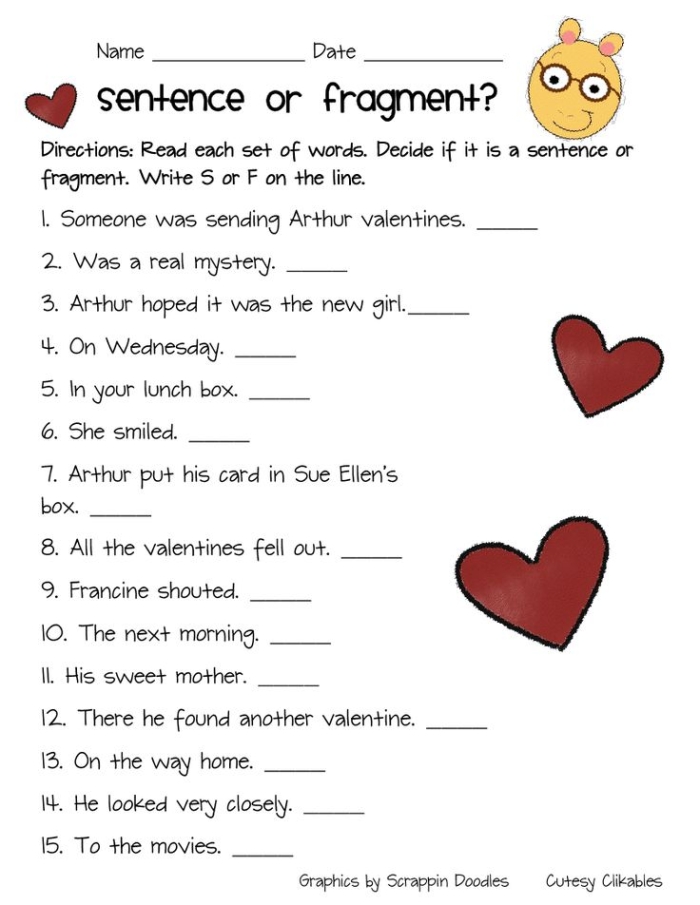
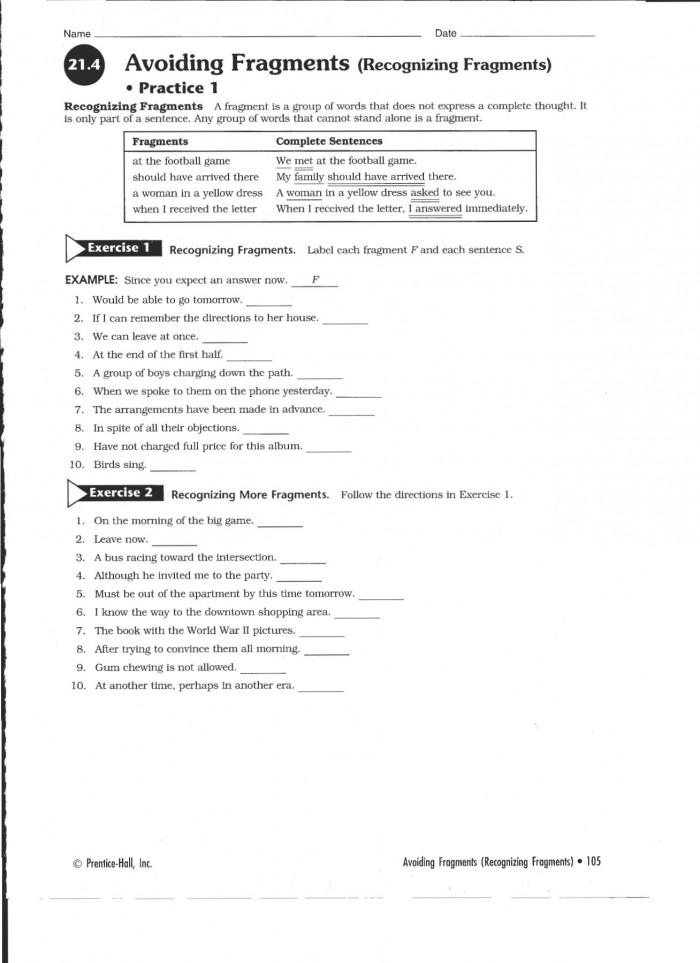
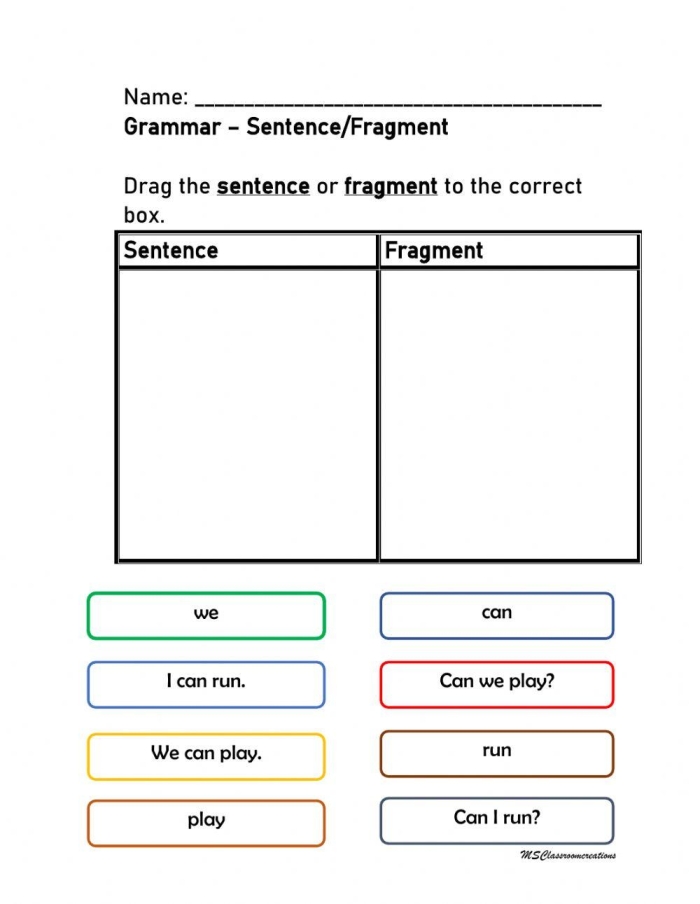
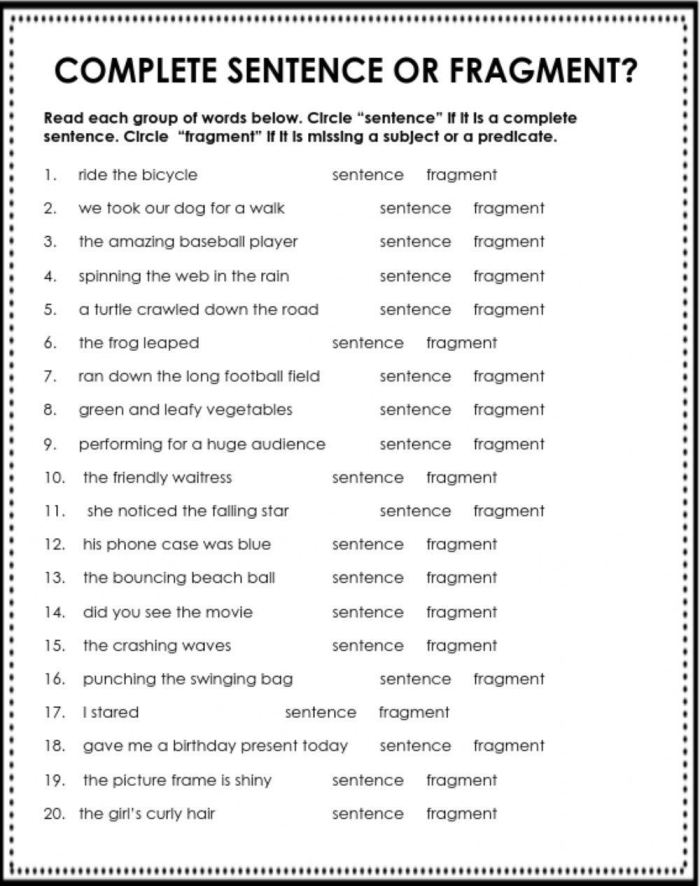
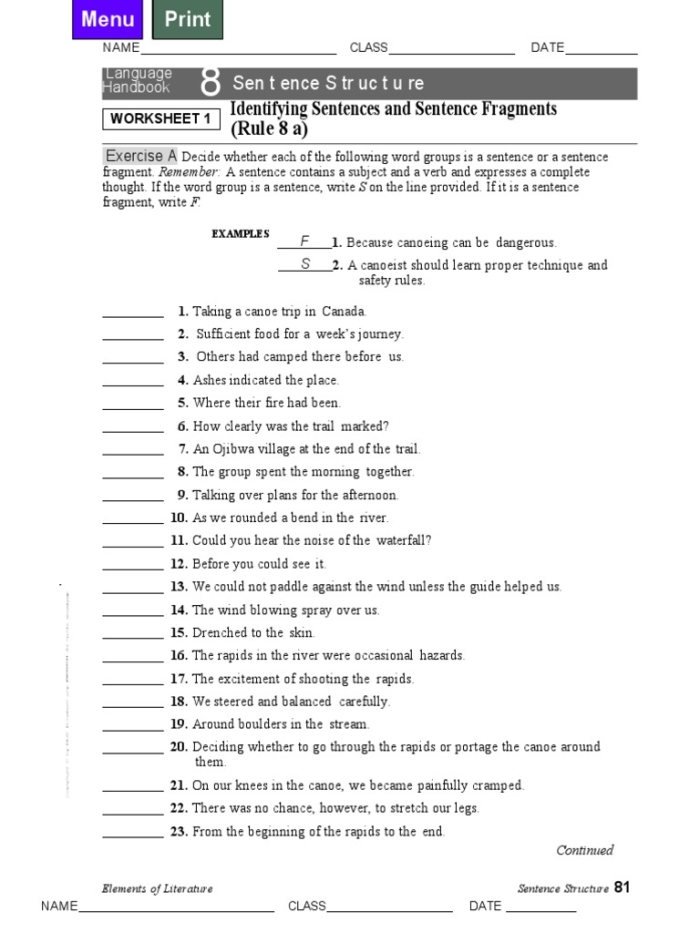
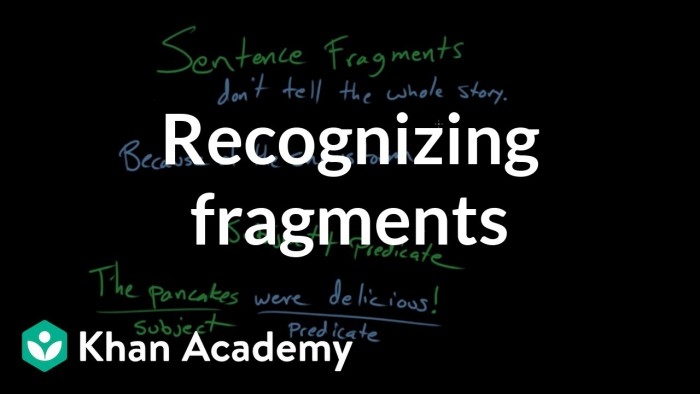
One of the trickiest skills in Fourth Grade Reading is learning to recognize the difference between a complete sentence and a fragment. Many students write fragments without realizing it, leaving their readers confused or wondering what they meant to say. A simple exercise can change this: reading through examples and deciding which ones are sentences and which ones are incomplete thoughts.
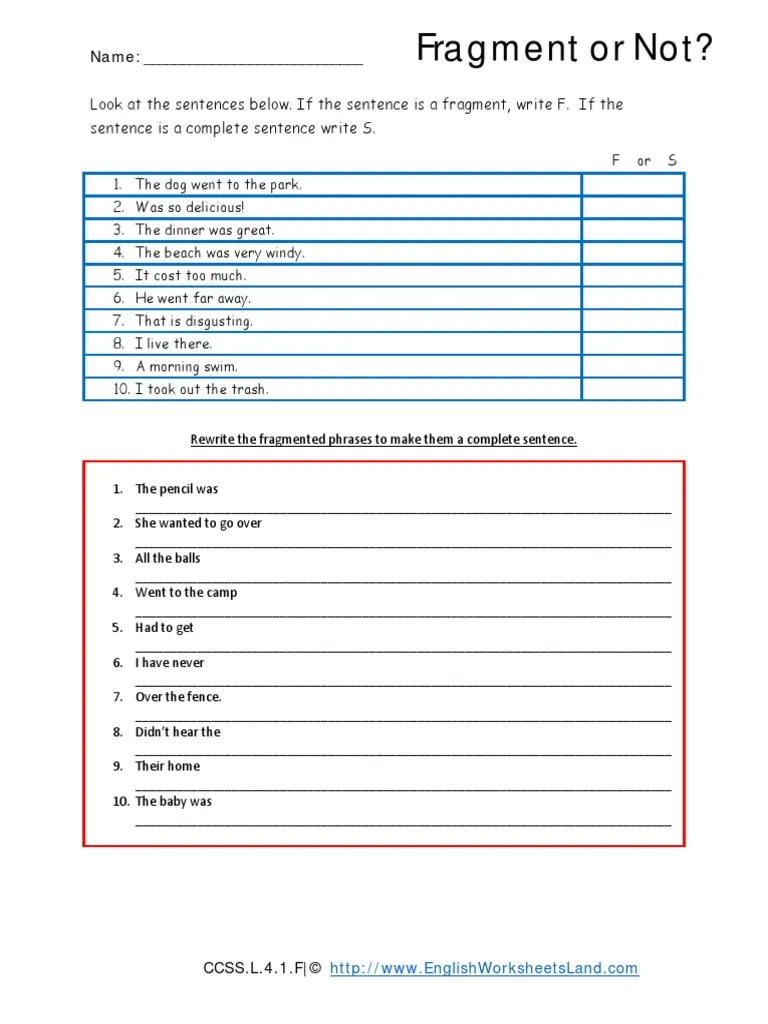
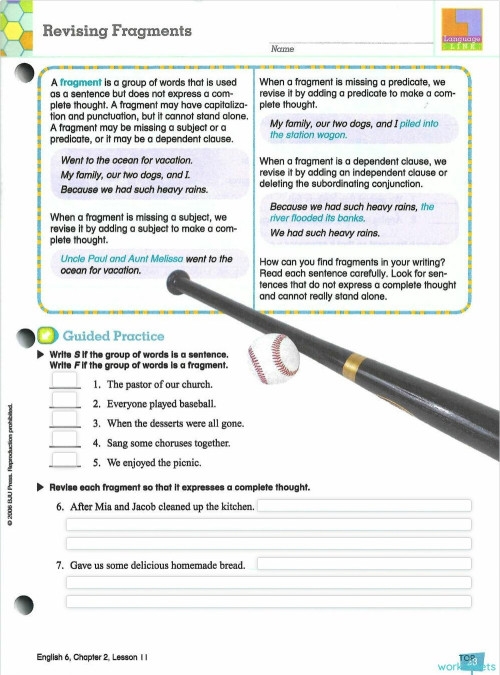
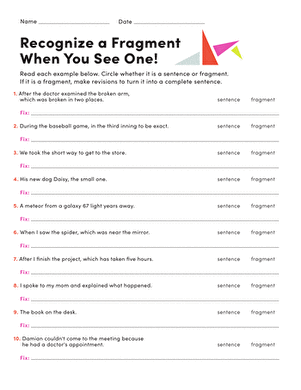
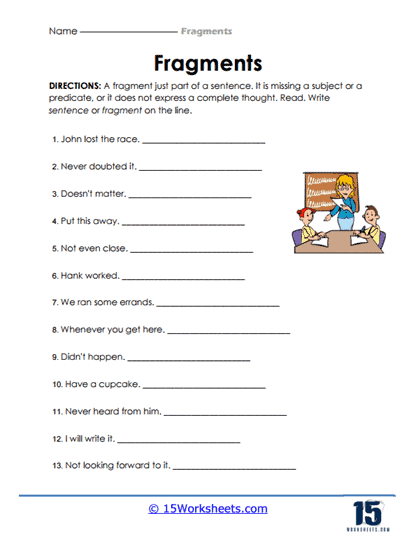
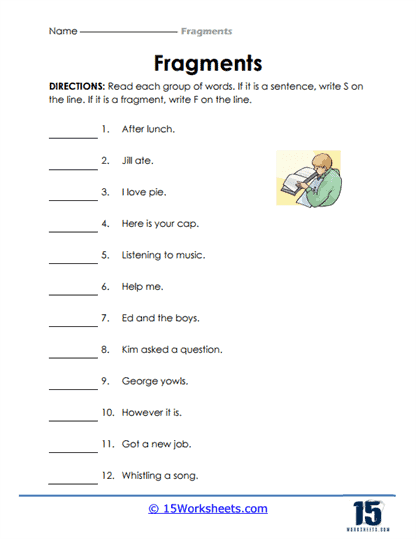
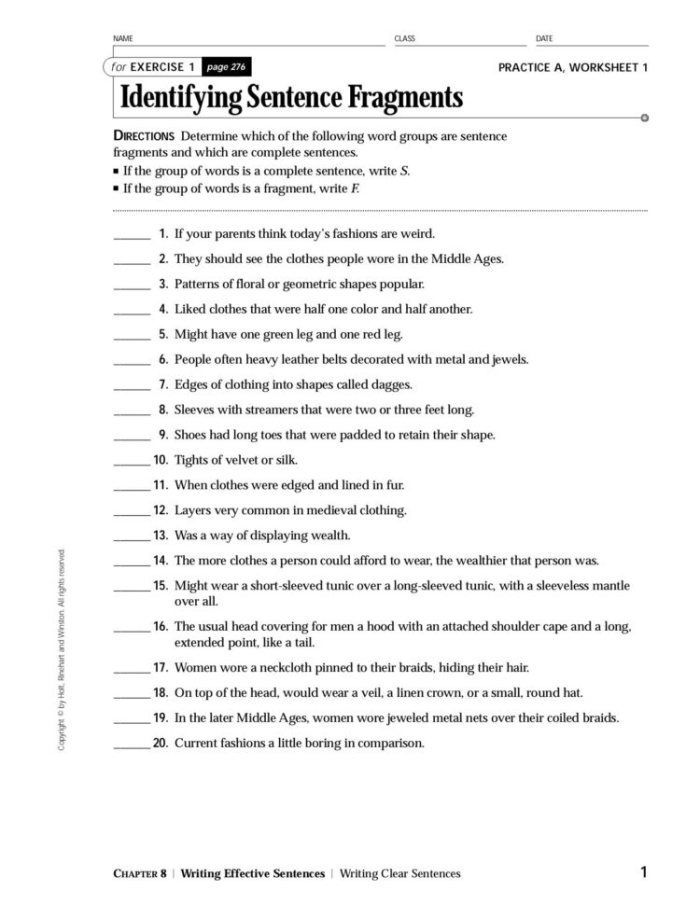
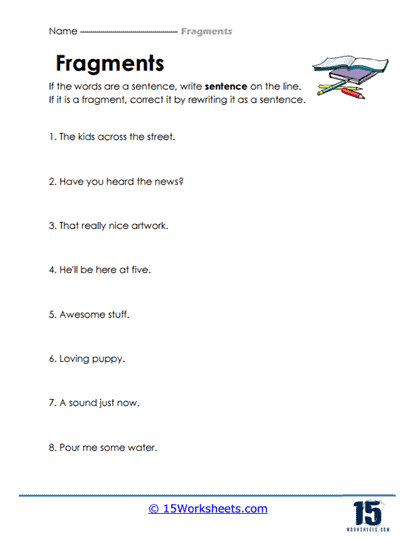
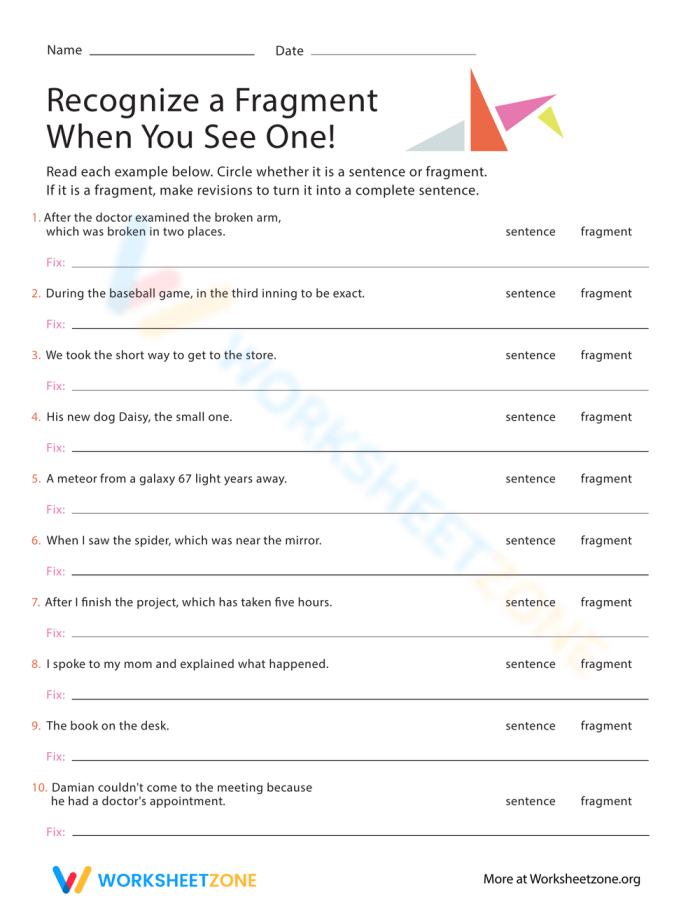
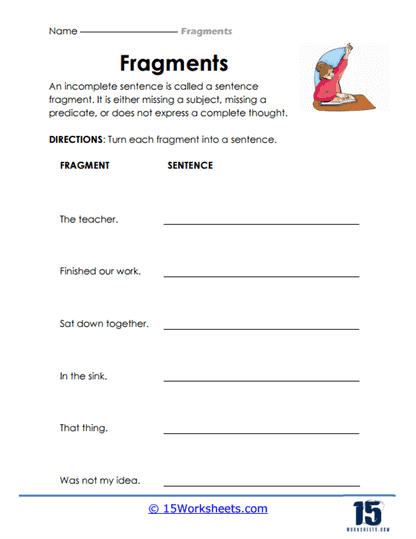
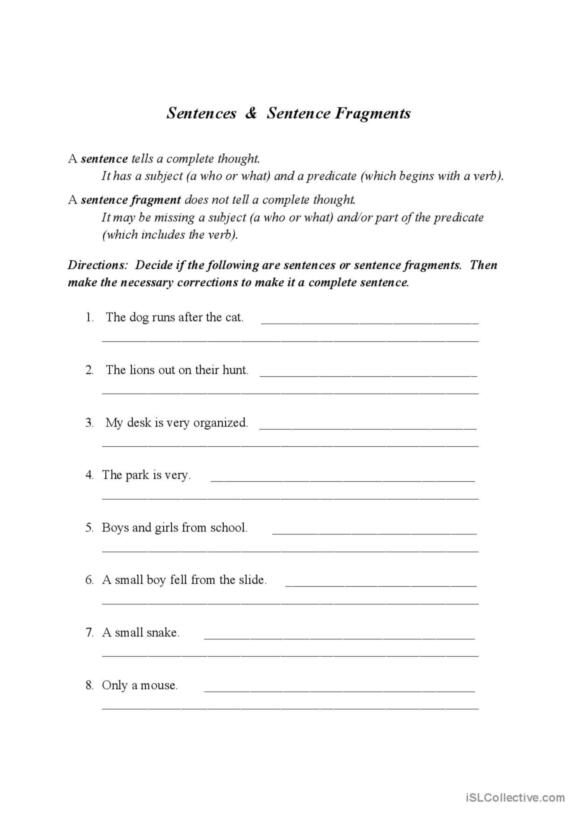
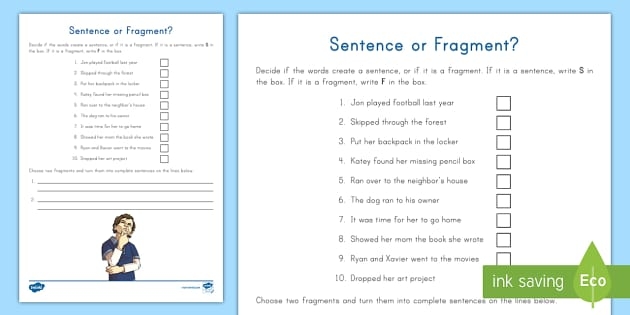
This activity asks students to examine 10 different examples and make that critical distinction. Some will be clearly complete sentences with a subject and predicate. Others will be fragments, lacking either a subject, a verb, or a complete thought. Once students identify the fragments, they rewrite them to become full sentences. This hands-on approach builds confidence and helps the skill stick.
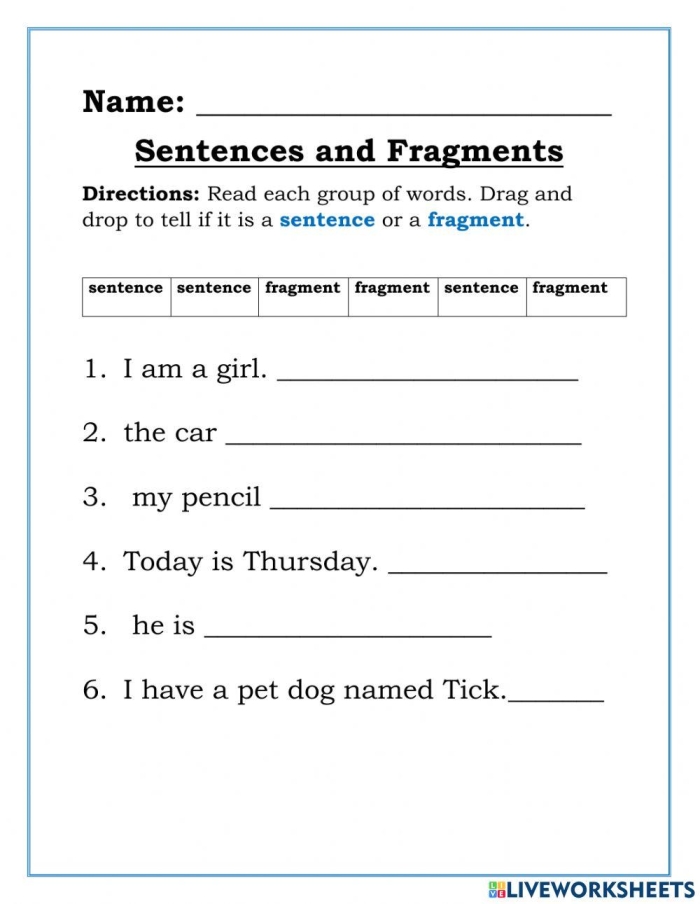
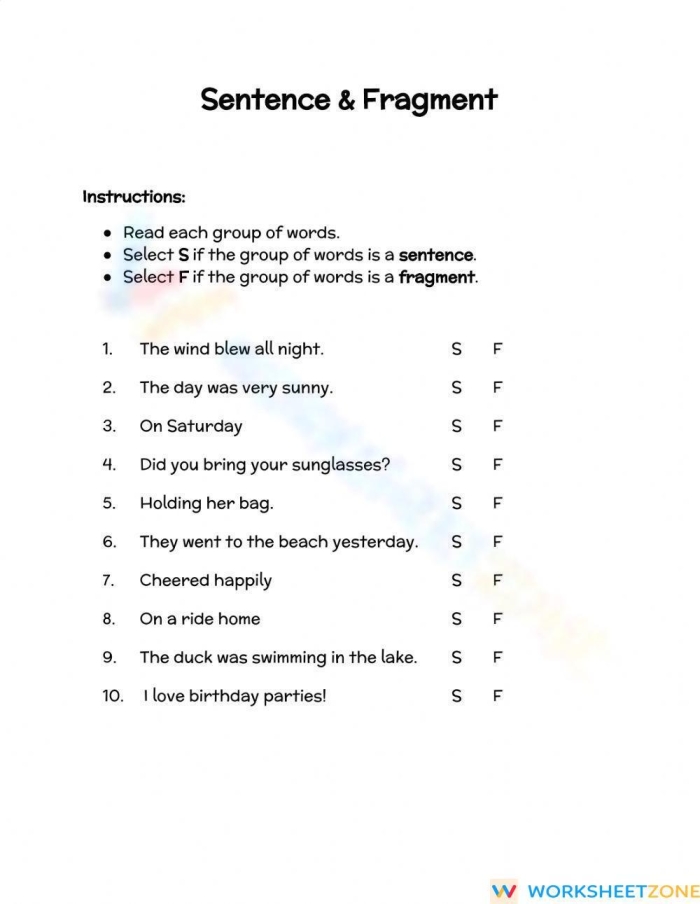
Why does this matter? Fragments confuse readers and weaken writing. When students practice spotting them early, they develop an internal editor that catches mistakes before they happen. The process isn’t complicated. A complete sentence needs someone doing something, plus it needs to express a complete idea. “The dog barked loudly” works. “Because the dog was excited” does not, even though it sounds like it could be part of a sentence.
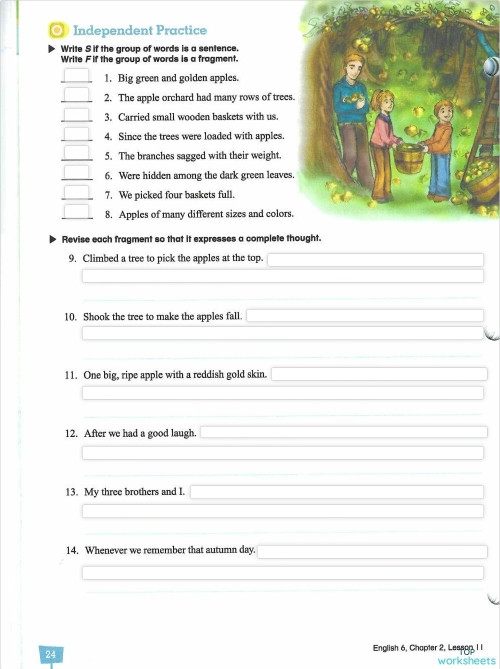
Rewriting fragments teaches students to think about what they’re trying to say. When they turn “Running through the park” into “The children were running through the park,” they’ve added the missing pieces. They’ve made their meaning clear.
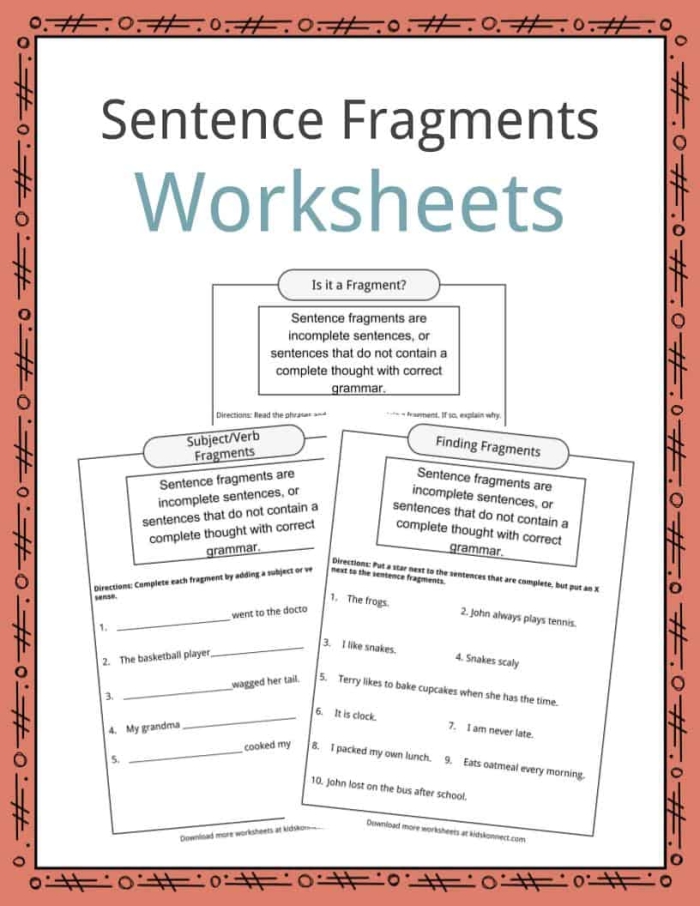
Using reading worksheets designed for this skill gives students repeated practice with different types of fragments. Some exercises focus on action verbs, while others work with descriptive phrases. The variety keeps the learning fresh and helps students understand that fragments can hide in many forms.
Fourth Grade is the perfect time to build this foundation, before writing assignments become more complex and demanding.
Printable Worksheets for Practice