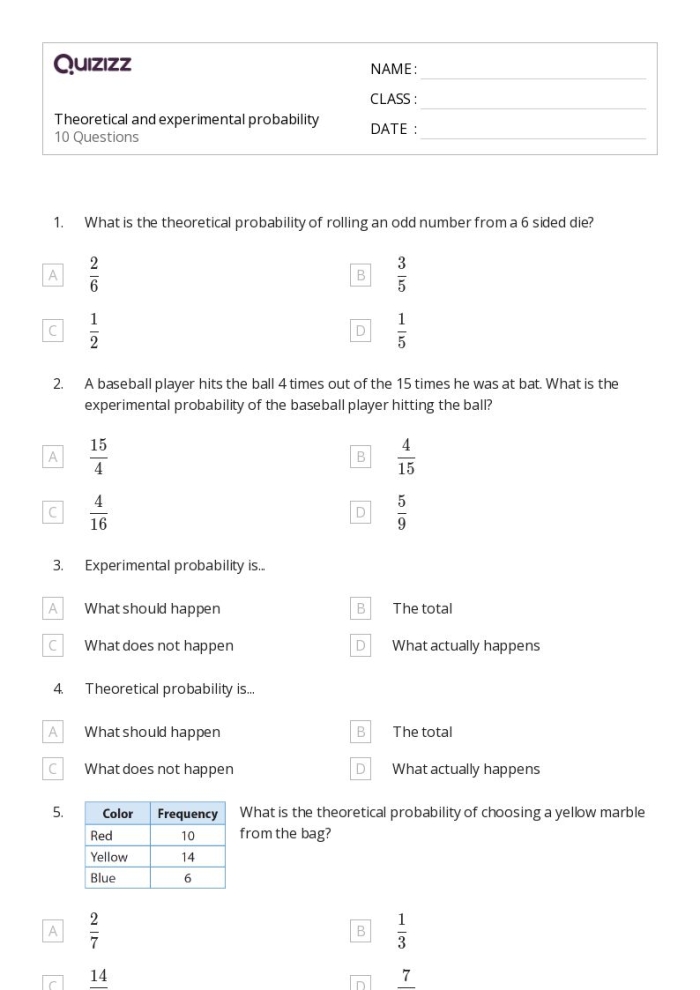
Seventh-grade students often struggle with abstract mathematical concepts, but experimental probability offers something concrete: a way to test ideas in the real world and see patterns emerge from actual data. This is where a solid probability worksheet becomes invaluable, moving students beyond memorized formulas into genuine problem-solving.
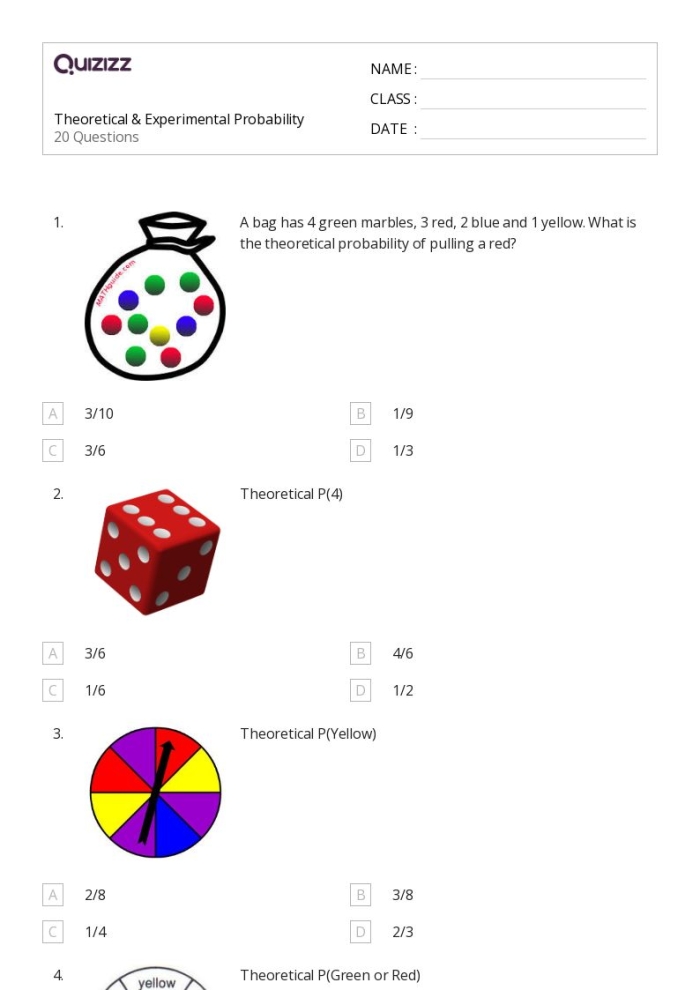
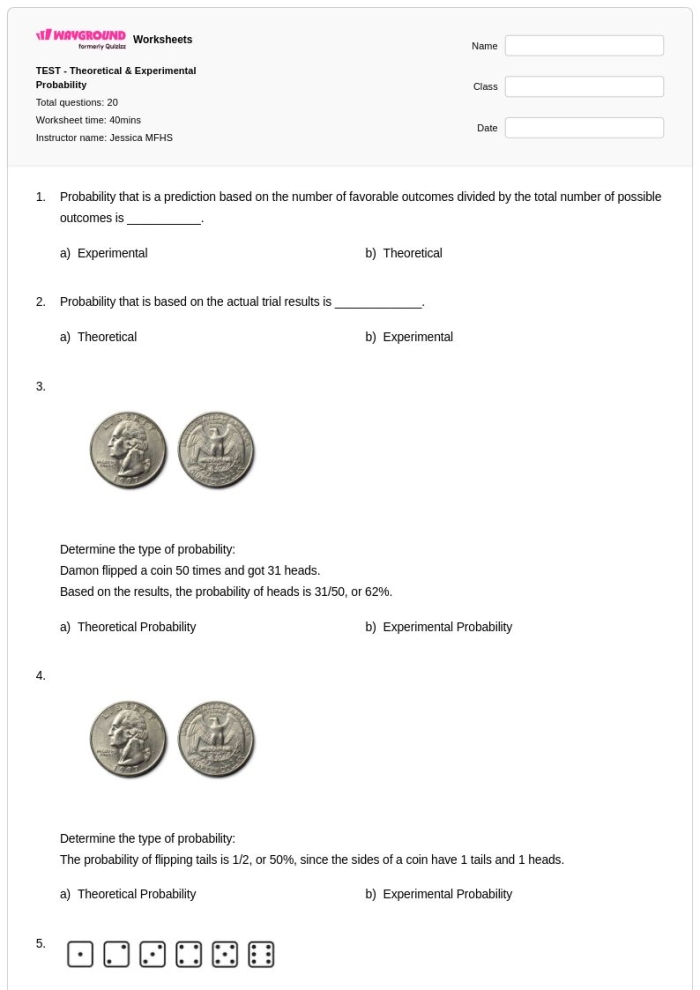
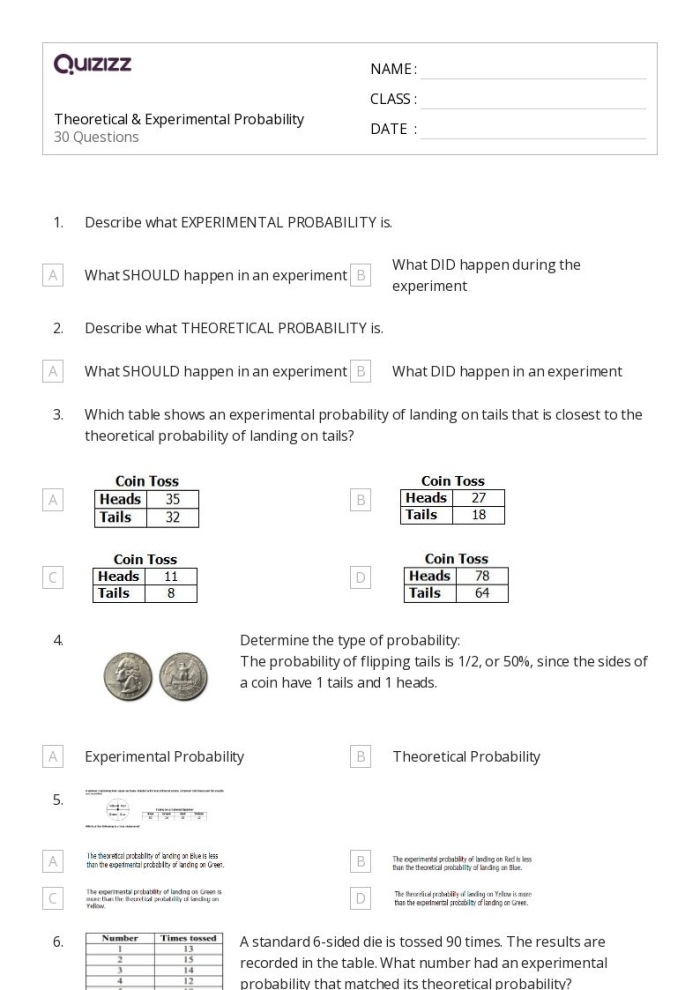
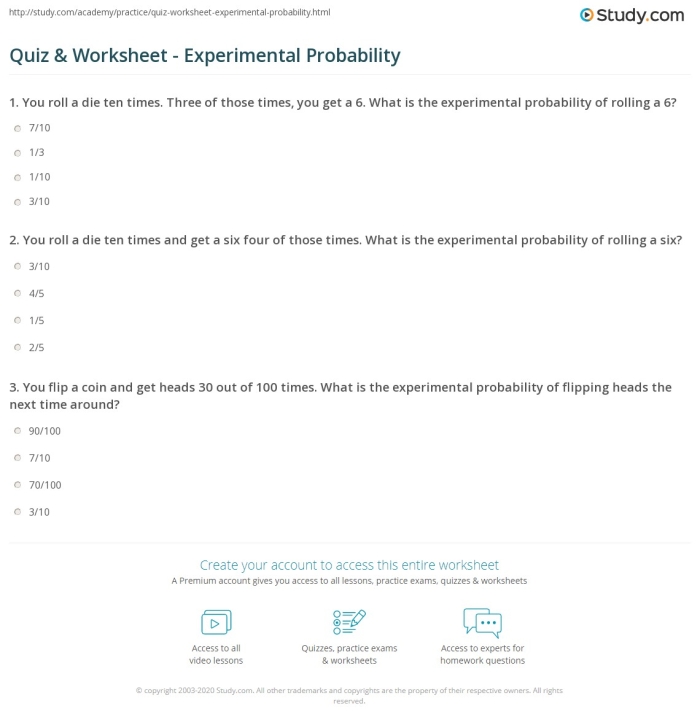
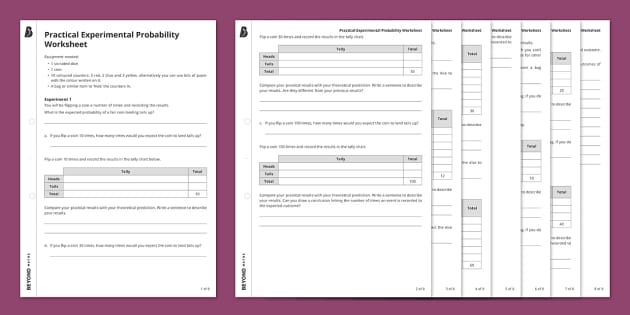
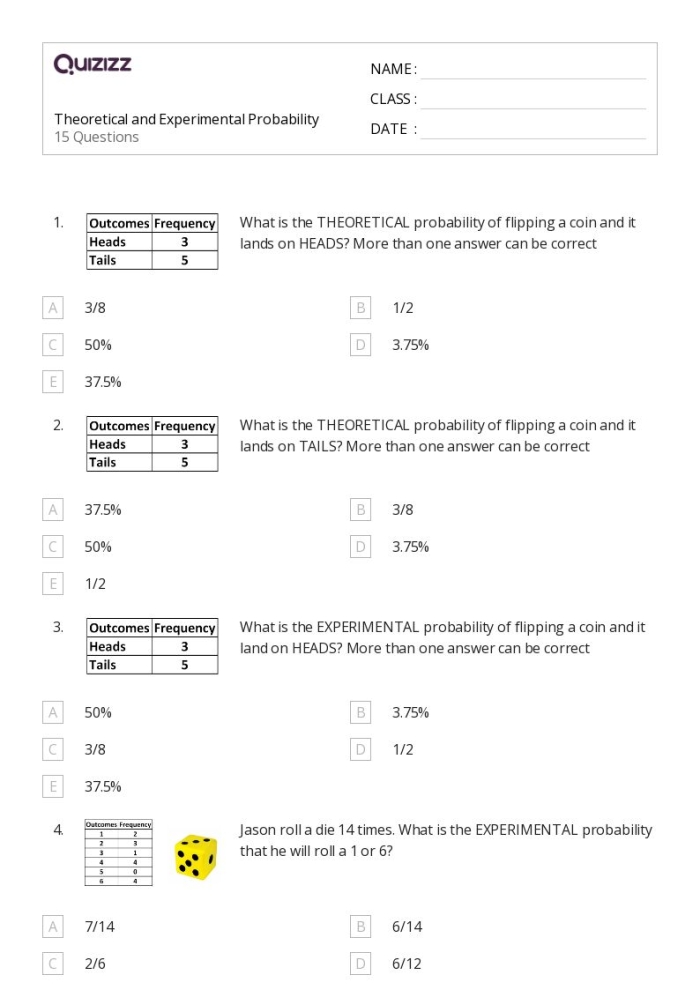
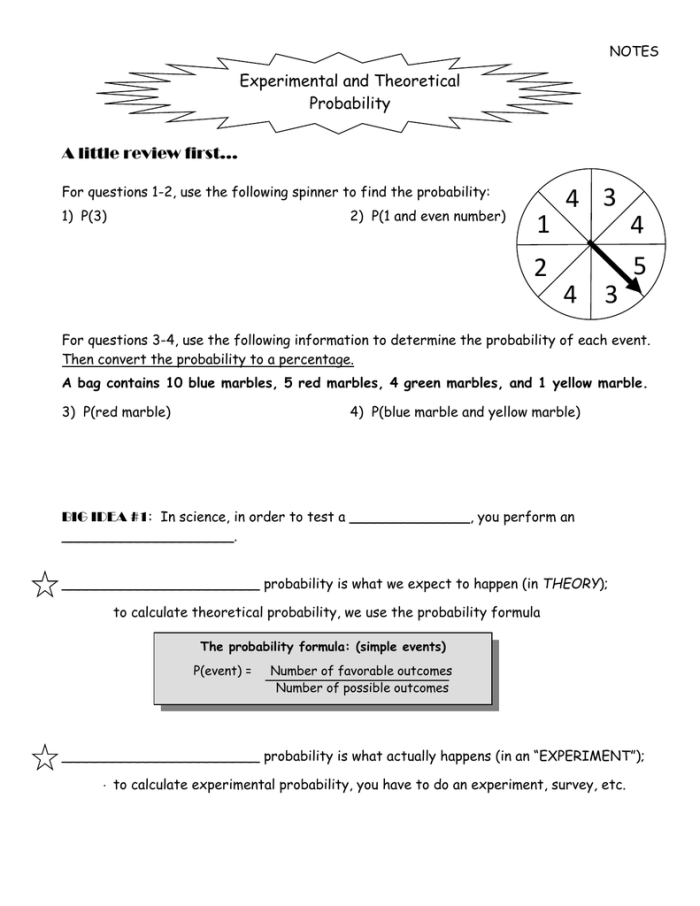
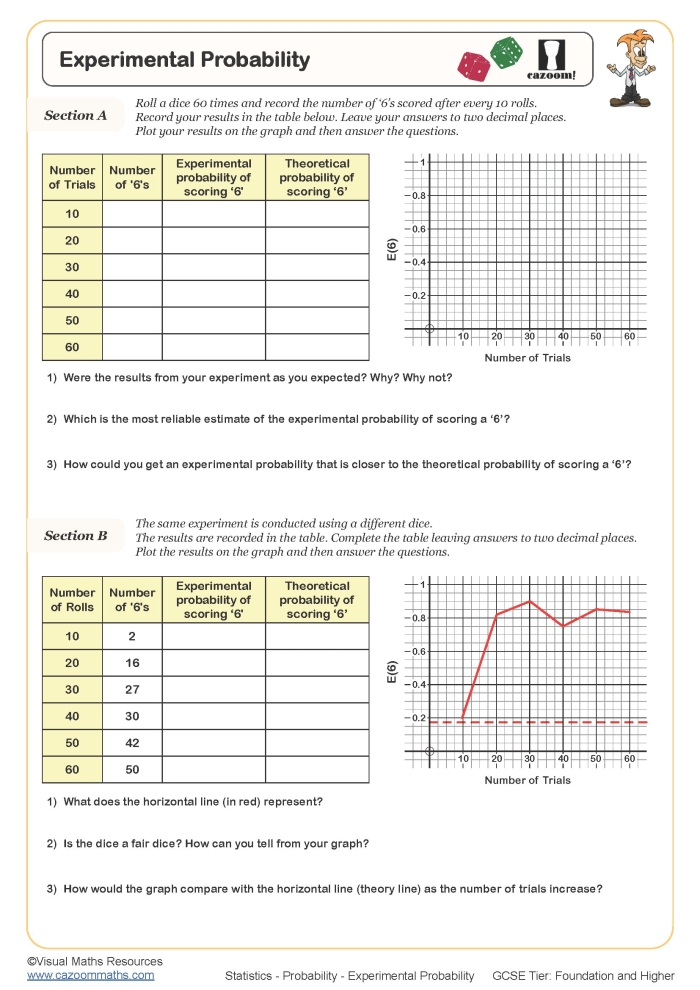
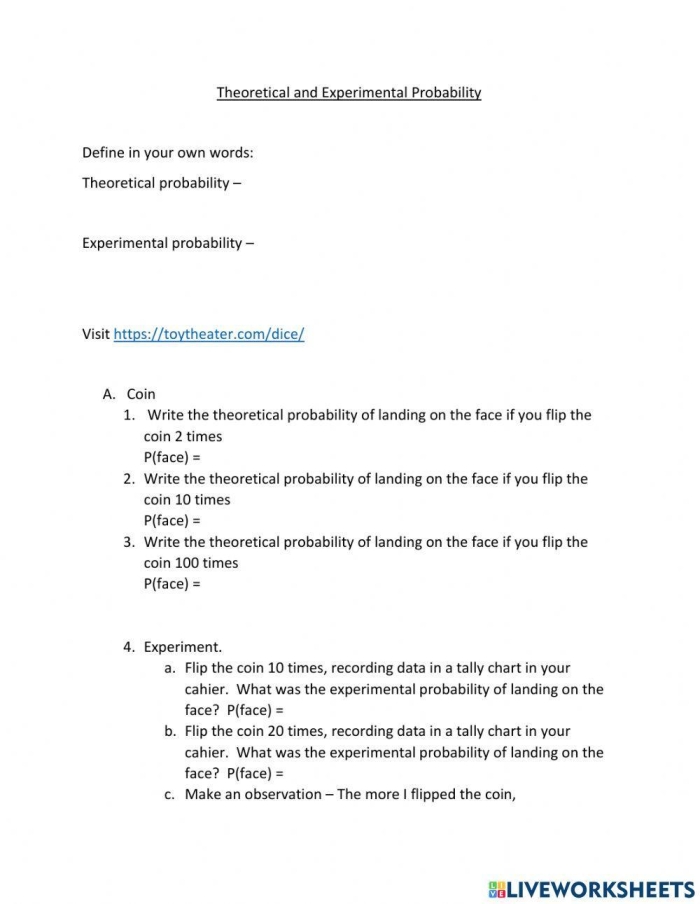
Experimental probability differs fundamentally from theoretical probability. While theoretical probability tells you what should happen in an ideal scenario, experimental probability shows what actually happens when you run a trial. A student might flip a coin 50 times and record the results, then compare that outcome to the theoretical 50-50 split between heads and tails. The gap between prediction and reality teaches a critical lesson: real-world results vary, and understanding that variation matters.
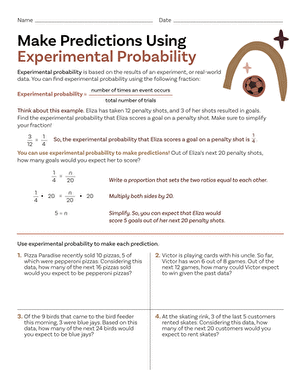
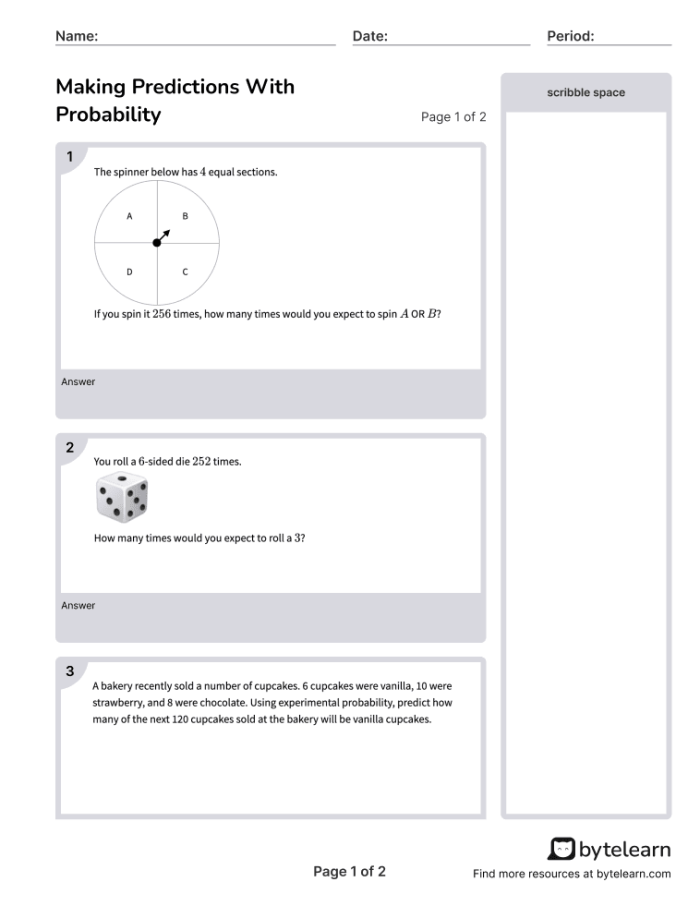
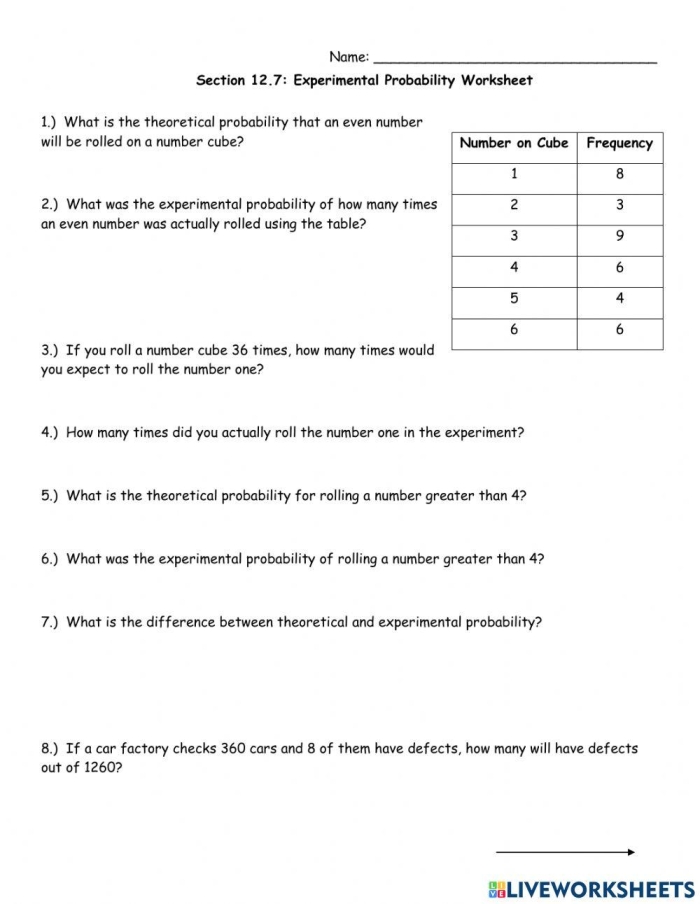
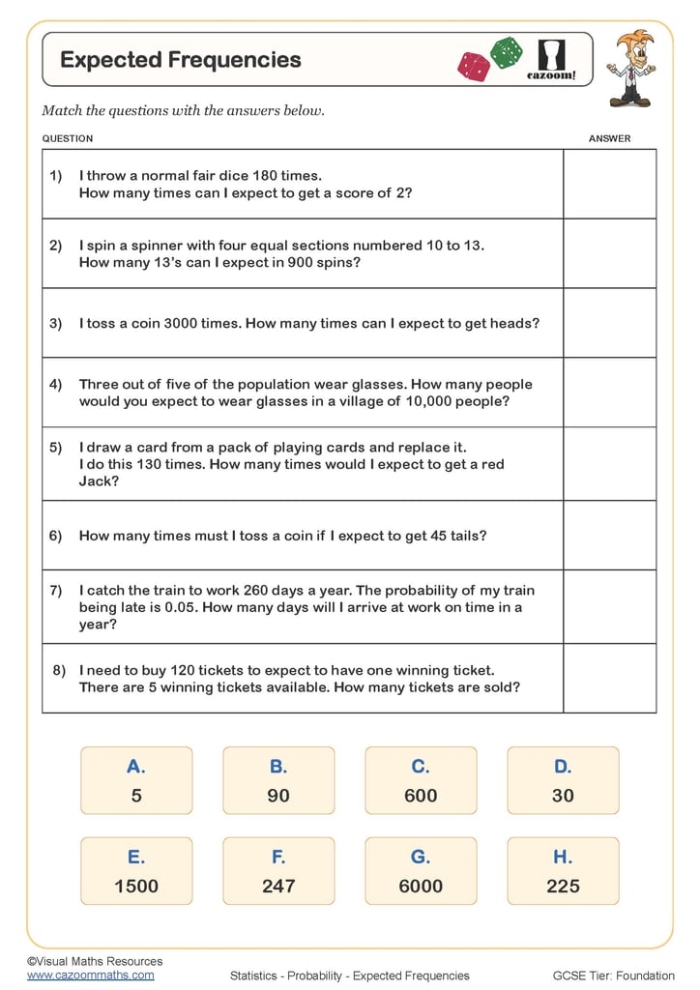
The practical value emerges when students use their experimental data to make predictions about future events. If a weighted die shows a six landing more frequently than other numbers across 100 rolls, students can reasonably predict that rolling it again will likely favor that six. This bridges the gap between abstract math and decision-making in everyday situations, from sports statistics to quality control in manufacturing.
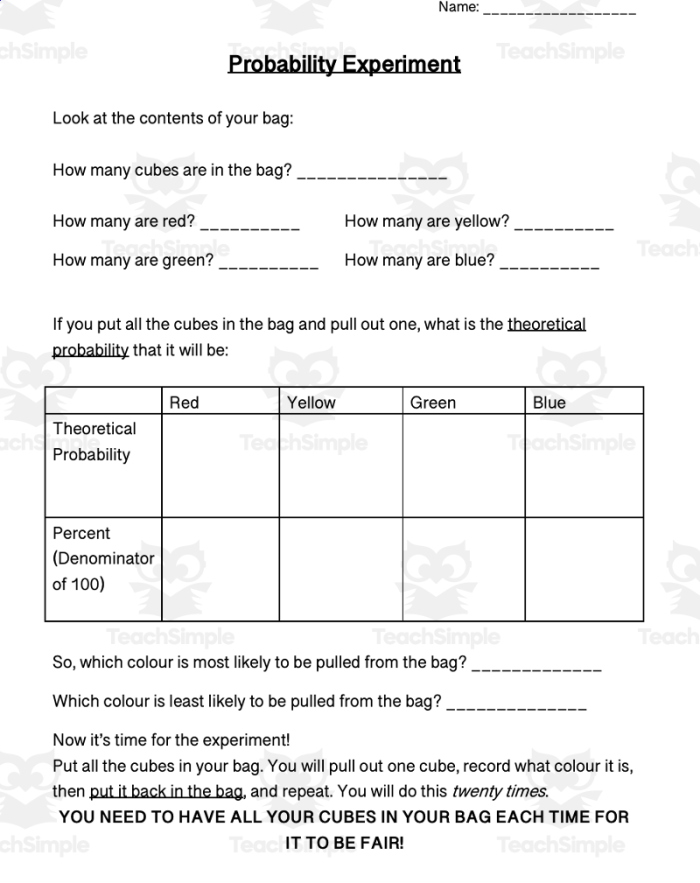
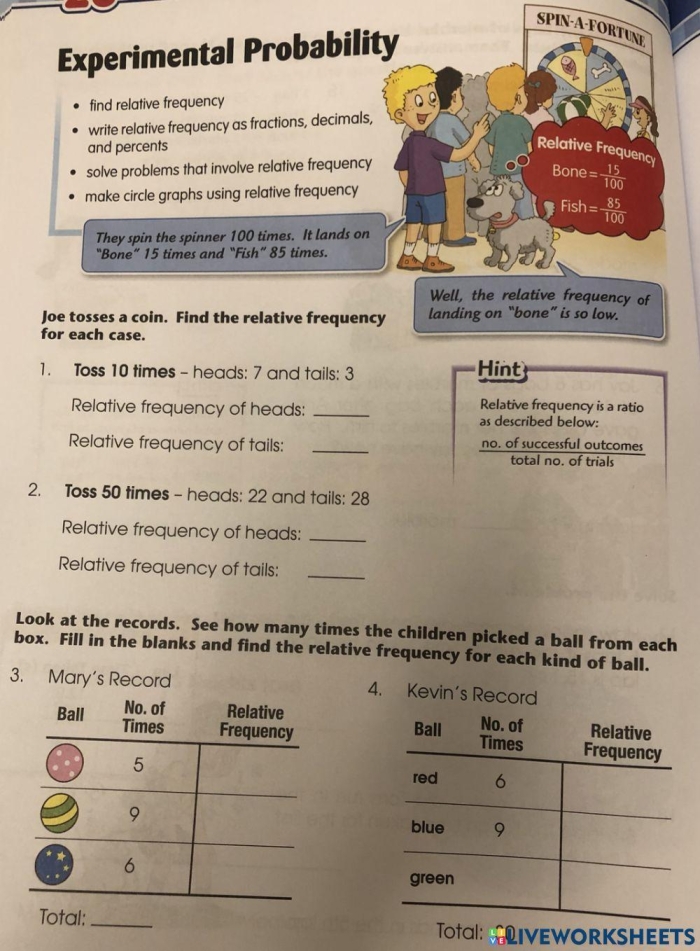
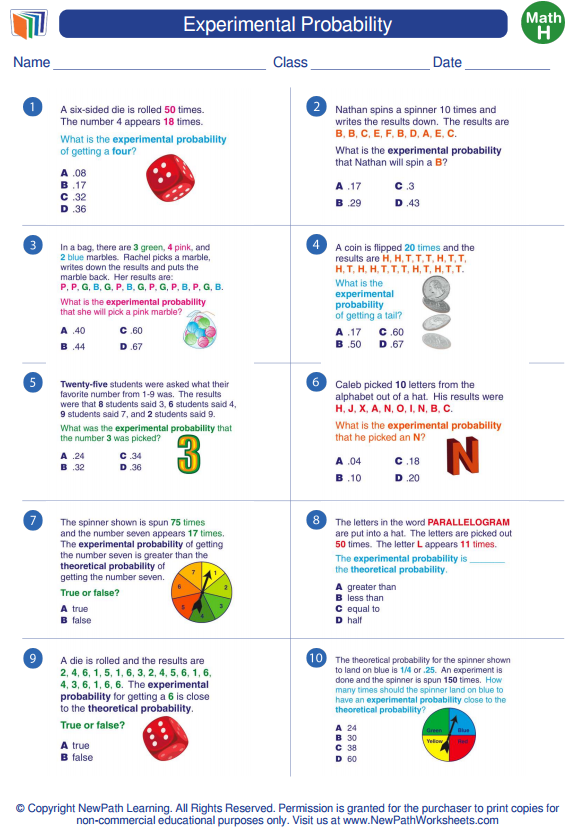
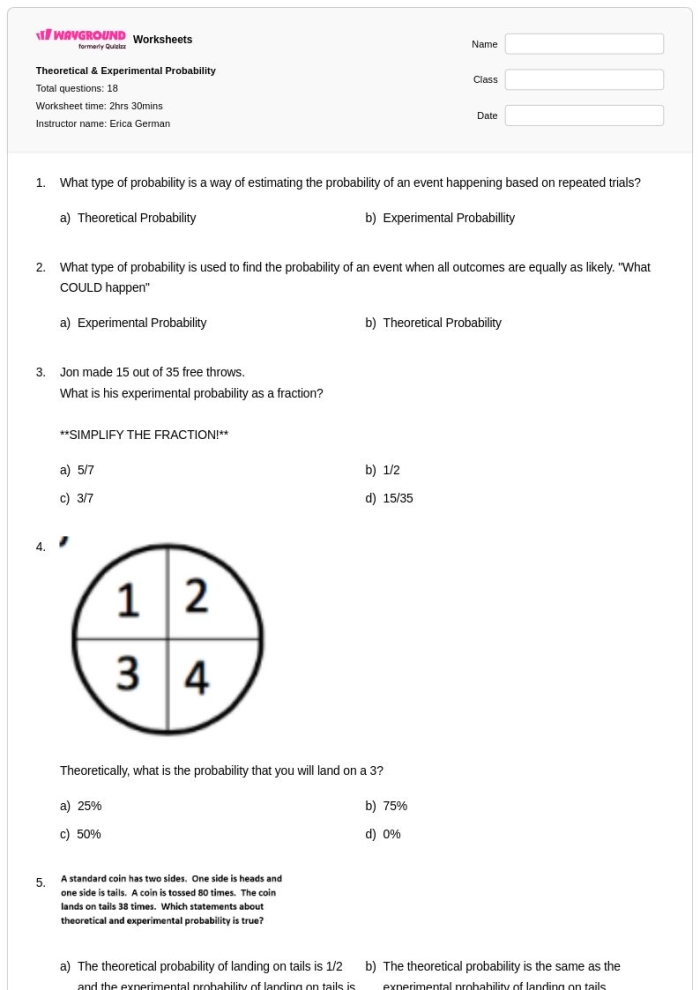
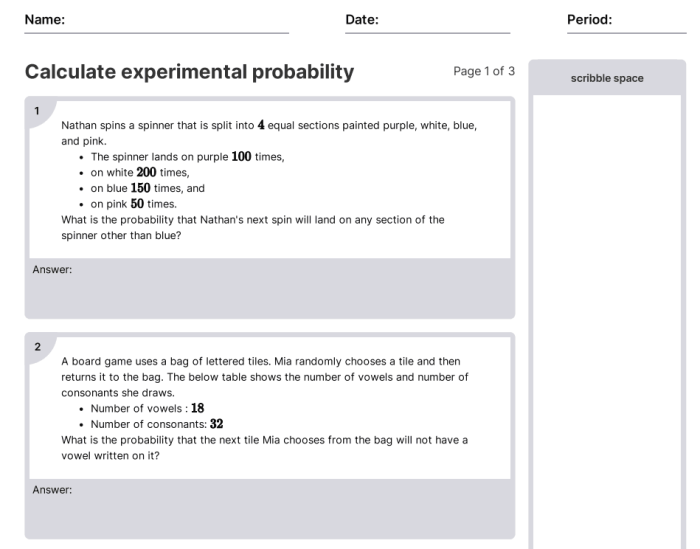
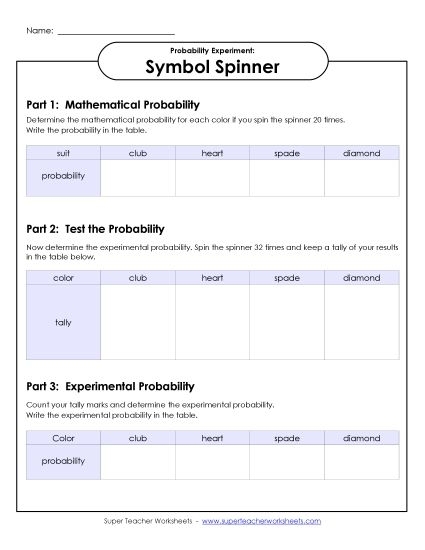
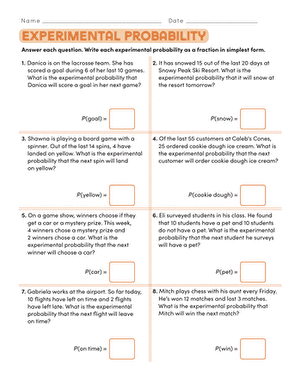
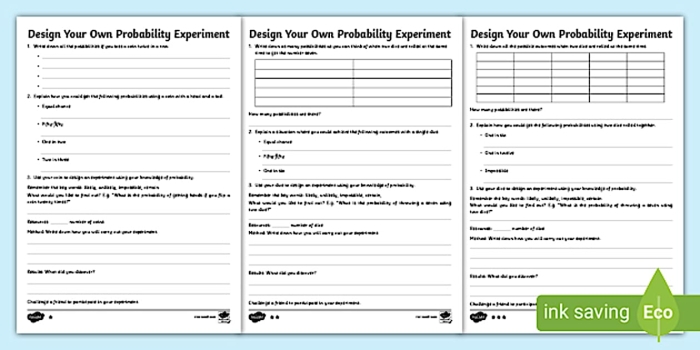
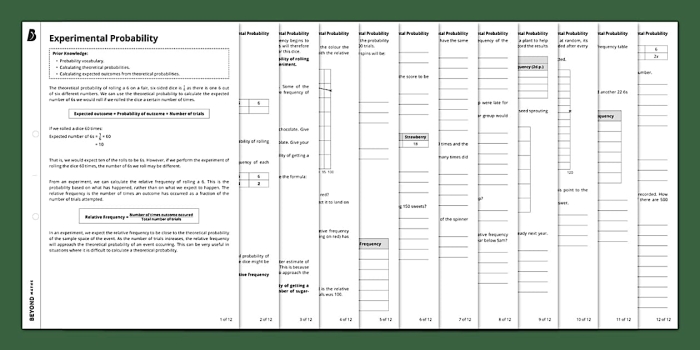
A well-designed seventh-grade worksheet guides students through this process systematically. They conduct experiments, record data, calculate frequencies, and then project those frequencies onto new scenarios. This hands-on approach keeps students engaged in ways that traditional reading comprehension exercises sometimes cannot, though understanding how to interpret information from different sources certainly supports mathematical literacy.
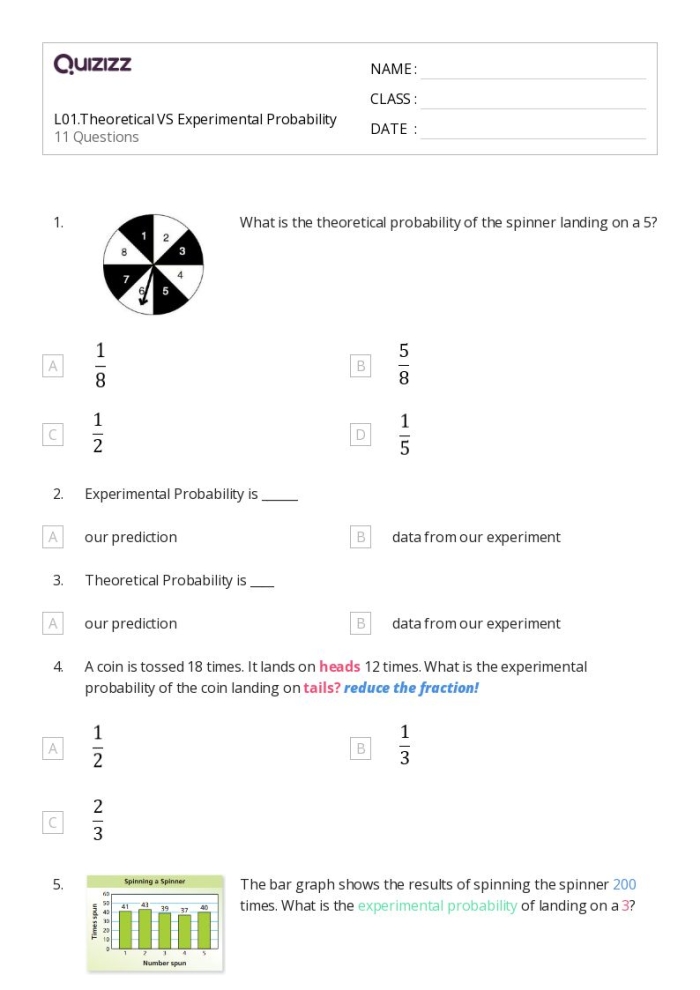
The key to mastery is repetition across different types of experiments. Whether flipping coins, drawing colored marbles, or spinning spinners, students recognize the underlying principles. This consistency helps probability concepts stick, transforming what might feel like a disconnected math topic into a transferable skill for analyzing uncertainty.
Use These Worksheets Today