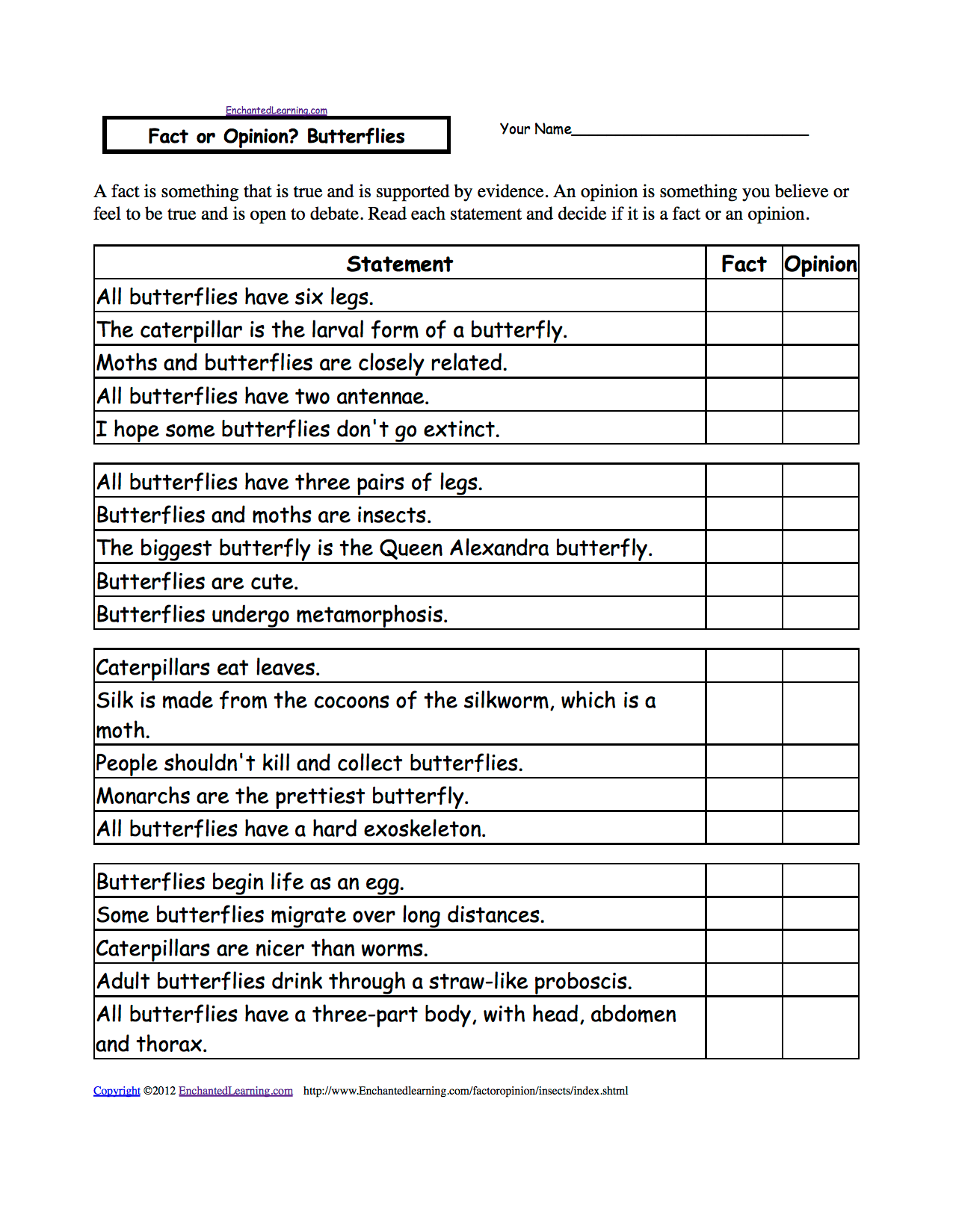
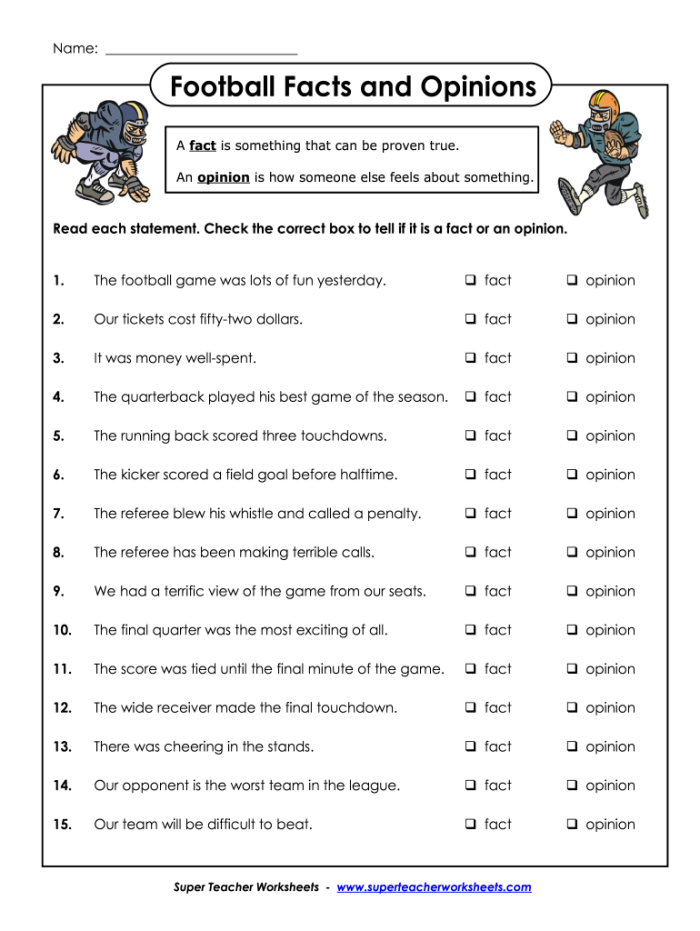
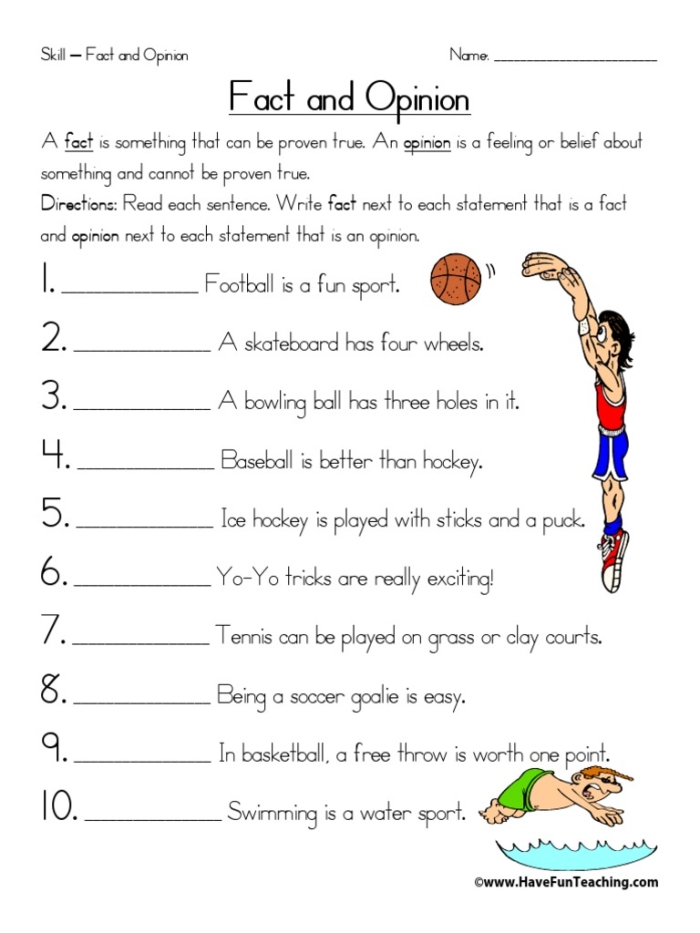
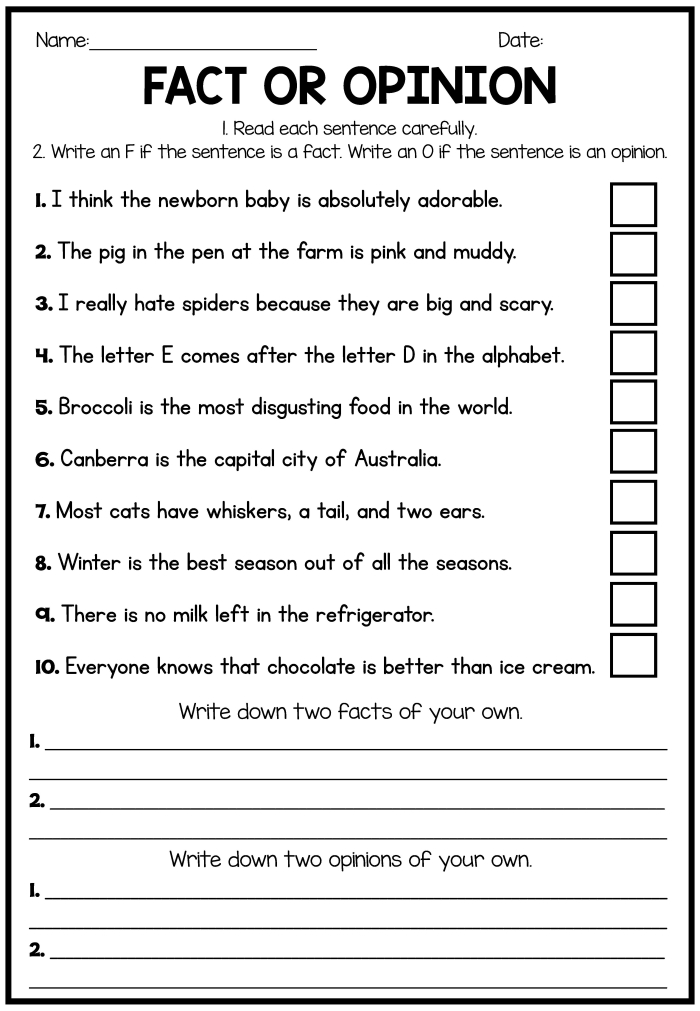
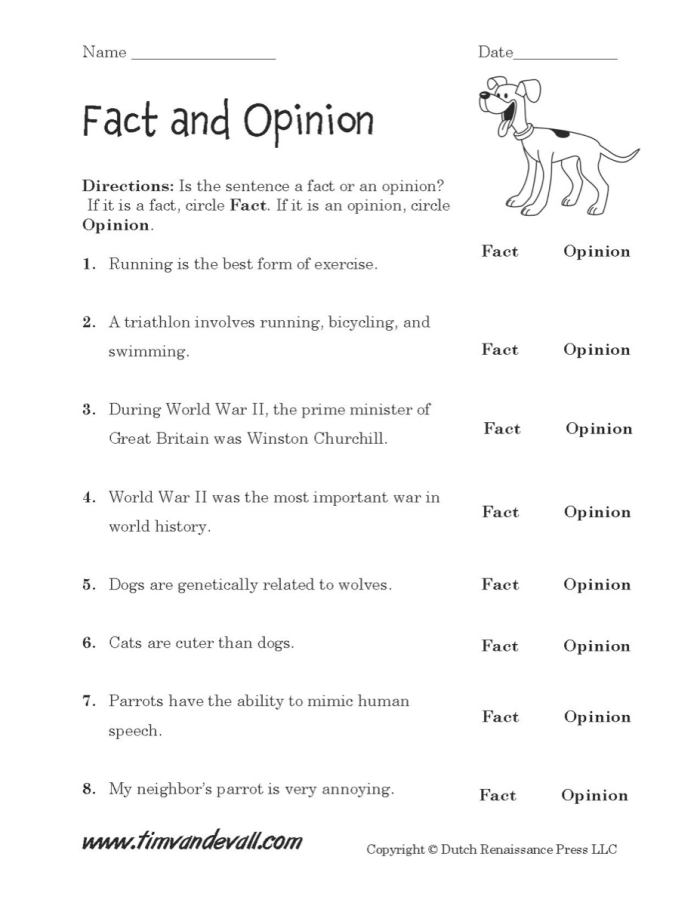
Teaching kids to spot the difference between facts and opinions is one of the most practical skills they’ll develop in second grade reading. A fact is something that can be proven true or false, while an opinion is what someone believes or feels about something. Getting this distinction down early helps children become stronger readers and more critical thinkers.
When you work through a facts vs. opinions worksheet with your students, you’re building their ability to evaluate information they encounter everywhere, from books to conversations to social media. Second grade is the perfect time to introduce this concept because children are developing their own thoughts and learning to express them, so they’re naturally curious about what makes a statement true versus what’s just someone’s preference.
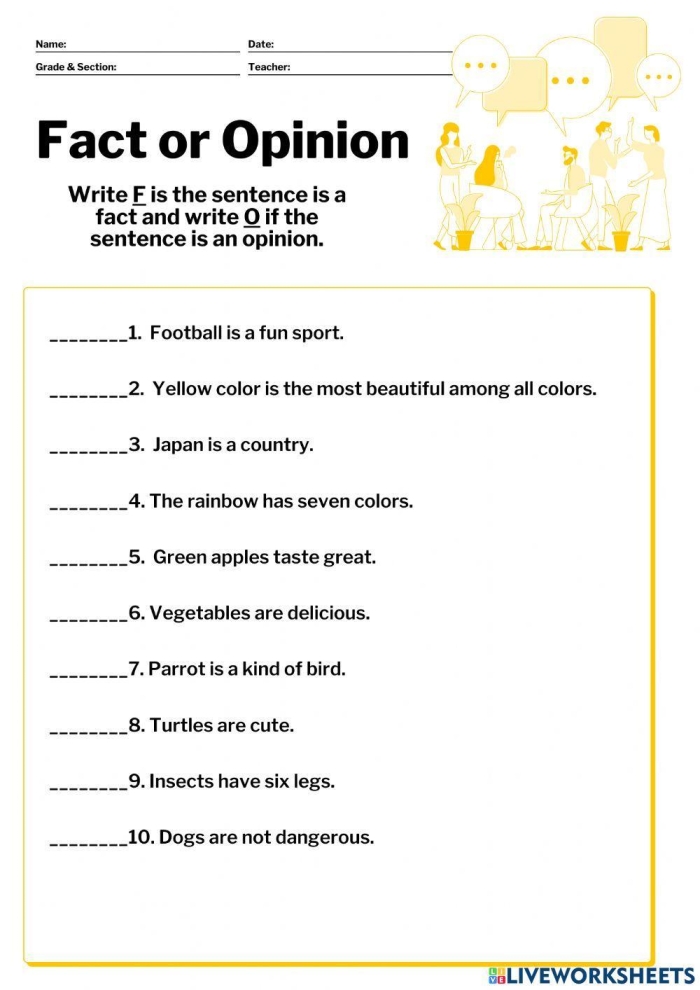
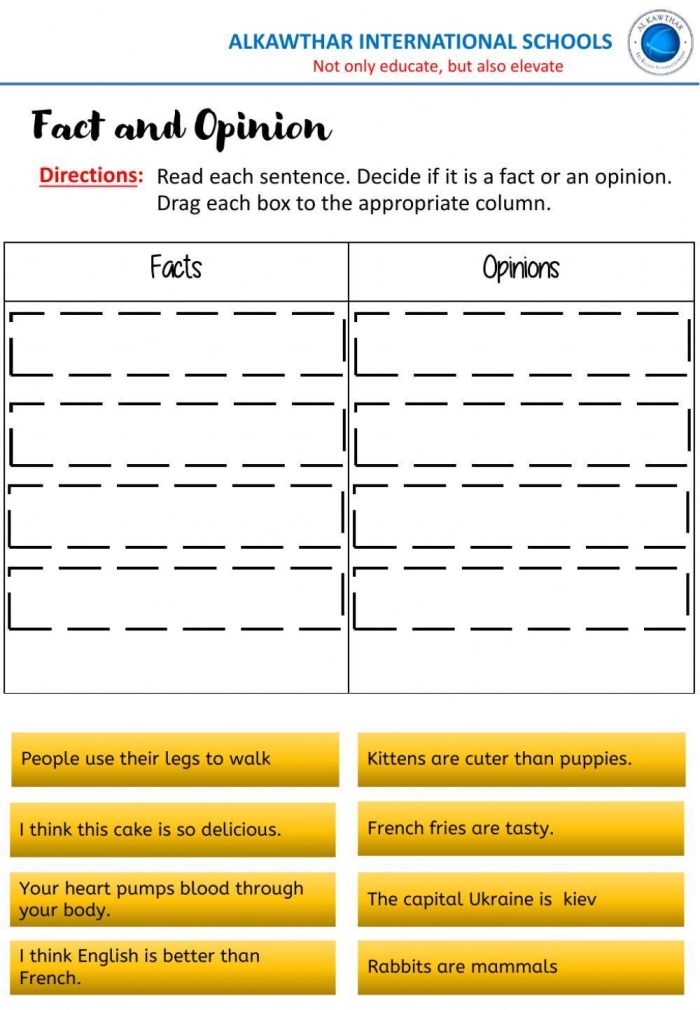
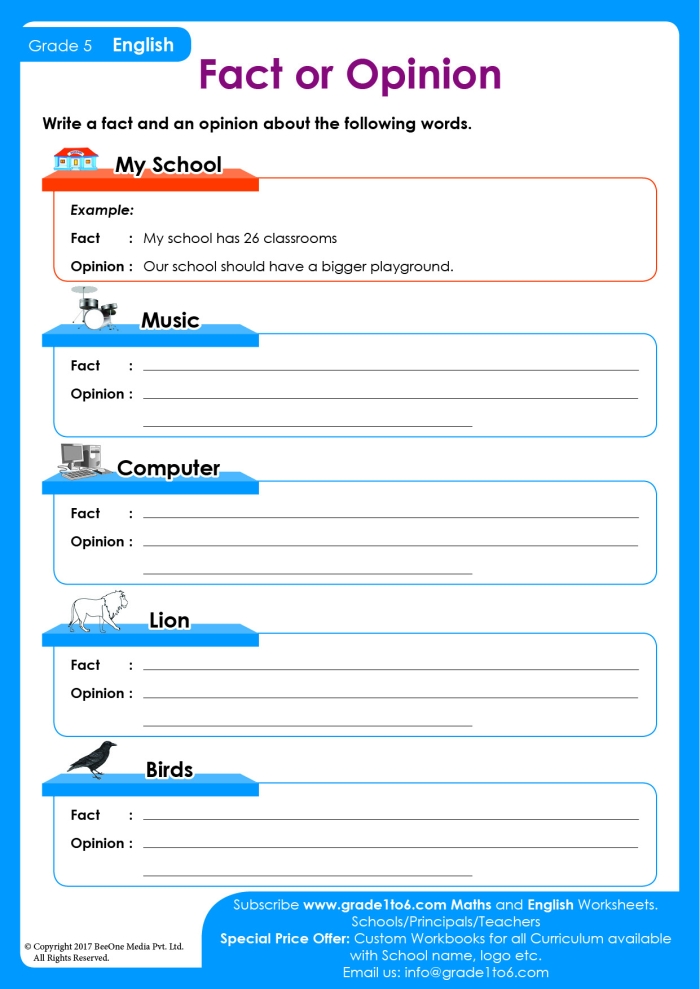
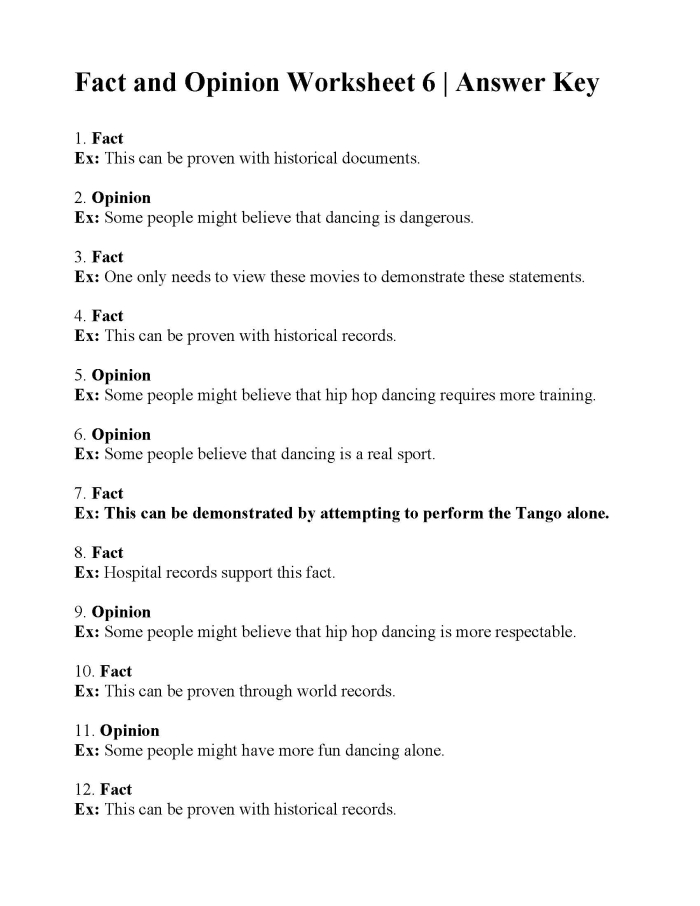
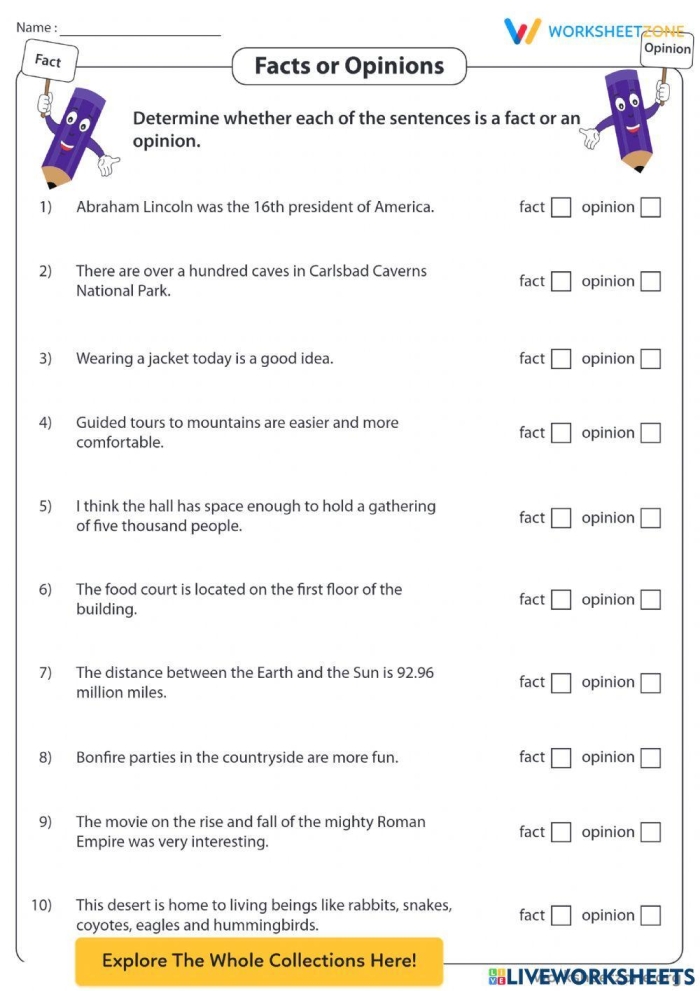
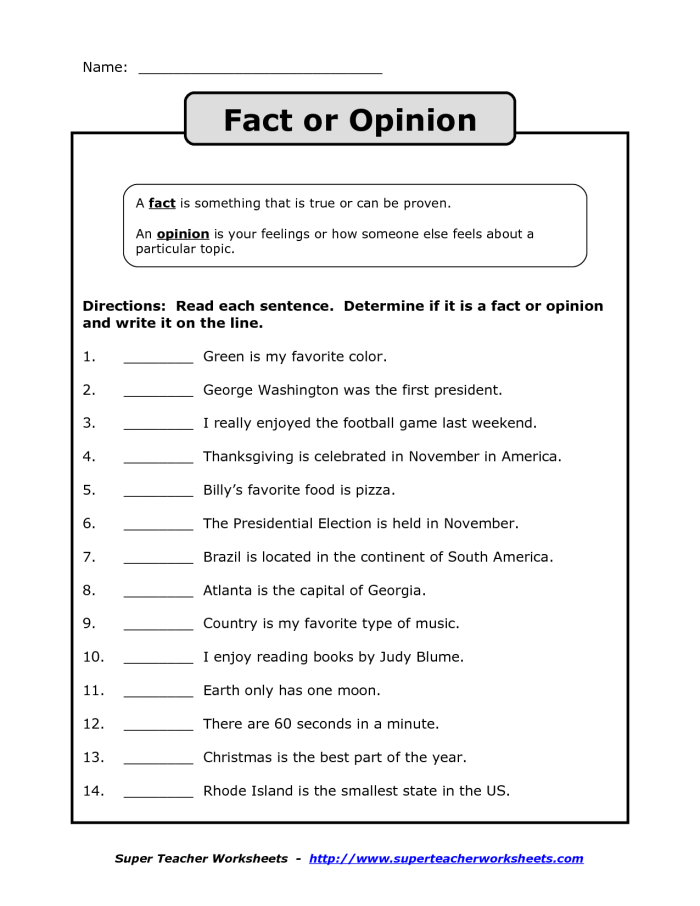
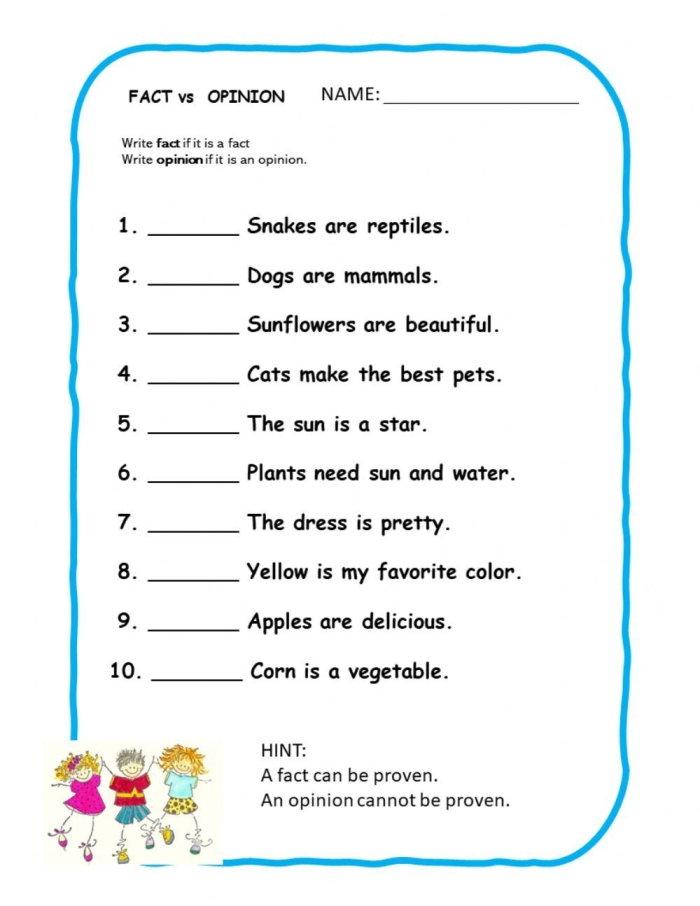
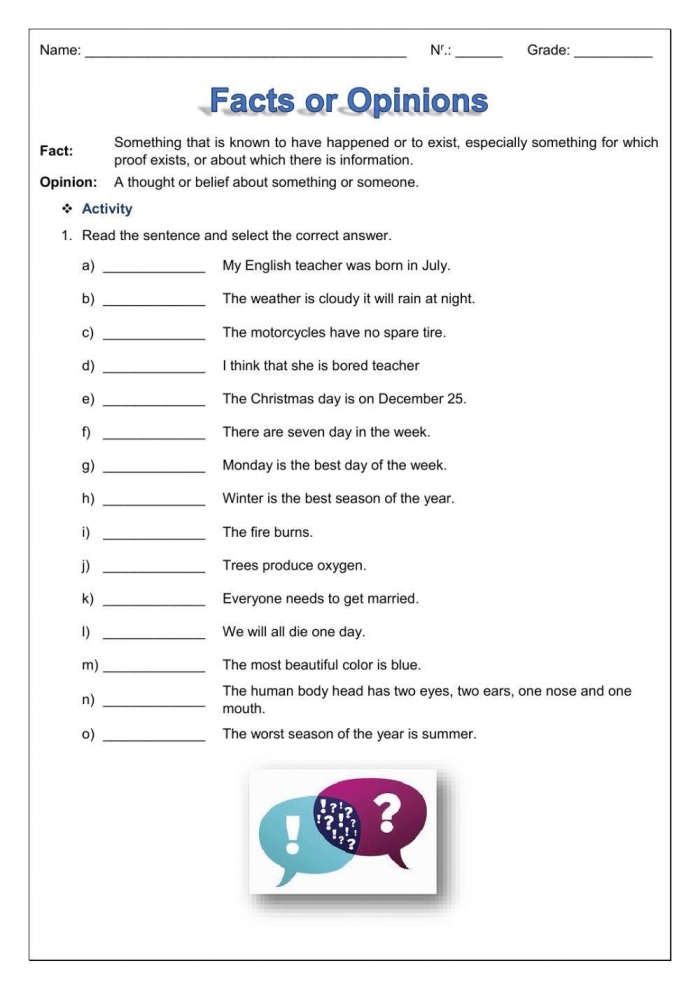
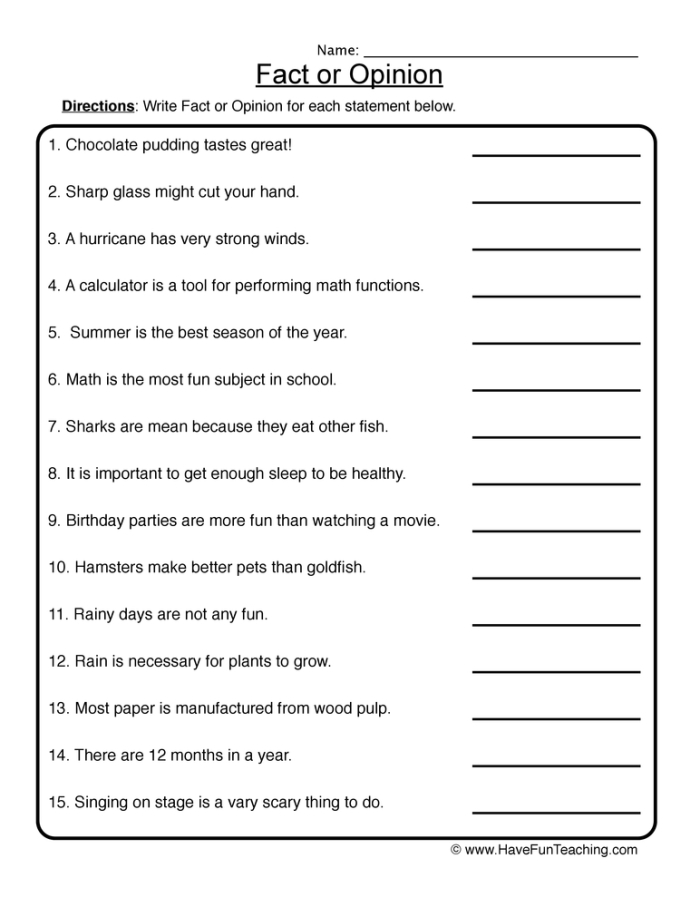
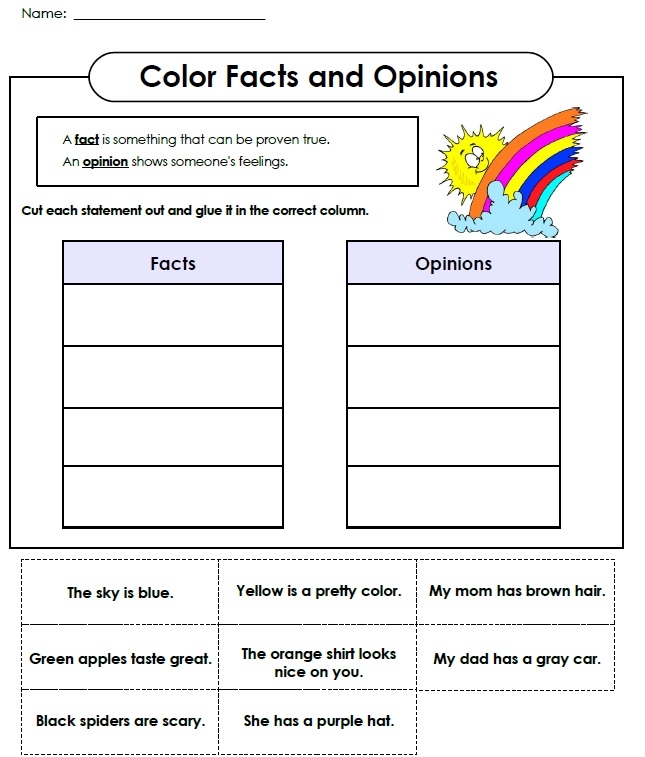
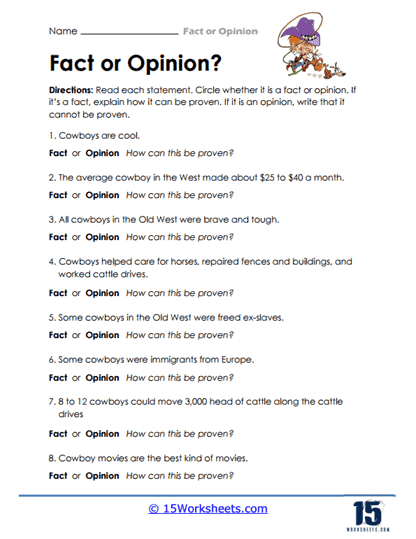
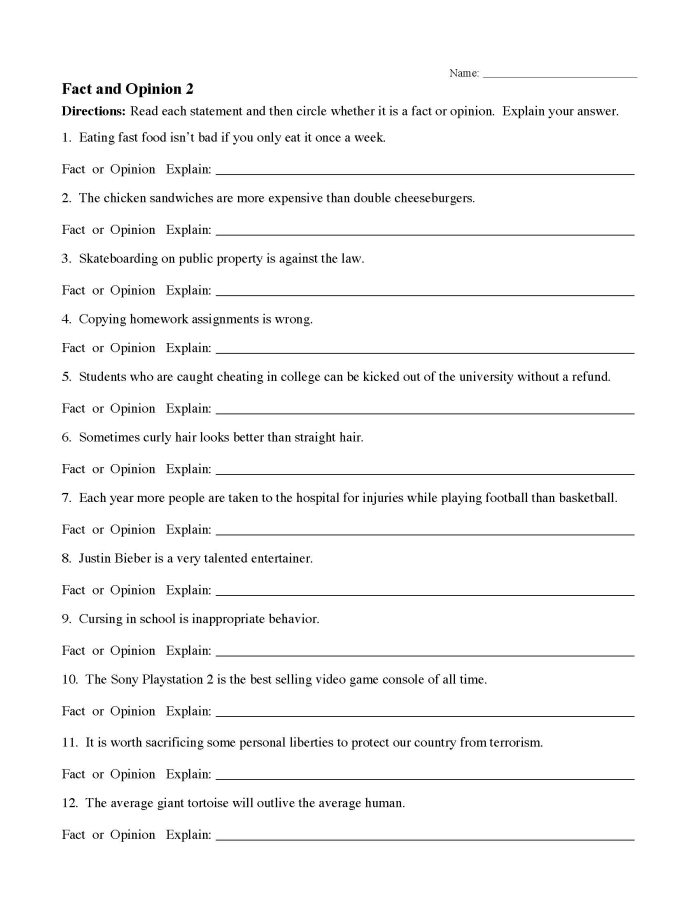
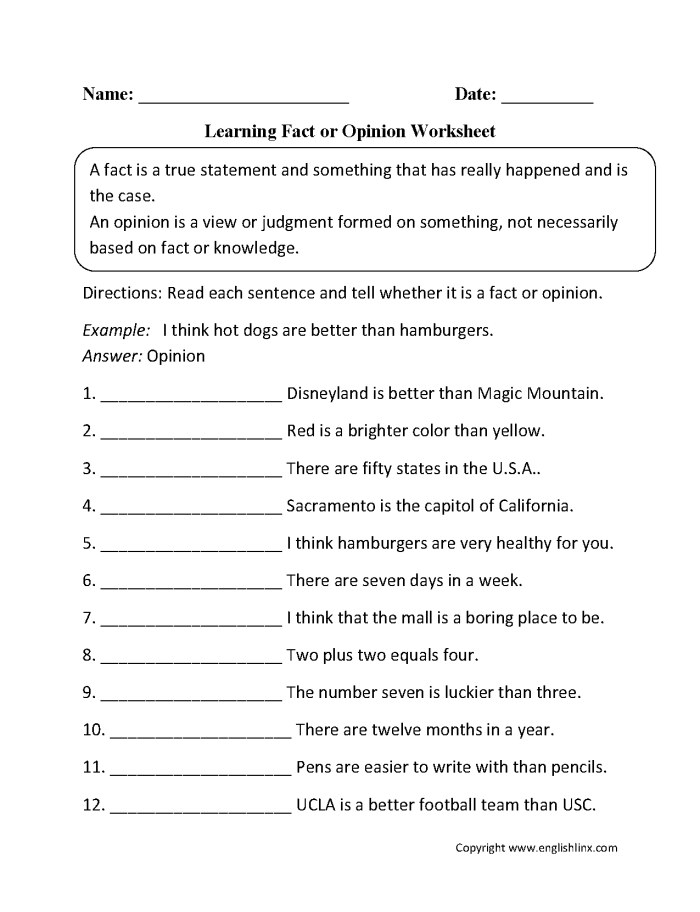
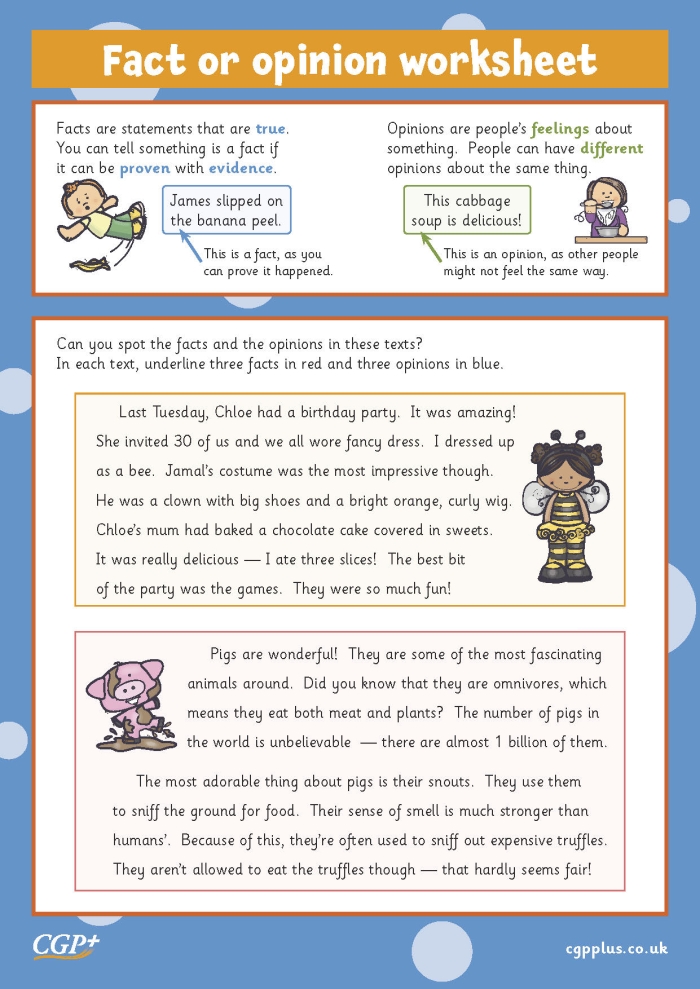
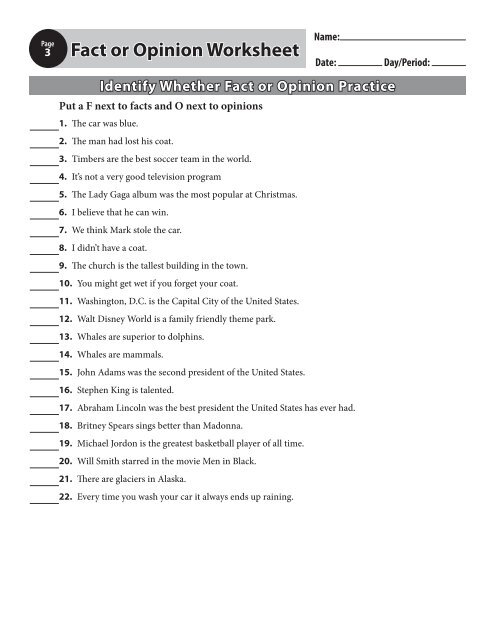
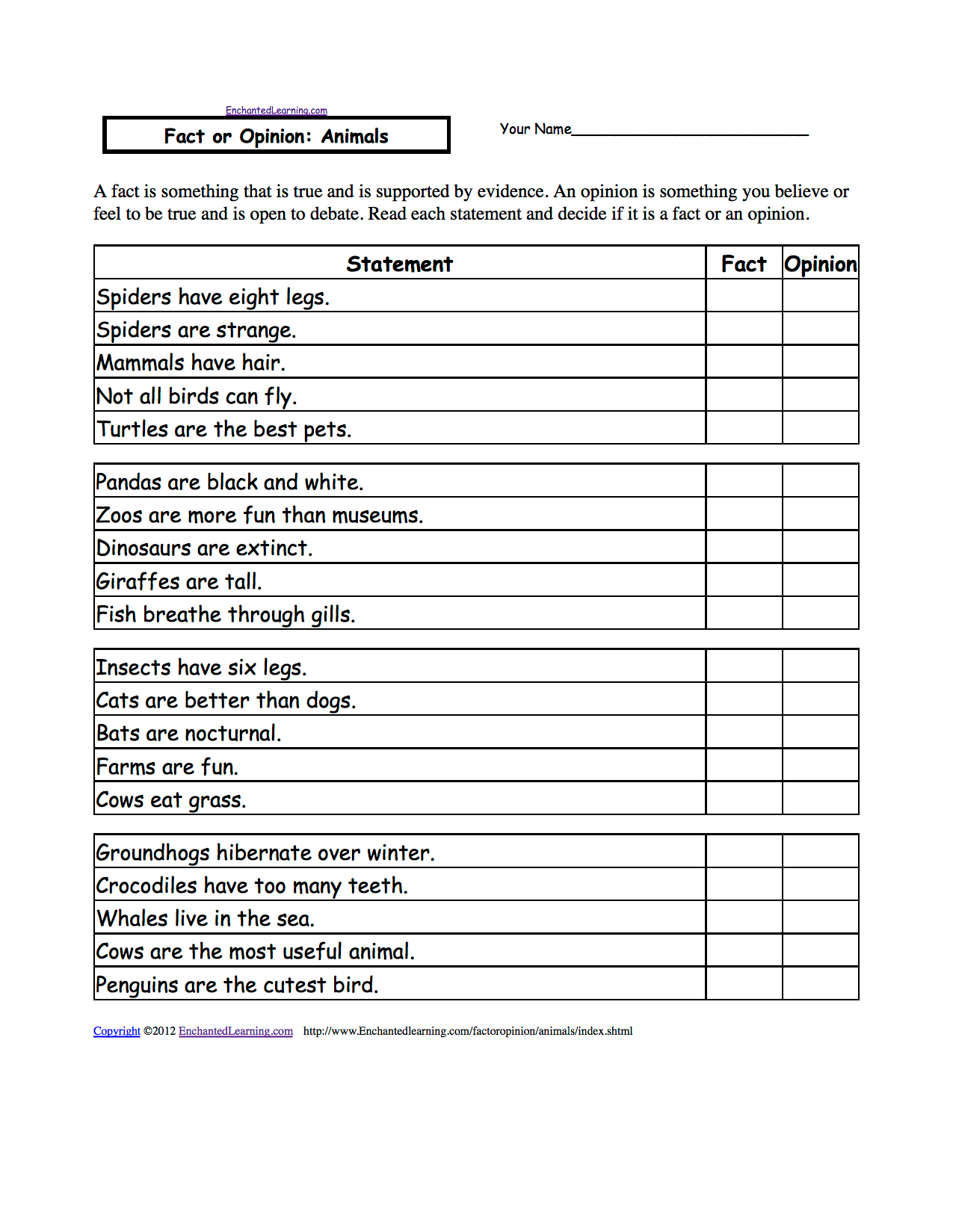
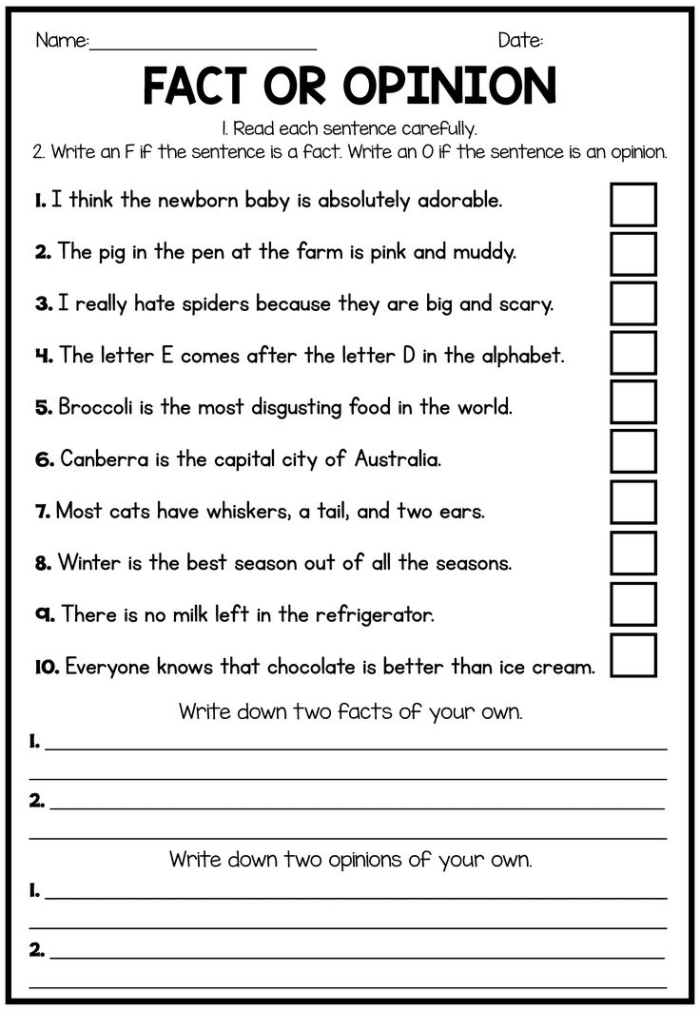
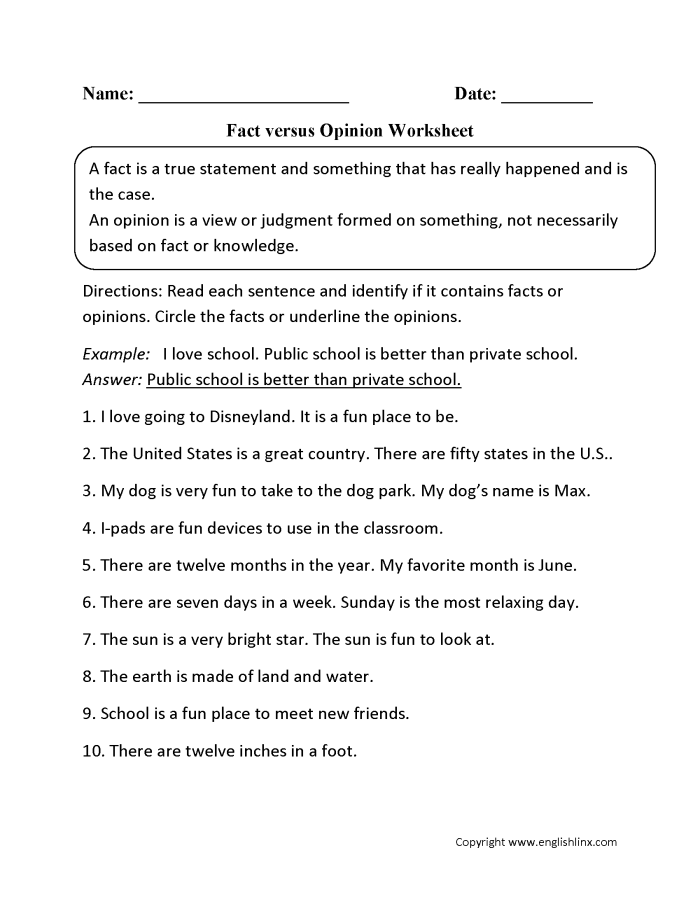
A typical worksheet presents two sets of text for students to analyze. The first might describe a verifiable event, like “Penguins live in cold places” or “The sun rises in the east.” The second set contains subjective statements such as “Pizza is the best food” or “That movie was boring.” Kids read each statement and mark whether it’s a fact or an opinion, sometimes explaining their reasoning in their own words.
This type of exercise works especially well when paired with other second grade reading materials. You might combine facts and opinions practice with worksheets about types of clouds, which naturally contain both factual information and descriptive language. Similarly, autumn spelling and reading activities offer chances to identify facts about seasons while separating them from personal preferences about fall.
Other reading topics like starfish and text features or local government for kids also contain plenty of factual content mixed with opinion-based language, making them excellent companions to this skill-building work.
The real value emerges when students start applying this distinction independently. Once they understand the difference, they begin questioning what they read more carefully, asking themselves whether something is provable or just someone’s view. That curiosity becomes the foundation for stronger reading comprehension throughout their education.
Printable Worksheets for Practice