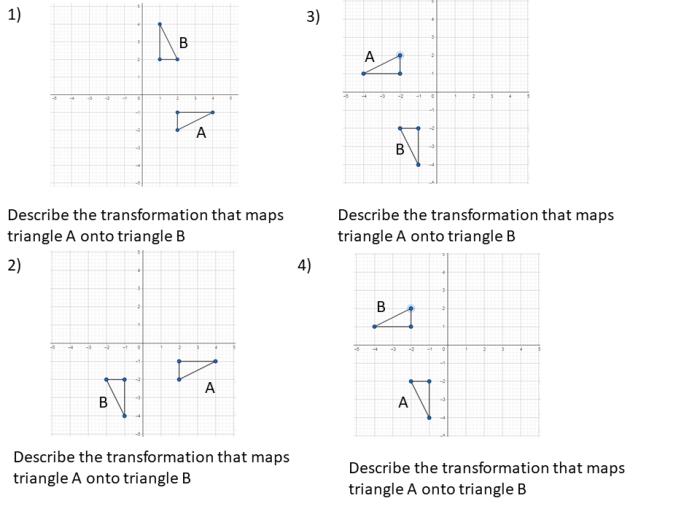
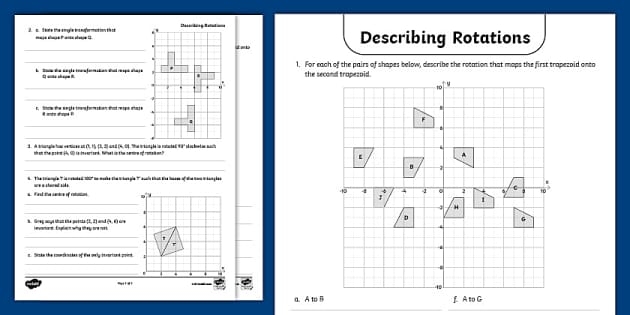
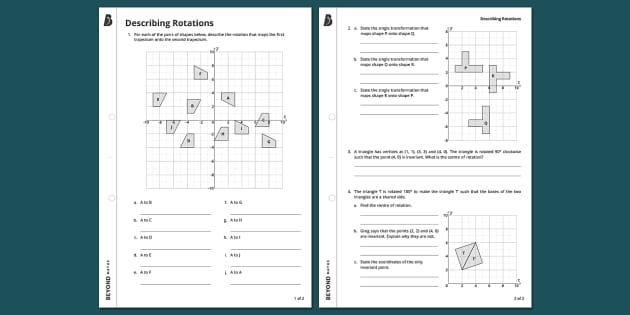
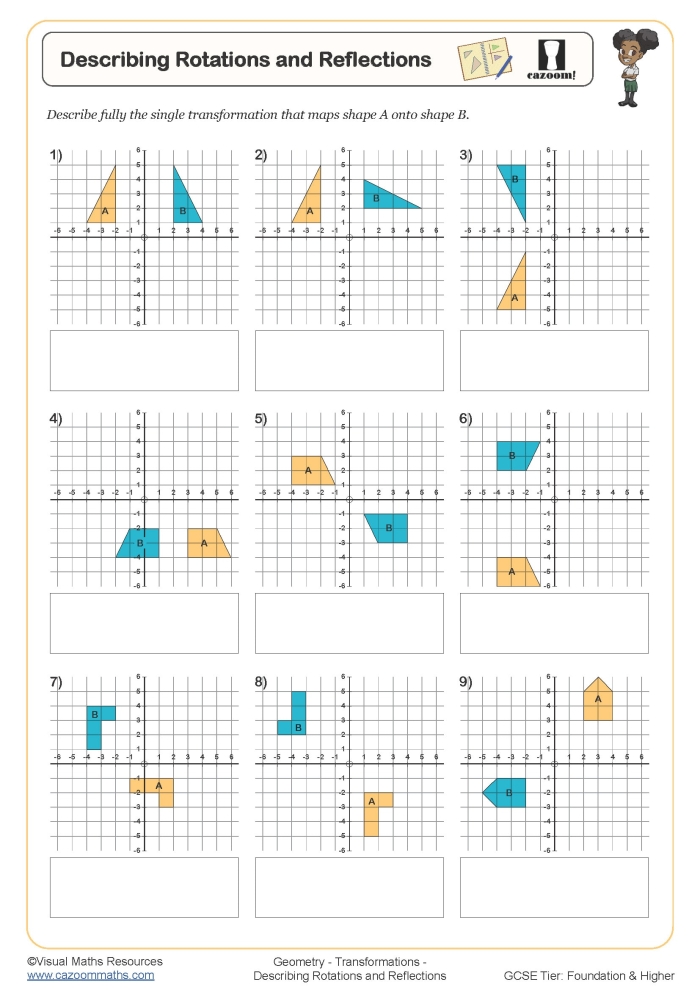
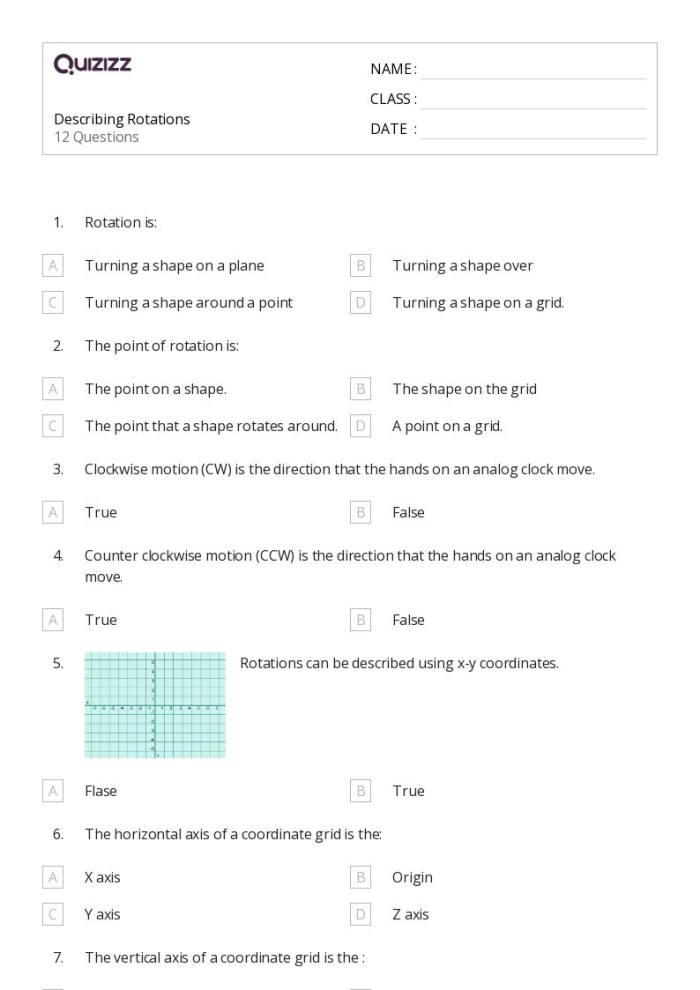
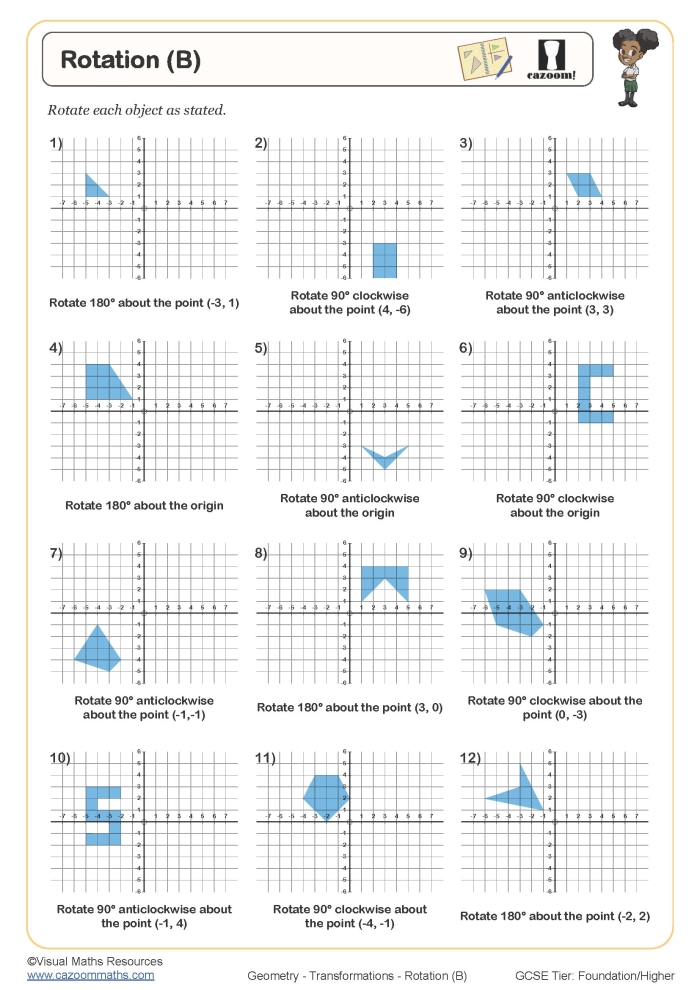
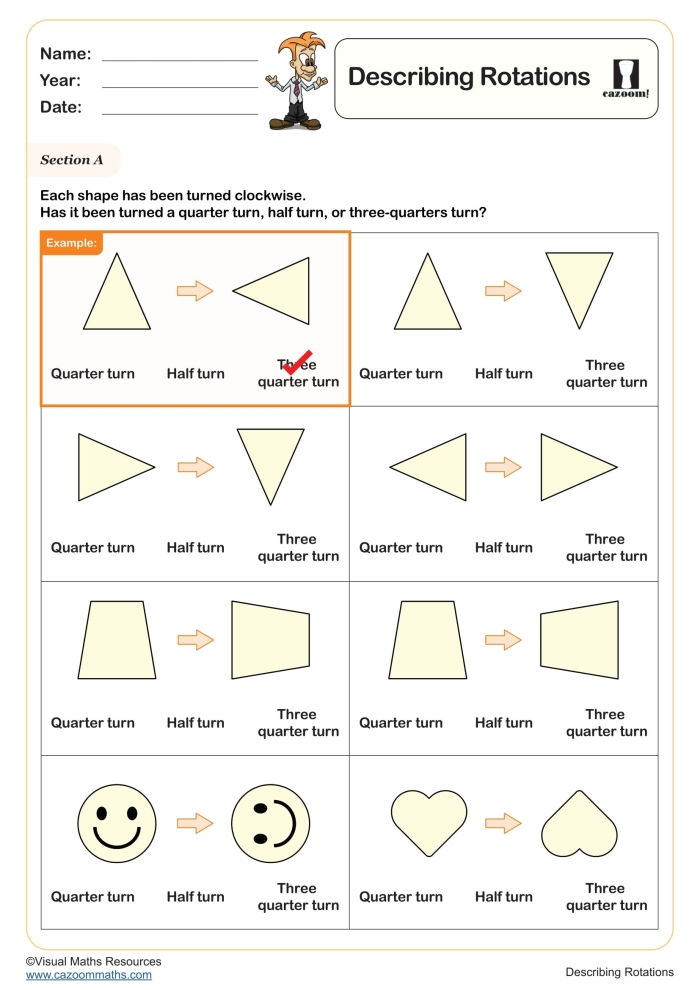
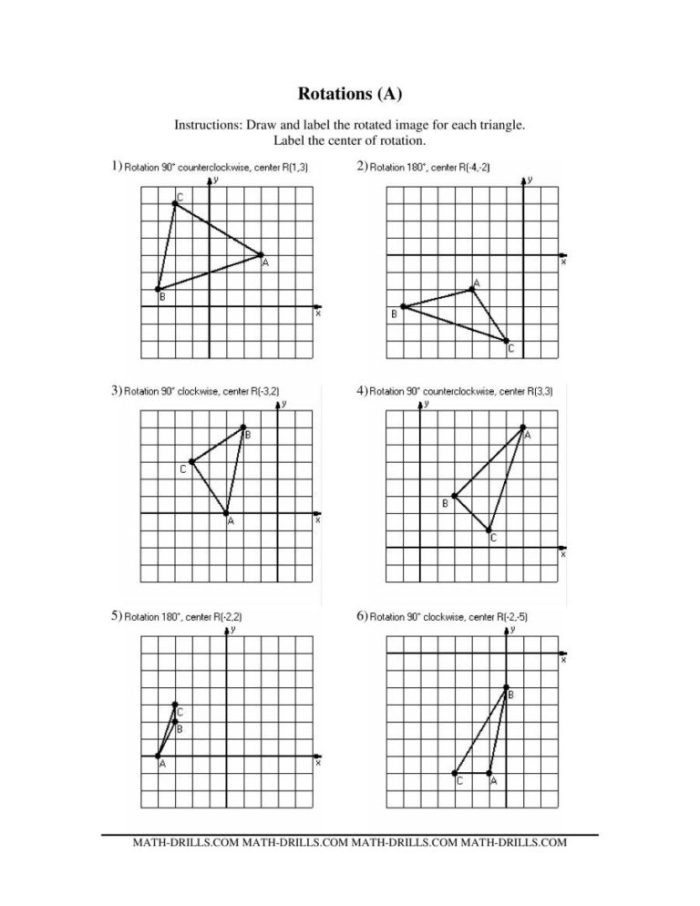
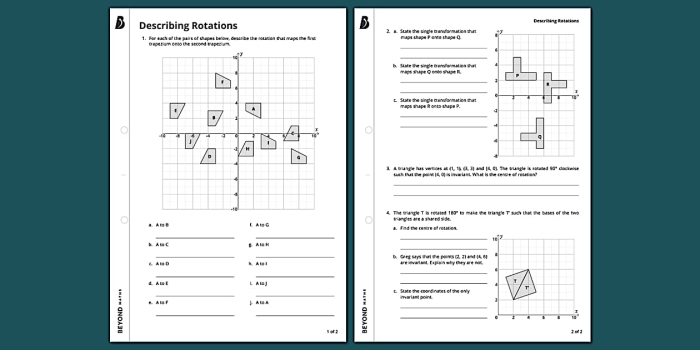
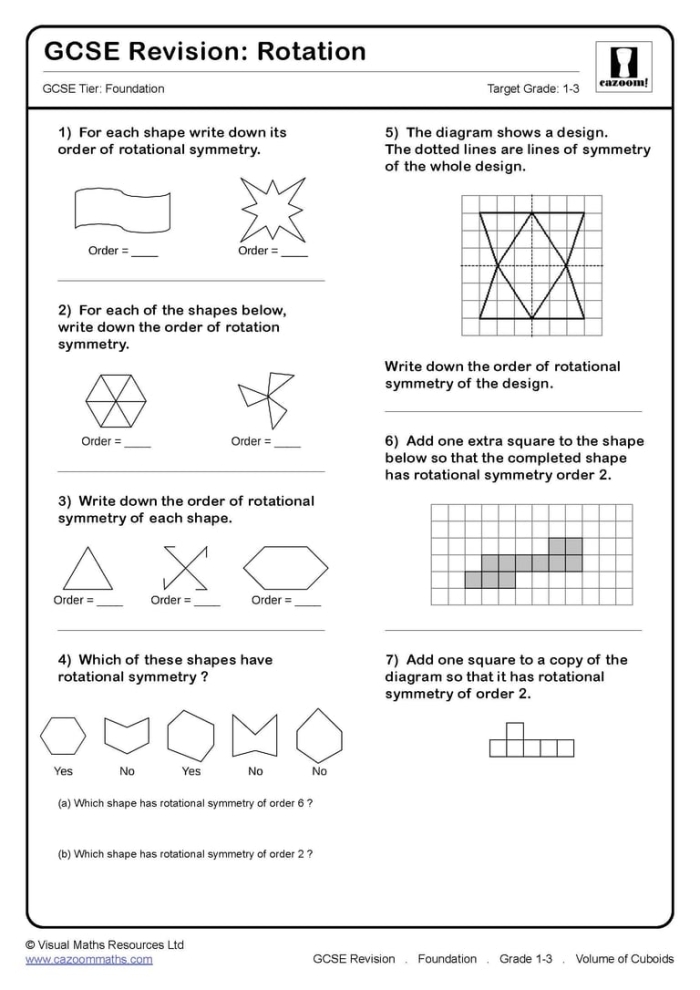
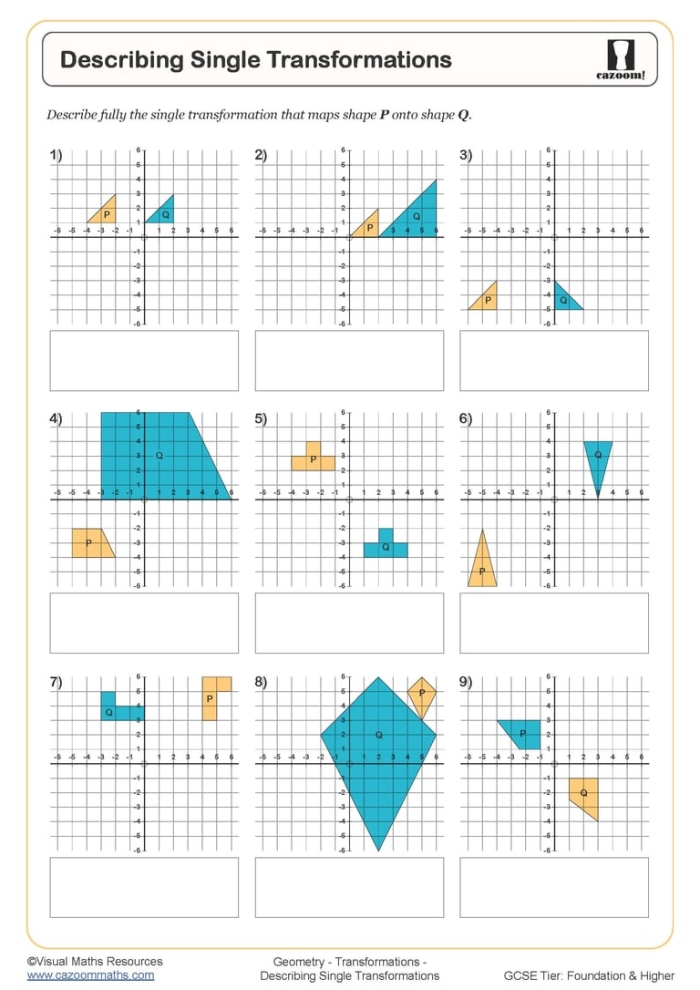
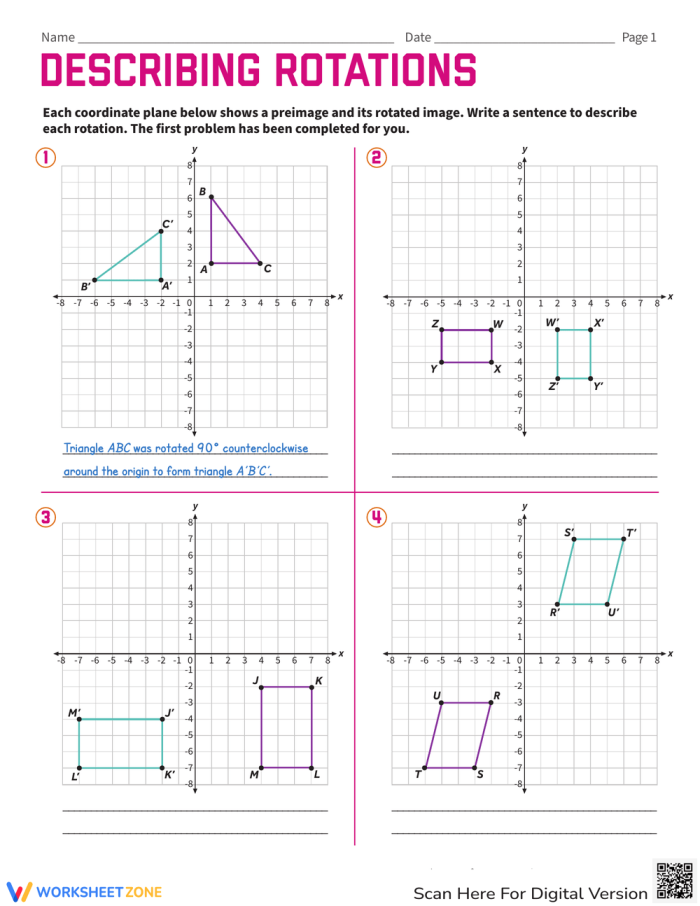
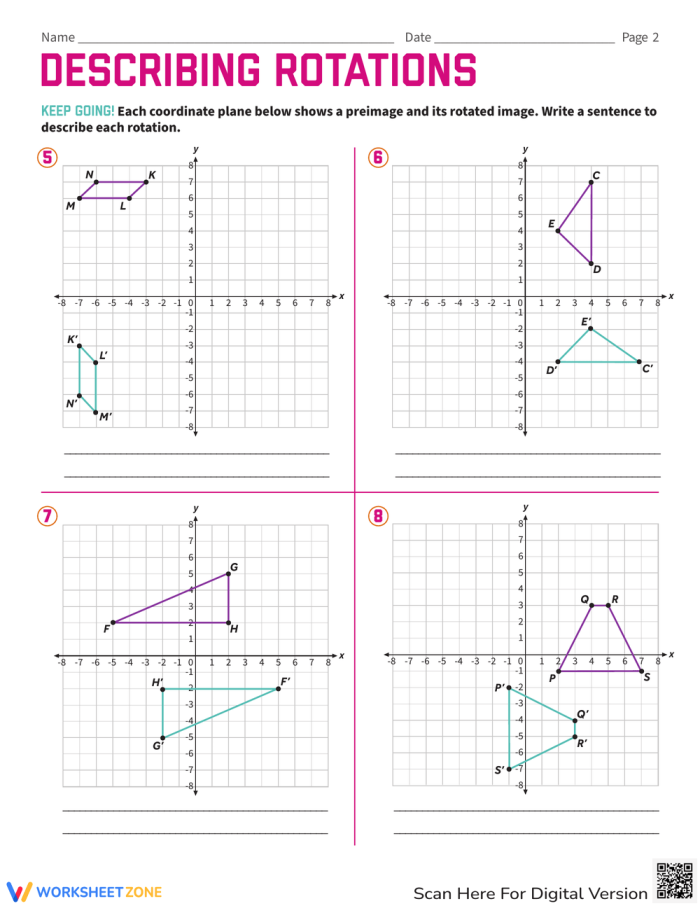
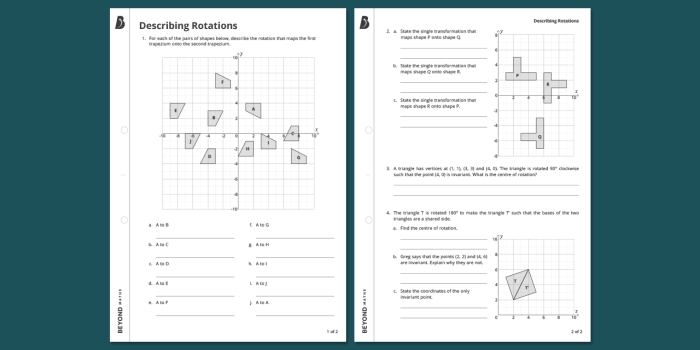
Rotations on the coordinate plane often confuse eighth-grade students because the concept requires them to visualize movement in multiple directions simultaneously. A well-designed worksheet can transform this abstract idea into something concrete and manageable.
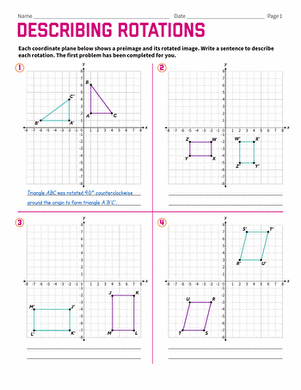
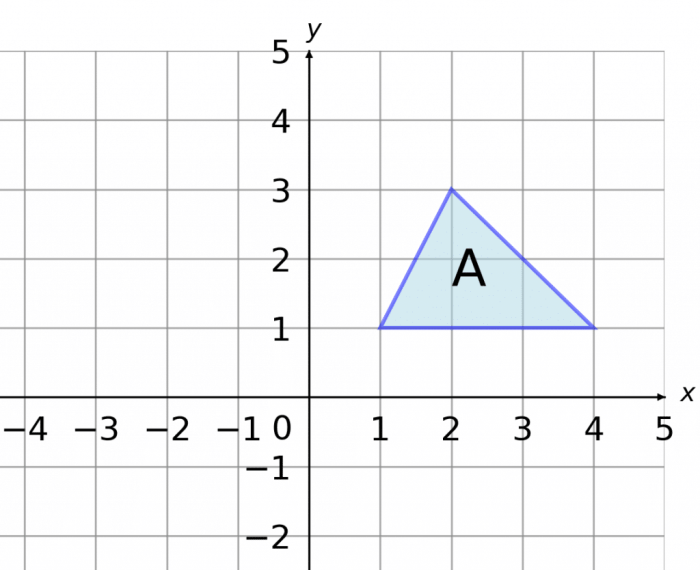
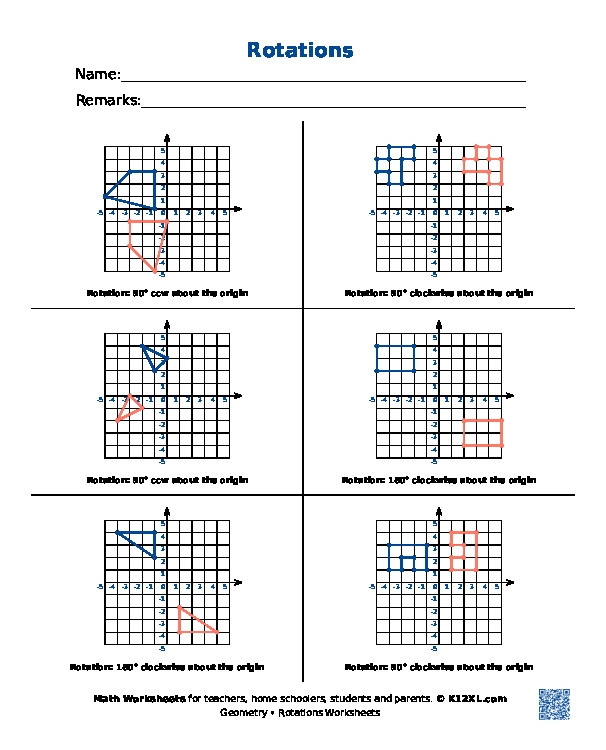
When students work through rotation problems, they’re essentially learning to track how points move around a fixed center, typically the origin. The key is understanding three critical pieces: the center of rotation, the angle of rotation, and the direction (clockwise or counterclockwise). Most eighth graders grasp the mechanics faster when they can see the before-and-after positions plotted on a grid.
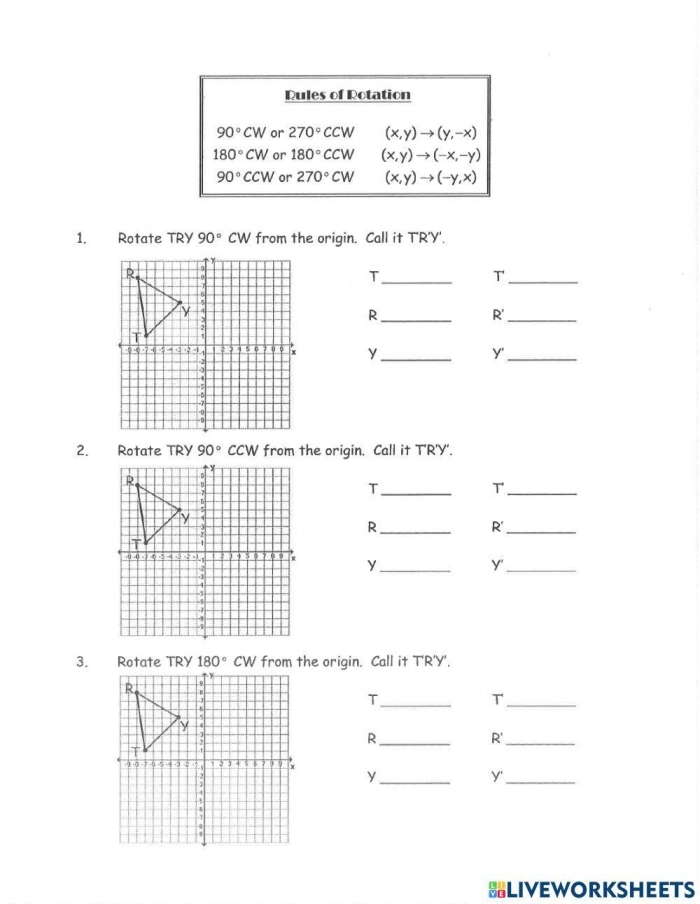
A solid worksheet should include problems where students rotate shapes by 90, 180, and 270 degrees. These angles create predictable patterns that help students develop intuition. For instance, rotating a point 90 degrees counterclockwise around the origin transforms the point (x, y) into (-y, x). Once students recognize this pattern, they can work more efficiently and with greater confidence.
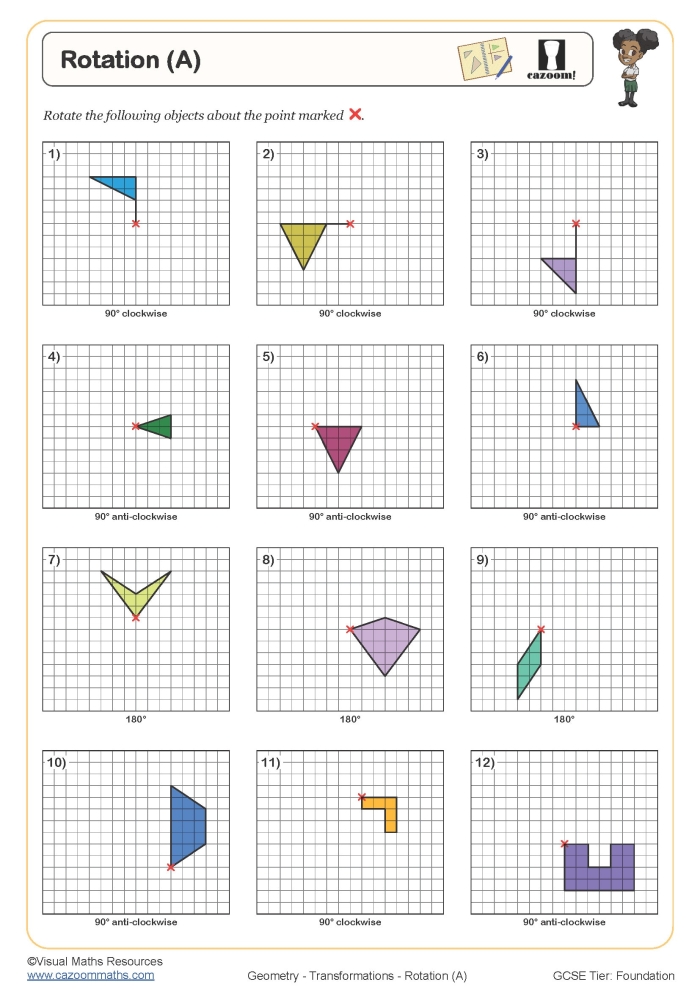
The reading component matters here too. Students need to carefully parse instructions that describe which direction to rotate and around which point. Clear, step-by-step problems help them build the vocabulary and comprehension skills necessary for geometry. Similar to how students learn to outline an essay, they benefit from structured approaches to solving rotations.
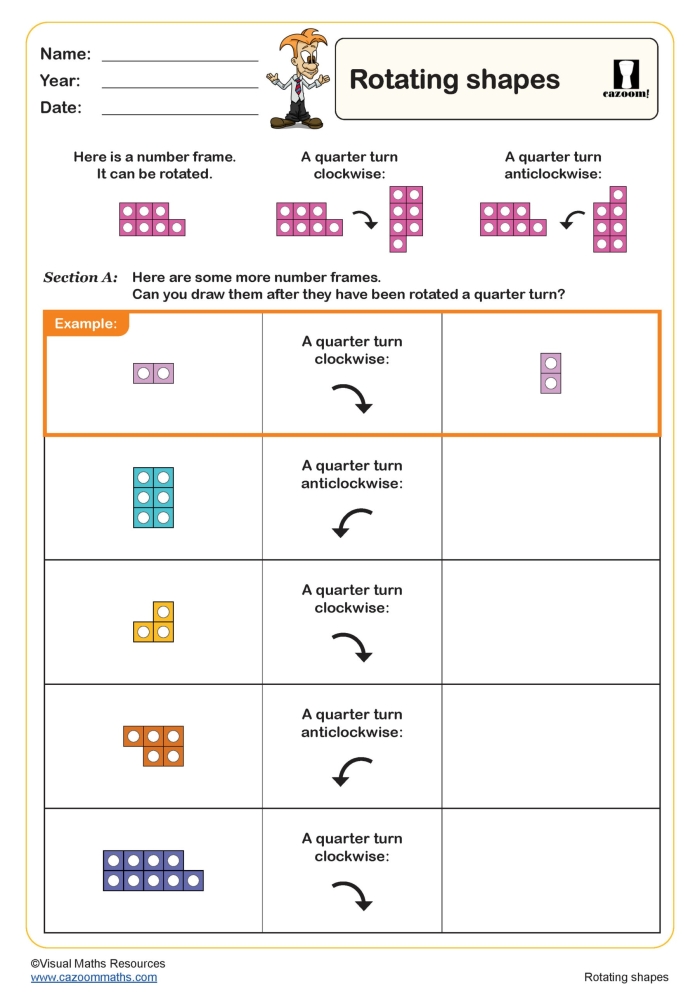
Pairing rotation worksheets with visual aids strengthens retention. Students who can draw the rotated shapes alongside their coordinate calculations develop deeper understanding. This hands-on approach makes the abstract concrete, helping them see why the coordinate rules work the way they do.
Eighth-grade geometry worksheets focused on rotations bridge the gap between basic coordinate knowledge and more advanced transformations. They’re essential practice for students preparing for higher mathematics.
Start Practicing with These Worksheets