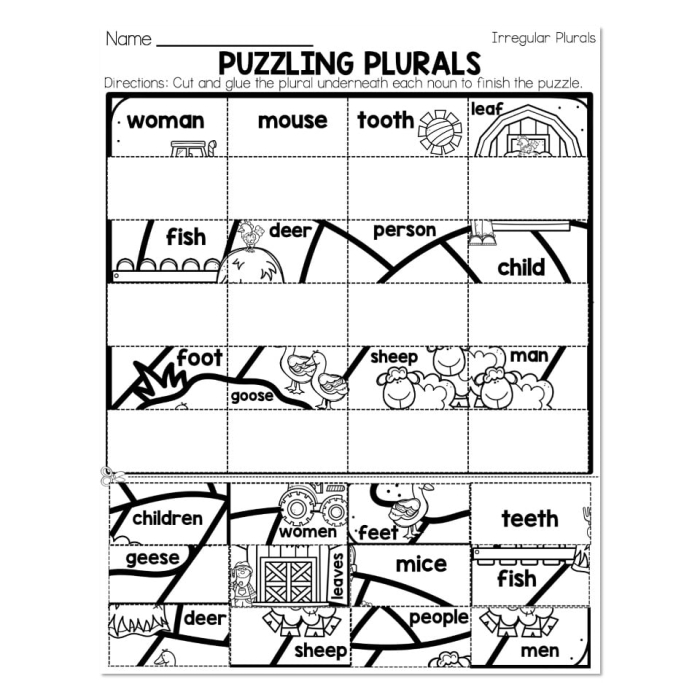
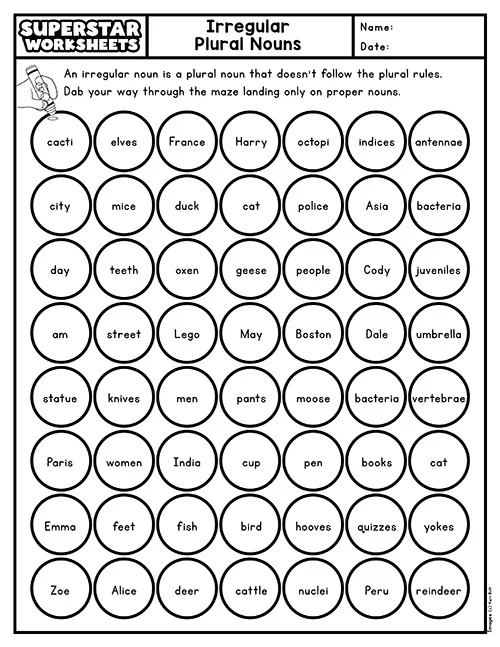
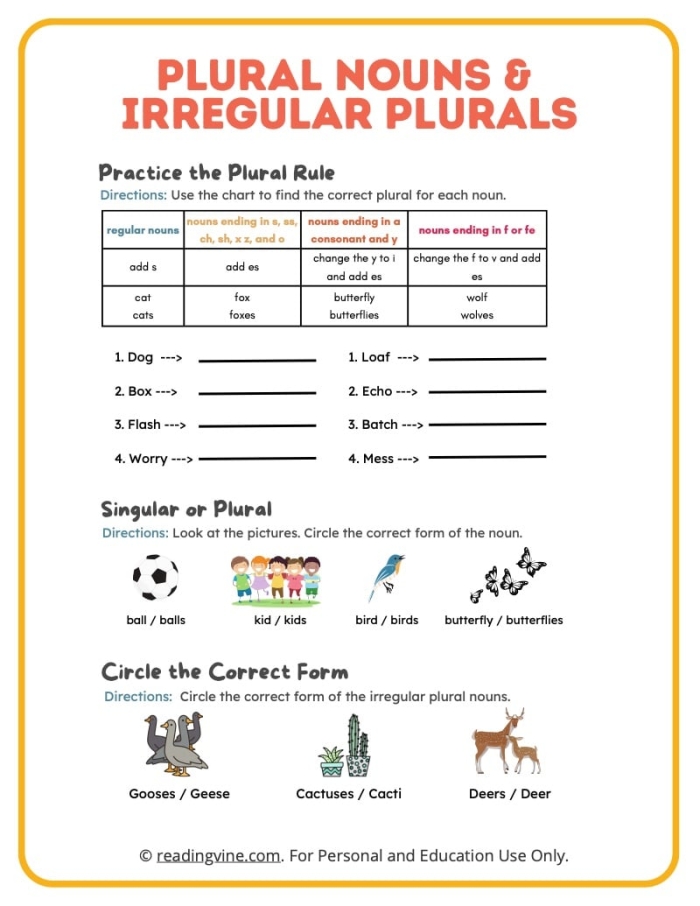
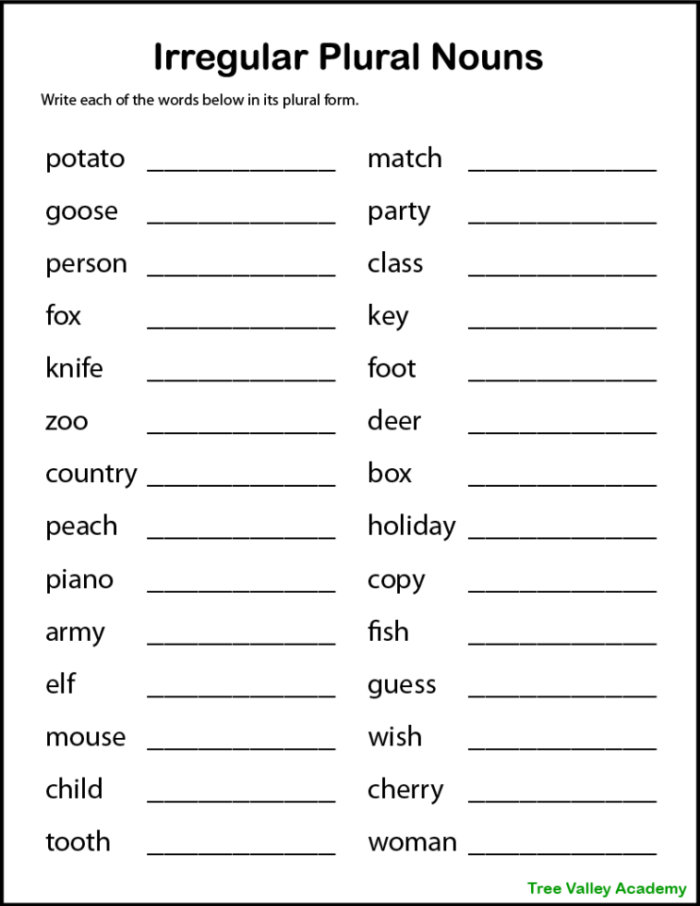
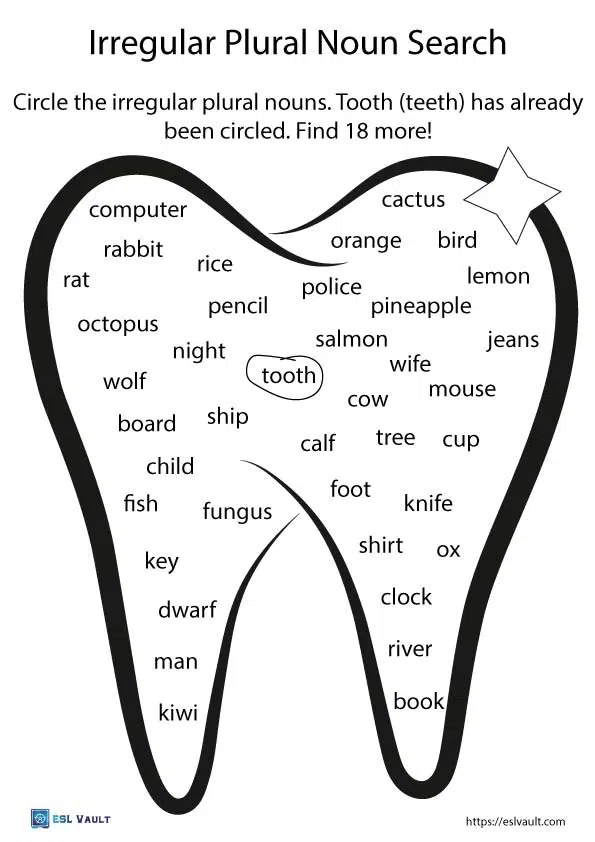
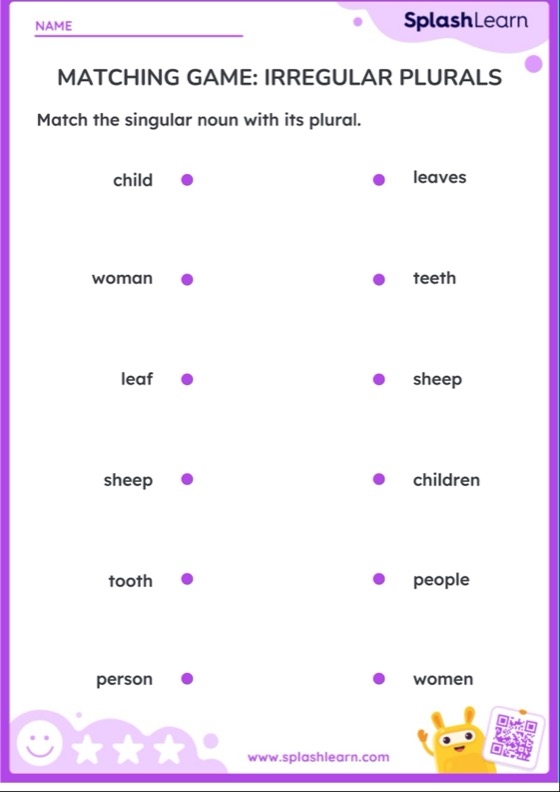
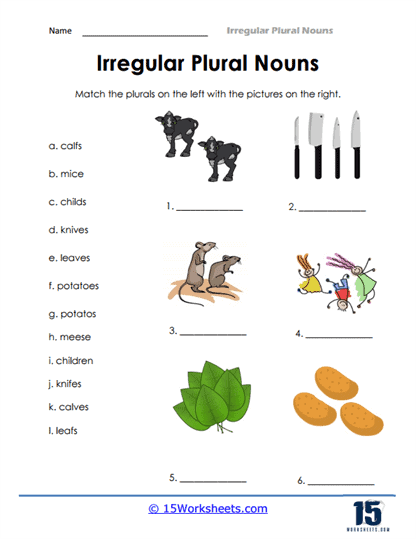
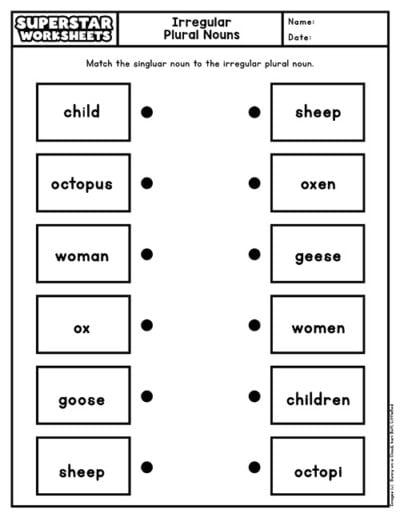
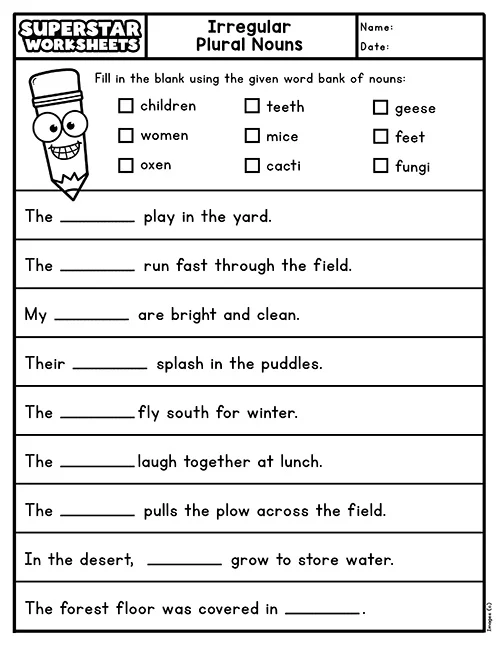
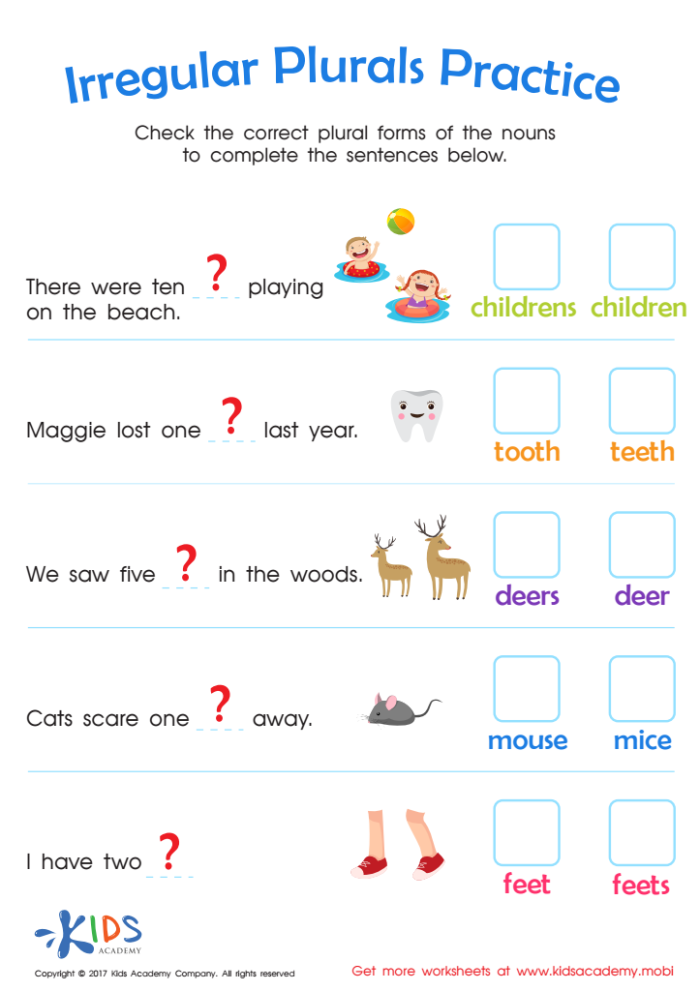
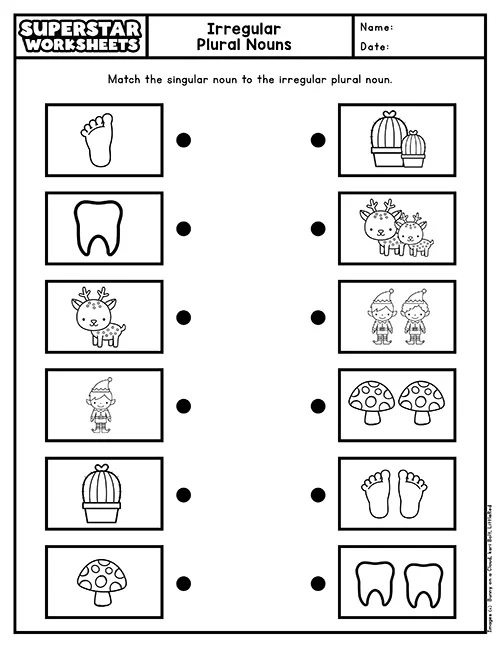
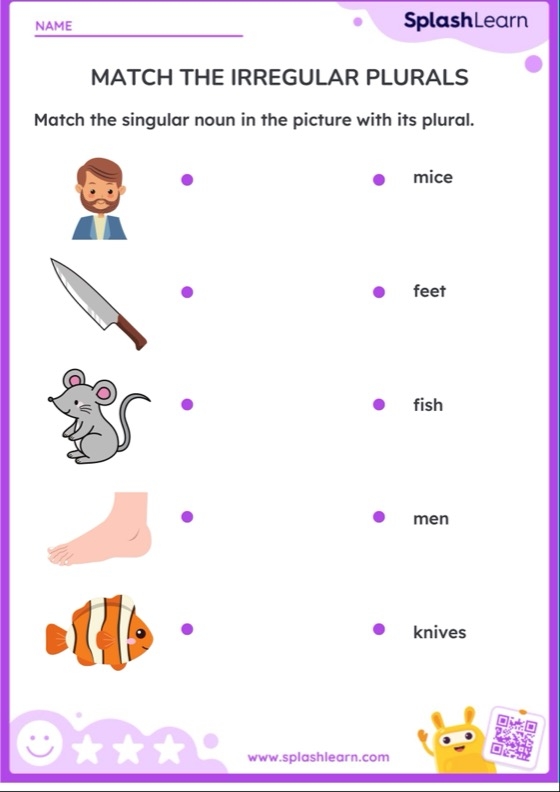
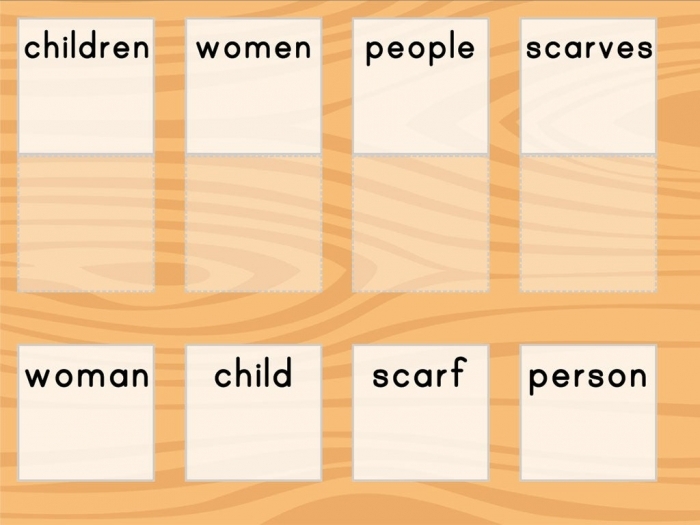
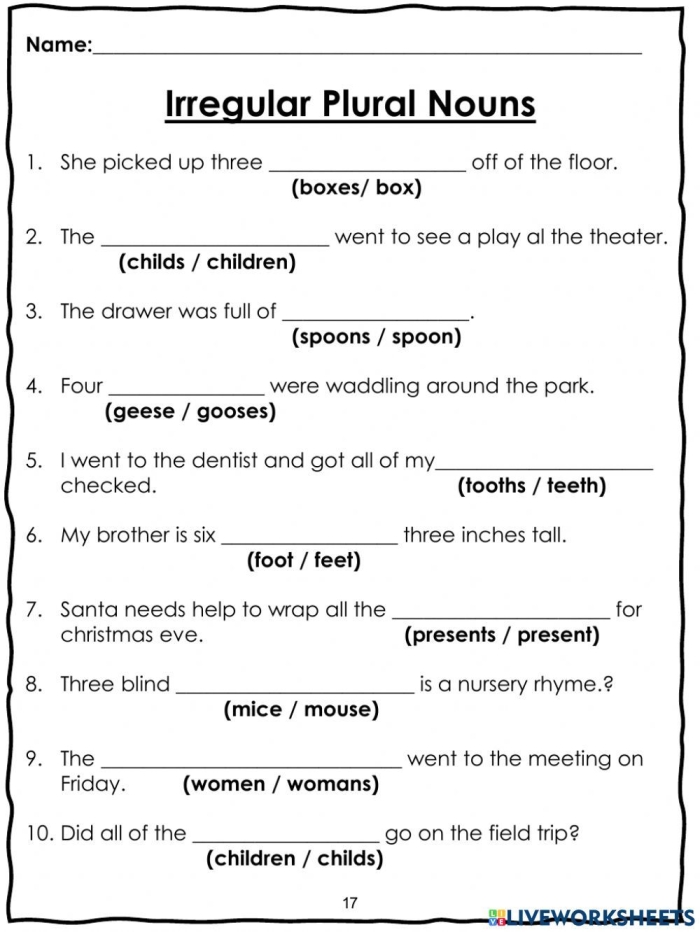
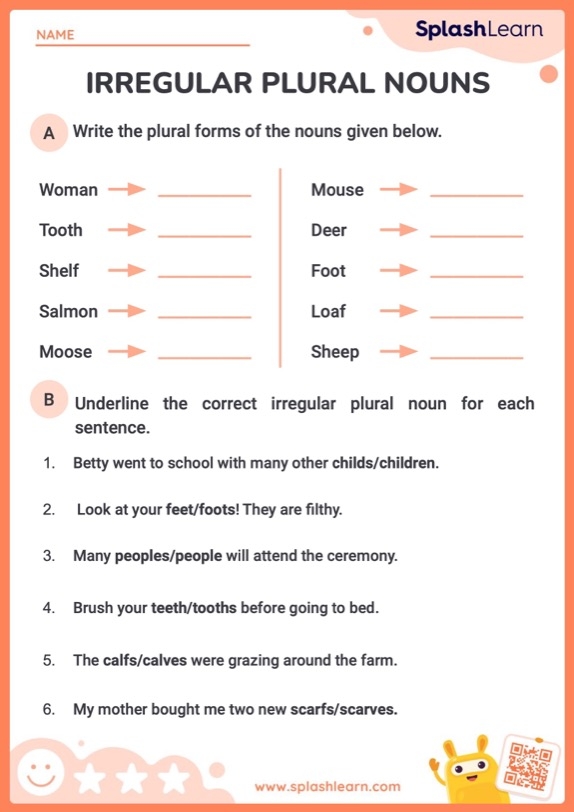
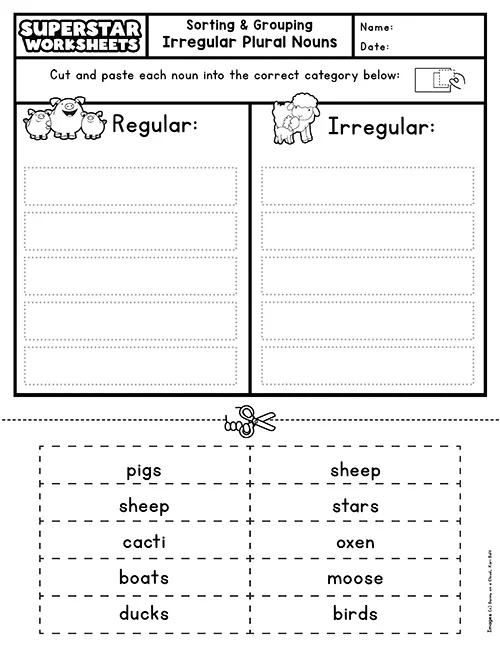
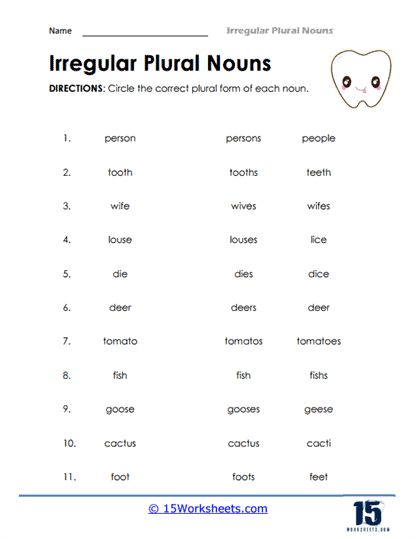
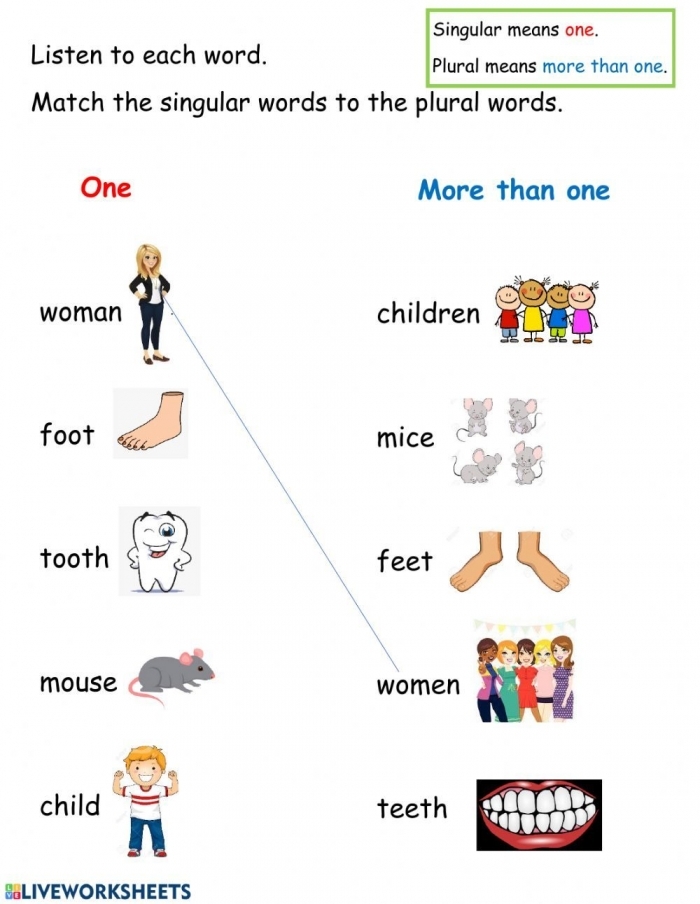
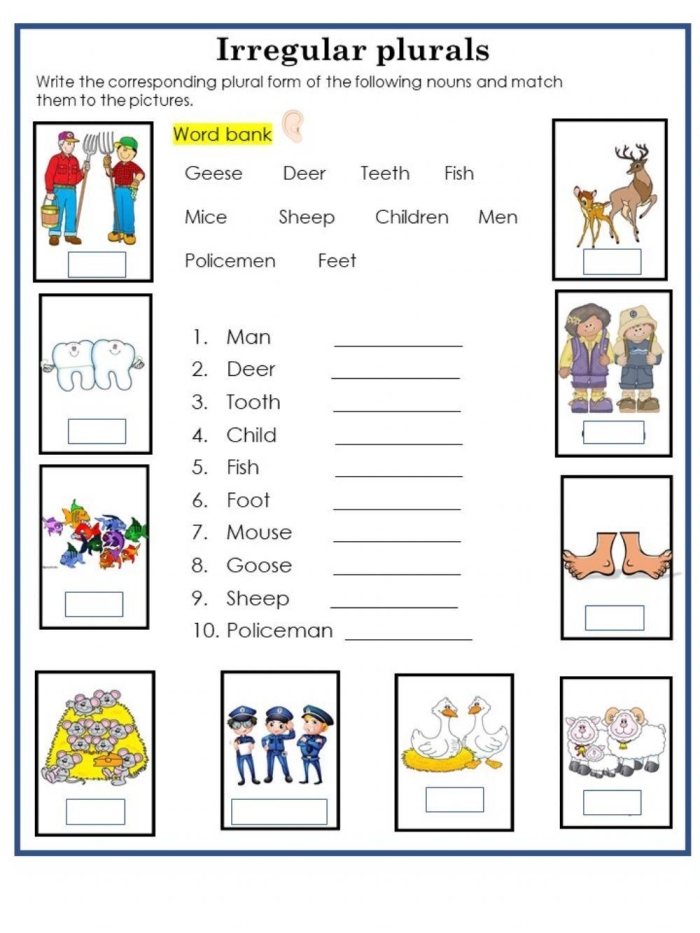
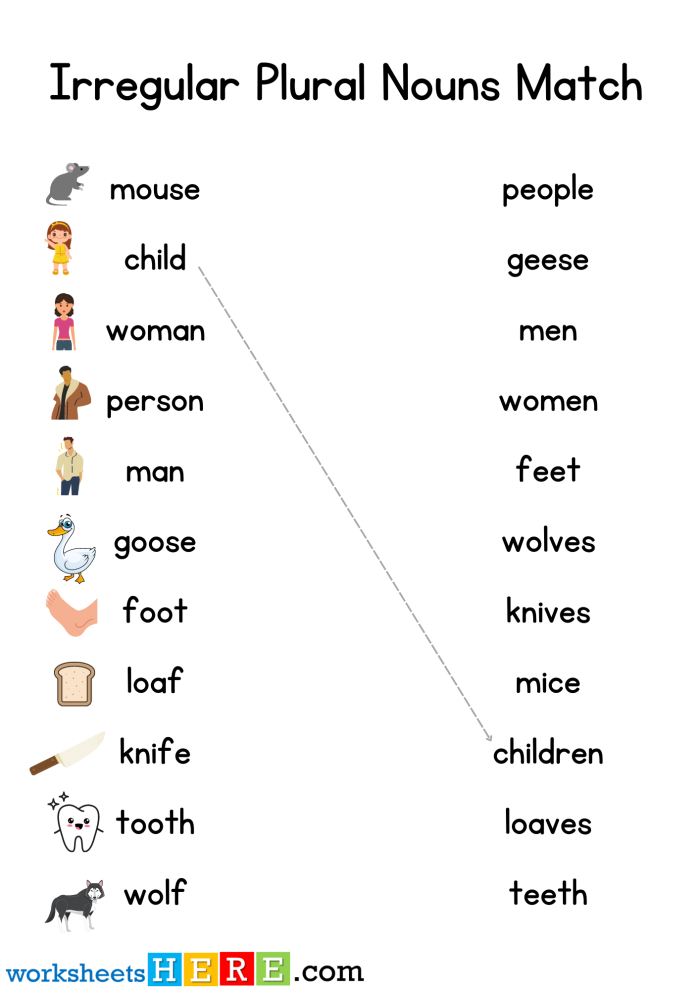
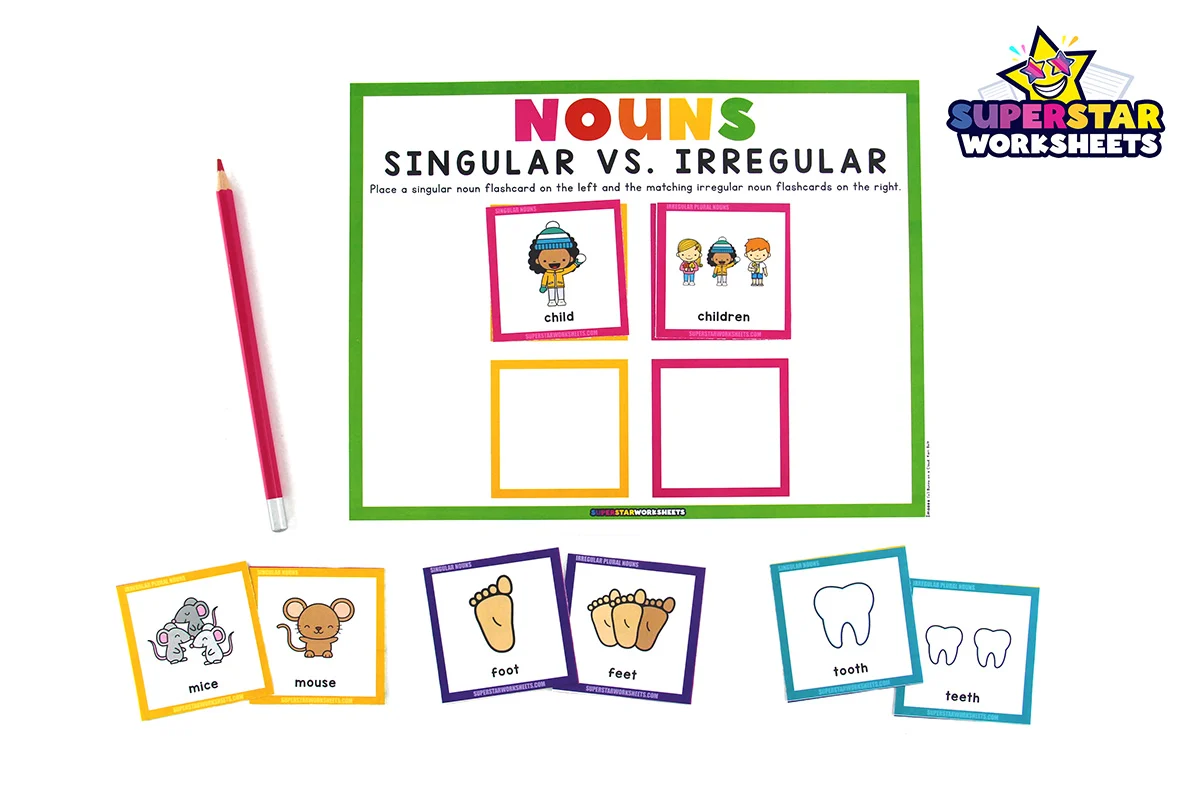
Irregular plural nouns trip up most second grade students because they don’t follow the standard rules. Words like “child” becoming “children,” “foot” becoming “feet,” and “mouse” becoming “mice” seem to come from nowhere. Students who’ve just mastered adding -s and -es to regular nouns suddenly find themselves facing exceptions that require memorization rather than pattern recognition.
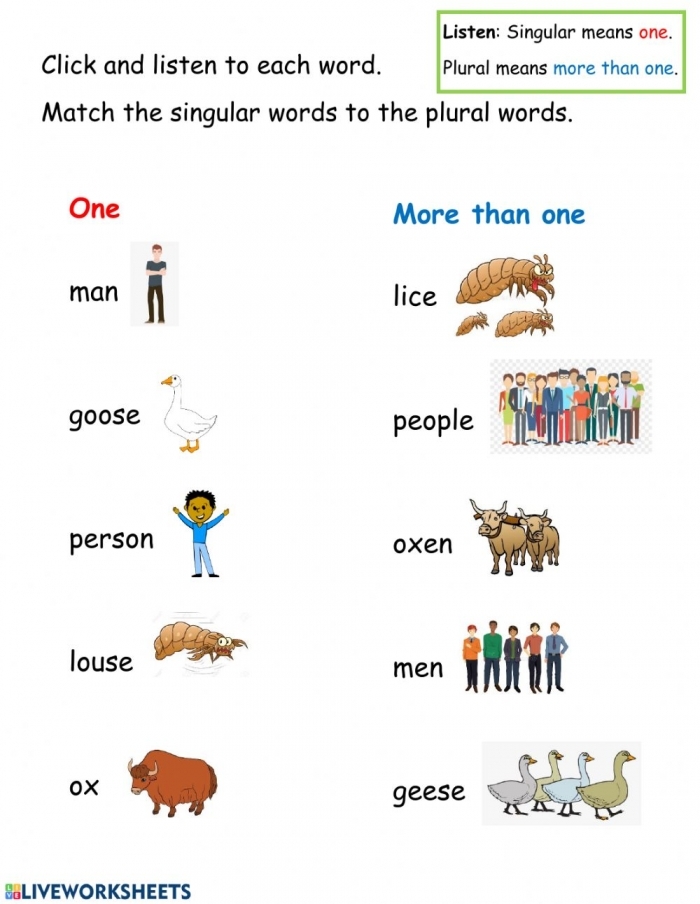
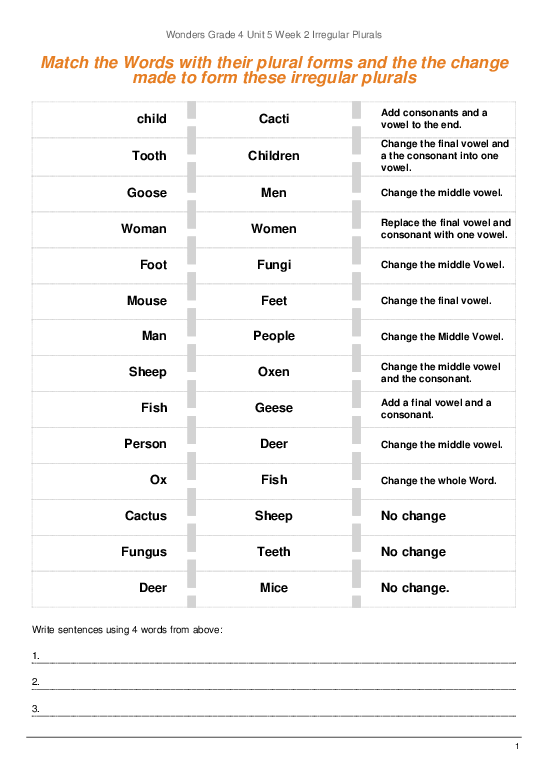
The challenge isn’t that these words are inherently difficult. Rather, students need repeated exposure to see these irregular forms stick in their minds. A matching worksheet gives them exactly that kind of practice in a format that feels manageable. When students pair singular nouns with their plural counterparts, they’re creating mental connections that help cement these tricky words into their vocabulary.
This type of activity works particularly well in second grade because students at this level are developing their foundational grammar skills. They’re ready to move beyond simple phonics and start understanding how language works at a deeper level. Matching exercises let them focus on the transformation itself without the pressure of generating the correct form from scratch.
An effective irregular plural noun matching worksheet should include common words that students encounter in their daily reading and writing. Words like “man,” “woman,” “tooth,” “goose,” and “person” appear regularly in second grade texts. By practicing with these specific nouns, students build confidence when they encounter them in actual reading assignments.
The beauty of this approach is that it requires minimal preparation once you have the worksheet ready. Students can work independently or in pairs, making it flexible for different classroom setups. Some teachers find success laminating these worksheets so students can use them multiple times throughout the year.
Pairing this practice with other grammar activities strengthens retention even further. When you combine matching worksheets with sentence-building exercises or reading activities that highlight irregular plurals, students develop a more complete understanding of how these words function in context.
Worksheet Practice Section