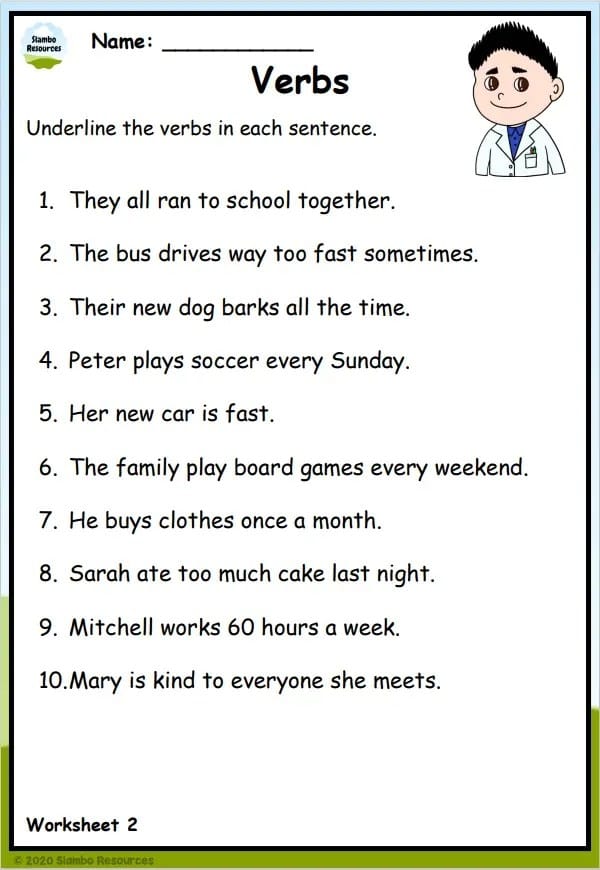
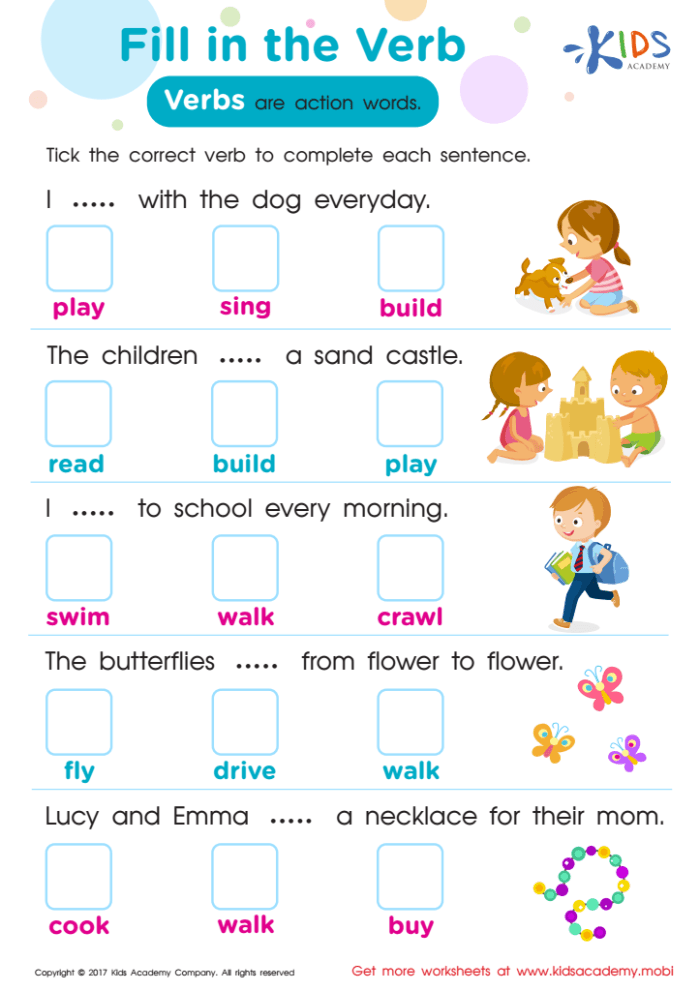
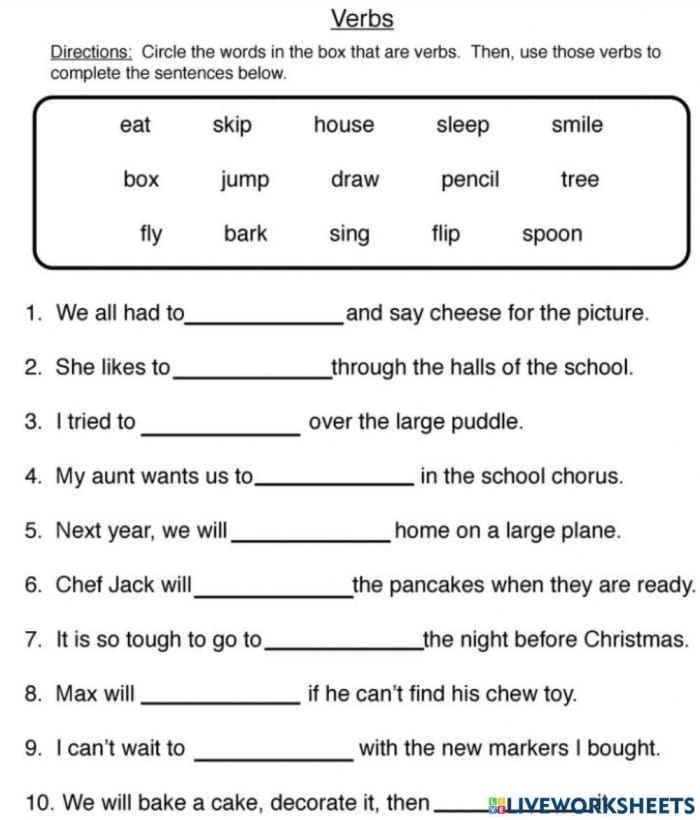
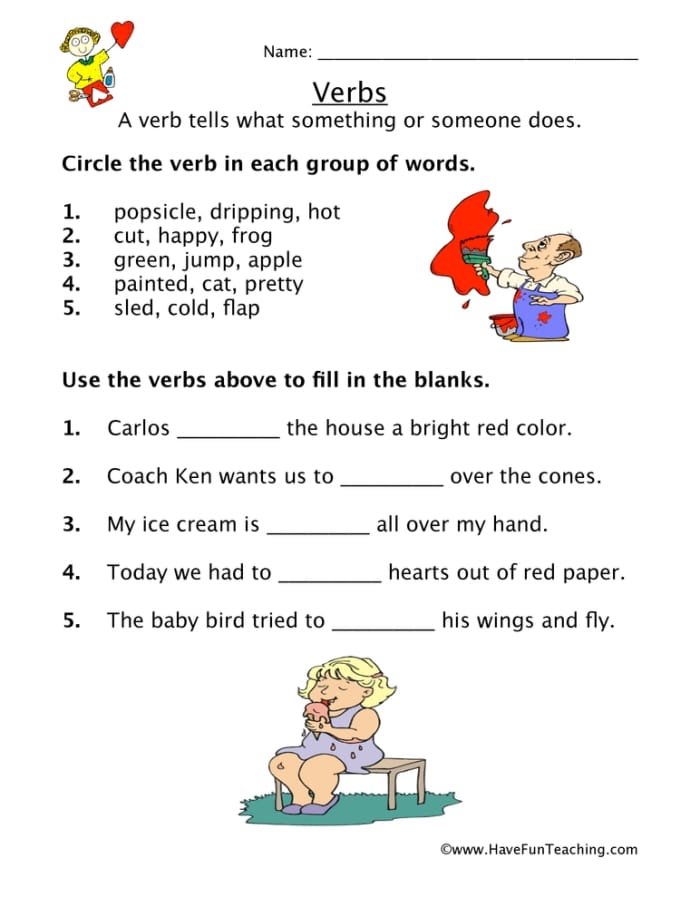
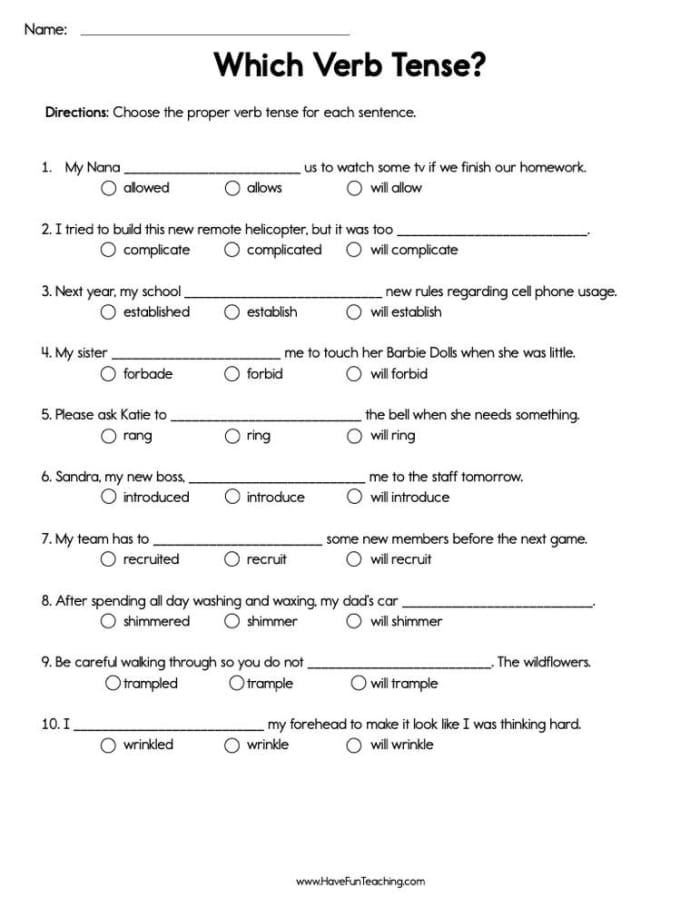
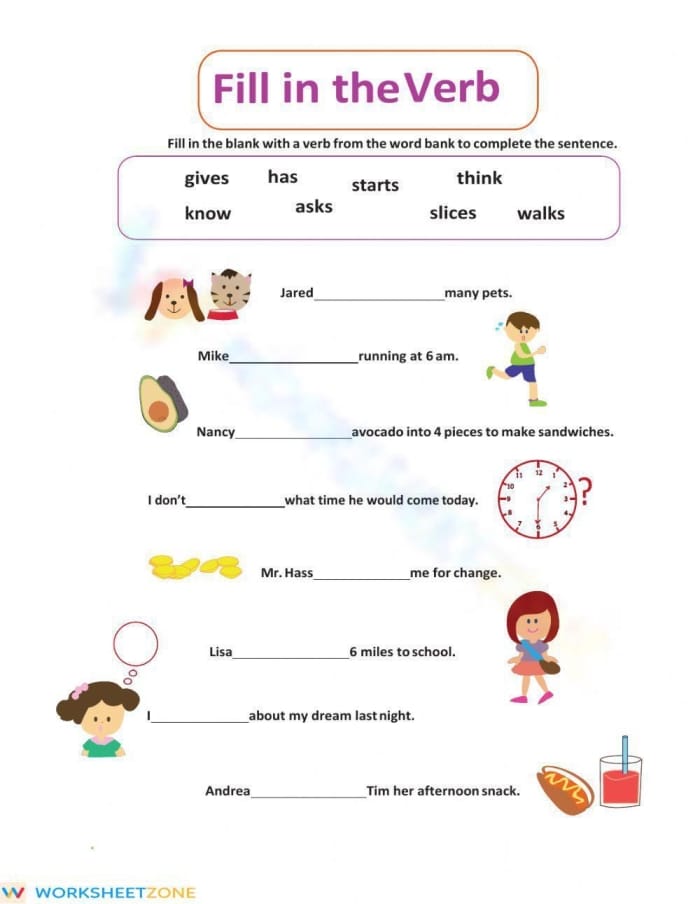
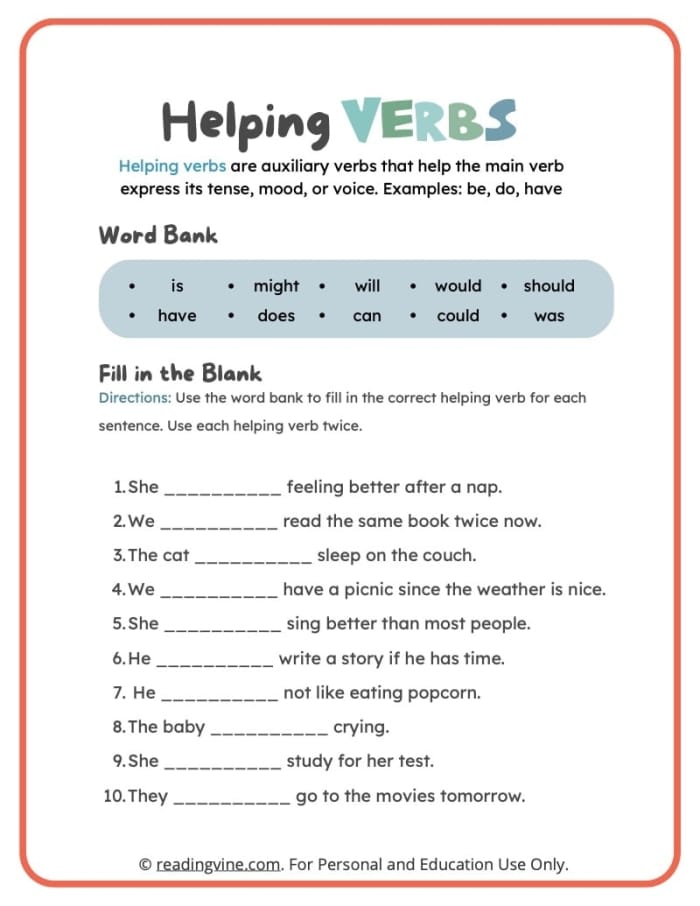
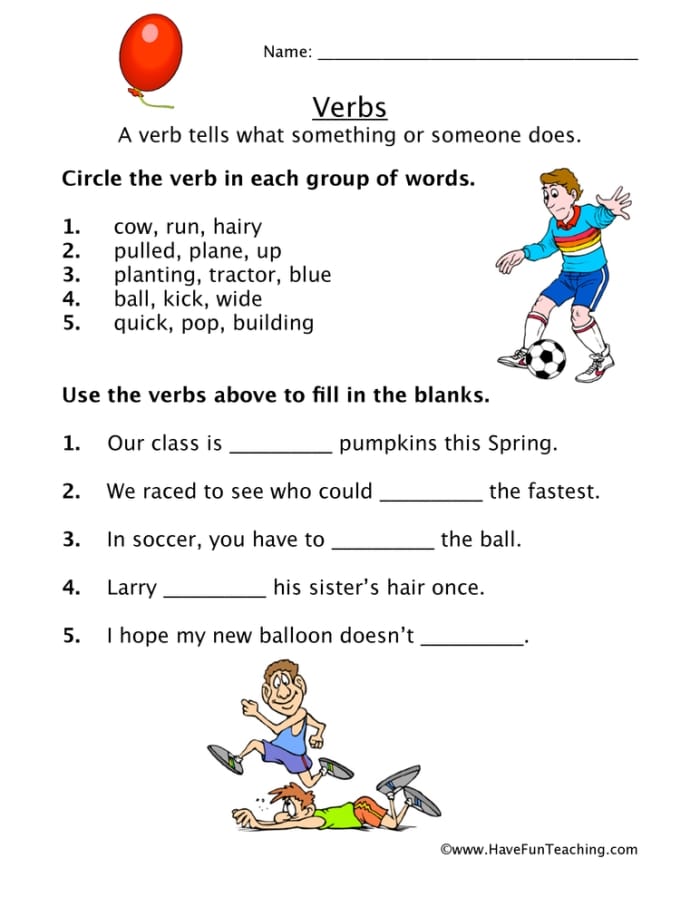
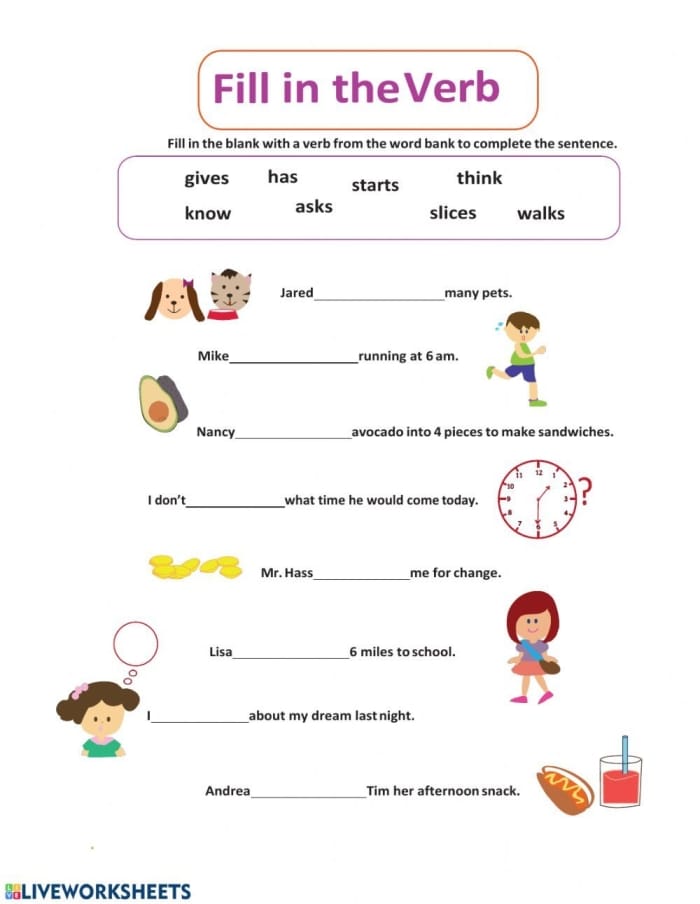
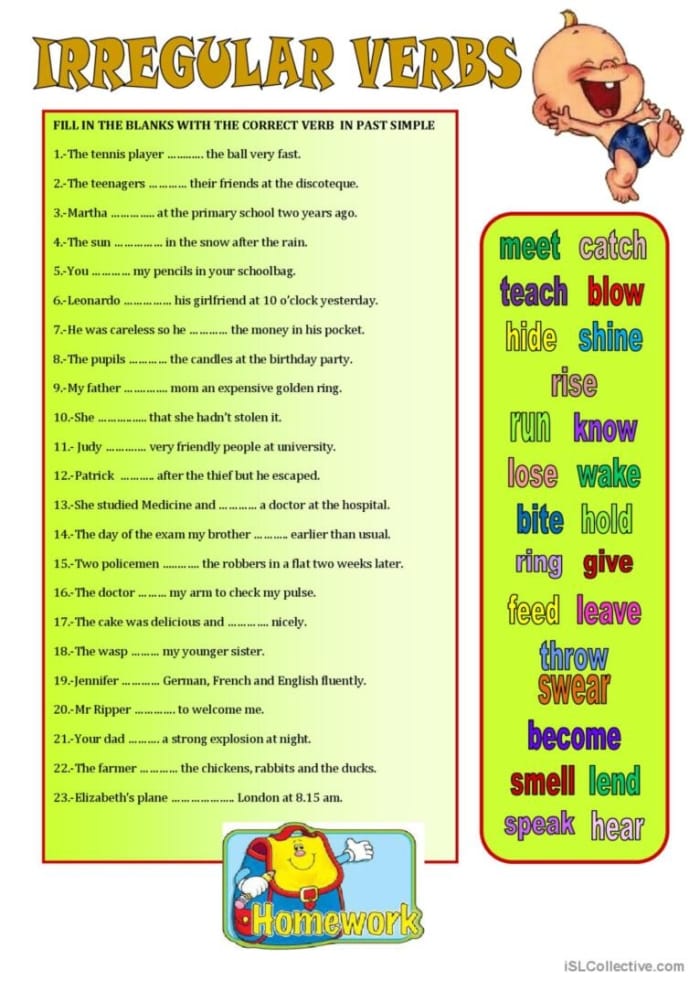
Verbs are the action words that bring sentences to life, and first graders need plenty of practice recognizing and using them correctly. A fill-in-the-blank verb worksheet gives young learners a low-pressure way to experiment with action words while building confidence in their writing skills.
When children encounter a sentence with a missing verb, they’re forced to think about what action makes sense in context. Does the cat jump, sleep, or run? This decision-making process helps them understand that verbs carry specific meanings and that word choice matters. Rather than passively reading about verbs, students actively engage with them, which strengthens retention far better than memorization alone.
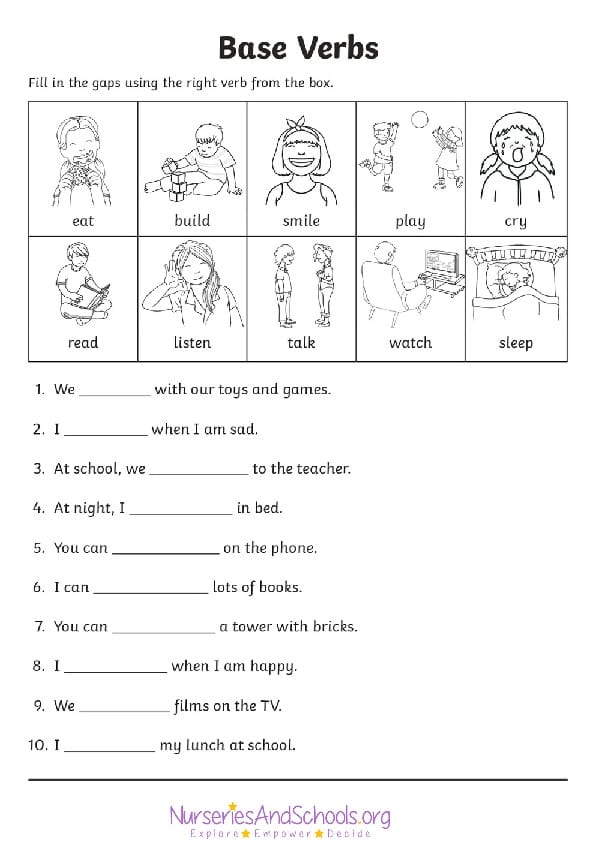
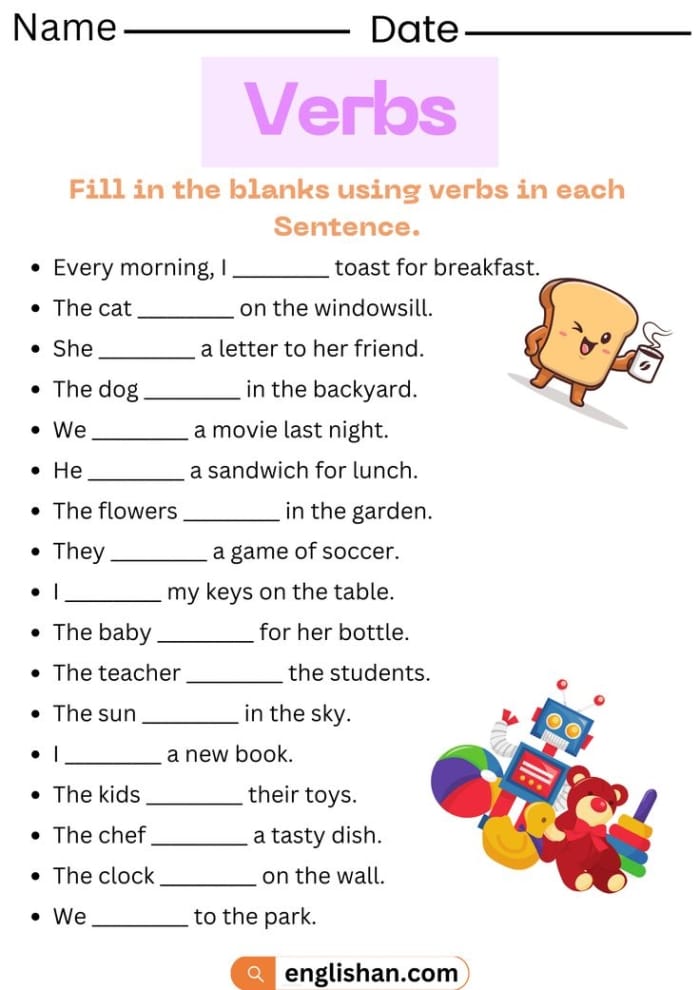
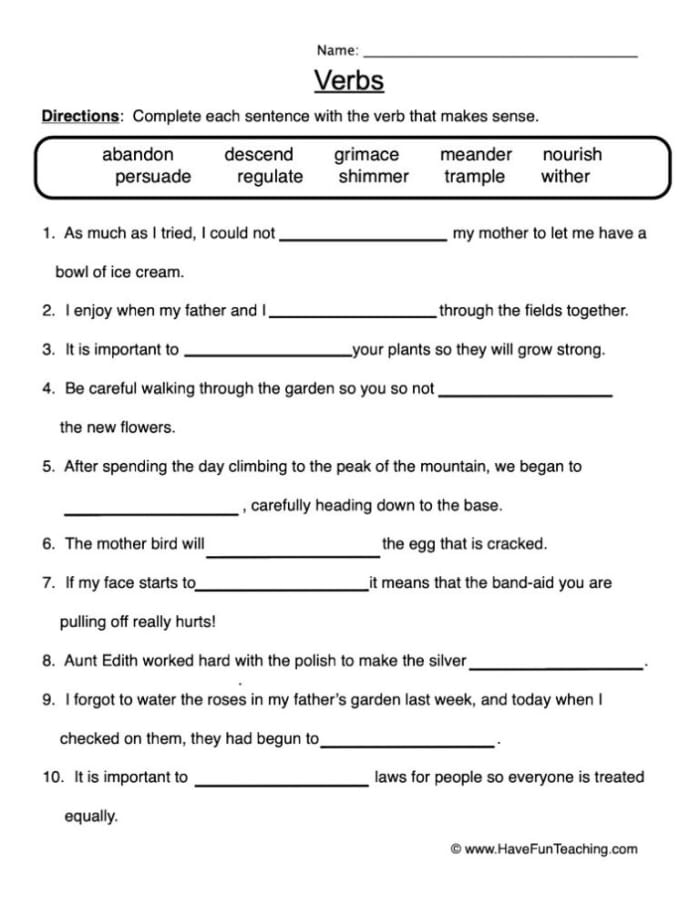
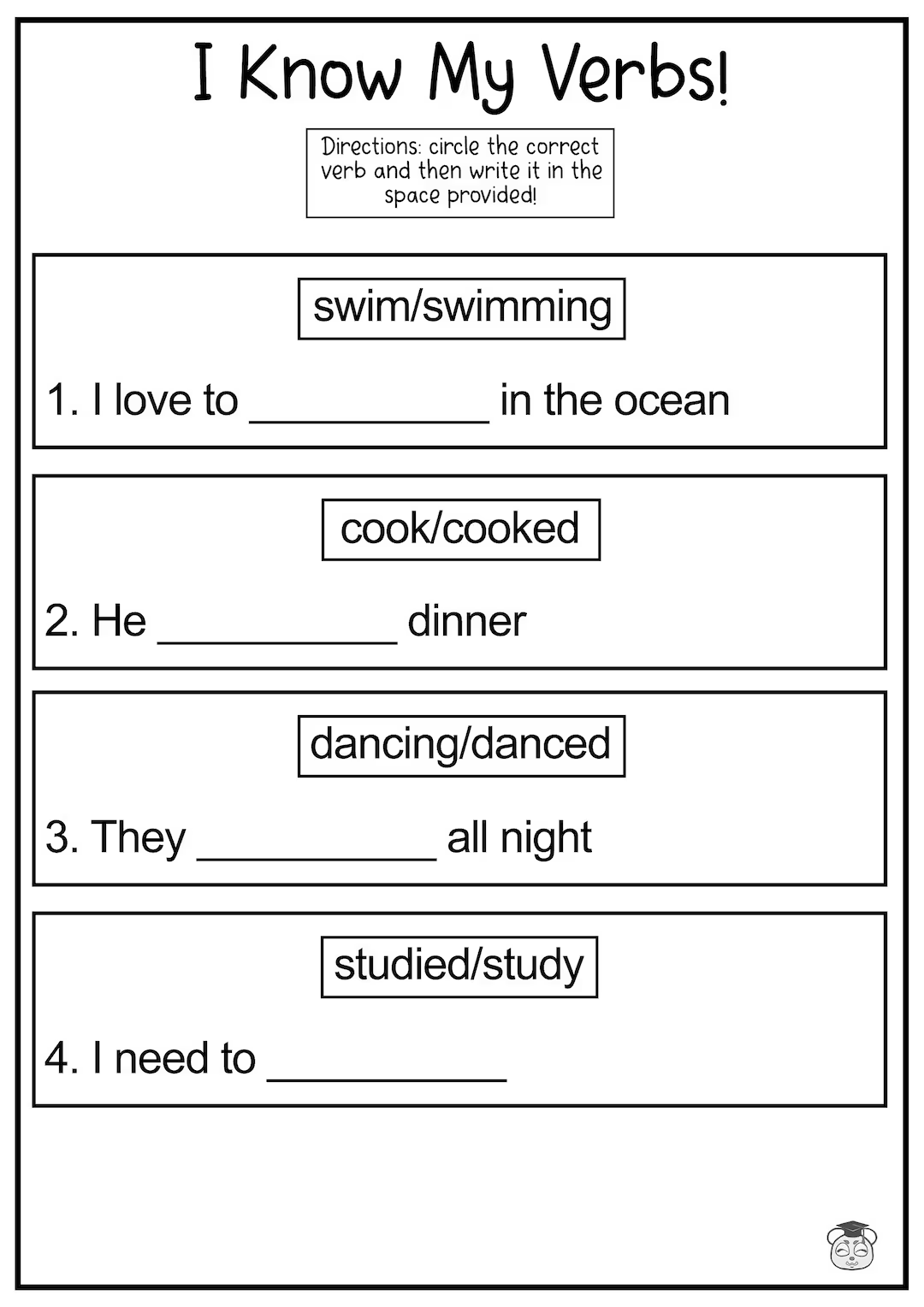
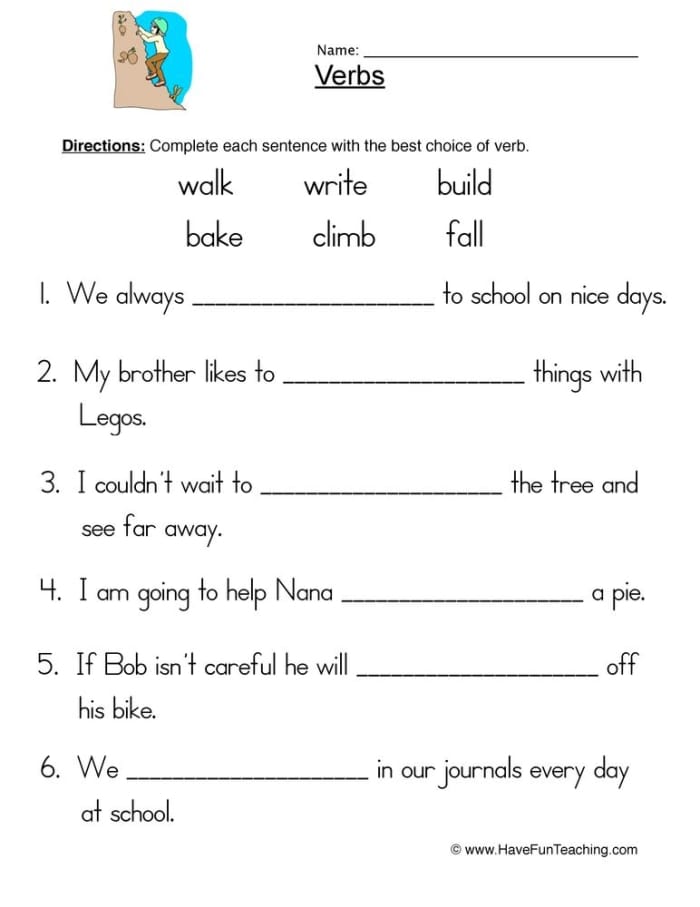
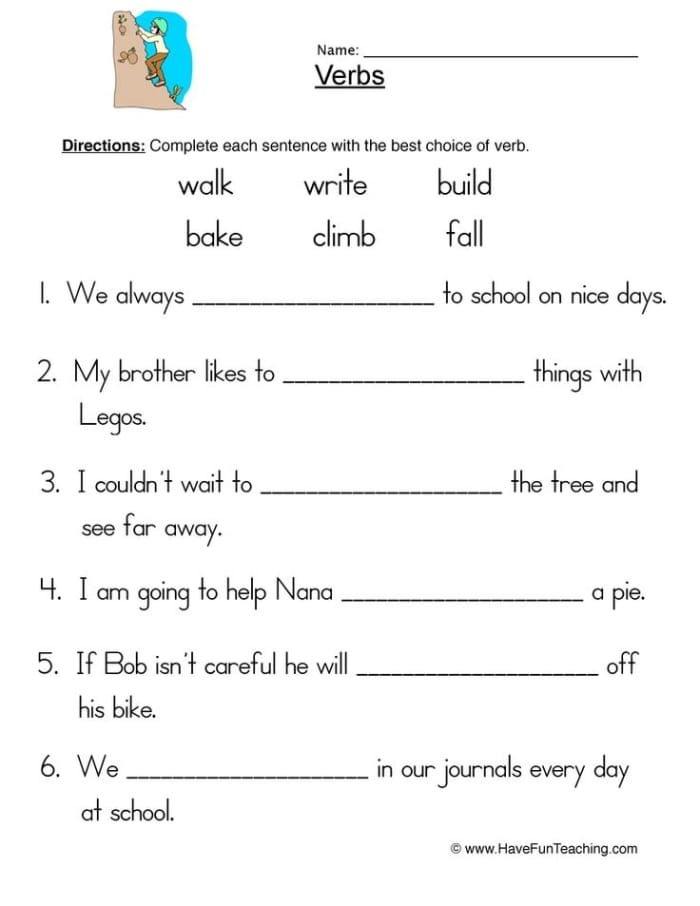
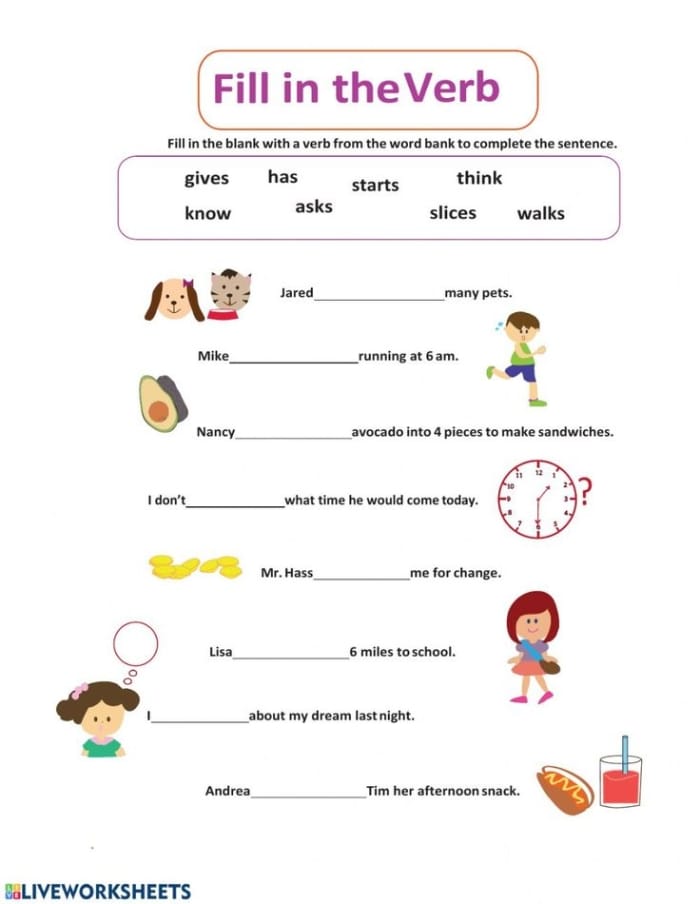
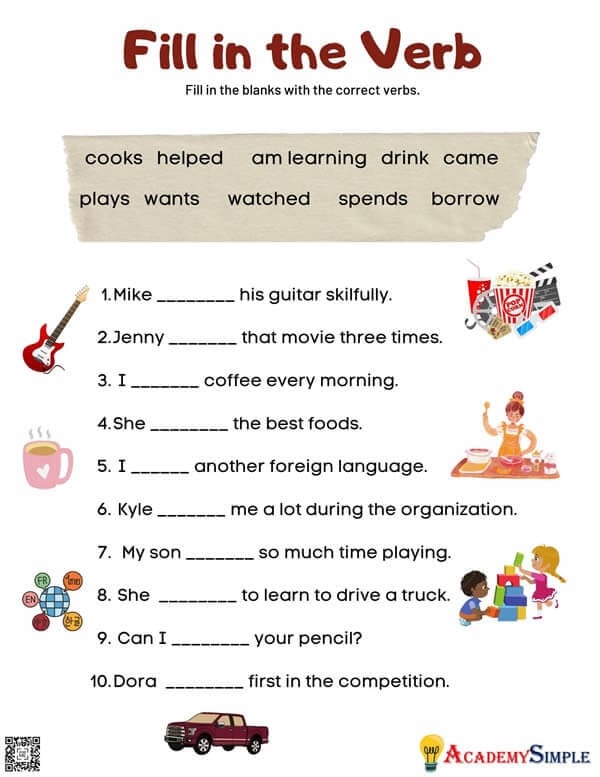
These worksheets work particularly well for first grade grammar and mechanics instruction because they meet kids where they are developmentally. At this stage, most children understand simple action words like run, jump, eat, and sleep. A good fill-in-the-blank worksheet uses familiar verbs and relatable scenarios, such as “The dog _____ in the yard” or “She _____ her lunch.” This approach keeps the focus on verb recognition without overwhelming students with complex sentence structures.
The beauty of this exercise is its flexibility. You can pair verb practice with other first grade skills by creating worksheets that combine actions with related concepts. For instance, you might include activities that work alongside basic punctuation practice or vocabulary building to reinforce multiple grammar and mechanics skills simultaneously.
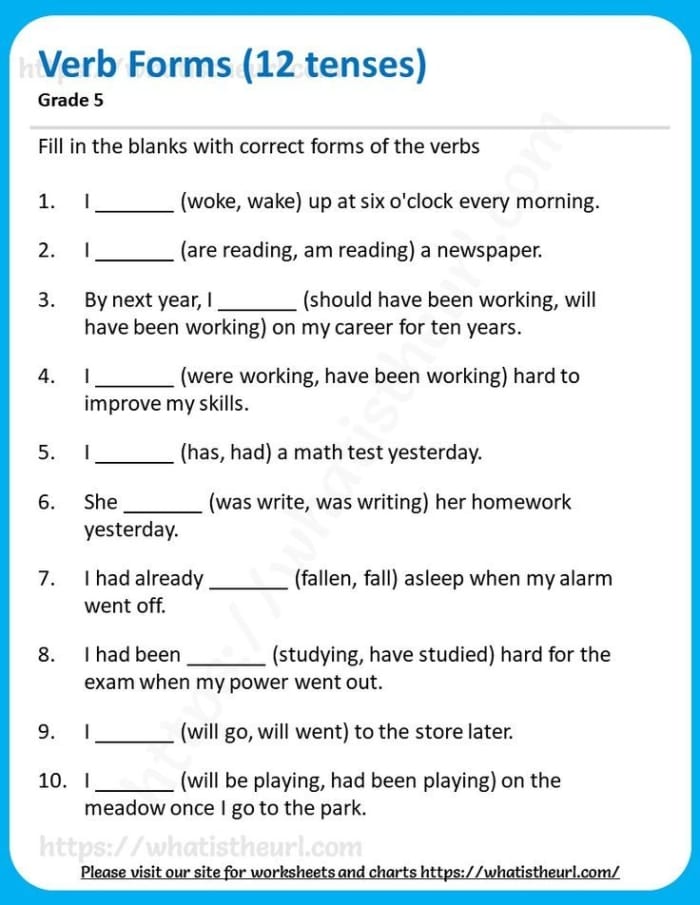
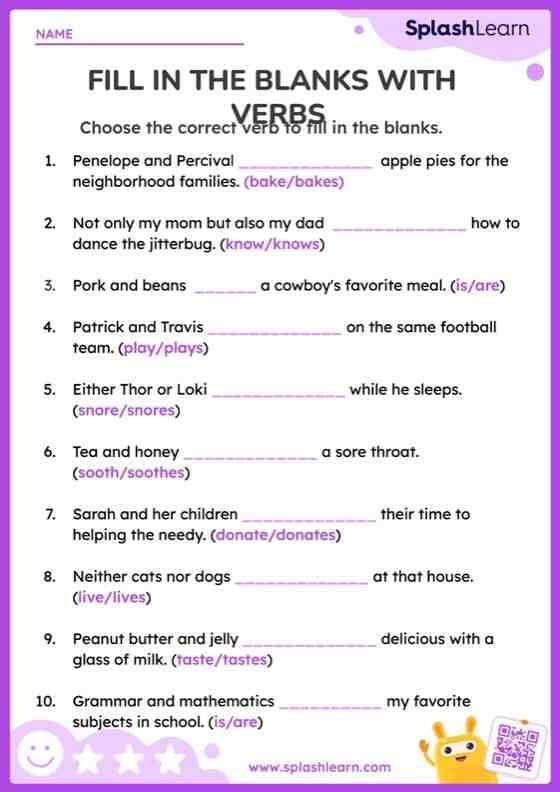
The repetition built into fill-in-the-blank activities also helps cement verb usage patterns. When students complete multiple sentences using different verbs, they internalize how verbs function within sentences. Second graders benefit from these worksheets too, as they’re ready to work with slightly more complex verb tenses and a broader range of action words.
Hands-On Worksheet Activities