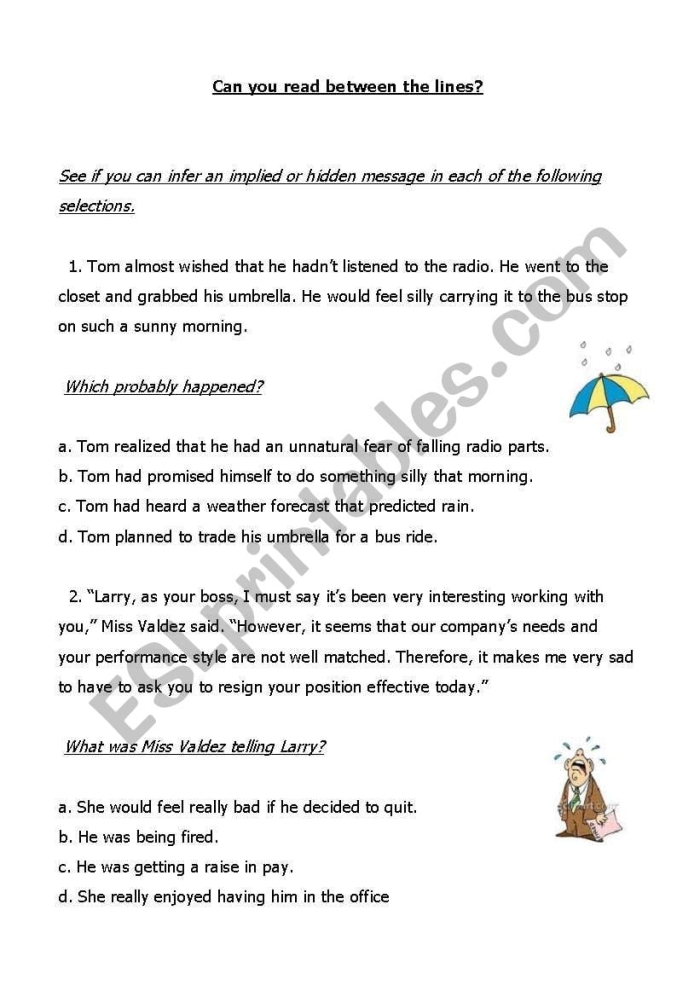
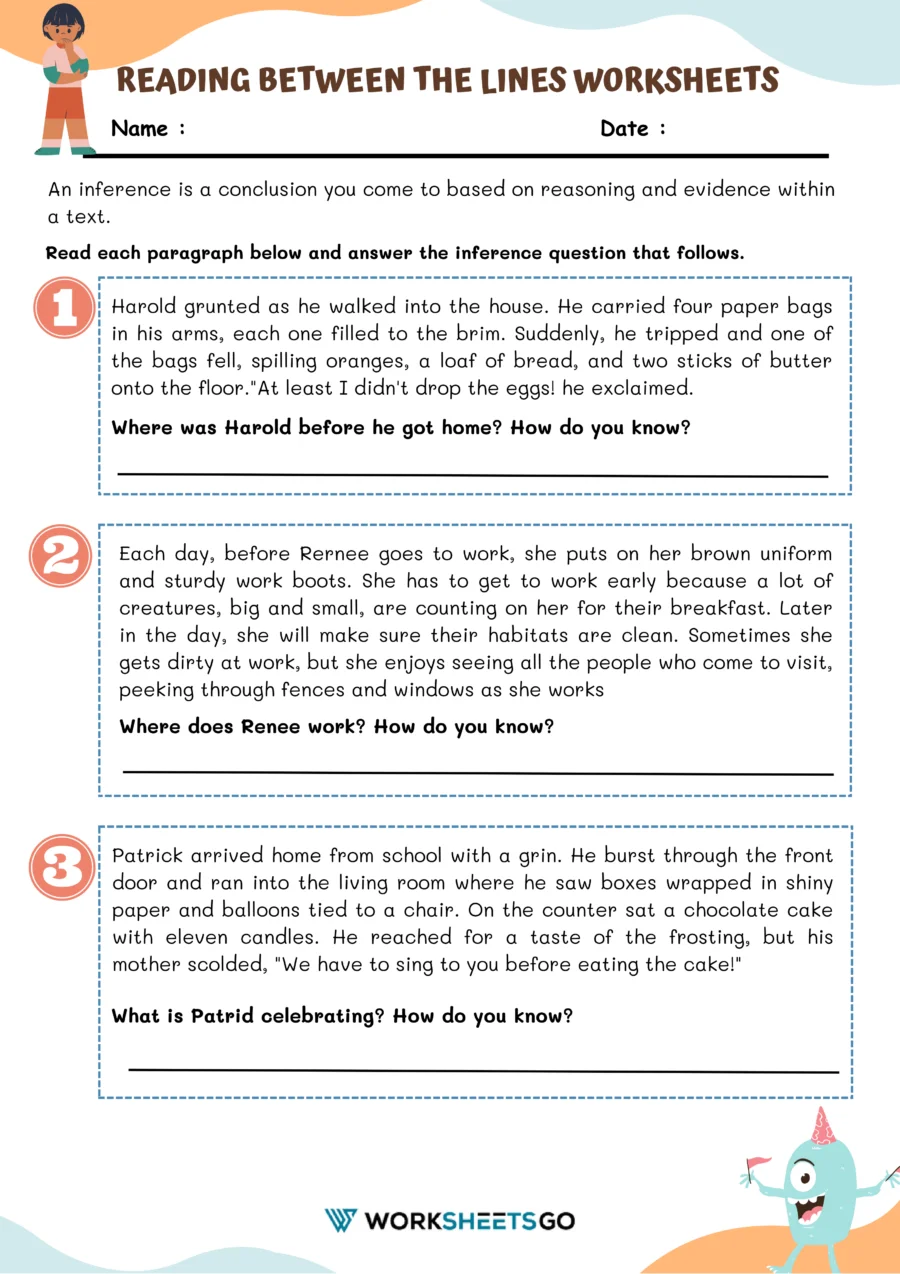
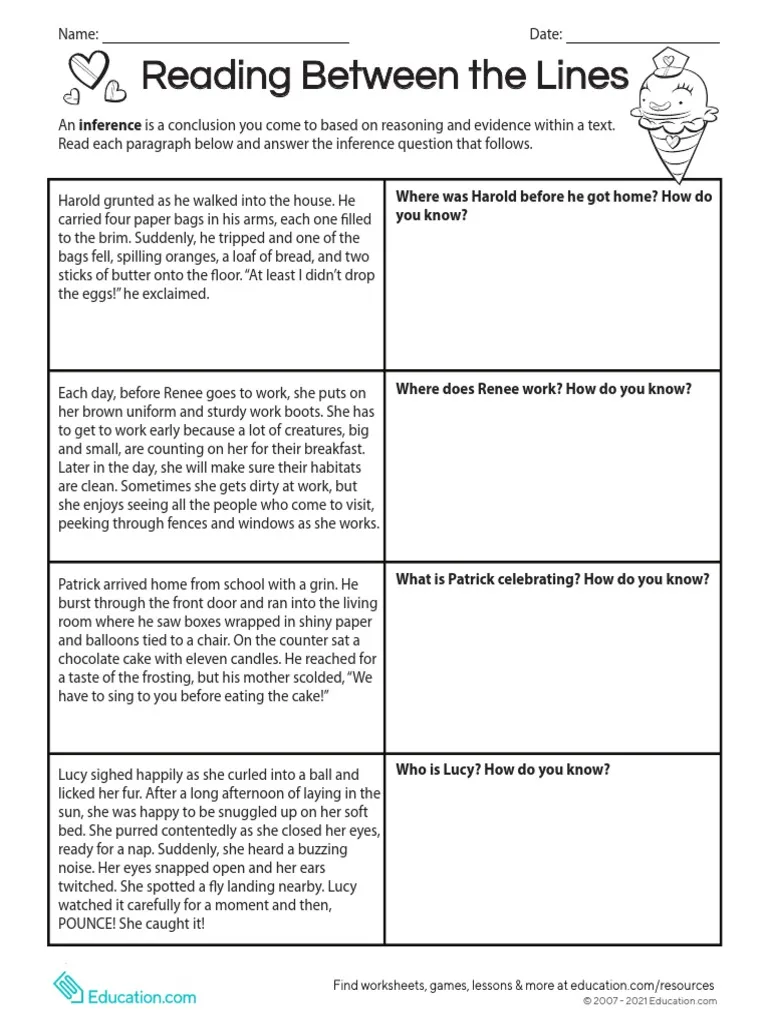
Encouraging fourth-grade students to read between the lines is crucial for developing their comprehension skills. When students engage with a reading exercise that requires them to make inferences, they learn to look beyond the text and consider the context, emotions, and motivations of characters. This skill enhances their understanding of the material and prepares them for more complex texts in the future.
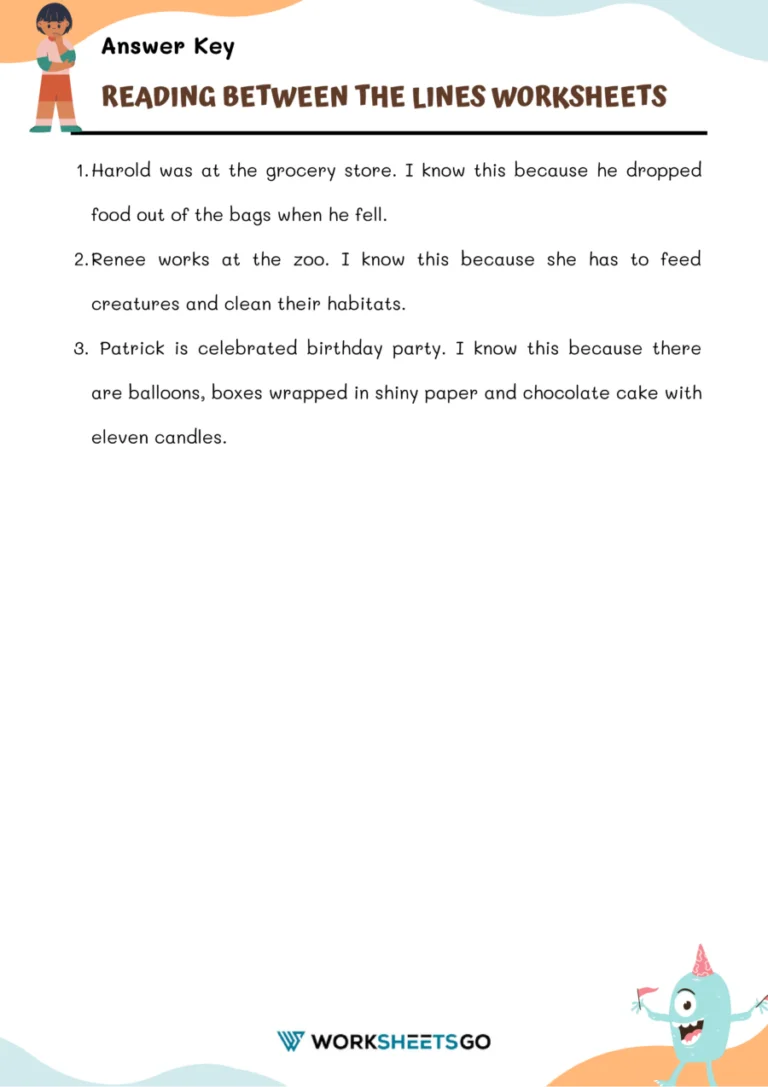
For example, consider a reading exercise that involves a character facing a difficult decision. The text may not explicitly state the character’s feelings, but by paying attention to the words and actions described, students can infer the character’s emotions. This process encourages critical thinking, as students must analyze the information presented and draw conclusions based on subtle clues. Such exercises can be found in printable worksheets designed specifically for fourth graders.
In addition to enhancing comprehension, making inferences helps students connect their learning to real-life situations. For instance, they might encounter similar themes in movies or stories they enjoy. By recognizing these patterns, students develop a deeper appreciation for narrative structures and the complexities of human emotion. It’s important to create an environment where students feel comfortable sharing their thoughts and interpretations, as this can lead to fruitful discussions that deepen their understanding.
Incorporating reading exercises that require inferencing into your curriculum not only aligns with educational standards but also engages students in meaningful ways. When they practice these skills, they become more adept at navigating texts and understanding the nuances of language. For more activities that encourage such critical thinking, explore resources like the foot length line plot worksheet or the homophones worksheet.
Boost Skills with These Worksheets