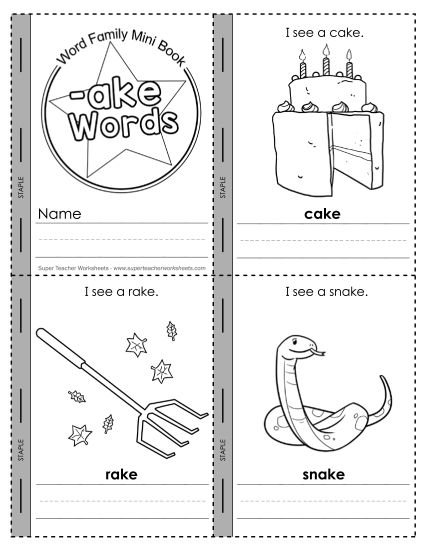
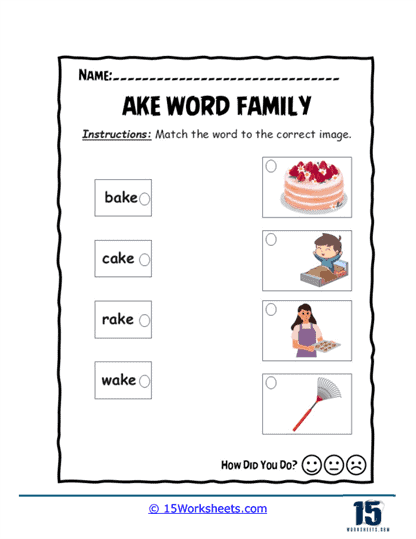
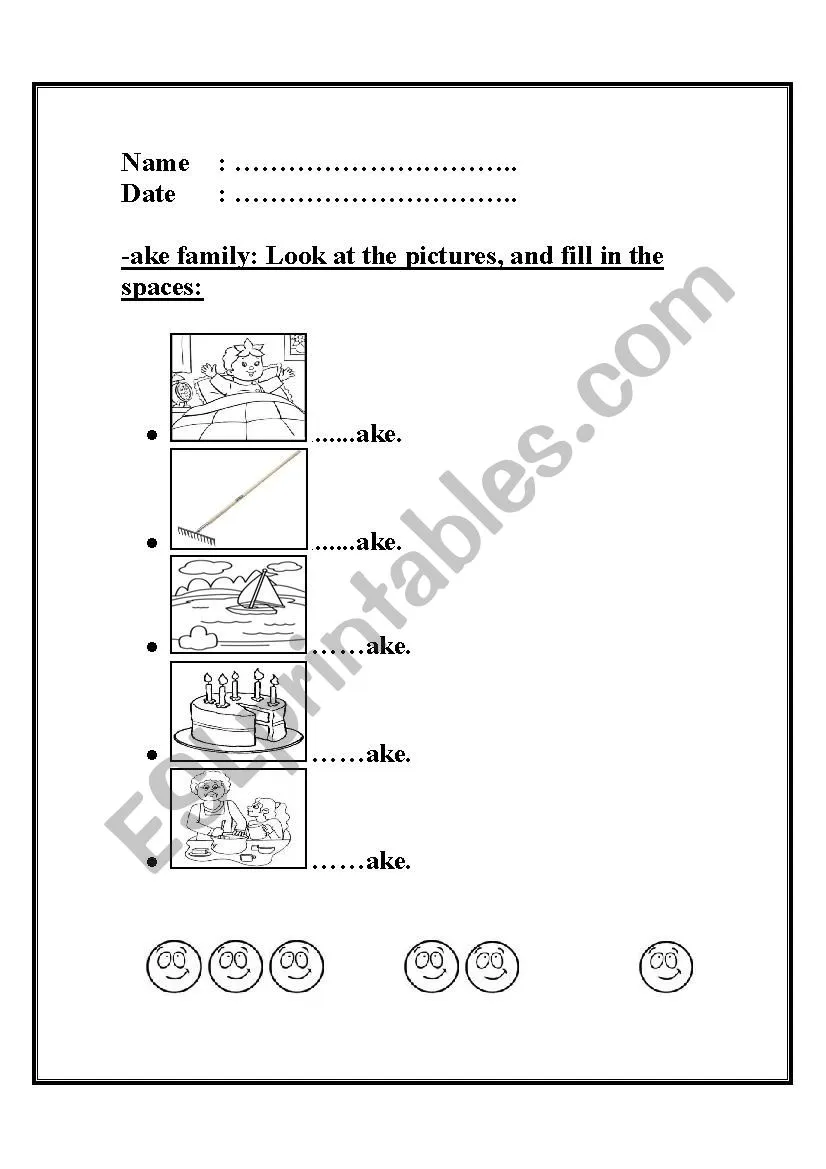
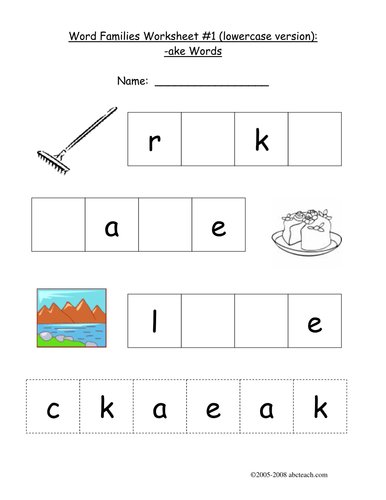
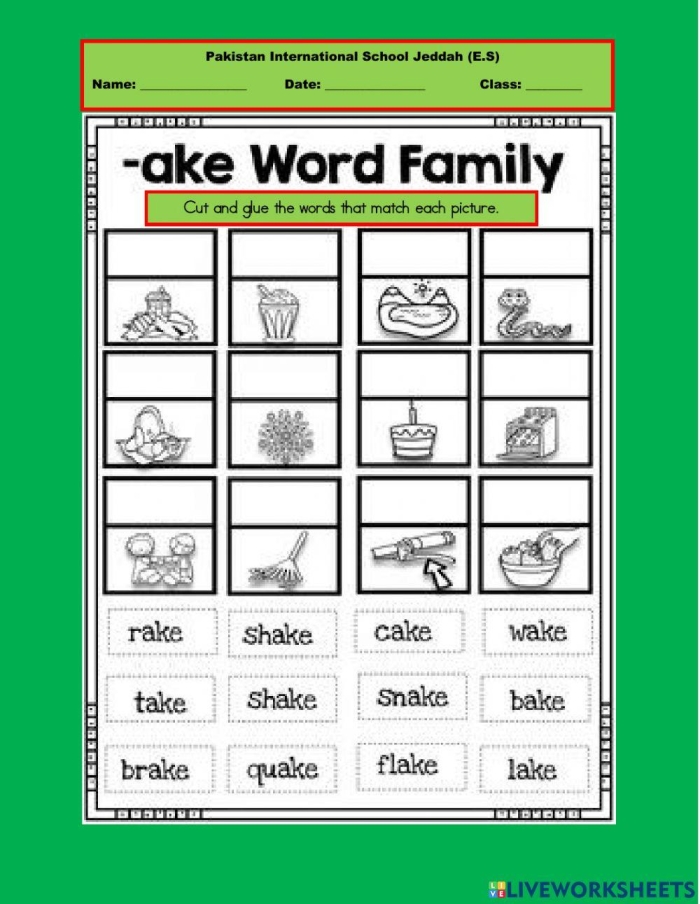
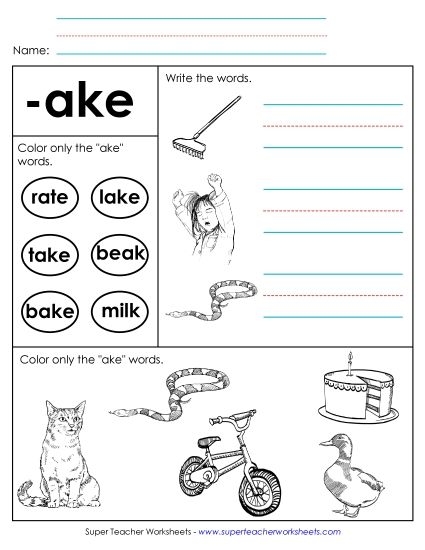
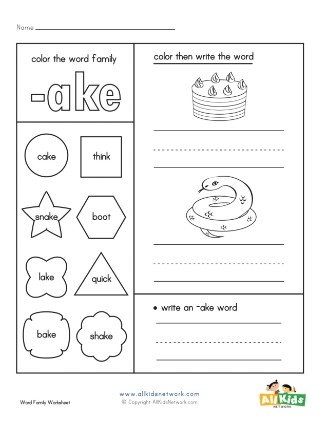
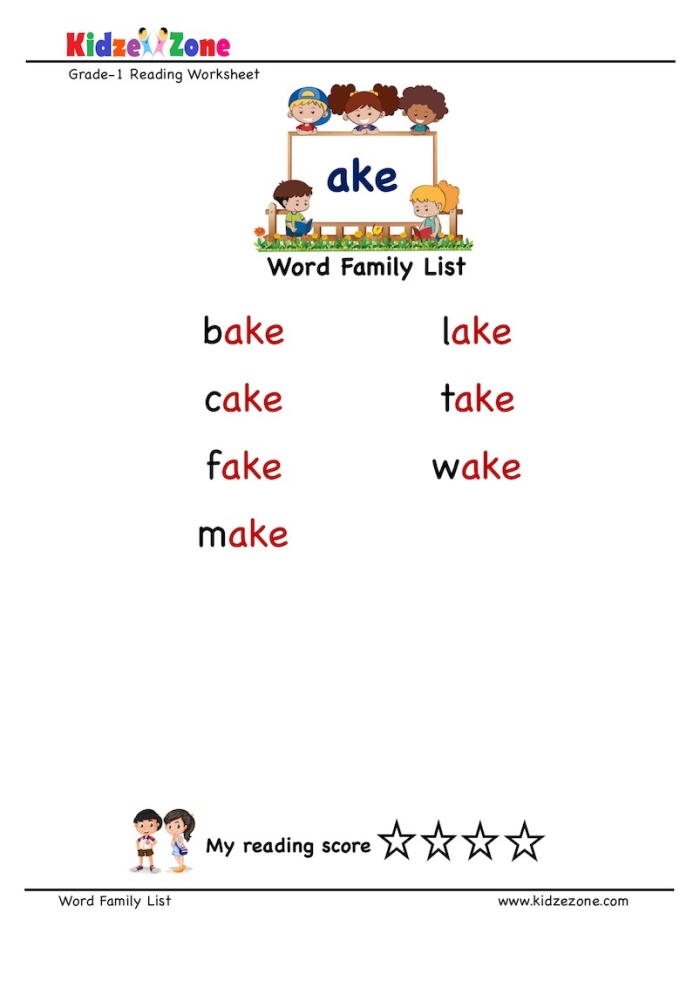
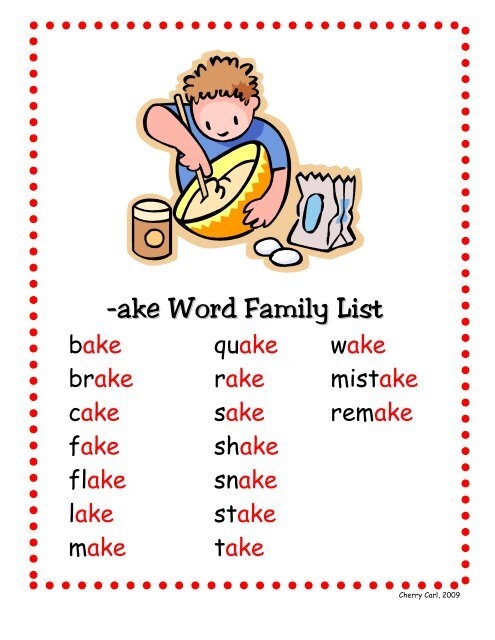
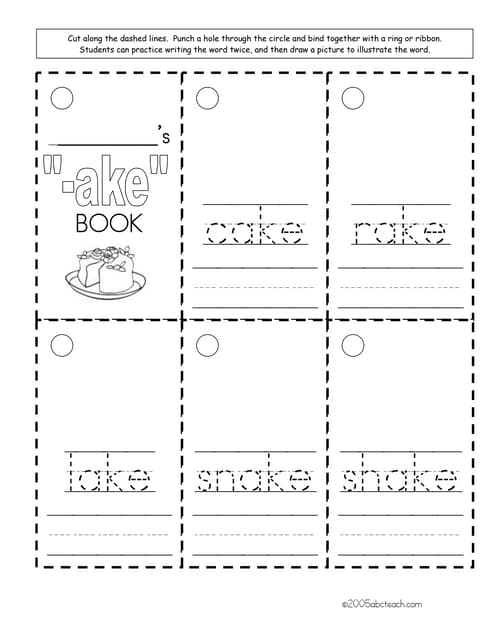
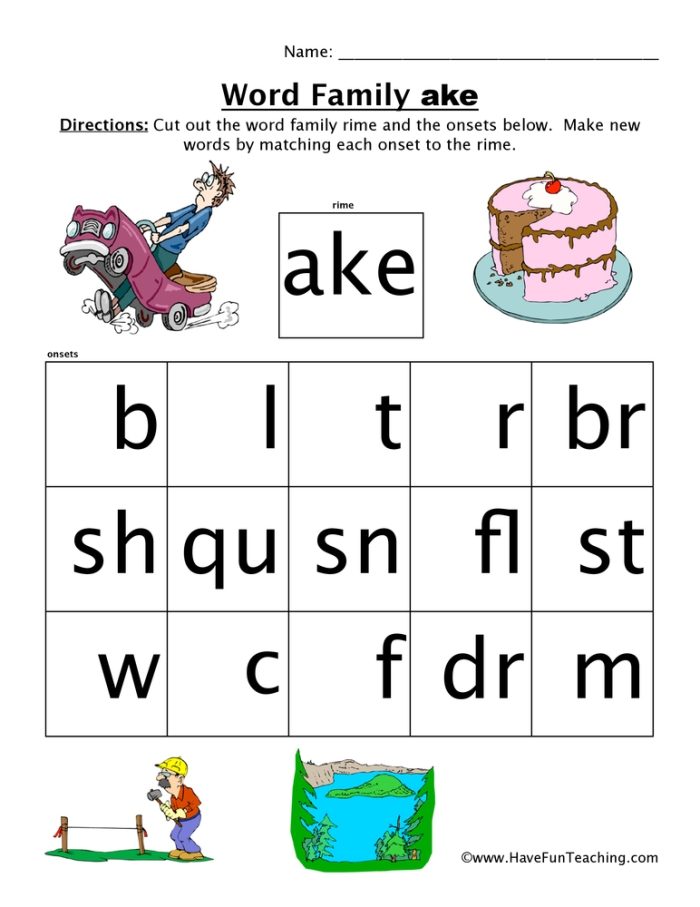
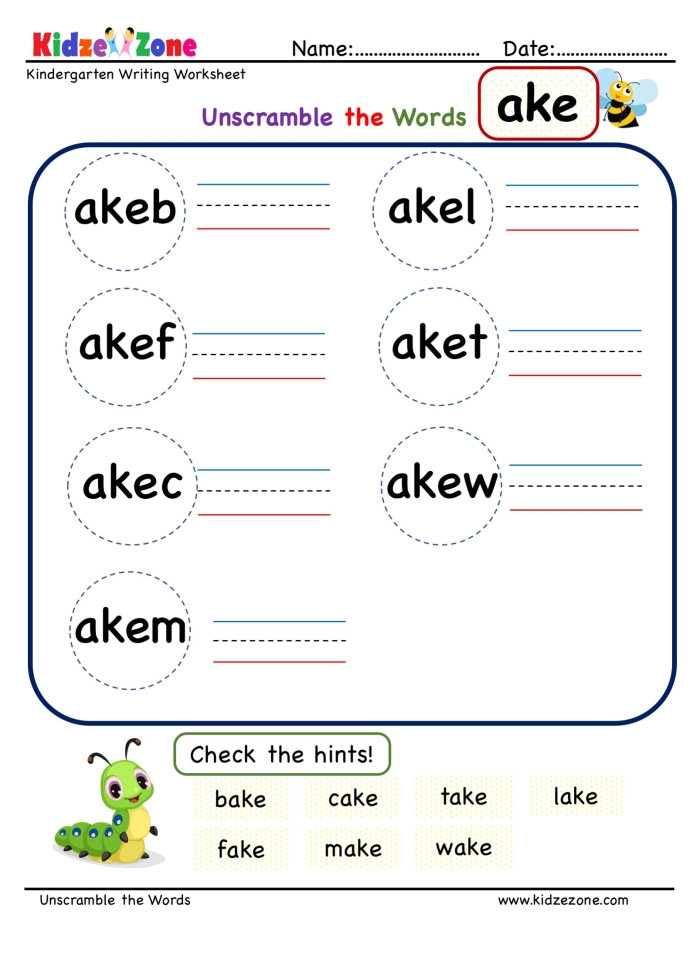
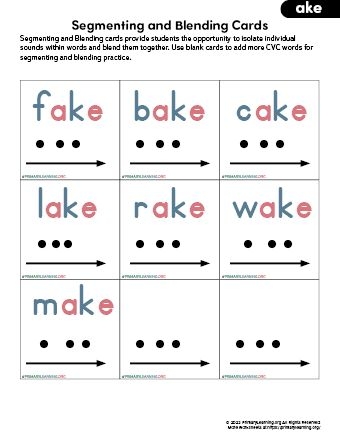
The “-ake” word family opens up a whole new world of reading and writing for young learners. Once children recognize the pattern in words like make, bake, cake, and lake, they start seeing connections across similar words. This recognition builds confidence and helps them decode new words independently, which is exactly what Pre-K writing instruction aims to do.
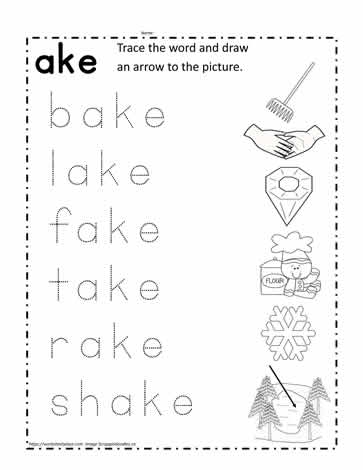
When you work with the “-ake” family, your child isn’t just memorizing random words. They’re learning a phonetic pattern that appears in dozens of common sight words. This approach is far more effective than drilling isolated vocabulary. By tracing these words repeatedly, young learners develop muscle memory for letter formation while simultaneously cementing word recognition.
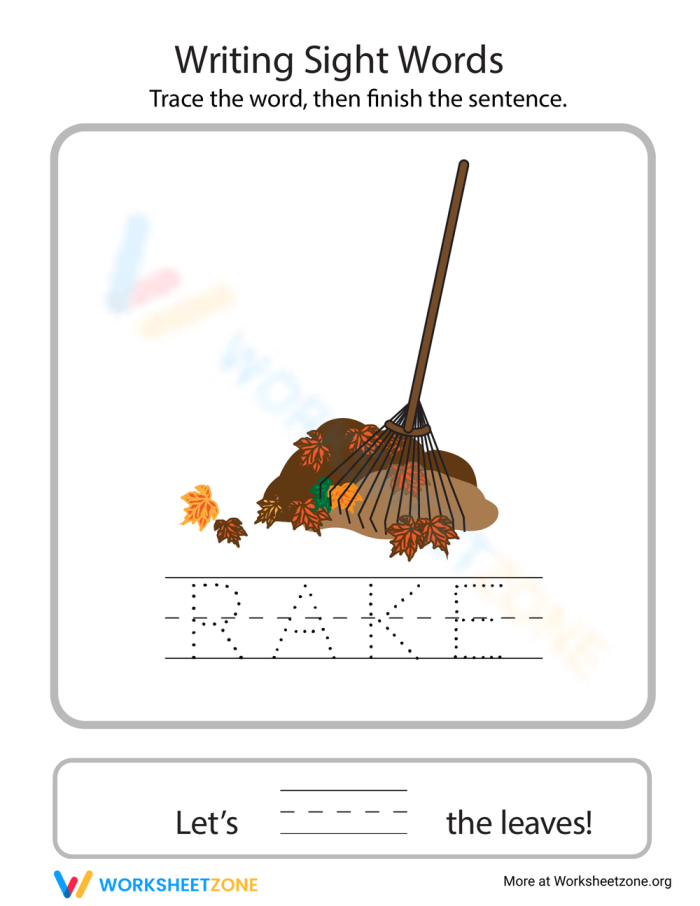
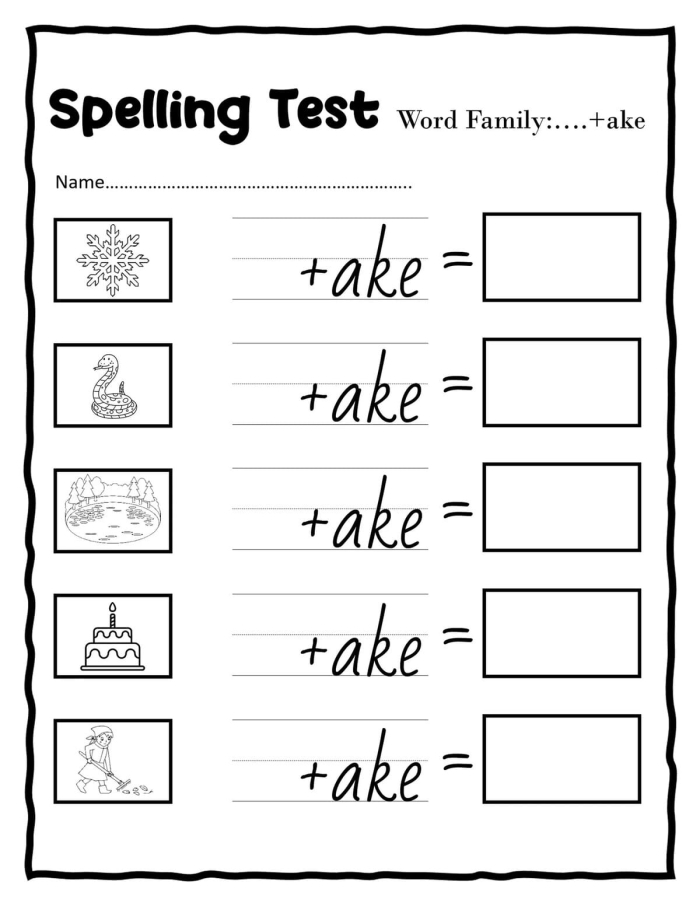
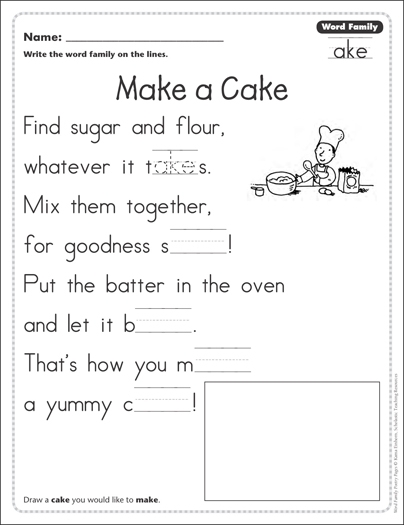
The beauty of word family activities lies in their simplicity and repetition. Start by having your child trace each “-ake” word slowly, focusing on letter formation. Once they’re comfortable with the basic shape and flow, move to finding or circling these words within sentences. You can also pair this practice with related activities, like tracing lowercase letters to strengthen foundational skills, or exploring practice tracing the letter t since it appears in words like “take.”
To keep engagement high, combine word family work with themed activities. If you’re studying animals, draw a snake and label it. If you’re learning colors, discuss the color yellow and words that rhyme with it. You might also incorporate writing the letter b when focusing on “bake” and “brake.”
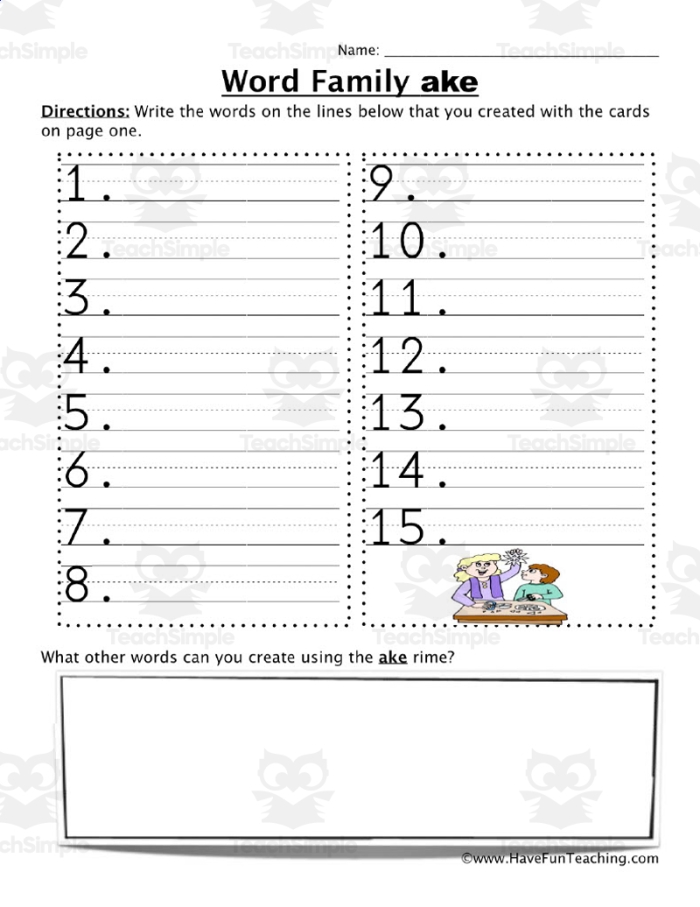
The “-ake” family typically includes around fifteen common words, making it manageable for Pre-K learners without overwhelming them. Start with the most familiar words and gradually introduce less common ones. This structured approach ensures steady progress and maintains your child’s motivation throughout the learning process.
Practice with These Worksheets