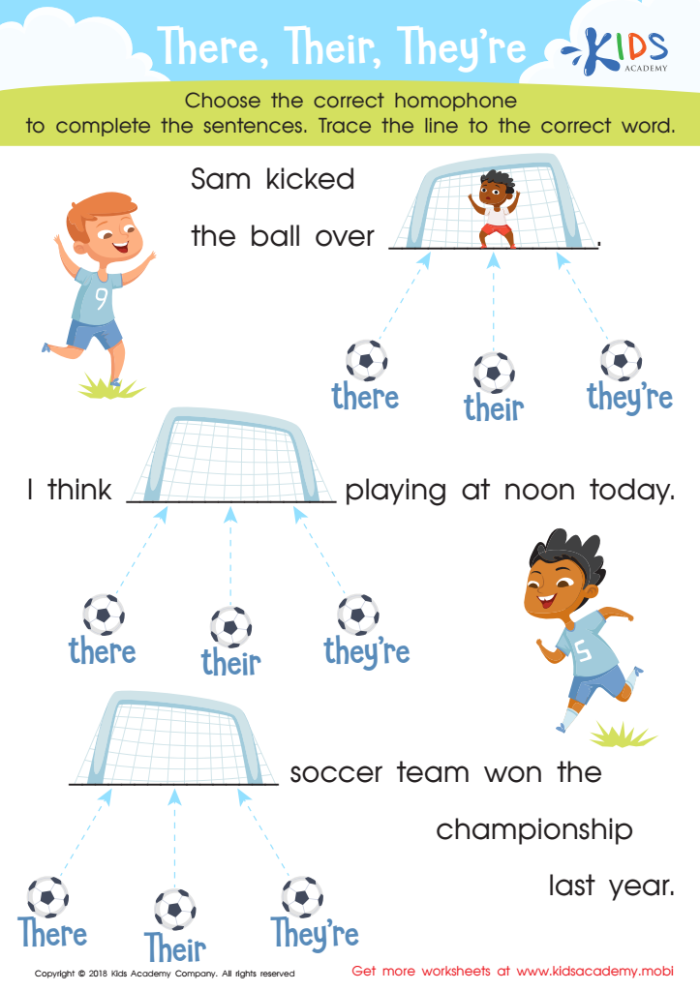
Ask any third grade teacher which homophones cause the most confusion, and they’ll likely point to there, their, and they’re. These three words sound identical when spoken aloud, yet they serve completely different purposes in writing. Students mix them up constantly, and the mistake is so common that many adults still pause before choosing the correct one.
The confusion makes sense. English pronunciation doesn’t always match spelling, and homophones force students to rely on memory and pattern recognition rather than sound. This is where targeted practice becomes essential. A well-designed worksheet that breaks down each word’s unique meaning and function can transform a frustrating grammar gap into something manageable.
Understanding Each Word
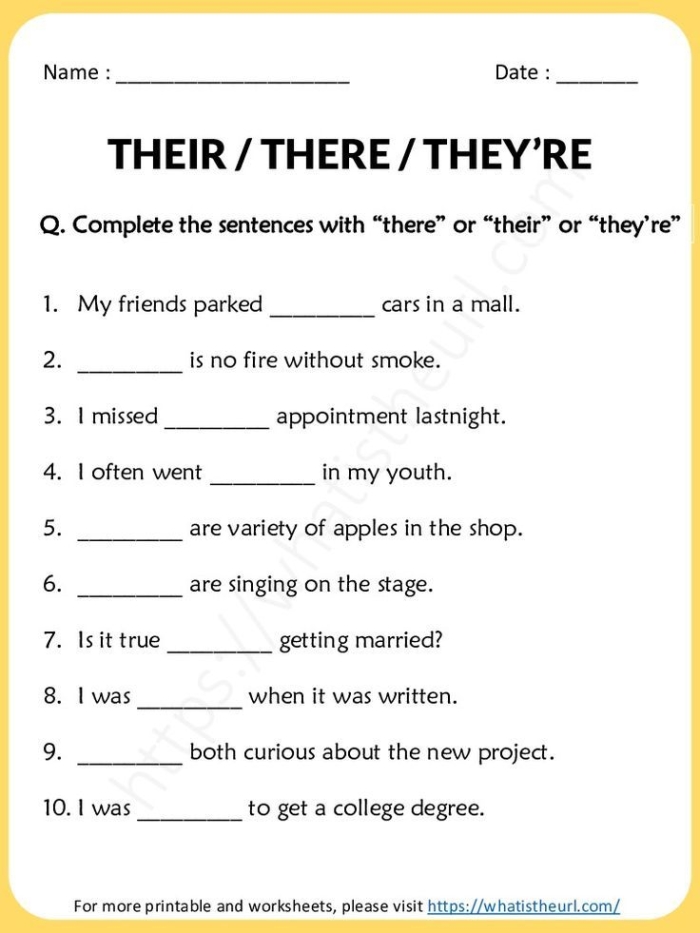
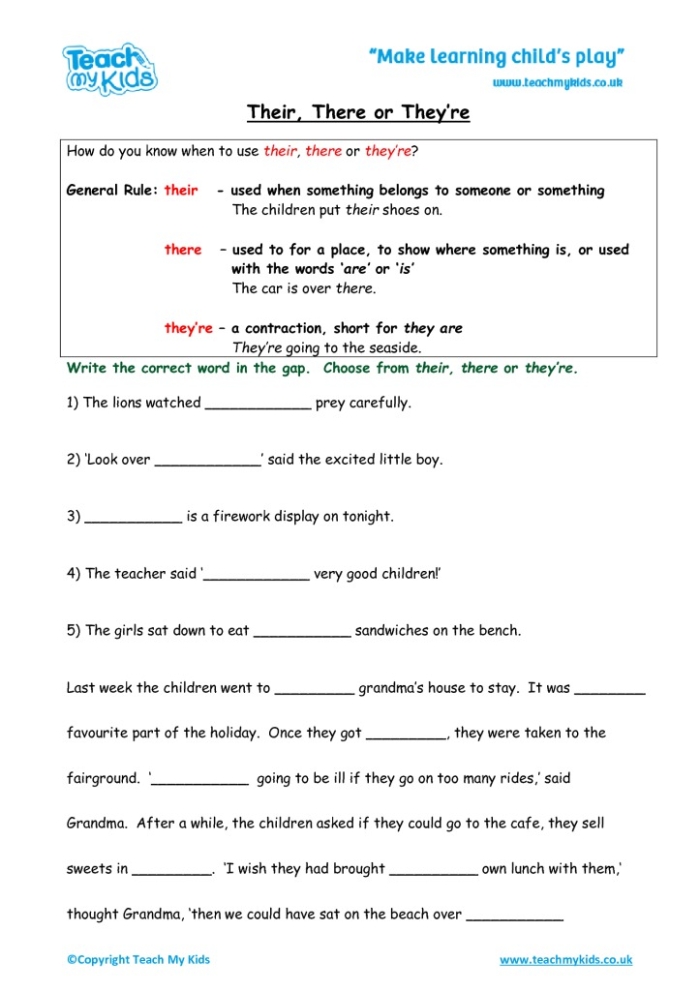
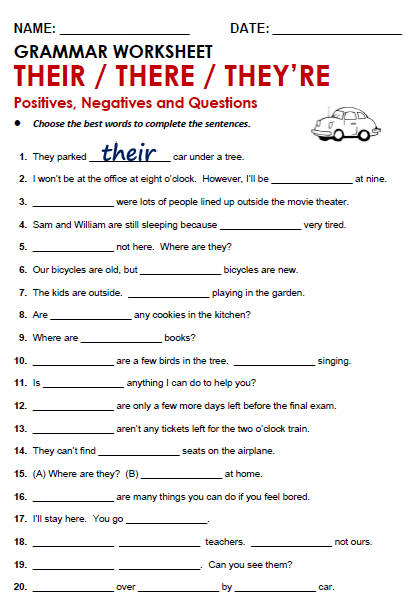
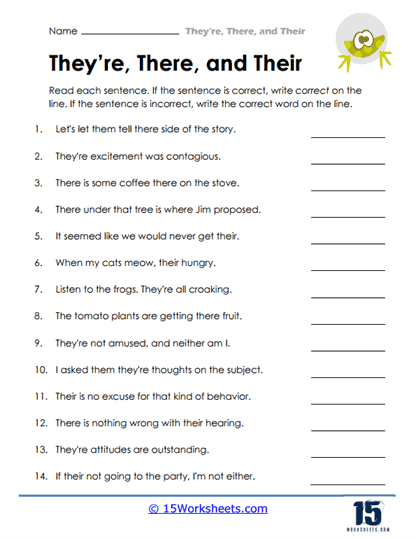
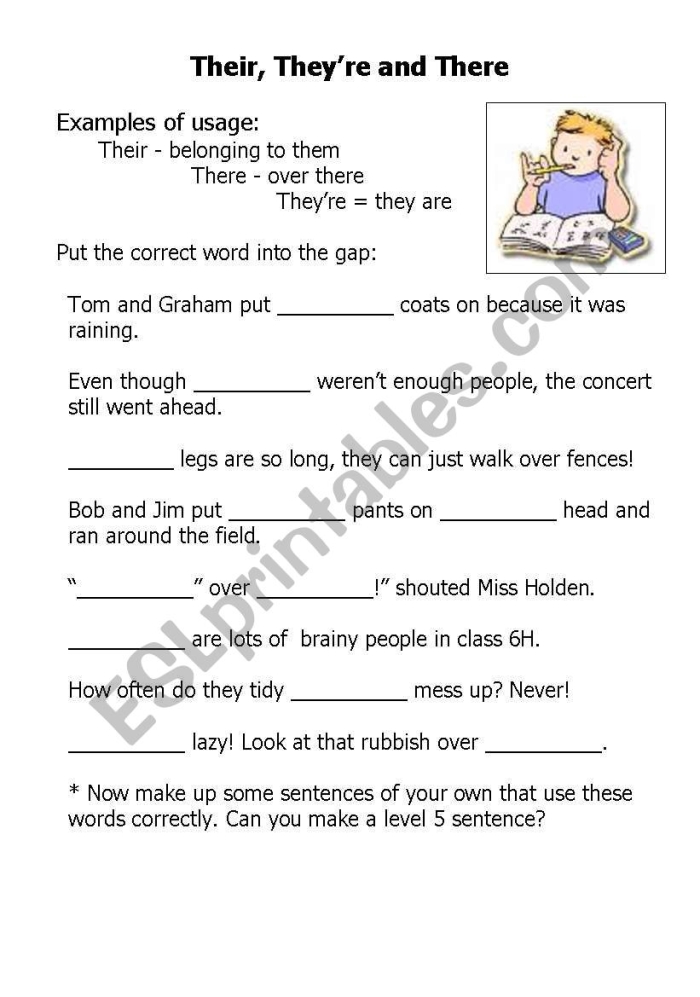
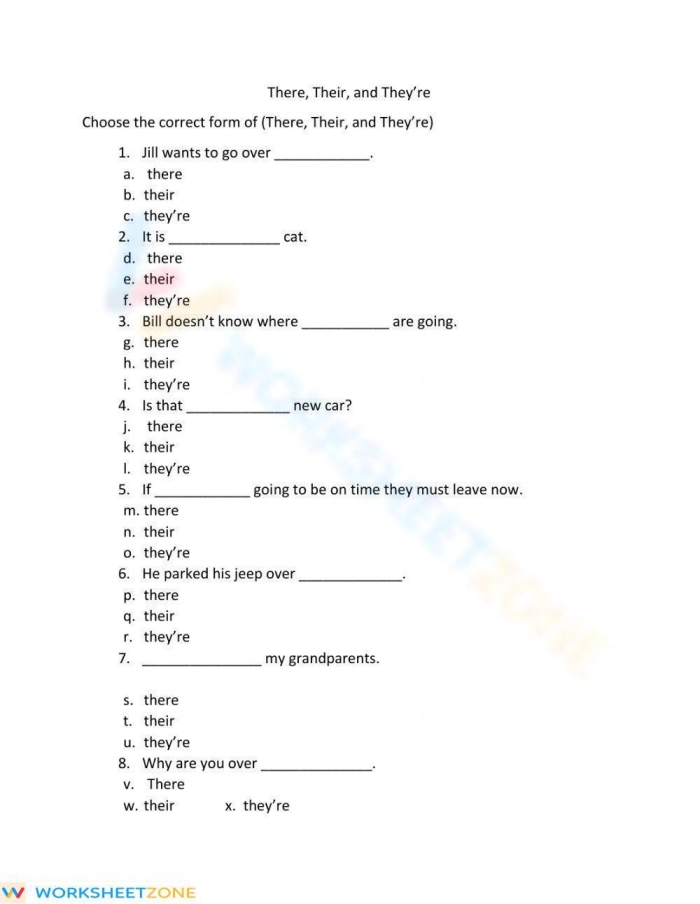
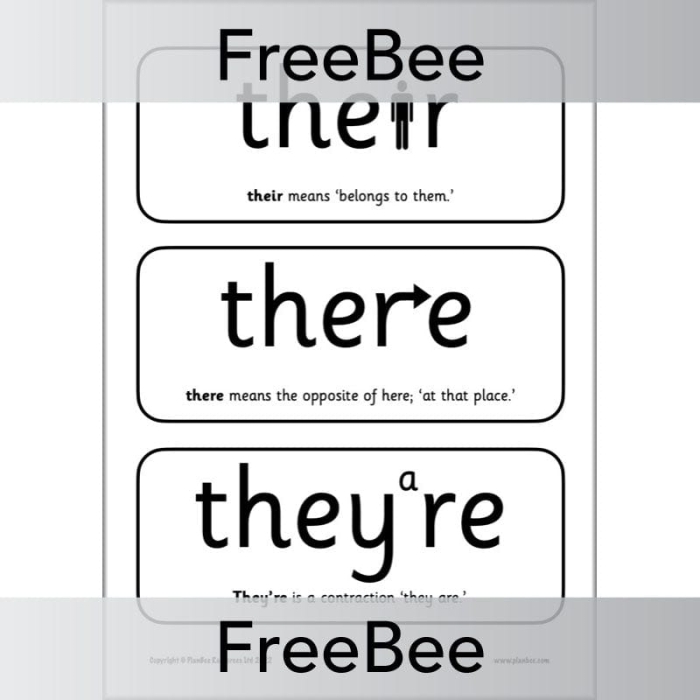
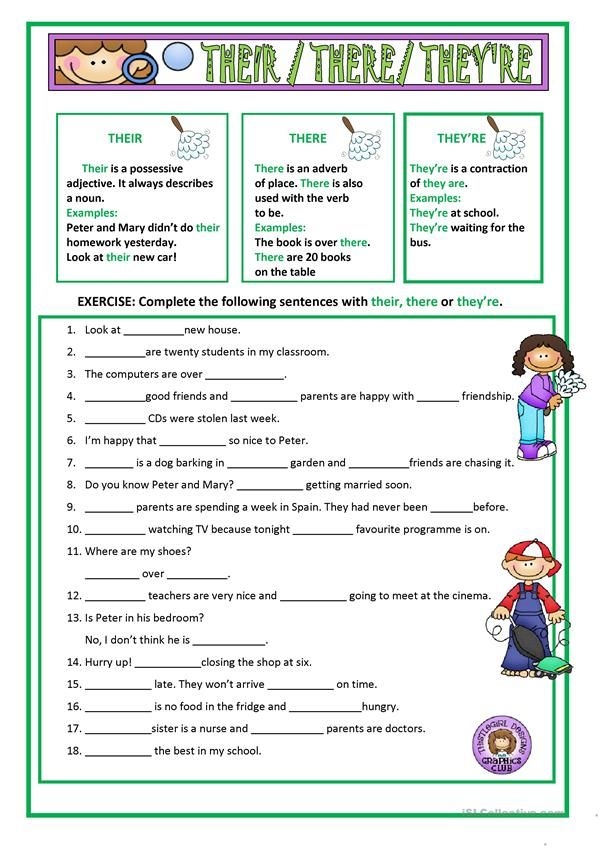
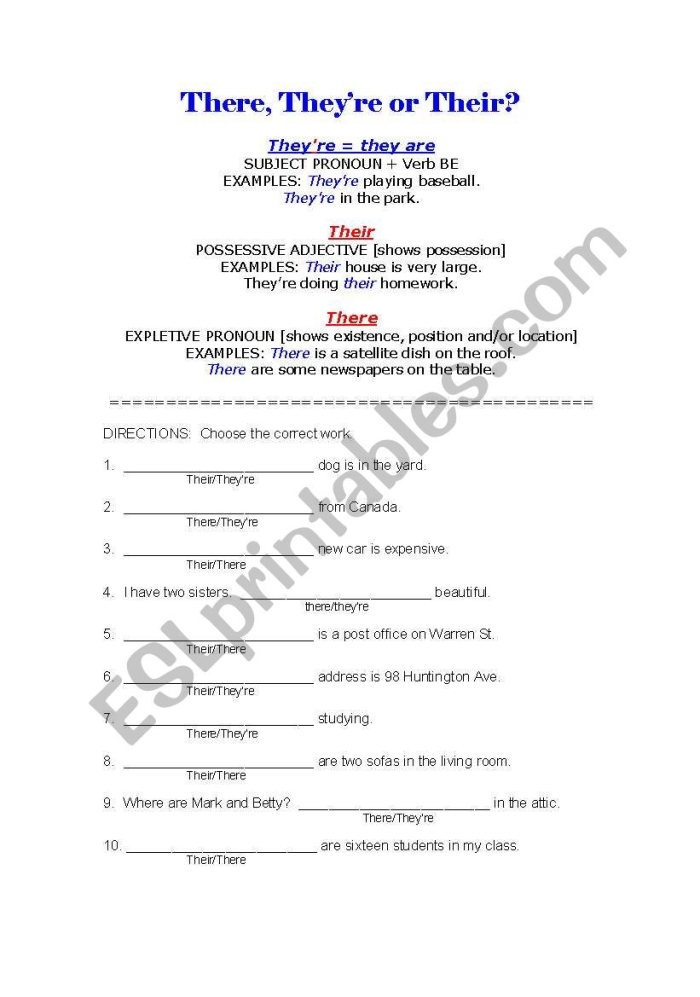
There refers to a place or location. You might say, “The book is over there” or “We went there last week.” Their shows possession and belongs to a group. A sentence like “Their homework was due Friday” uses their to show that the homework belongs to them. They’re is simply a contraction of “they are.” When you say “They’re going to the store,” you could expand it to “They are going to the store.”
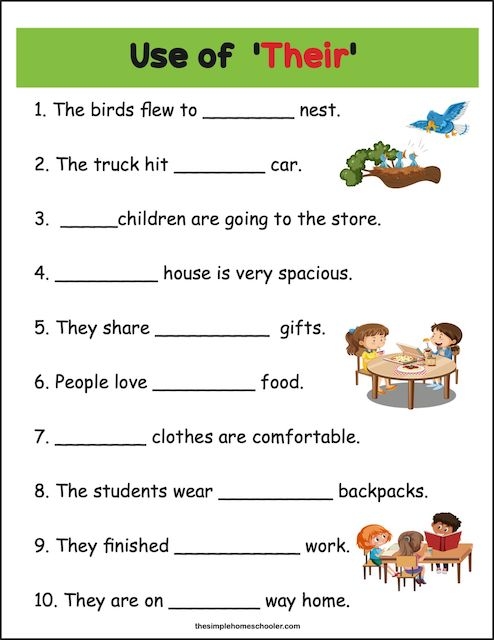
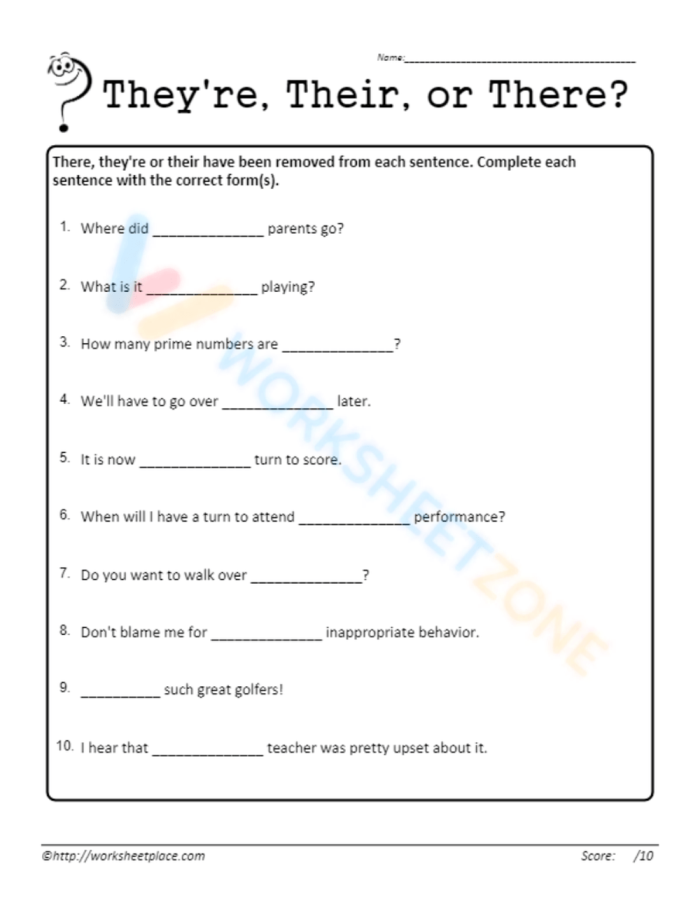
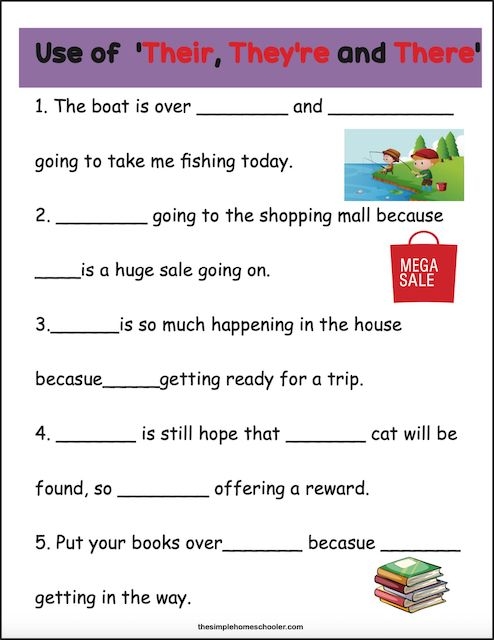
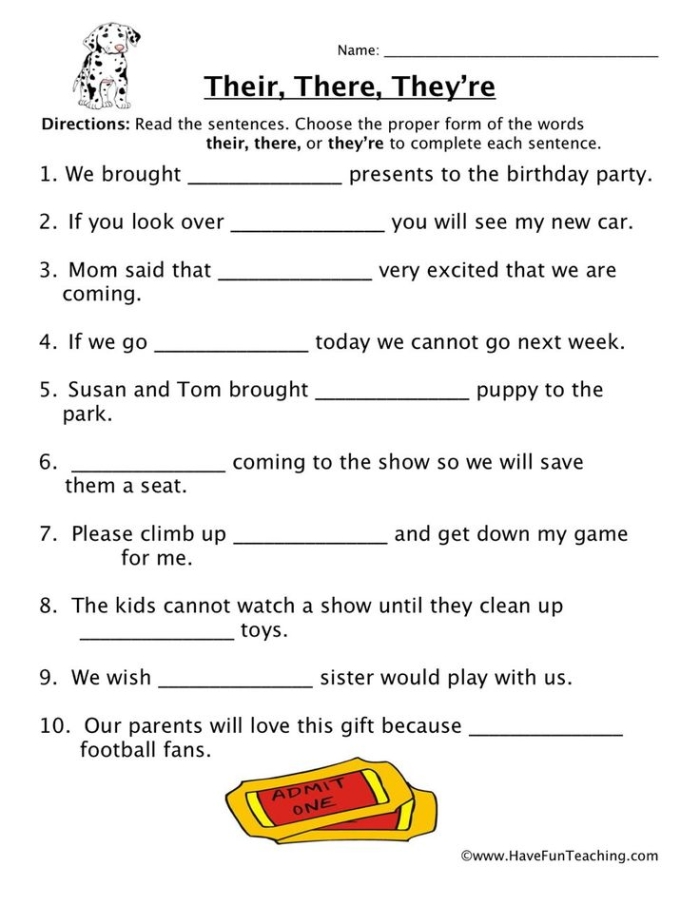
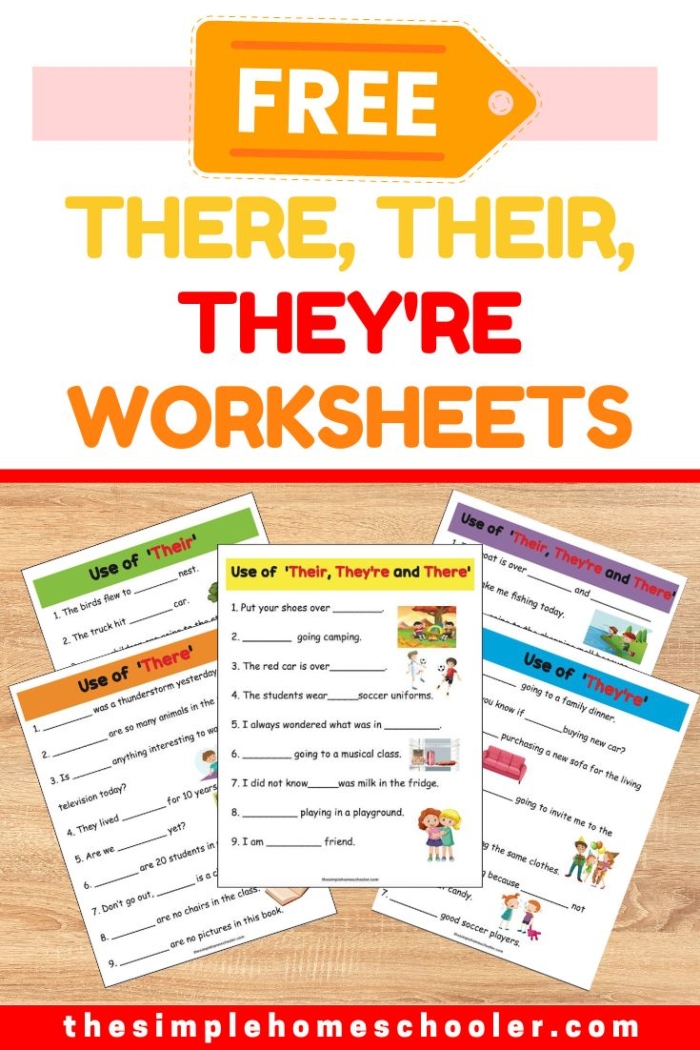
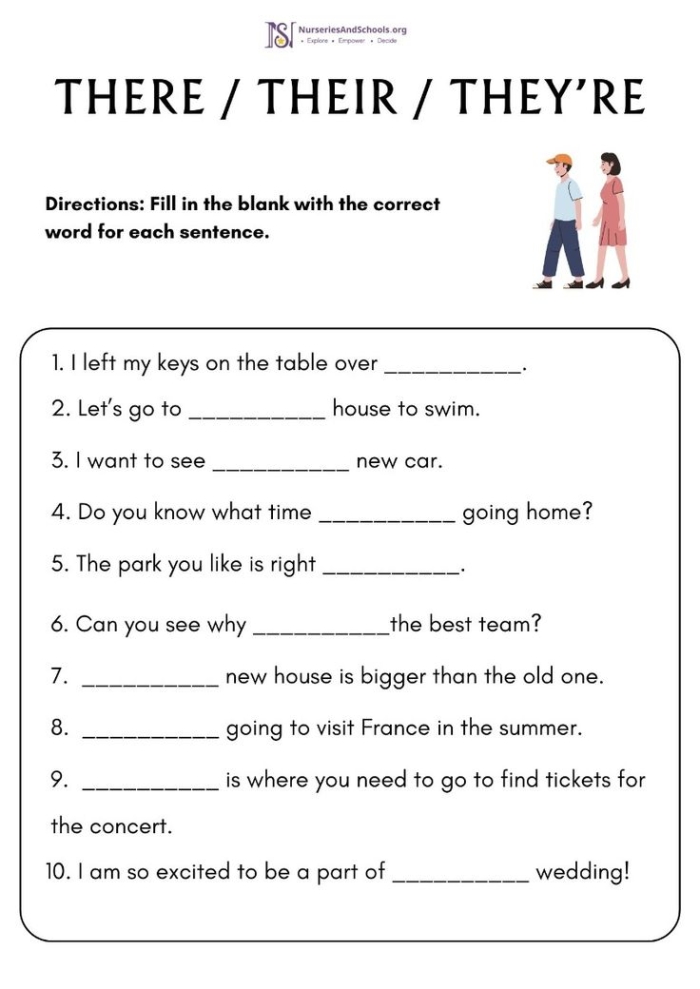
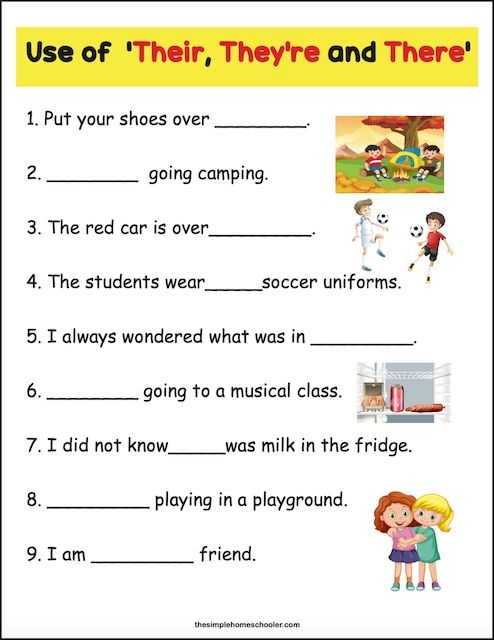
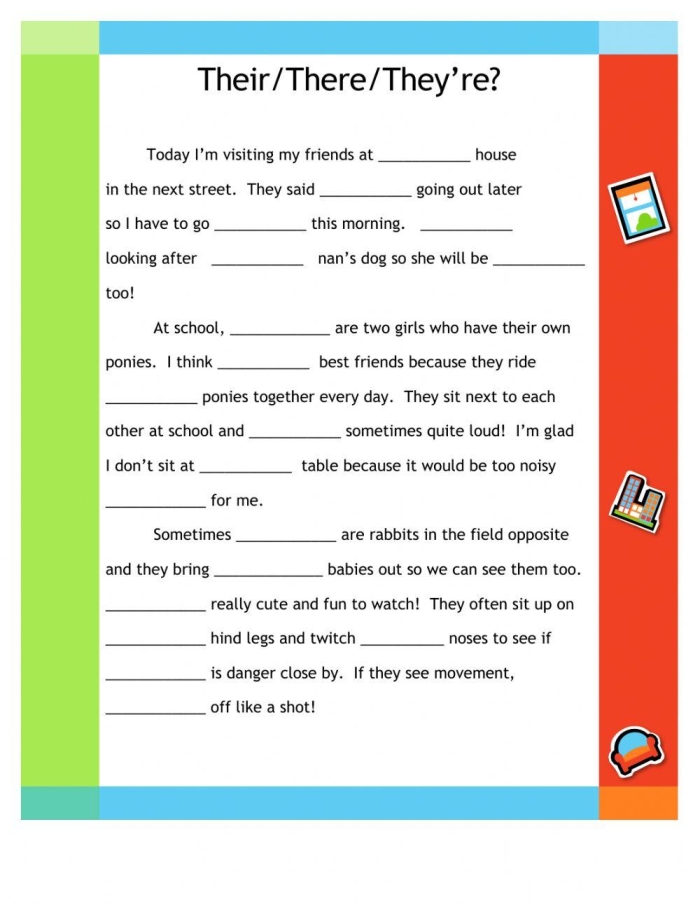
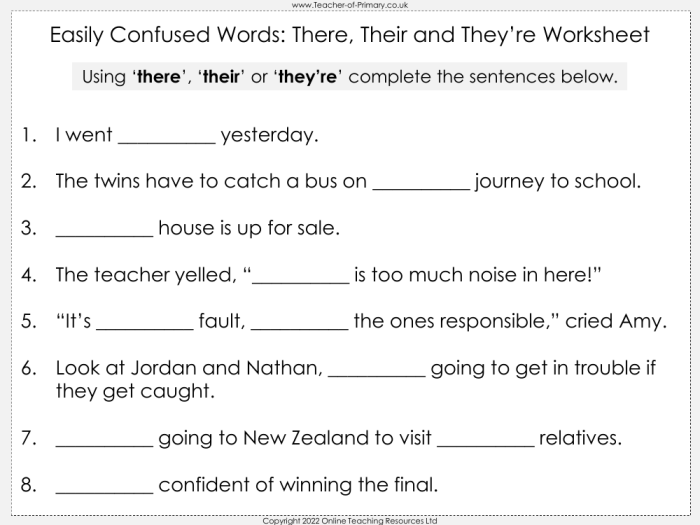
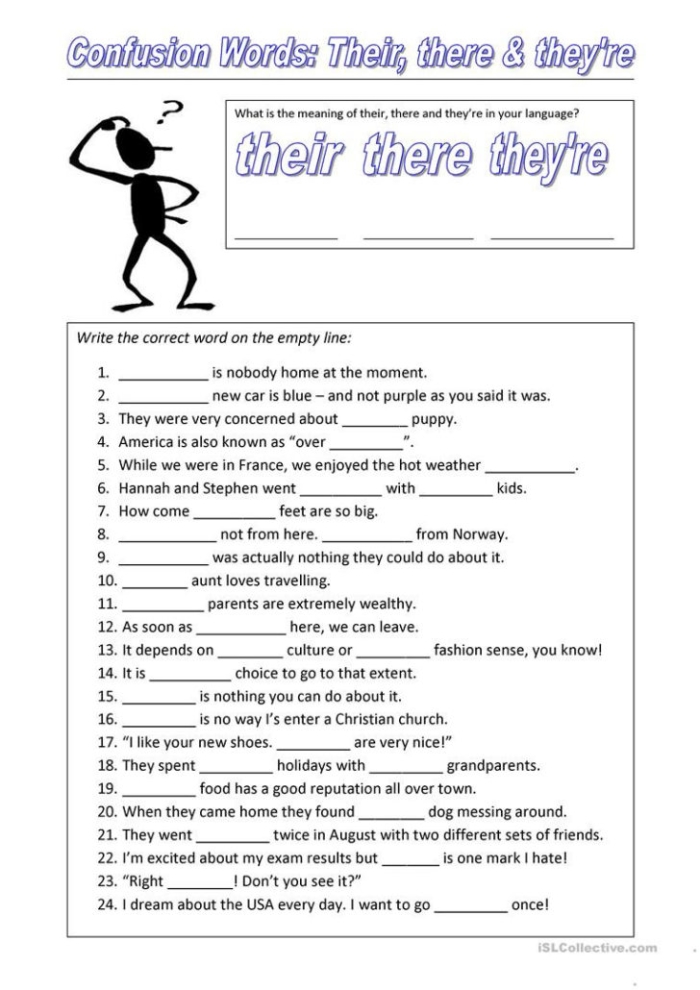
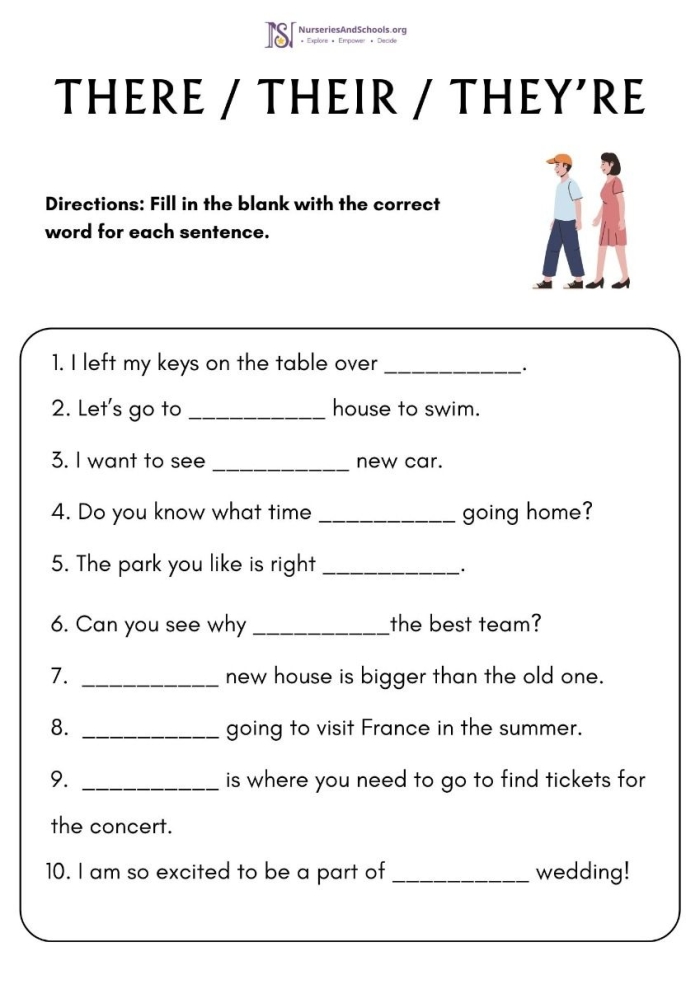
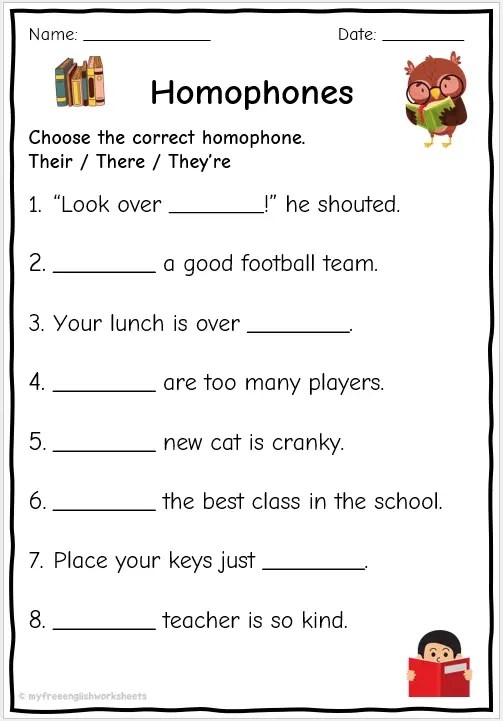
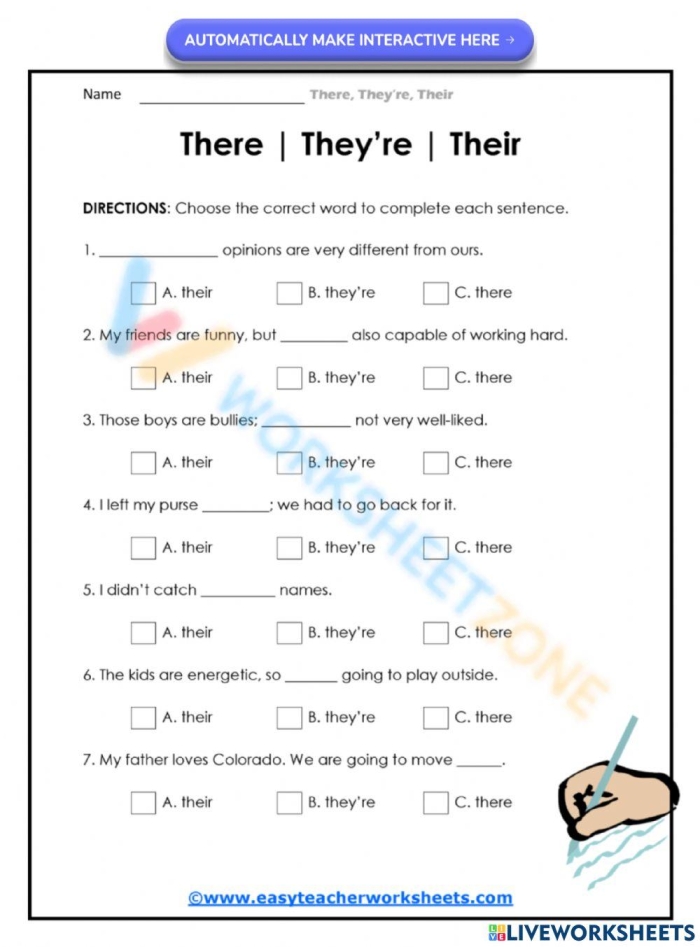
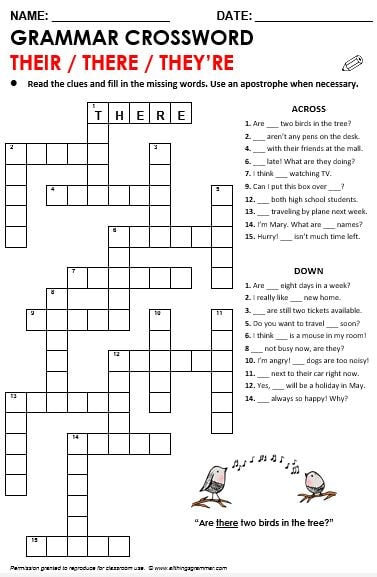
Once students understand these definitions, the worksheet approach works well. Rather than passive reading, children actively choose the correct word to complete sentences. This method builds muscle memory and confidence. A third grade student working through multiple practice sentences begins to recognize patterns and develops stronger writing habits.
Pairing this grammar work with other learning reinforces skills across subjects. Students tackling comparative and superlative adjectives or exploring what time zones are benefit from consistent grammar practice. The repetition helps cement foundational writing skills that carry forward into fourth grade and beyond.
Practice with These Worksheets