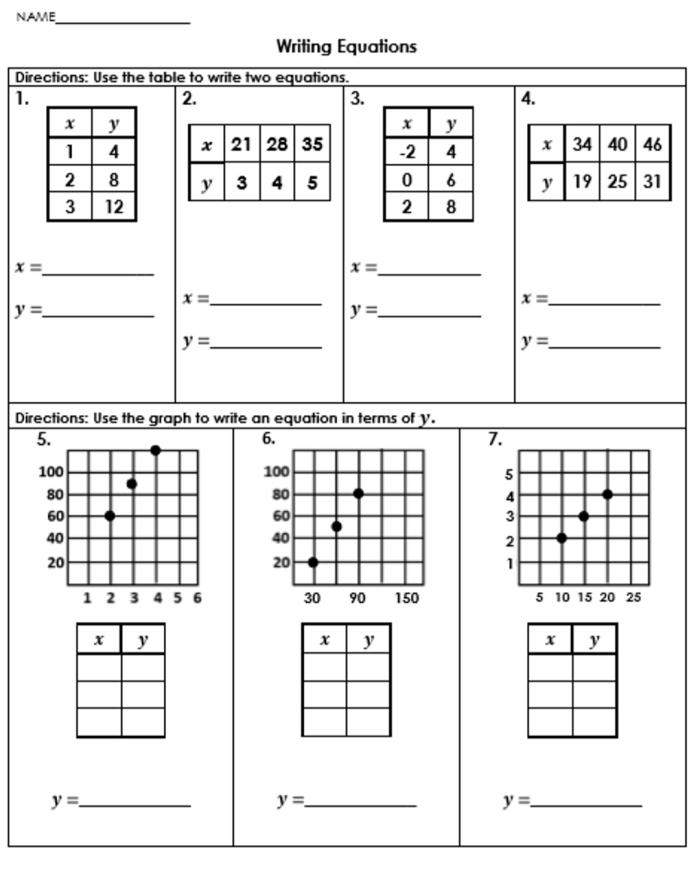
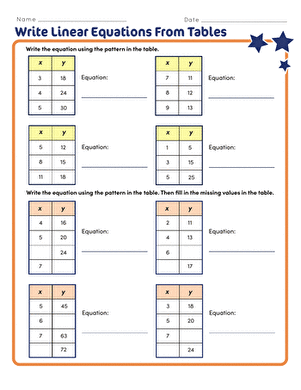
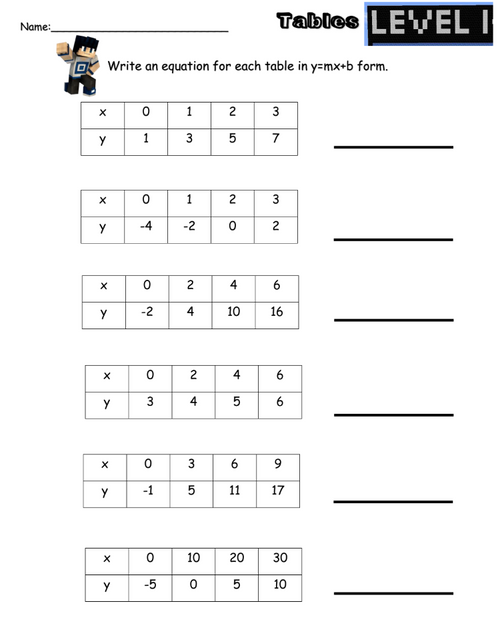
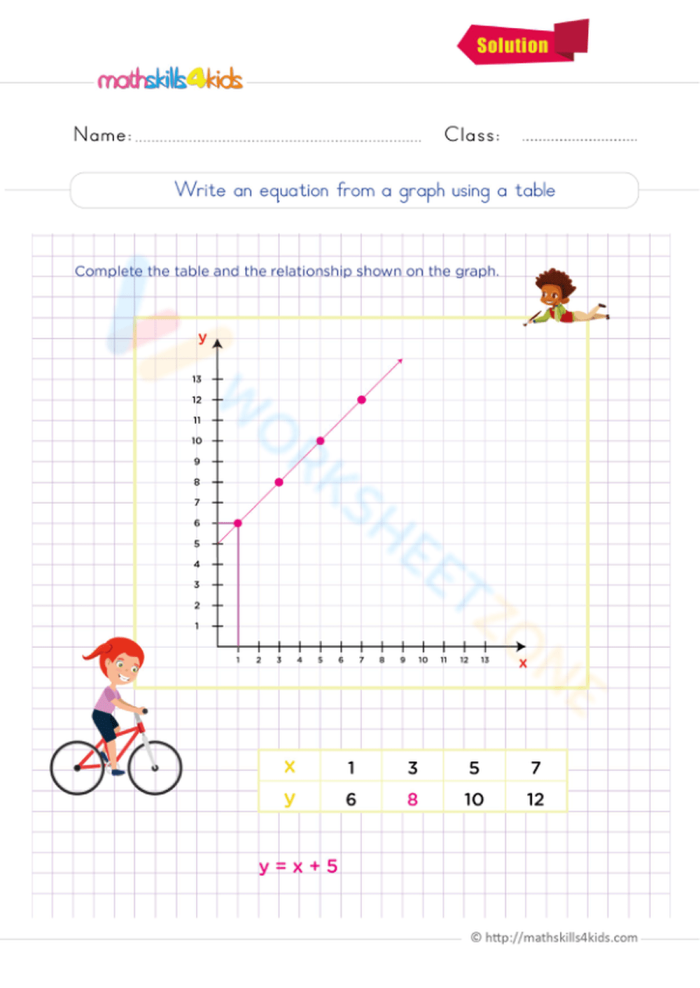
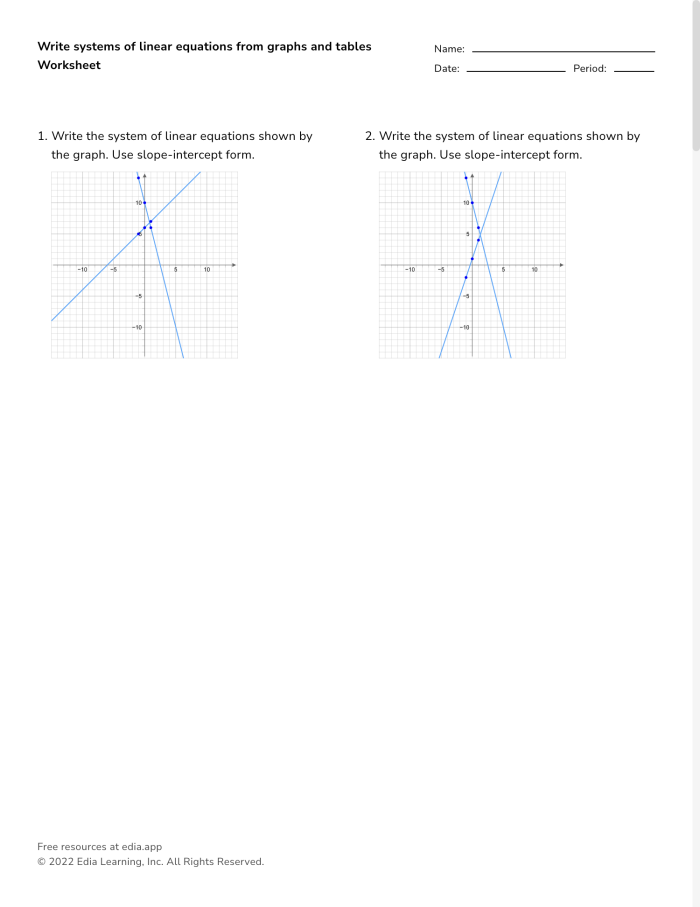
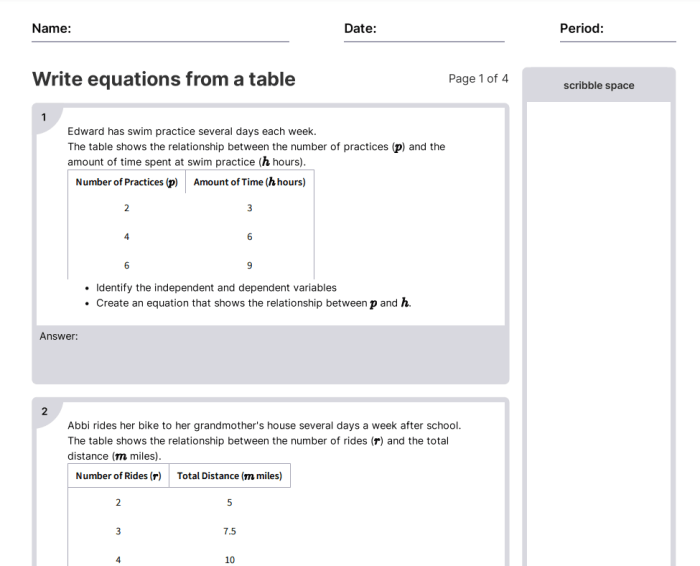
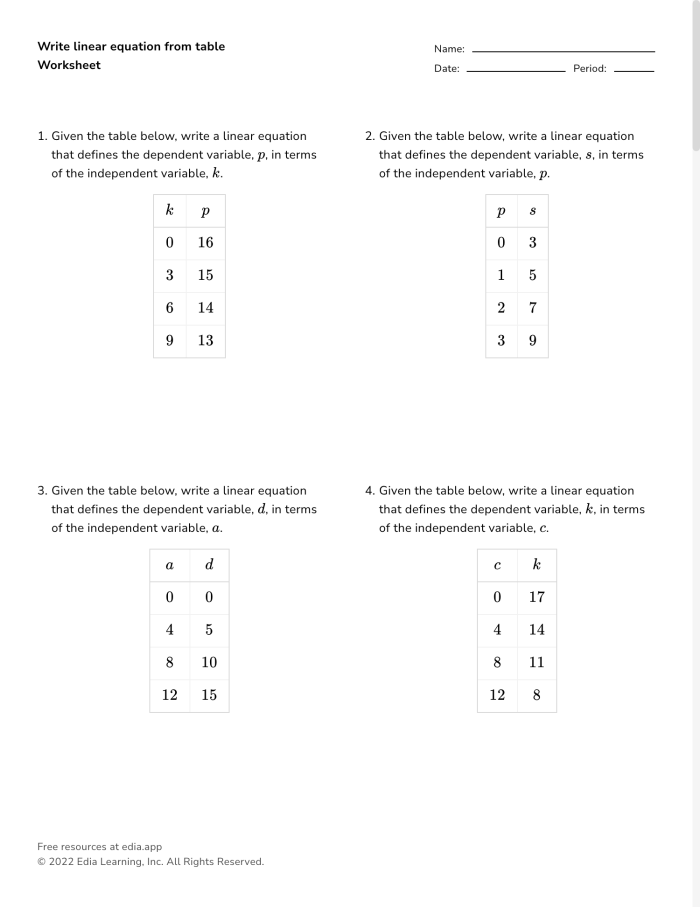
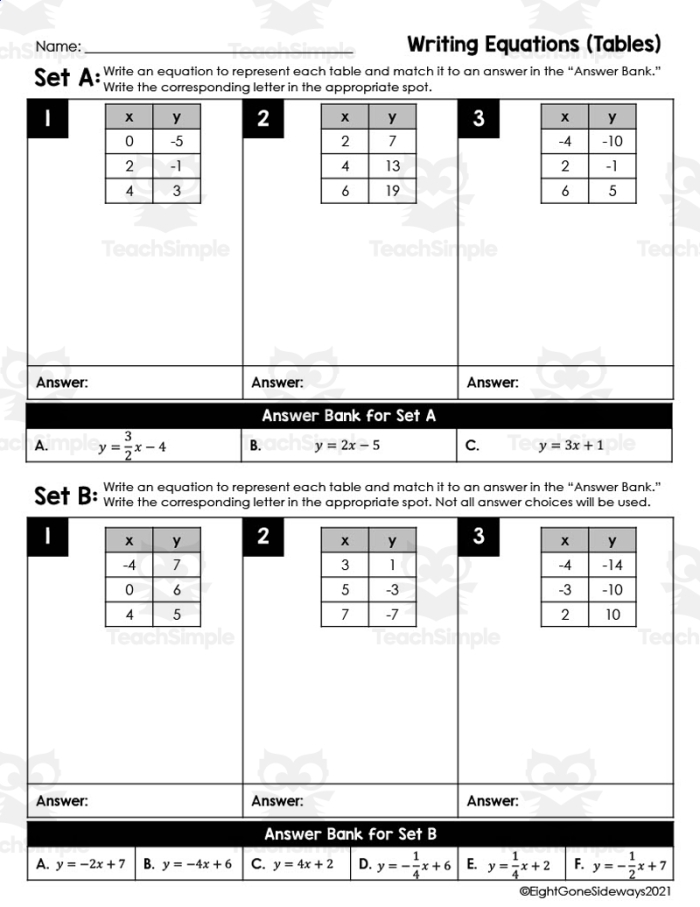
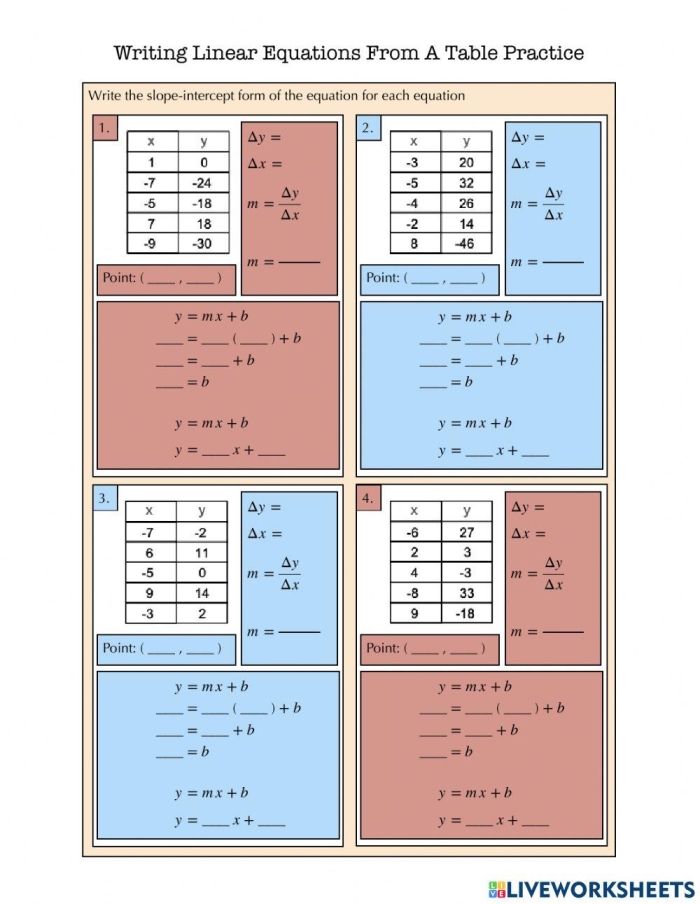
Pattern recognition is one of those foundational skills that students either develop early or struggle with for years. When sixth grade algebra students learn to spot patterns in tables and translate them into linear equations, they’re building the mental bridges they’ll need for everything from graphing to real-world problem solving.
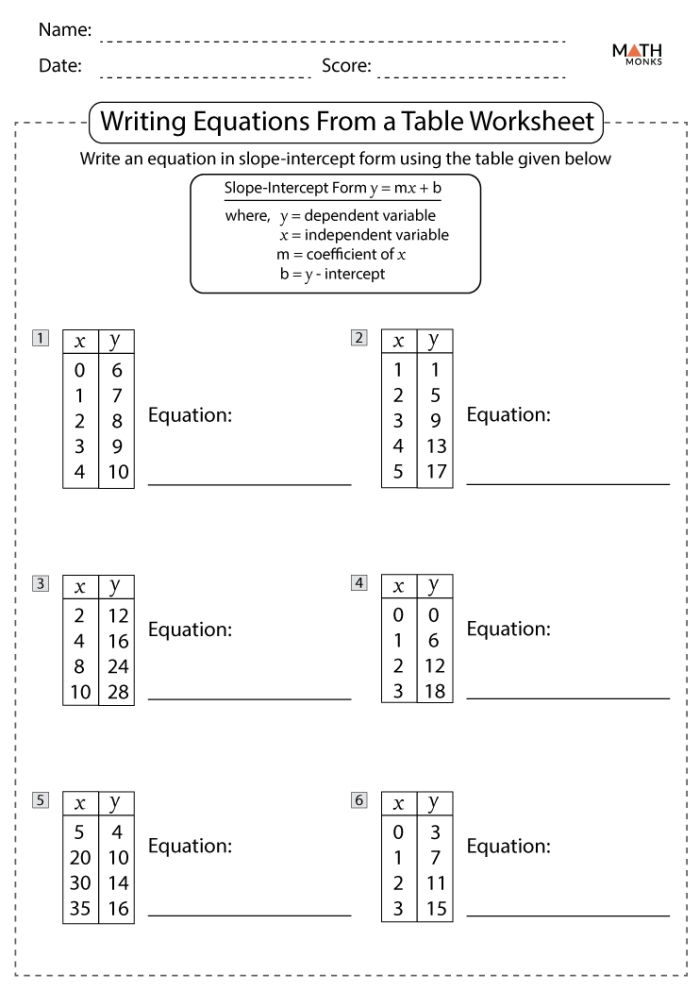
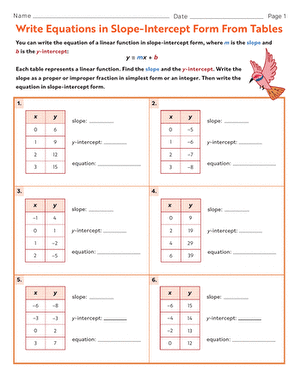
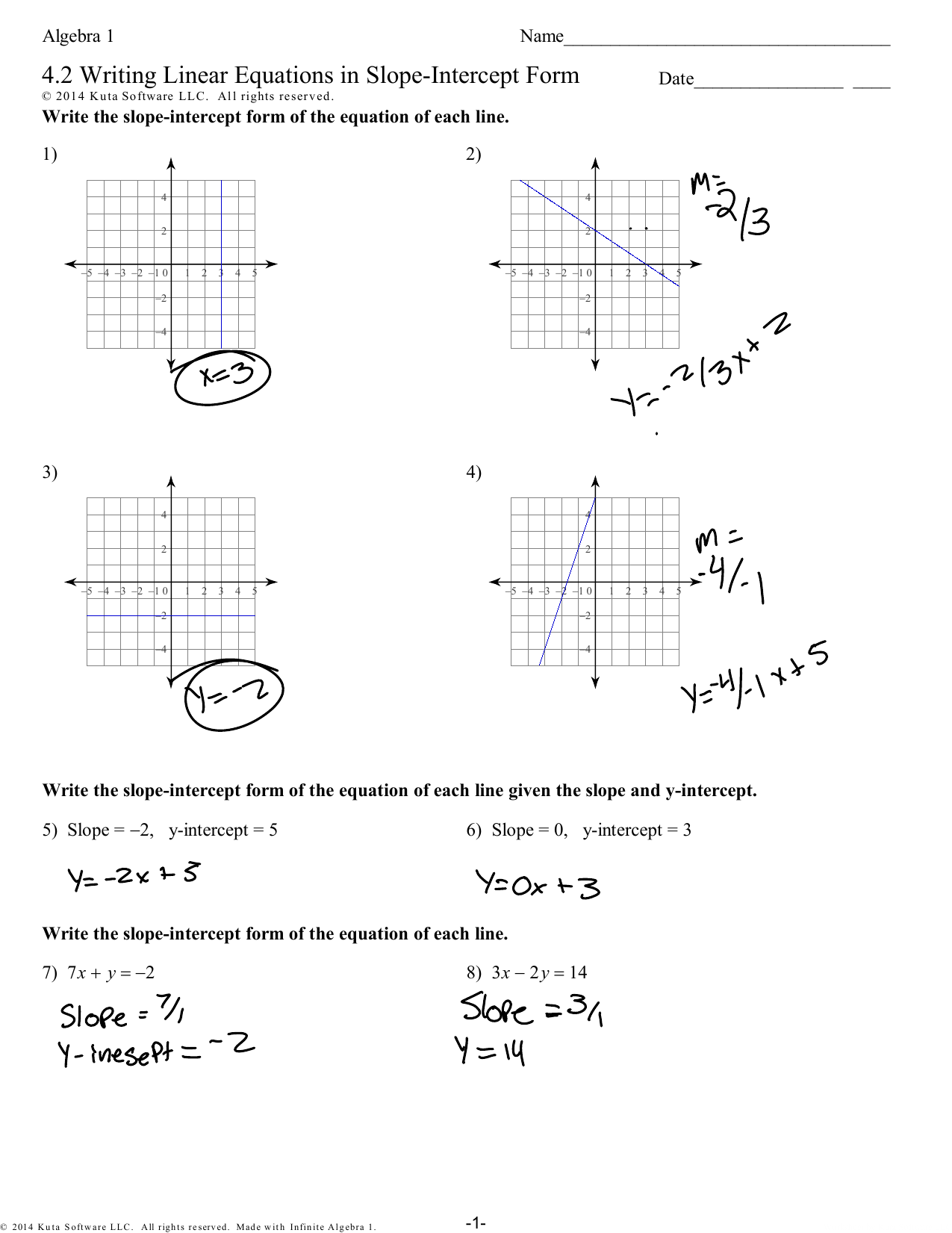
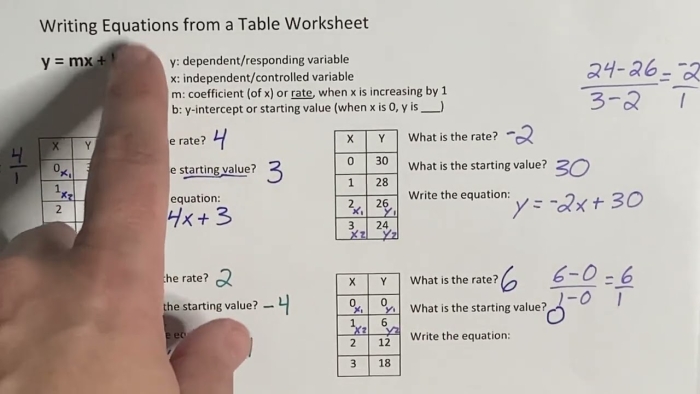
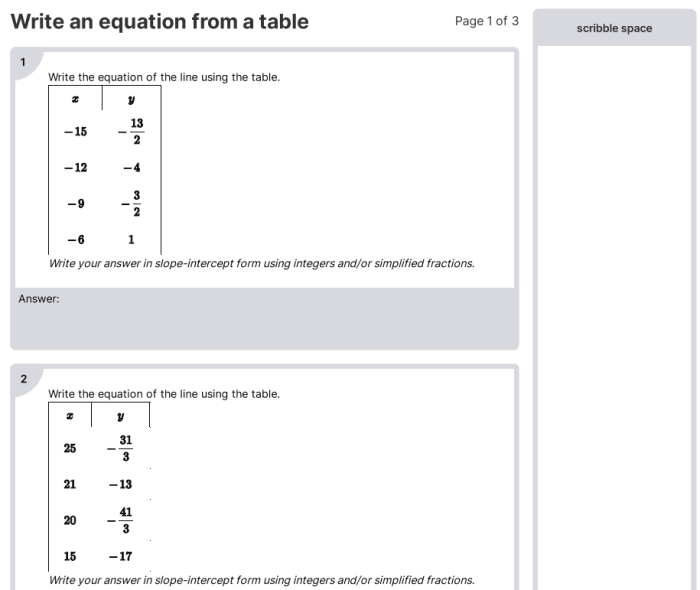
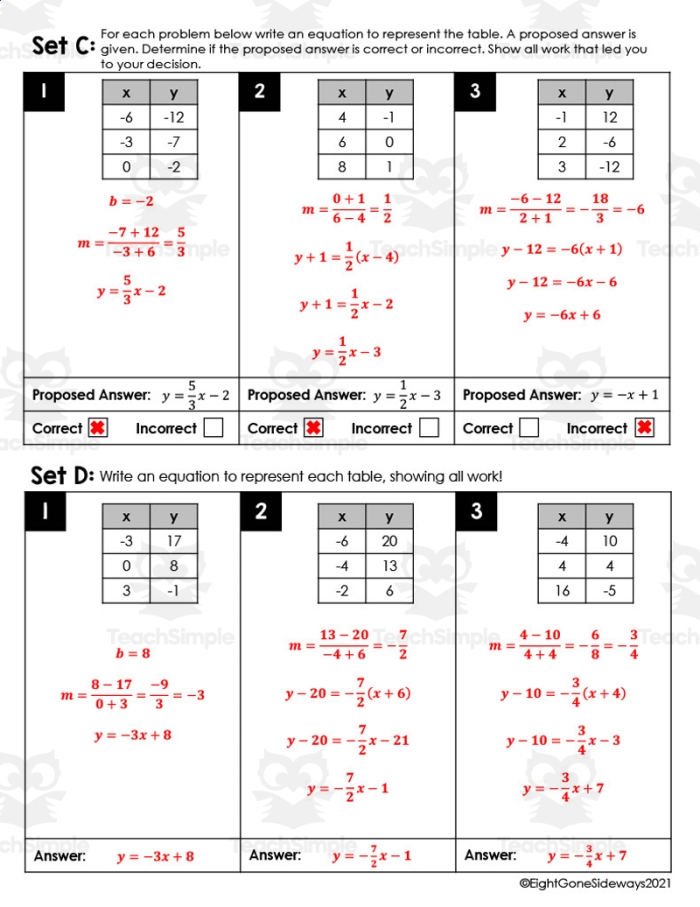
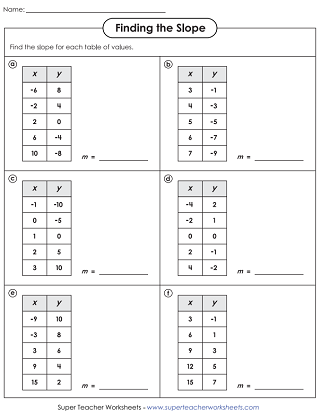
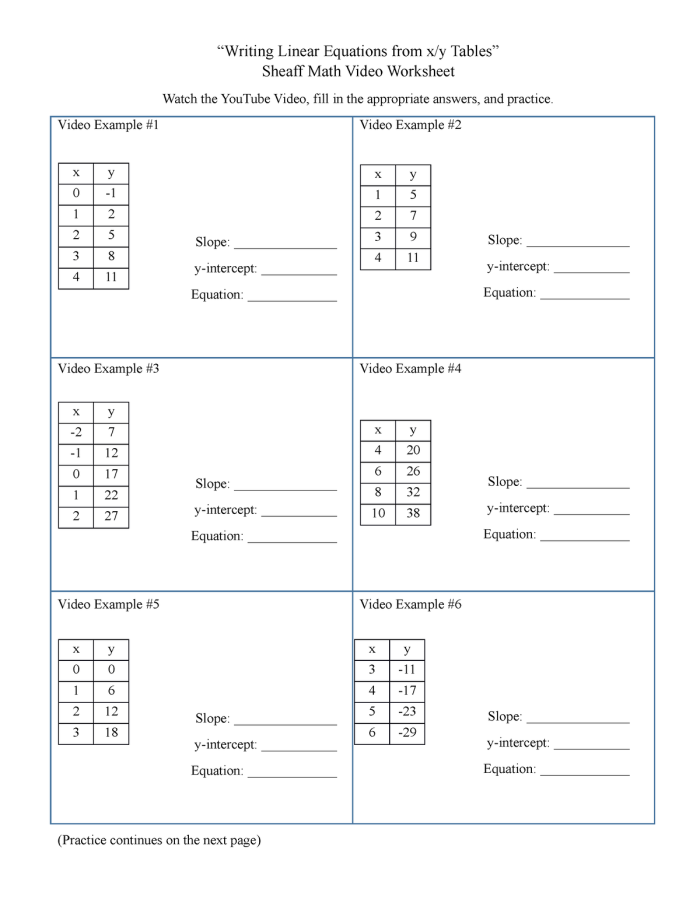
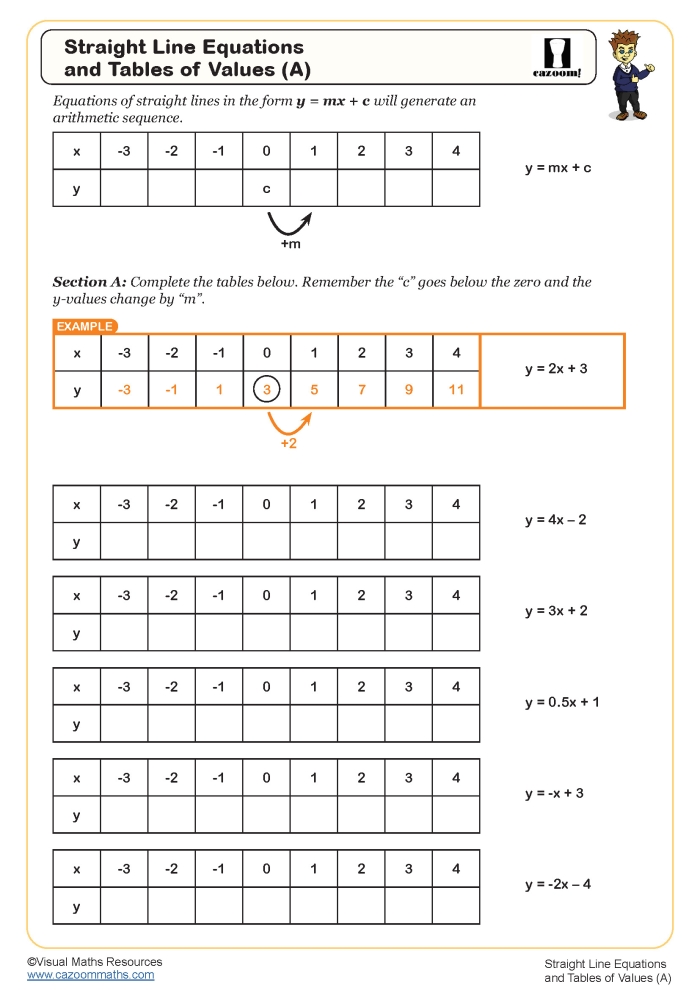
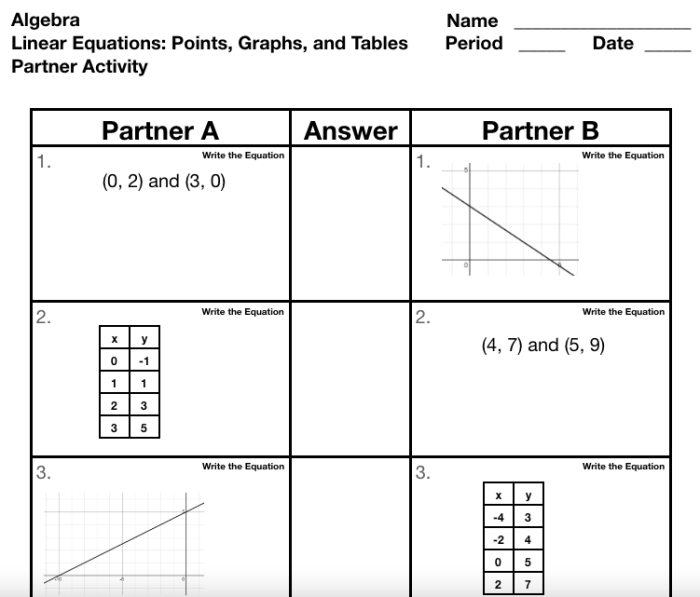
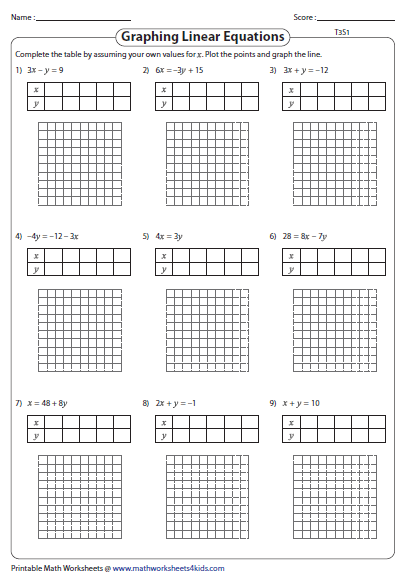
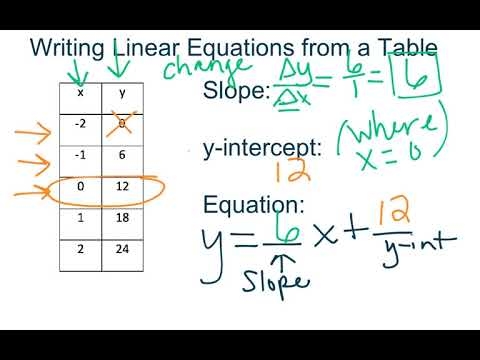
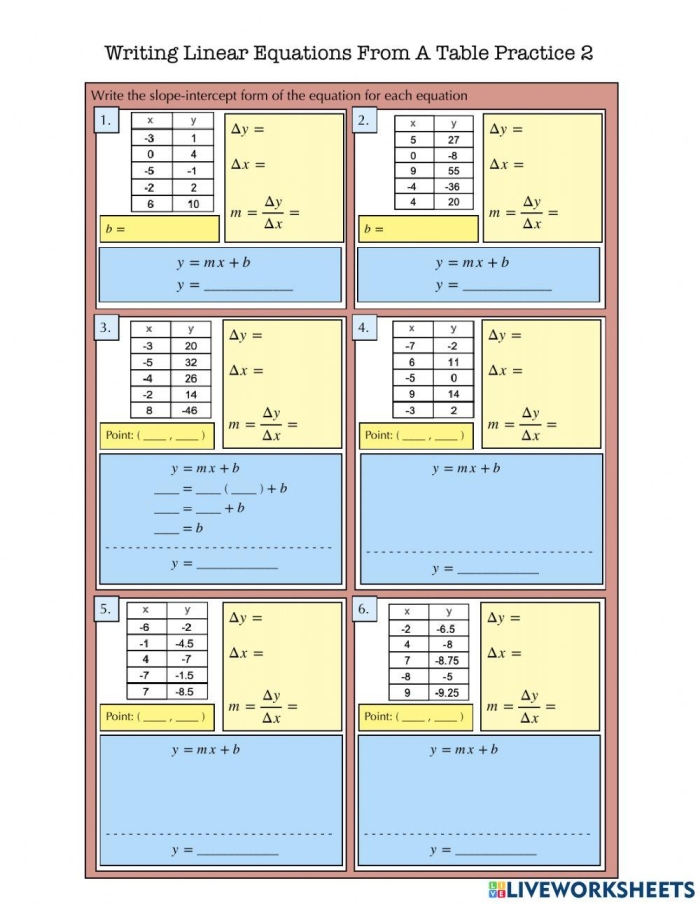
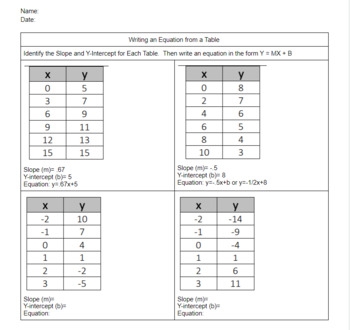
A worksheet designed for this purpose gives students a structured way to practice this skill repeatedly. Rather than jumping straight into abstract equations, students work with concrete data presented in table format. They look at how values change from one row to the next, identify the relationship between input and output, and then write the equation that describes that relationship. This progression from concrete to abstract is where real understanding happens.
The mechanics work like this: a table might show that when x equals 1, y equals 3; when x equals 2, y equals 5; when x equals 3, y equals 7. Students calculate the rate of change, find the starting value, and arrive at y = 2x + 1. Repeating this process with different tables builds automaticity and confidence. Once students can reliably identify patterns, they’re ready to tackle more complex algebraic concepts without getting lost in the mechanics.
What makes this type of practice effective is that it isolates one skill at a time. Students aren’t simultaneously learning how to read a table, understand slope, and write equations. They’re focusing on pattern recognition in a controlled environment. This approach complements other sixth grade algebra work, whether students are working on understanding the difference between expressions and equations or exploring how mathematical thinking applies across subjects.
Having a dedicated worksheet for this practice means students get repetition without monotony. Different tables present different patterns, keeping the work engaging while reinforcing the same underlying skill.
Grab These Worksheets Now