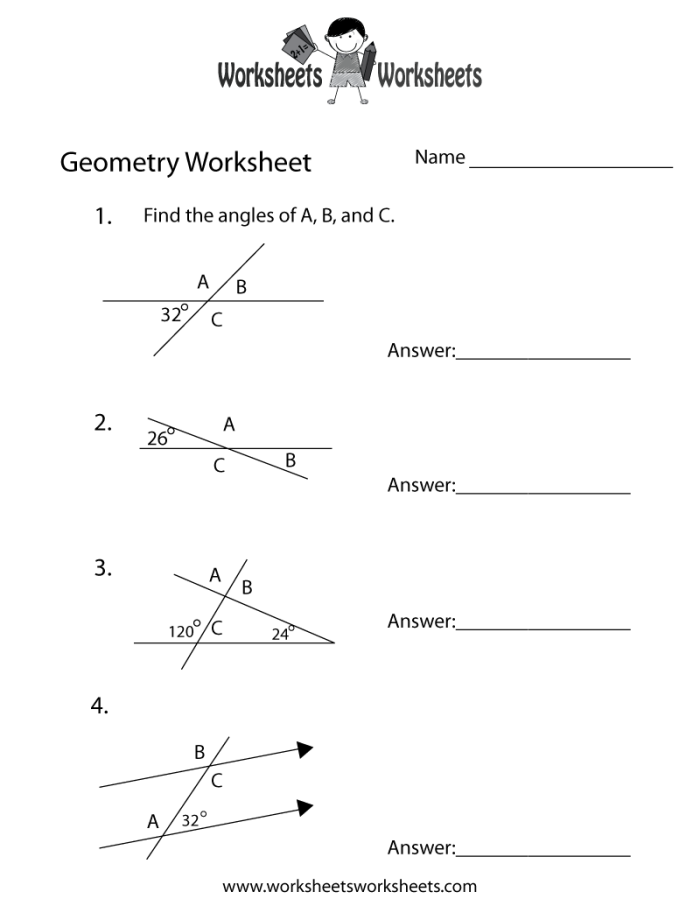
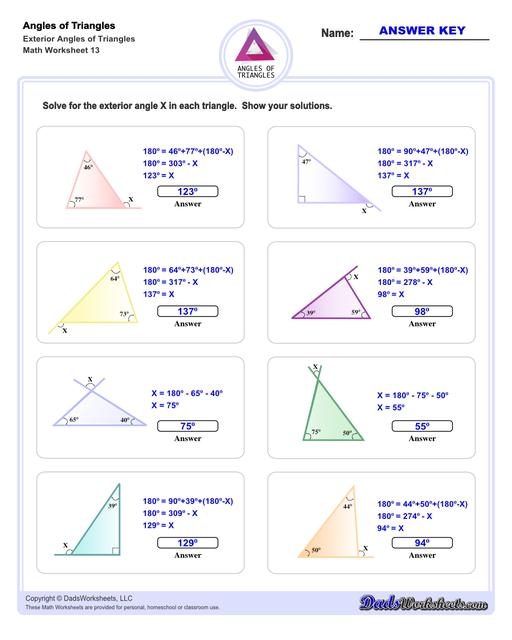
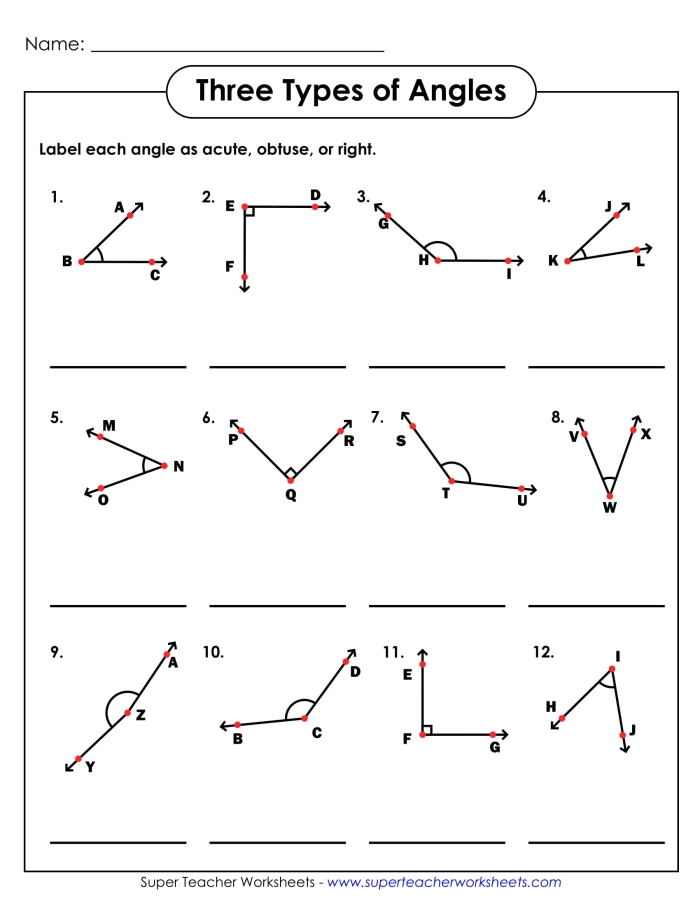
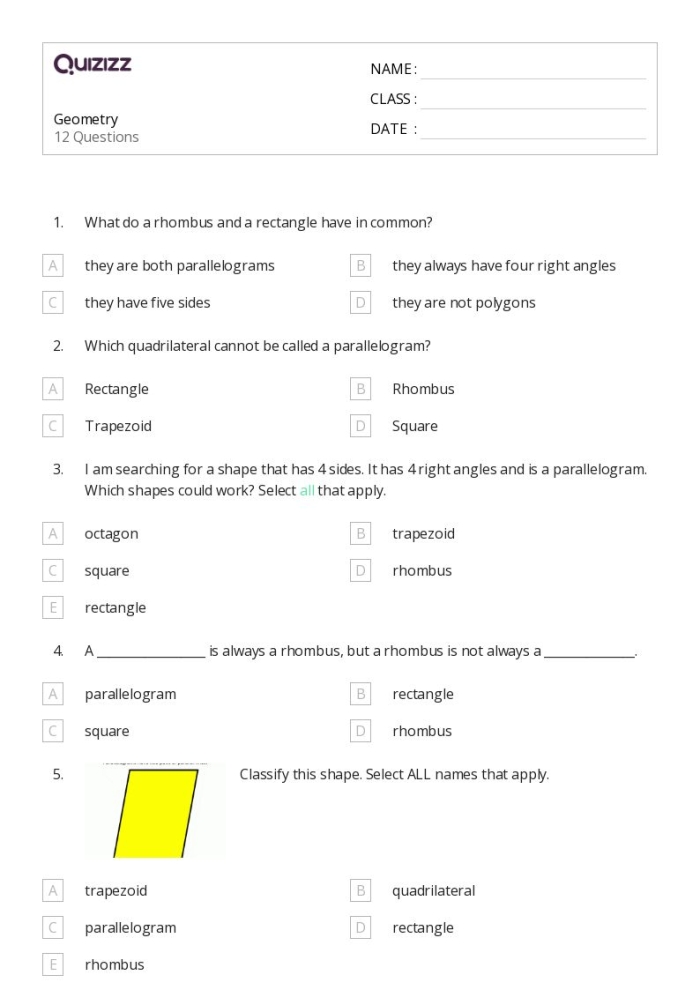
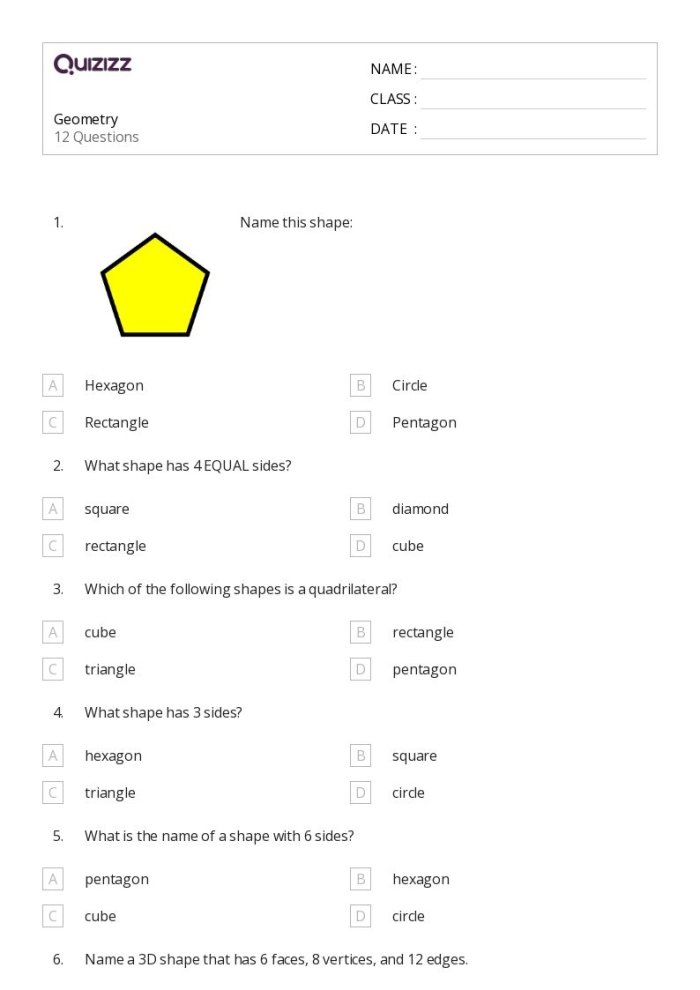
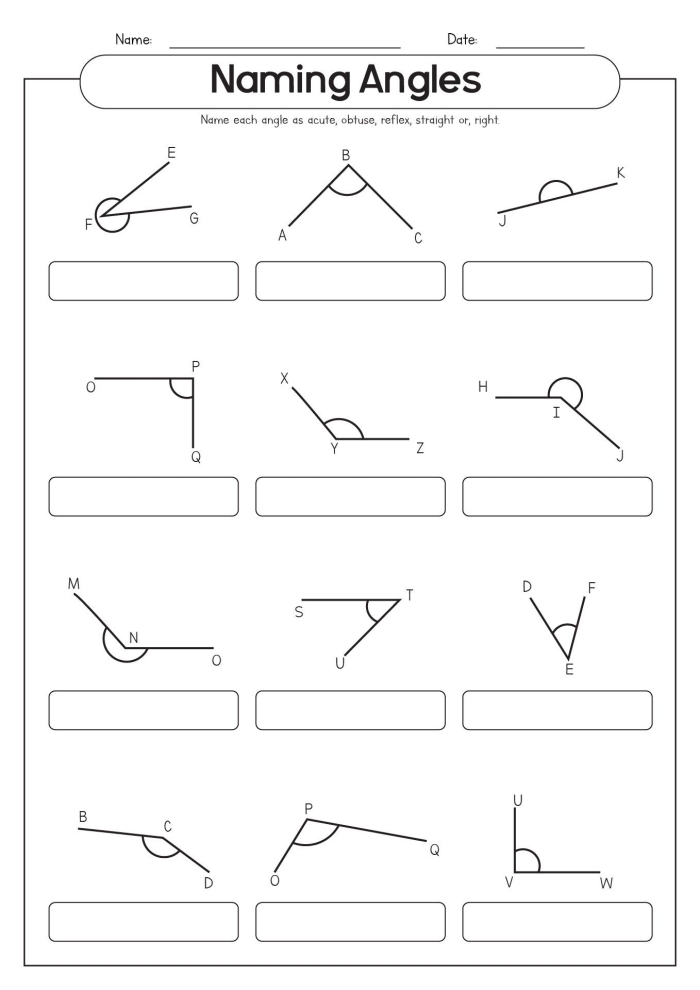
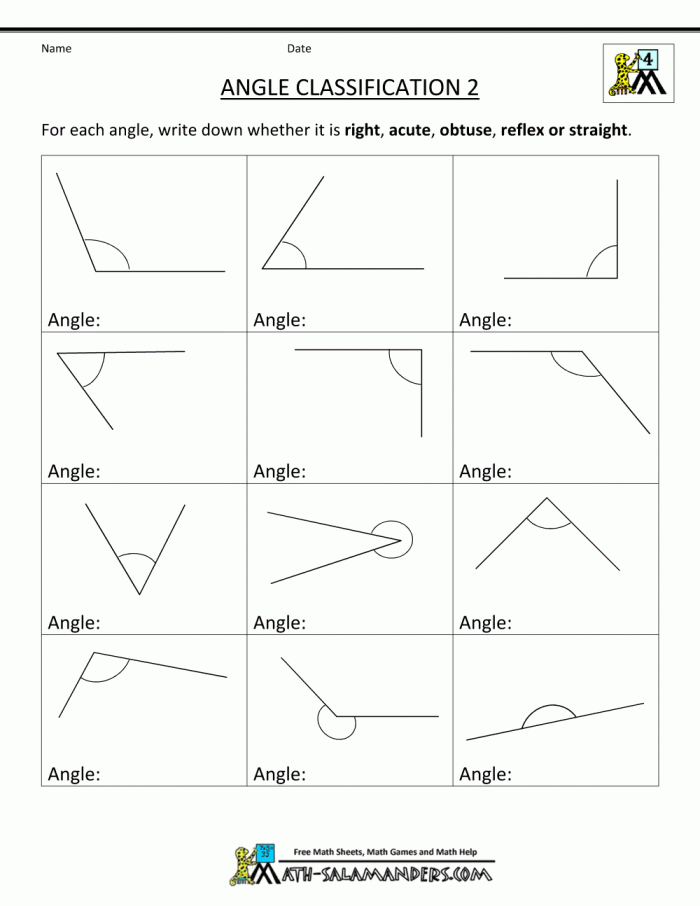
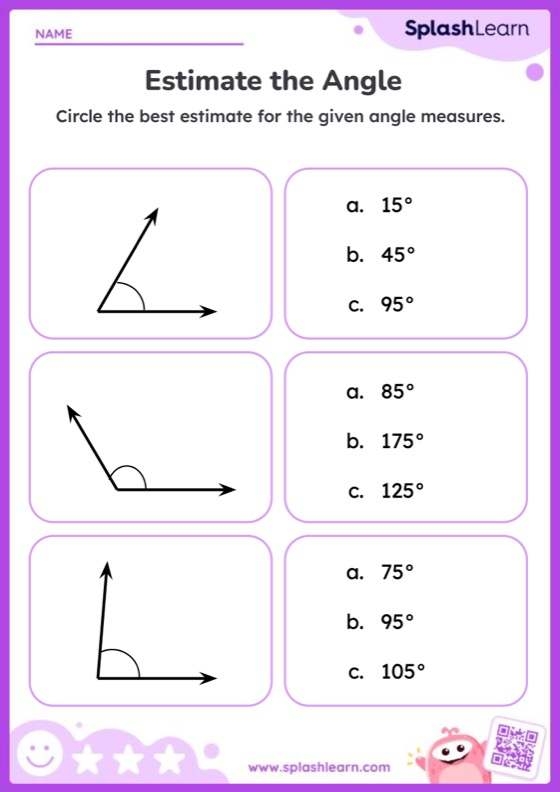
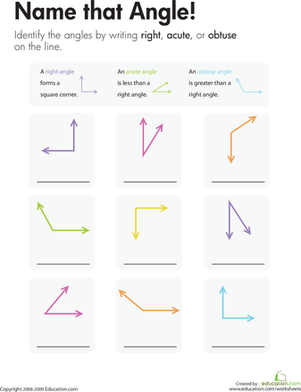
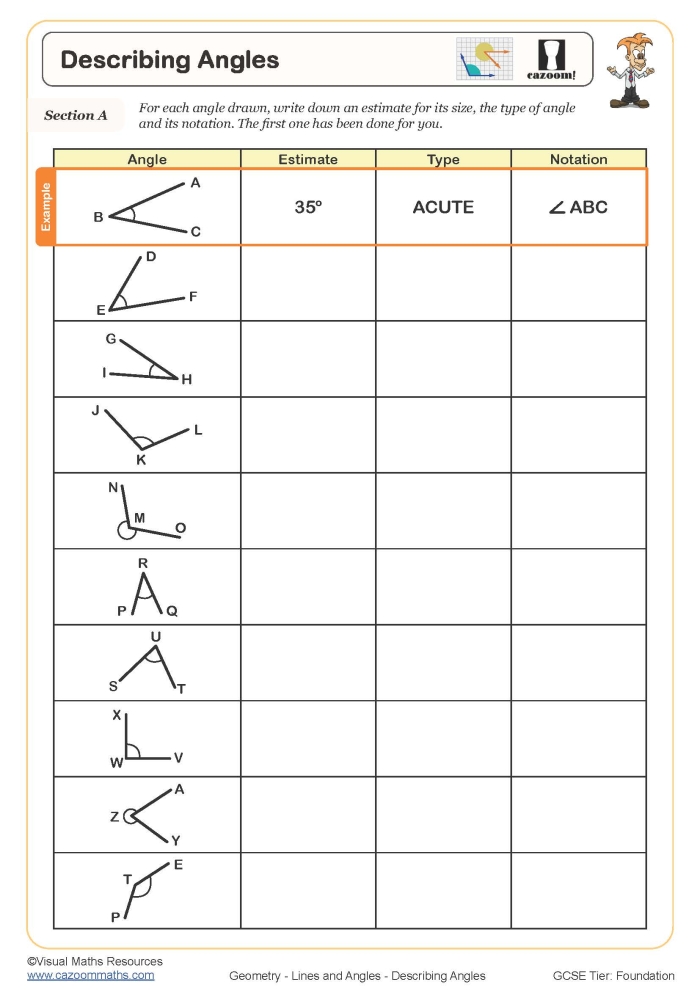
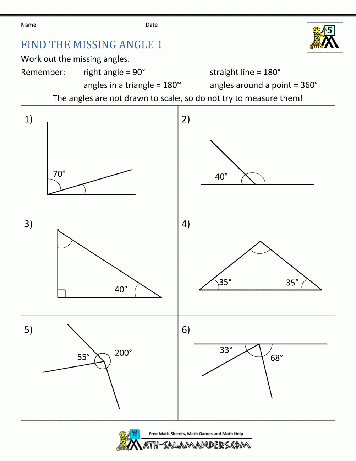
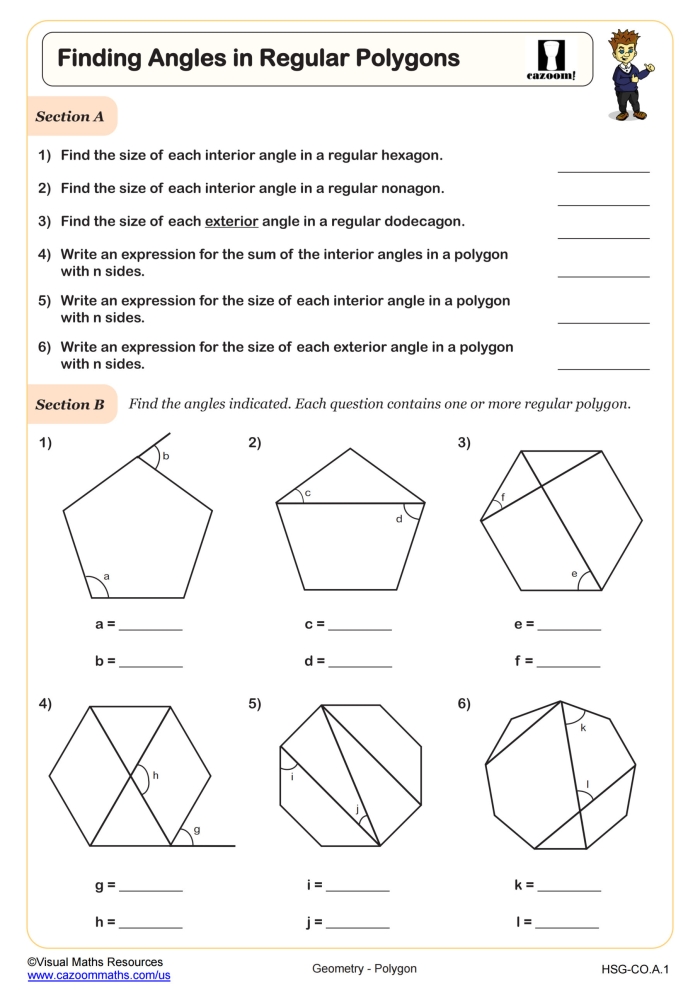
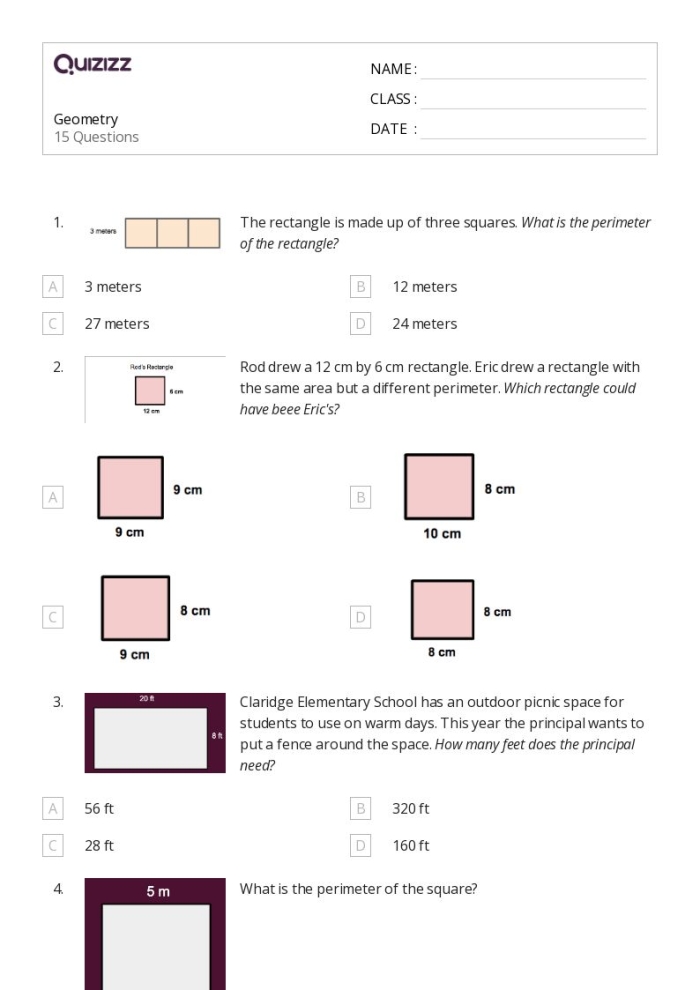
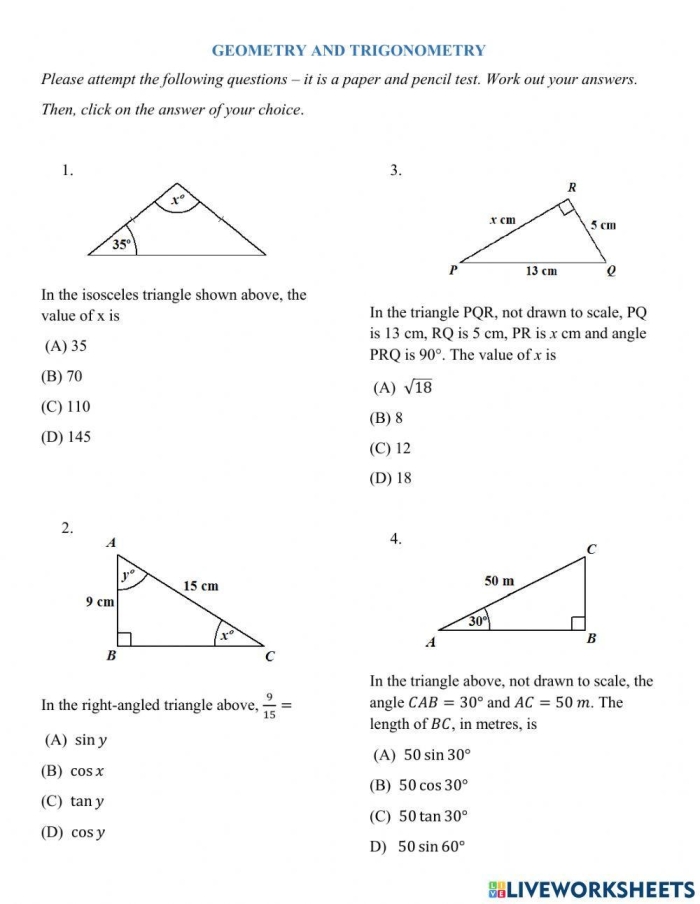
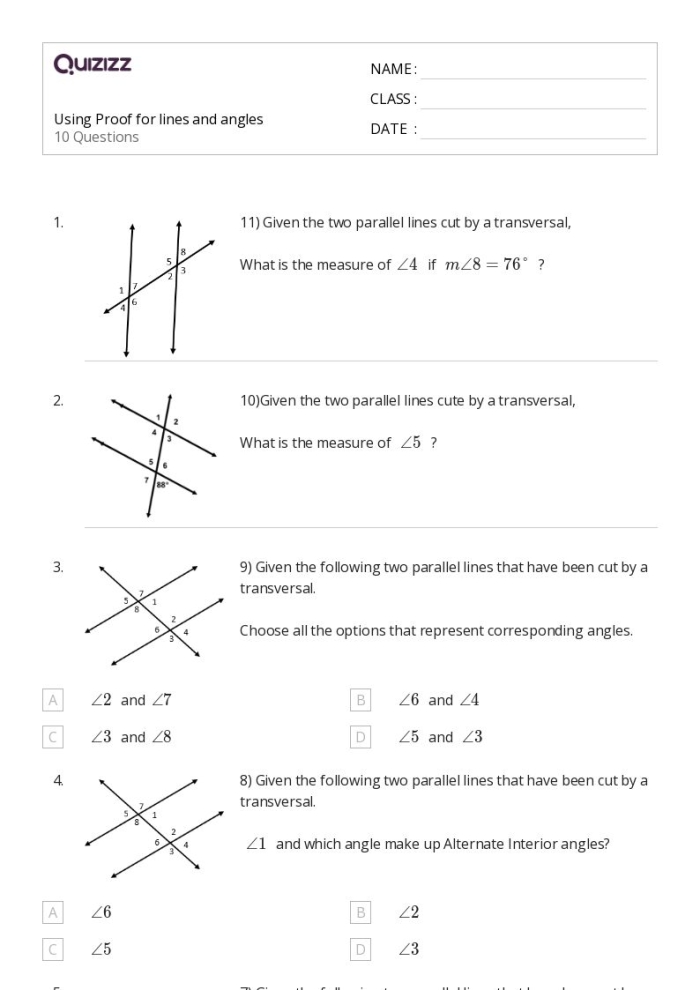
Third grade is when angles stop being invisible. Kids suddenly notice that corners aren’t all the same, that the angle formed by a clock’s hands changes throughout the day, and that understanding these differences matters in math. A solid geometry worksheet focused on naming angles gives students the concrete practice they need to spot and classify three fundamental angle types.
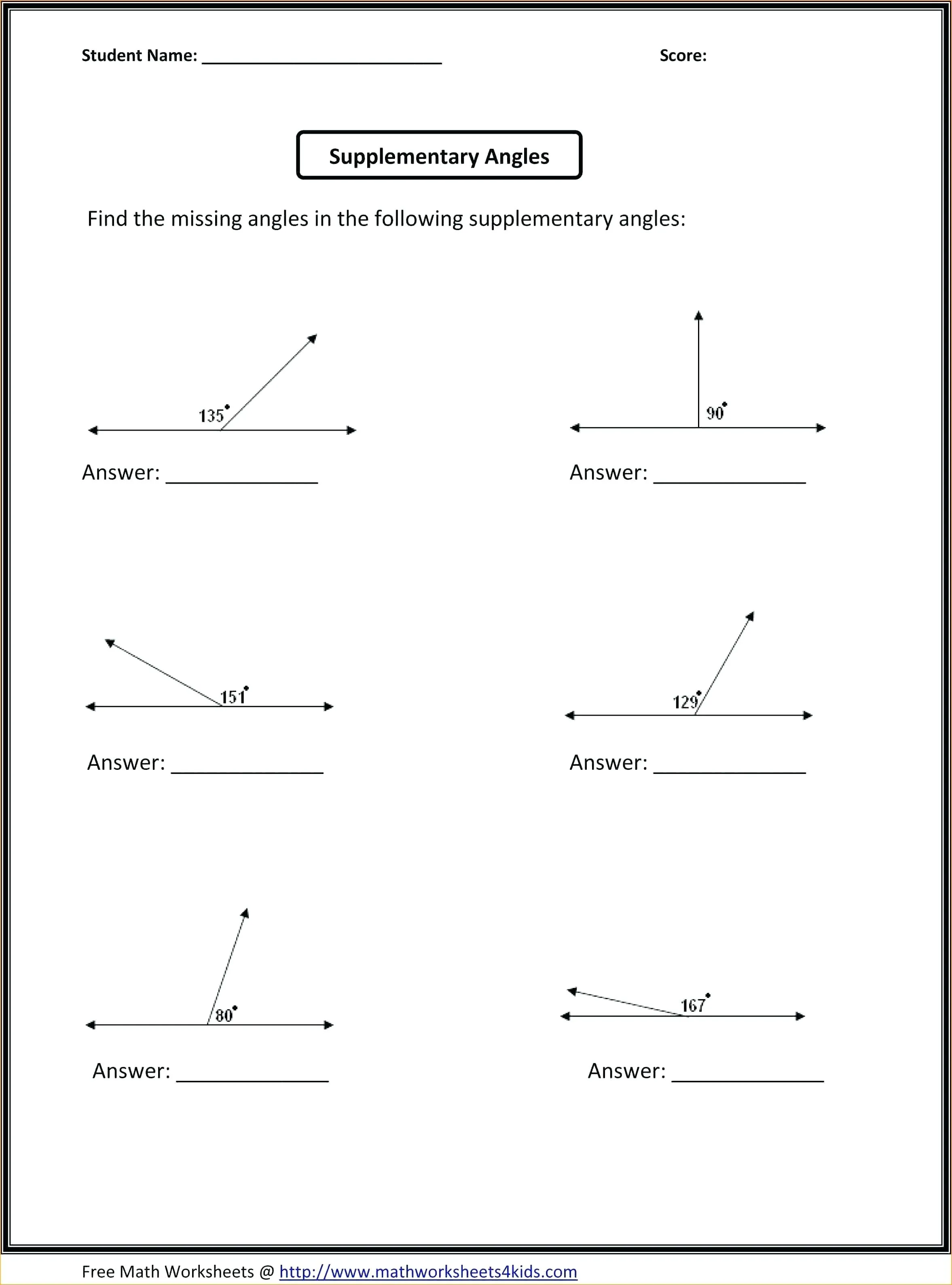
When students work through angle identification exercises, they’re learning to distinguish between right angles, acute angles, and obtuse angles. A right angle measures exactly 90 degrees and appears everywhere: the corners of a book, a door frame, or a window. An acute angle is smaller than a right angle, measuring less than 90 degrees, like the sharp point of a pencil or the angle of a partially opened book. An obtuse angle is larger than a right angle, measuring between 90 and 180 degrees, similar to the wide opening of a door that’s been pushed almost all the way open.
Third grade worksheets typically present these angles in simple, recognizable contexts. Rather than abstract diagrams, effective materials show angles within objects children encounter daily. This approach helps the concept stick because students can connect what they see on paper to what they observe in their classroom and homes.
Practicing angle identification builds foundational geometry skills that support later learning. Students who can confidently name angles are better prepared for more complex geometry work involving shapes, measurements, and spatial reasoning. The repetition involved in completing a full worksheet reinforces pattern recognition and visual discrimination.
Beyond angles, third graders benefit from varied math practice. Worksheets covering division problems and line graphs develop different mathematical thinking. Meanwhile, text feature activities and writing check-ups round out a balanced curriculum that supports both mathematical and literacy development at this grade level.
Hands-On Worksheet Activities