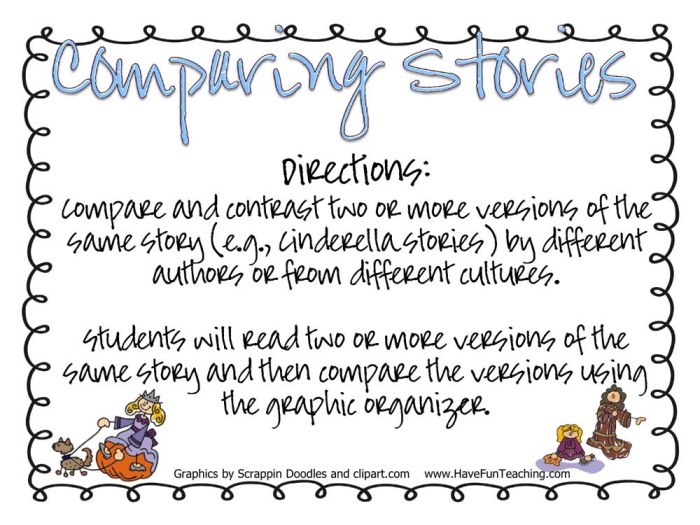
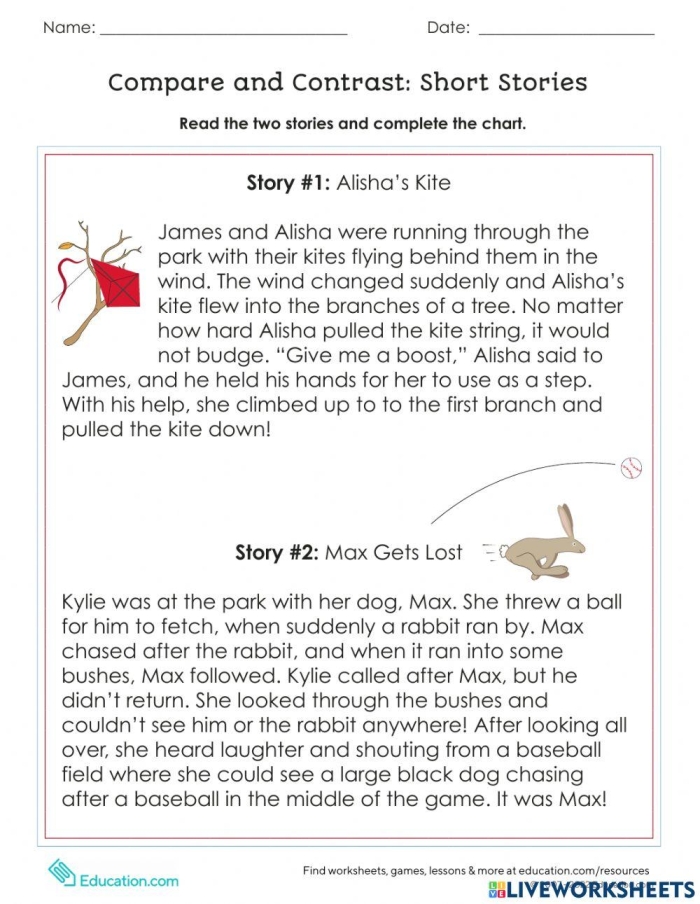
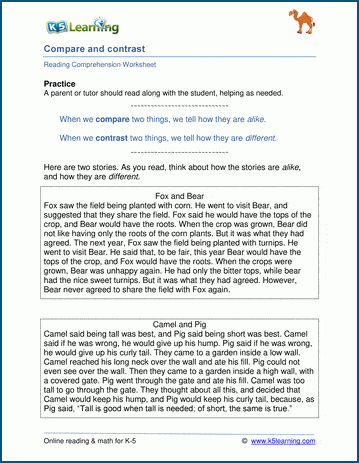
When third grade students encounter two different stories, they often read them as separate experiences without recognizing how authors make similar choices in character development, setting, and plot. A structured comparison activity changes this by training readers to notice patterns and understand how story elements function across different narratives.
Comparing two fiction texts forces students to move beyond simple comprehension. Instead of just answering “What happened?” they begin asking “How is this character like the other one?” or “Why did both authors choose similar settings?” This deeper thinking builds critical reading skills that carry forward through middle school and beyond.
The practical benefits show up quickly. Third graders who practice comparing stories develop stronger vocabulary for discussing literature. They learn terms like protagonist, conflict, and resolution not through definitions but through actual application. When a student notices that both stories feature a determined main character facing an obstacle, they’re internalizing story structure in a meaningful way.
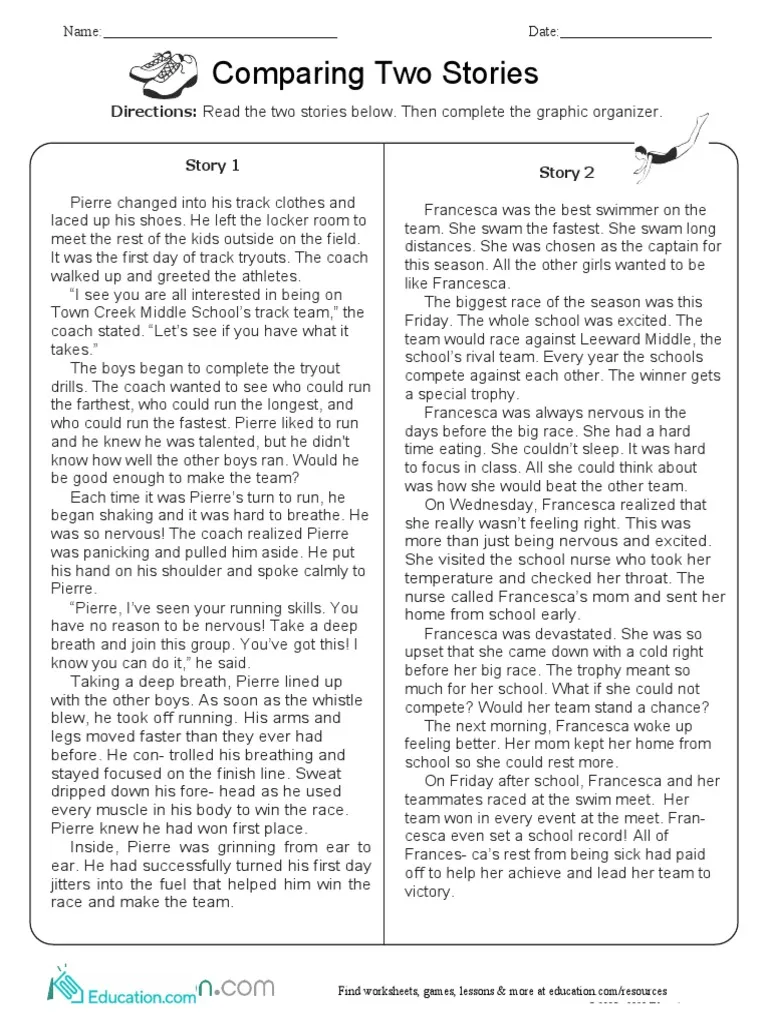
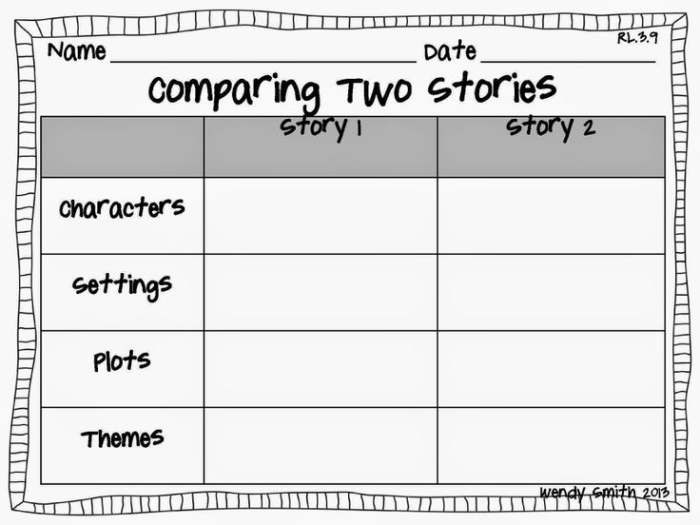
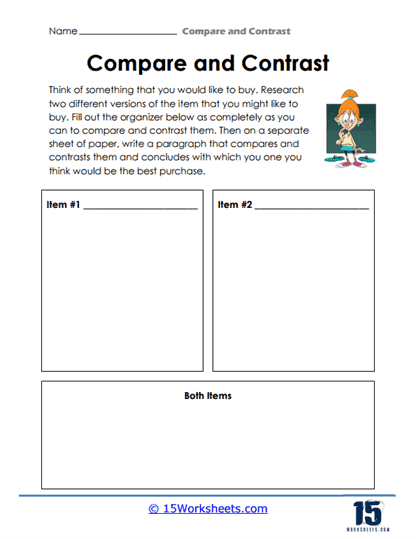
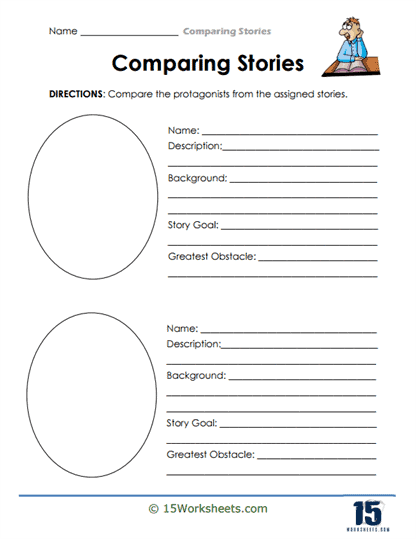
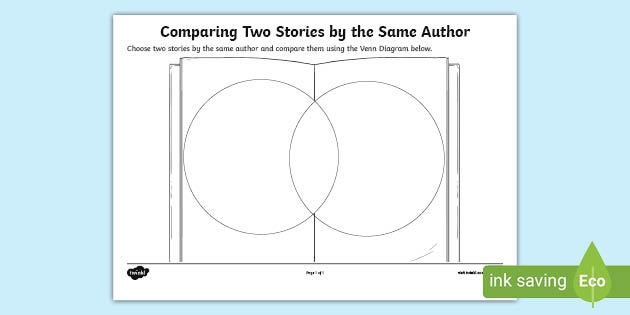
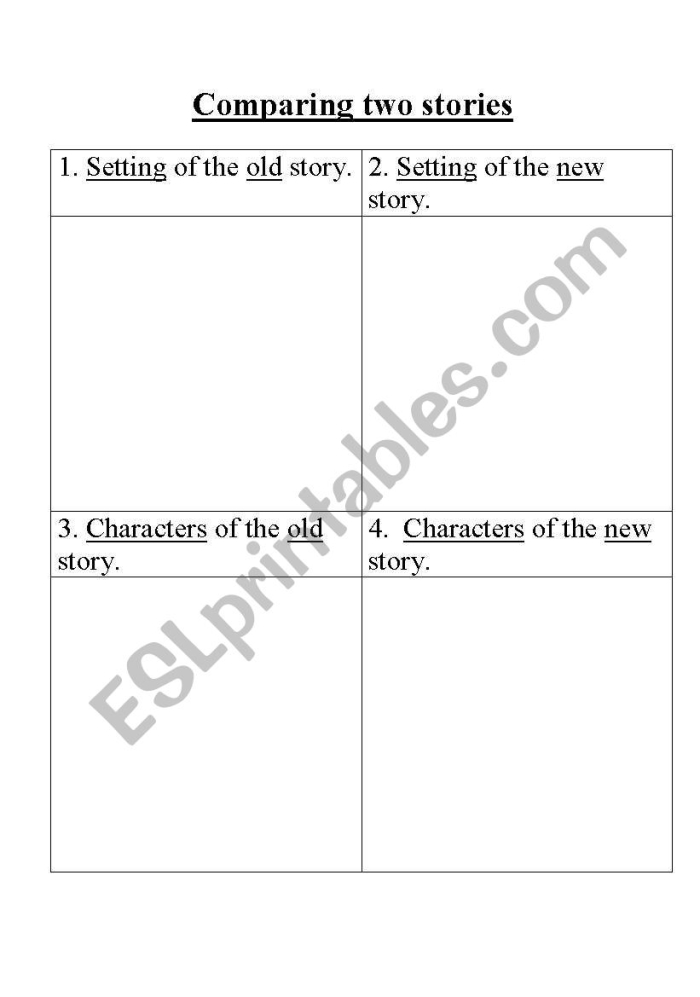
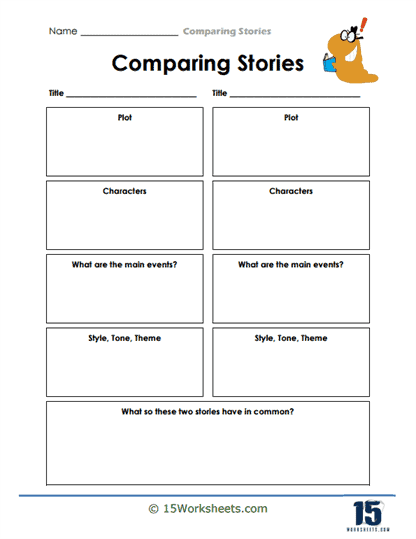
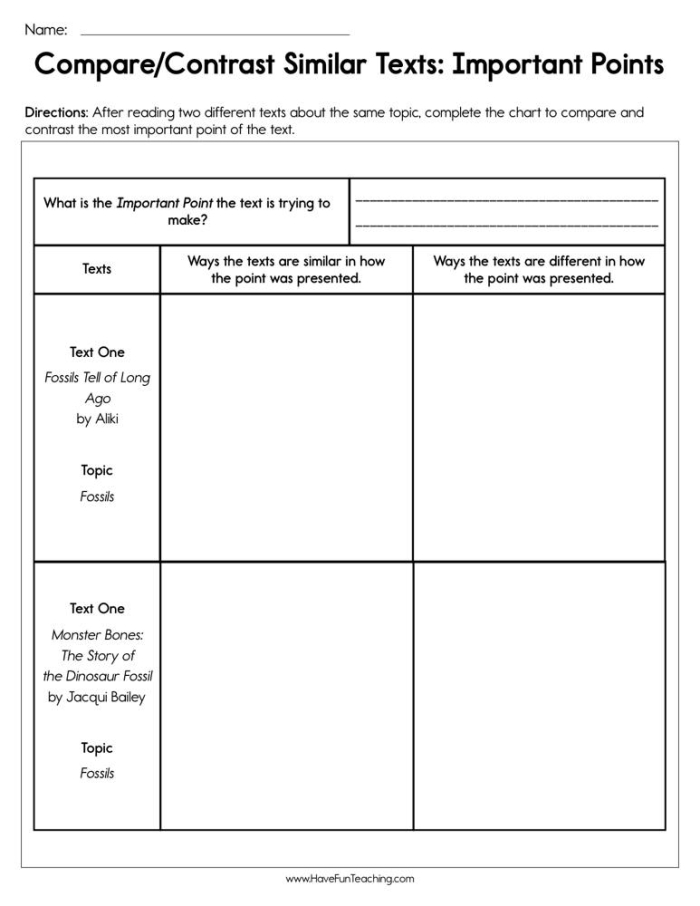
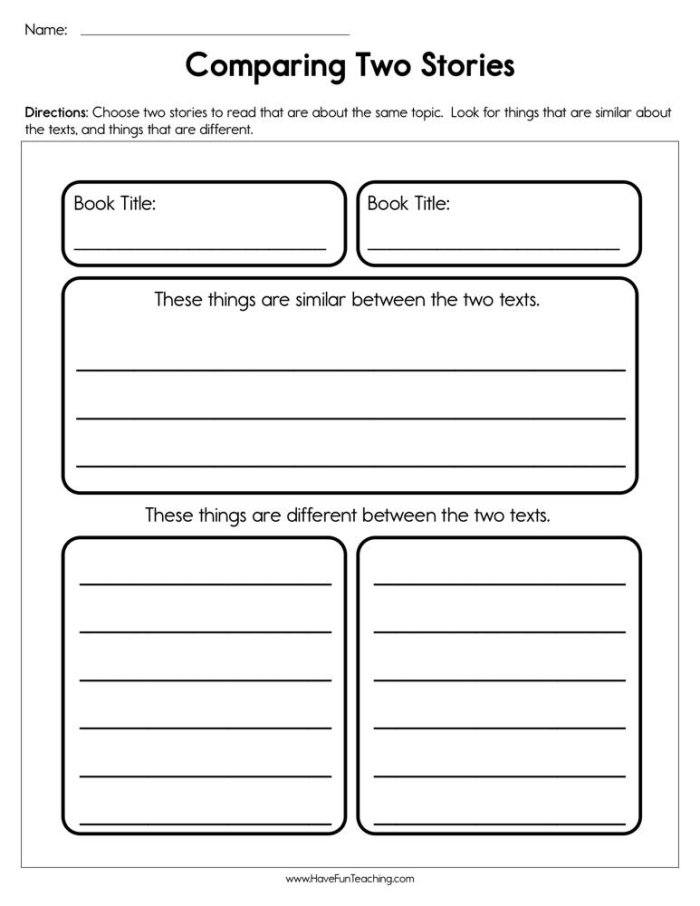
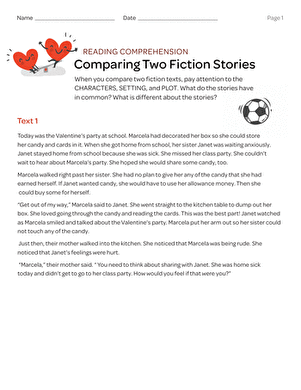
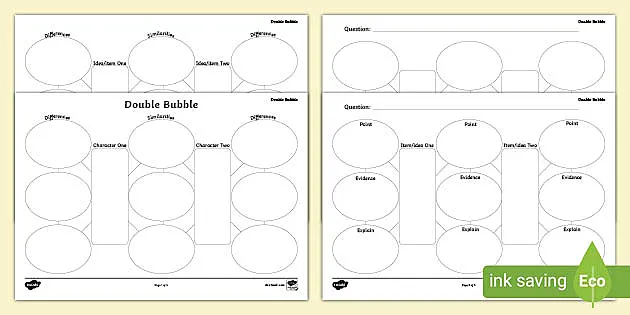
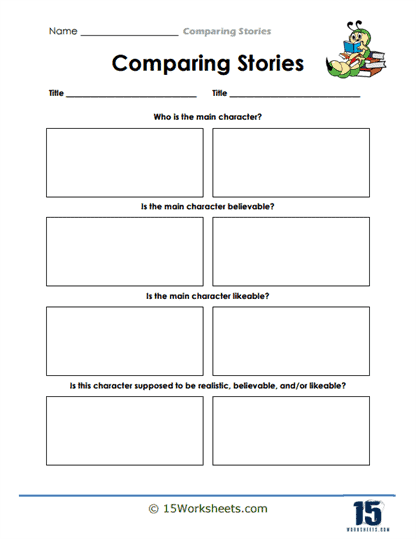
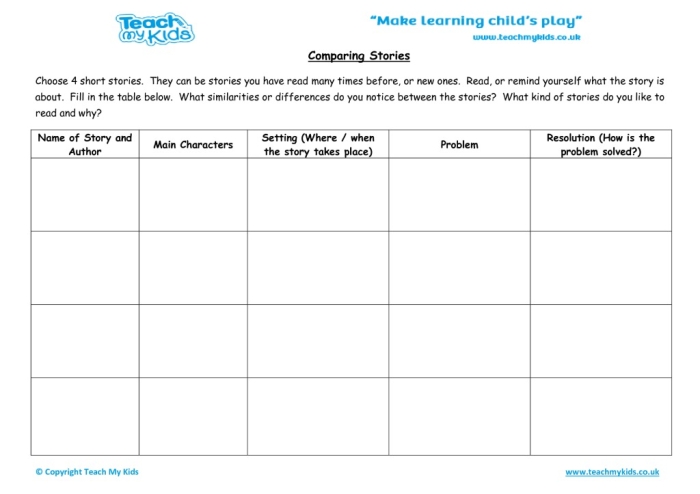
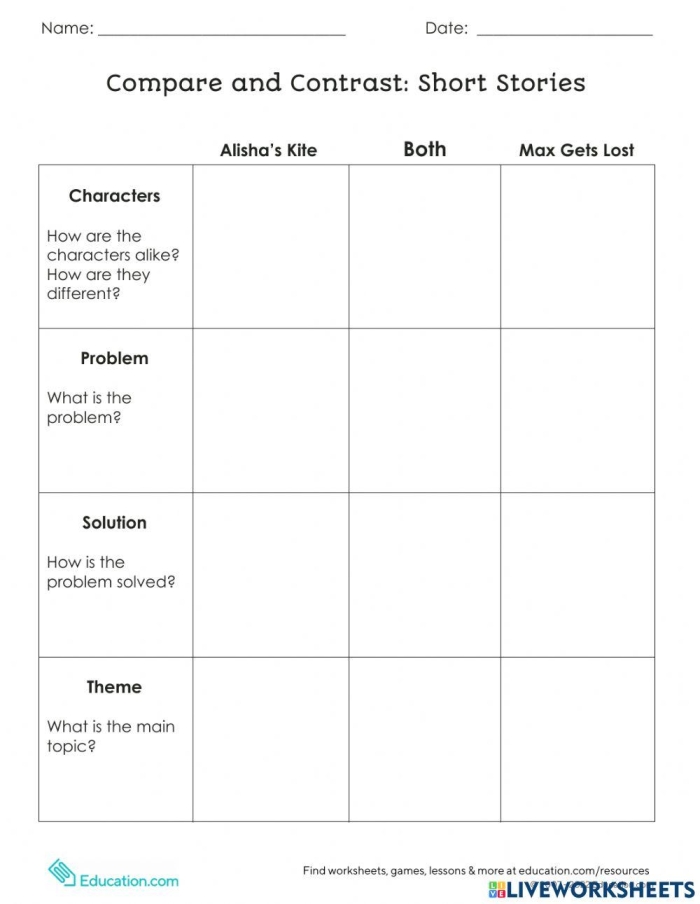
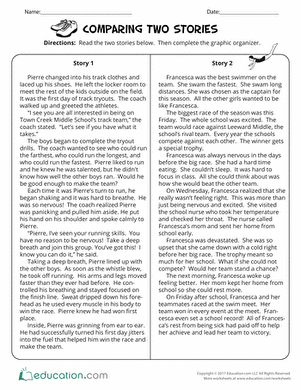
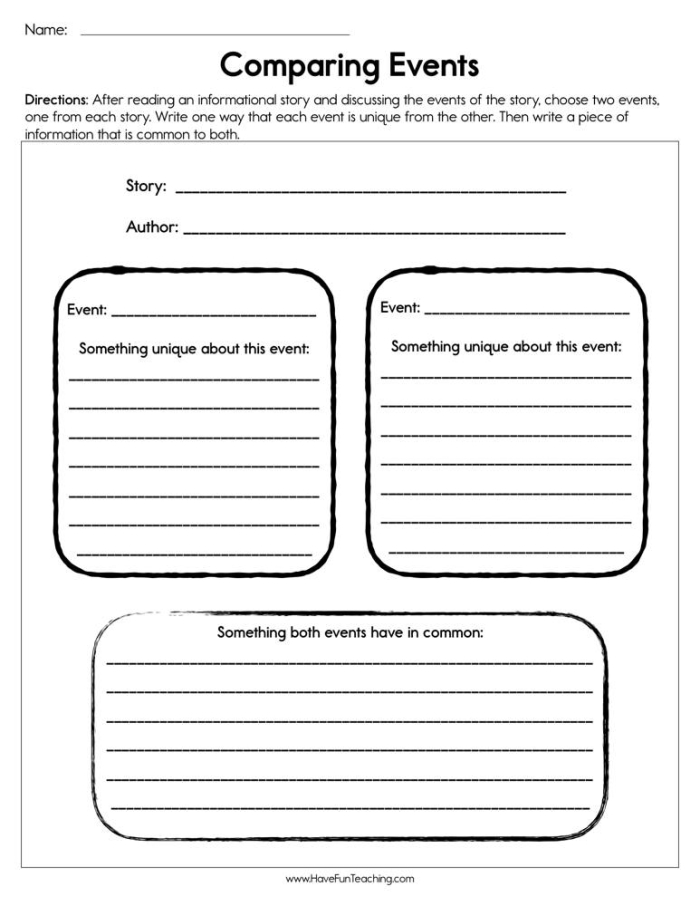
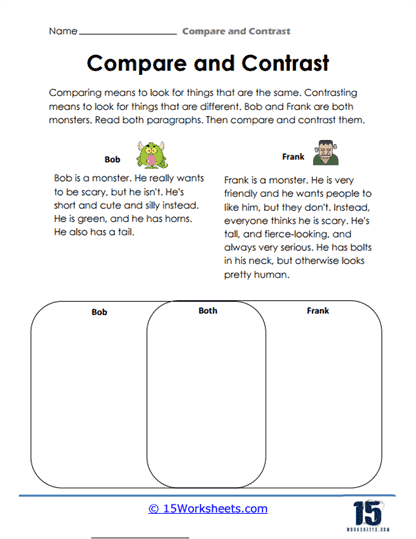
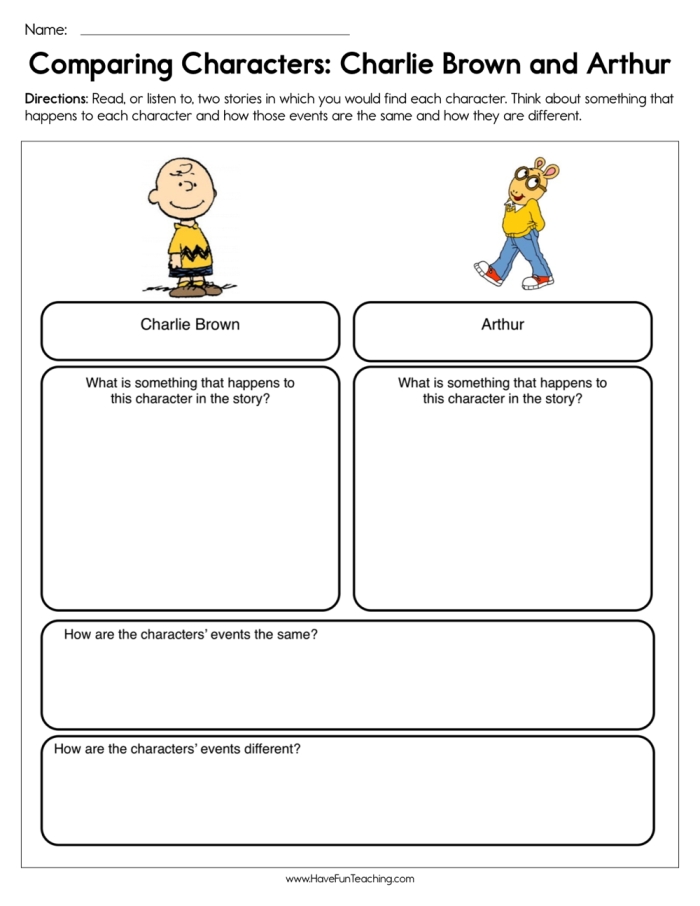
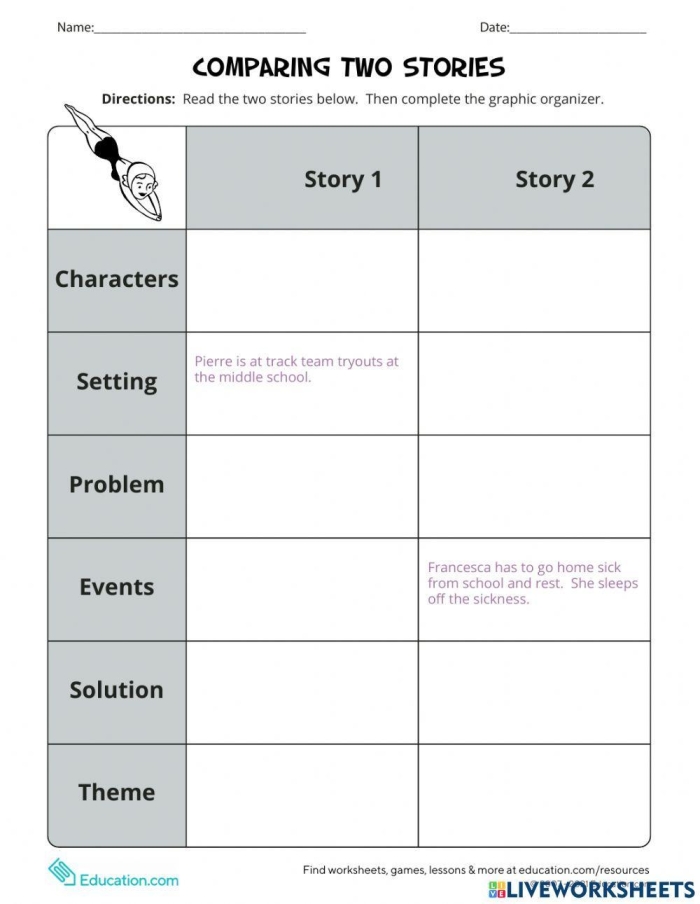
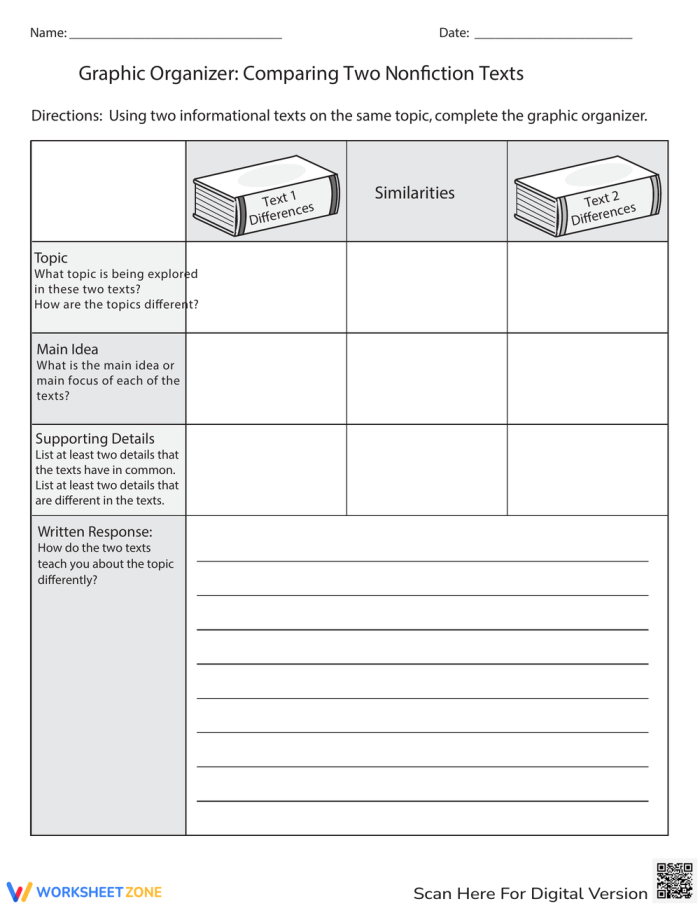
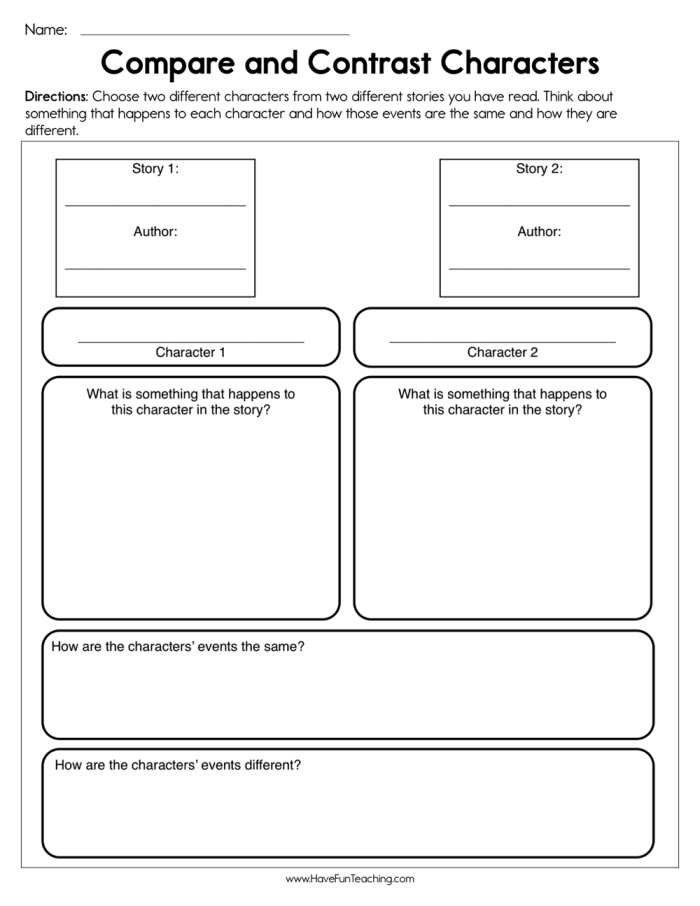
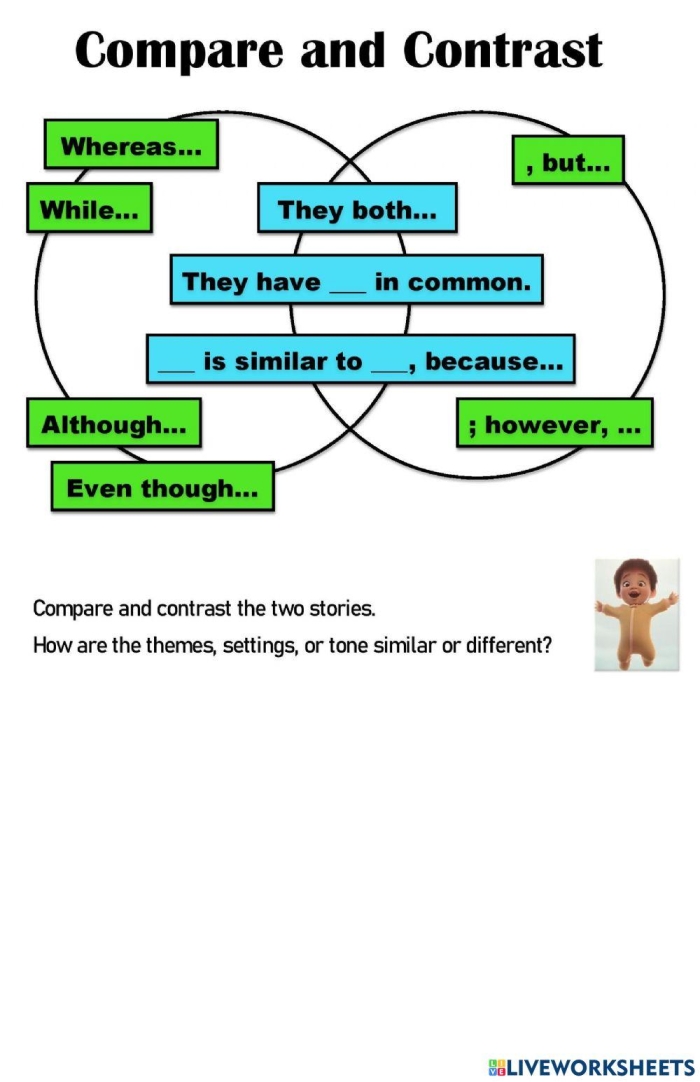
Effective comparison worksheets guide students through specific elements. Rather than asking open-ended questions, they might prompt students to identify the main character’s goal in each story, then note similarities and differences. Some resources structure this as a Venn diagram, which gives visual learners a clear framework for organizing their thoughts.
These activities also work well alongside other reading instruction. A student working through main idea practice with working dogs can apply those same skills when comparing how different authors present similar themes. Pairing comparison work with activities like writing with adjectives helps students describe story elements more precisely.
The key is consistency. When third graders regularly compare stories throughout the school year, they build a mental toolkit for analyzing any fiction they encounter. They stop being passive readers and become active investigators of how stories work.
Download These Worksheets for Practice