Comparing fractions with unlike denominators stops being abstract the moment you connect it to something a fourth grader actually cares about. Instead of staring at 3/4 and 2/5 on a worksheet, imagine splitting a pizza with a friend or measuring ingredients for a recipe. That’s when the math clicks.
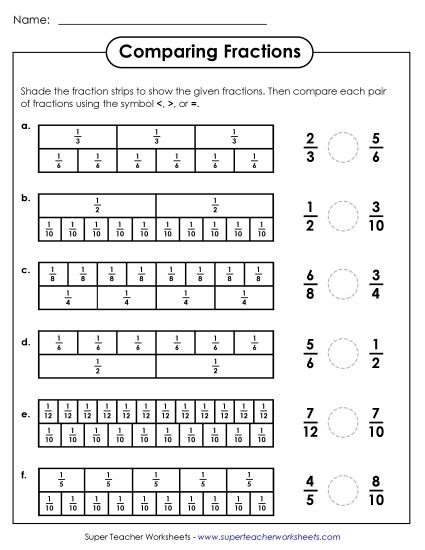
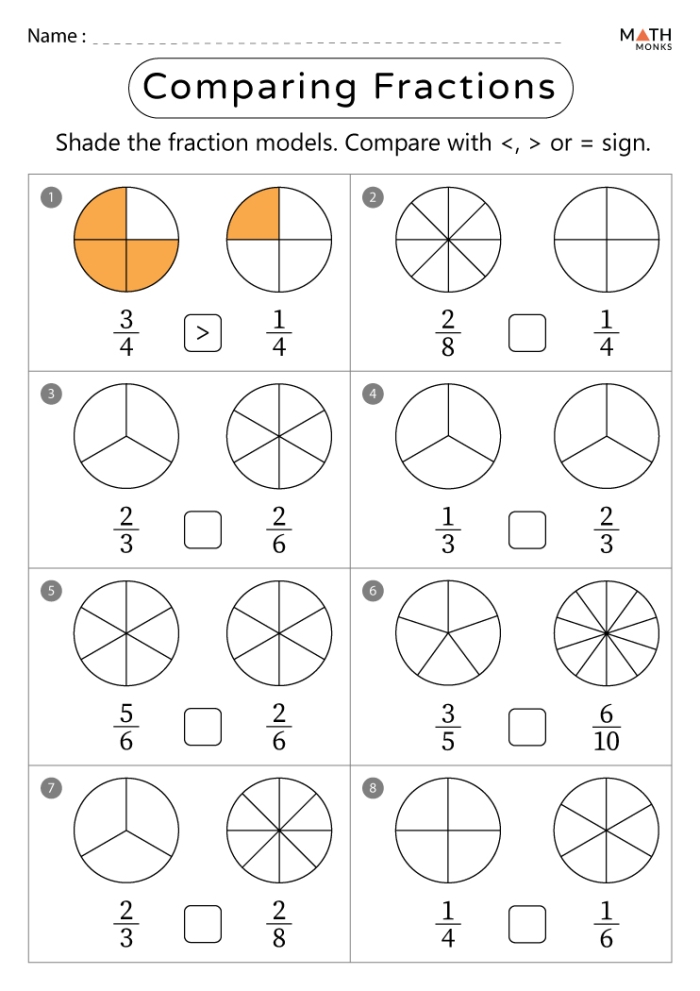
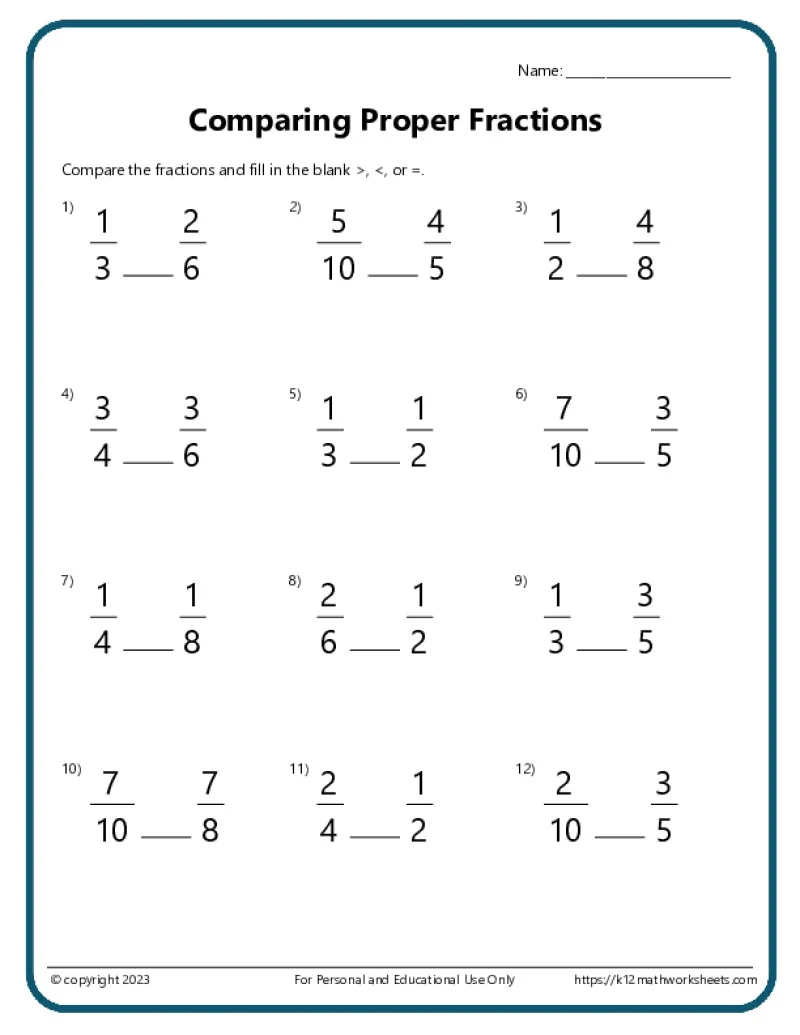
The challenge with unlike denominators is real. Students can’t just compare the numerators because the pieces aren’t the same size. A fourth grader needs to find a common denominator, which requires understanding that 1/2 and 2/4 represent the same amount, even though they look different. This conceptual leap matters far more than memorizing a procedure.
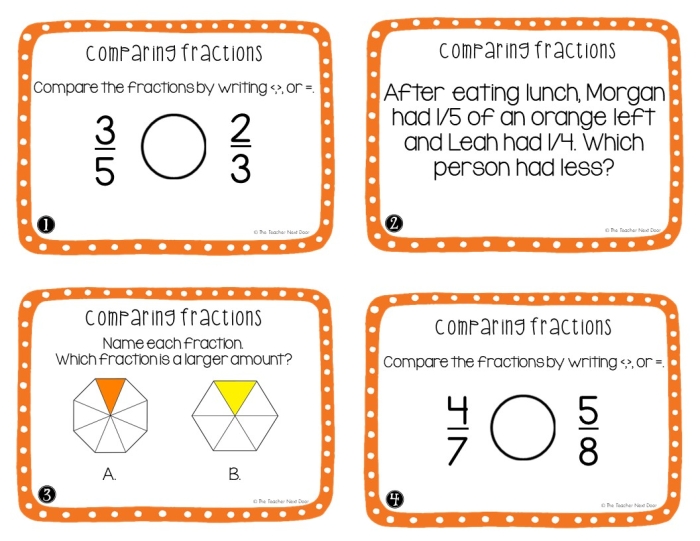
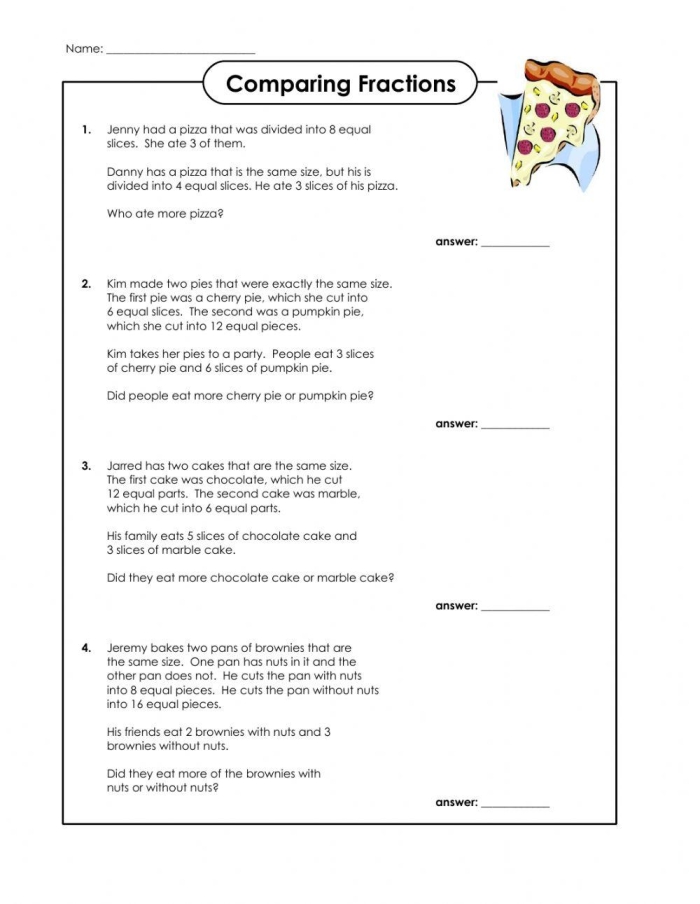
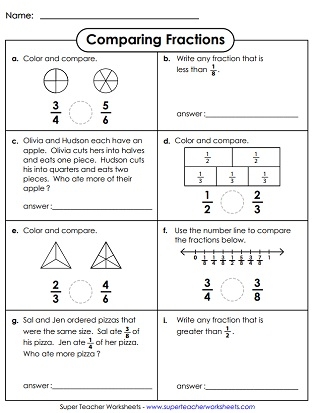
Real-world scenarios make this concrete. If one friend ate 1/3 of a sandwich and another ate 2/5 of an identical sandwich, who ate more? Suddenly, the student isn’t solving an abstract problem. They’re comparing actual portions. They need to convert both fractions to a common denominator (15ths in this case: 5/15 versus 6/15) to answer the question fairly.
Sports provide another natural context. A fourth grader might compare how far two runners completed a race: one finished 3/8 of the route while another finished 1/2. Which runner went further? The common denominator (eighths) reveals that 1/2 equals 4/8, so the second runner covered more ground.
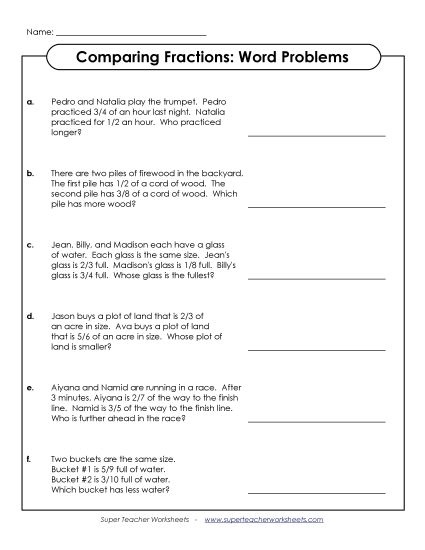
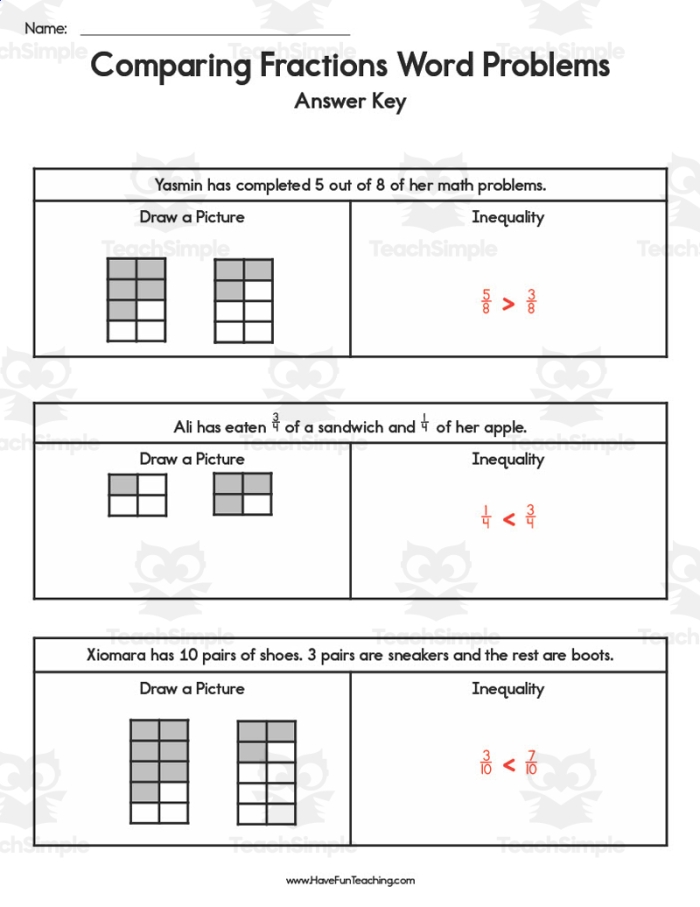
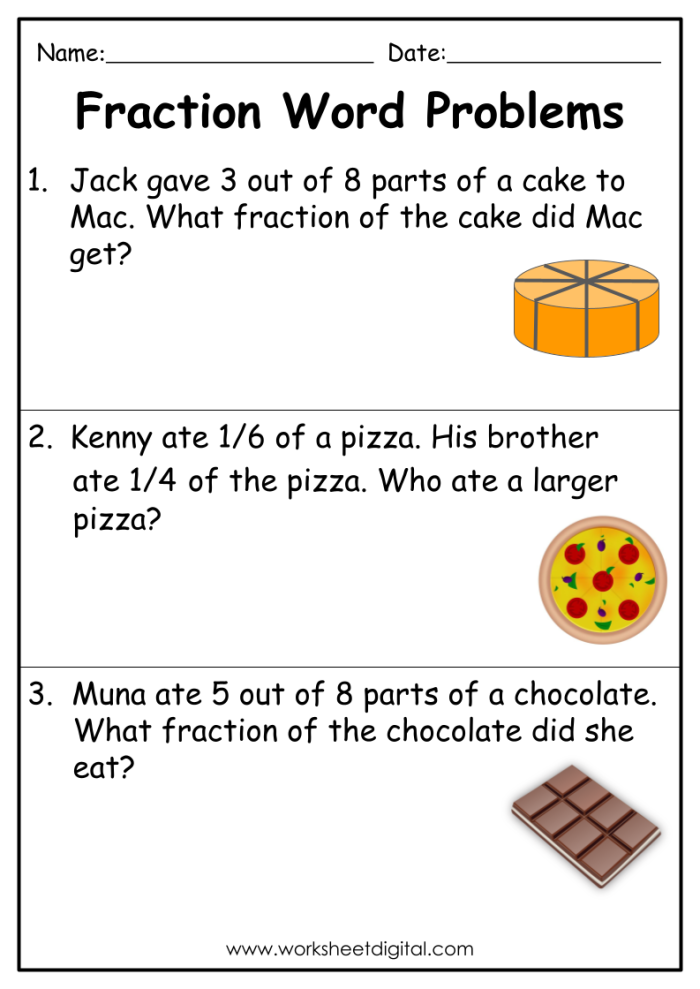
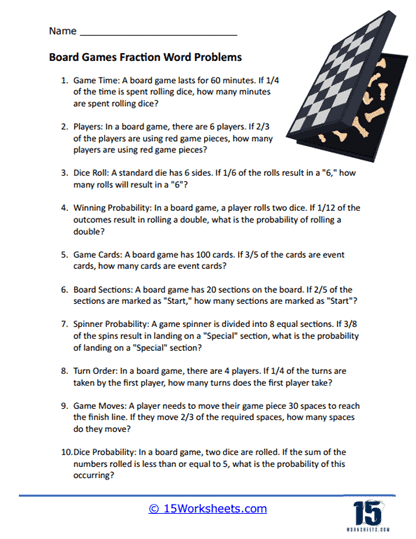
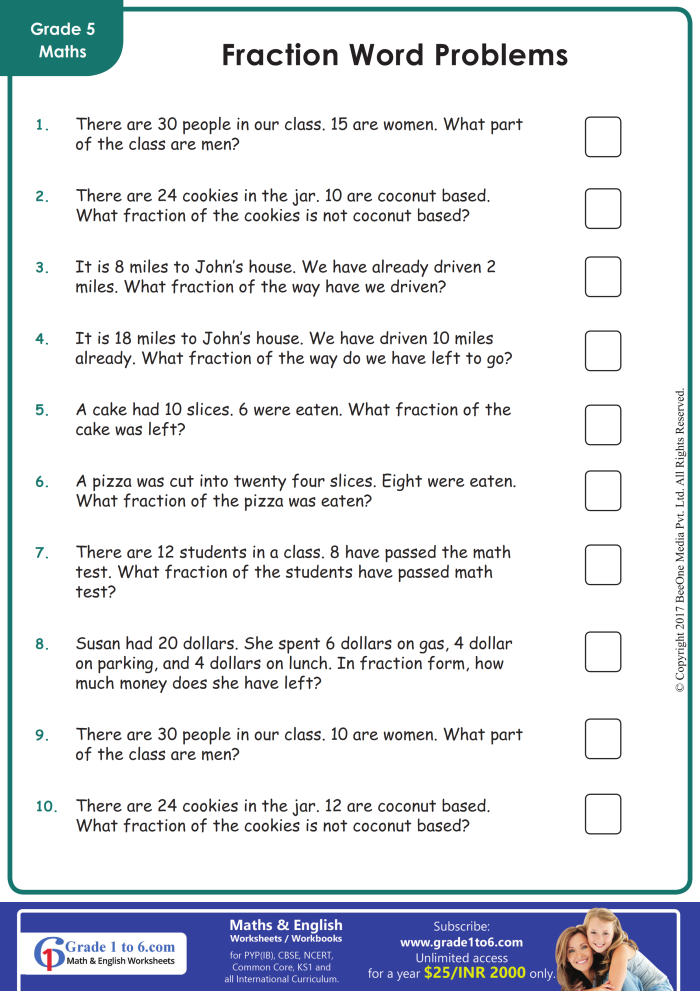
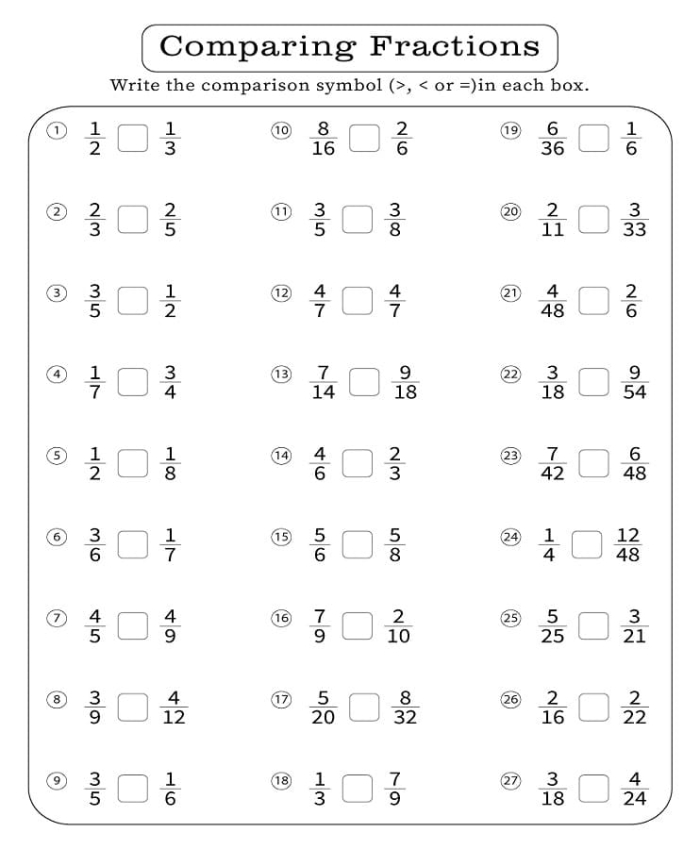
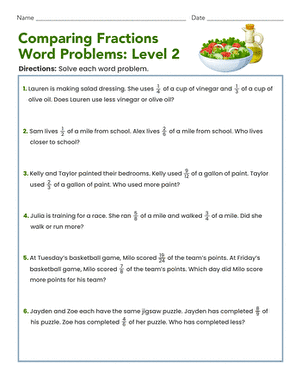
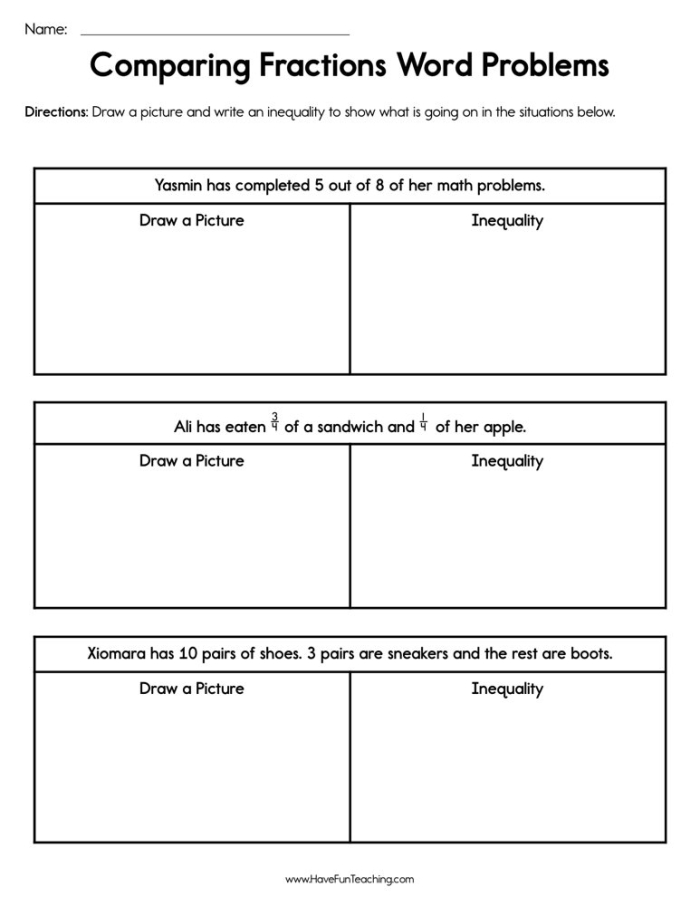
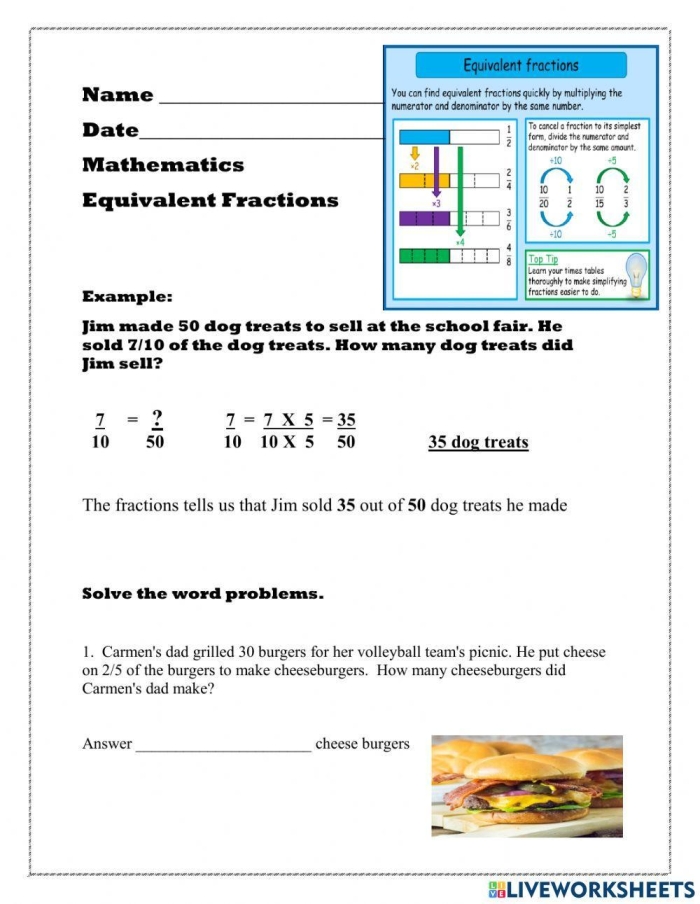
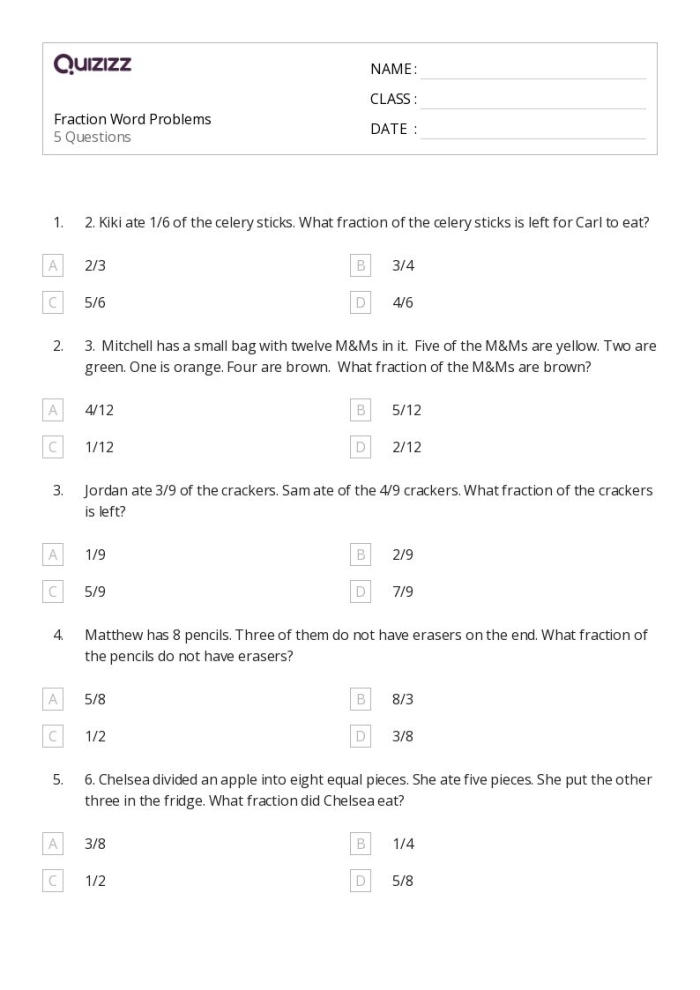
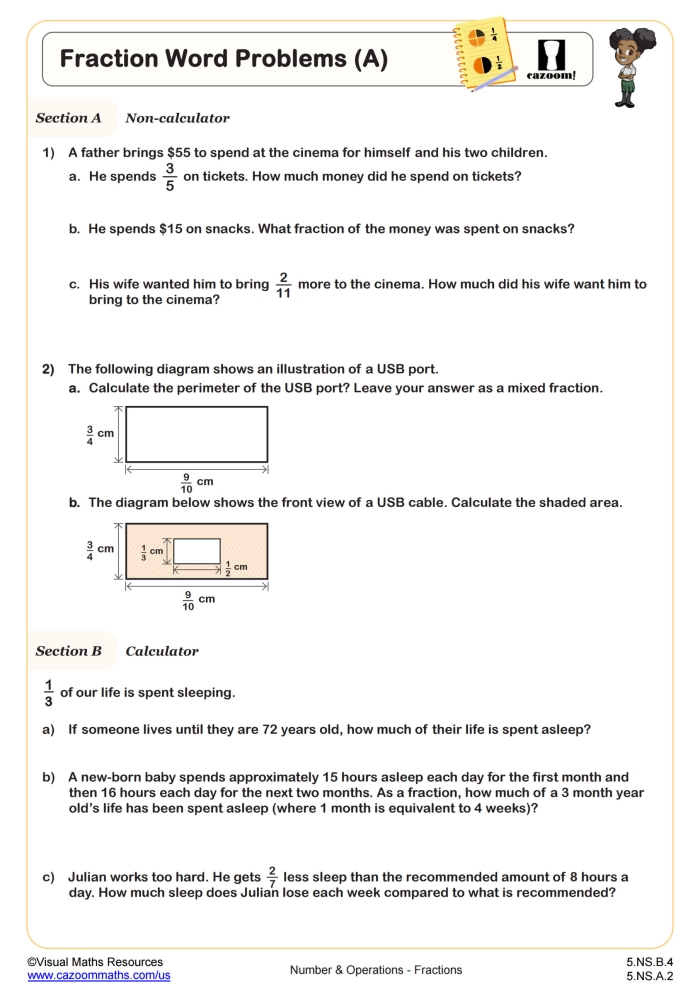
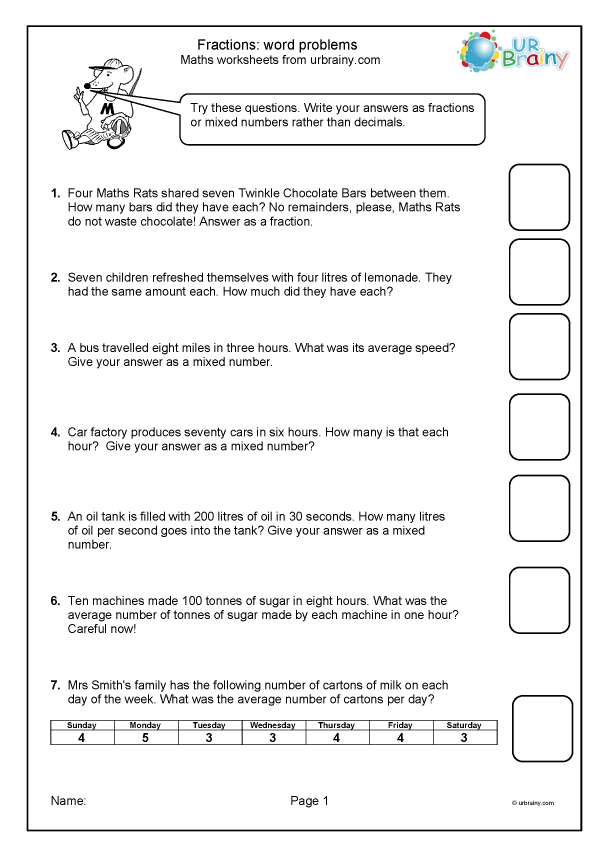
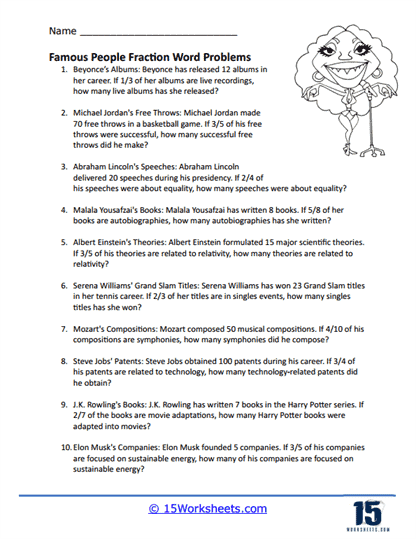
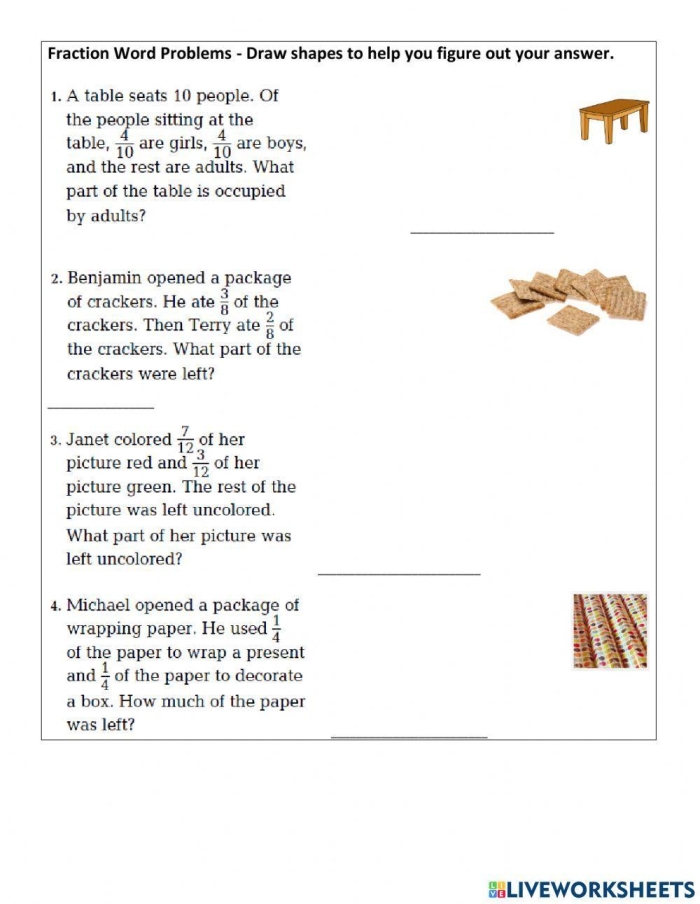
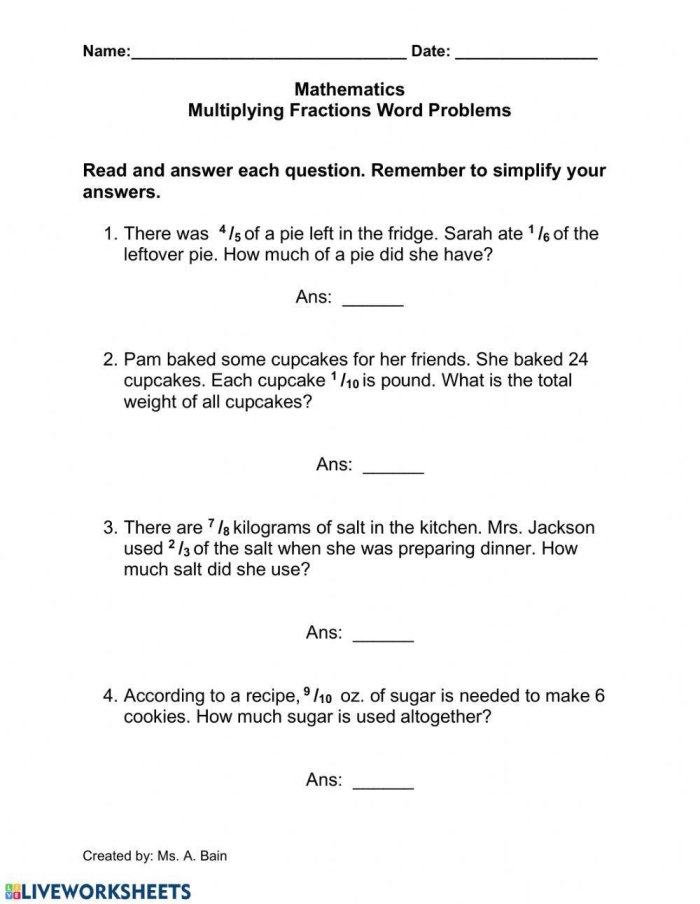
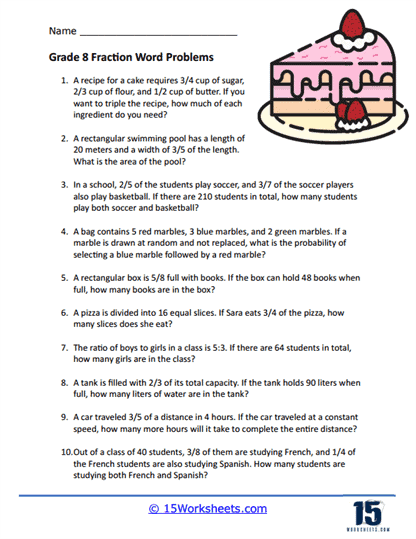
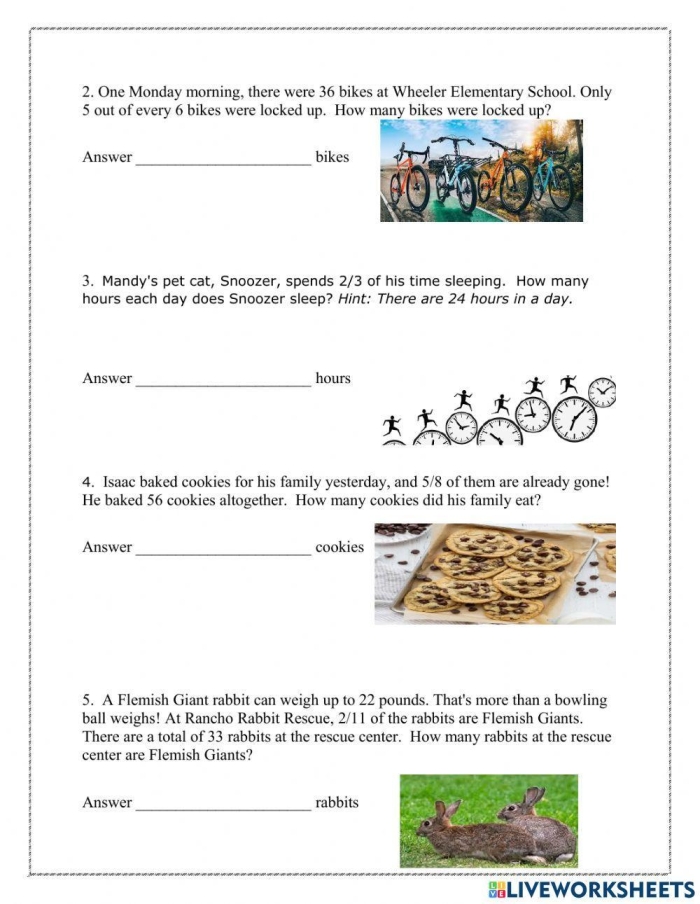
Worksheets that embed these comparisons into word problems help students practice without the tedium of isolated drills. When you use comparing fractions word problems at level 2, you’re combining math practice with reading comprehension and vocabulary development through word families. This approach reinforces multiple skills simultaneously while keeping fourth graders engaged with scenarios that feel relevant to their lives.
The goal isn’t speed. It’s building confidence that fractions represent real quantities that can be compared, measured, and used to solve actual problems.
Try These Printable Worksheets