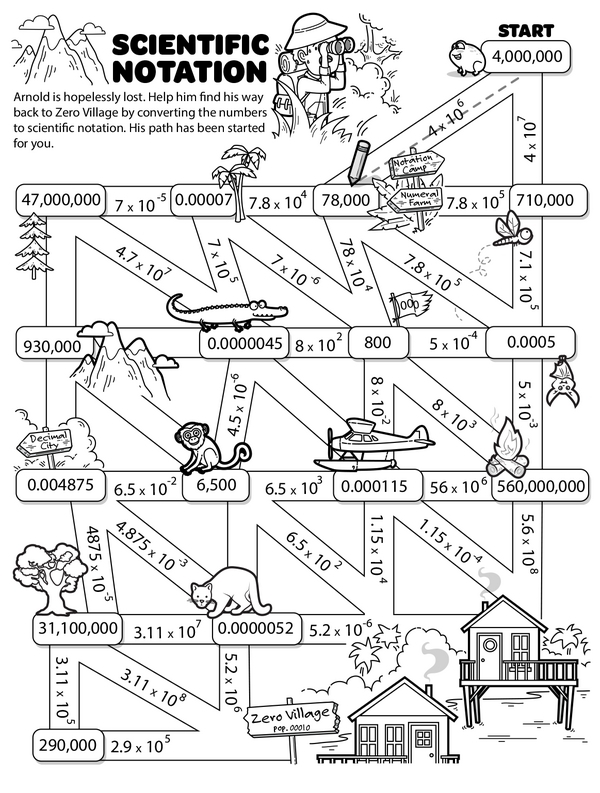
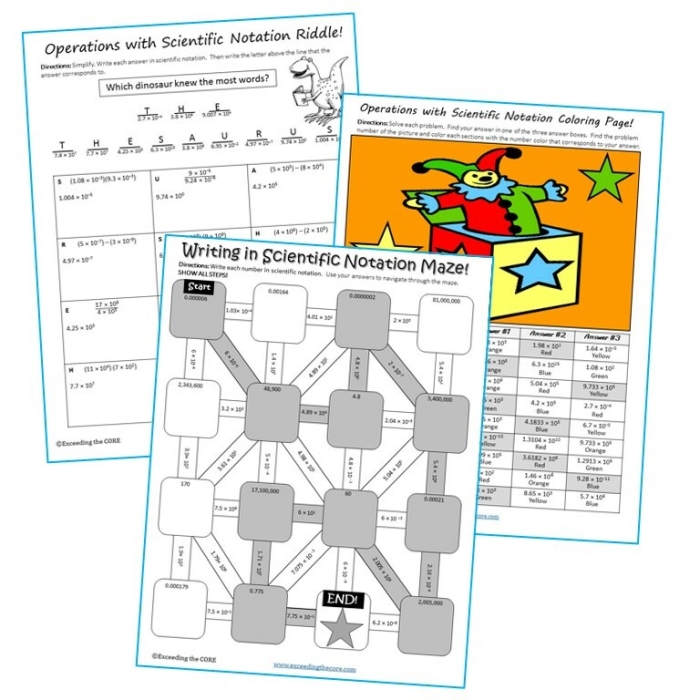
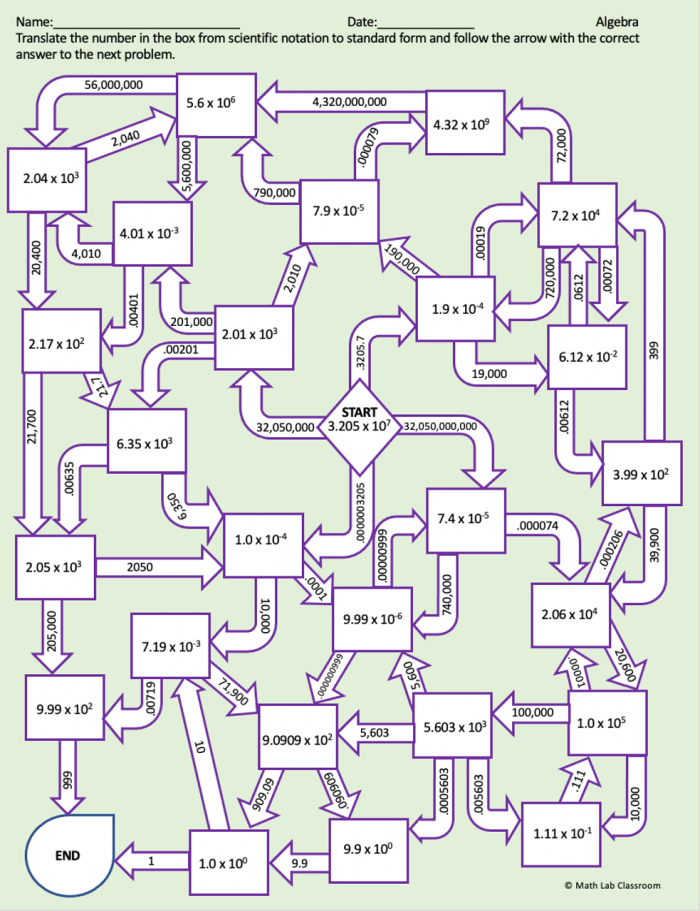
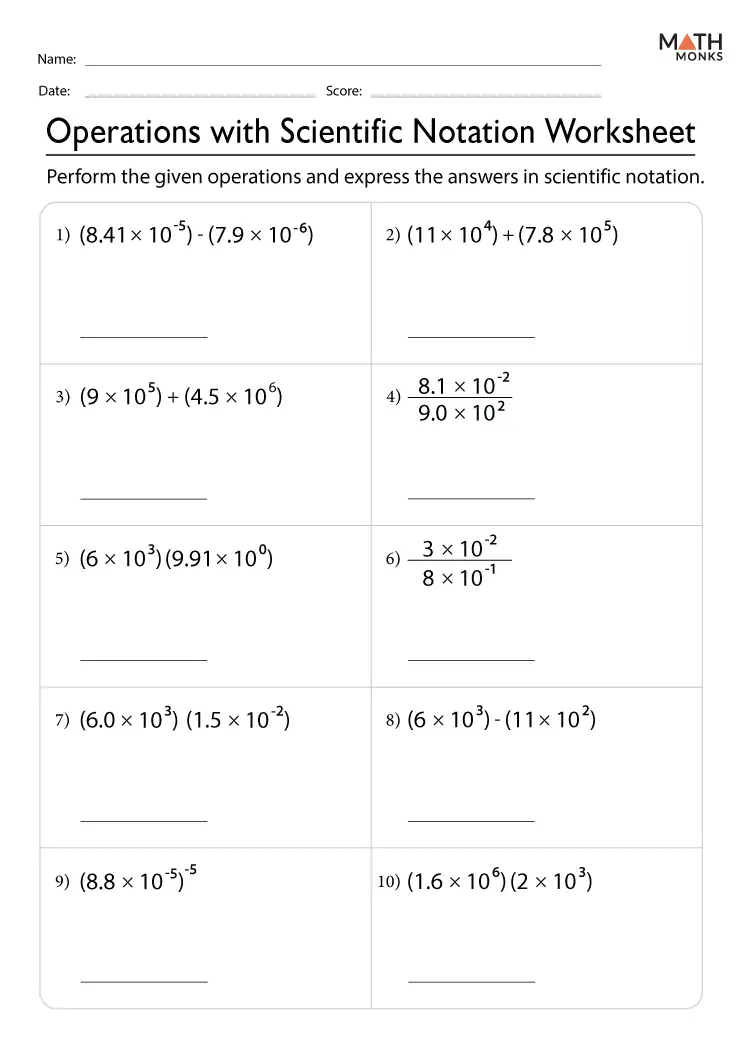
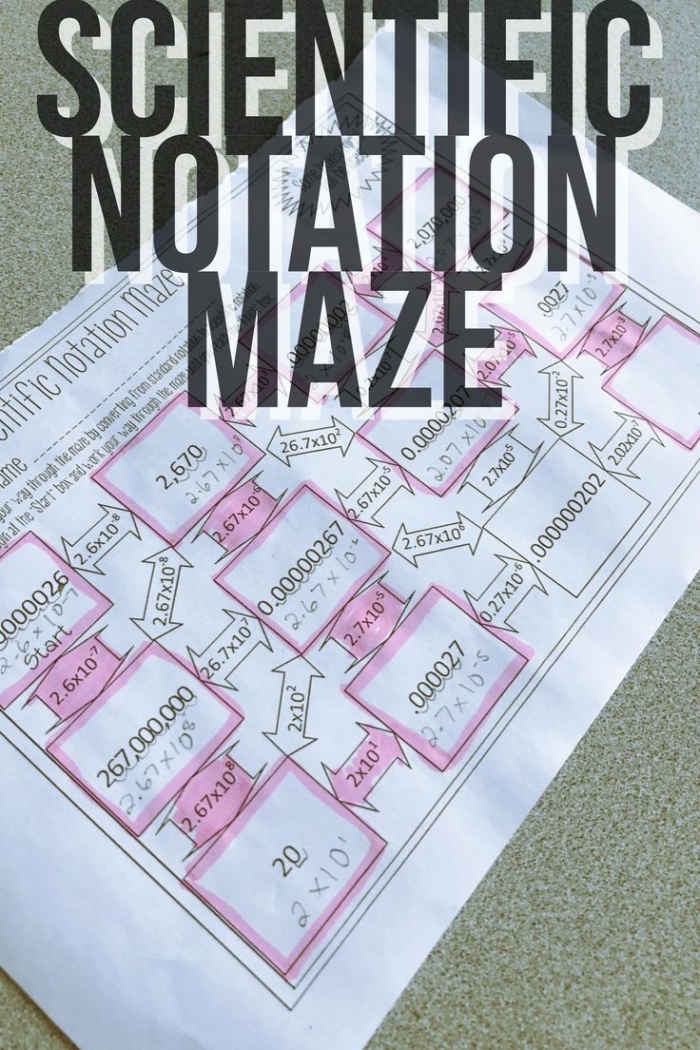
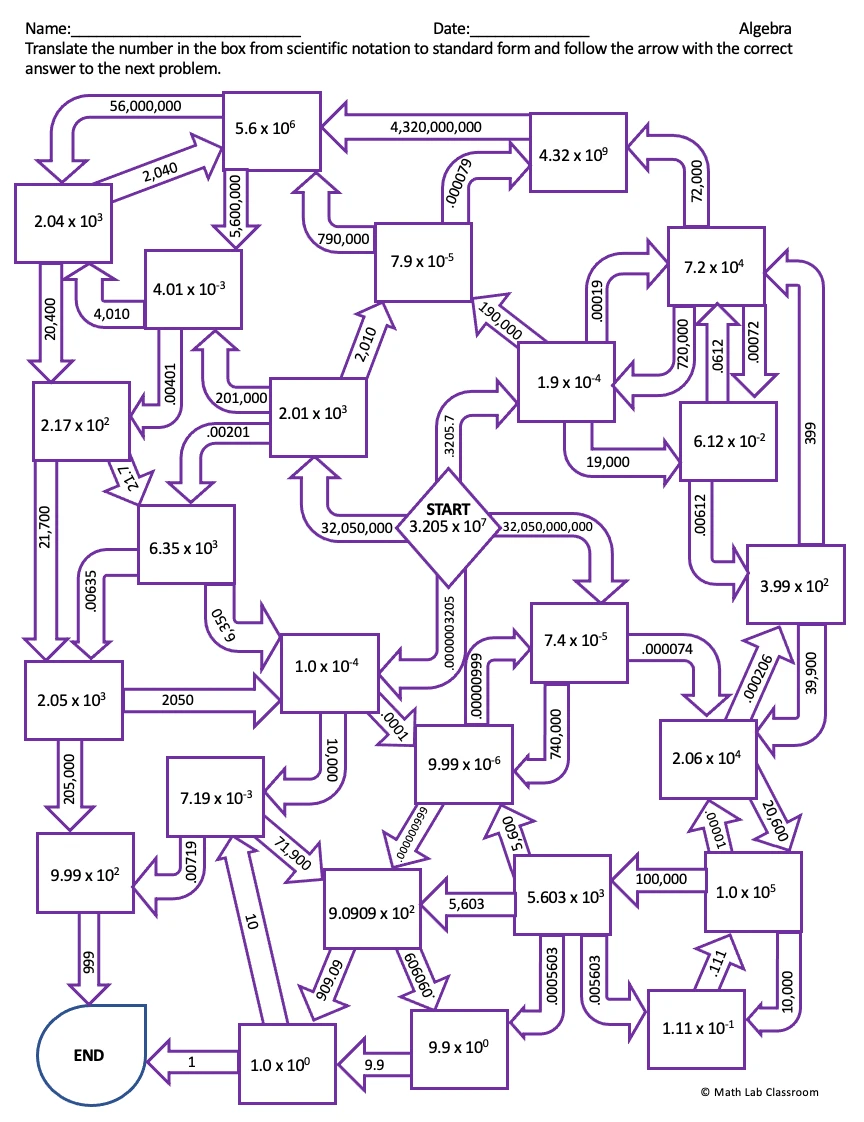
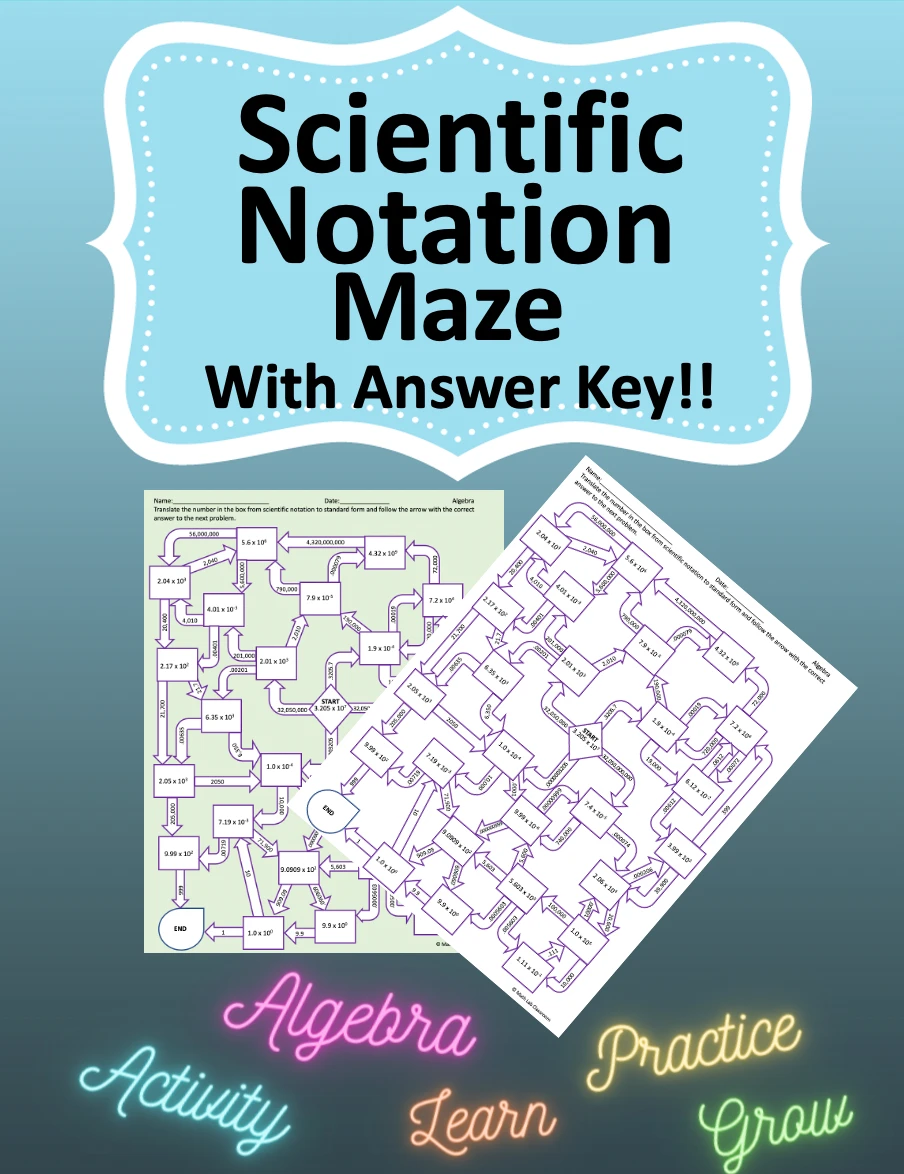
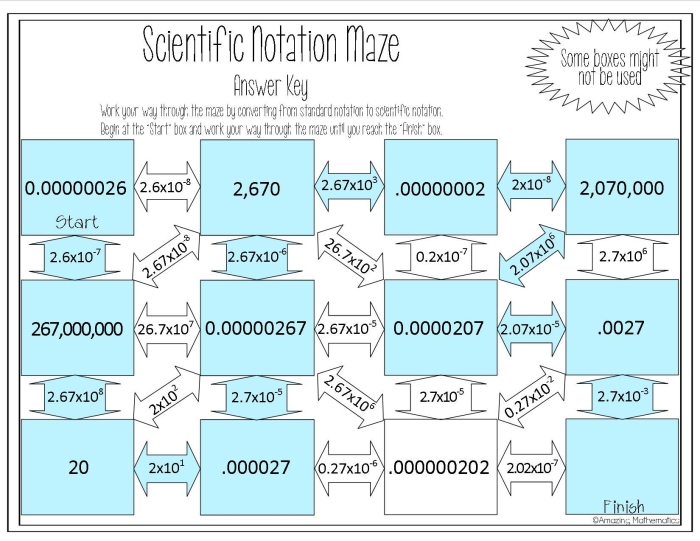
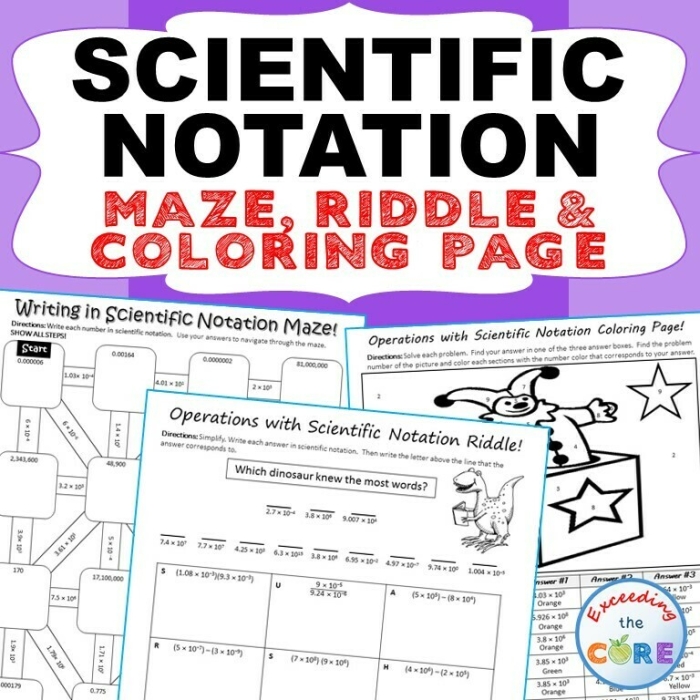
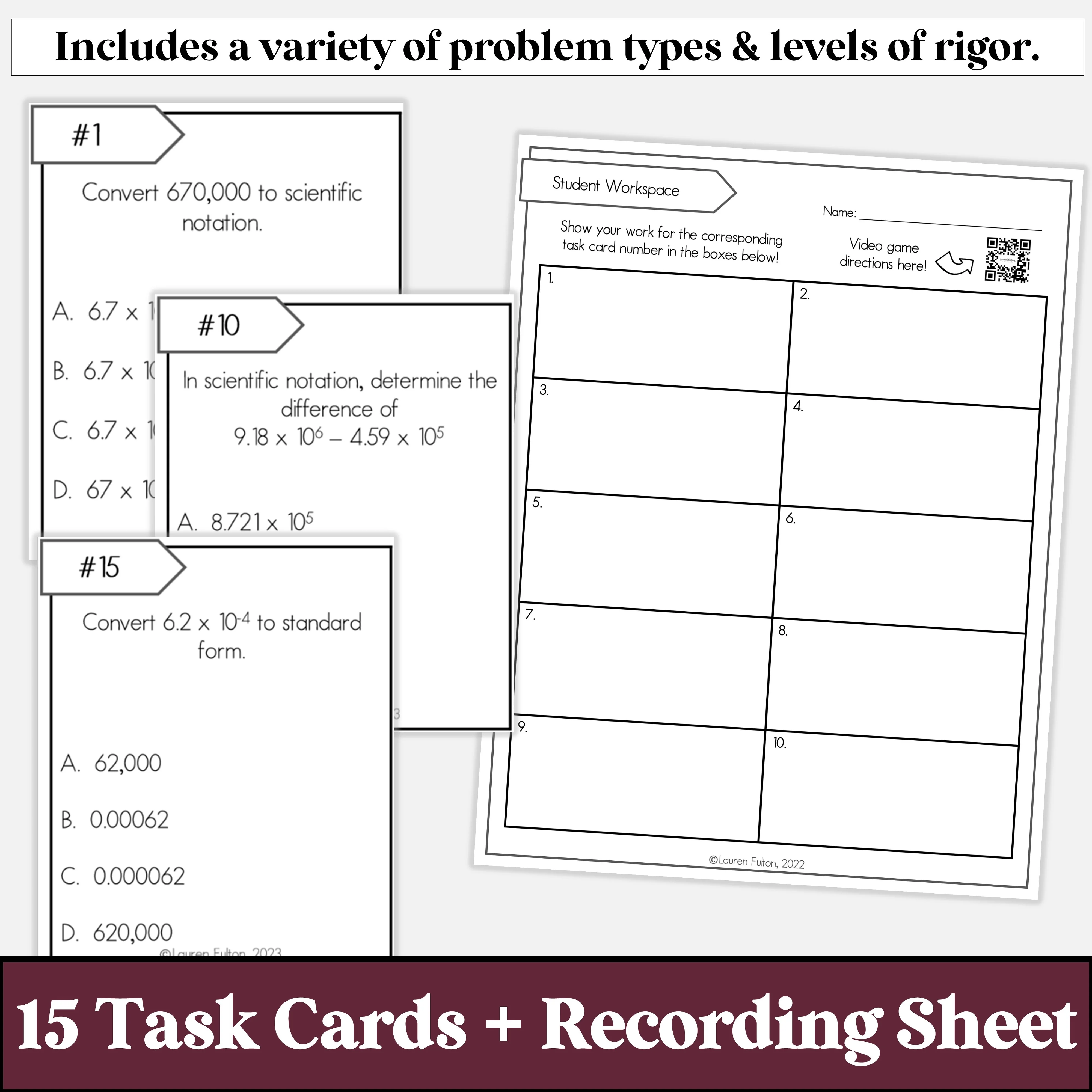
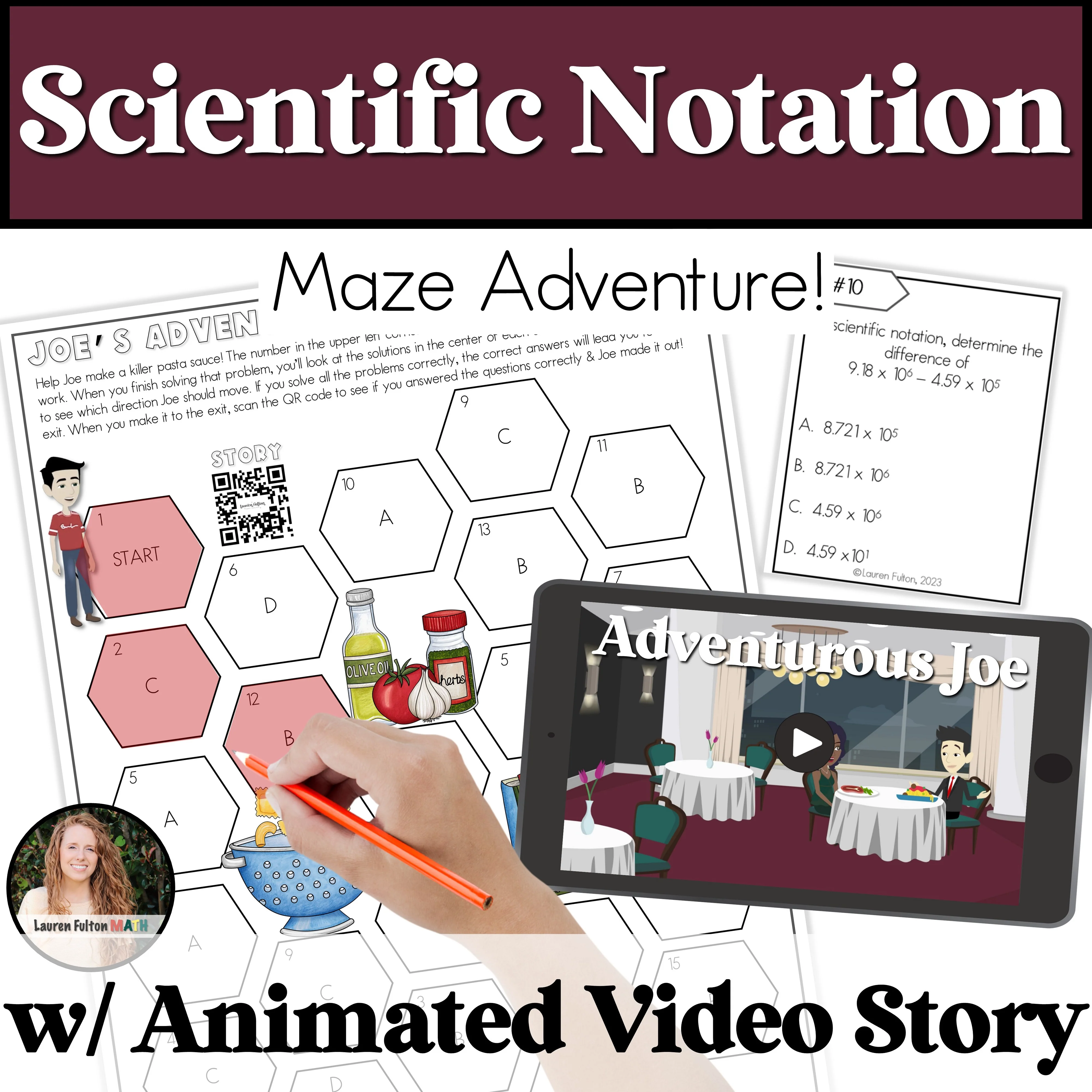
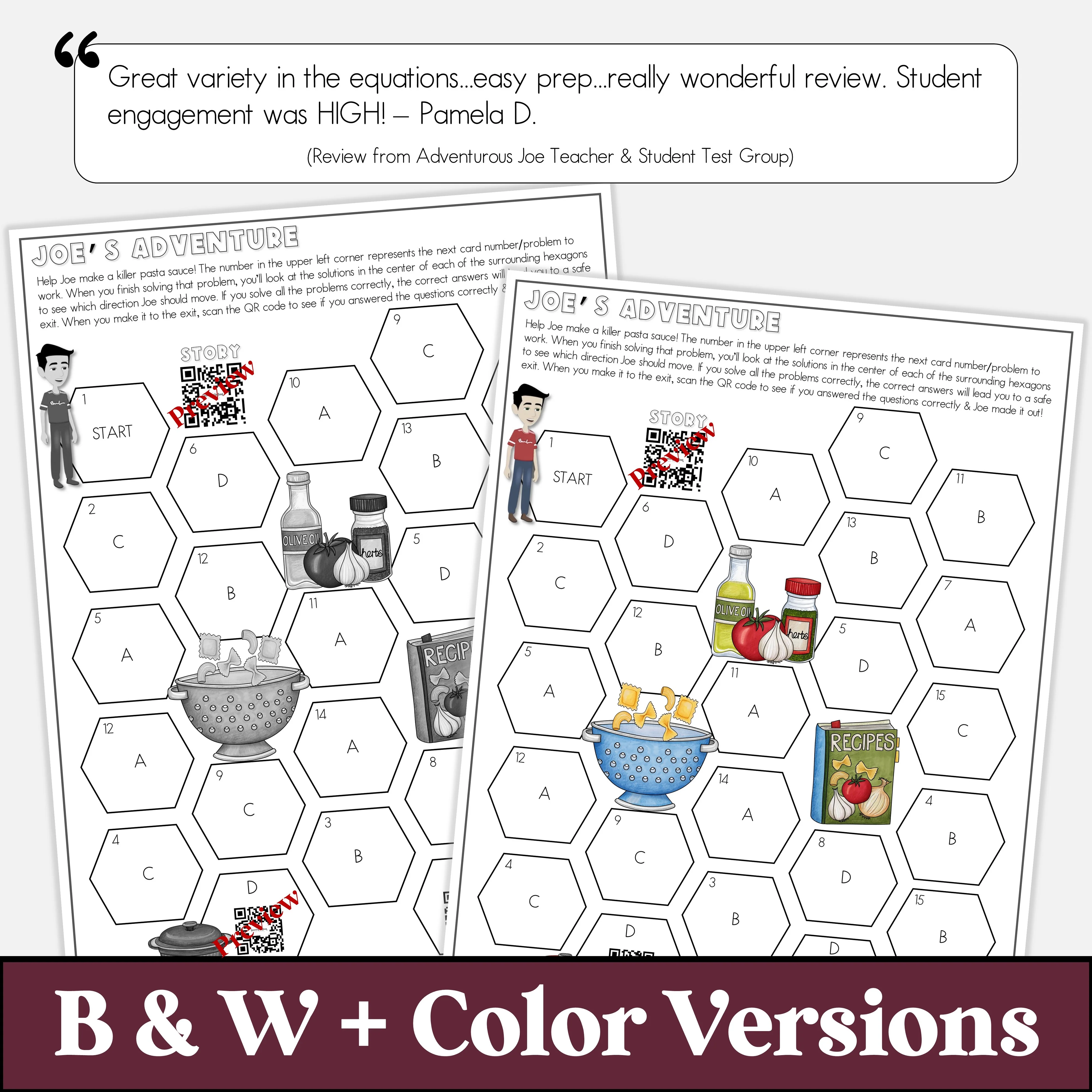
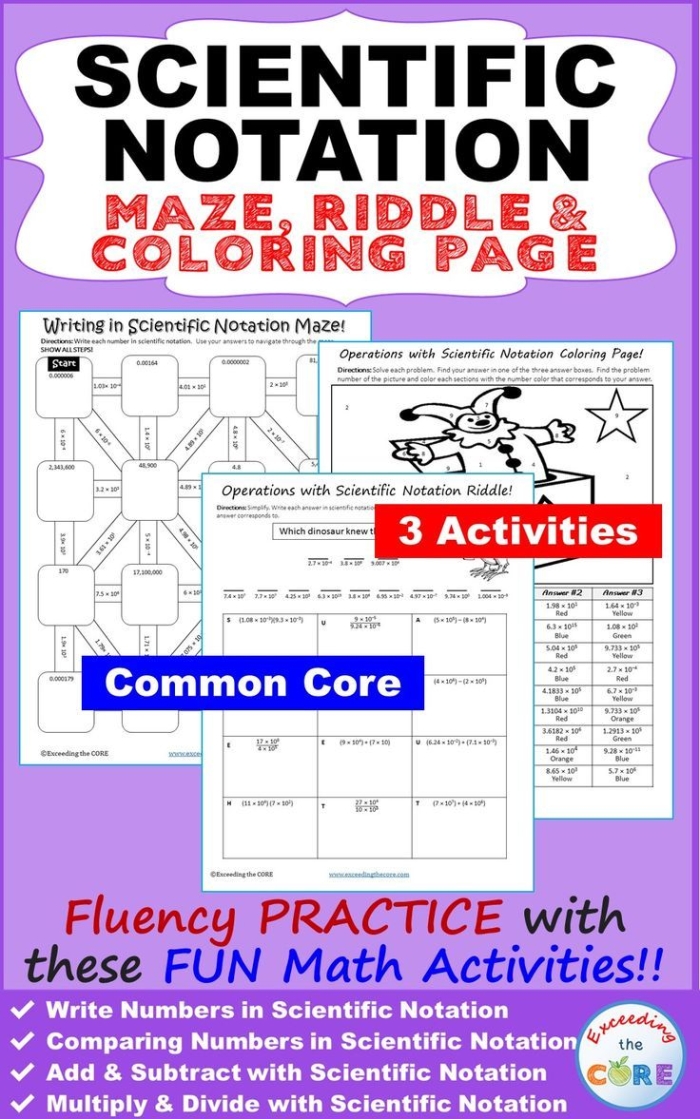
A scientific notation maze forces eighth grade students to stop and think before they move. Instead of randomly wandering through paths, they must convert numbers between scientific notation and standard form to determine which direction is correct. Each wrong conversion sends them down a dead end, while correct answers open the path forward.
This approach works because it combines two things students often struggle with separately: understanding the actual math concept and applying it under pressure. When solving problems on a worksheet, students can take their time, erase, and move on. In a maze, every decision matters immediately. A student who thinks 3.2 × 10² equals 320 will confidently head down one corridor, only to hit a wall. That instant feedback is powerful. They backtrack, reconsider their conversion, and realize their mistake in real time.
The handwriting component matters too. Eighth graders benefit from writing out their conversions as they work through the maze. They might jot down the steps beside each path choice, creating a visible record of their thinking. This handwriting practice reinforces the process rather than just circling answers on a traditional worksheet.
What makes a printable scientific notation maze worksheet effective is that it removes the intimidation factor some students feel around these conversions. A maze feels like a puzzle or game, not a test. Students engage with moving decimal points and powers of ten because they want to reach the end, not because they feel obligated to answer questions.
Teachers often pair these mazes with other eighth grade handwriting activities like constructing scatter plots or solving equations with like terms to create a balanced practice set. The variety keeps students engaged across different math skills while maintaining the same hands-on, written approach.
Use These Worksheets Today