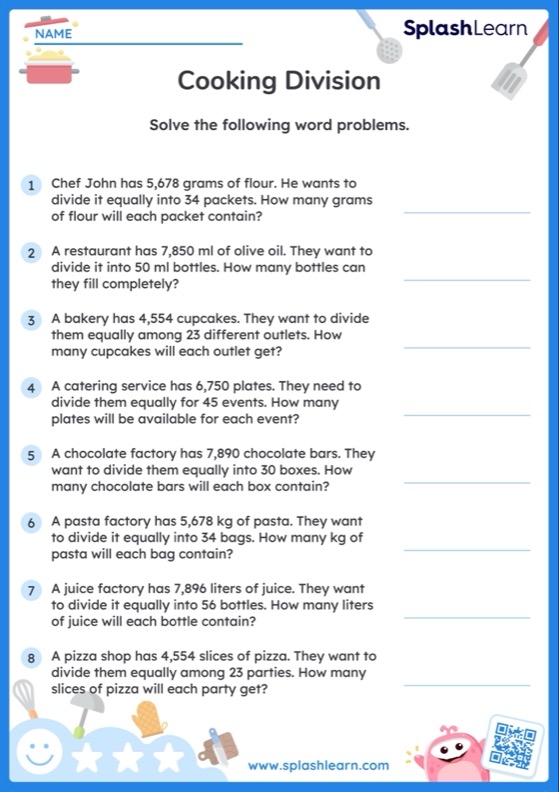
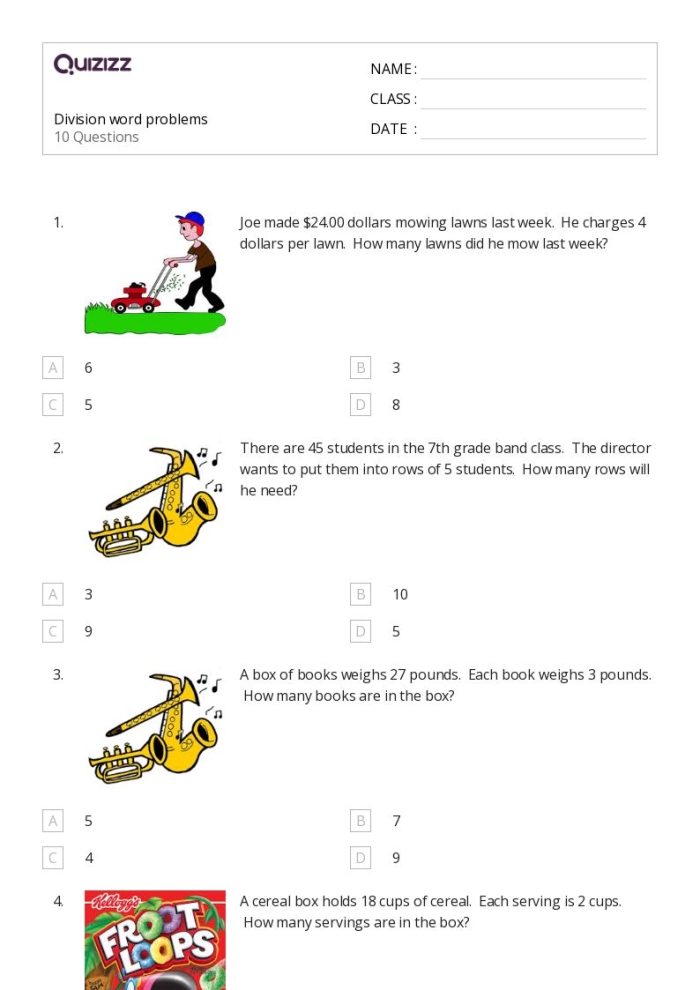
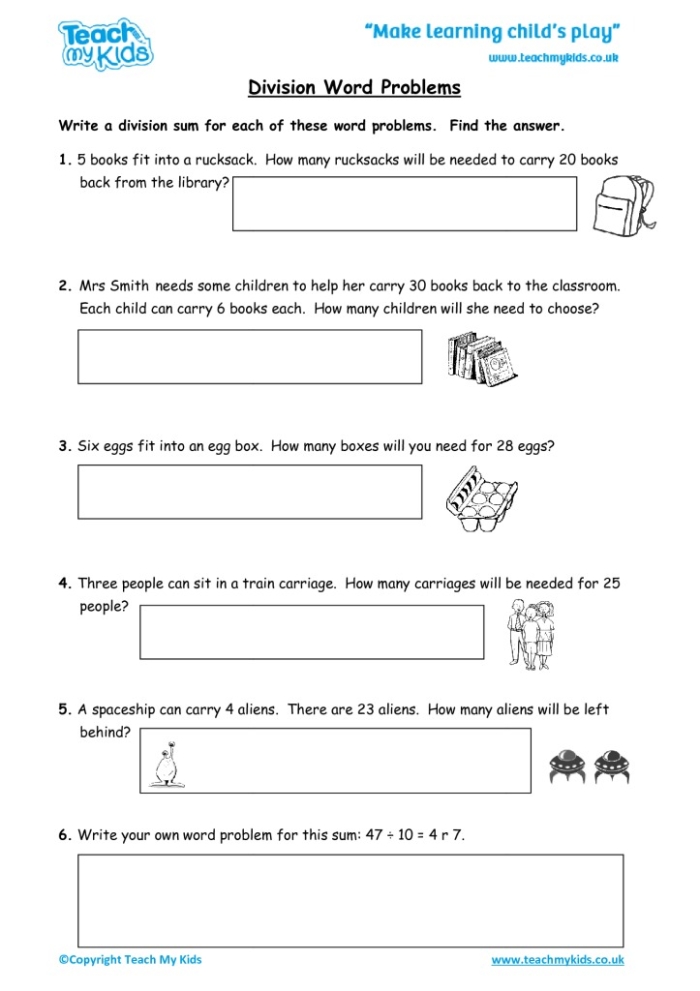
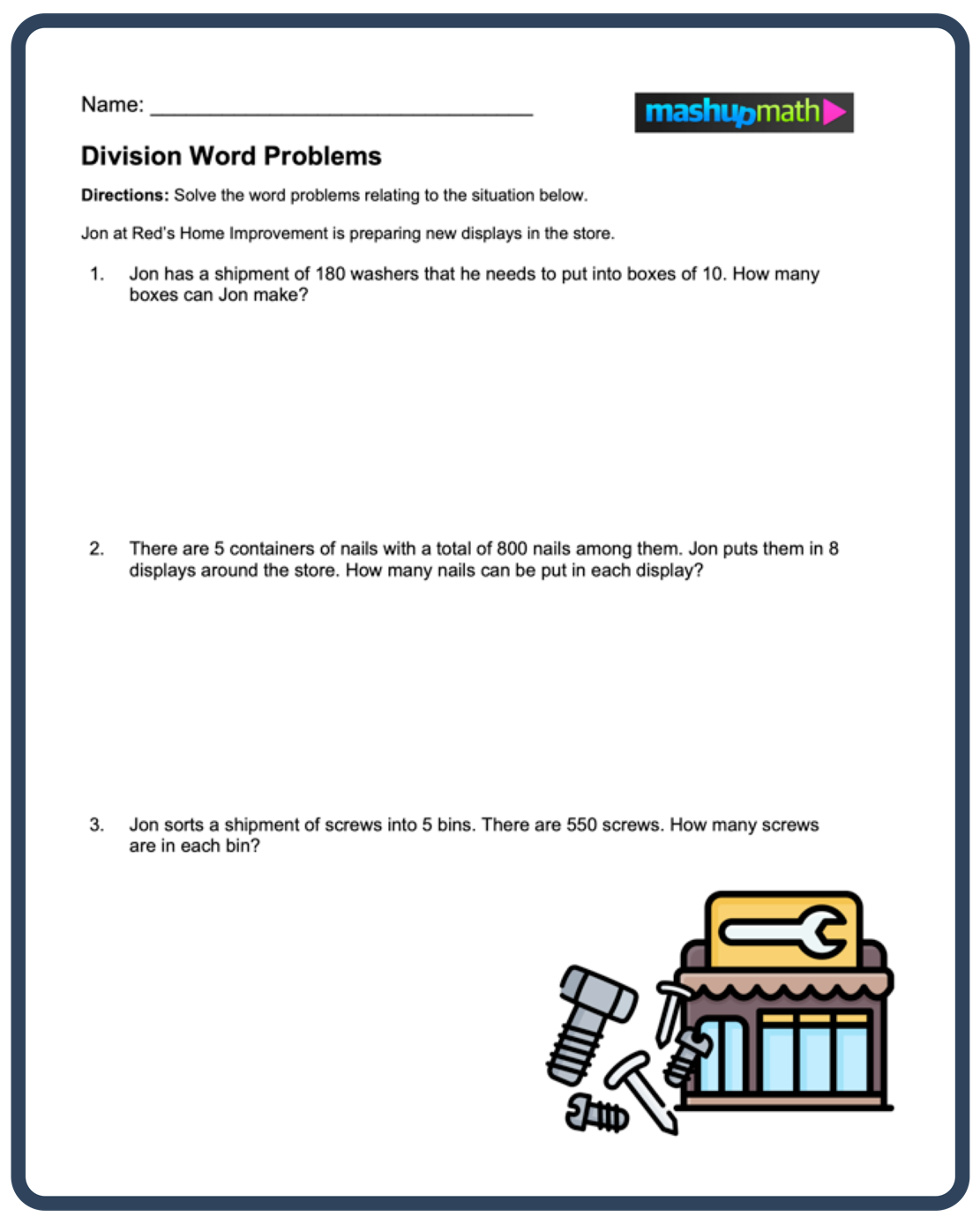
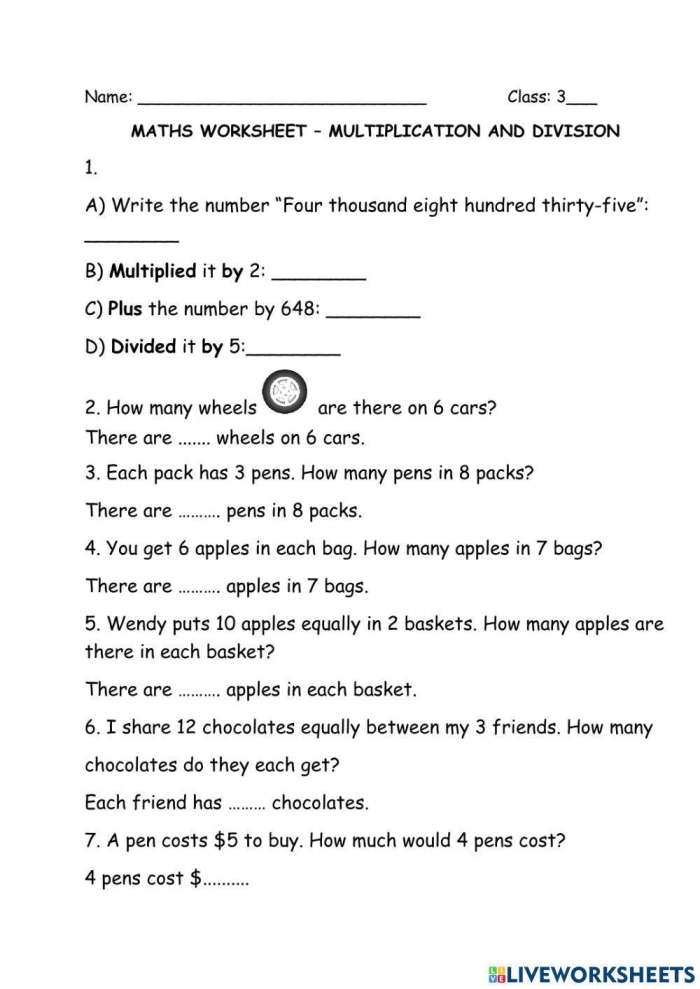
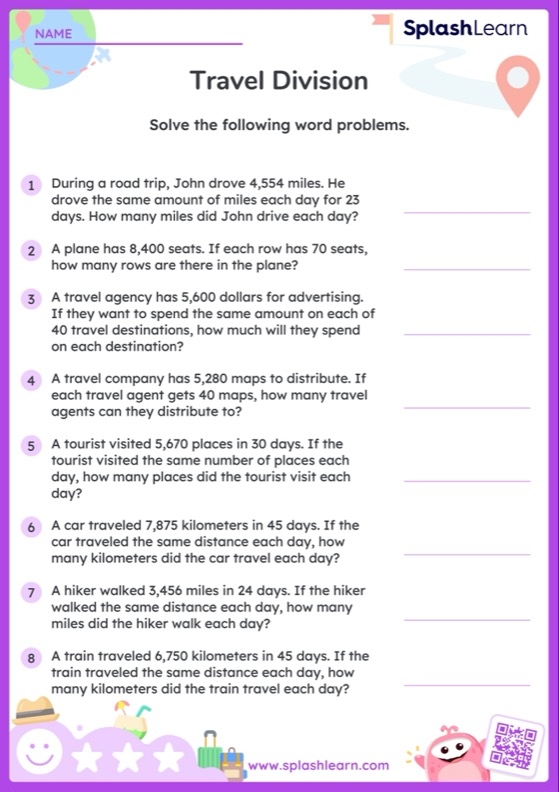
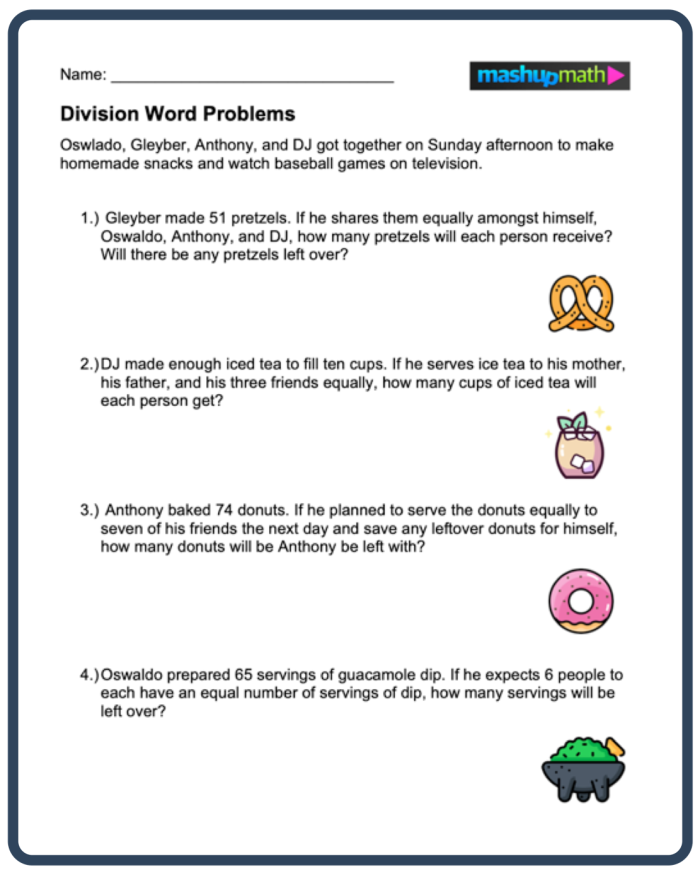
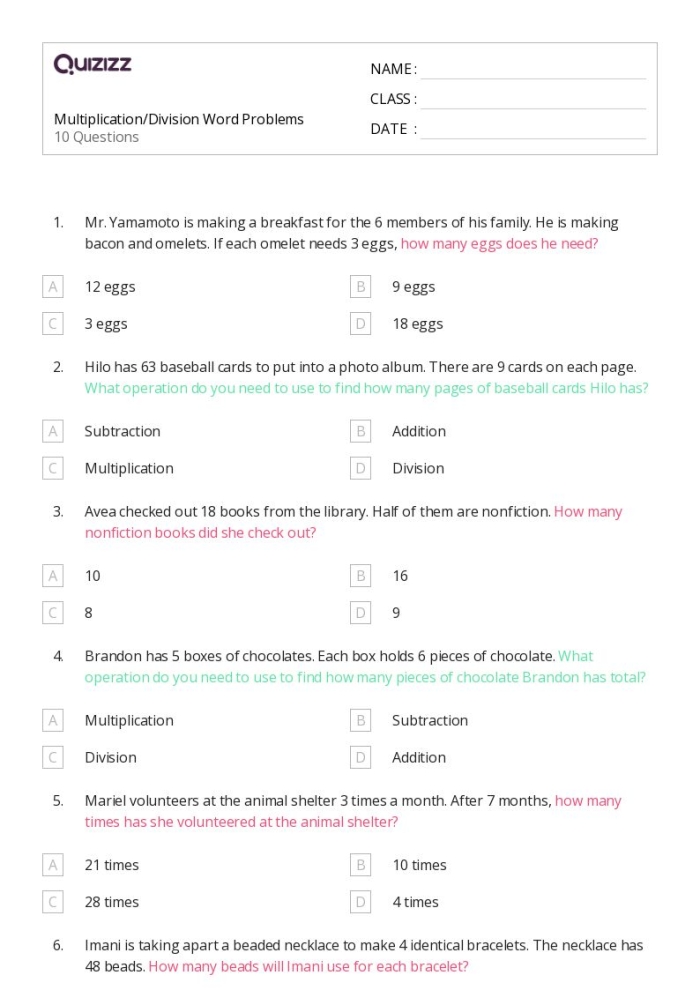
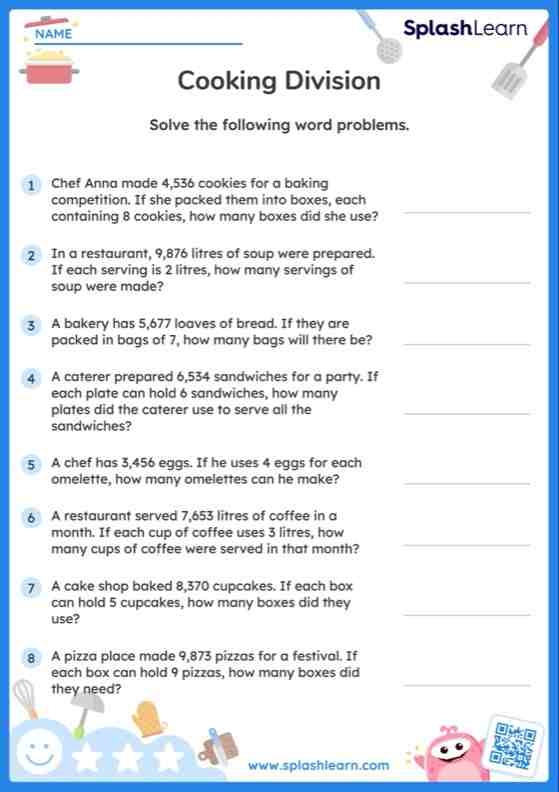
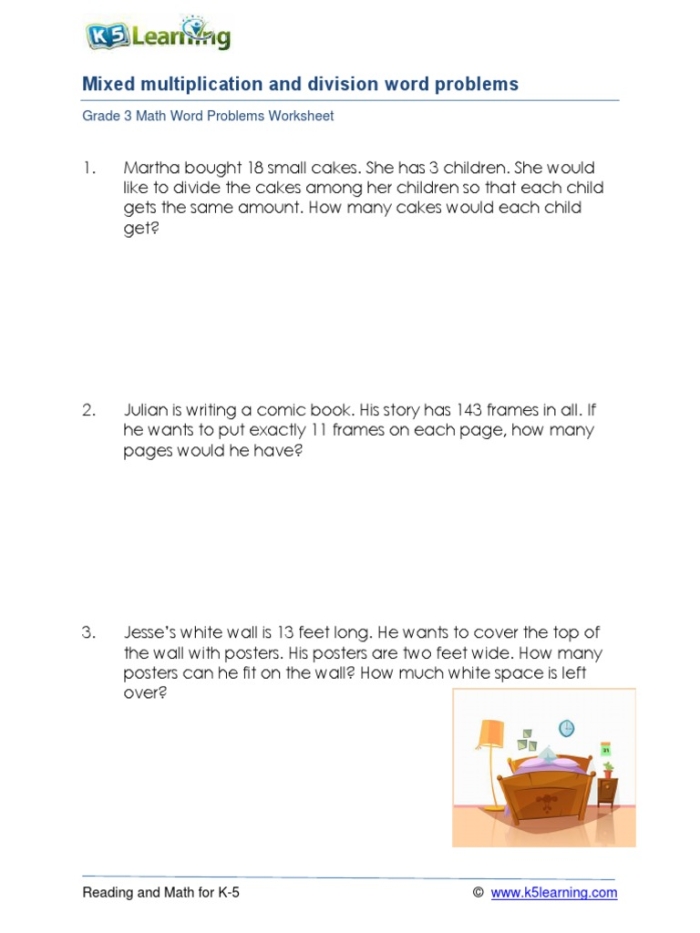
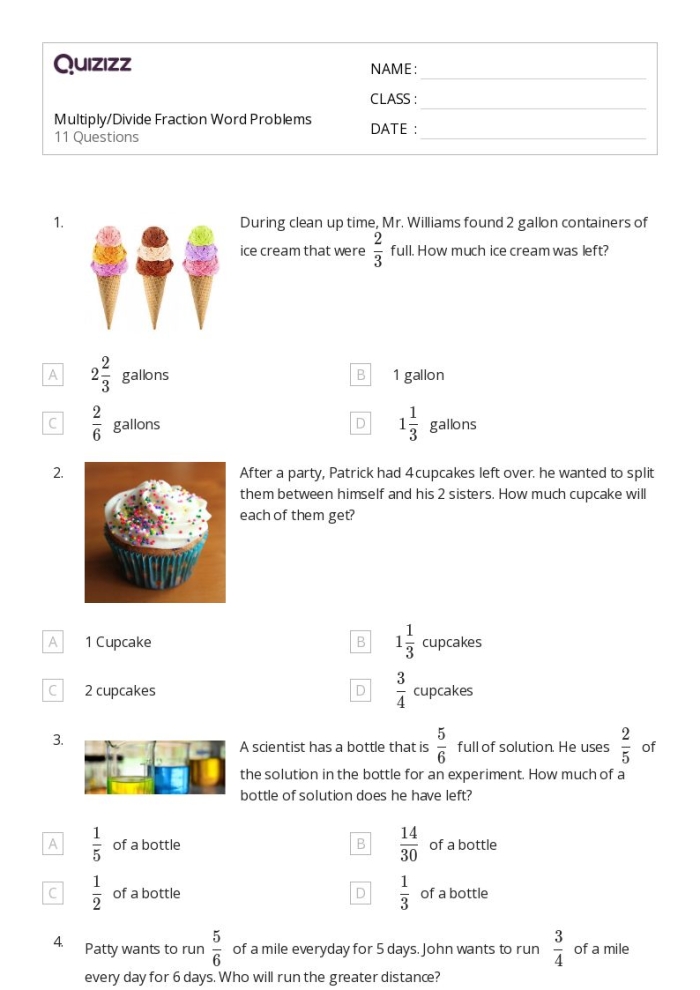
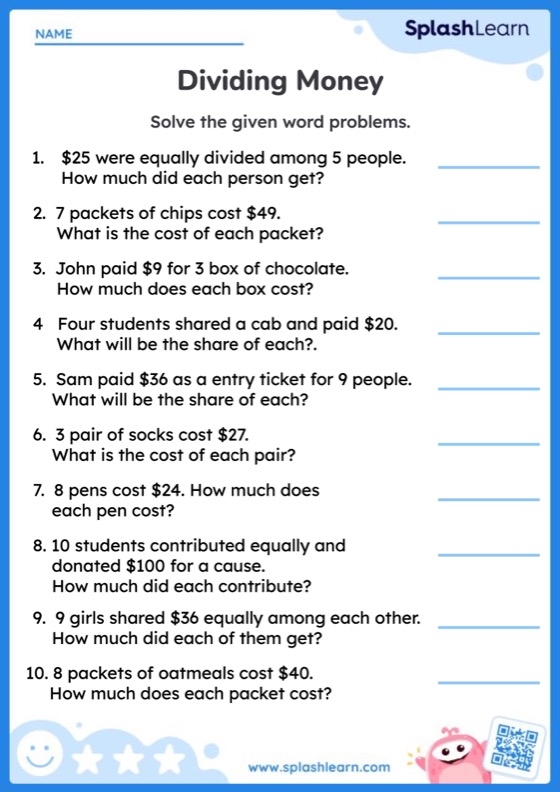
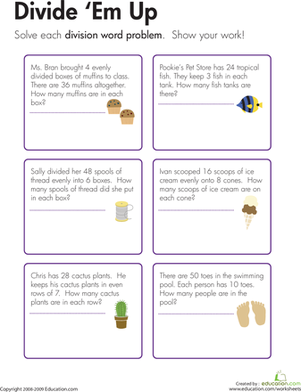
Division word problems force kids to think like mathematicians, not just worksheet-fillers. When third grade students encounter a real scenario, they have to extract the right numbers, understand what the problem is actually asking, and then work backward to create their own division equation. This worksheet takes that process seriously.
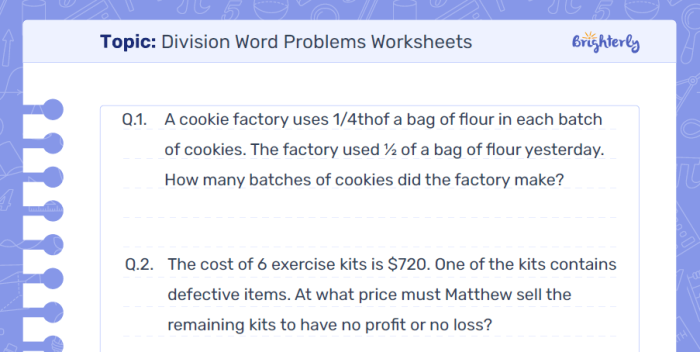
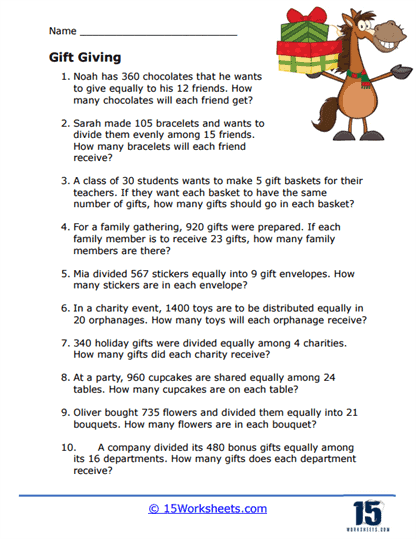
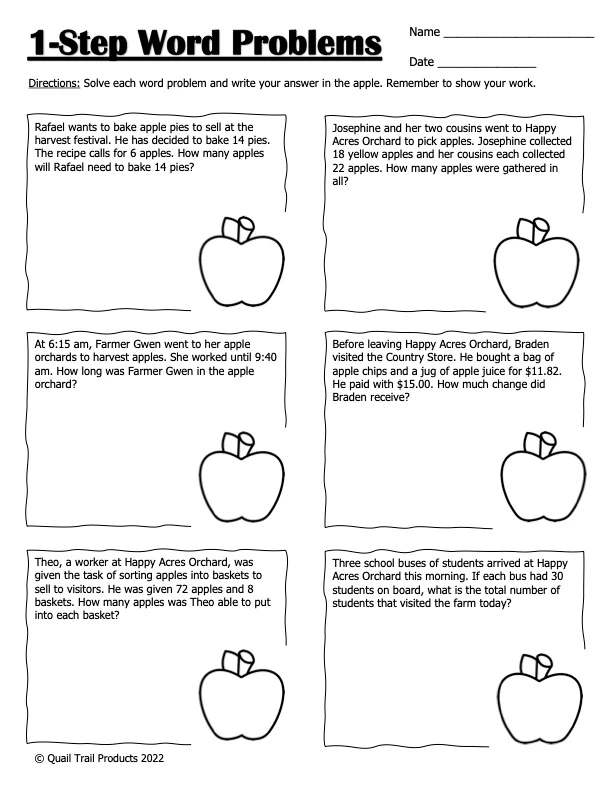
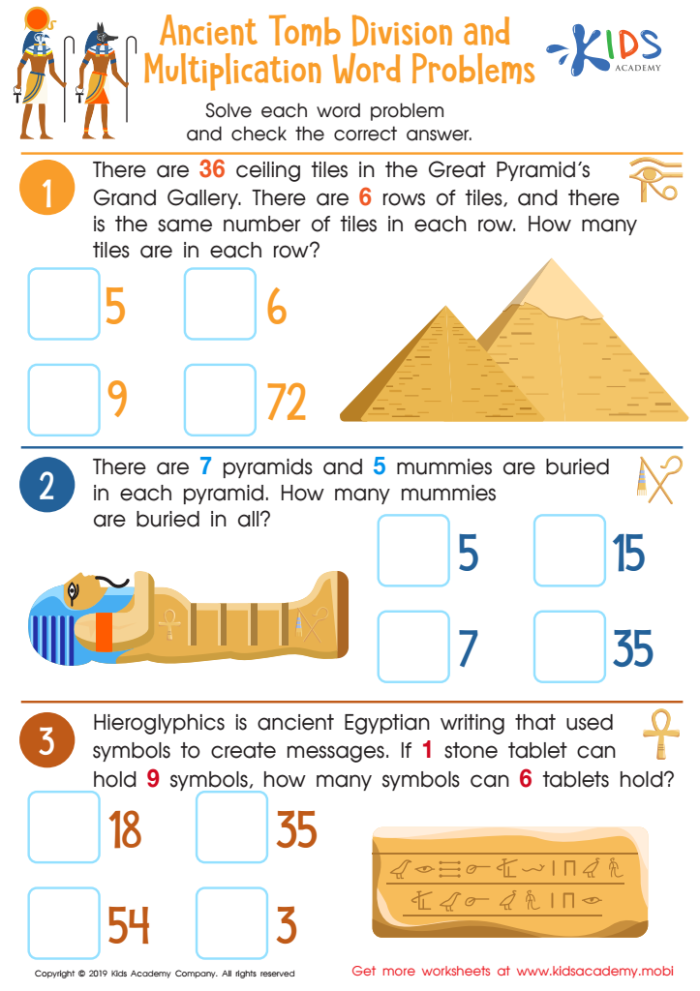
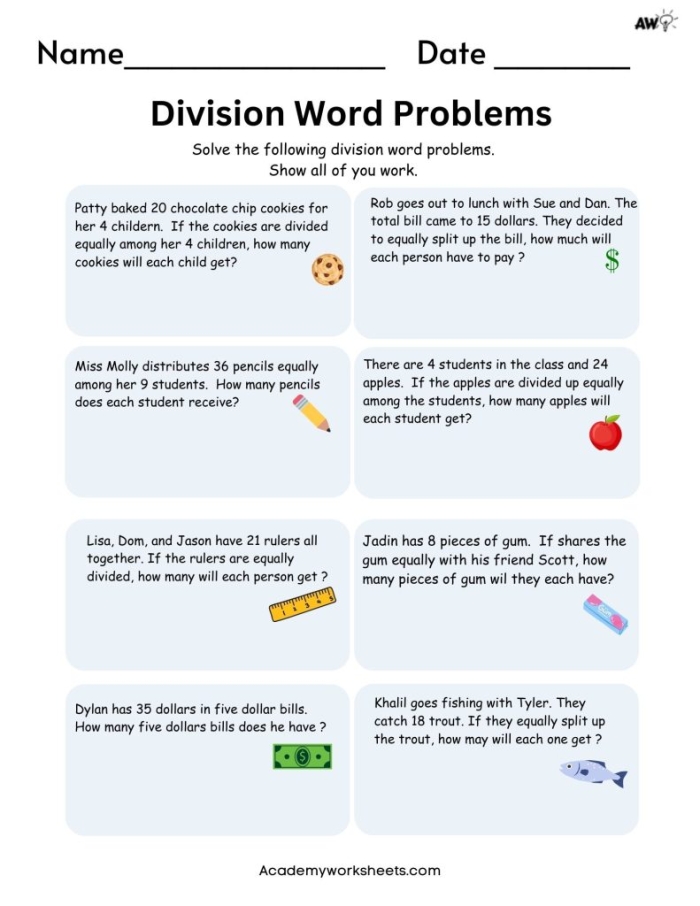
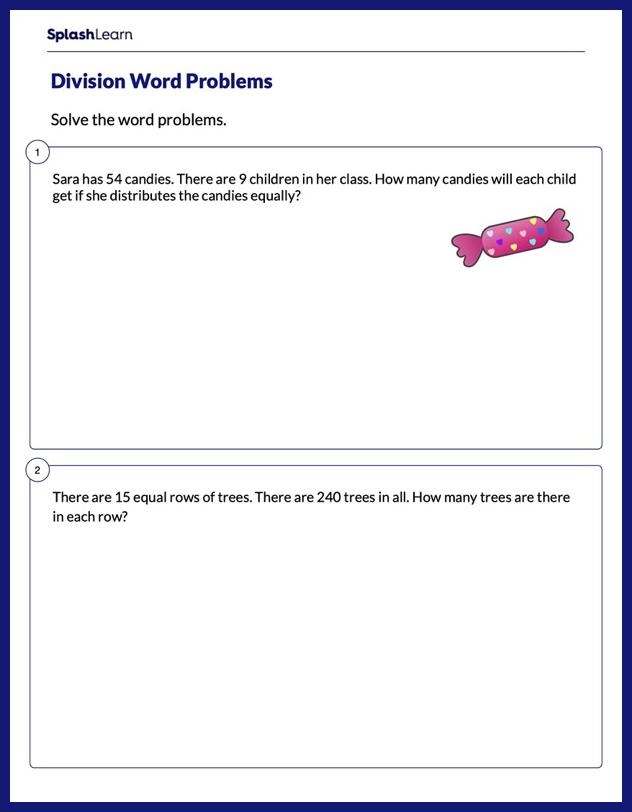
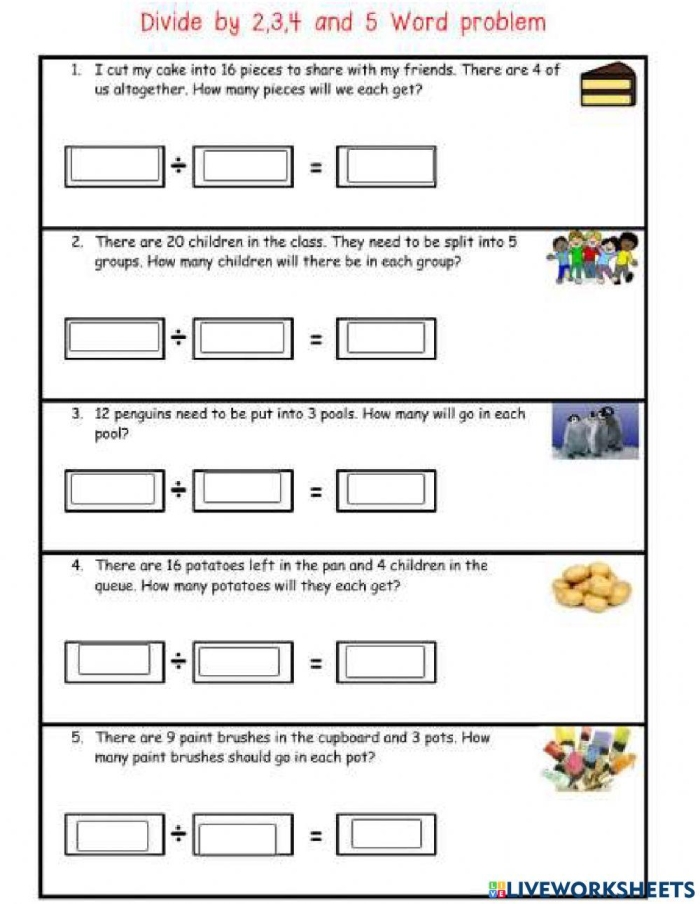
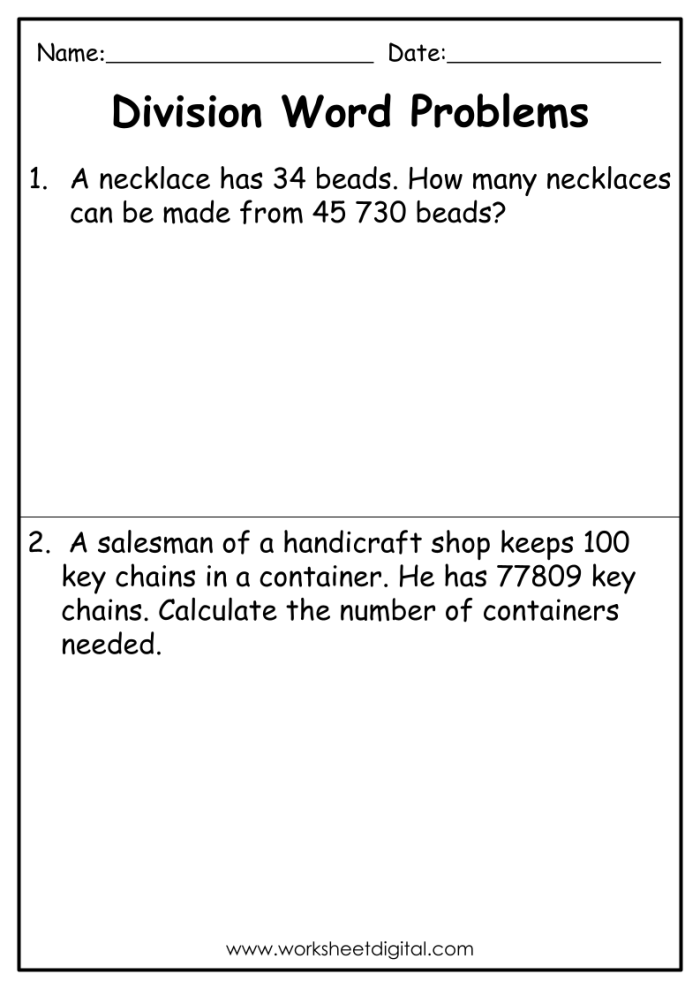
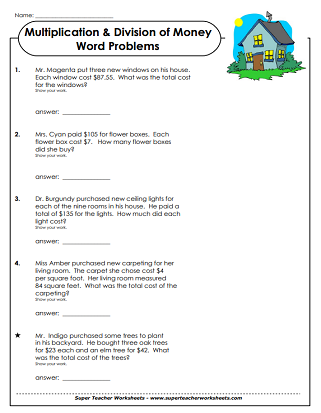
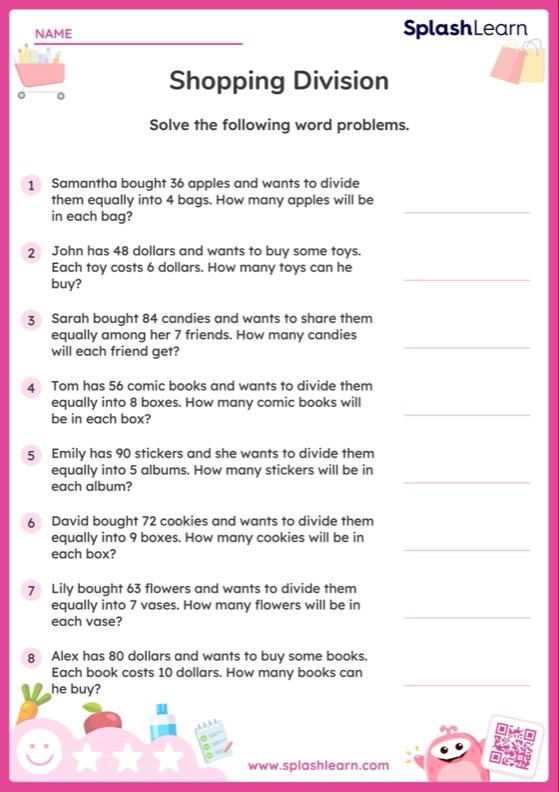
The structure here is straightforward but effective. Students read through word problems that describe everyday situations, then pull out the details they need. Maybe a problem talks about dividing cookies among friends, or splitting a collection of items into equal groups. From those details, kids construct a division problem where a multidigit number divides evenly into smaller, equal parts. The key phrase here is “evenly divided.” Third grade students aren’t wrestling with remainders yet. These problems are designed so the answer comes out clean, letting them focus on the mechanics of long division without extra complications.
What makes this approach valuable is that it reverses the typical direction of learning. Rather than starting with a division equation and solving it, students begin with context and build the math from there. This strengthens their understanding of what division actually means. They see that 24 divided by 3 isn’t just an abstract calculation, it’s an answer to a real question about fair sharing or grouping.
This kind of problem-solving connects naturally to other third grade skills. Kids working through math puzzles involving the ocean or exploring area and decimals are building the same foundational reasoning. Even students tackling grammar work with plural possessive nouns benefit from this kind of structured, detail-focused thinking.
The worksheet format works because it’s repeatable. Once students understand the pattern, they can apply it to multiple problems, building confidence with each one they complete successfully.
Start Practicing with These Worksheets