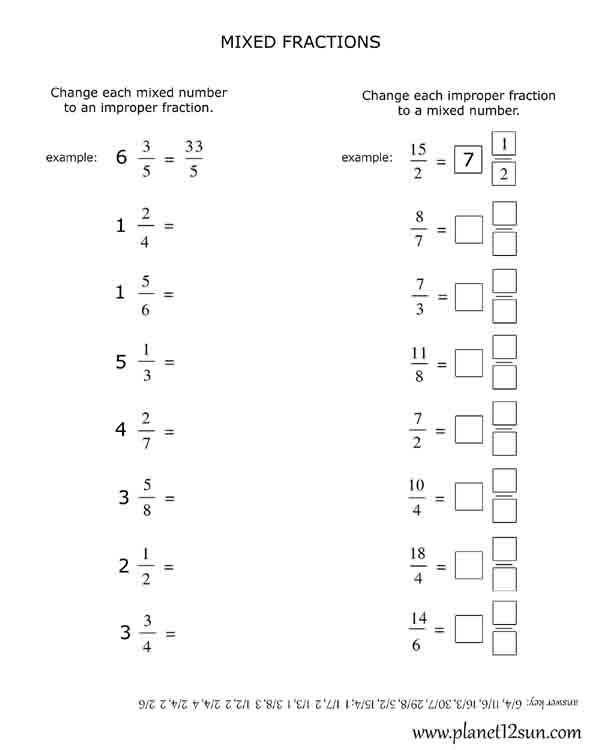
Converting mixed fractions to improper fractions is one of those skills that looks confusing at first, but becomes automatic once you understand the mechanics behind it. If you’re teaching fifth grade geometry or working through math worksheets, this conversion shows up constantly, and mastering it opens doors to more complex fraction operations.
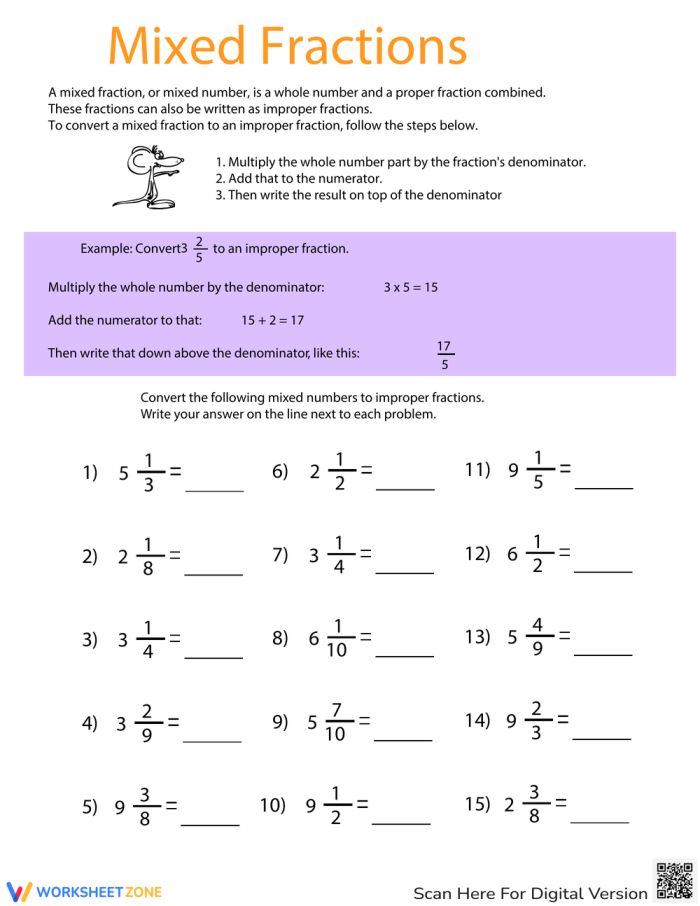
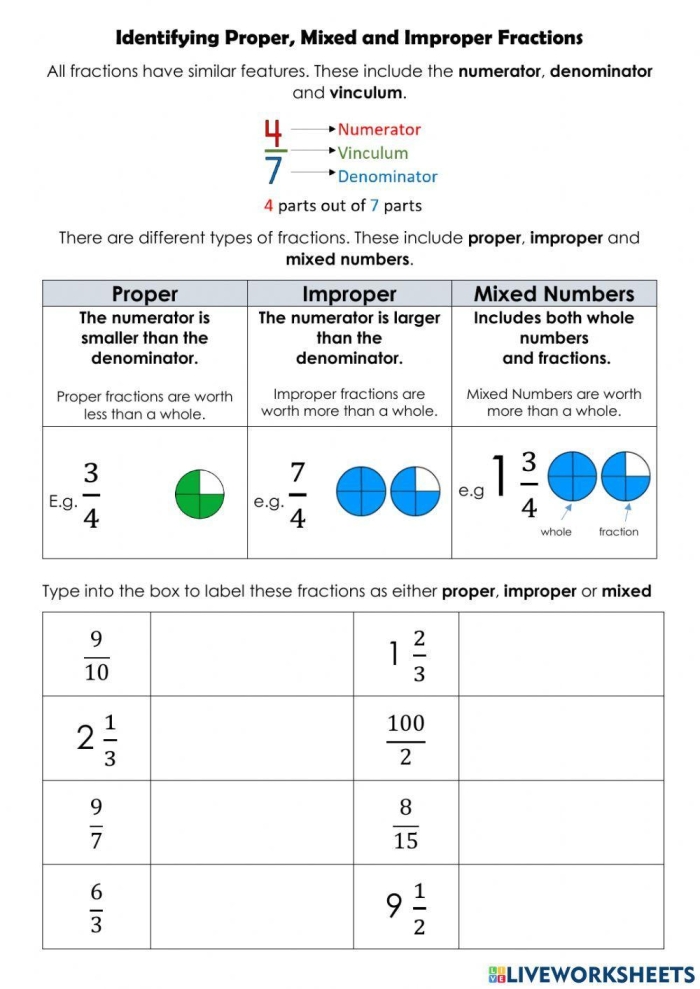
A mixed fraction combines a whole number with a proper fraction, like 2 3/4. An improper fraction has a numerator larger than or equal to its denominator, like 11/4. The conversion itself follows a straightforward formula: multiply the whole number by the denominator, add the numerator, and place that result over the original denominator.
Let’s walk through an example. Take 3 2/5. Multiply 3 by 5 to get 15, then add the numerator 2 to reach 17. Your improper fraction is 17/5. The reason this works comes down to understanding that the whole number represents multiple complete fractions. Three wholes equal 15 fifths, so adding the 2 fifths gives you 17 fifths total.
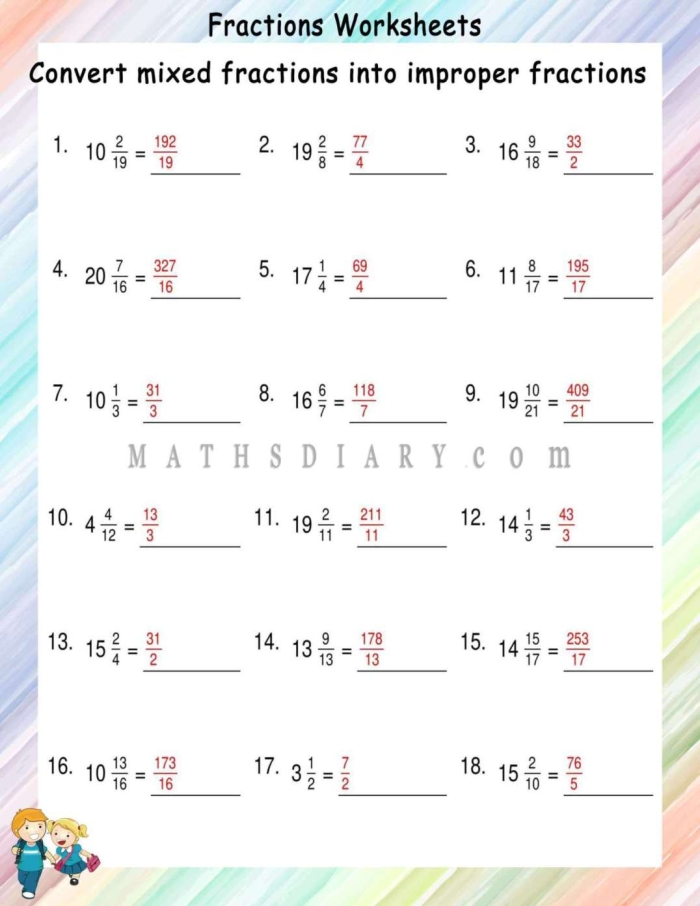
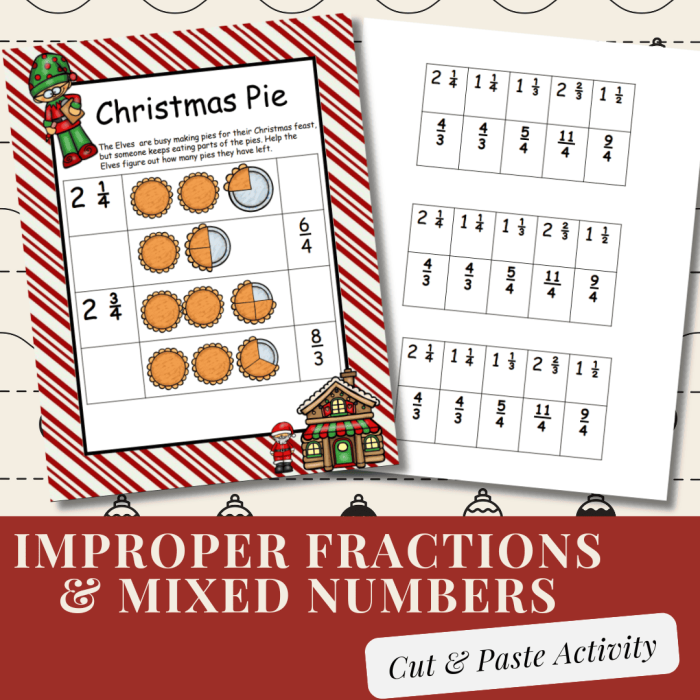
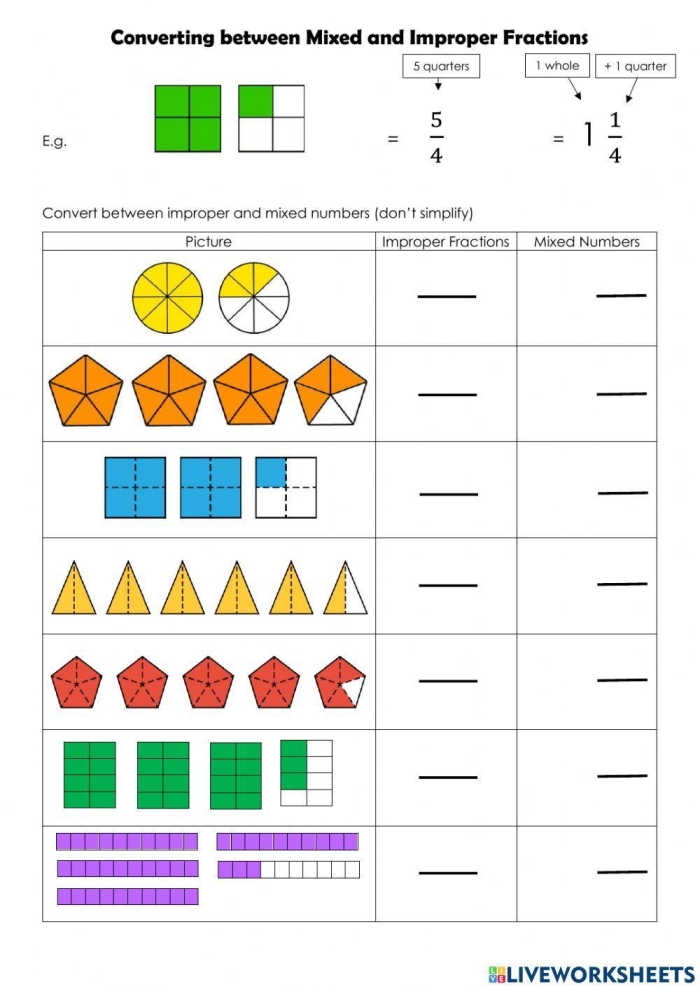
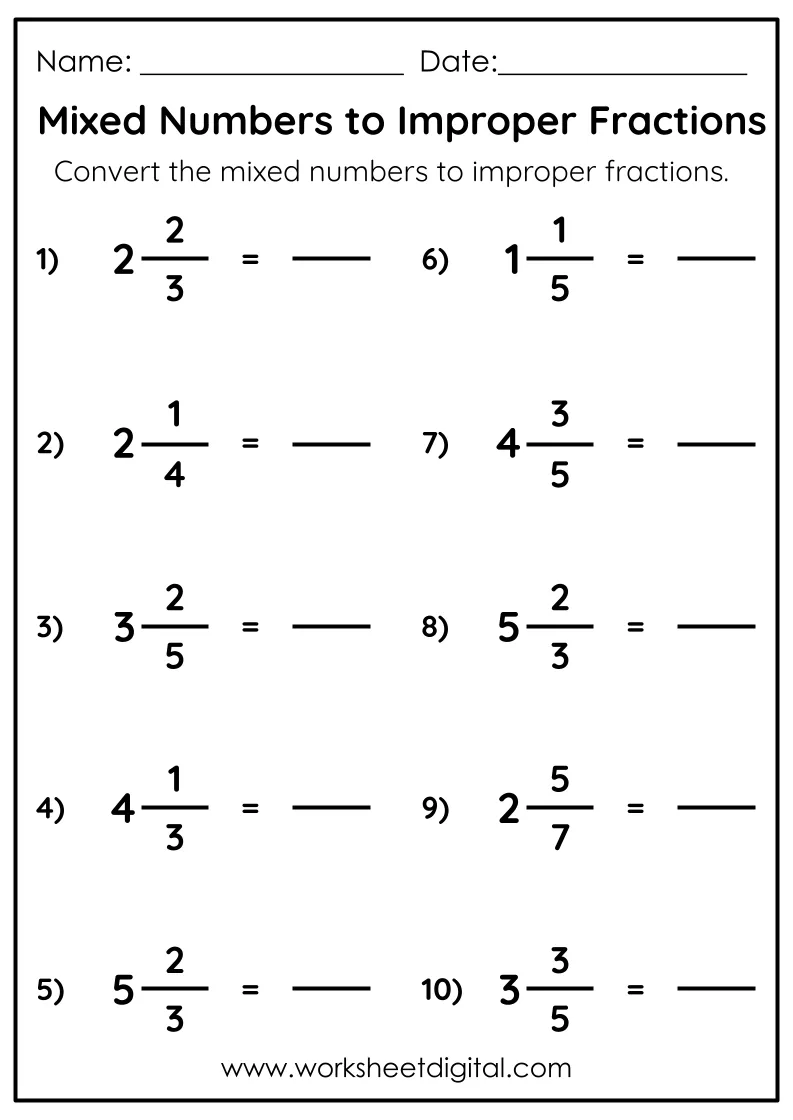
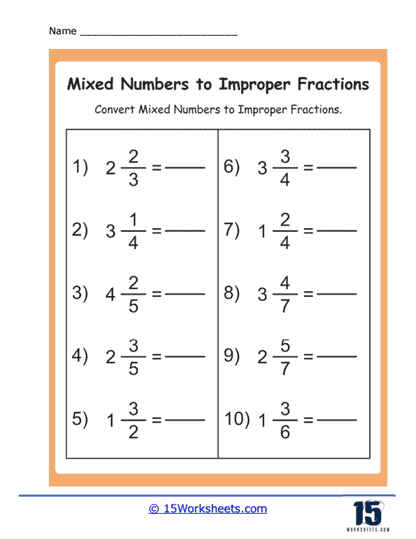
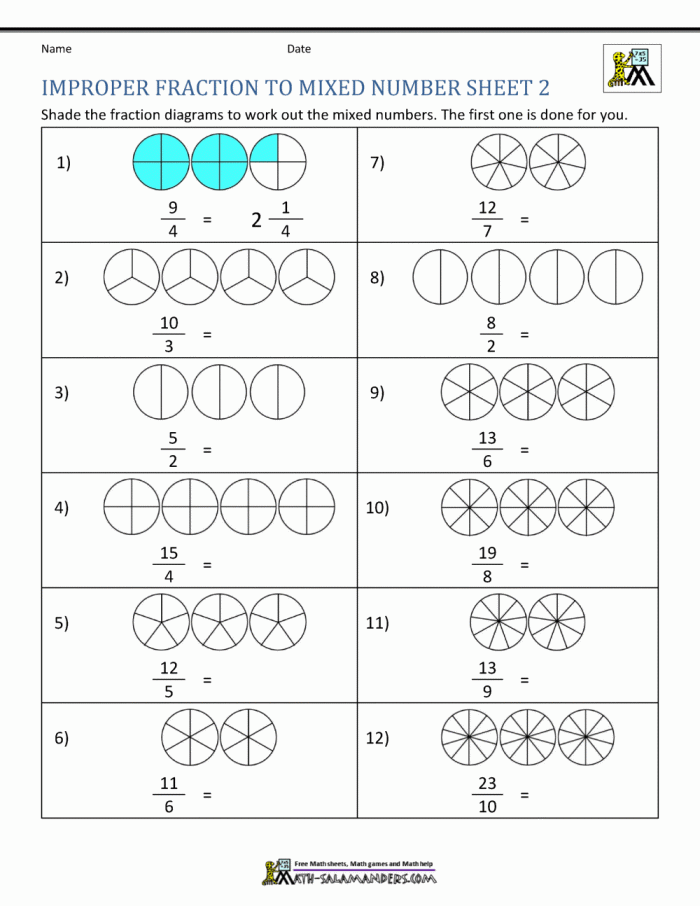
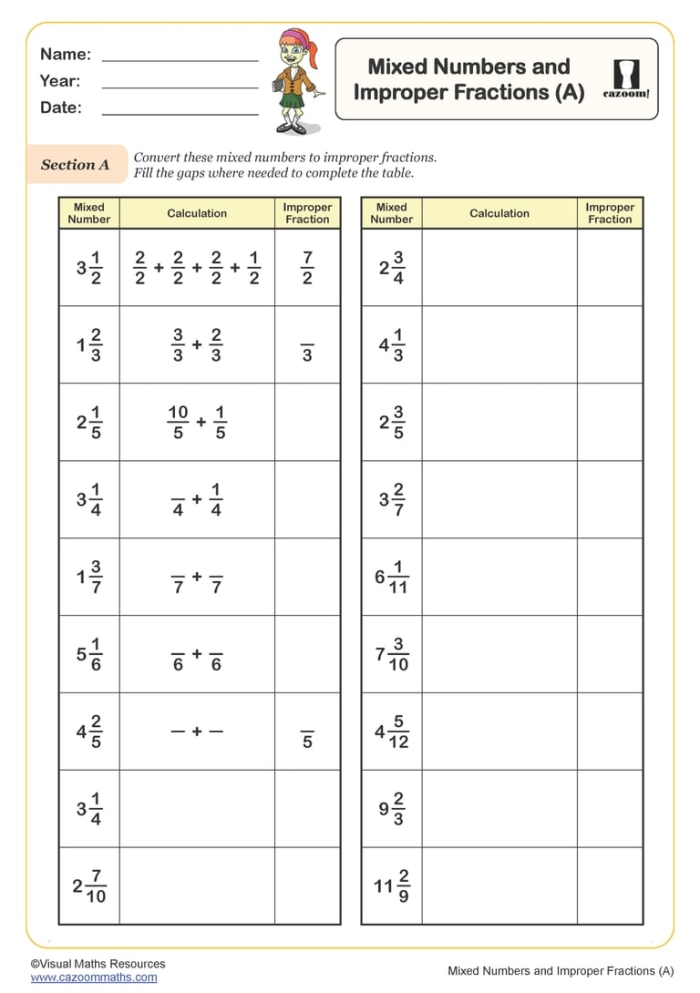
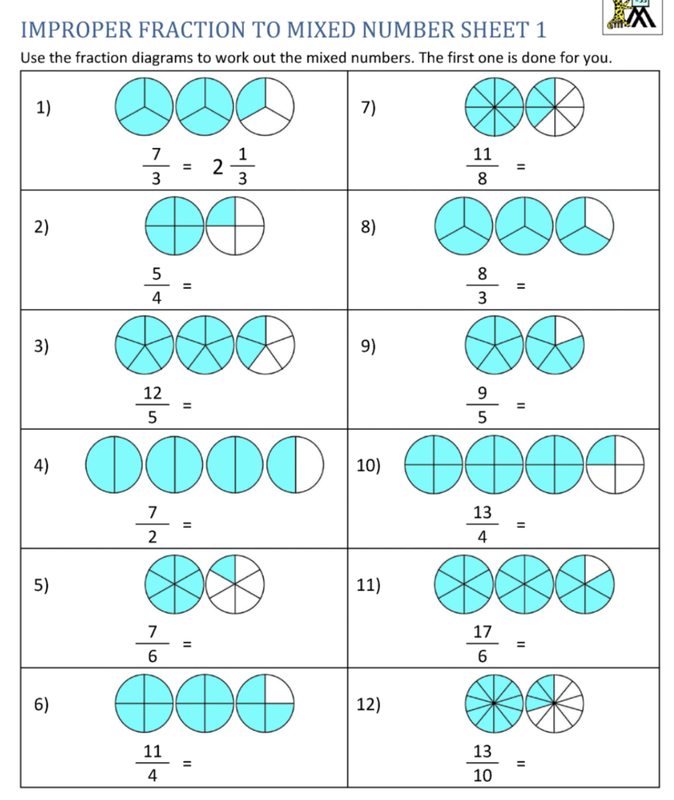
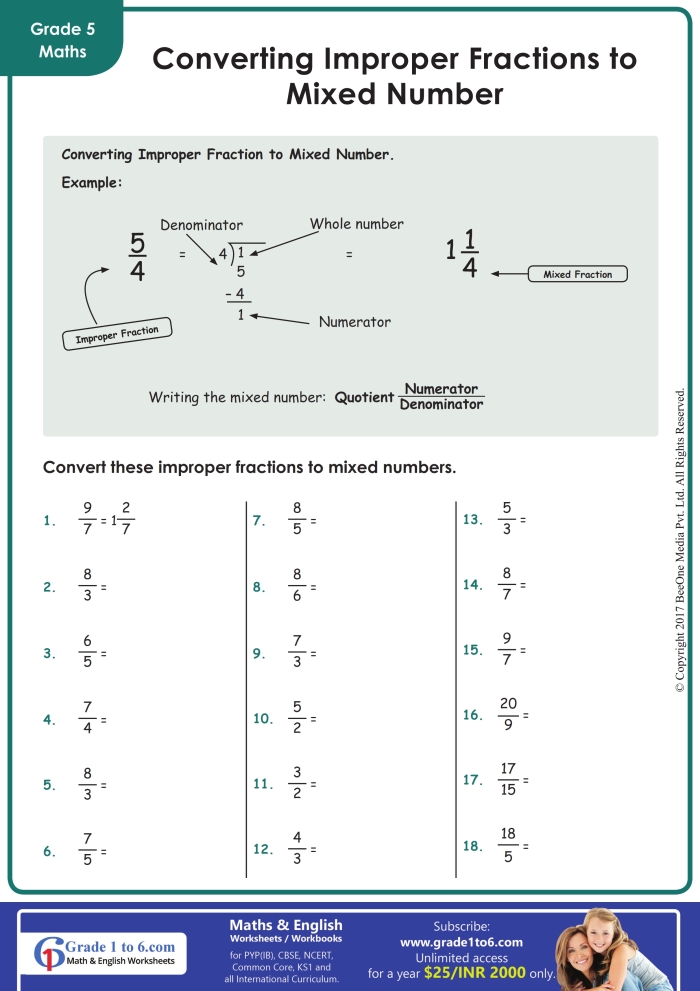
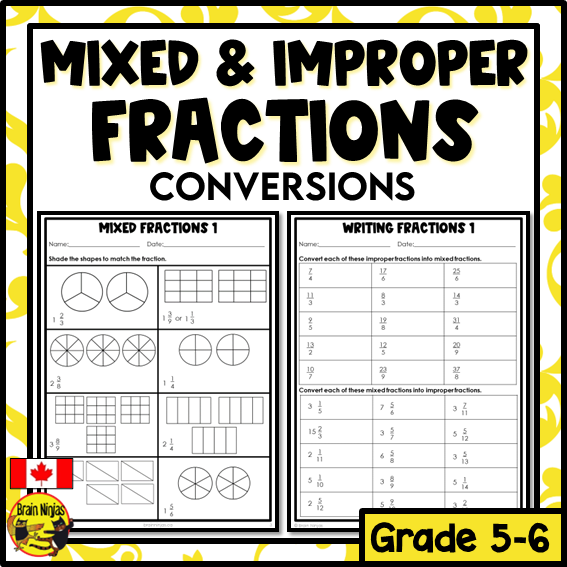
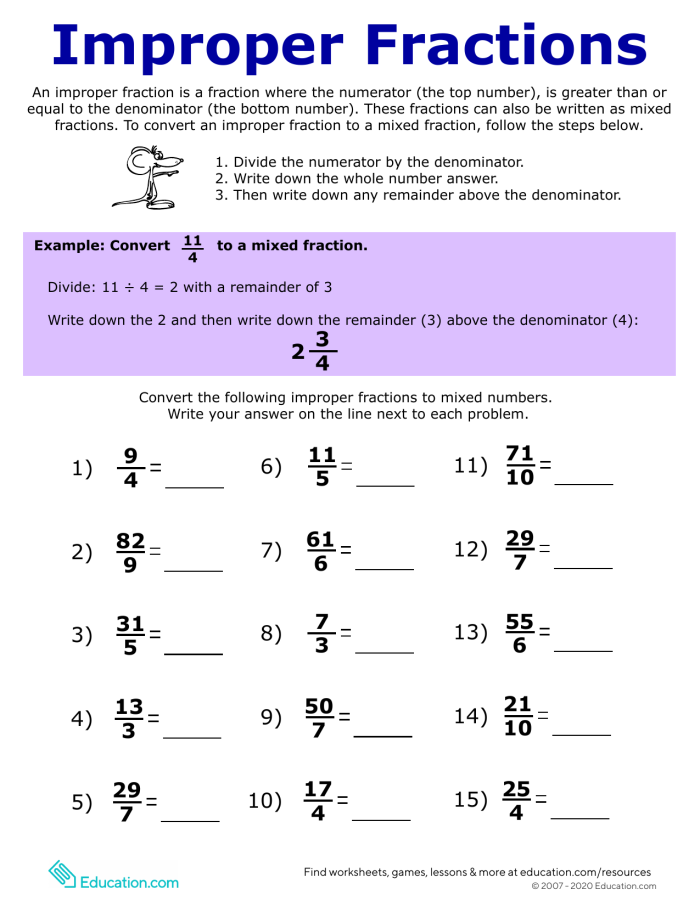
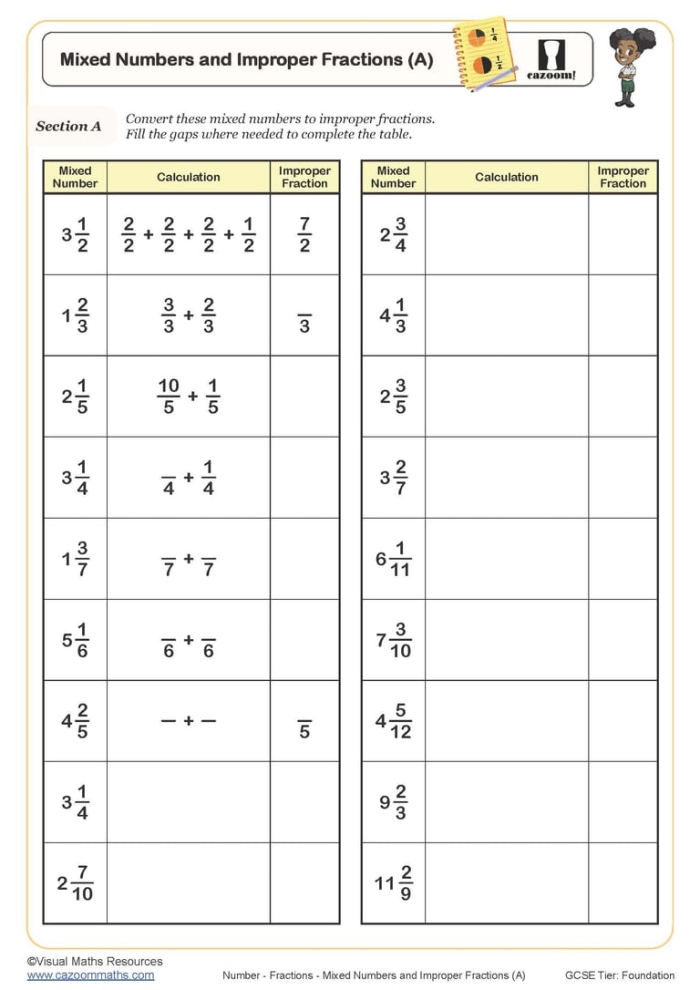
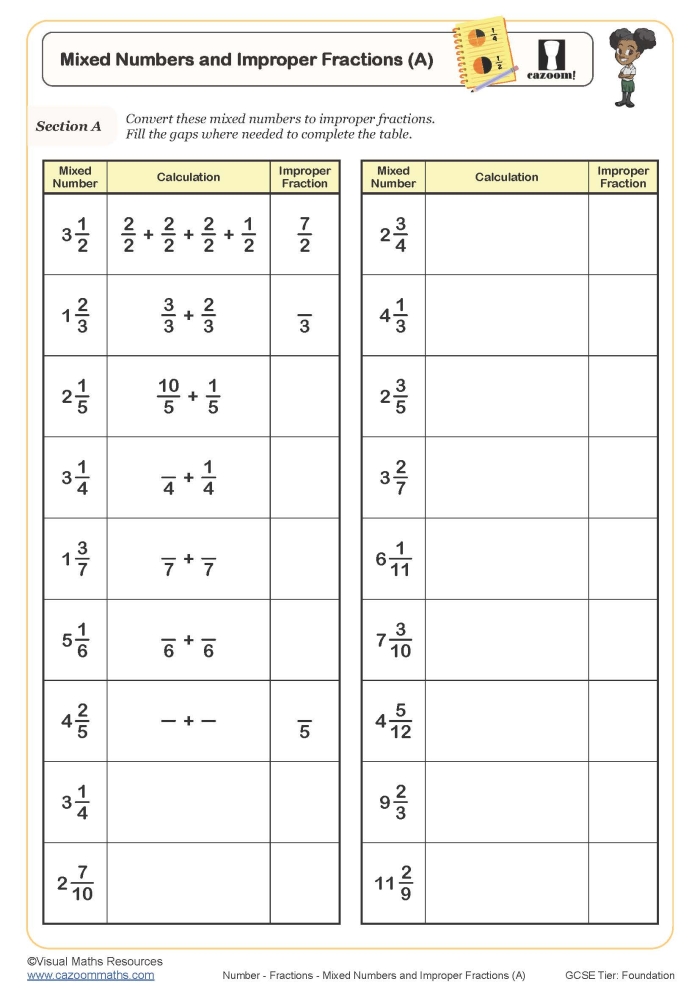
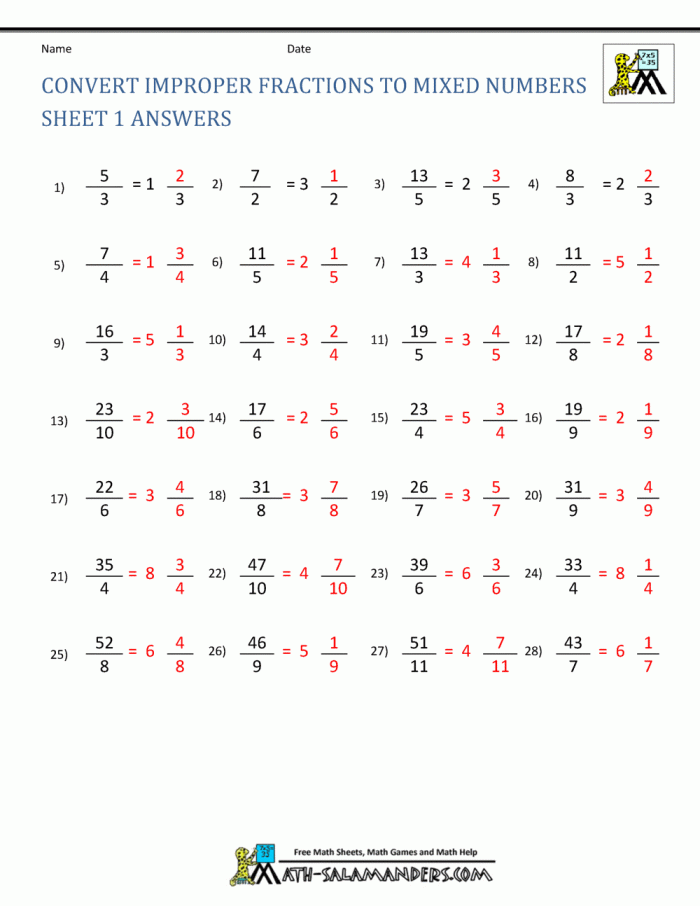
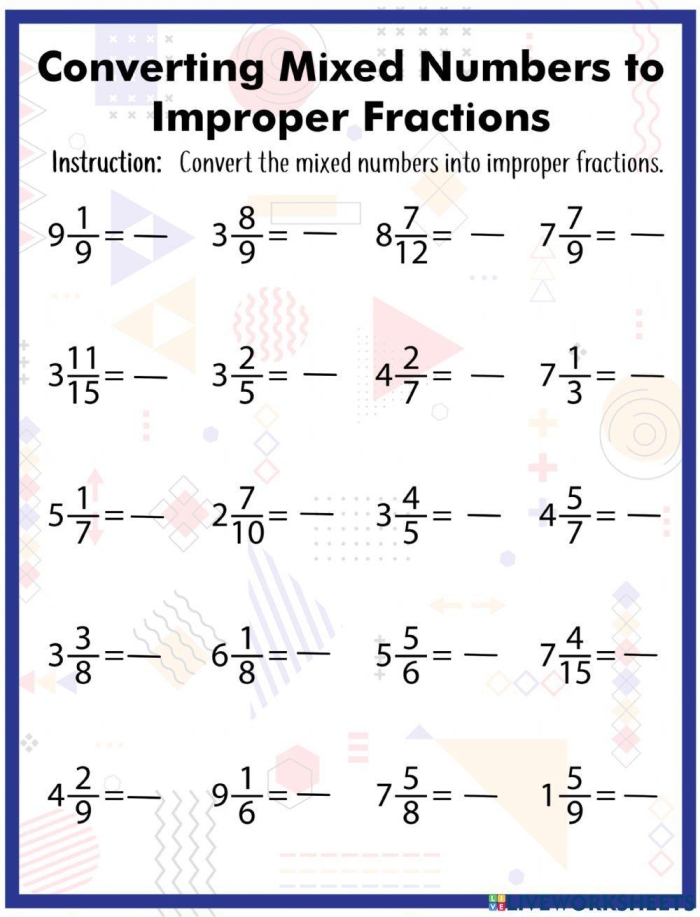
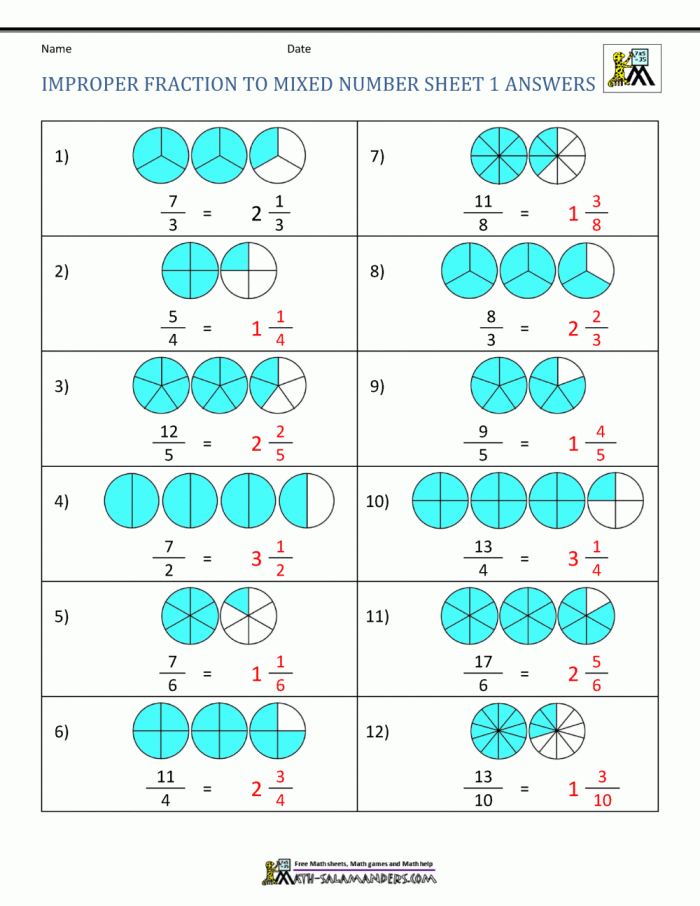
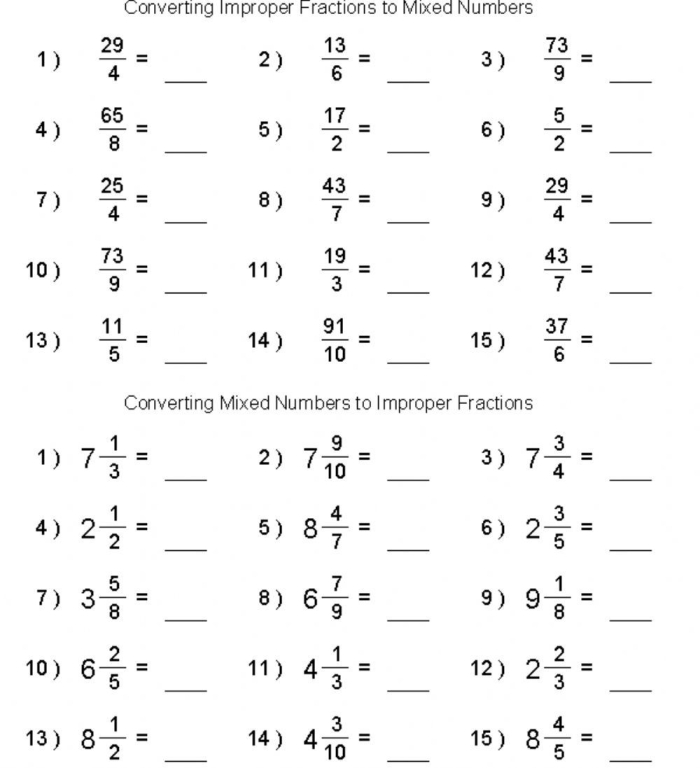
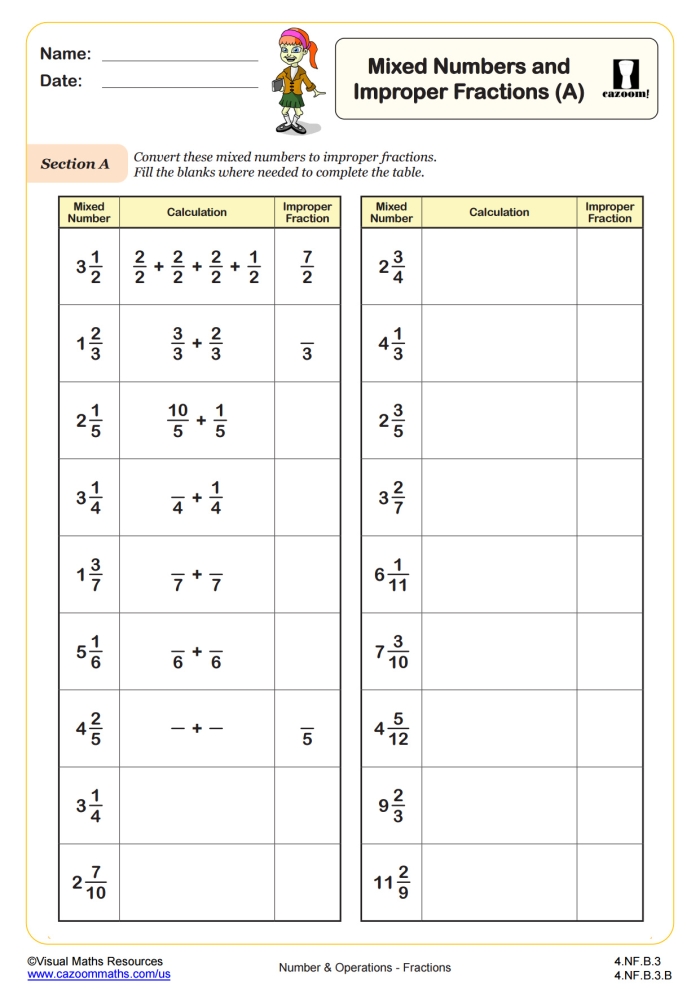
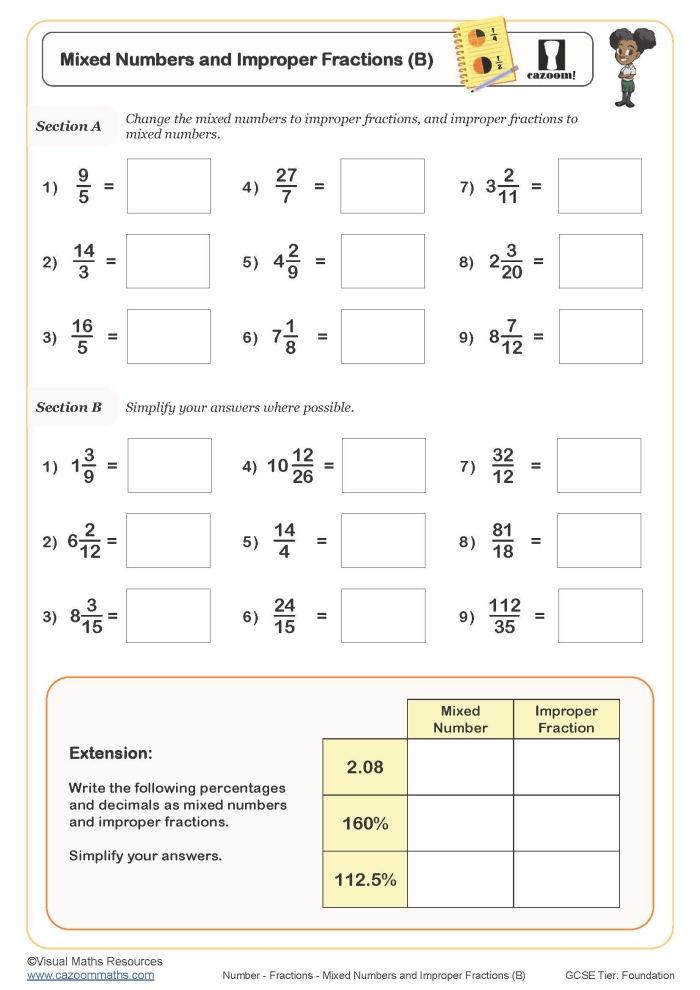
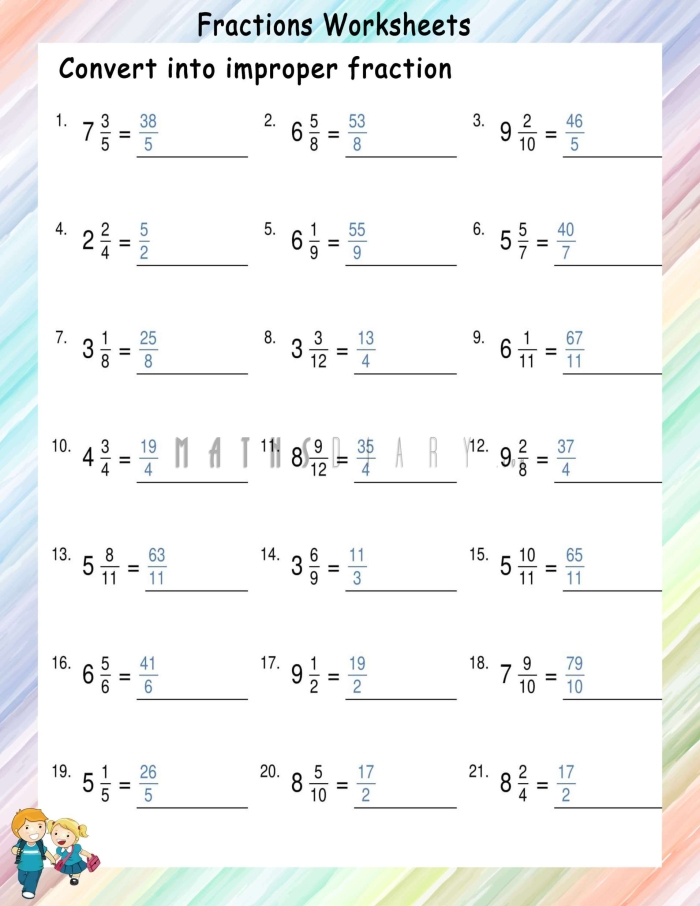
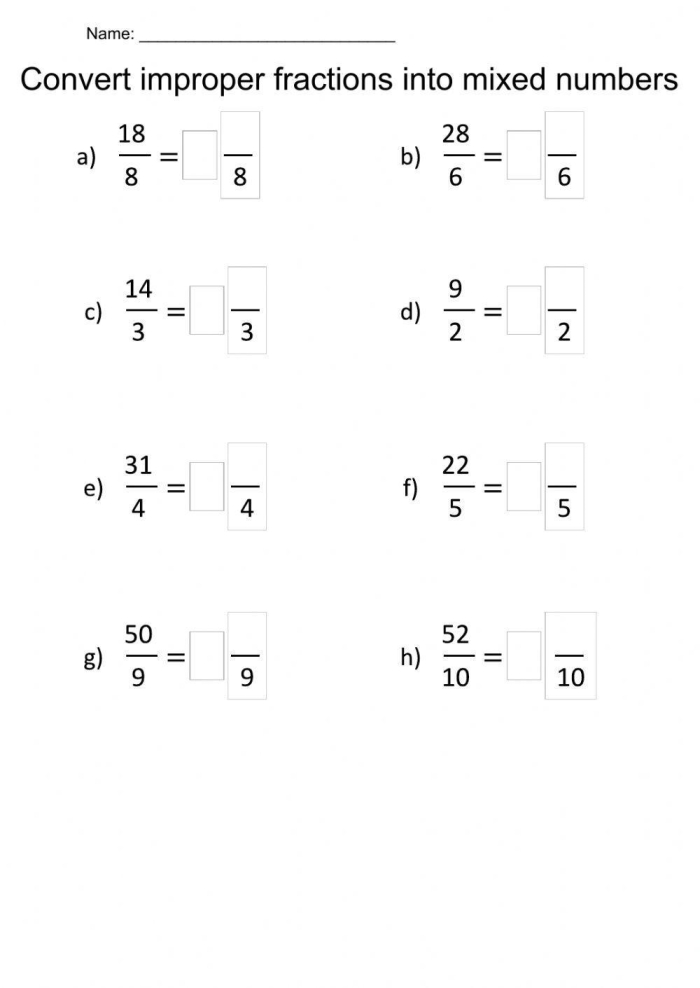
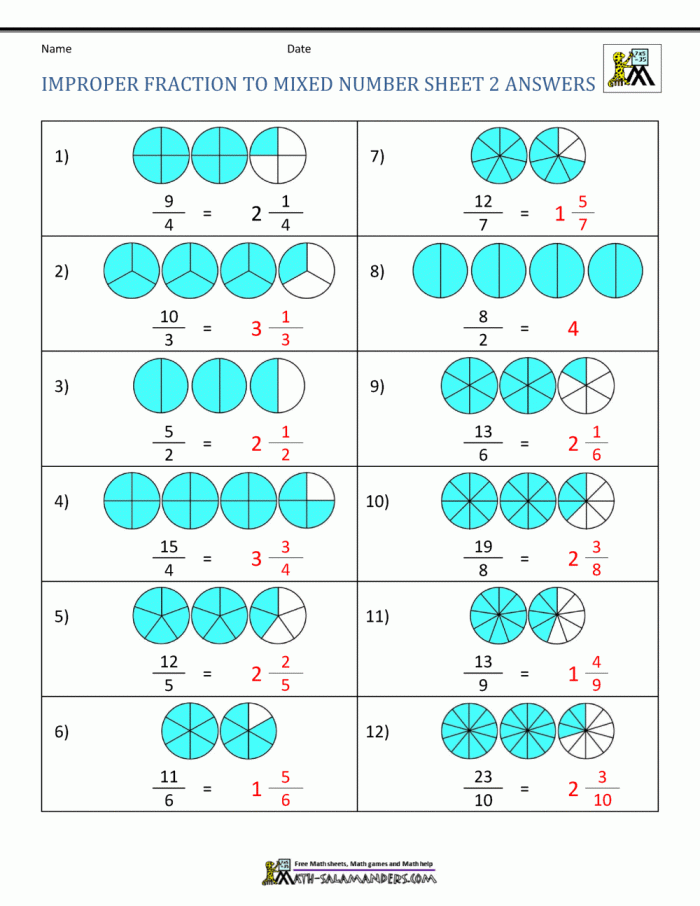
When you’re working through a printable mixed and improper fractions worksheet, you’ll encounter dozens of these conversions. The repetition builds muscle memory, and students stop needing to think through each step. This foundation matters because improper fractions are easier to work with when adding, subtracting, or multiplying fractions together.
Fifth grade students benefit from worksheets that mix straightforward conversions with word problems that require the conversion as an intermediate step. Pairing this practice with related skills like working with customary unit conversions reinforces the broader concept that different representations of the same quantity serve different purposes in mathematics.
Having a solid worksheet focused on this single skill removes distractions and lets students focus on accuracy and speed. The goal is competence, not just completion.
Printable Worksheets for Practice