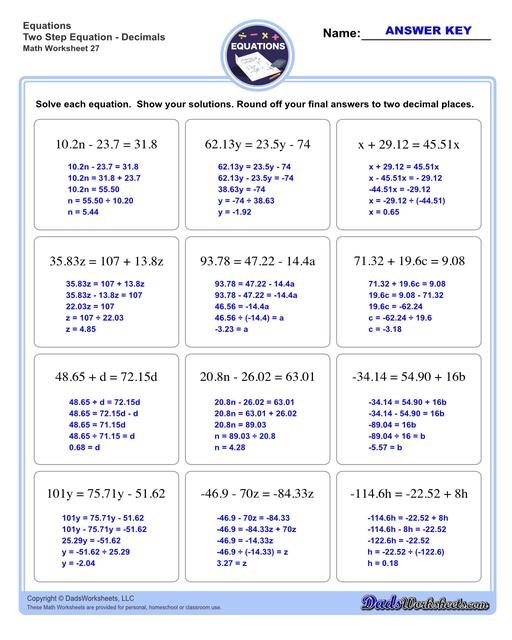
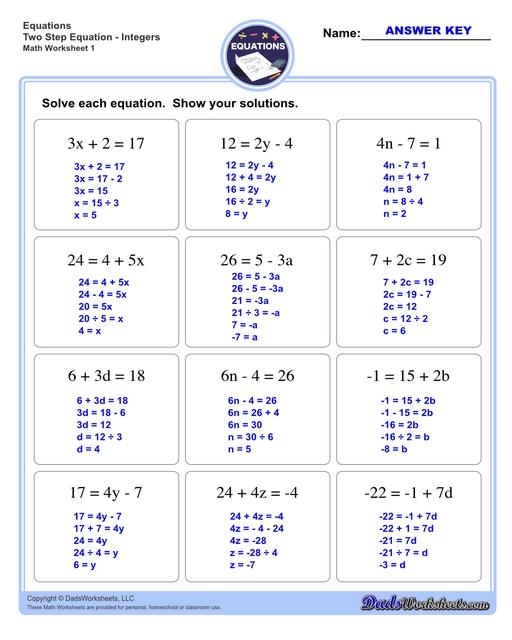
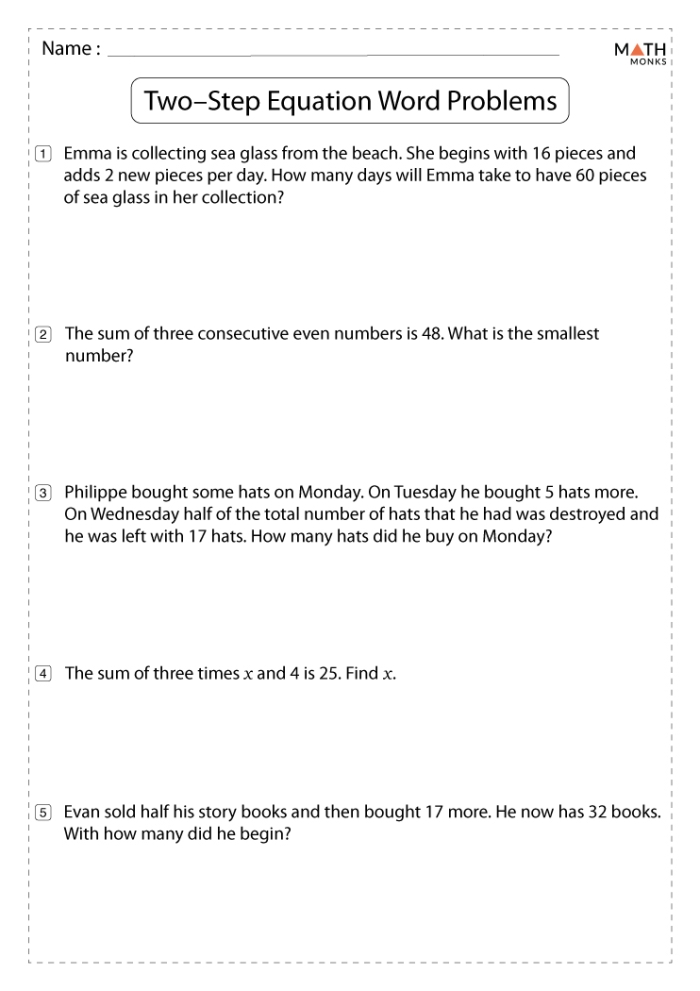
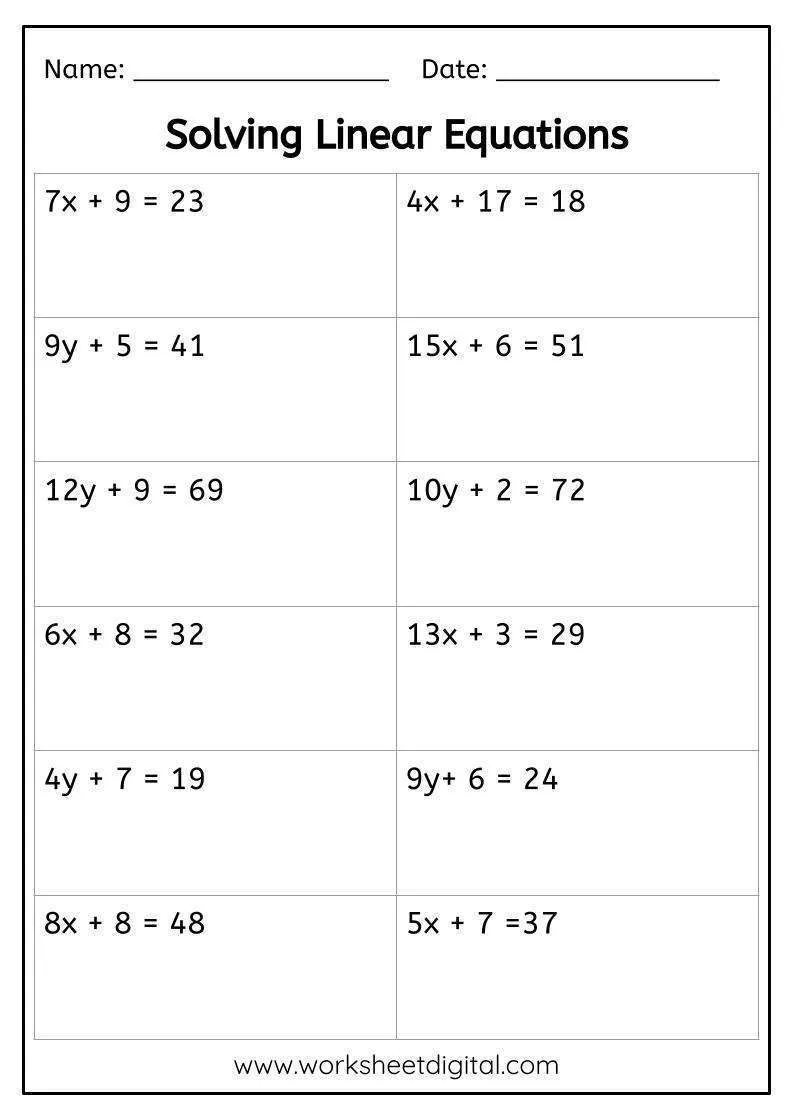
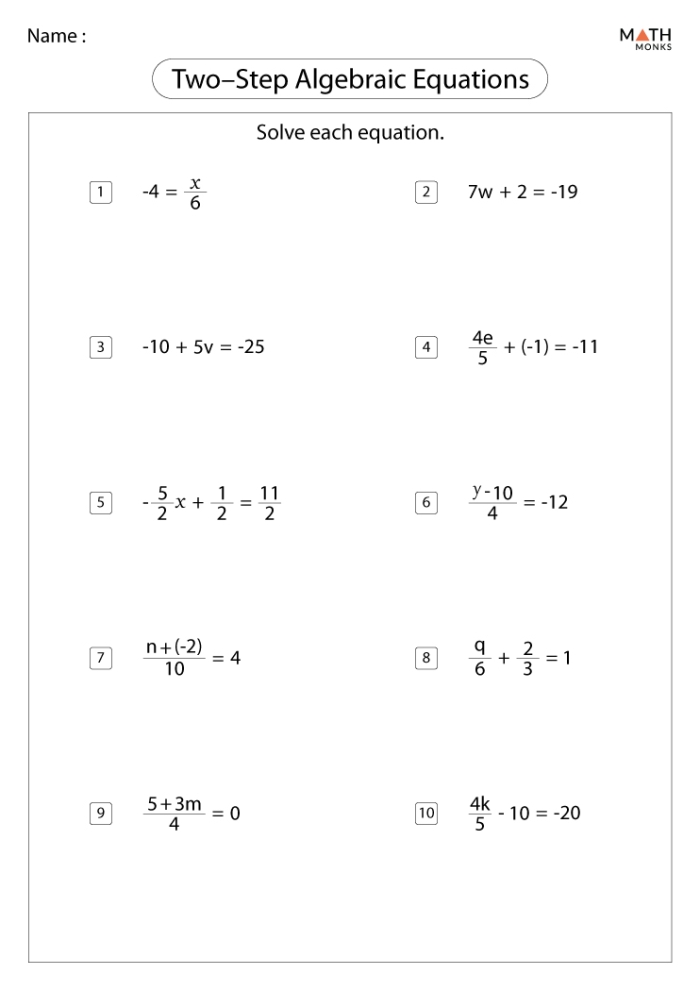
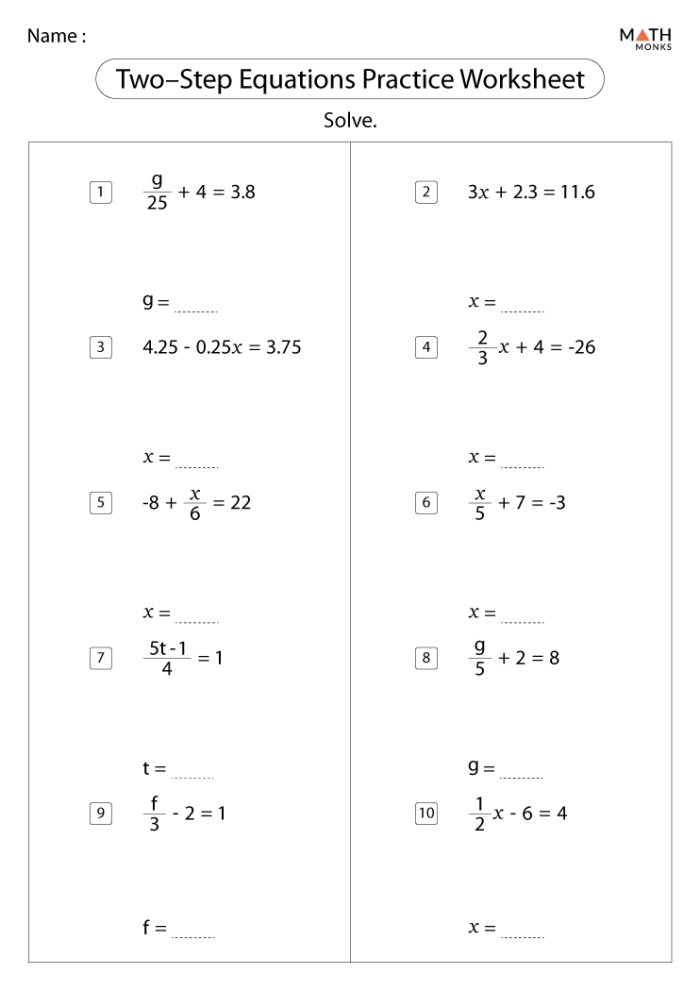
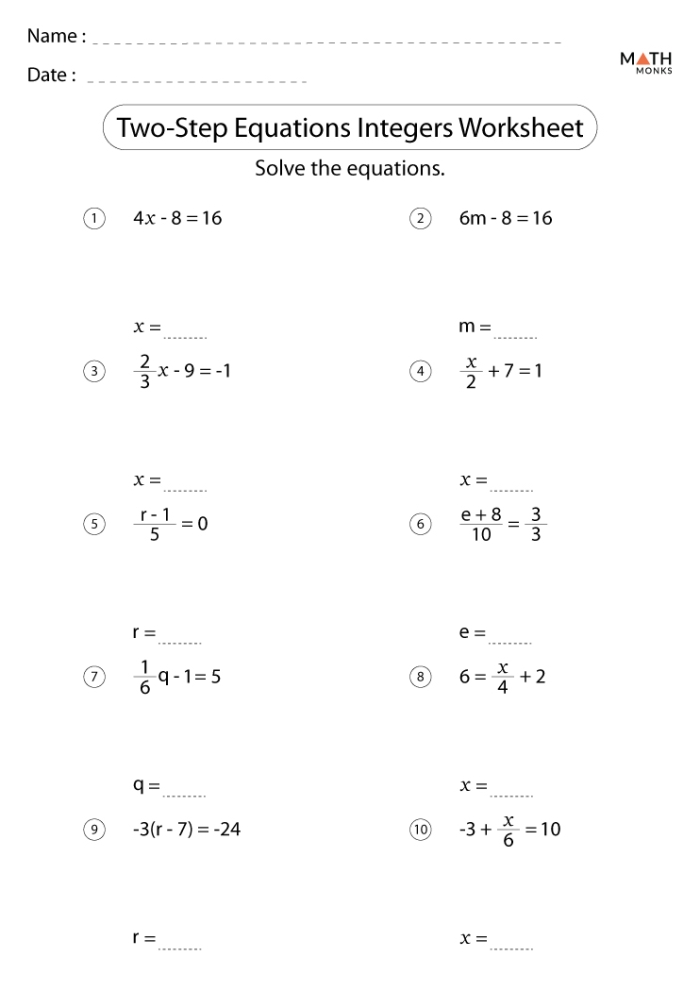
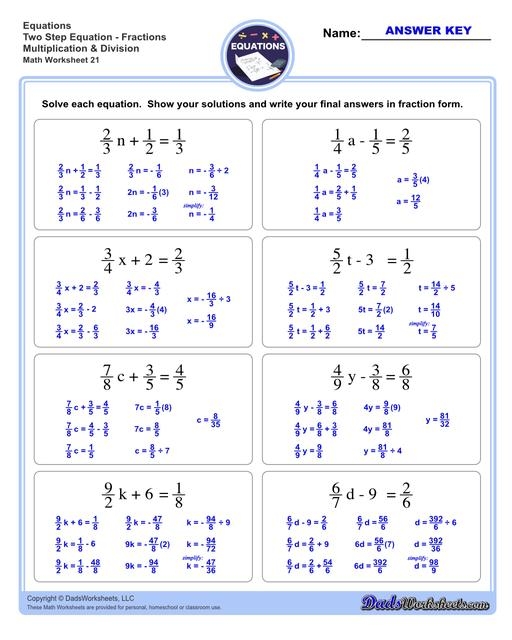
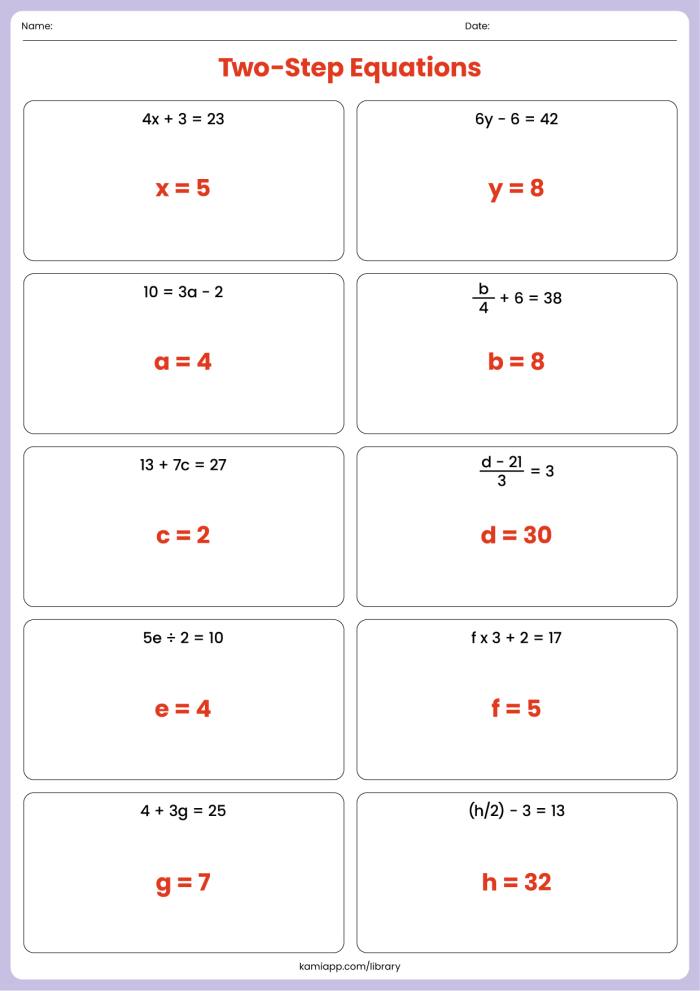
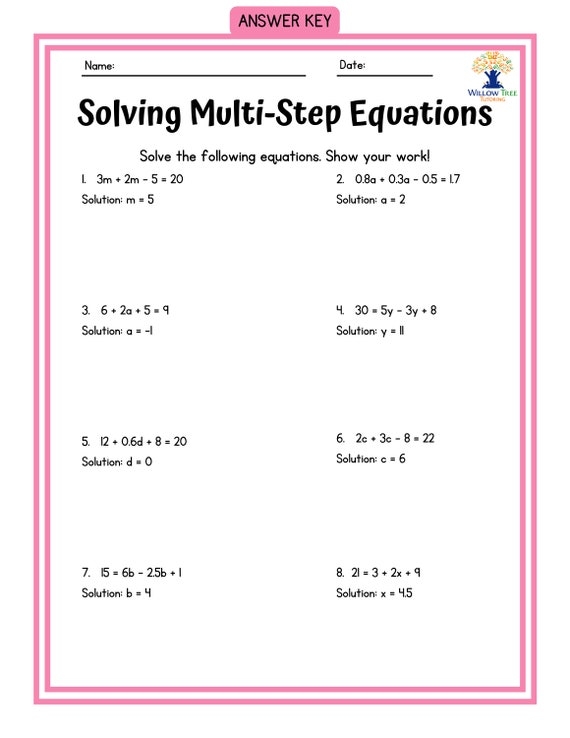
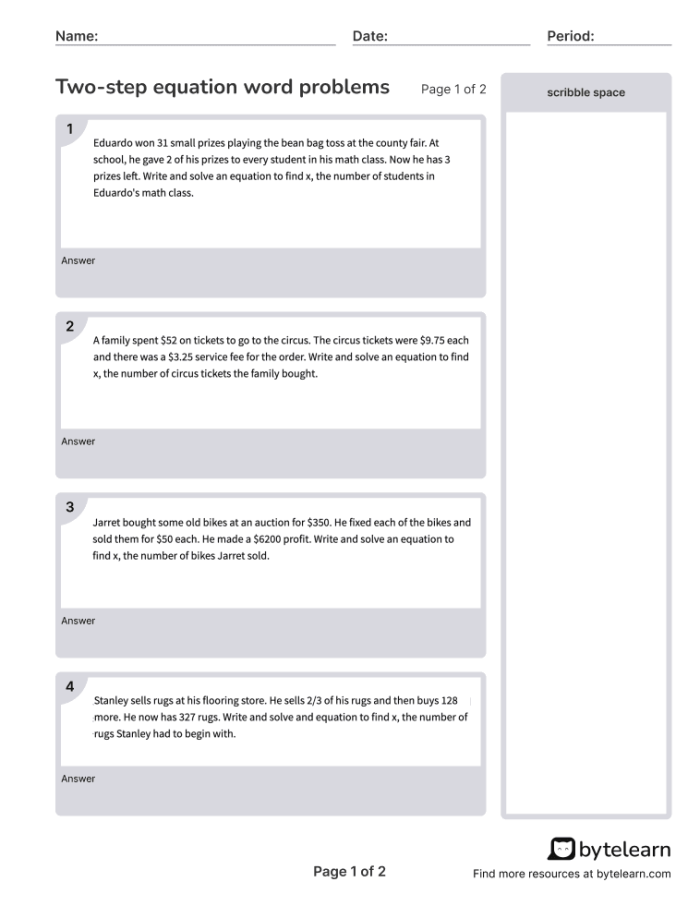
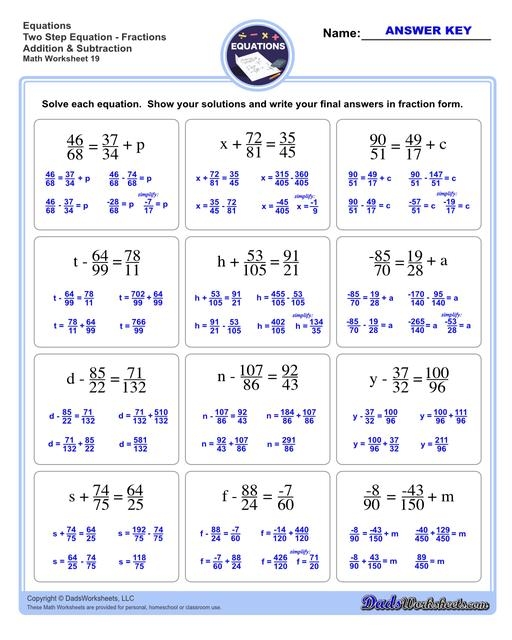
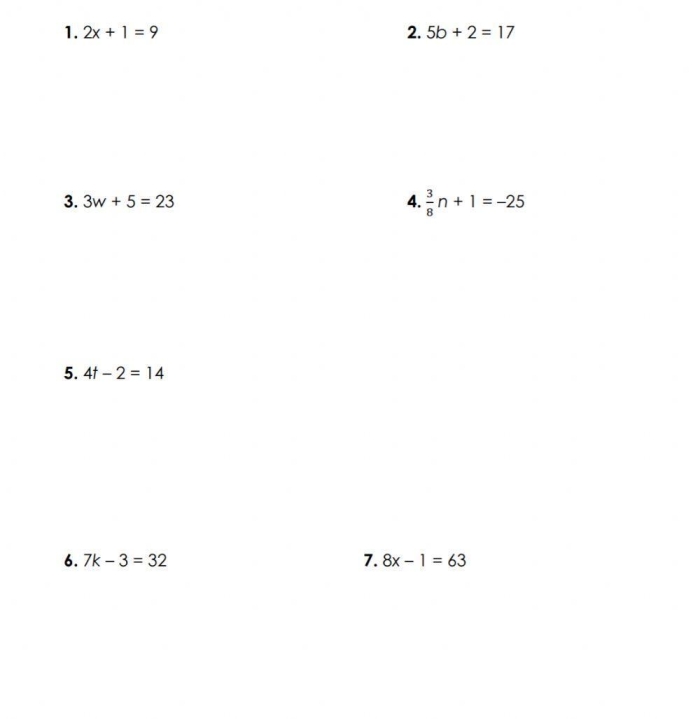
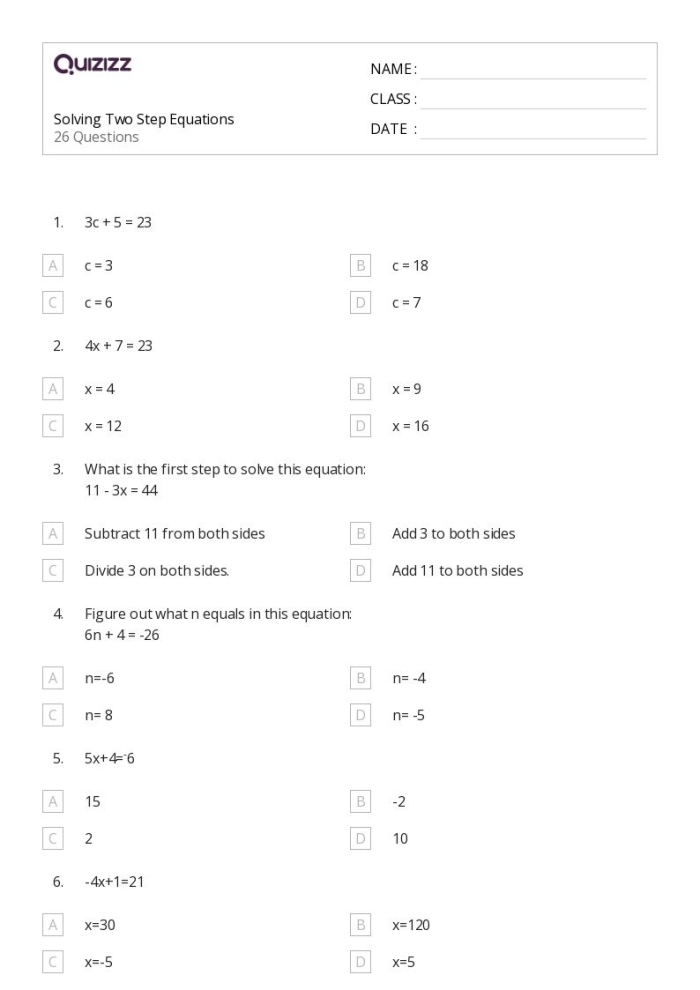
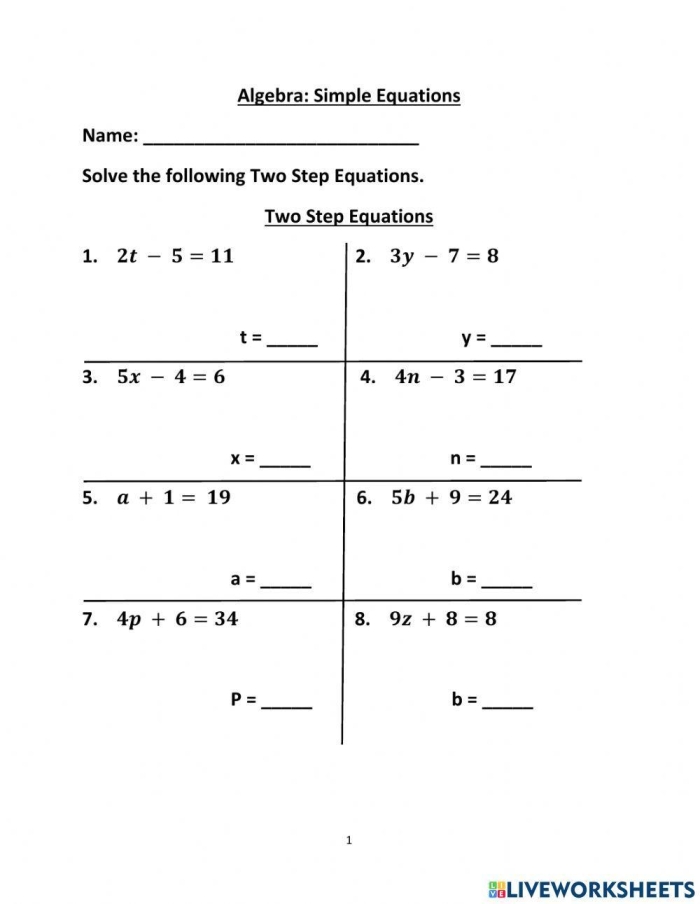
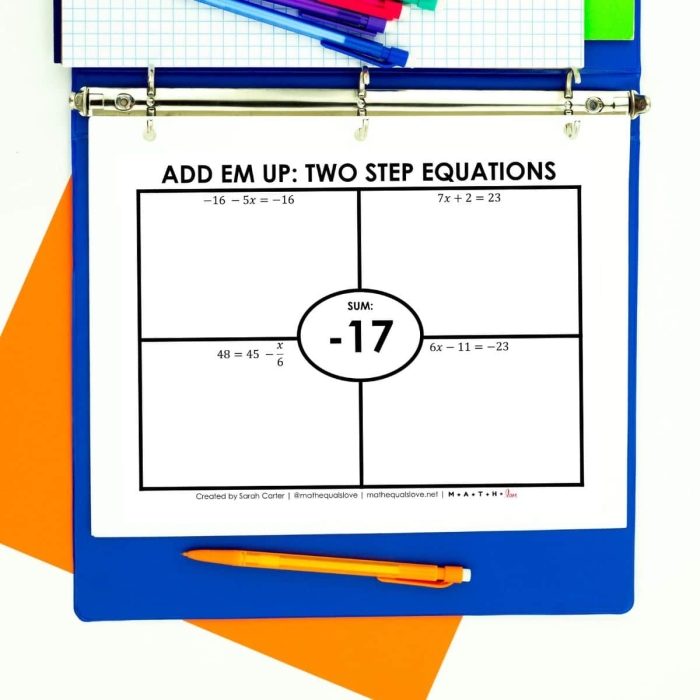
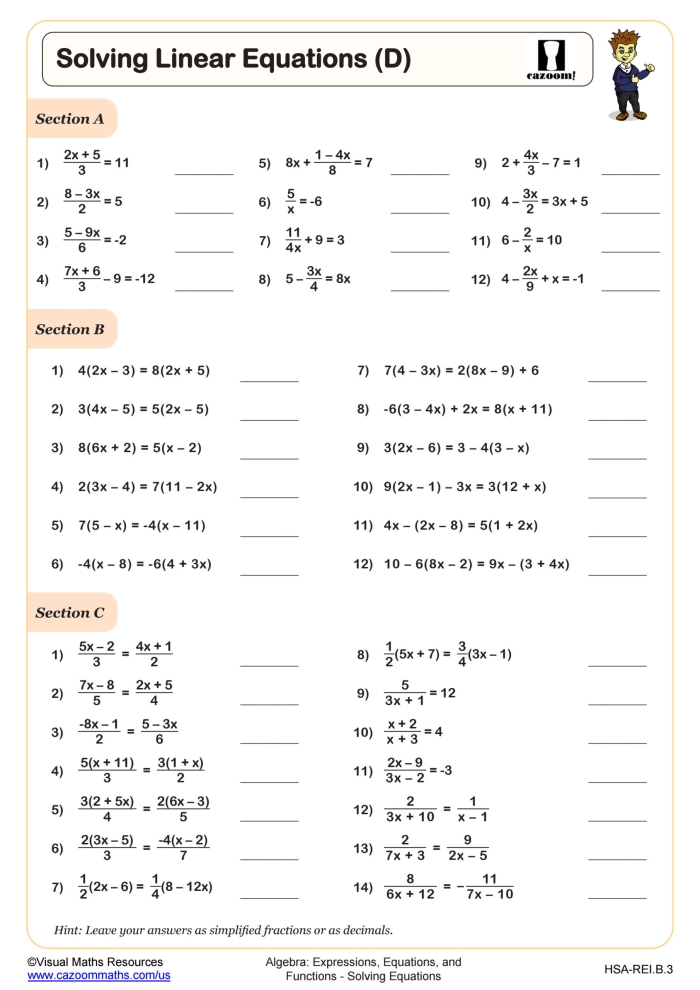
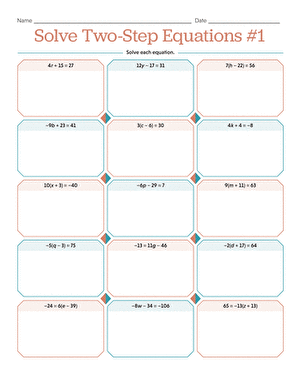
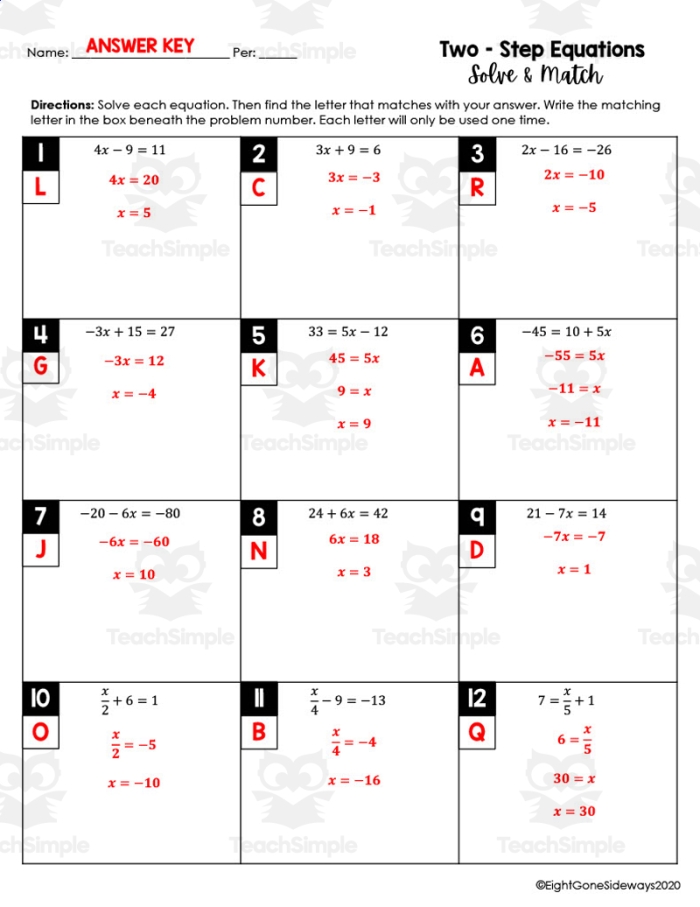
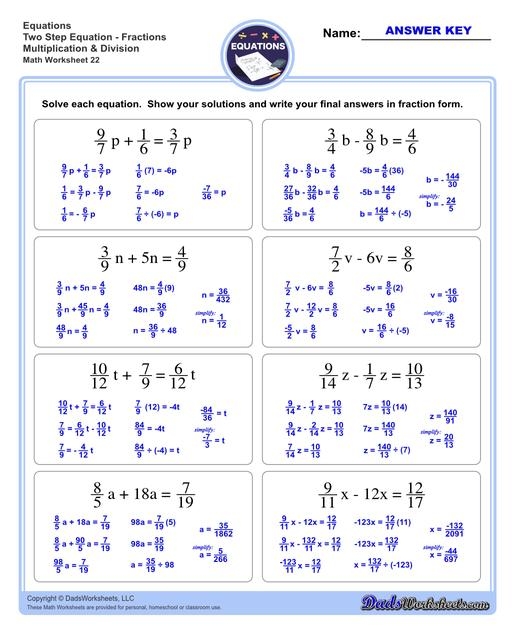
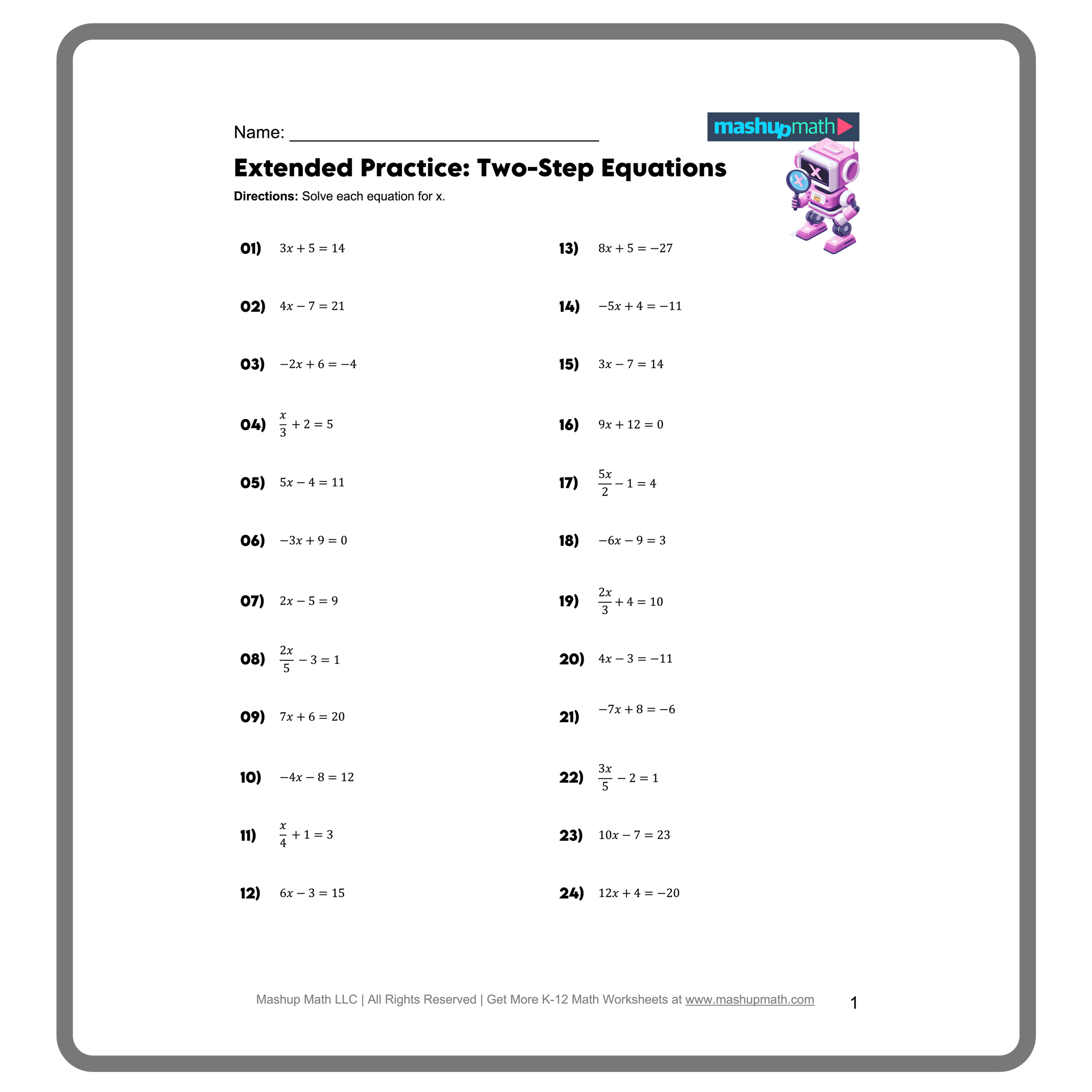
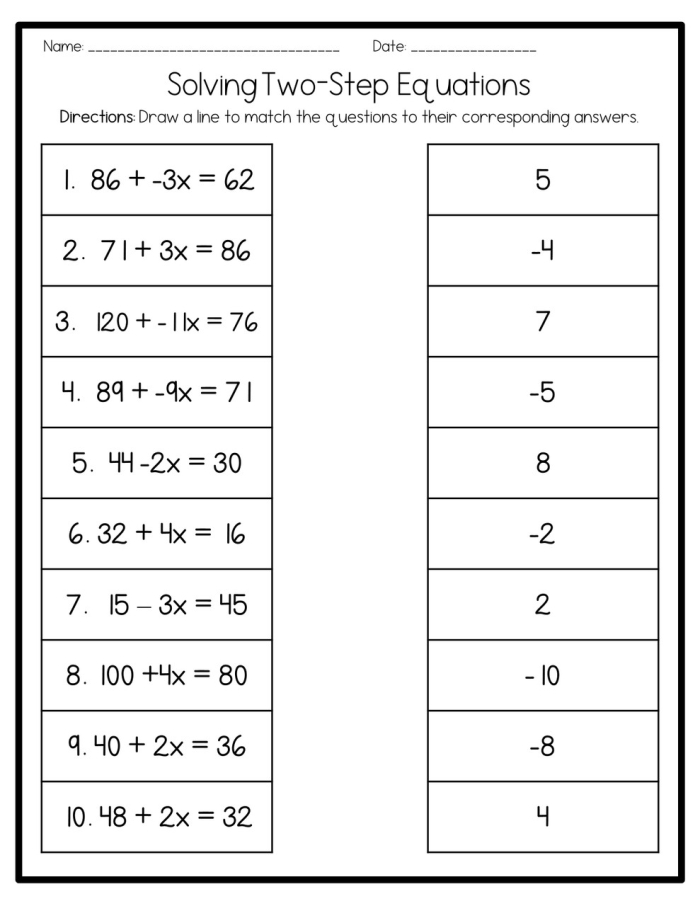
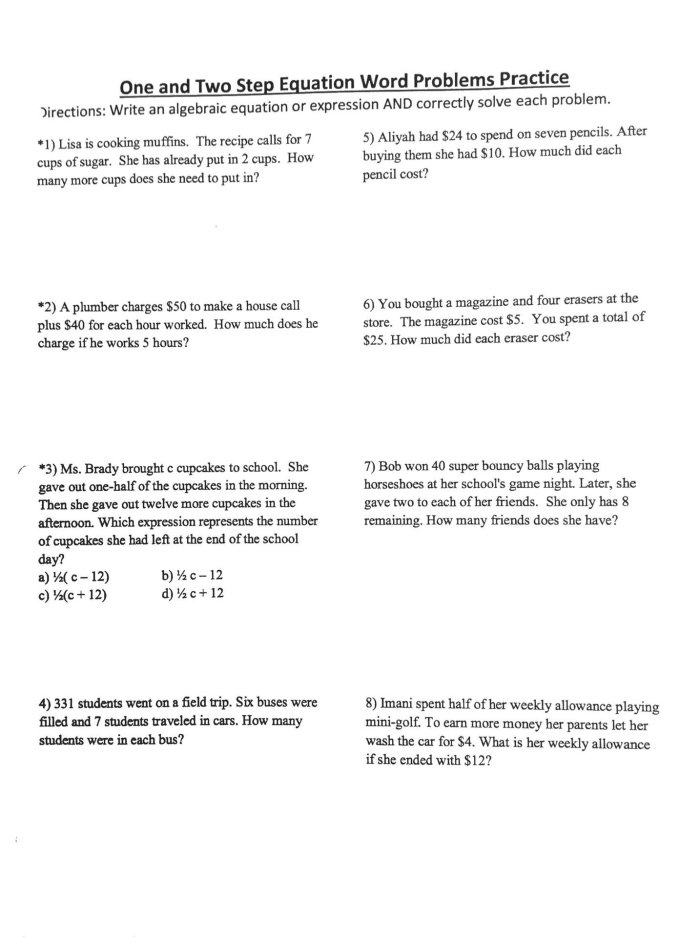
Two-step equations form the backbone of seventh-grade algebra, and mastering them opens doors to more complex problem-solving. When students work through these equations systematically, they develop logical thinking patterns that extend far beyond the math classroom. A focused practice worksheet gives learners the repetition and structure they need to build confidence with this essential skill.
The core concept behind two-step equations is straightforward: students perform two operations in reverse order to isolate the variable. If an equation reads 3x + 5 = 20, a student subtracts 5 first, then divides by 3. This reversal of operations becomes intuitive with practice, and worksheets designed for this level provide the scaffolding that makes the process stick. Each problem reinforces the same logical sequence, allowing students to recognize patterns and apply them automatically.
What makes dedicated practice materials effective is their focus on one skill at a time. Rather than mixing in unrelated concepts, a well-designed worksheet keeps students focused on two-step equations exclusively. This concentration helps seventh graders avoid cognitive overload and build genuine fluency. When students encounter similar problems repeatedly, their brains develop automatic responses, freeing up mental energy for more challenging algebraic thinking later.
Beyond two-step equations, seventh-grade algebra involves understanding proportional relationships and probability. Students who build strong equation-solving skills find it easier to tackle concepts like identifying the constant of proportionality from tables or working through probability performance tasks. The foundational thinking required for solving equations transfers directly to these more applied contexts.
Printable worksheets offer practical advantages for classroom use and homework assignments. Teachers can distribute copies immediately, students can work at their own pace, and the paper format eliminates distractions. Starting with Level 1 two-step equations ensures students build confidence before advancing to more complex variations. This progression mirrors how students also learn to find the constant of proportionality from graphs, moving from concrete to increasingly abstract representations.
Boost Skills with These Worksheets