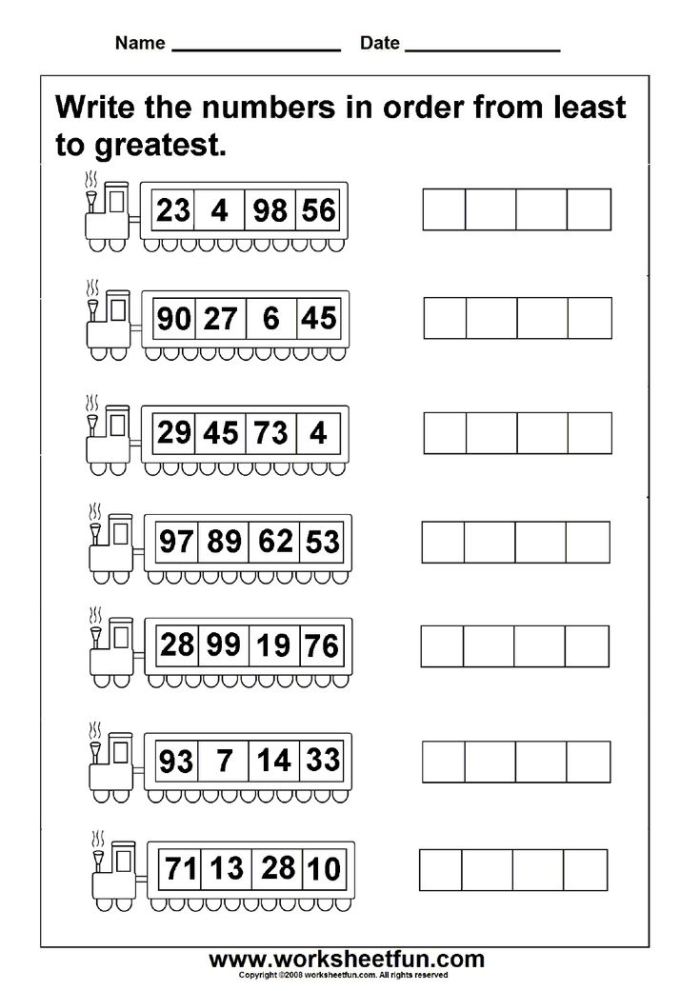
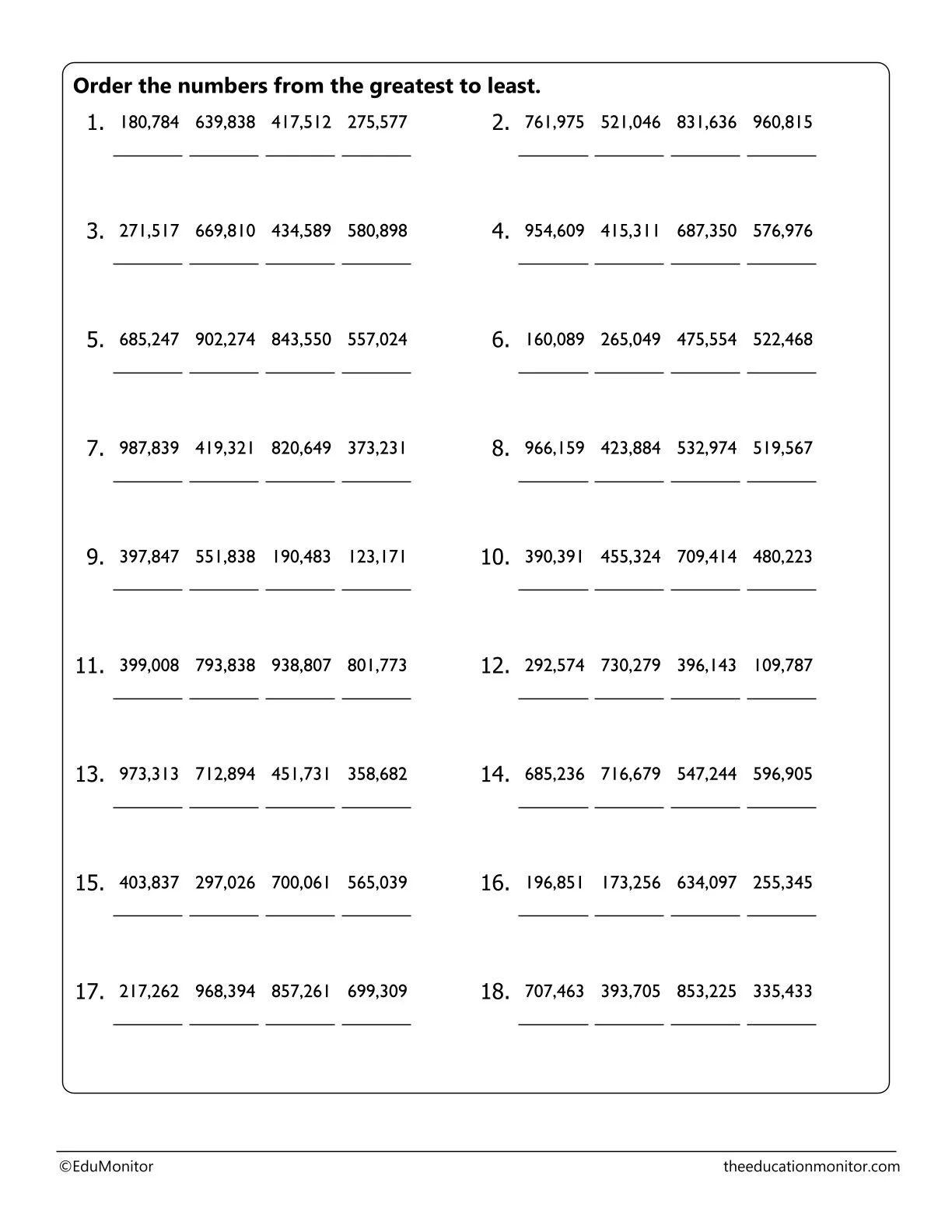
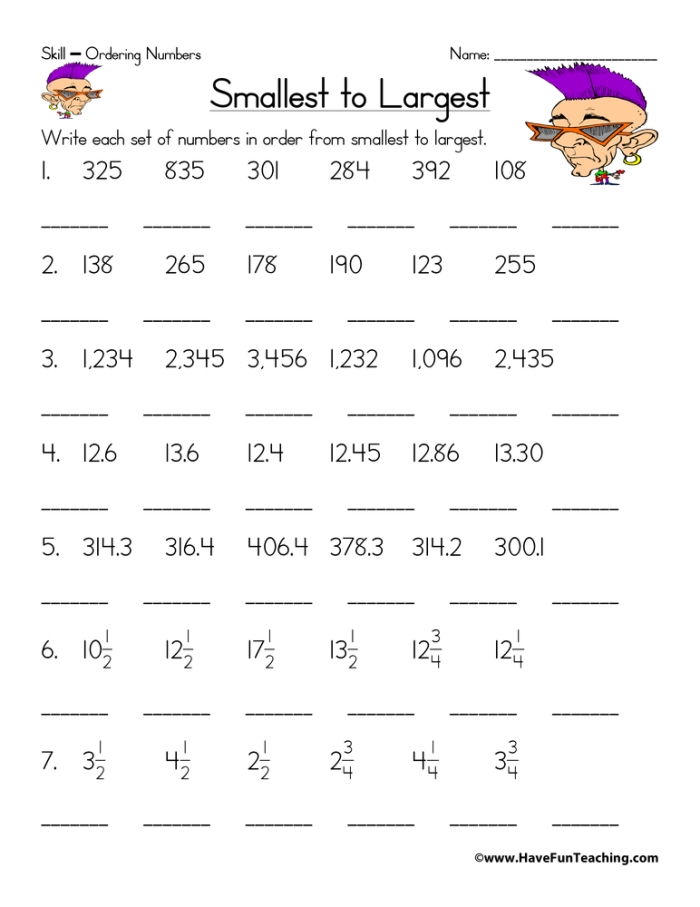
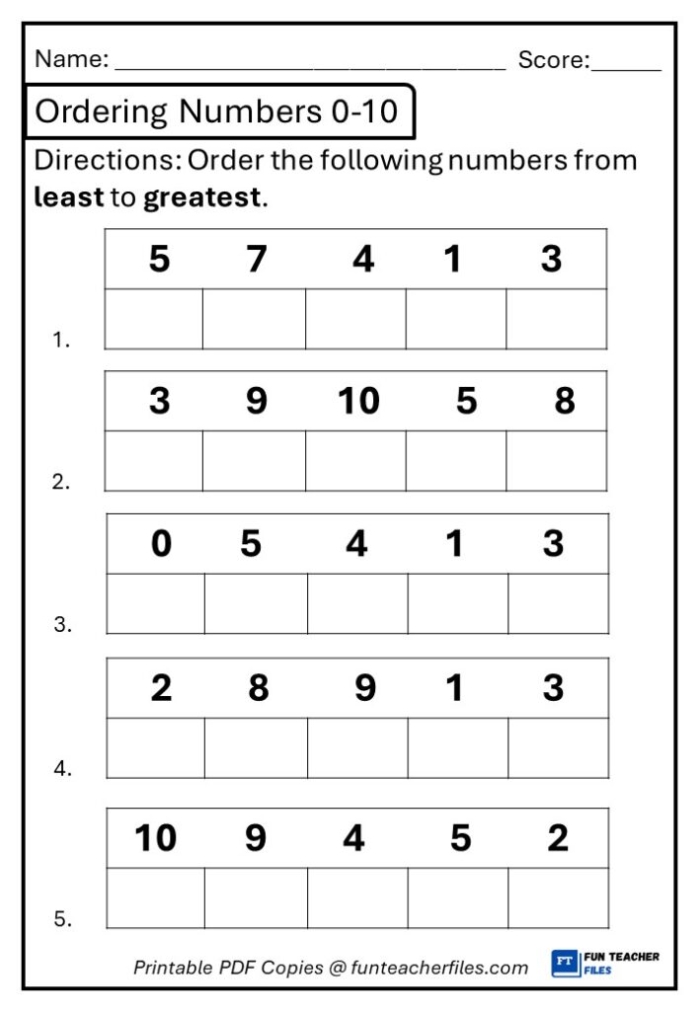
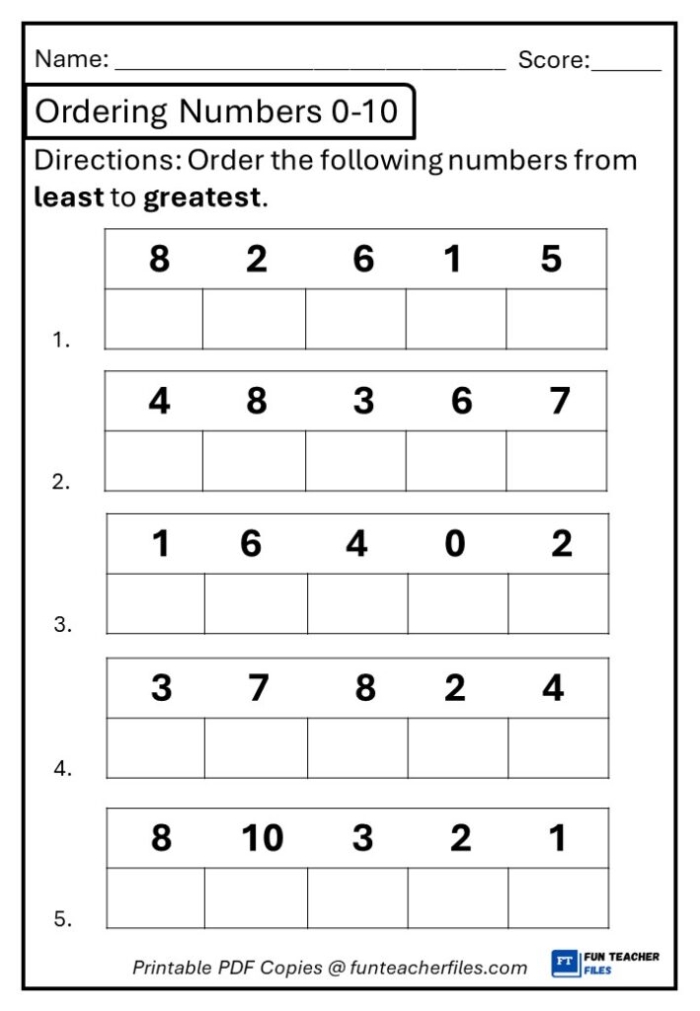
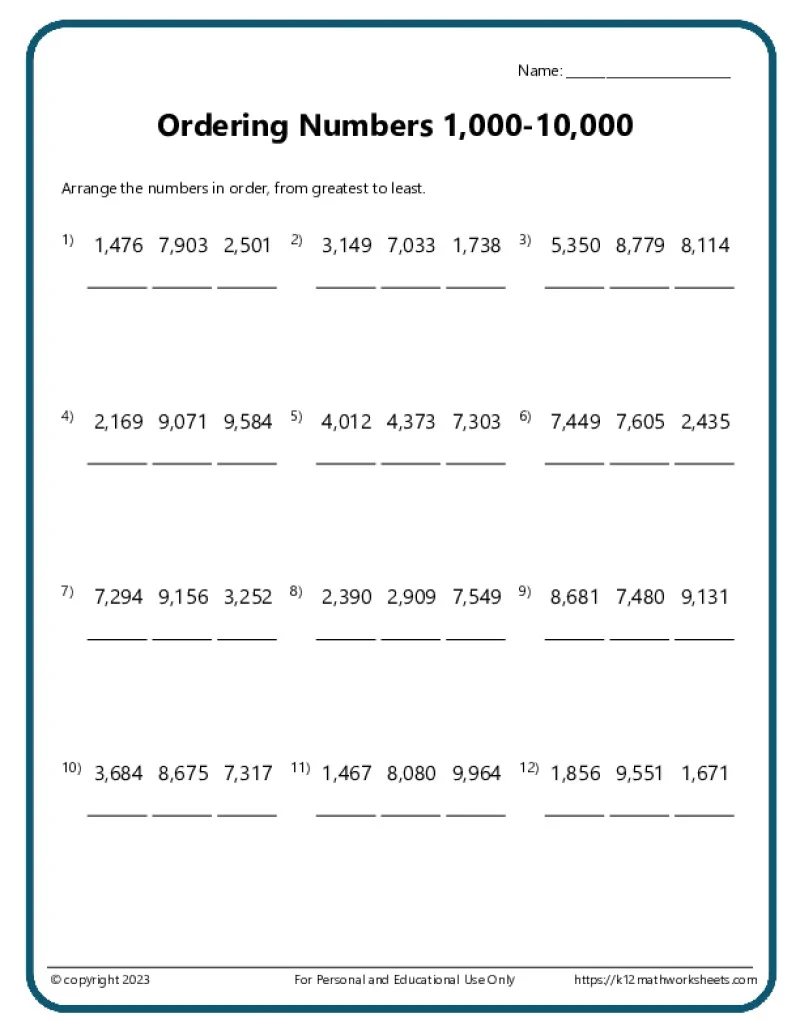
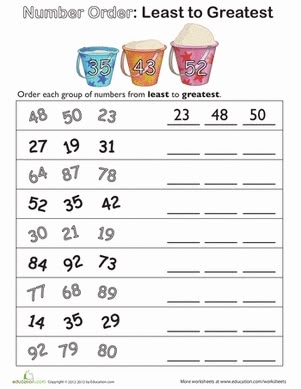
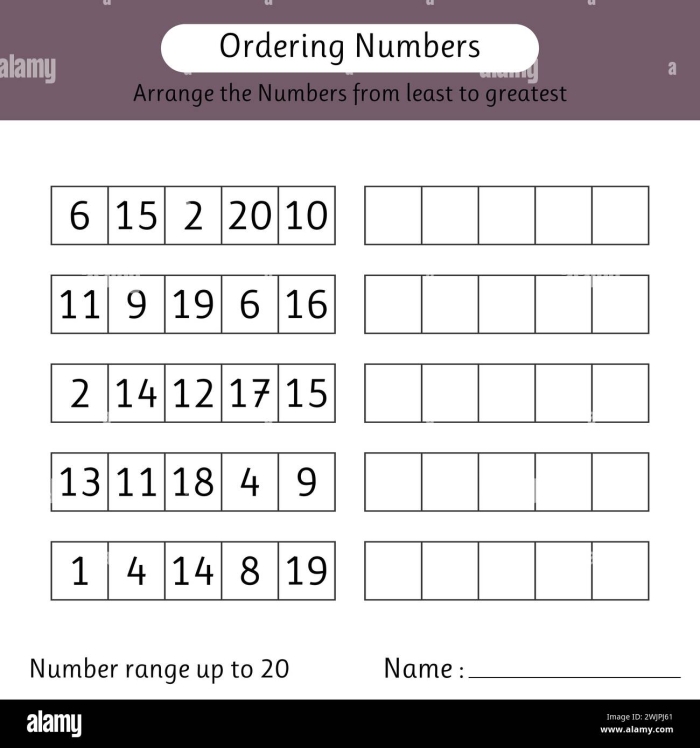
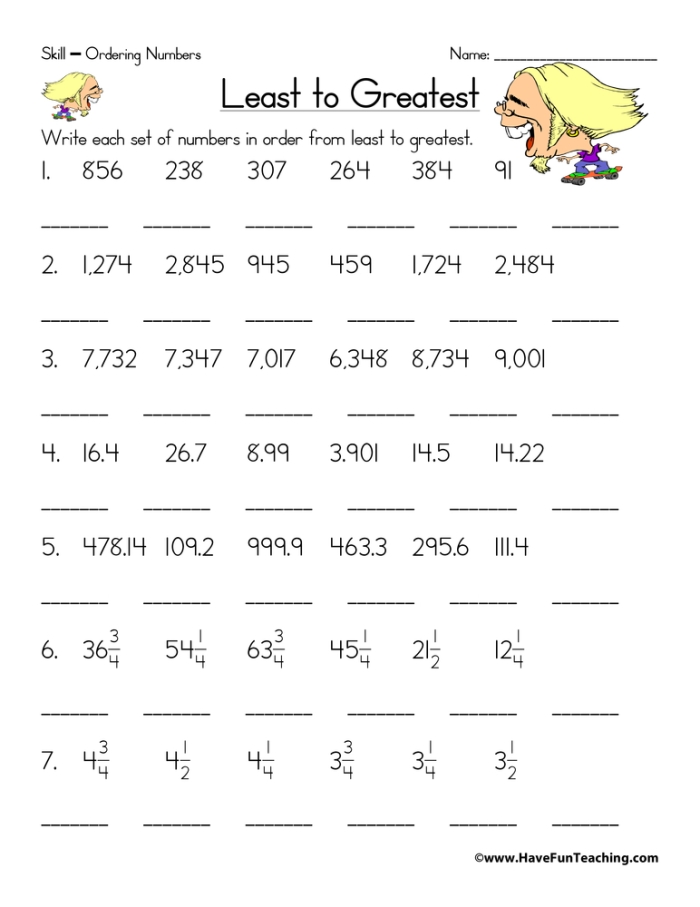
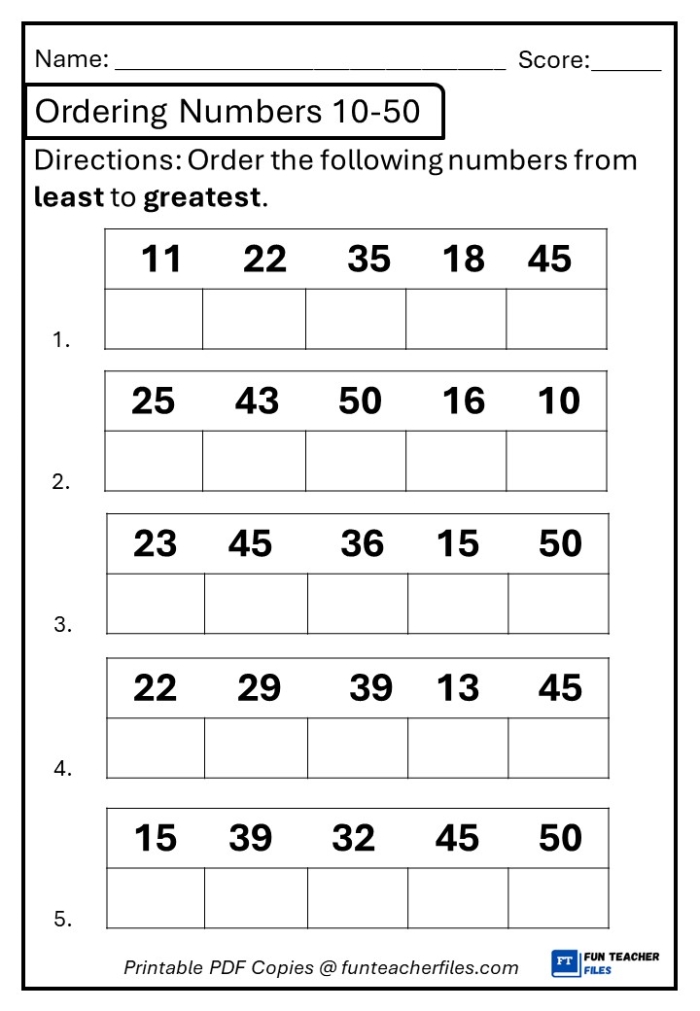
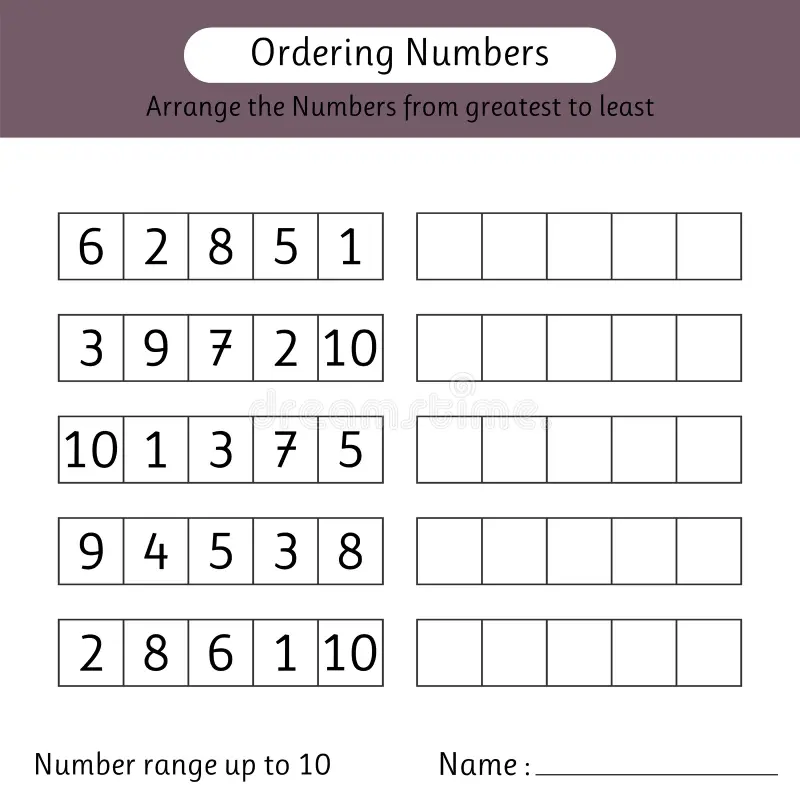
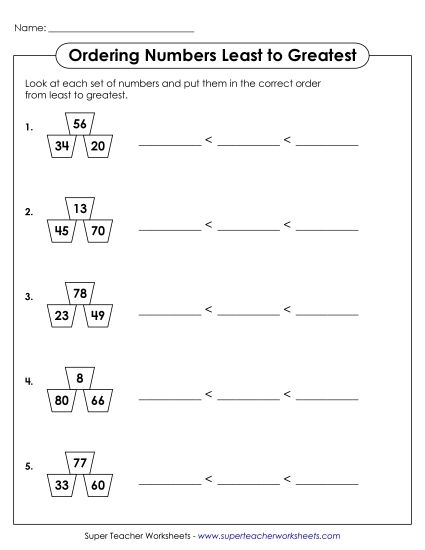
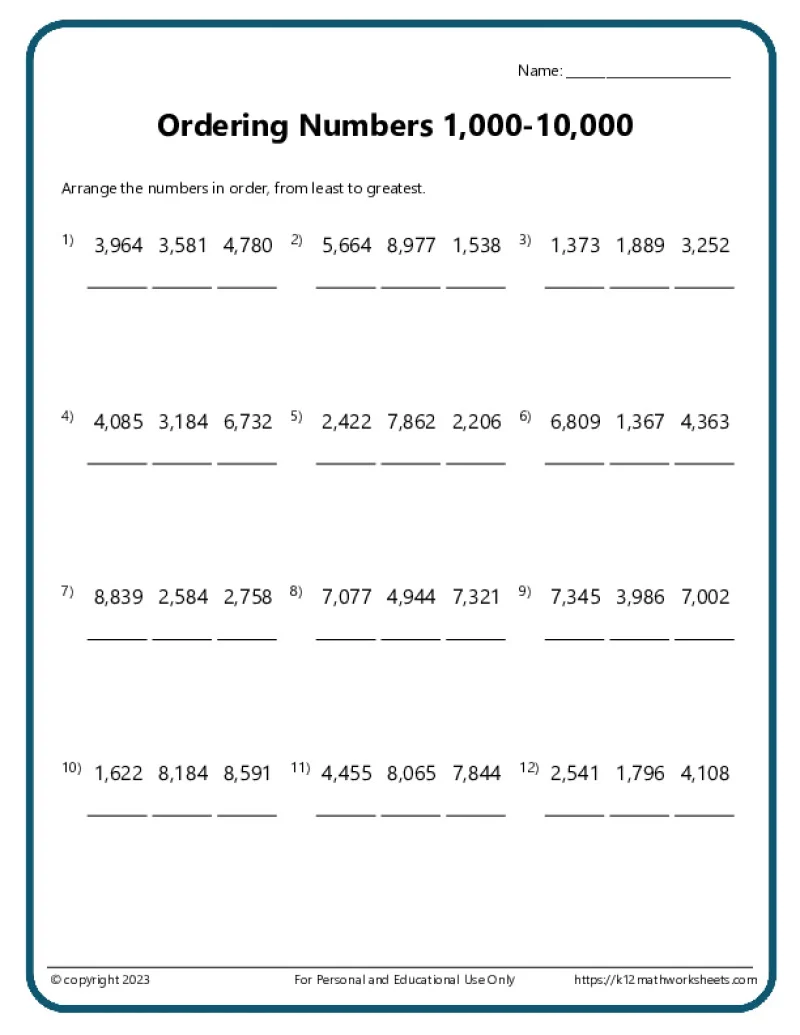
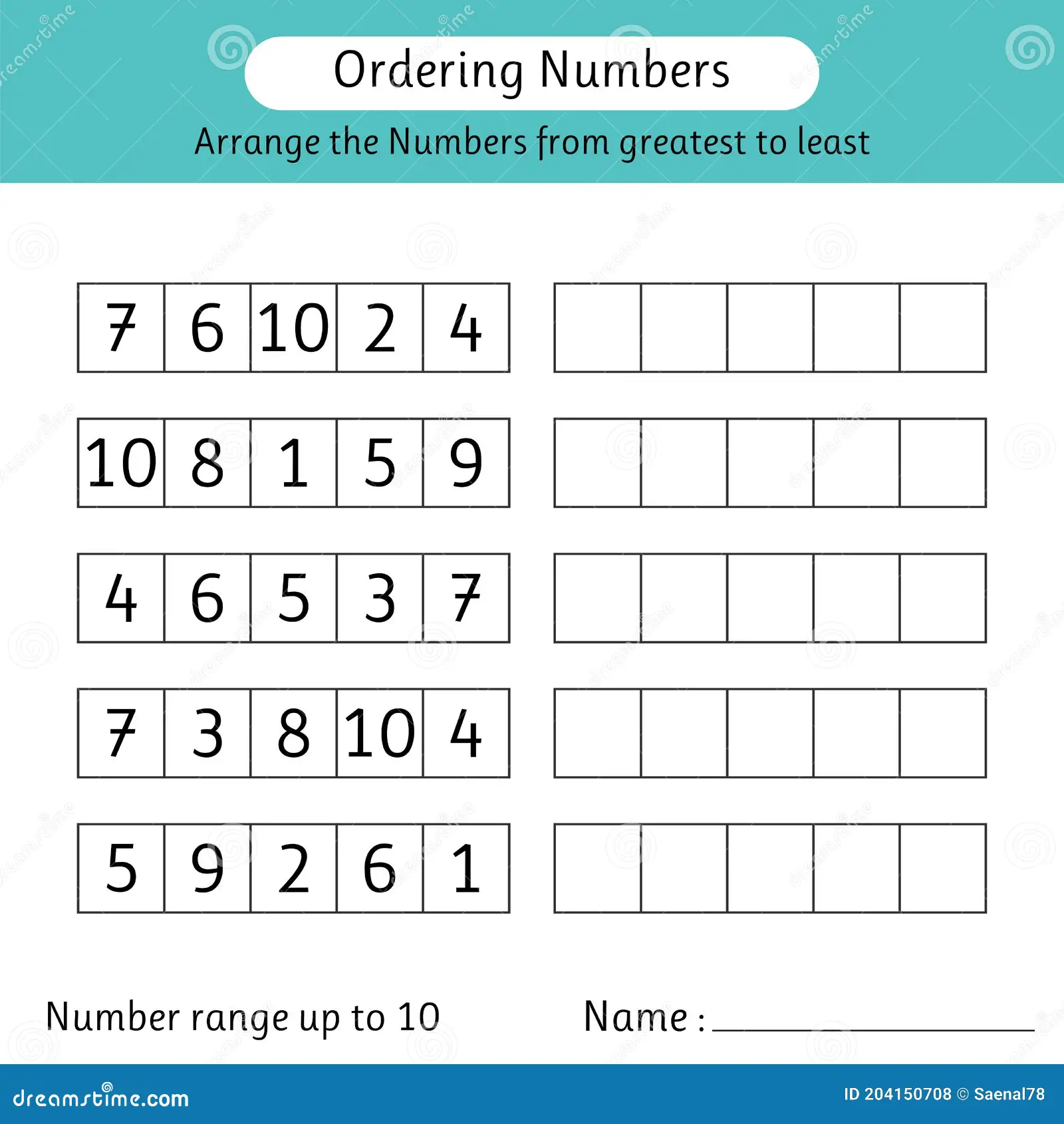
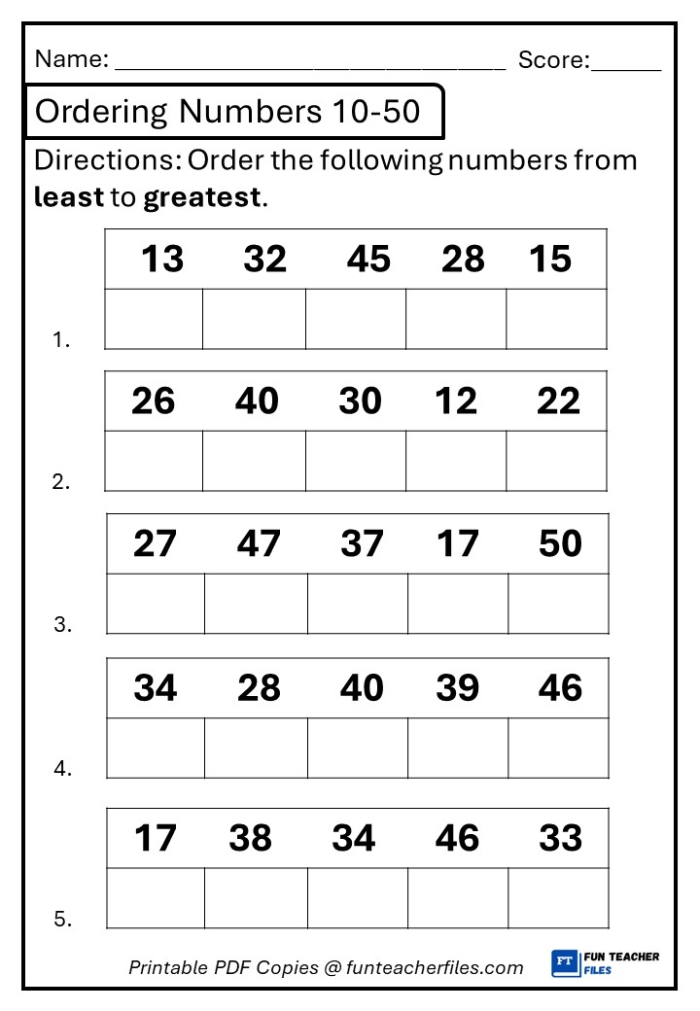
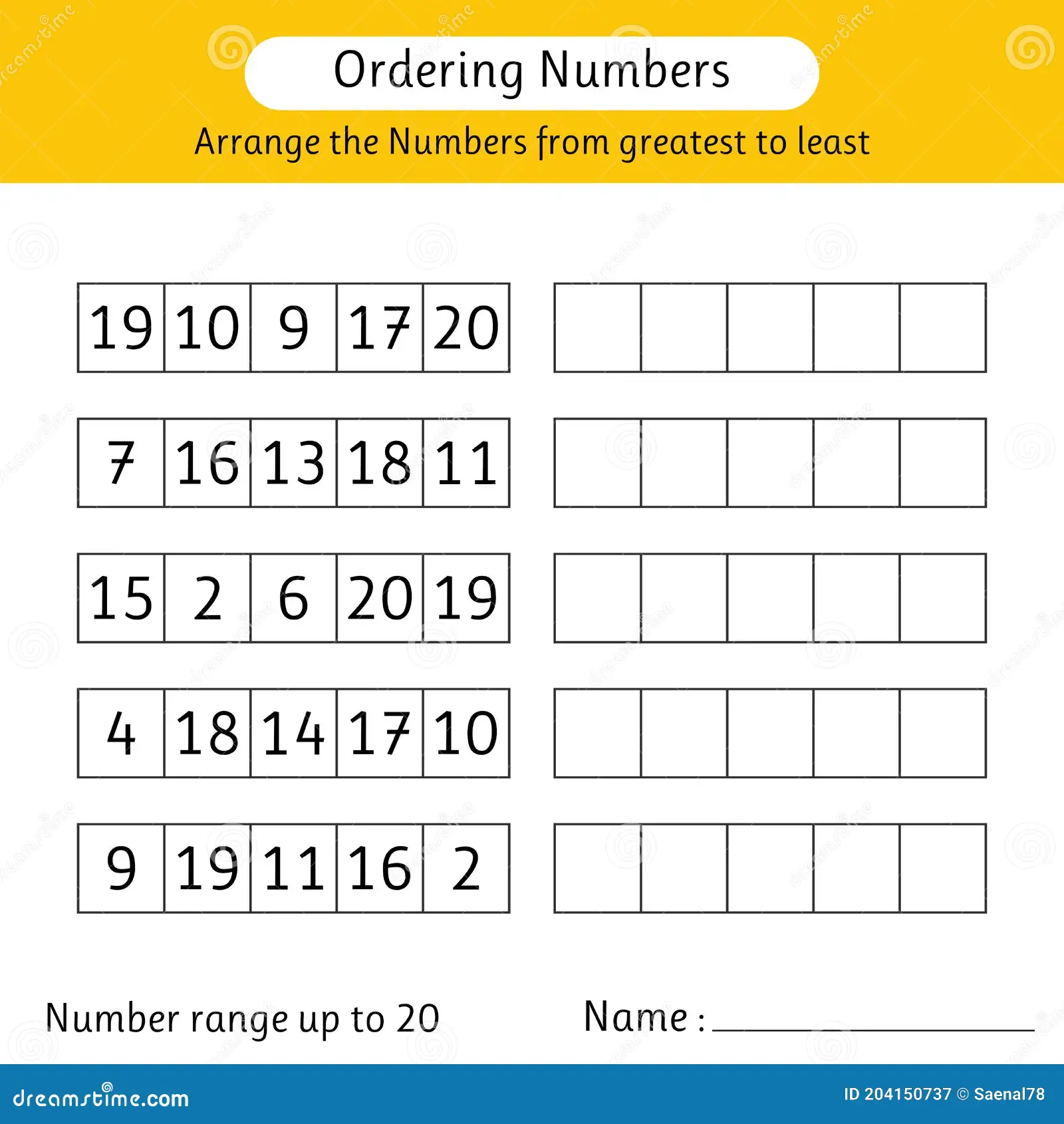
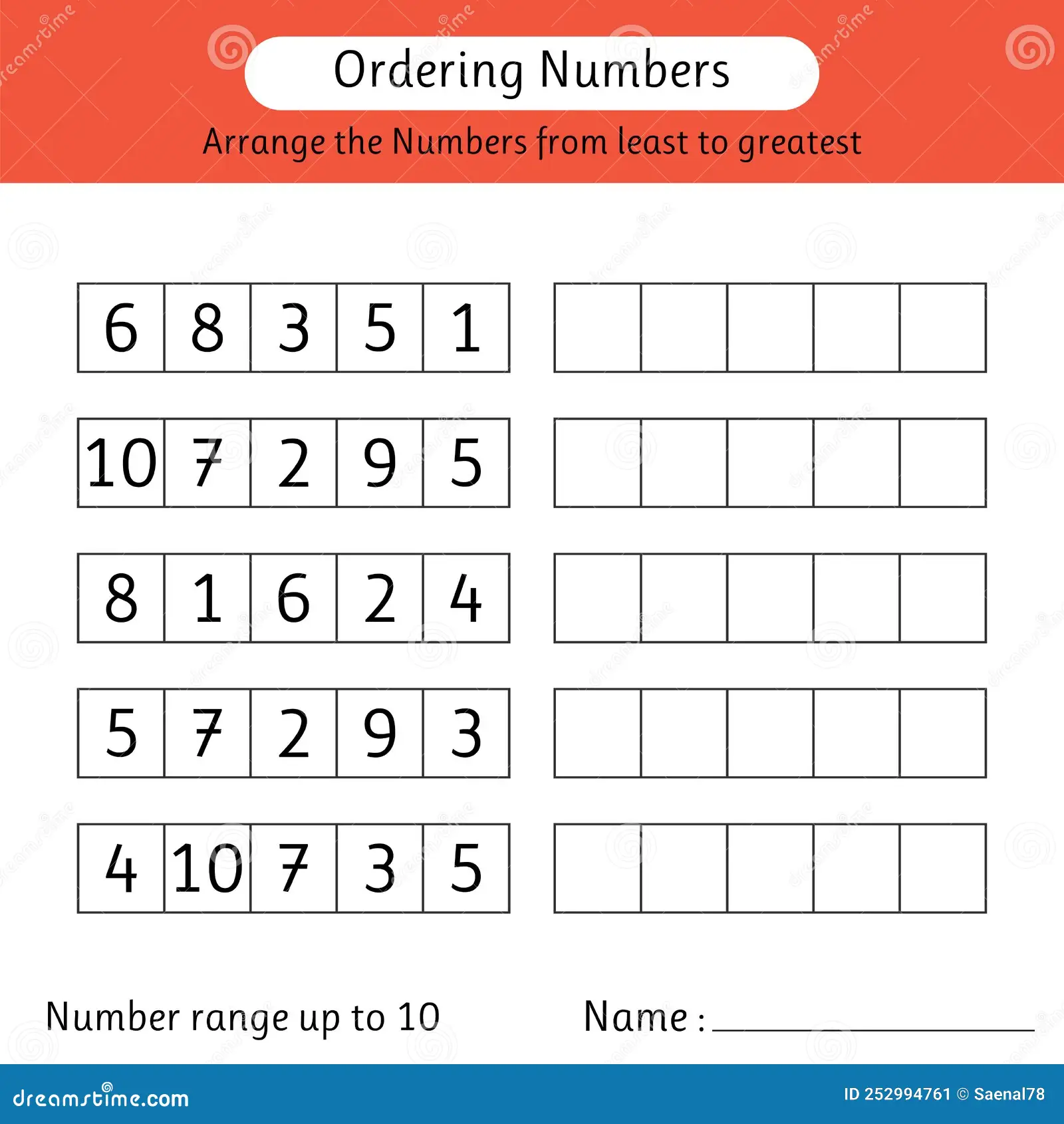
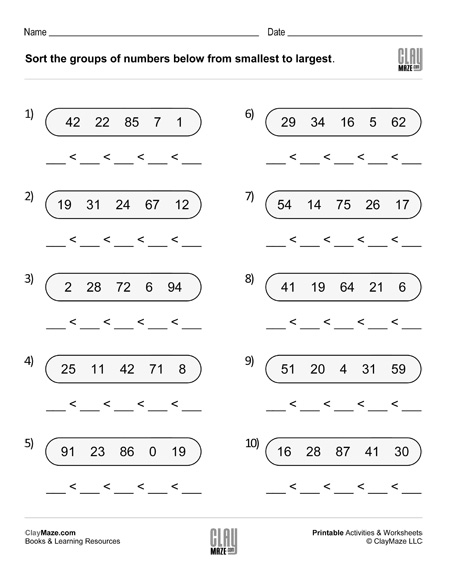
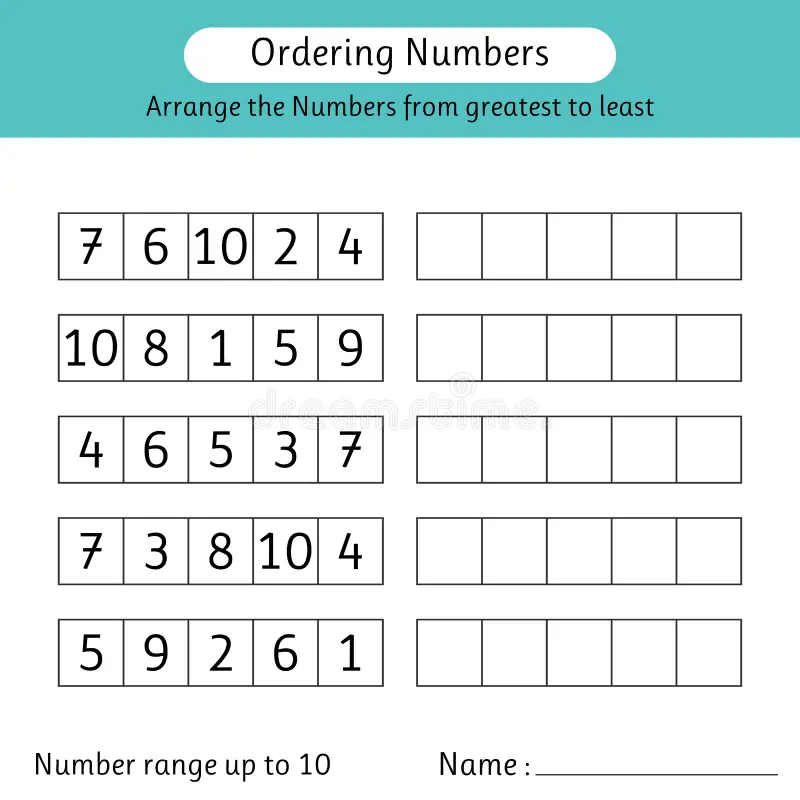
Number sequencing worksheets form a quiet but essential part of first grade math instruction, and this particular type asks students to do something deceptively simple: arrange a set of numbers from least to greatest. What seems straightforward on the surface actually builds foundational skills that support everything else children will learn about numbers.
When first graders work through these exercises, they’re doing more than just rearranging digits. They’re developing number sense, which means they’re learning to understand how numbers relate to each other and where they sit on a number line. A child who can quickly identify that 3 comes before 7 is building the mental framework needed for addition, subtraction, and eventually more complex math concepts.
These worksheets typically present five to ten numbers in random order, and students write them out in sequence from smallest to largest. The numbers usually stay within a manageable range for first grade, often between 1 and 20 or 1 and 30. Some worksheets mix single-digit and double-digit numbers to challenge students who are ready for it.
The practical benefit shows up quickly in the classroom. Once children master ordering numbers, they find it easier to understand comparisons. They start recognizing patterns and can better grasp concepts like greater than and less than relationships. Teachers often pair these sequencing activities with other first grade reading and math practice, since the skills reinforce each other.
What makes these worksheets effective is repetition with variety. A child might order numbers one day, then work on adding within 20 using visual models the next, then return to sequencing later. This cycle helps the concept stick without feeling monotonous.
For parents supporting learning at home, having printable number order worksheets on hand gives children the practice they need to build confidence with numbers before tackling more demanding operations.
Try These Printable Worksheets