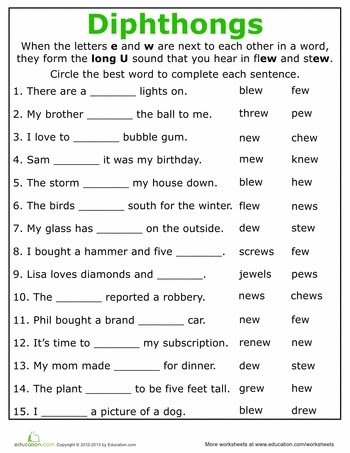
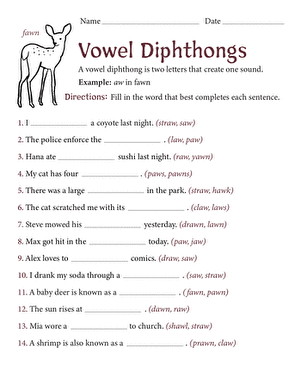
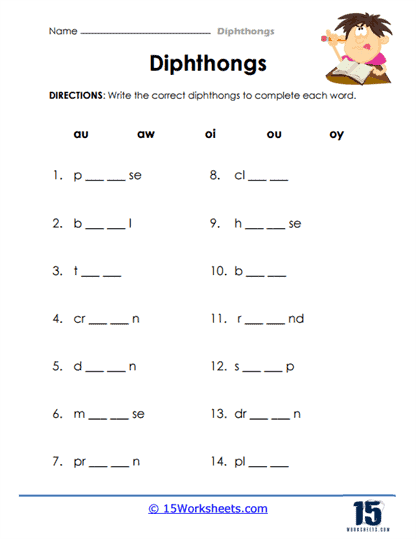
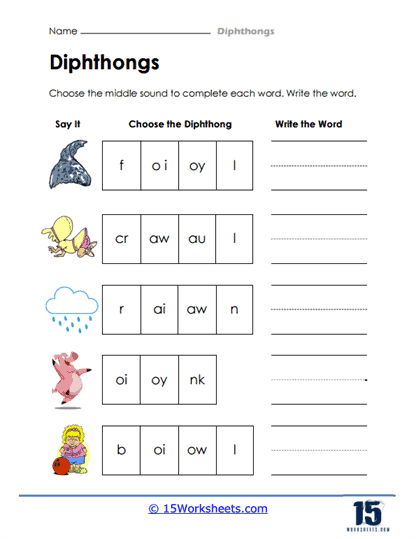
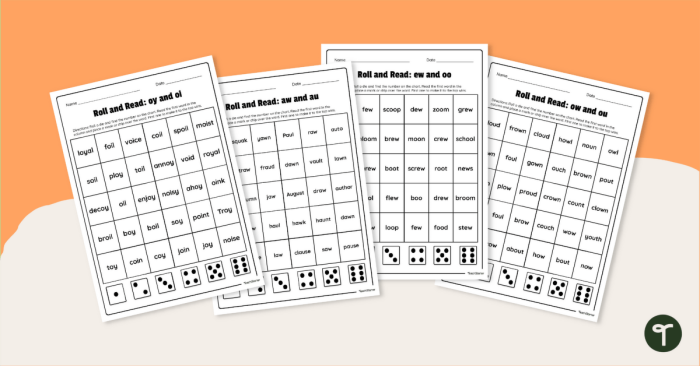
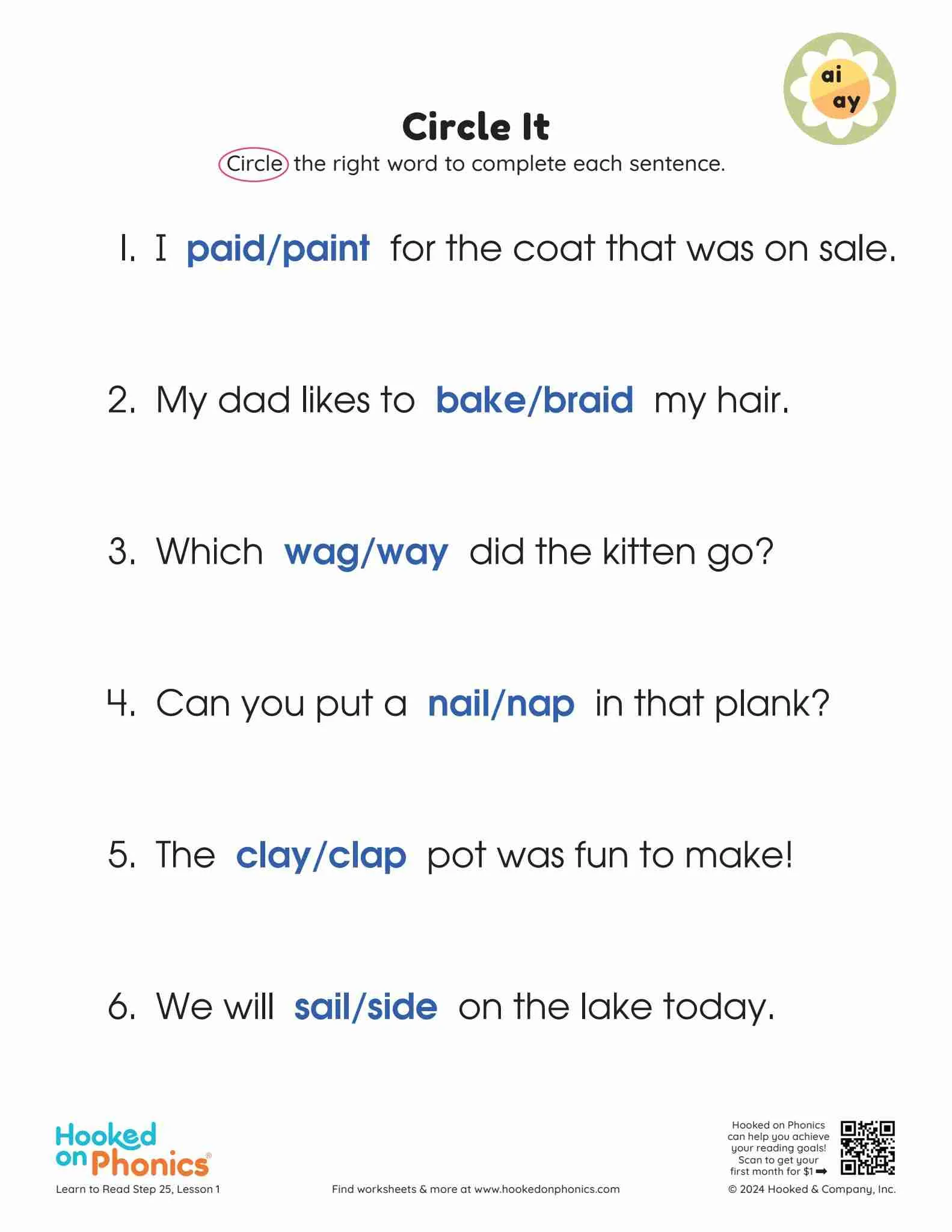
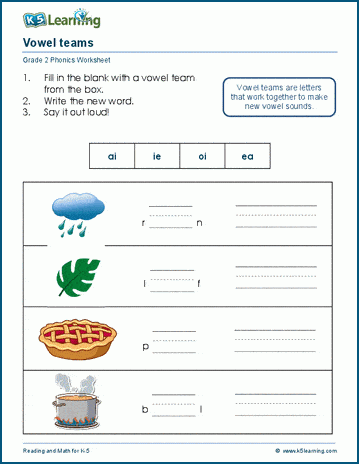
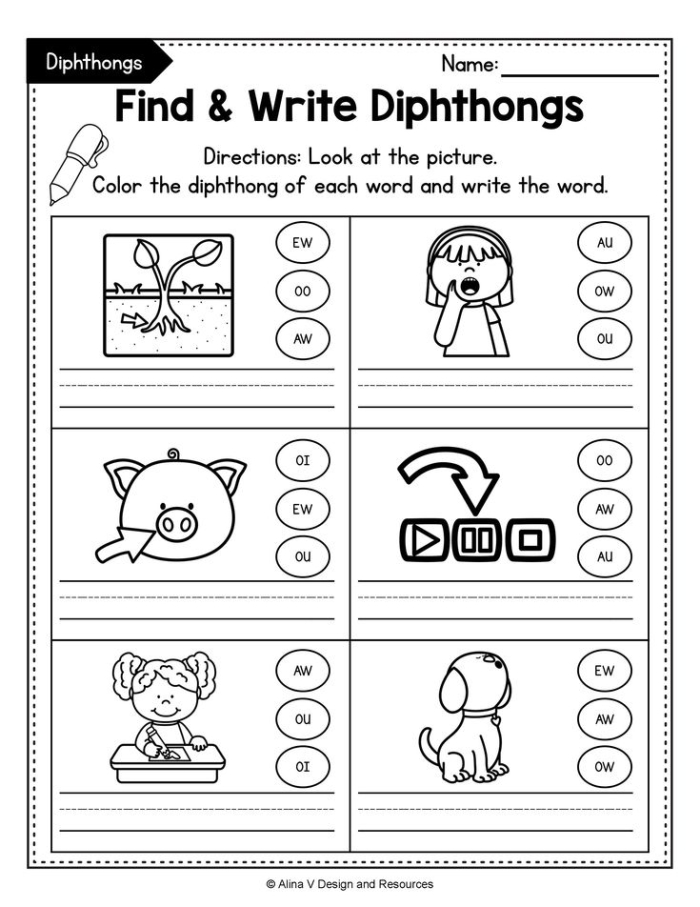
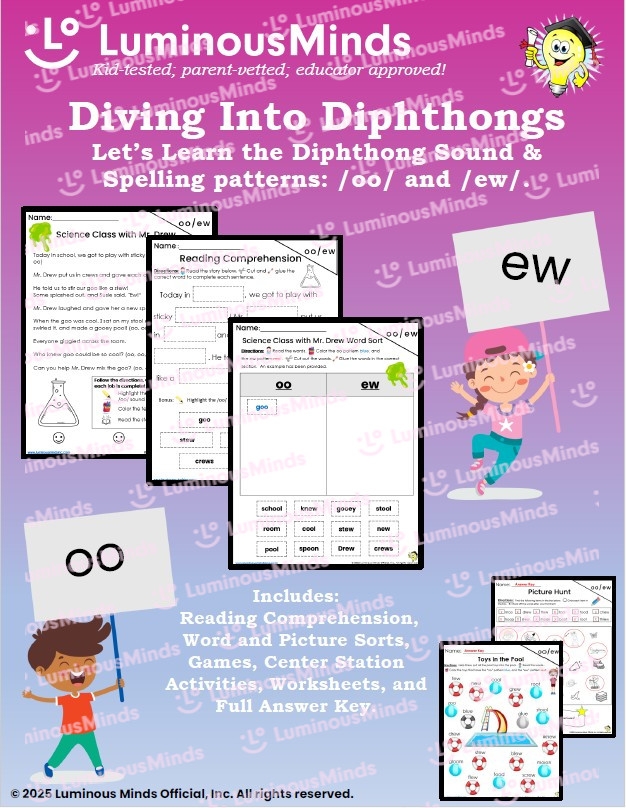
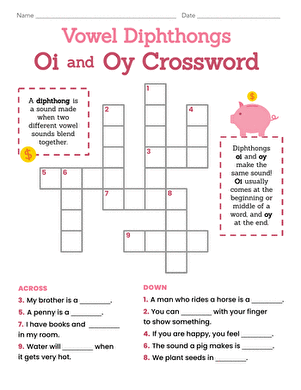
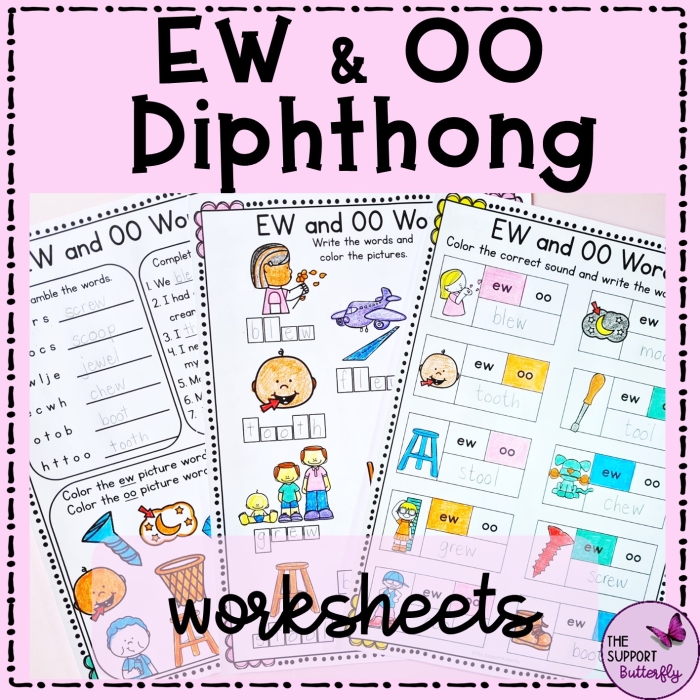
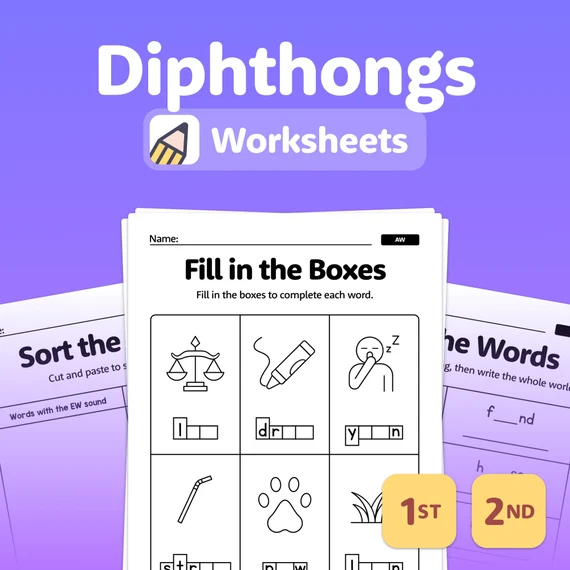
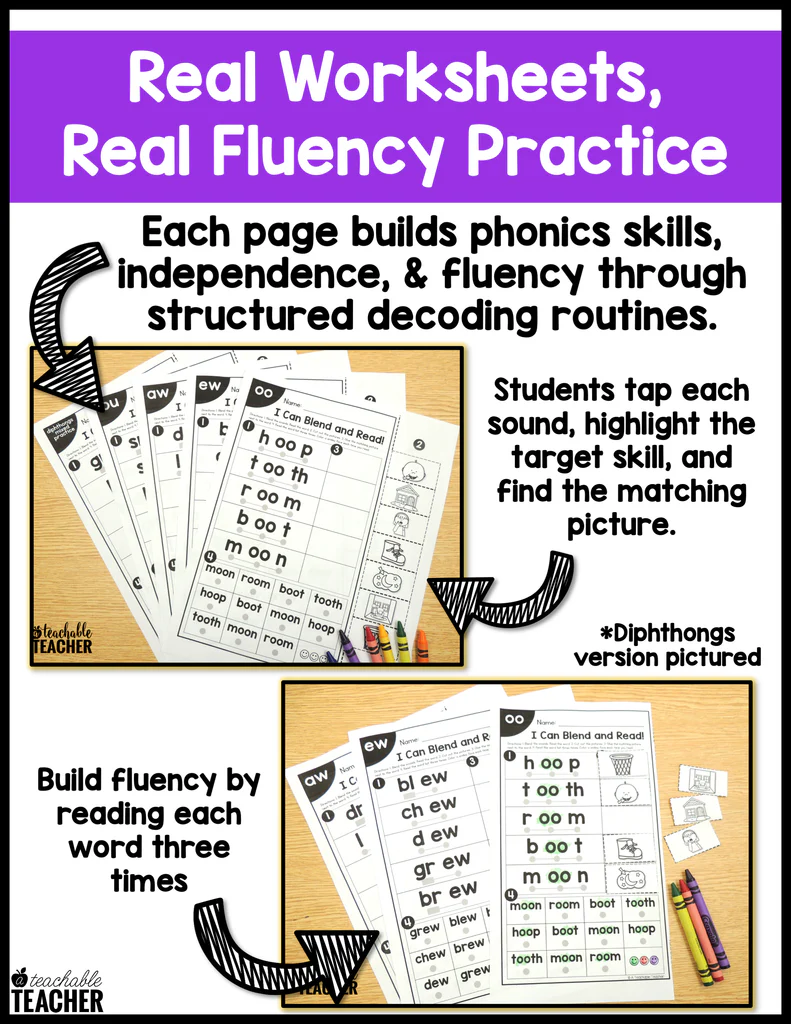
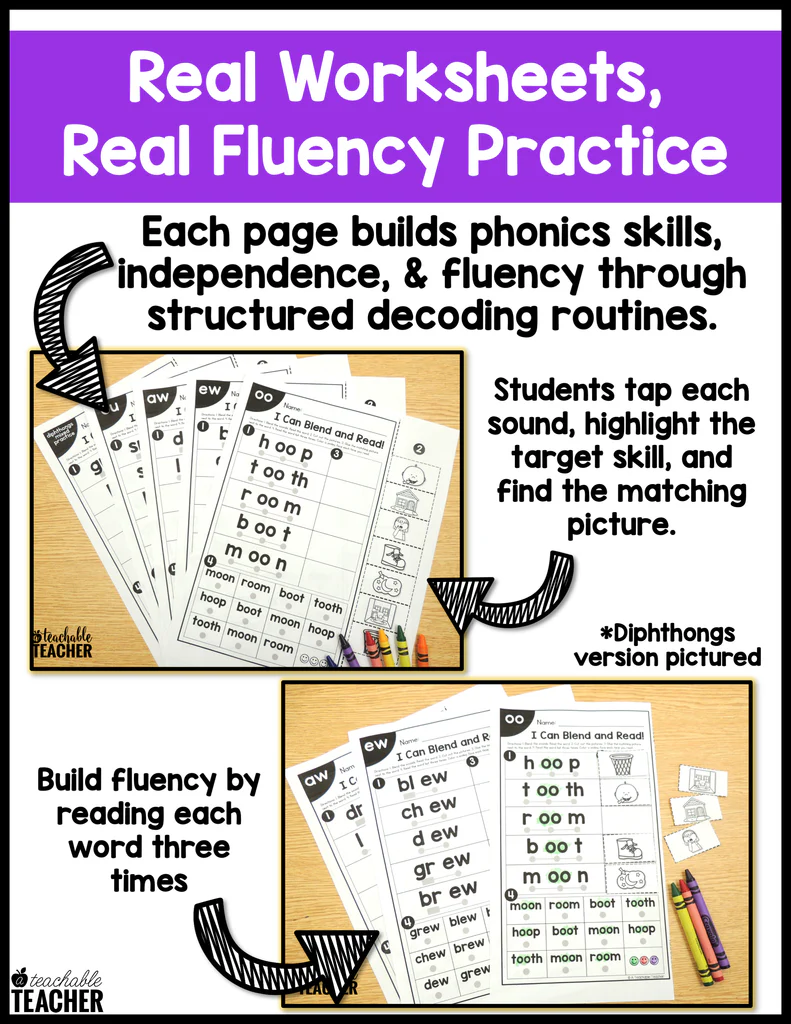
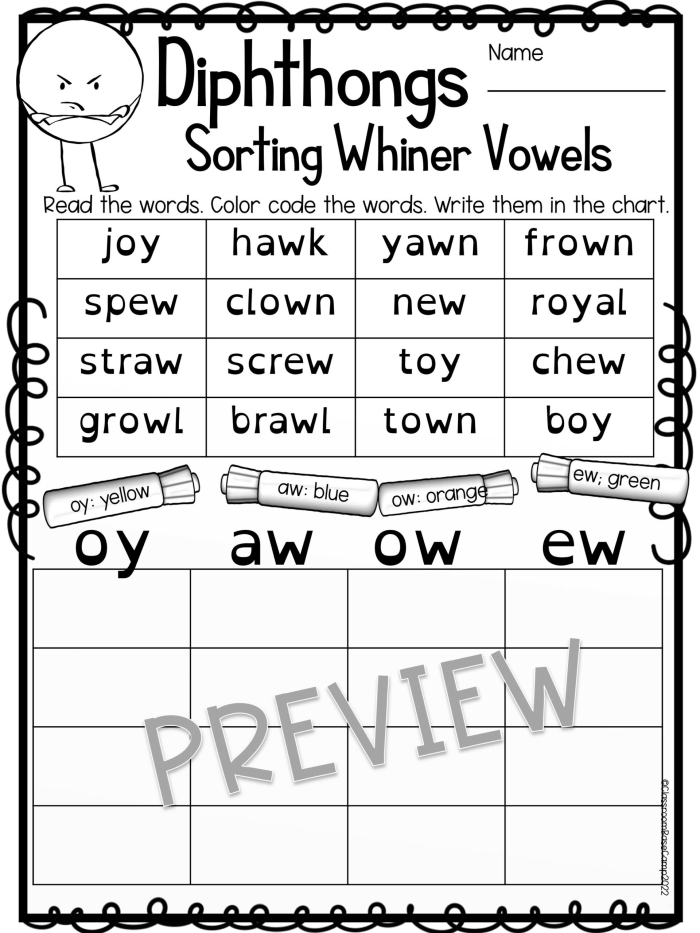
Second graders often stumble over vowel diphthongs, especially the “ew” sound that appears in everyday words like “new,” “few,” and “chew.” This worksheet targets that specific challenge by asking students to select the correct “ew” word that fits each sentence context. It’s a straightforward approach that builds both decoding skills and reading comprehension at once.
The beauty of this exercise lies in how it forces kids to think beyond just sounding out letters. When a child reads a sentence and has to choose between similar-sounding options, they’re practicing the kind of critical thinking that transfers to independent reading. They can’t just decode mechanically; they have to understand what makes sense in the sentence.
Most second graders benefit from seeing these words in context rather than in isolation. A word list on a wall is one thing, but actually using “drew,” “blew,” or “flew” in a meaningful sentence helps the word stick in their memory. This worksheet creates that repetition in a way that feels purposeful rather than tedious.
You might pair this practice with other second grade learning activities. If your student is working on geometry concepts, they could tackle something like creating a covered wagon with geometry shapes during math time, then come back to reading practice afterward. Mixing subjects keeps the day varied and prevents fatigue.
The worksheet works best when you sit with your child and have them read each sentence aloud before selecting their answer. This oral component reinforces the sound and helps you catch any confusion about letter patterns. Some kids will zoom through it, while others might need you to point out that “ew” makes the same sound whether it appears at the end or middle of a word.
Hands-On Worksheet Activities