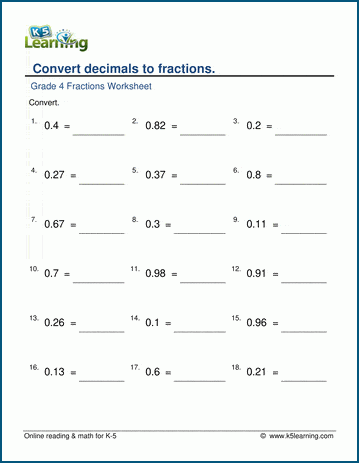
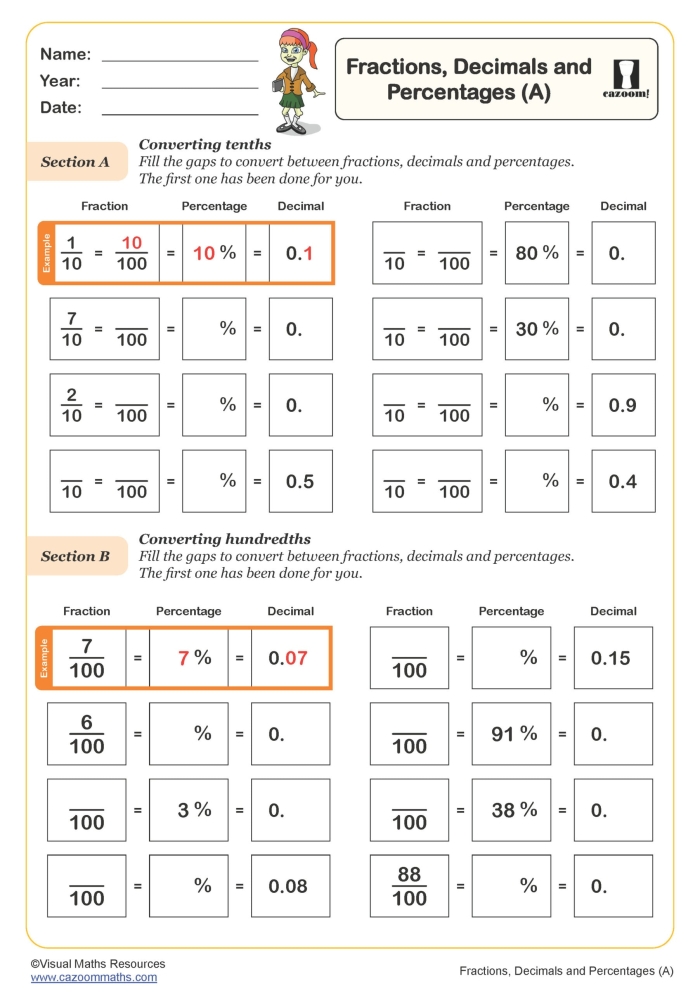
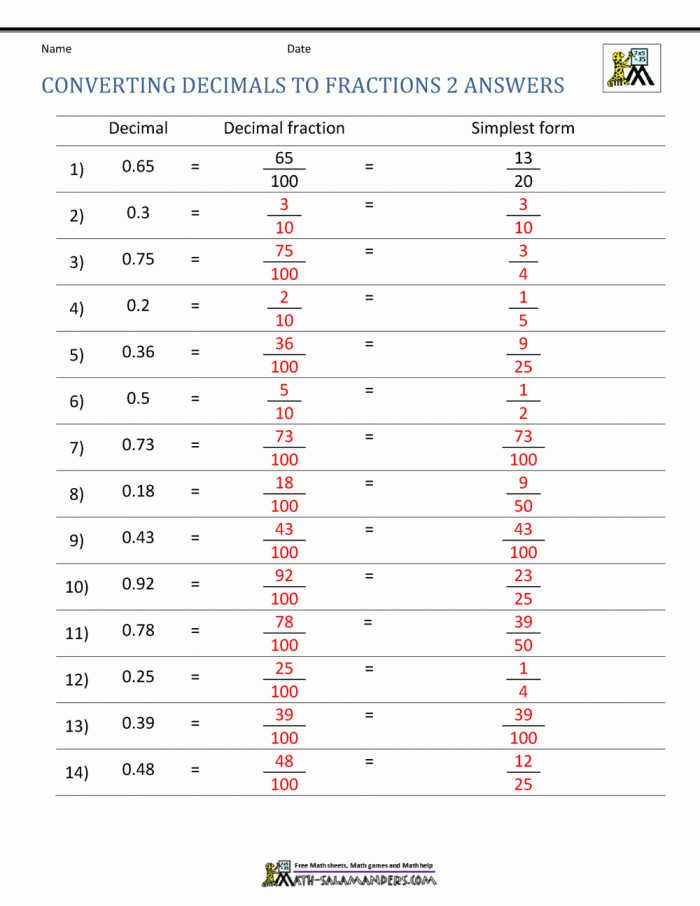
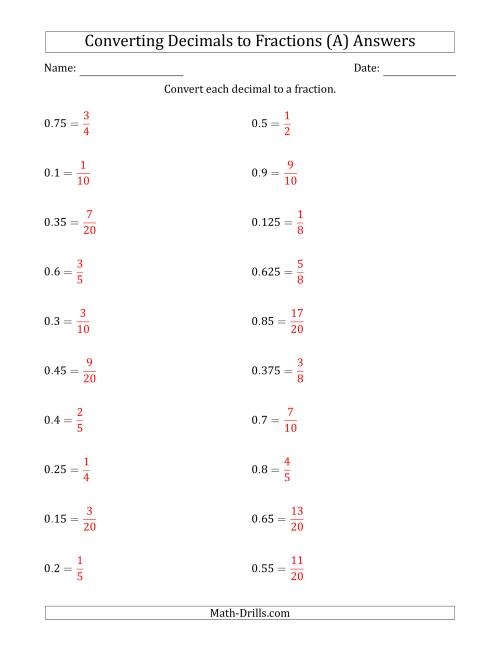
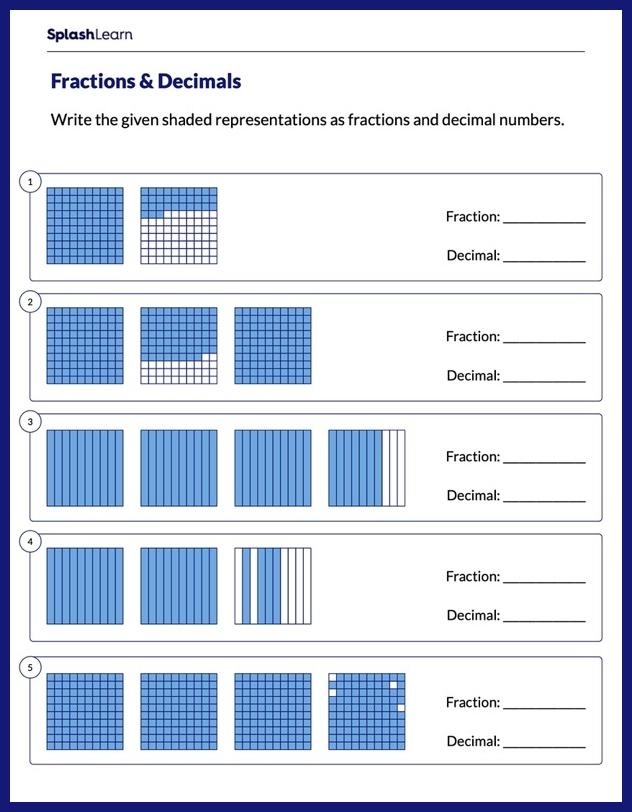
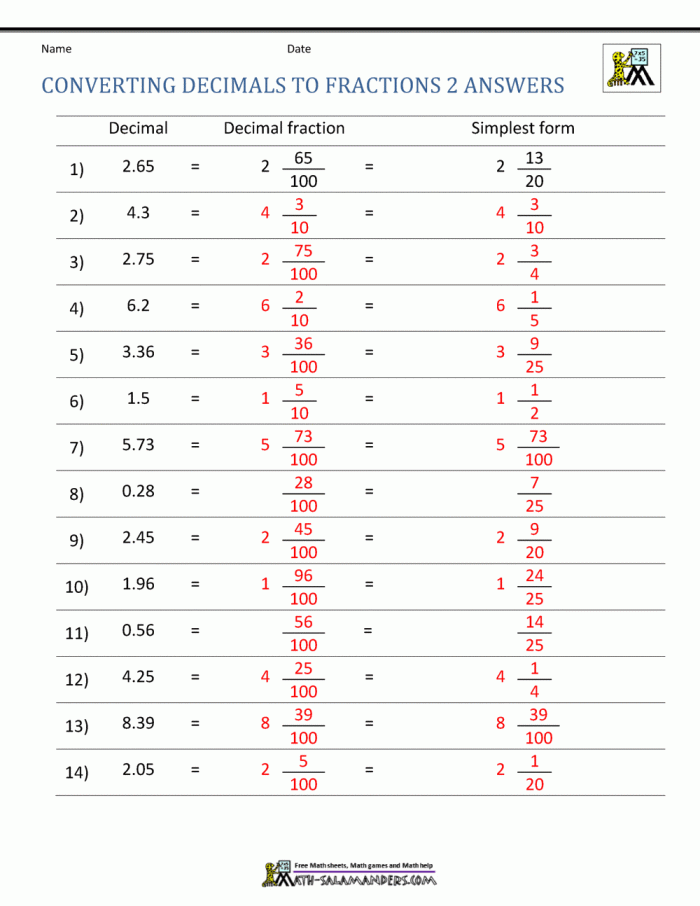
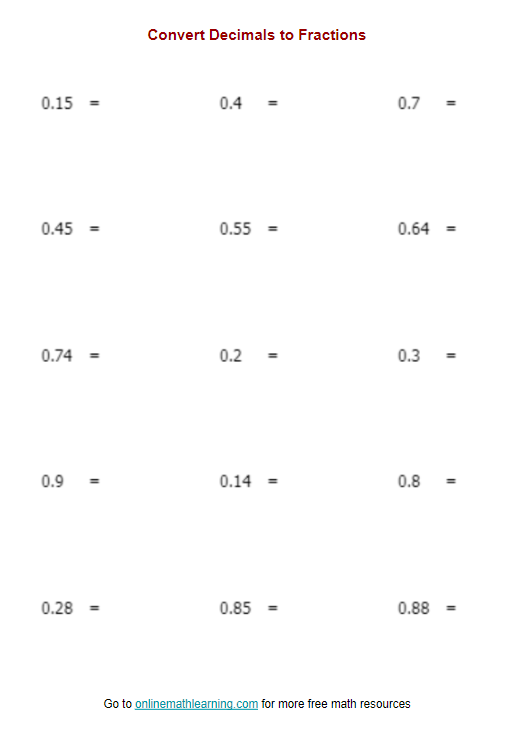
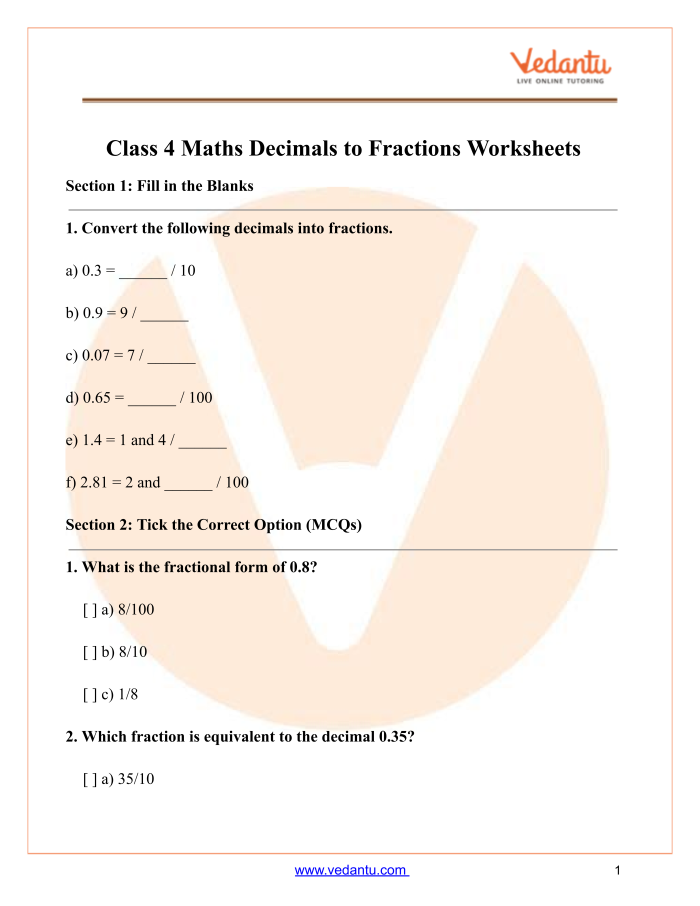
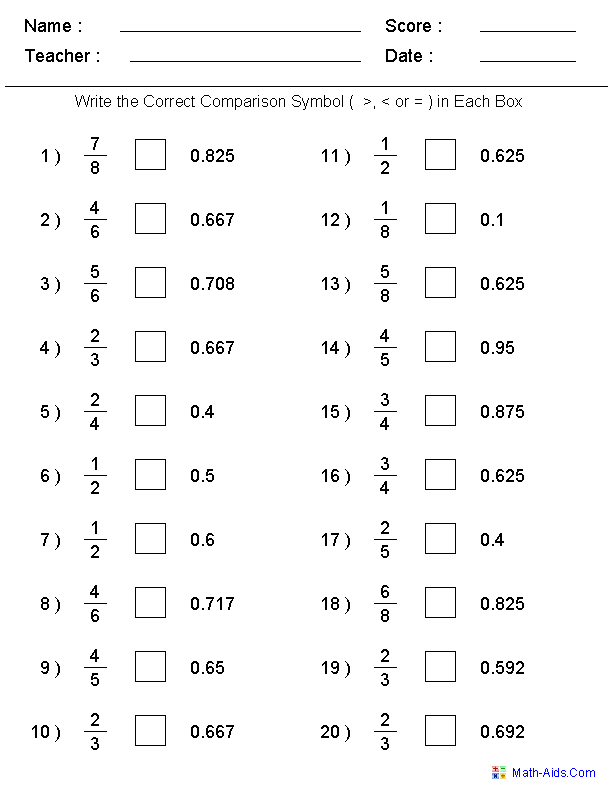
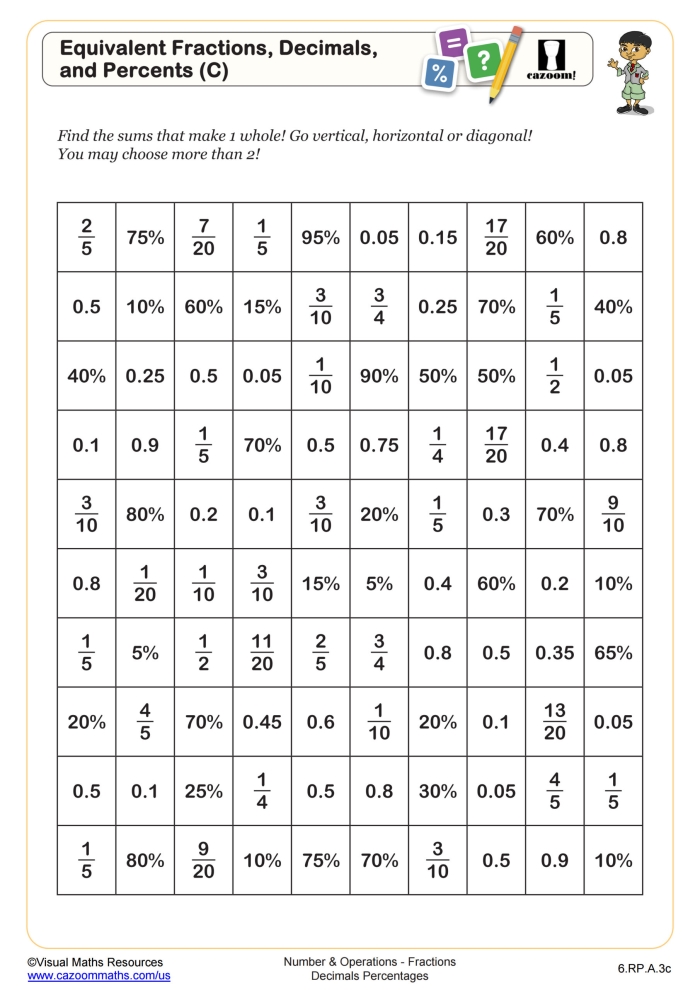
Converting decimals to fractions is one of those skills that looks harder than it actually is. When you start with a decimal between 0 and 1, you’re working with a number that sits right where fractions live naturally. The trick is recognizing the pattern and matching it to the correct fraction.
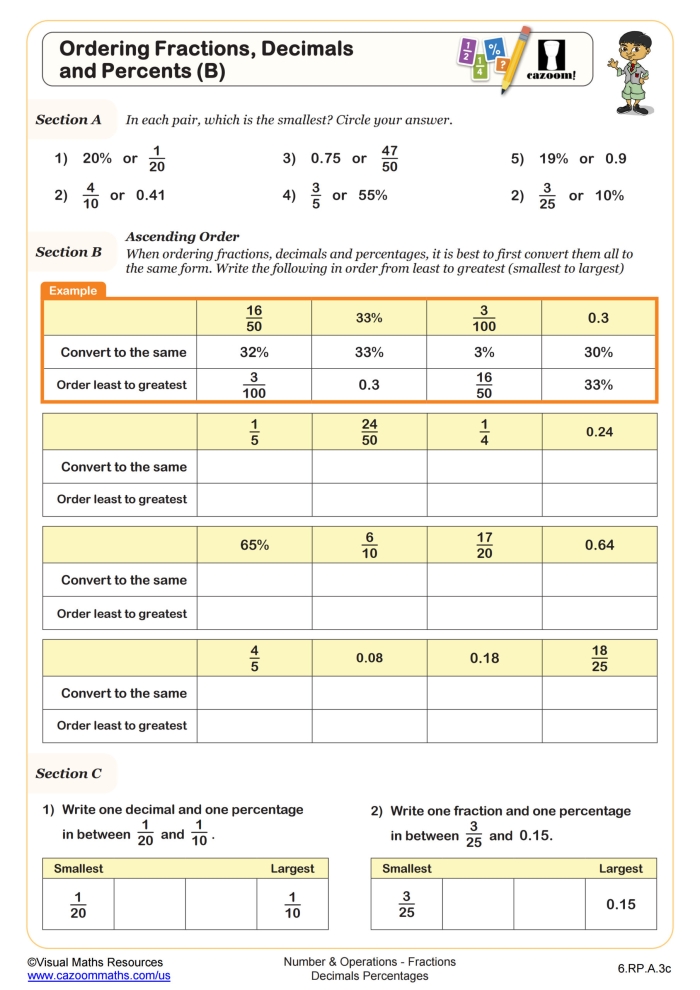
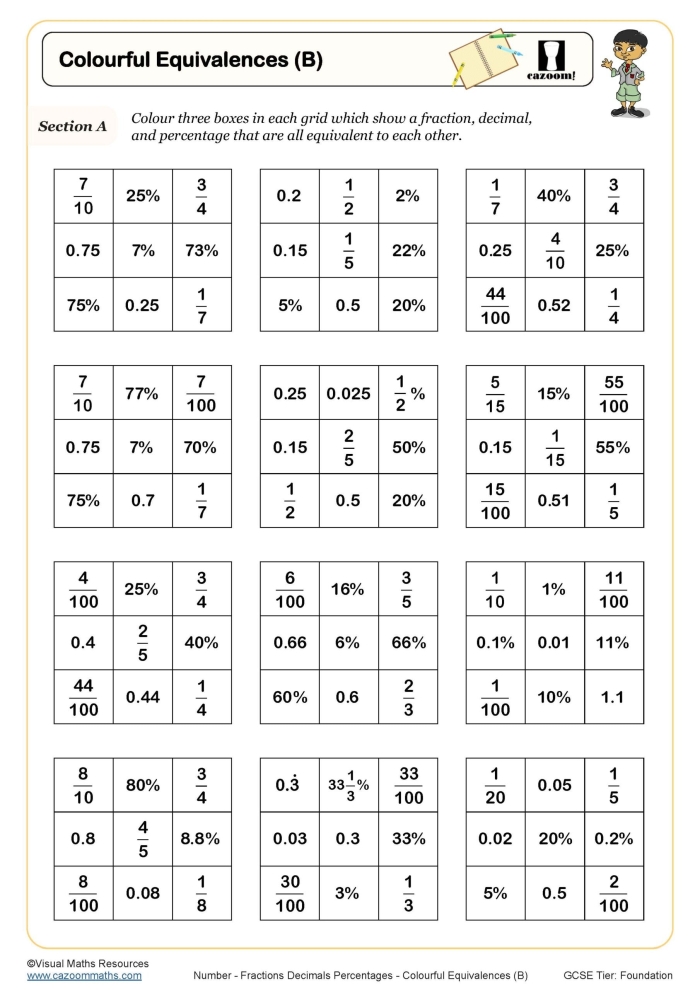
Take 0.5 as an example. That decimal sits exactly halfway between 0 and 1, which means it equals 1/2. The decimal 0.25 represents one quarter of a whole, so it matches 1/4. These connections become obvious once you understand that the decimal point tells you how many decimal places you have, and that information determines your denominator.
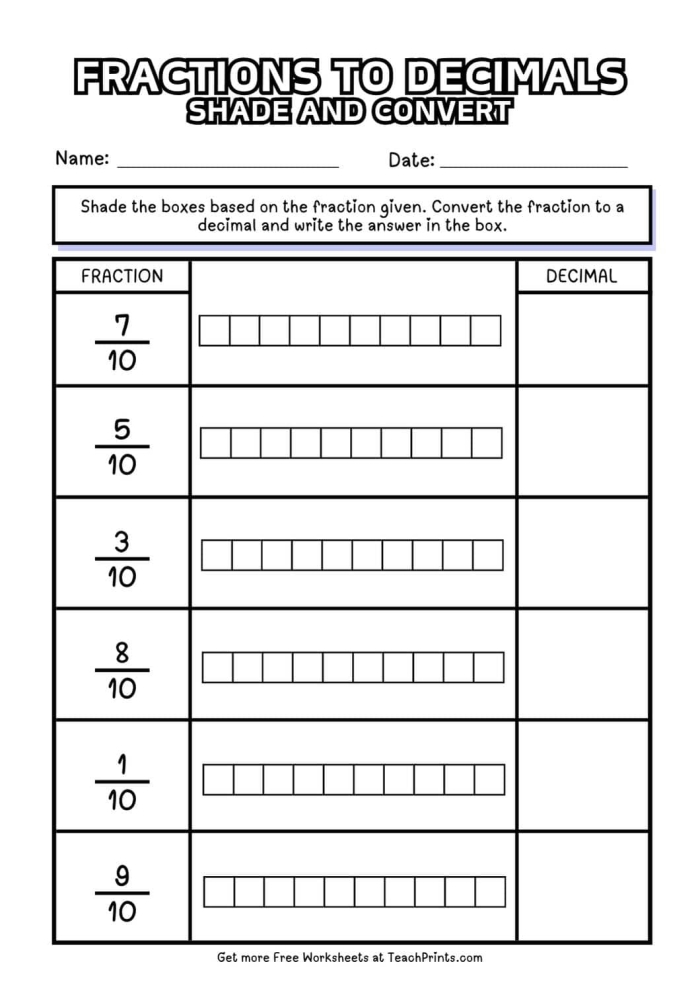
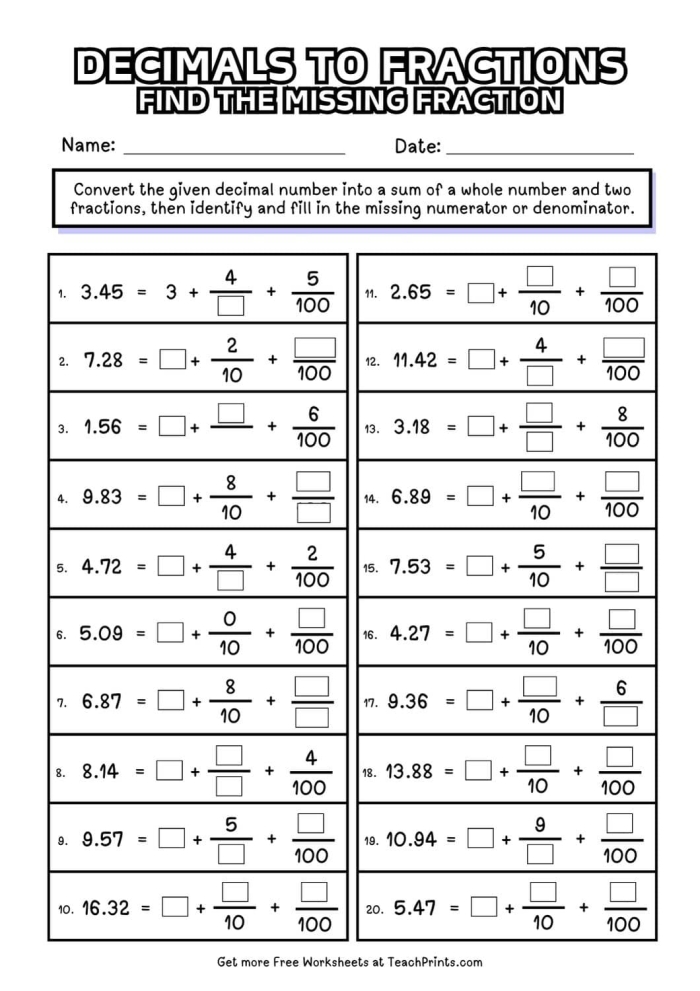
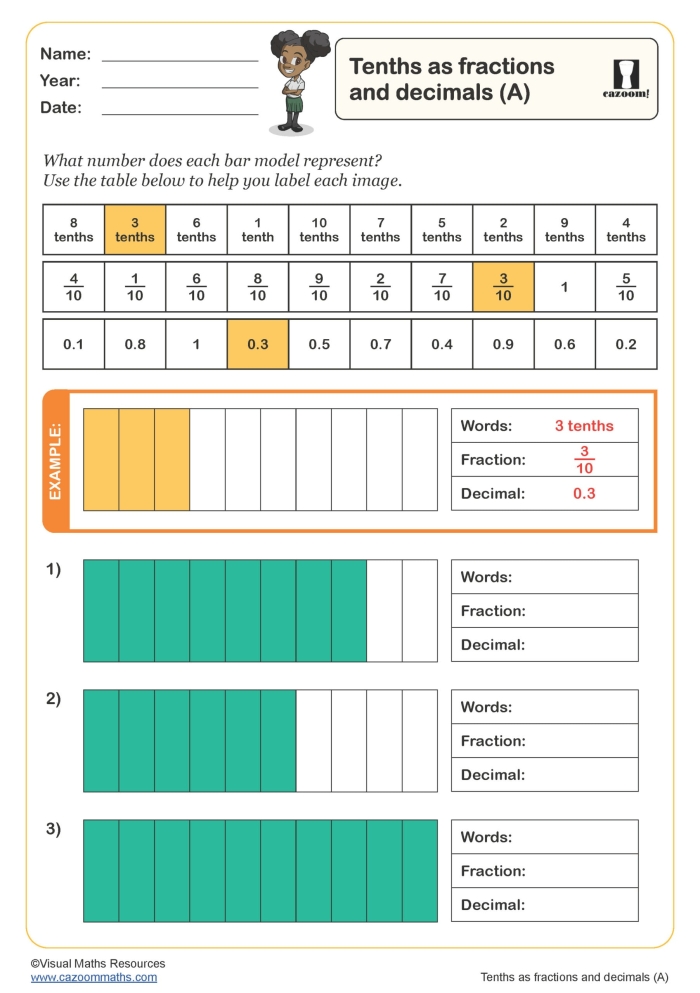
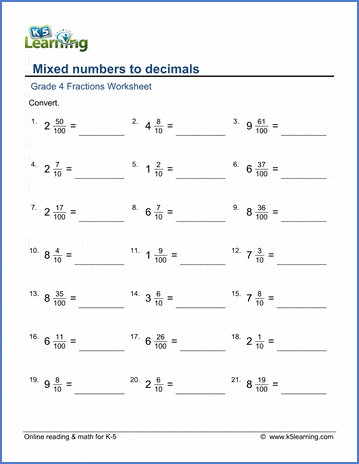
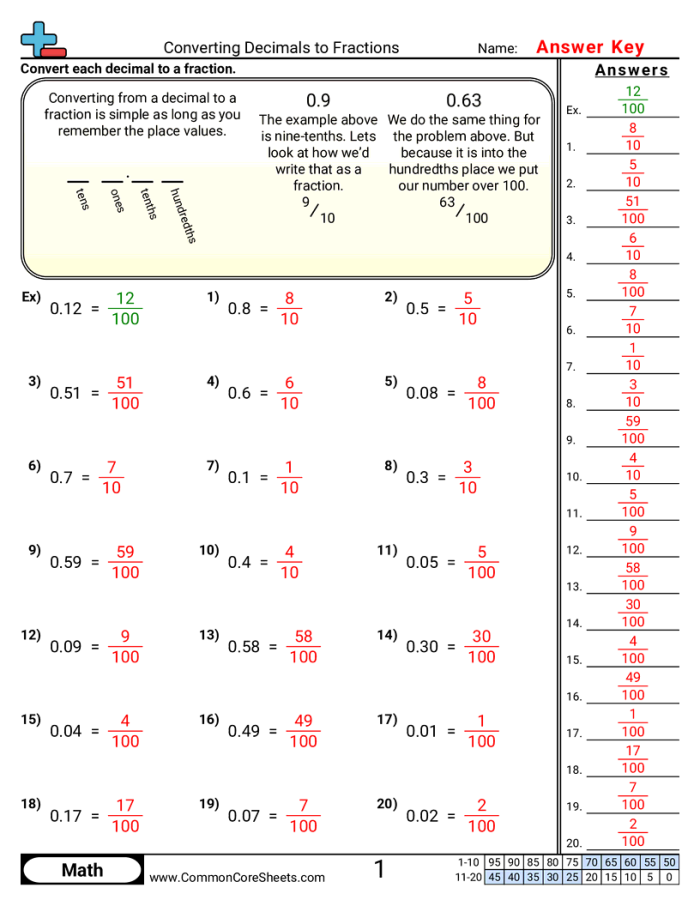
Here’s where the pattern emerges: a decimal with one digit after the decimal point (like 0.7) has a denominator of 10, making it 7/10. Two digits after the decimal point (like 0.75) means your denominator is 100, giving you 75/100, which simplifies to 3/4. Fourth grade students working through multiplication and related concepts benefit from seeing this connection because it strengthens their number sense across different representations.
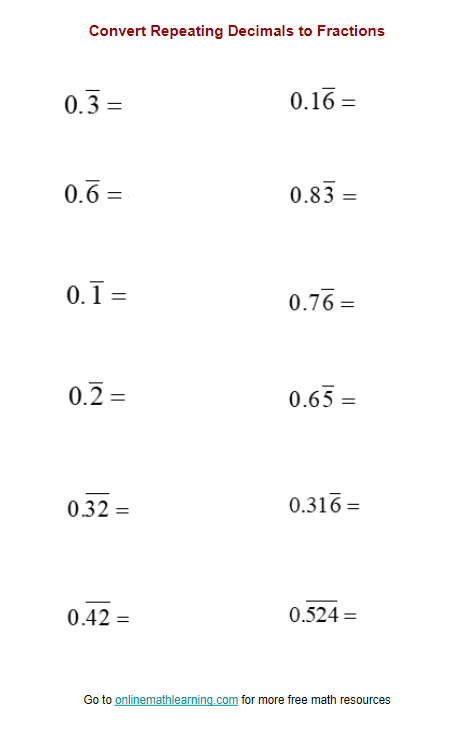
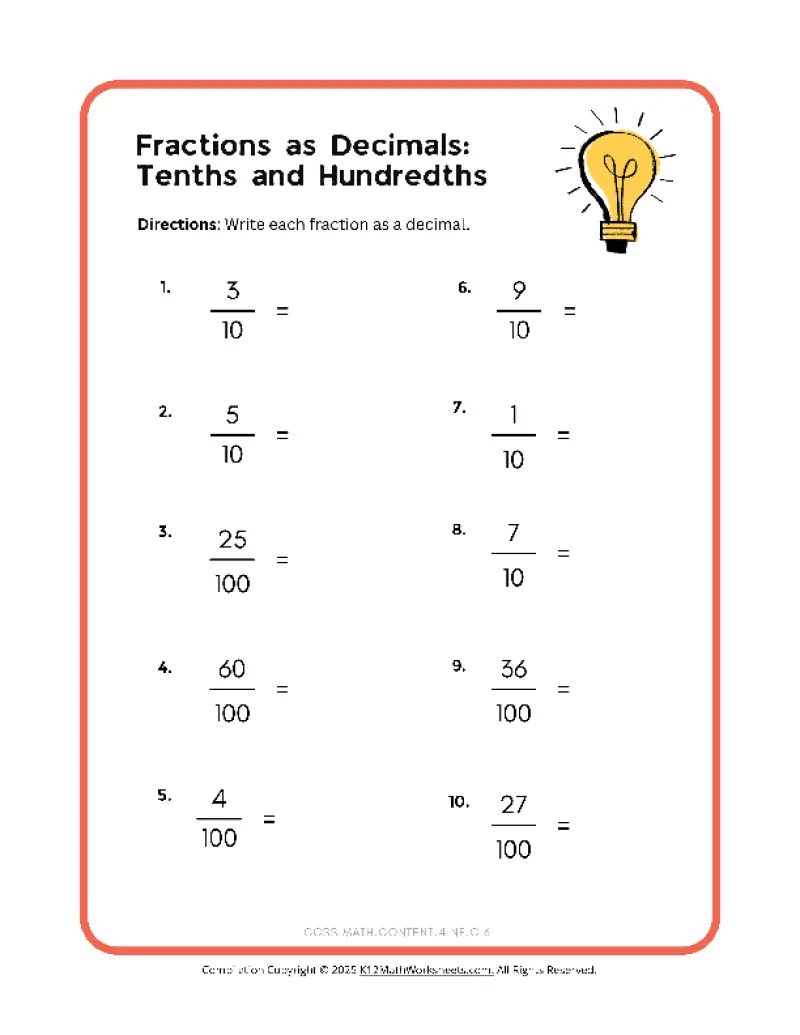
The conversion process involves three simple steps. First, count how many digits appear after the decimal point. Second, use that count to determine your denominator as a power of 10. Third, write the digits after the decimal as your numerator. Then simplify if needed by finding common factors.
When you’re teaching this skill, finding the theme in multiplication and decimal exercises helps students see the bigger picture. Practicing with word problem assessments that combine multiplication with decimals gives fourth graders real context for why this conversion matters. The ability to move fluidly between decimals and fractions opens doors to more advanced math concepts down the road.
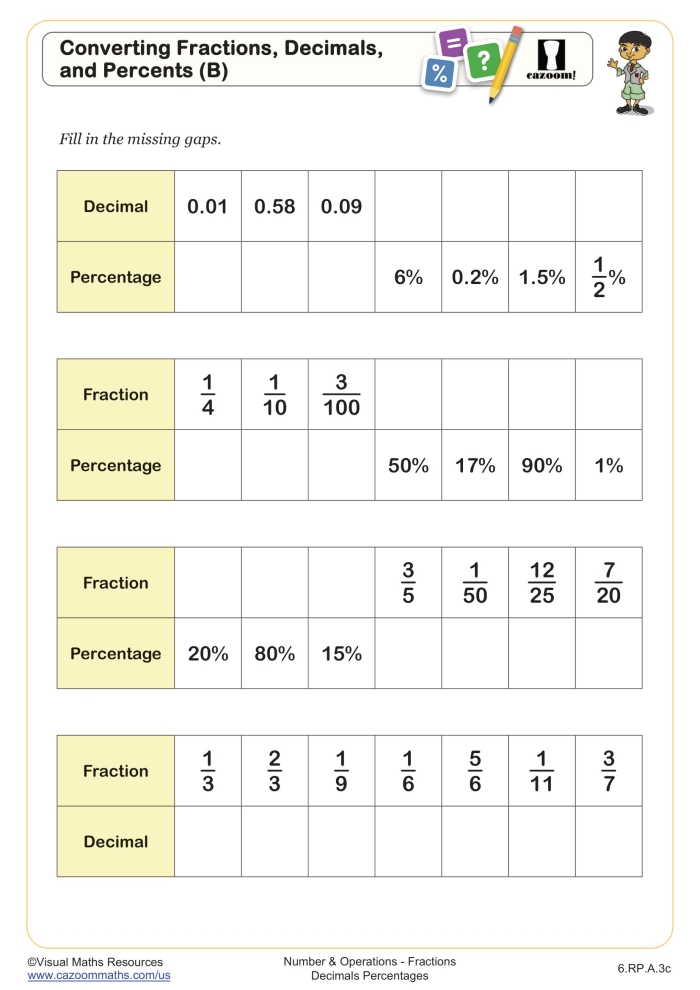
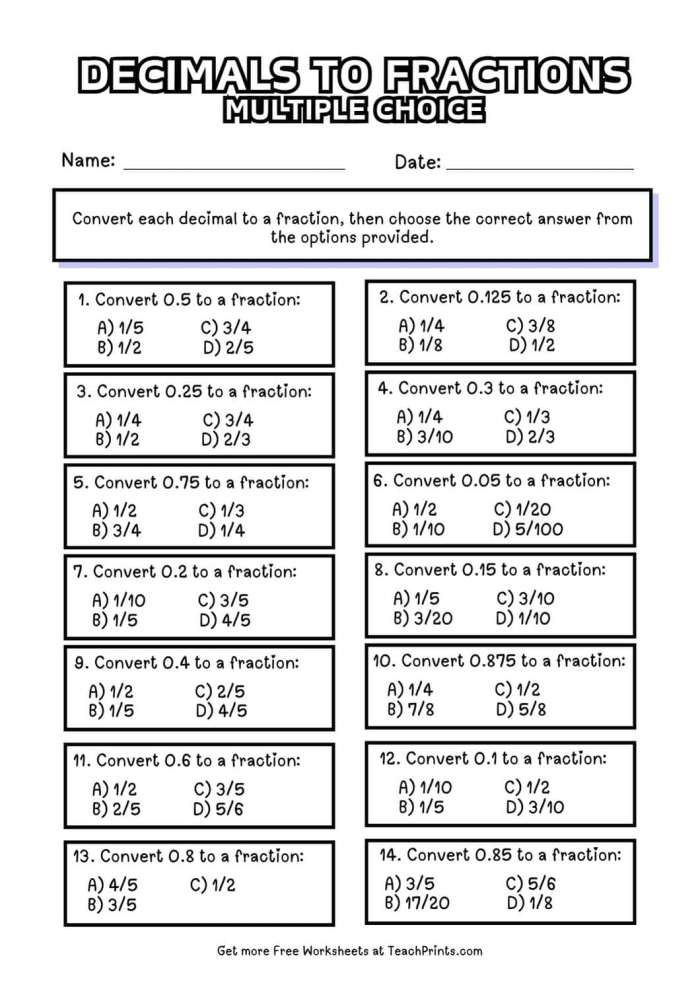
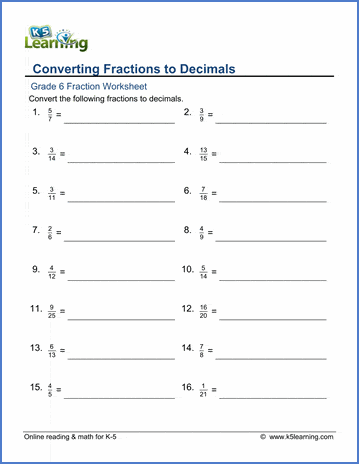
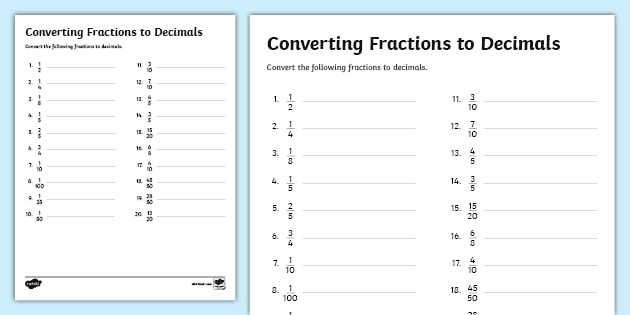
Start Practicing with These Worksheets