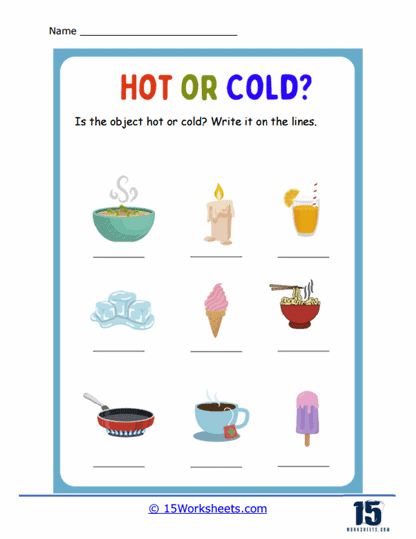
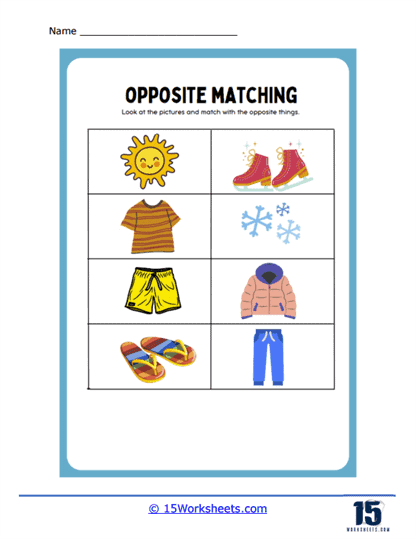
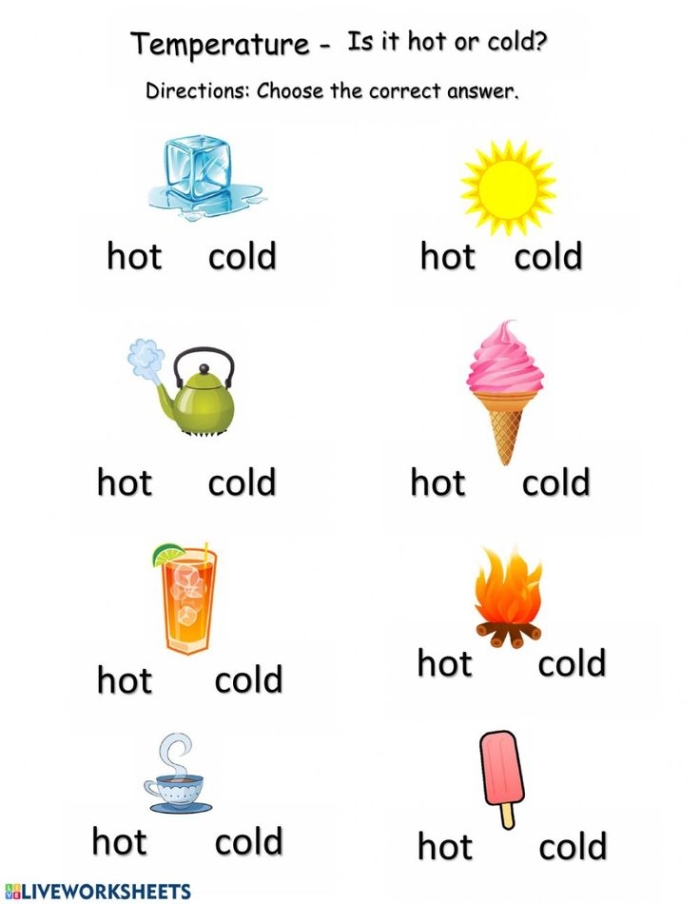
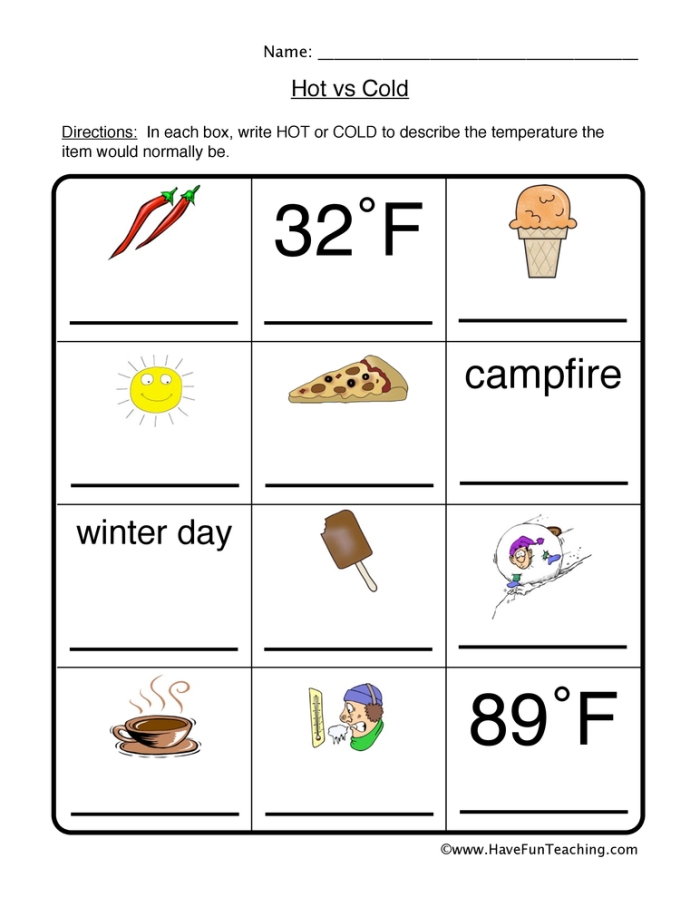
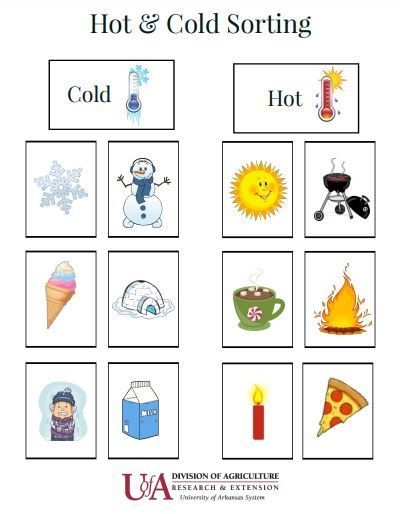
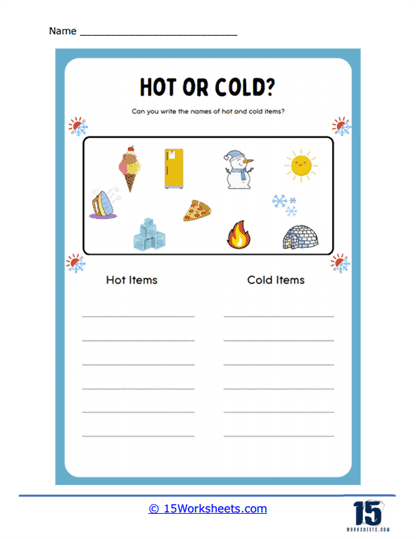
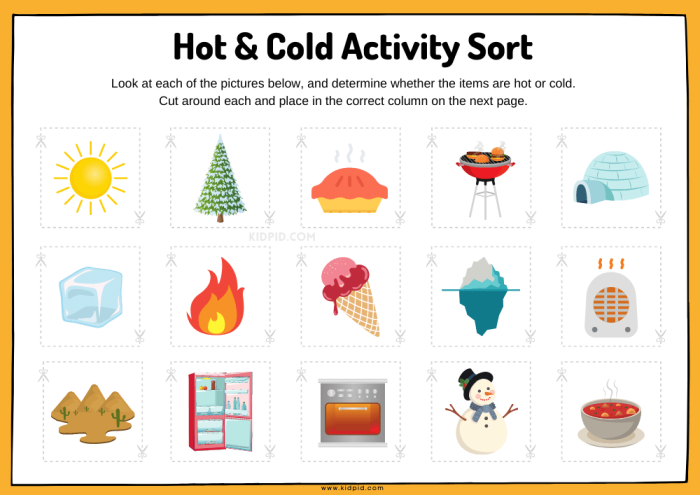
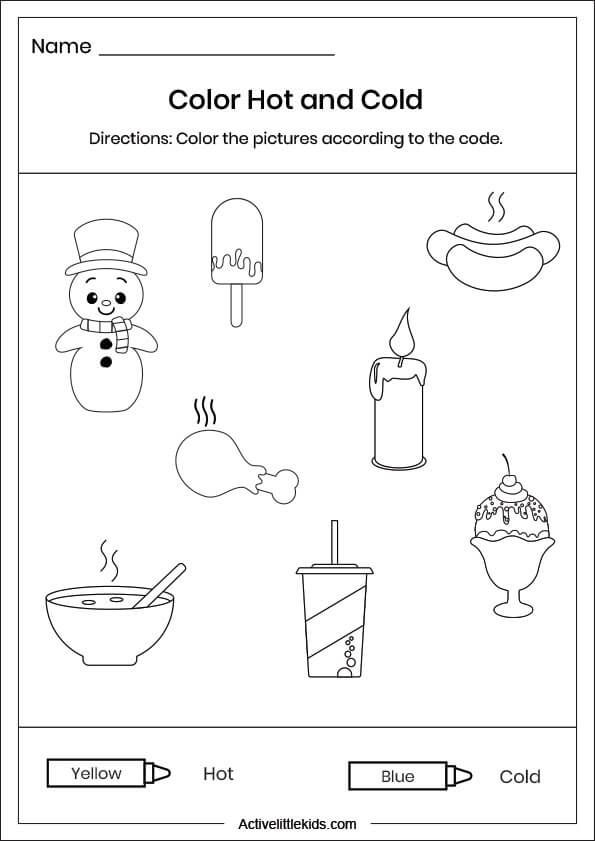
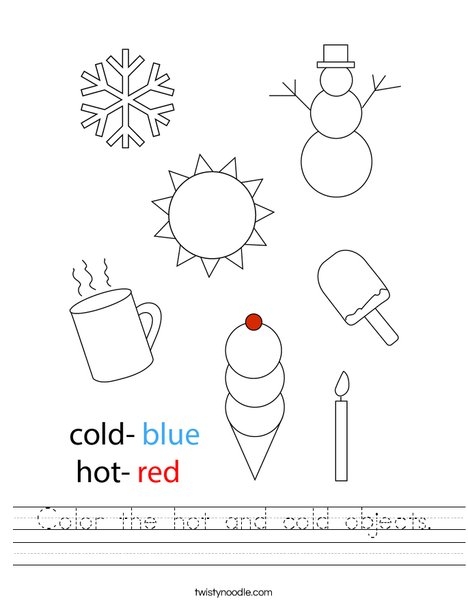
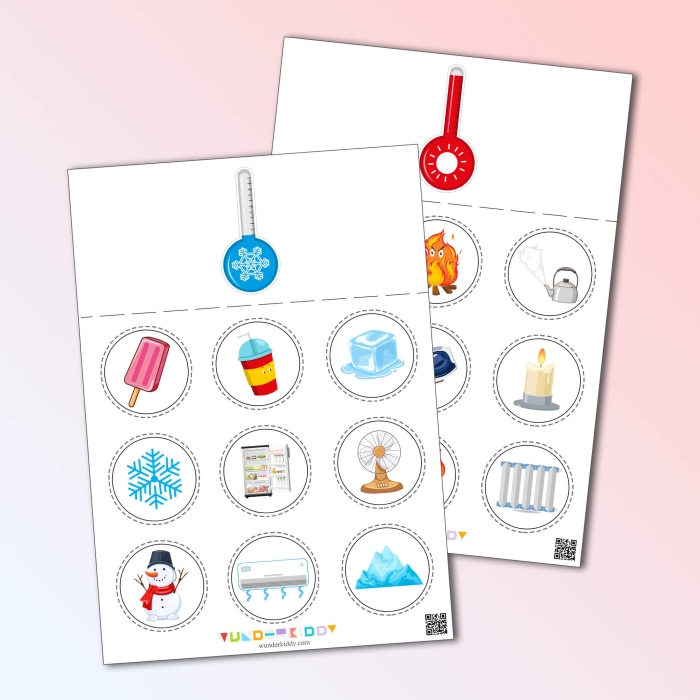
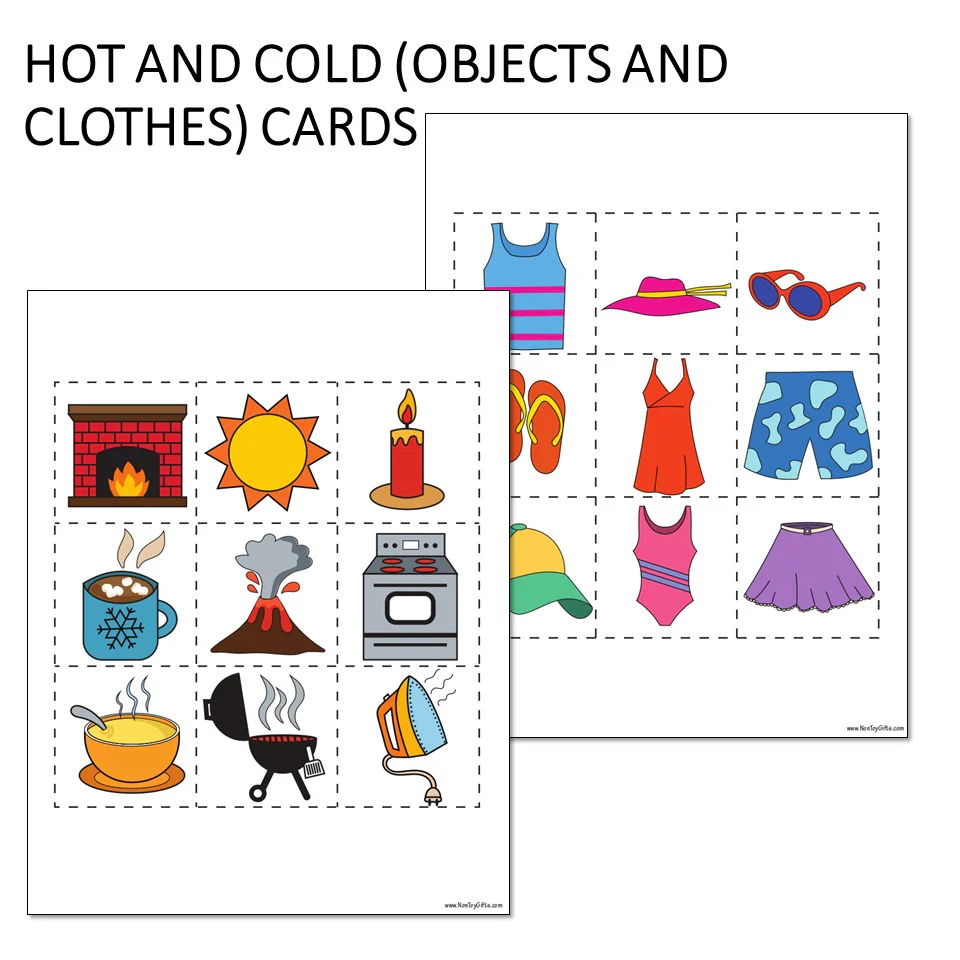
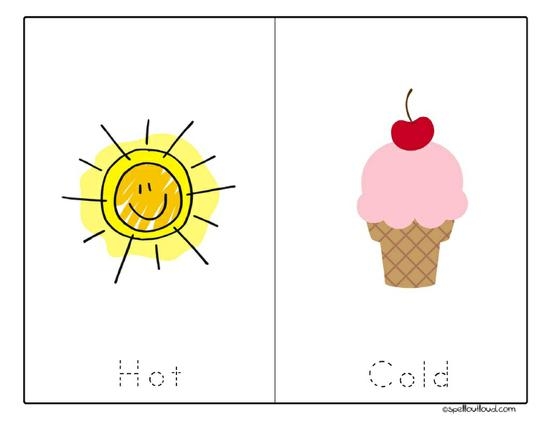
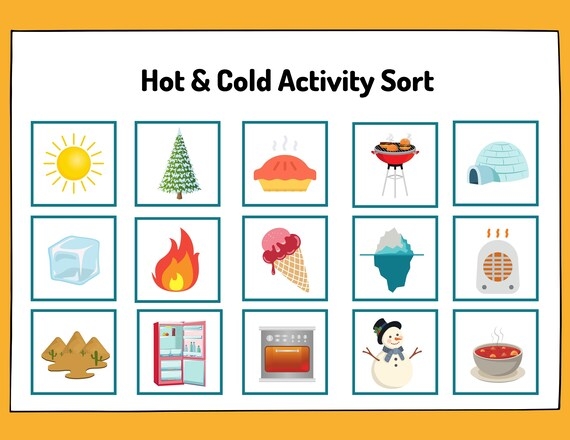
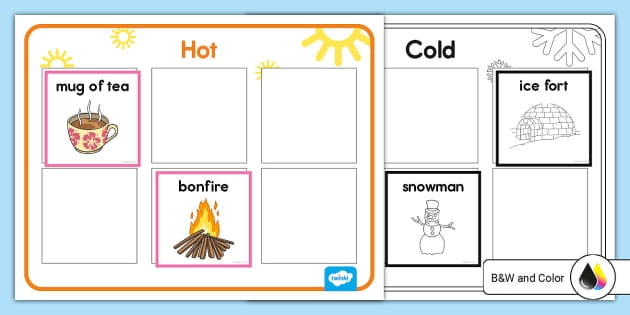
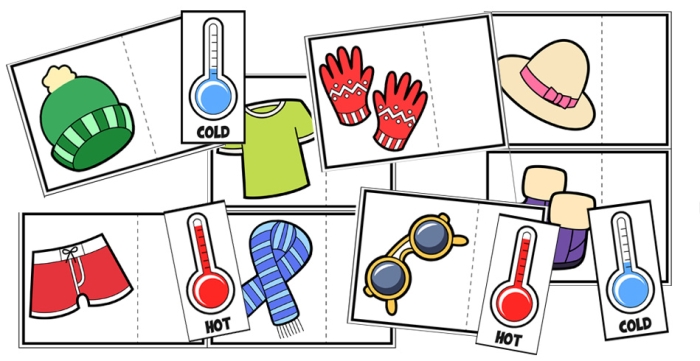
Sorting activities form the foundation of early math thinking, and a simple hot or cold classification exercise does exactly what Pre-K students need: it teaches them to observe, compare, and organize information into categories. The activity involves nine everyday items that children cut out and sort into two boxes labeled “hot” and “cold,” building both fine motor skills and basic statistical thinking.
When children handle scissors to cut out pictures of items like a cup of tea, ice cream, a campfire, and a snowflake, they’re strengthening hand-eye coordination while staying engaged with the content. The physical act of cutting makes the sorting task feel less like an abstract lesson and more like a hands-on discovery. Once the items are separated, children see a visual representation of data they’ve organized themselves, which is far more memorable than simply being told how to sort.
The nine-item format works well for this age group because it’s substantial enough to feel like a real task without becoming overwhelming. Pre-K students can typically handle this quantity without losing focus, and the resulting sorted groups are large enough to discuss and count. A teacher might ask follow-up questions like “Which group has more?” or “Can you count how many cold things we have?” This transforms a simple cutting and sorting activity into an informal statistics lesson where children practice basic data organization.
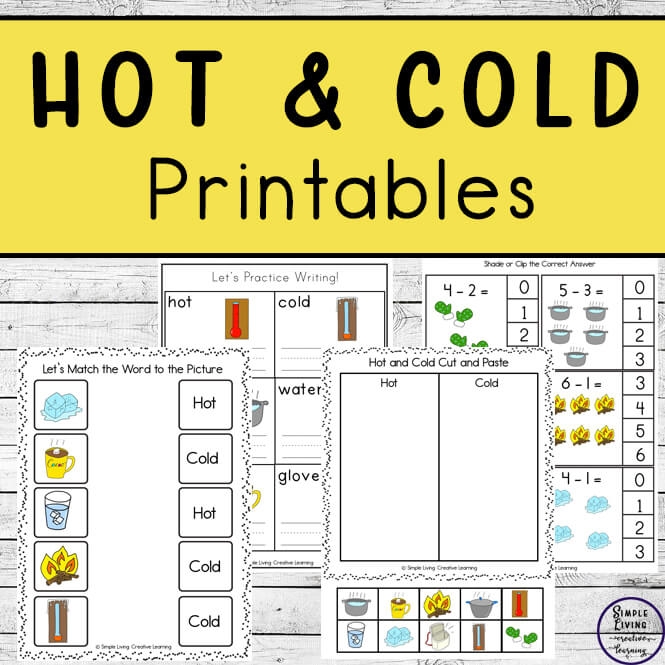
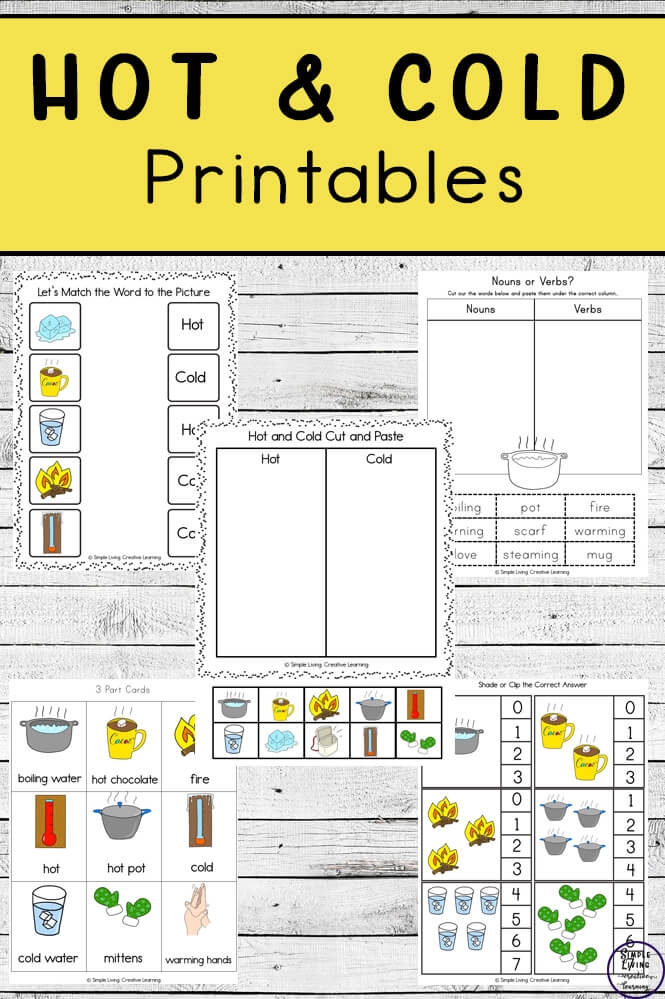
What makes this approach effective is that it uses real-world categories children already understand. Hot and cold are concepts they experience daily, so the sorting logic feels natural rather than arbitrary. If you’re looking for printable hot or cold worksheets that follow this structure, you’ll find they work as standalone activities or as part of a broader unit on sorting and classification.
Use These Worksheets Today