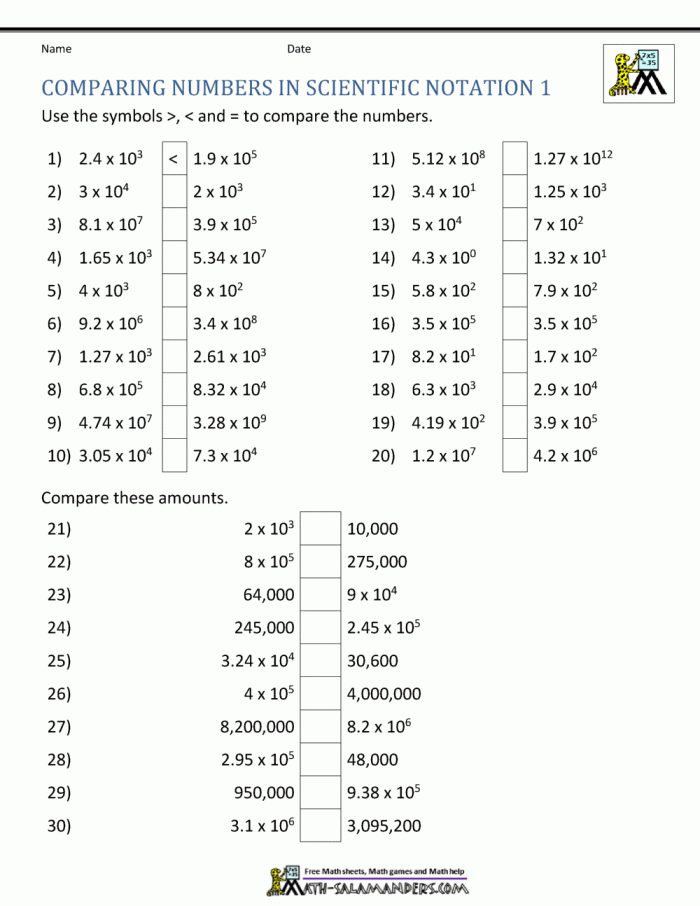
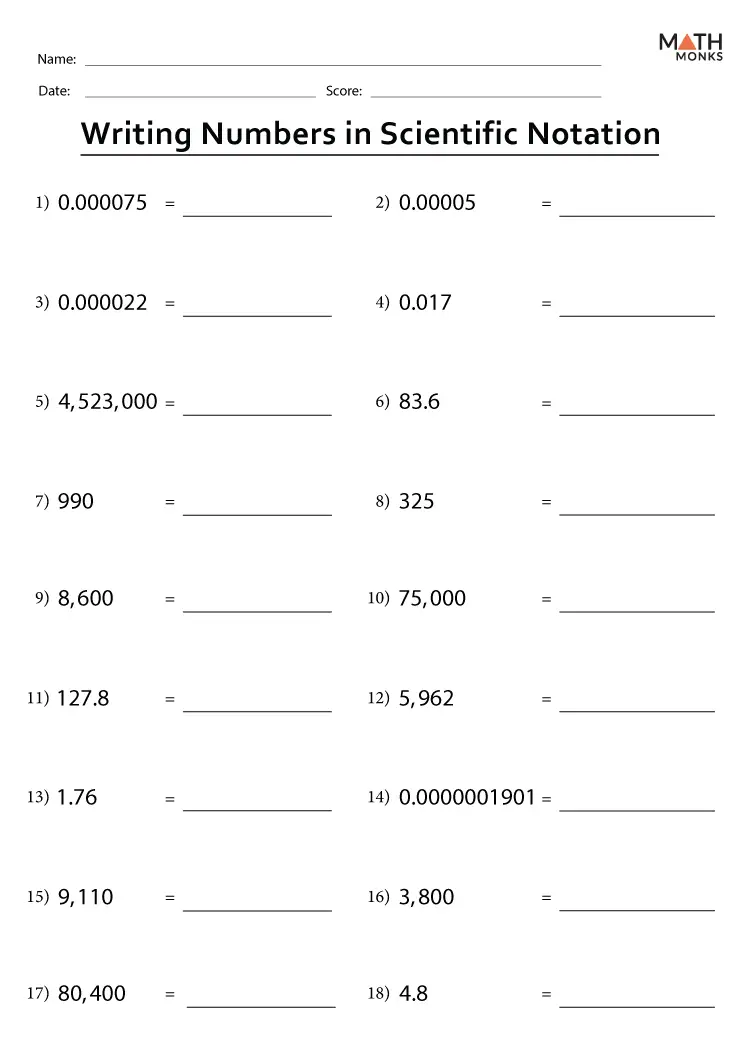
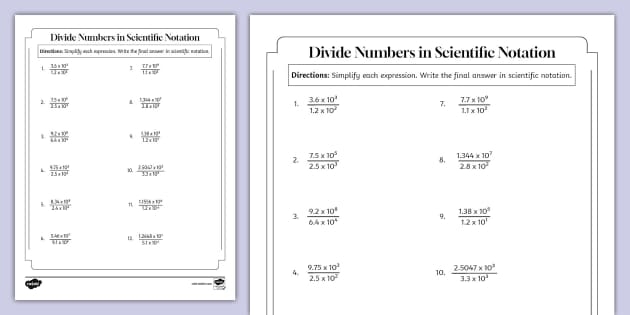
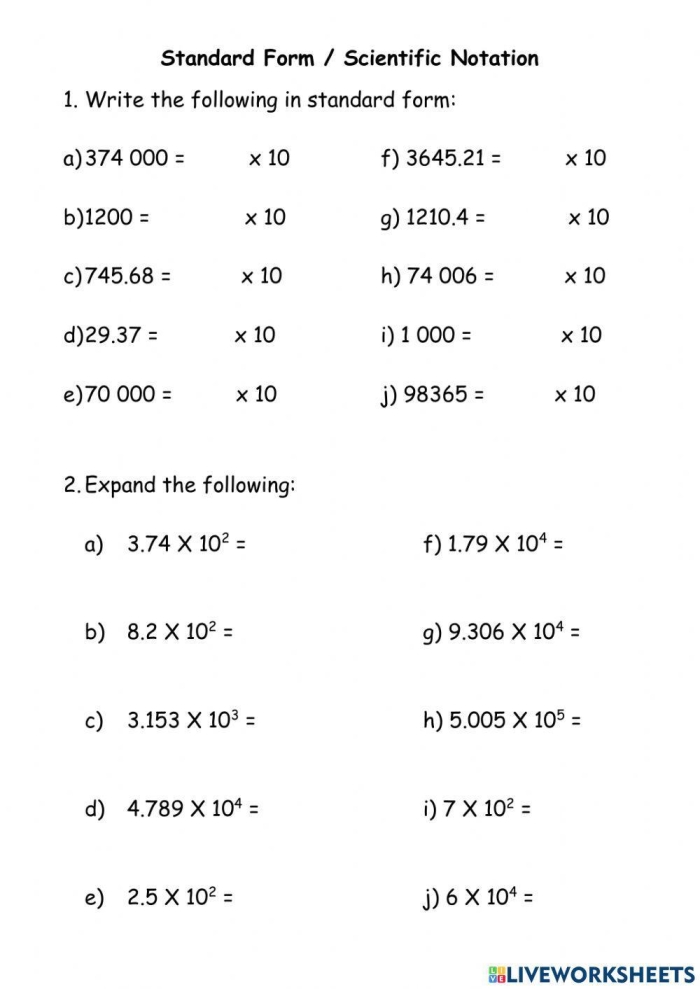
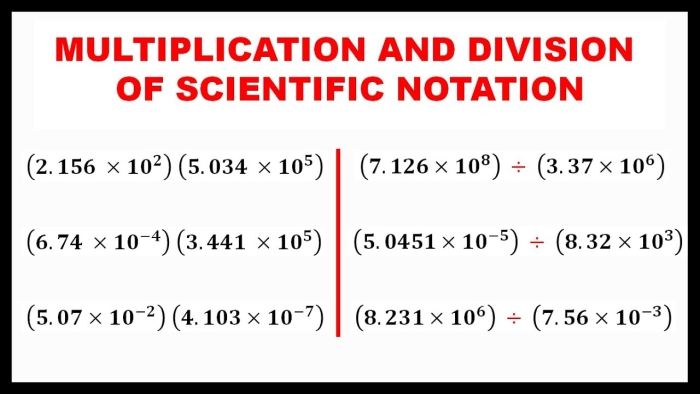
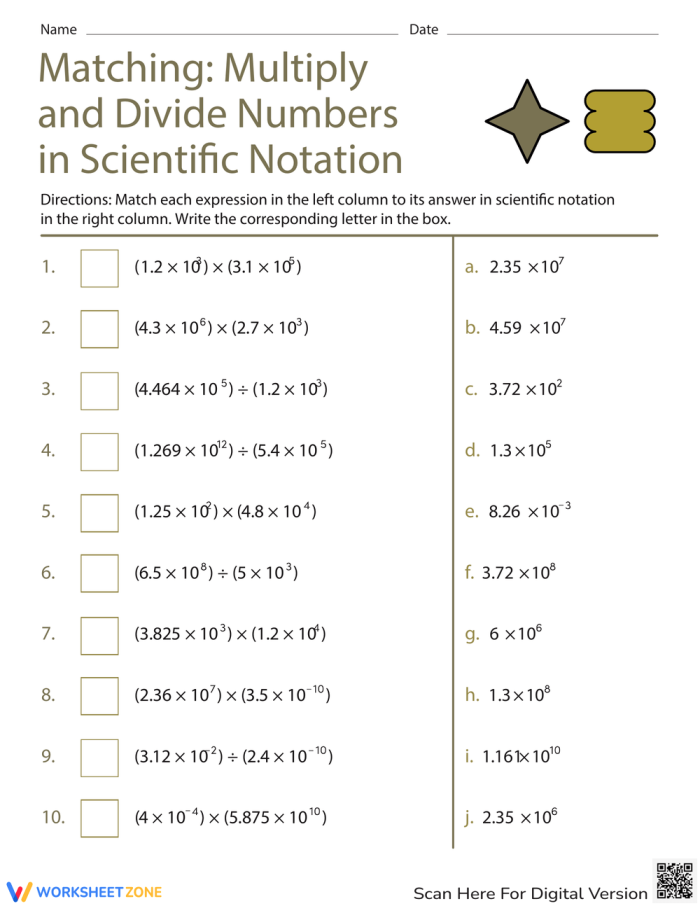
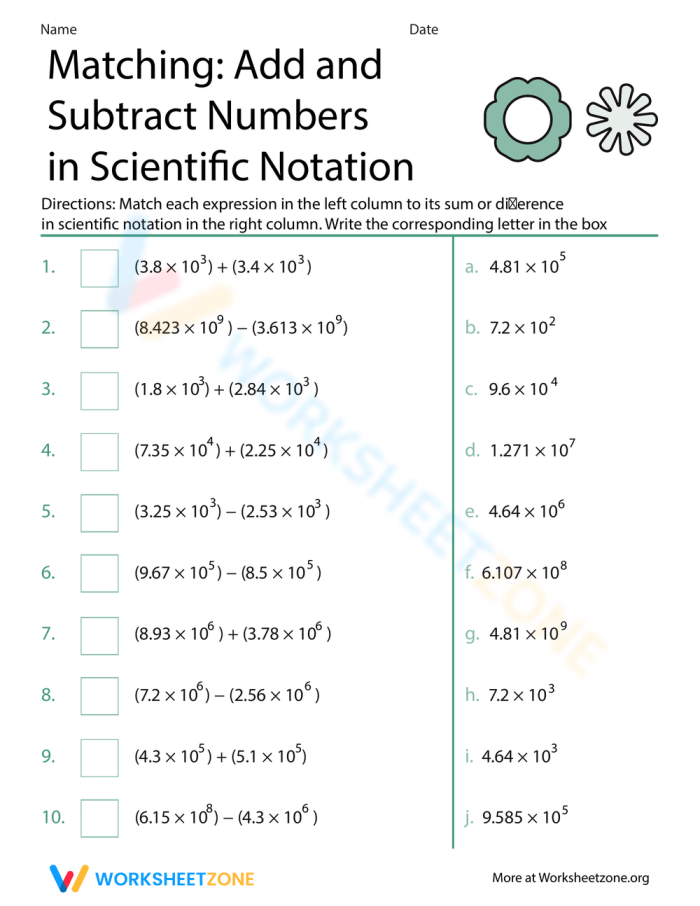
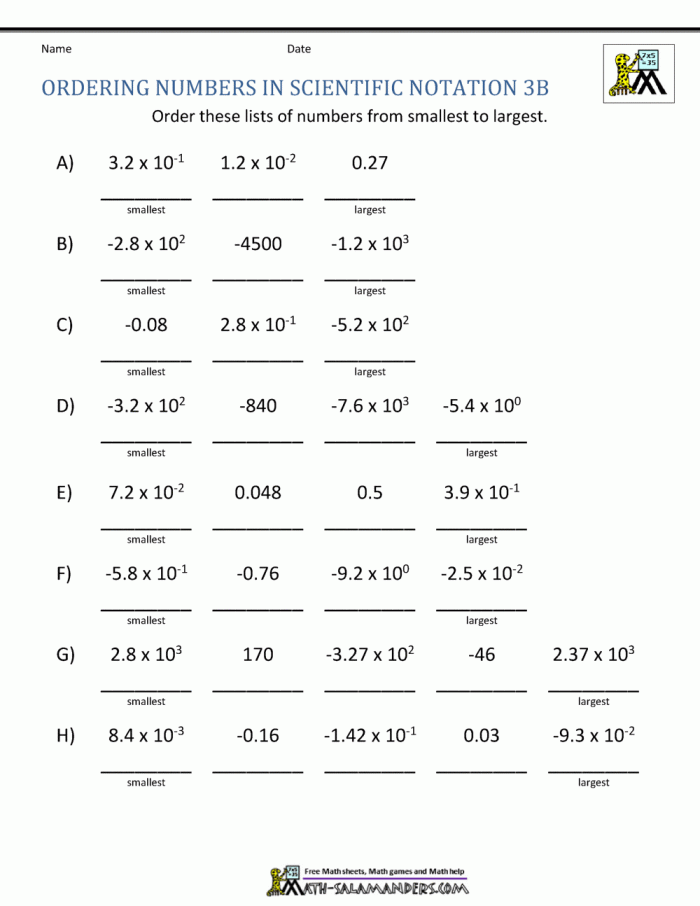
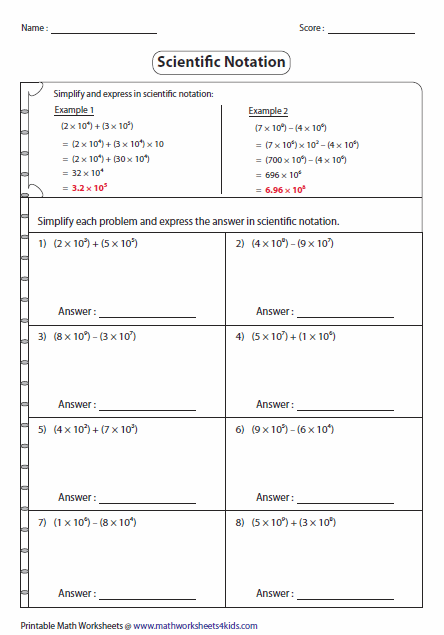
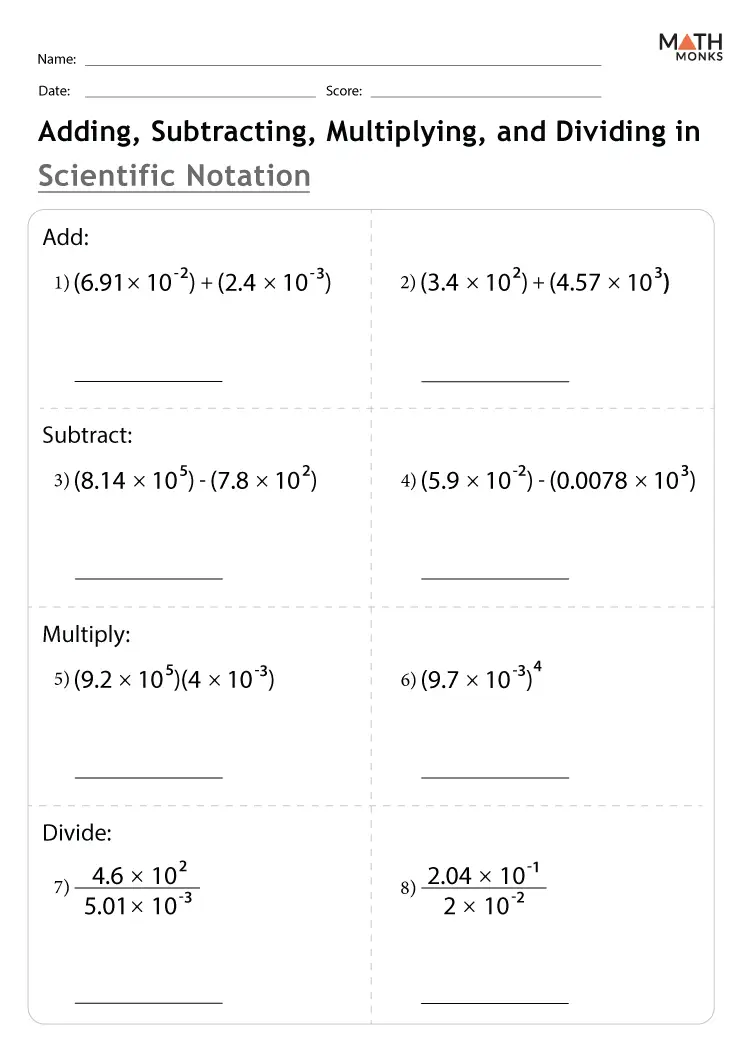
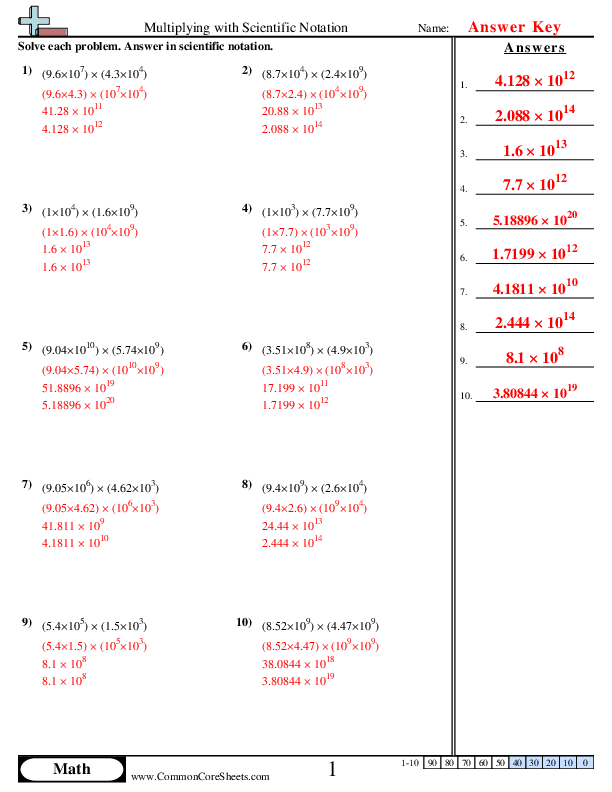
Scientific notation trips up eighth grade students more often than you’d think, especially when multiplication and division enter the picture. The abstract nature of moving decimal points and managing exponents makes it easy for students to lose track of what they’re actually doing. A matching activity cuts through that confusion by forcing students to work through problems methodically and then connect their answers to the correct result.
The beauty of matching exercises lies in their immediate feedback loop. Students solve a problem, then scan the answer choices to see if their result appears. If it doesn’t, they know something went wrong and can backtrack. This self-correcting mechanism works better than traditional worksheets where students might never realize they’ve been making the same mistake repeatedly.
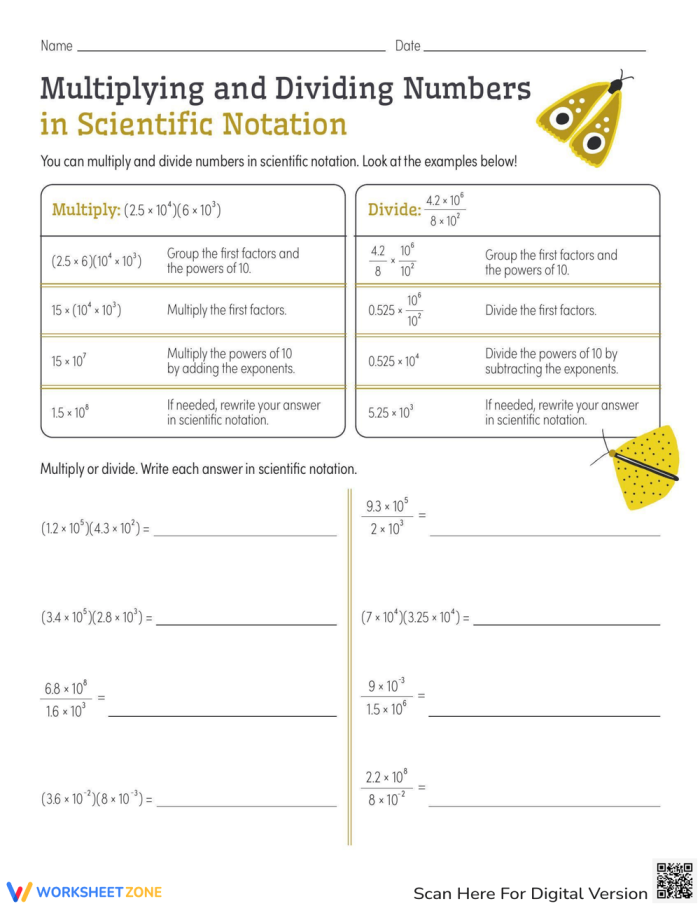
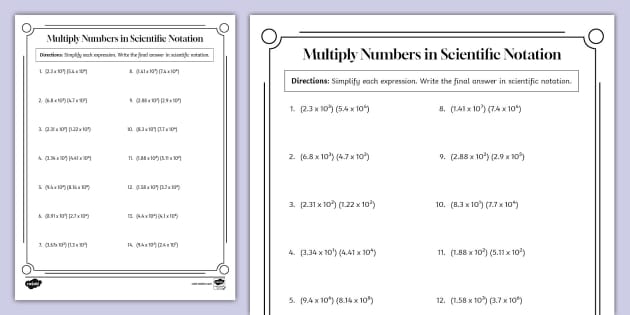
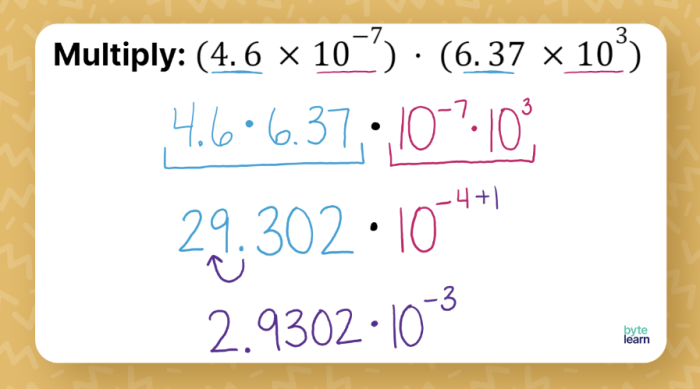
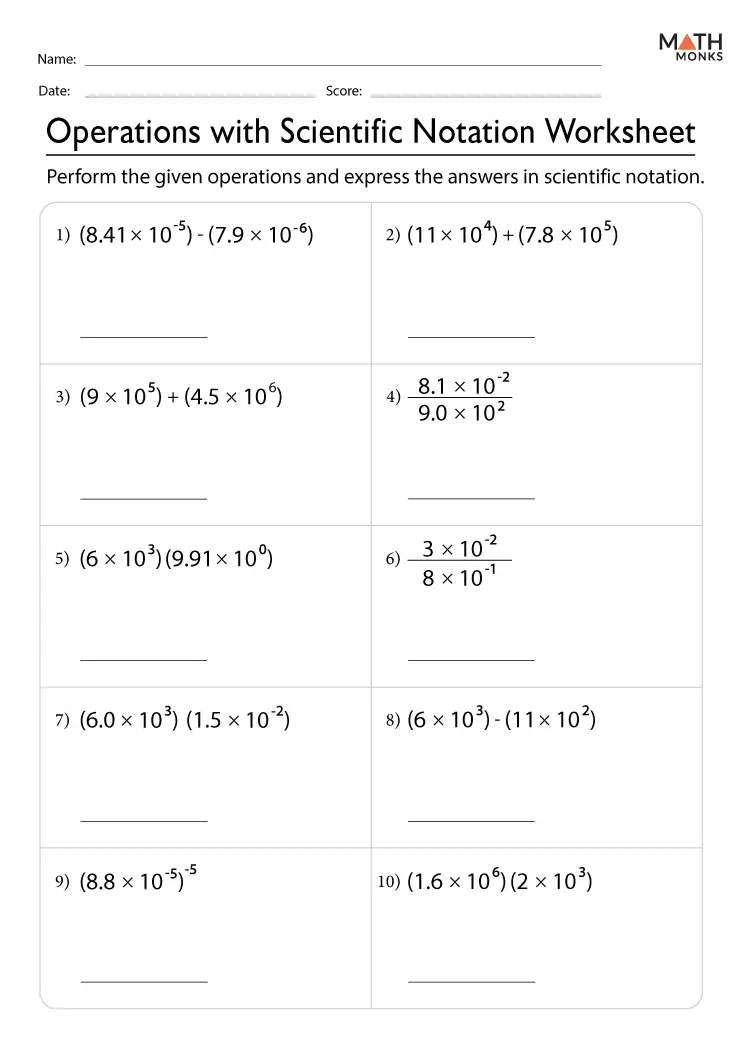
When multiplying numbers in scientific notation, students multiply the coefficients together and add the exponents. When dividing, they divide the coefficients and subtract the exponents. Matching activities let students practice these operations without the tedium of showing work for twenty identical problem types. They can focus on the procedure itself rather than getting bogged down in repetitive calculations.
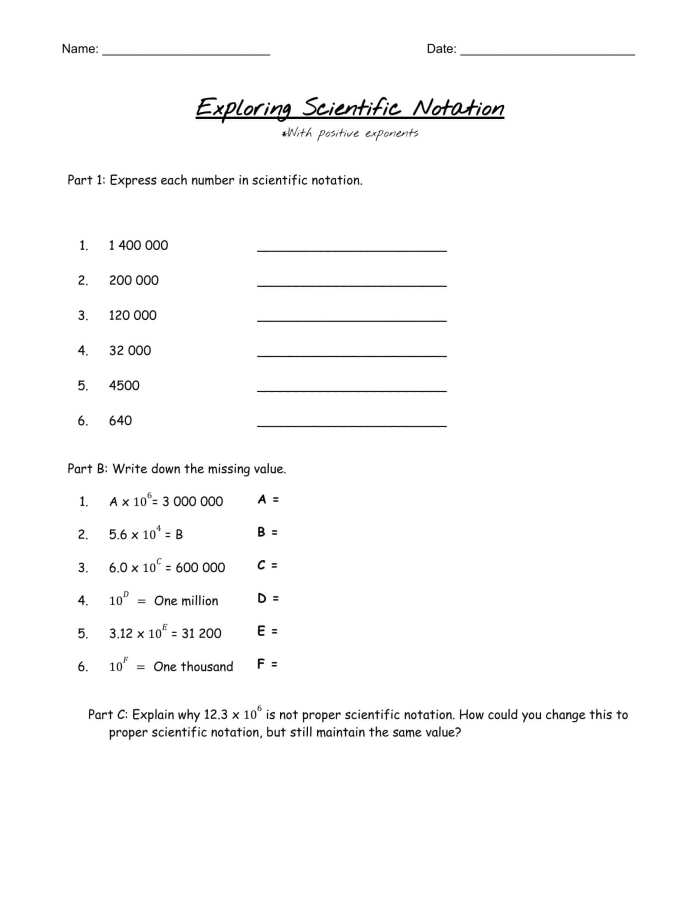
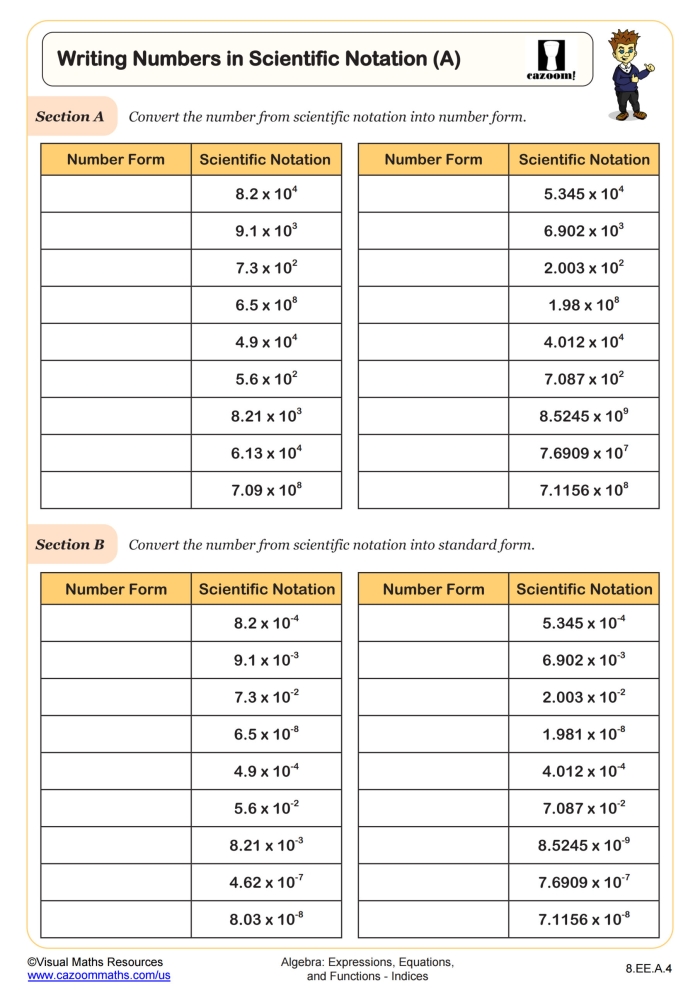
These worksheets fit naturally into eighth grade mathematics instruction, particularly when students are building foundational skills in working with exponents and scientific notation. Pairing this matching activity with other eighth grade resources strengthens overall numeracy. For instance, students working on coordinate geometry can benefit from reviewing graphing proportional relationships, while those exploring geometric transformations might tackle transformations on the coordinate plane through reflections or describing dilations as complementary skills.
The matching format also accommodates mixed ability levels. Struggling students can work through problems at their own pace, while advanced students can speed through and move on to more challenging material. Teachers appreciate this flexibility because it allows differentiated instruction without creating multiple versions of the same assignment.
Worksheet Practice Section