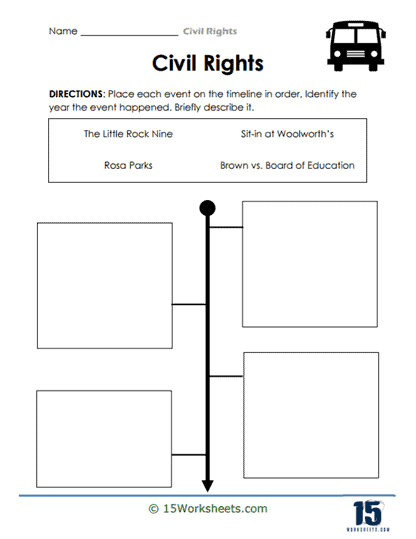
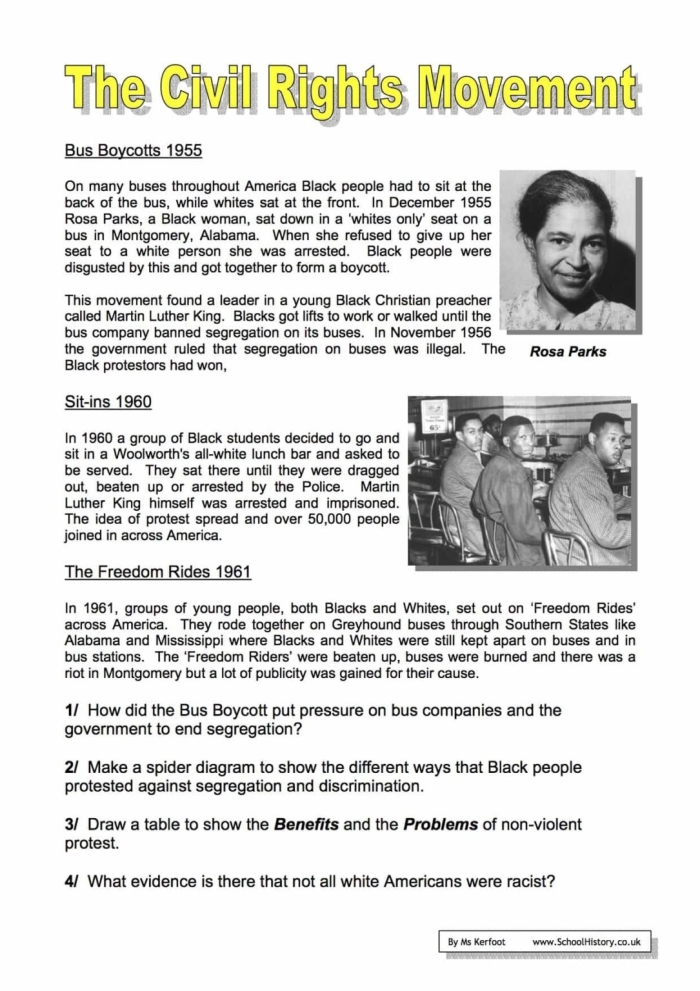
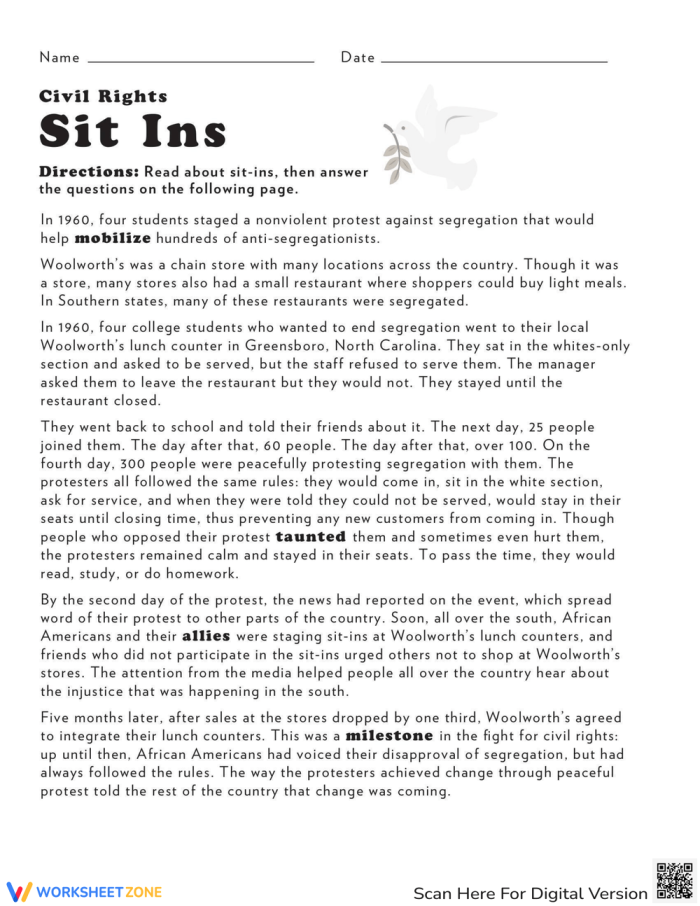
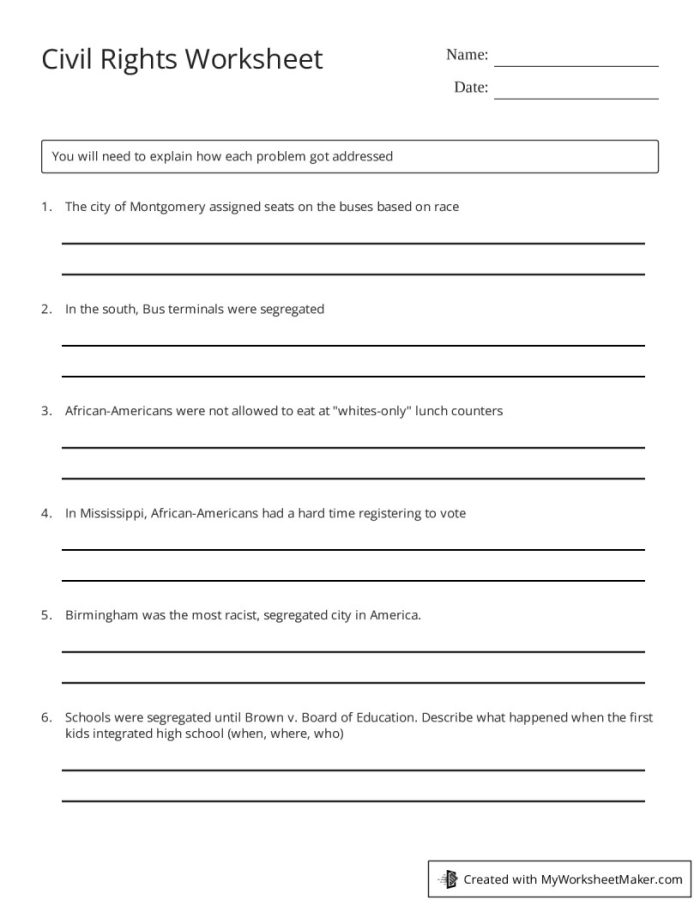
On February 1, 1960, four Black college students walked into a Woolworth’s lunch counter in Greensboro, North Carolina and ordered coffee. The waitress refused to serve them. Instead of leaving, they sat down and stayed put. This simple act of peaceful resistance sparked a movement that would reshape the nation’s approach to segregation.
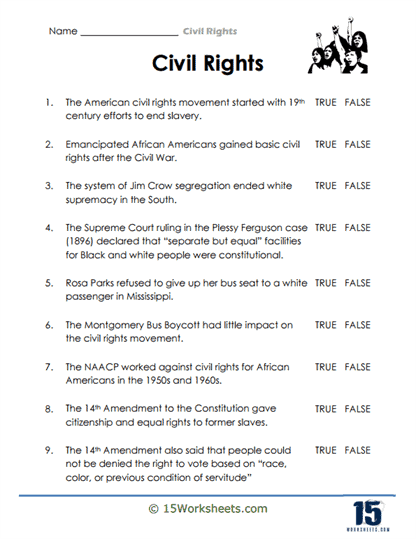
This worksheet introduces fourth-grade students to the Sit-In movement by examining how it started and tracing its effects across communities and the entire country. Rather than presenting history as a distant story, the lesson helps students understand cause and effect through real events that changed American society.
The Sit-In movement spread rapidly after Greensboro. Within weeks, similar protests occurred in Nashville, Atlanta, and dozens of other cities across the South. Young activists, many of them teenagers and college students, occupied lunch counters, libraries, and other public spaces where segregation laws kept them out. They faced verbal abuse, physical threats, and arrest, yet they continued returning day after day.
For fourth graders studying data and graphing, this movement offers concrete material to work with. Students can track how many cities participated in sit-ins, graph the number of arrests over time, or map where protests took place. These activities transform abstract numbers into stories about real people fighting for equality.
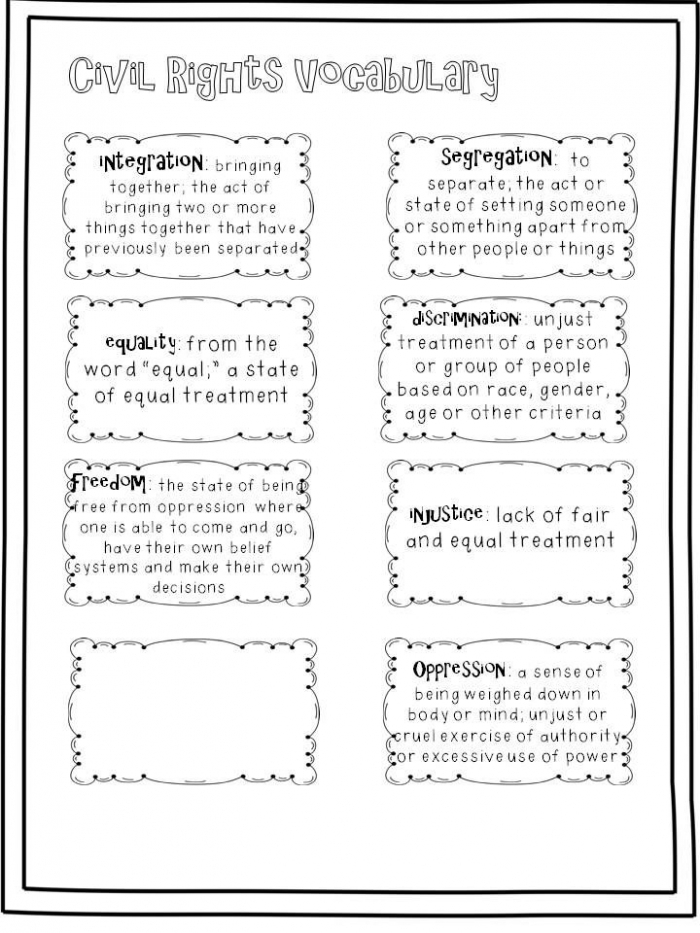
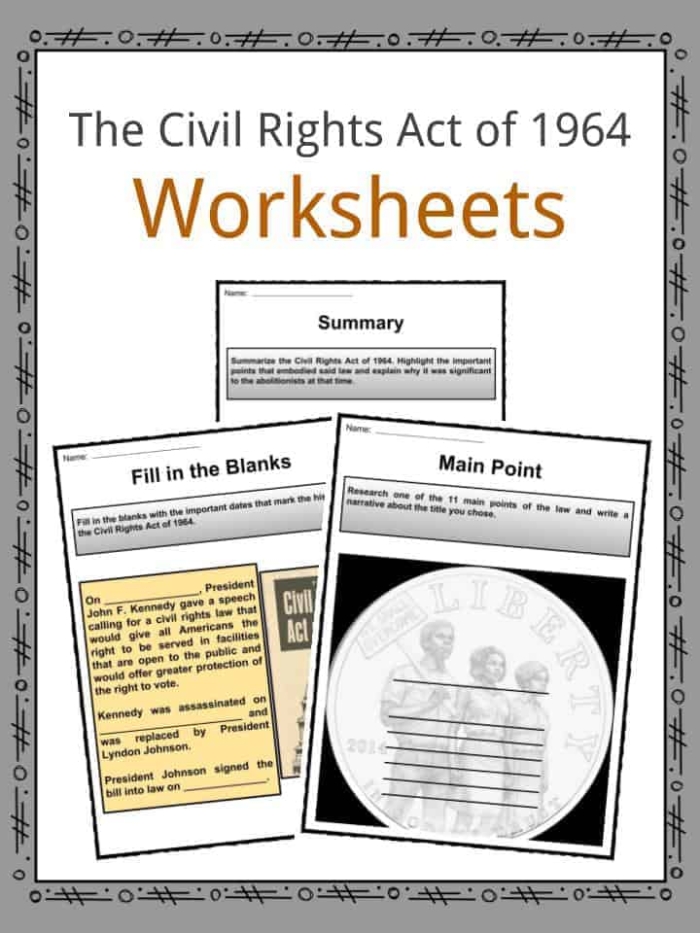
The regional impact was immediate. Businesses lost customers and faced public pressure. Local governments had to confront the reality that young people would not accept “separate but equal” any longer. Nationally, the movement influenced the Civil Rights Act of 1964, which officially banned segregation in public accommodations.
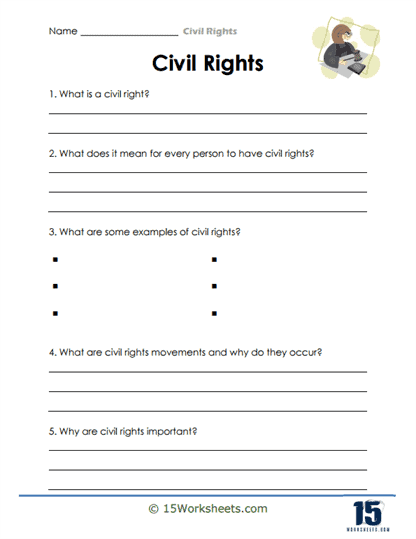
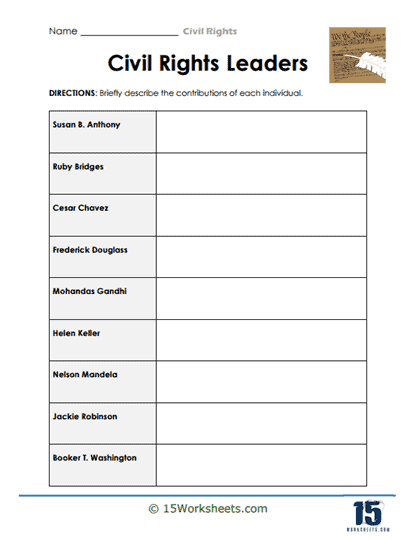
By learning about the Sit-In movement, students recognize that ordinary people can create extraordinary change. The worksheet format allows teachers to connect historical events to skills students are already developing, much like how lessons on unit prices and data matching help students apply math to real situations.
Hands-On Worksheet Activities