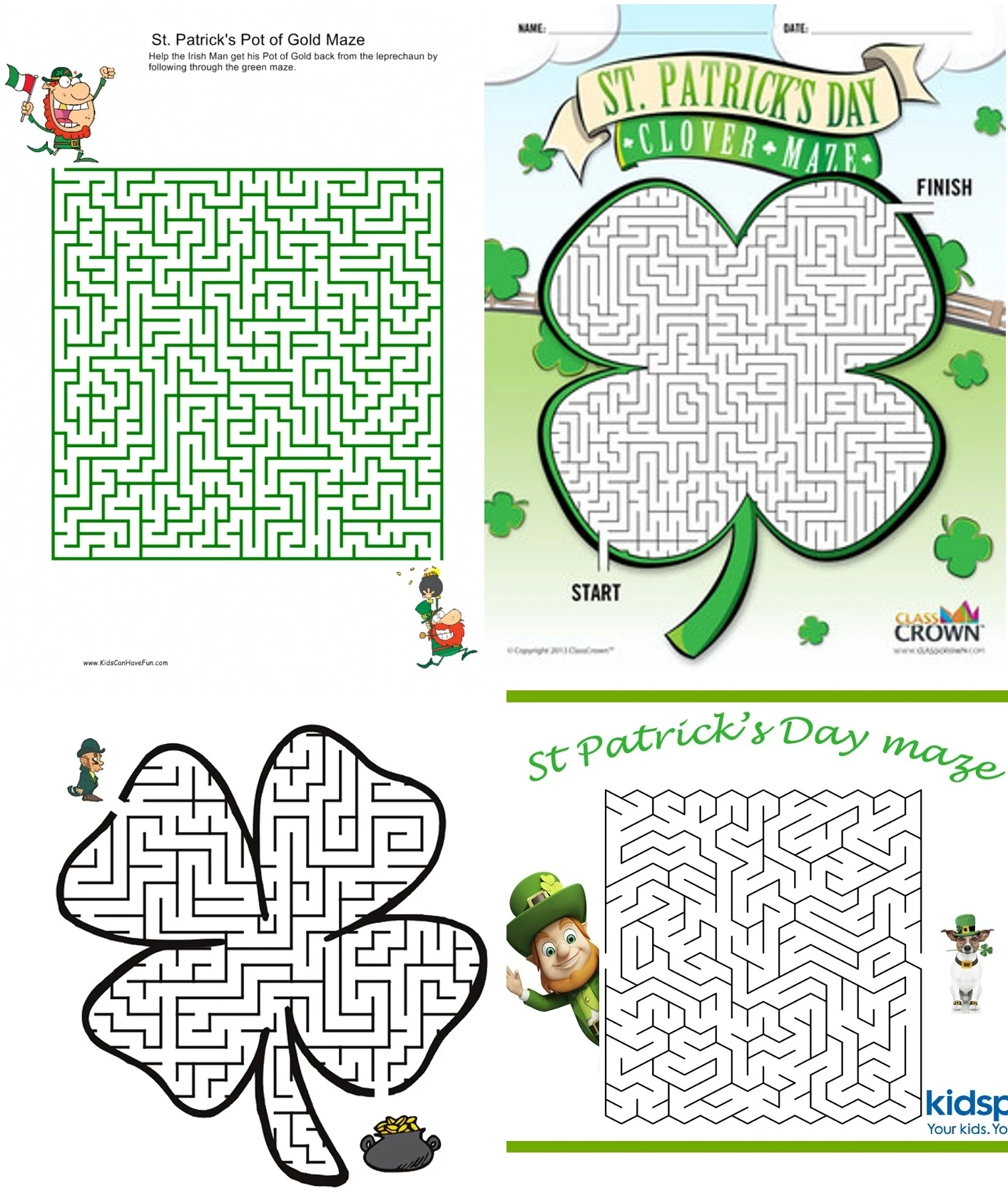
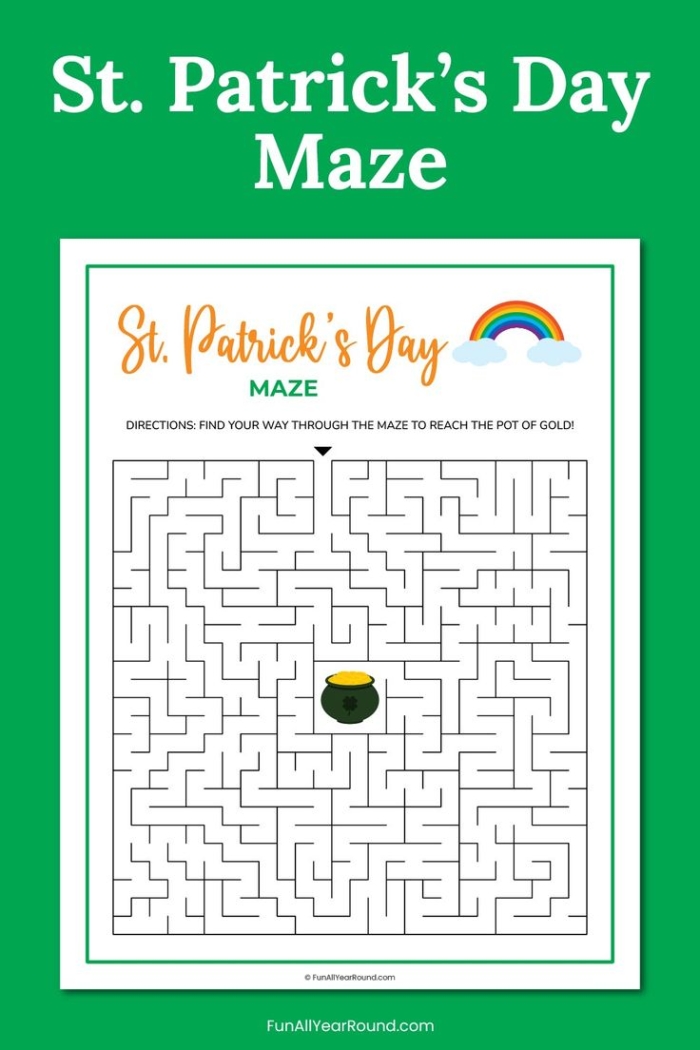
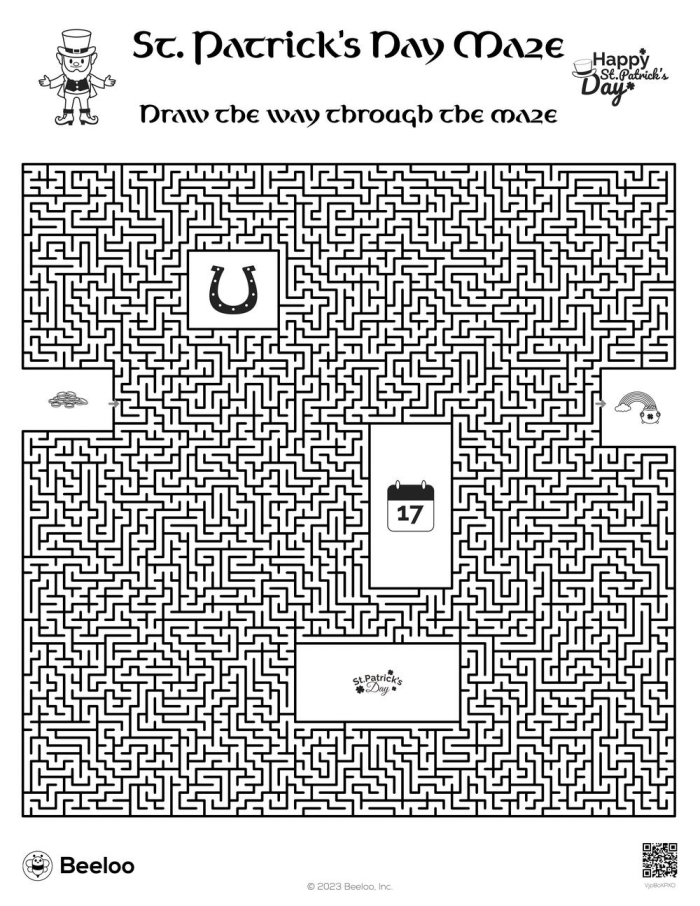
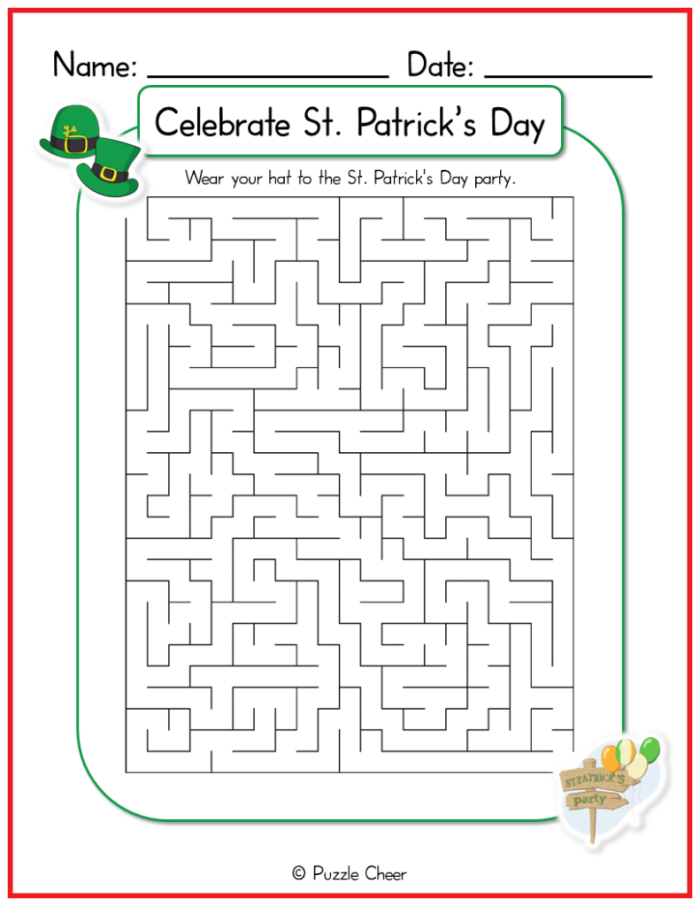
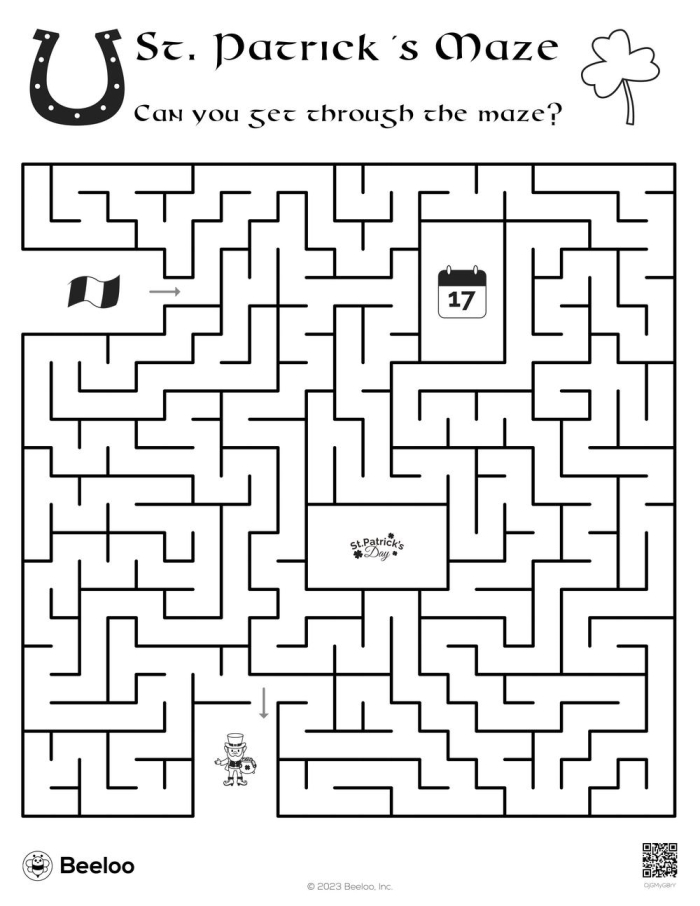
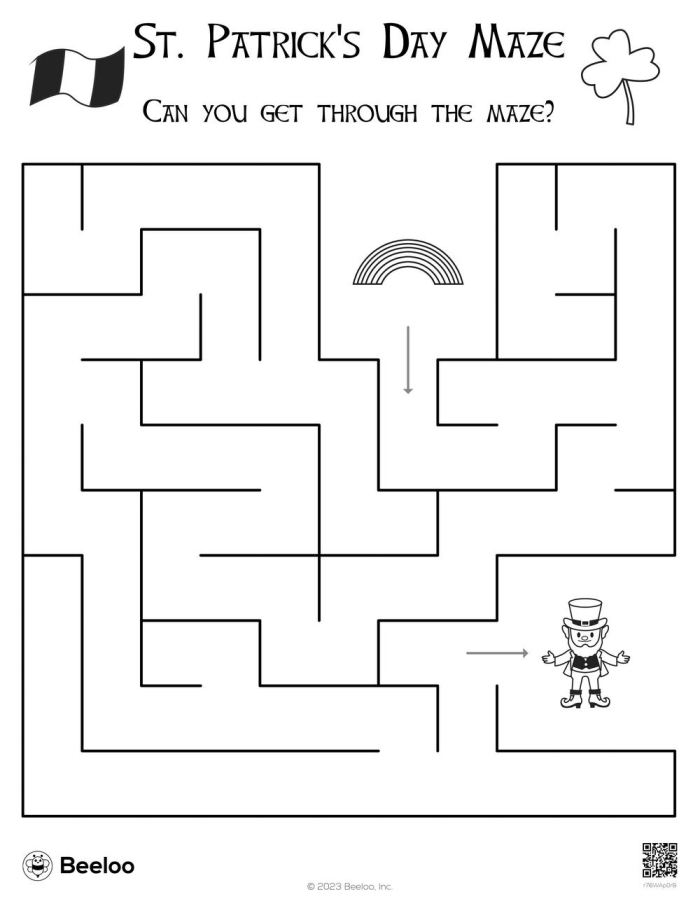
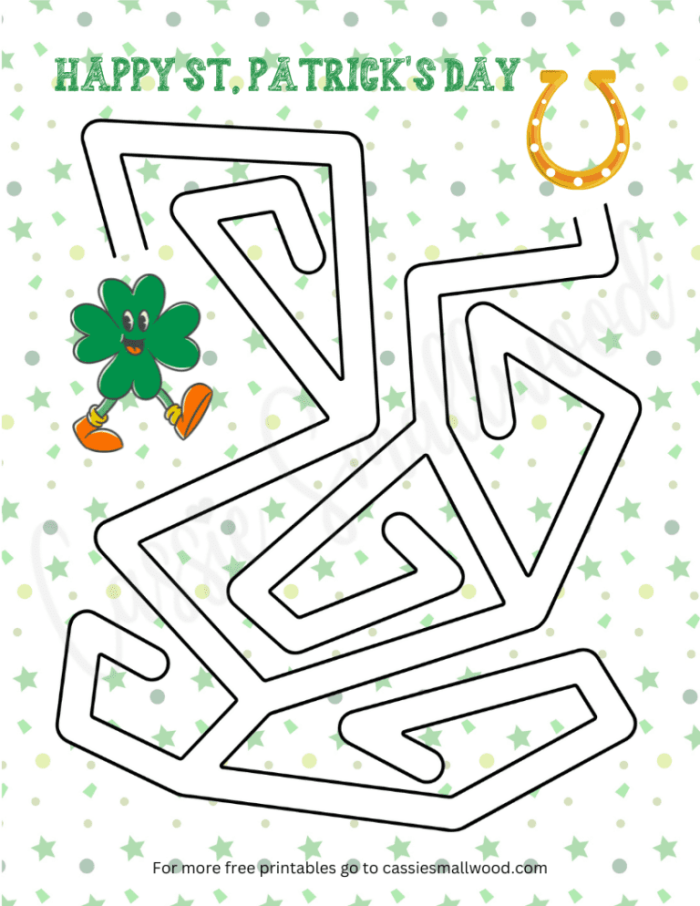
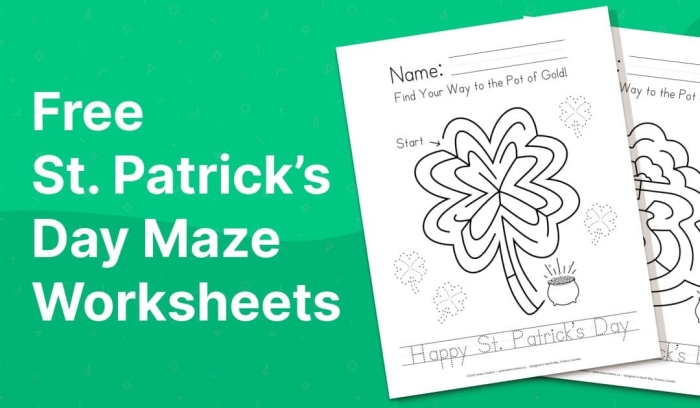
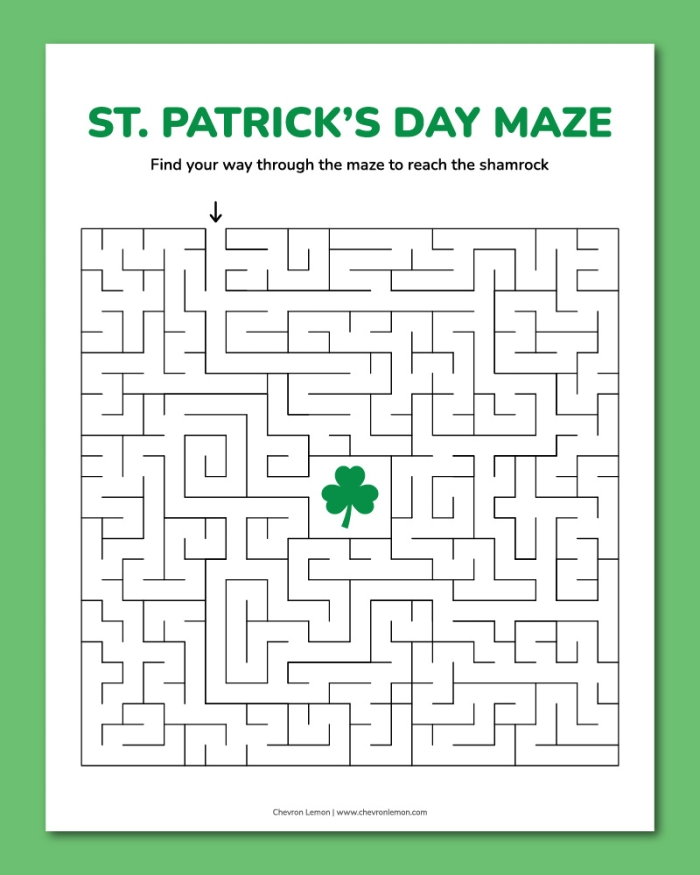
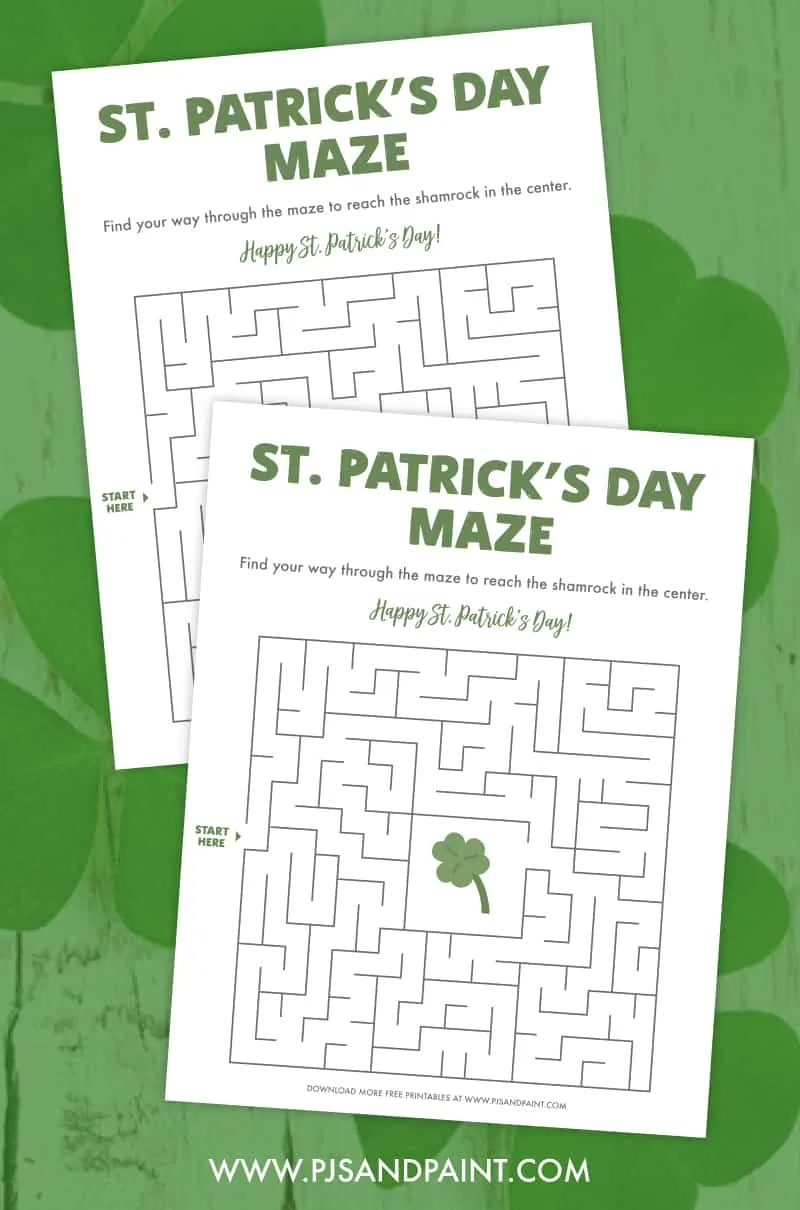
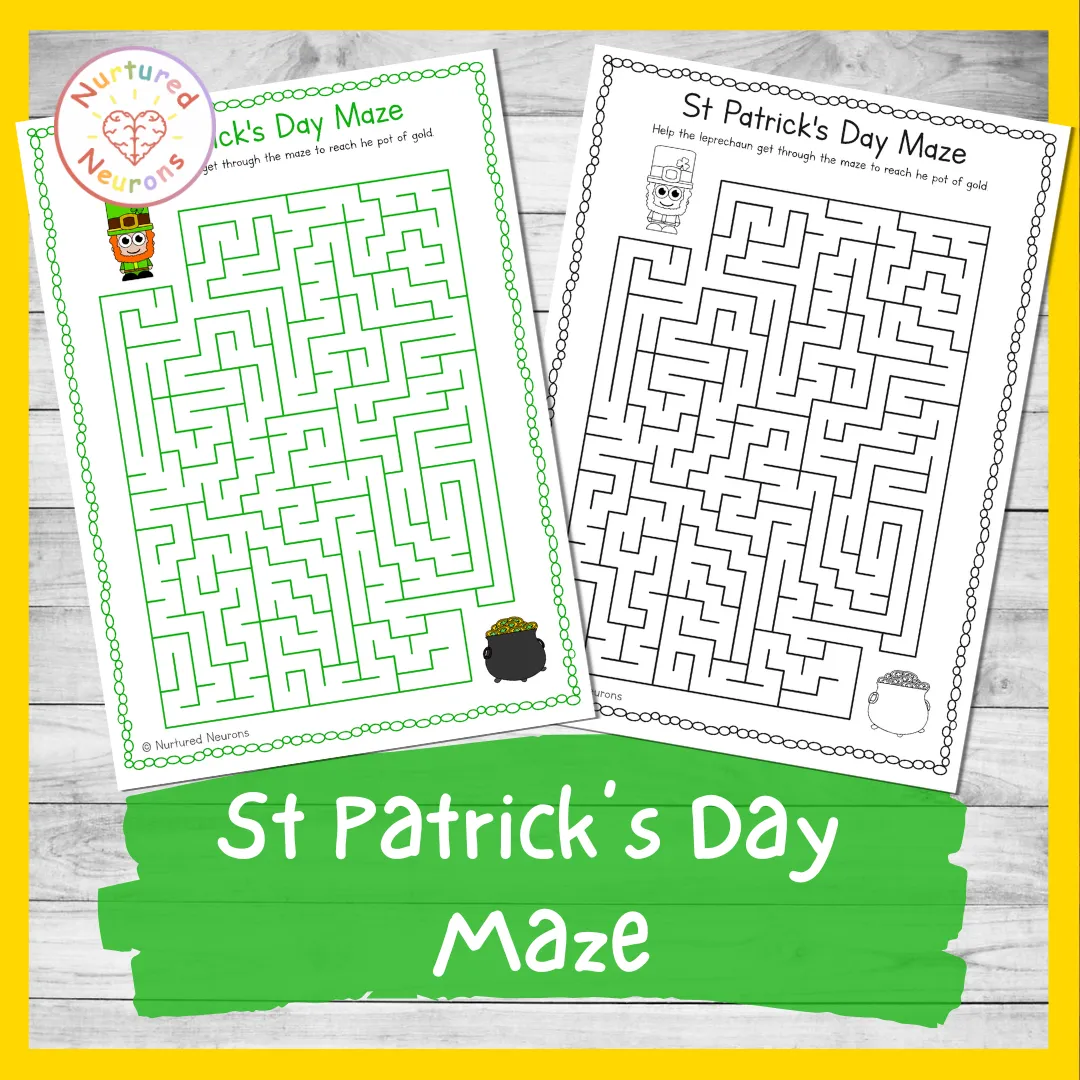
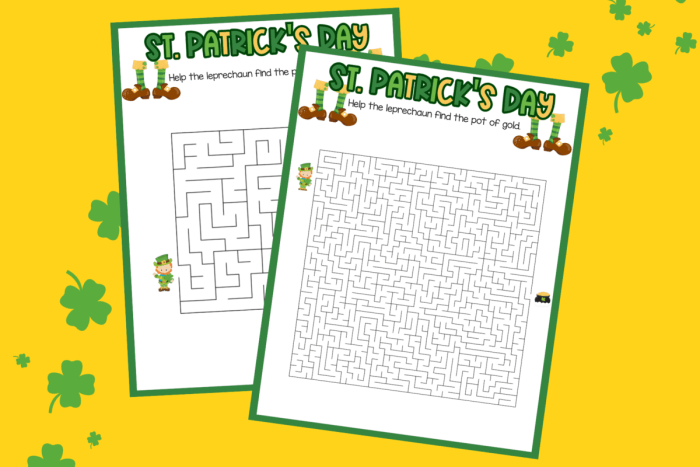
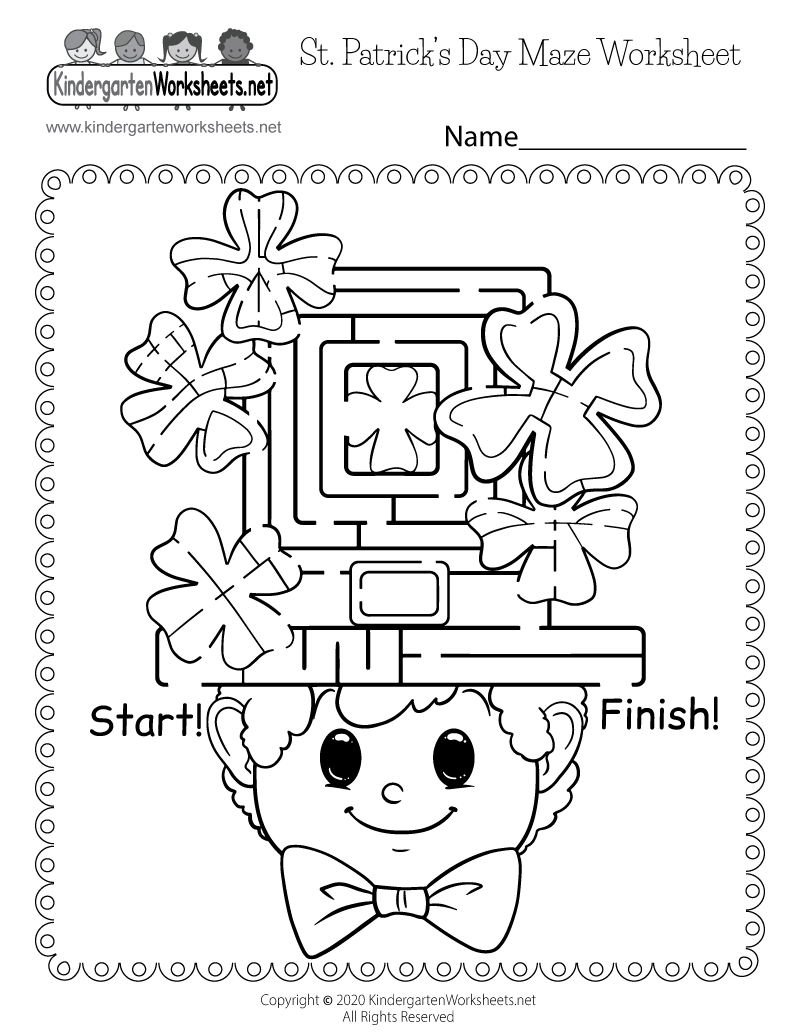
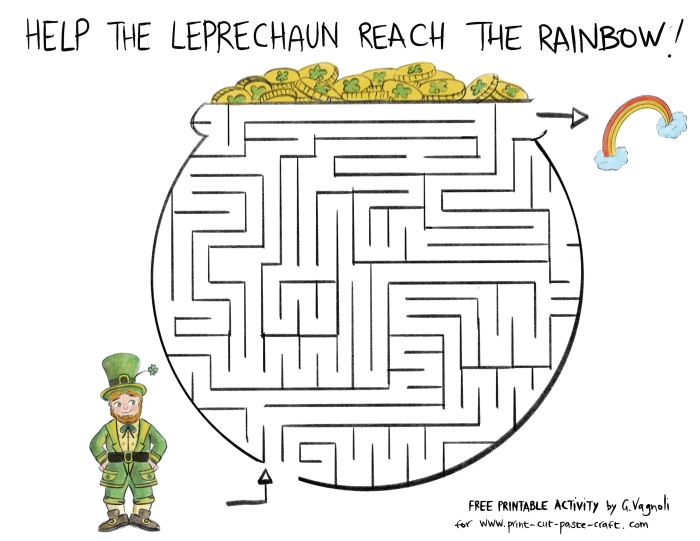
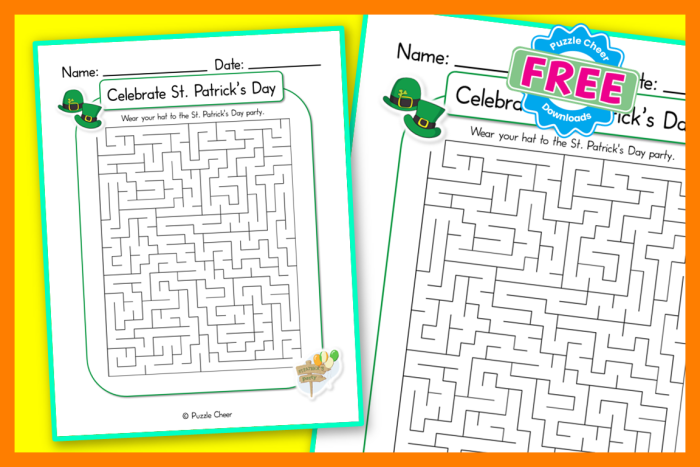
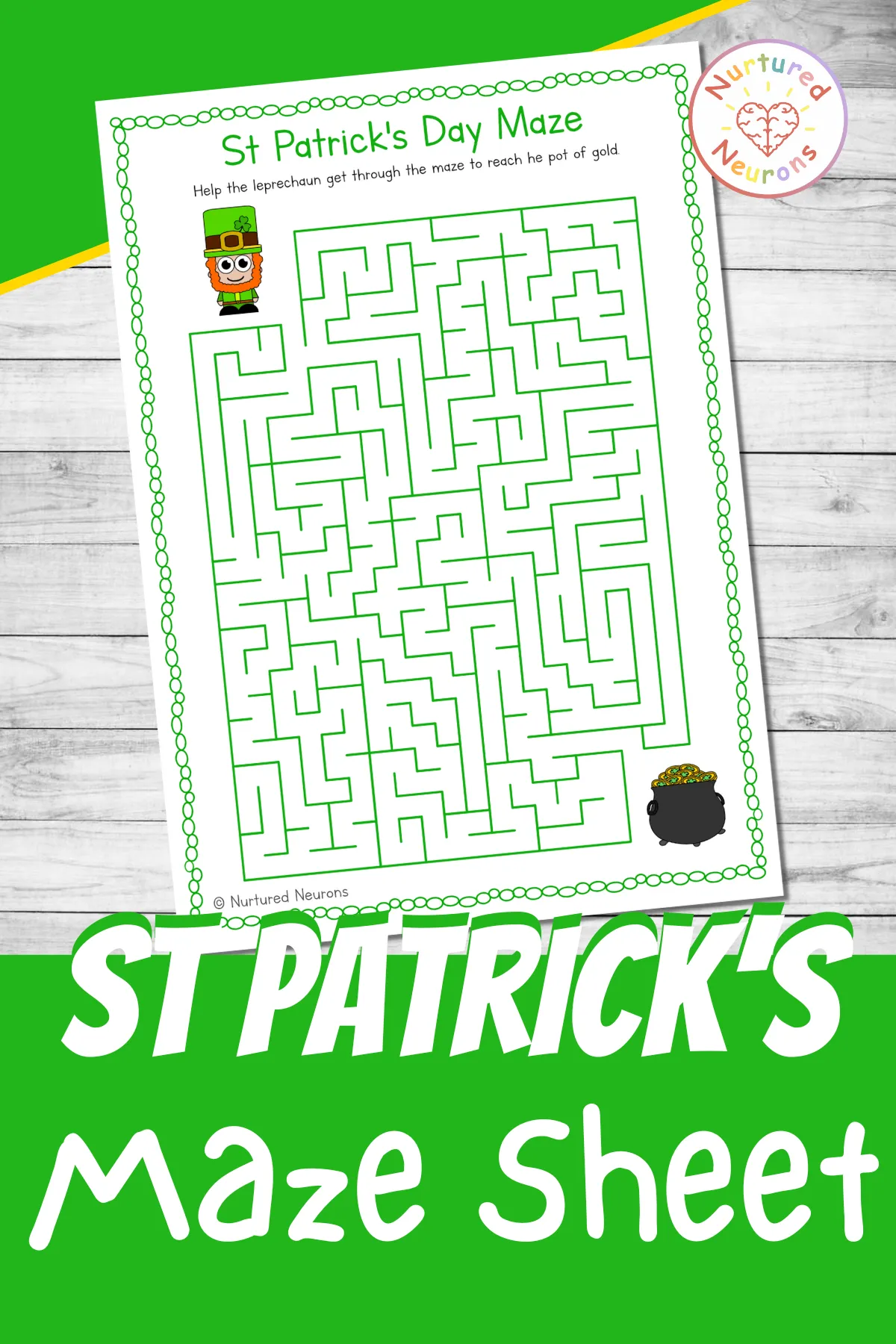
Try your luck this St. Patrick’s Day with a challenging maze race designed specifically for second grade students working on grammar and mechanics skills. This activity pairs two players who each select their path: one chooses a lucky start, the other a lucky finish, and both race side by side through intricate mazes. The goal is not just to complete the maze quickly, but also to pay attention to the details hidden along the way, making it as much a test of focus as of speed.
The mazes themselves are uniquely crafted to incorporate elements related to grammar and mechanics, so while navigating twists and turns, children reinforce concepts like irregular plurals or changing nouns ending in -y to -ies. For example, one maze might include checkpoints where players must identify the correct plural form to proceed, connecting spatial reasoning with language skills. This blend of physical navigation and mental challenge makes the maze race a memorable learning experience.
Printable St. Patrick’s Day maze race worksheets are a great resource for teachers and parents looking to add an interactive twist to language lessons. These worksheets often come with side-by-side mazes that allow for friendly competition, encouraging kids to focus on both the maze paths and the grammar tasks embedded inside. This format supports not only second graders’ understanding of language mechanics but also their ability to recognize patterns, much like those found in number patterns exercises from practice tests on the same site.
Incorporating measurement concepts into the maze, such as counting steps in centimeters or inches, can add another layer of learning. This approach connects language arts with basic math skills, which is especially useful in second grade. Resources like the Measurement Mania worksheets complement maze activities well, helping students develop a stronger grasp of both subjects.
Engaging children in a St. Patrick’s Day maze race is a fun, effective way to practice grammar and mechanics while encouraging critical thinking and friendly competition. The combination of visual challenge and language learning makes this activity stand out among typical classroom exercises, offering hands-on practice that sticks with young learners beyond the holiday.
Use These Worksheets Today