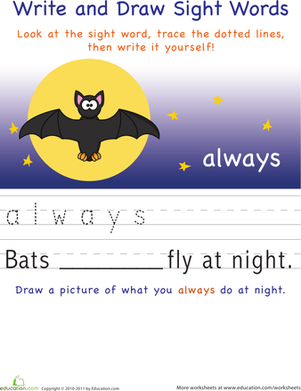
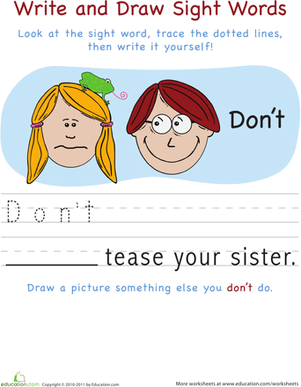
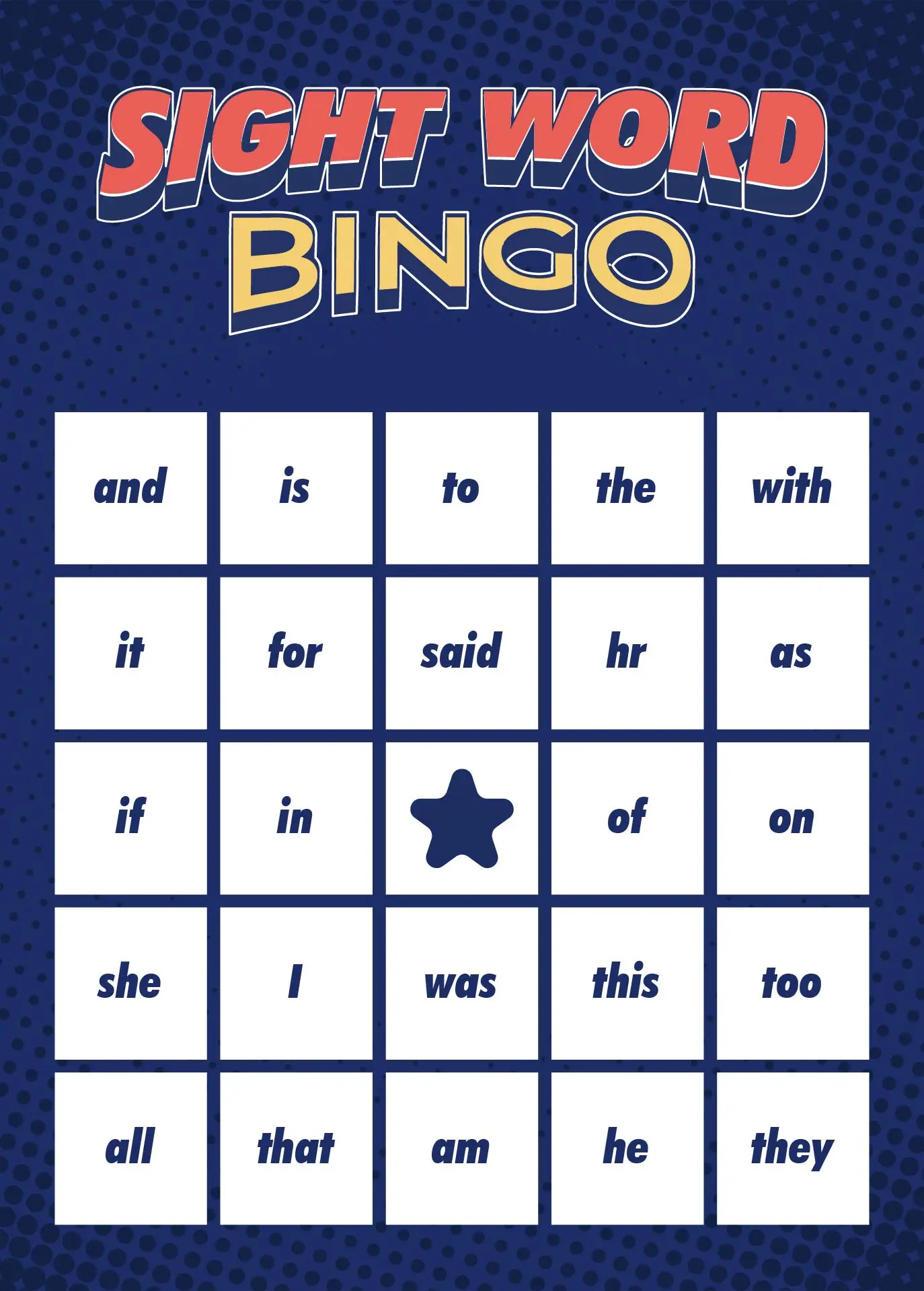
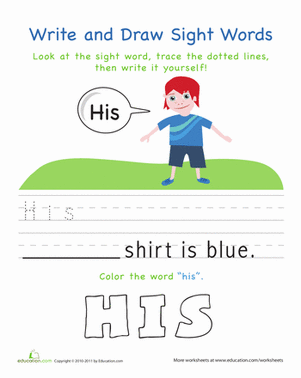
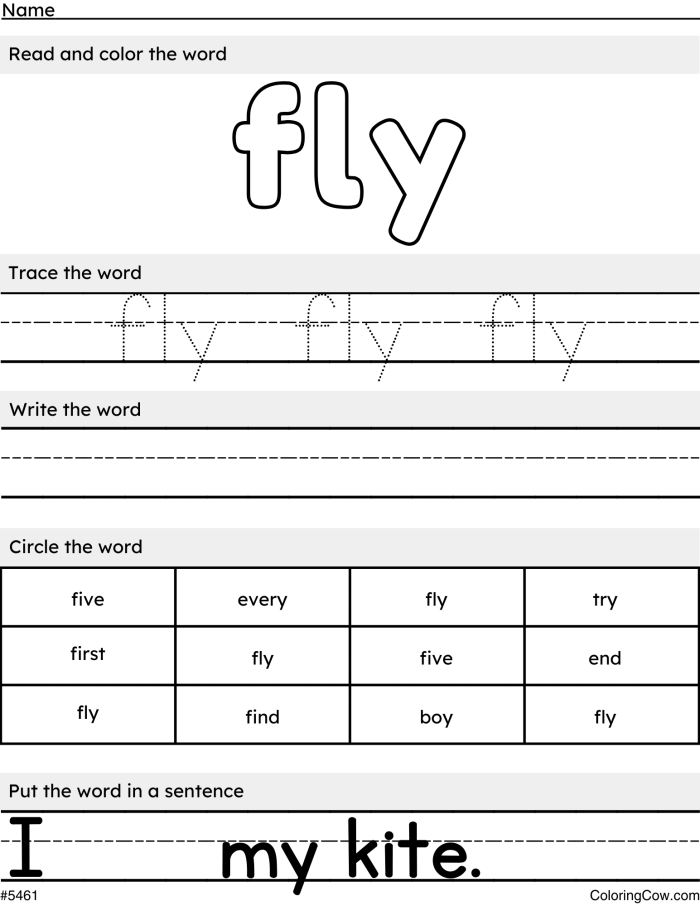
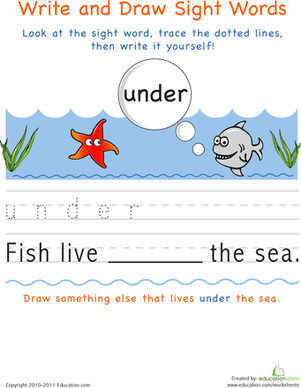
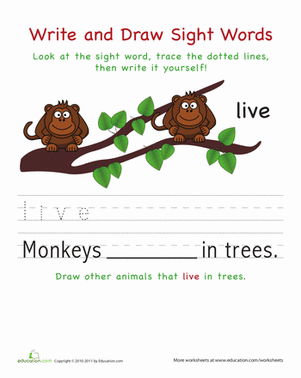
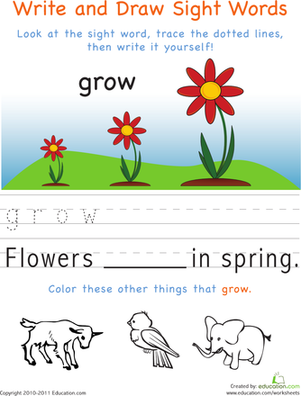
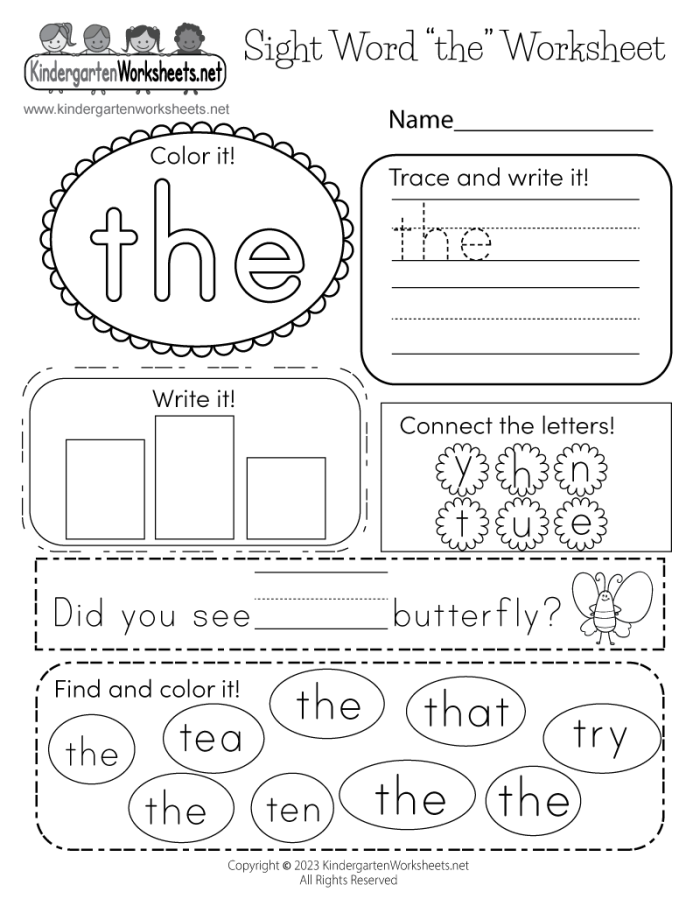
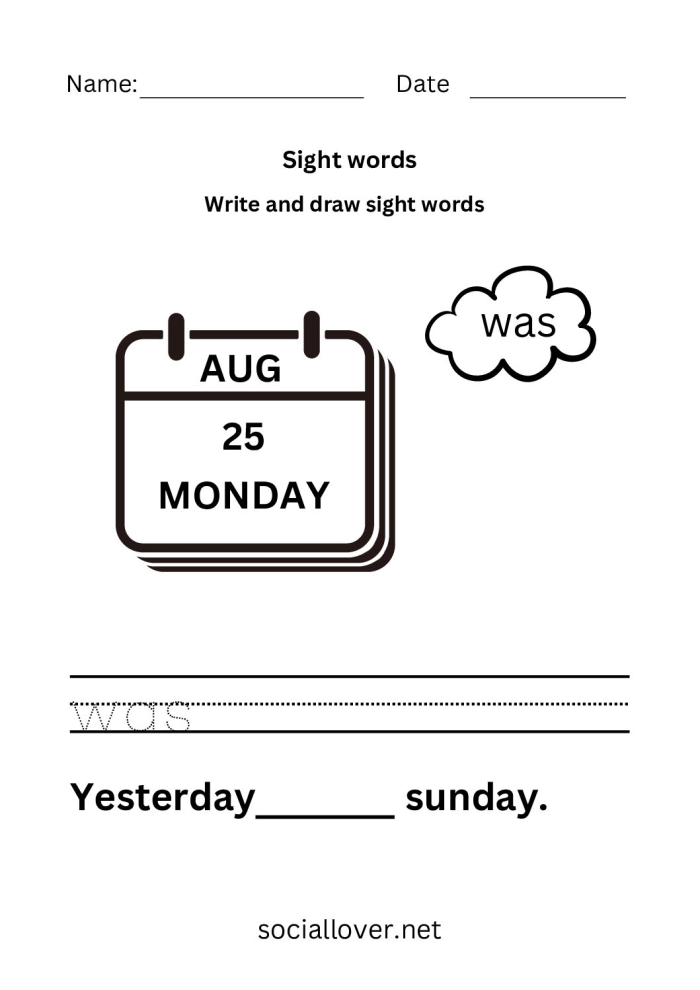
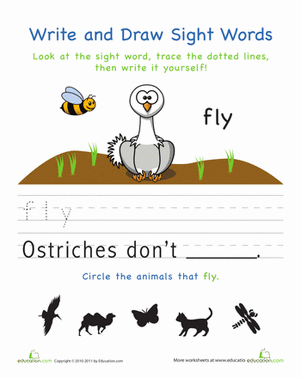
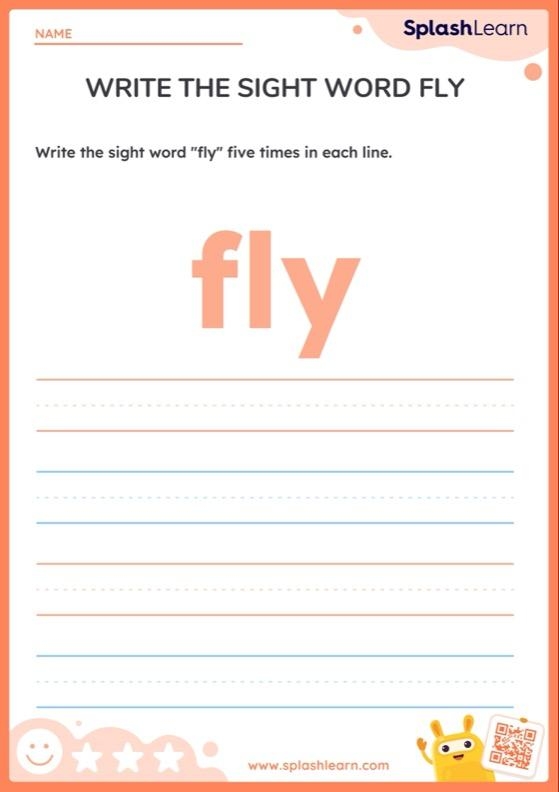
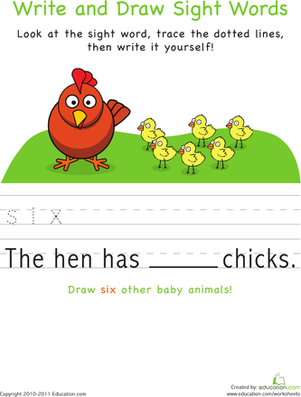
Tracing letters and forming words on paper might seem simple, but it’s where early readers start building the foundation for literacy. A worksheet focused on the word “fly” does exactly this by combining two critical skills: recognizing sight words and practicing handwriting in a way that feels natural rather than forced.
The structure of this activity works because it meets kids where they are developmentally. Kindergarten students benefit from repetition that doesn’t feel like drilling. When children trace the word “fly” multiple times, their hands develop muscle memory for letter formation while their brains absorb the visual pattern of the word itself. This dual reinforcement is why tracing remains one of the most effective early literacy techniques.
What makes this worksheet stand out is the second step: writing the word in a sentence. This pushes beyond simple mechanics. Instead of just copying letters, kids must think about meaning and context. They’re not just learning how to write “fly,” they’re learning that this word has purpose. A child might write “The bird can fly” or “I like to fly a kite.” Suddenly, the word connects to their own experiences and imagination.
This approach demonstrates that reading and writing don’t have to feel like separate academic tasks. When kids see that words they’re learning can describe things they care about, engagement naturally follows. The activity reinforces that reading is functional and connected to real life, not an isolated classroom exercise.
For educators looking to build similar skills, exploring resources like I Can writing activities or missing vowels worksheets provides variety in how students practice sight words and writing mechanics throughout the school year.
Worksheet Practice Section