Introducing students to William Penn opens a window into a critical chapter of early American history. As the founder of Pennsylvania, Penn played a significant role in shaping the ideals of religious freedom and democracy that would later influence the entire nation. His commitment to peace and tolerance set a standard that is still relevant today.
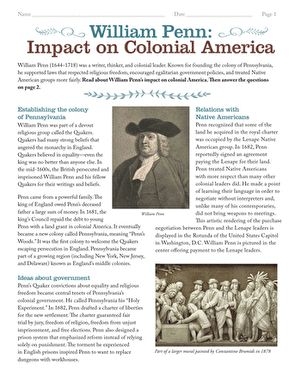
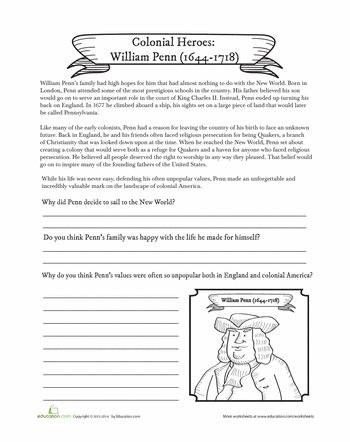
Penn was born in 1644 in England, the son of an admiral. His Quaker beliefs led him to seek a place where he could practice his faith freely. In 1681, King Charles II granted him a charter for the land that would become Pennsylvania. This colony was unique in its approach; it welcomed people of all religions and backgrounds, promoting a diverse society where different beliefs could coexist. This was revolutionary at a time when religious persecution was common in Europe.
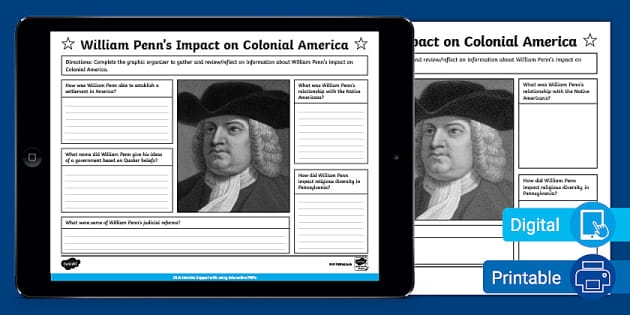
Students can explore Penn’s contributions through engaging activities that enhance their understanding of fractions within this historical context. For instance, they might analyze how Penn’s policies affected the population ratios of various religious groups in Pennsylvania, providing a practical application of fractions in real-life scenarios. Worksheets that incorporate these themes, like the Printable William Penn: Impact on Colonial America Worksheets, can offer valuable exercises in both history and mathematics.
Moreover, Penn’s legacy as a leader who advocated for fair treatment of Native Americans is an important aspect of his story. He negotiated treaties and maintained peaceful relations, which is notable in a period marked by conflict. Understanding these interactions can help students grasp the complexities of colonial life and the ethical considerations of expansion.
By providing a comprehensive view of William Penn’s life and contributions, educators can enrich students’ knowledge of early American history while also integrating practical skills in subjects like fractions. It’s a unique opportunity to connect the past with present-day lessons, ensuring that students not only learn about history but also see its relevance in their lives.
Hands-On Worksheet Activities