Unit rates show up everywhere once you start looking for them, from grocery store prices to sports statistics to travel speed. The challenge for sixth grade students is that unit rates often feel abstract until they’re connected to something real. That’s where word problems become essential.
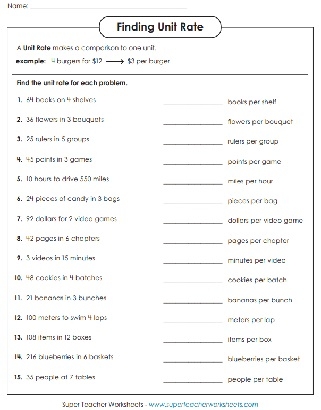
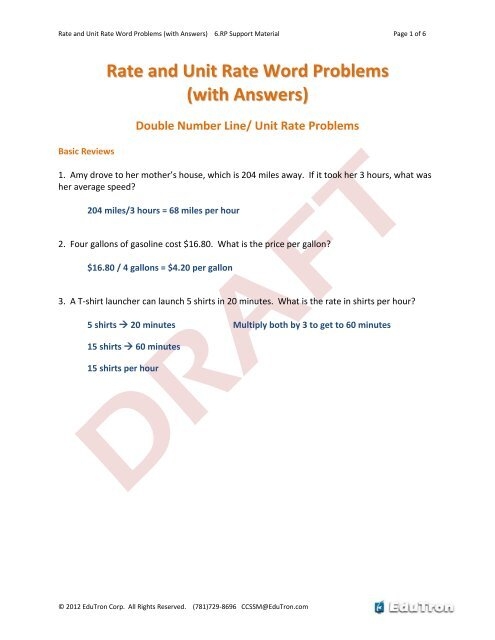
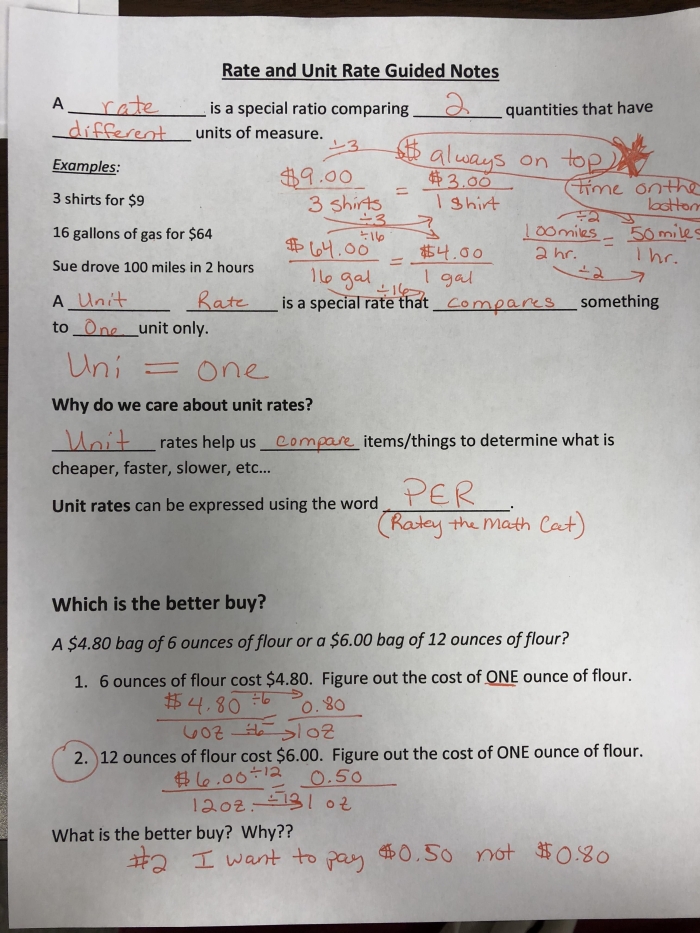
A unit rate is simply the amount of something per one unit of something else. When you see “3 apples for $2,” the unit rate might be the cost per apple or apples per dollar. The math itself is straightforward division, but students often struggle with deciding what to divide by what and why it matters. Real-world problems force students to think about which unit rate actually answers the question being asked.
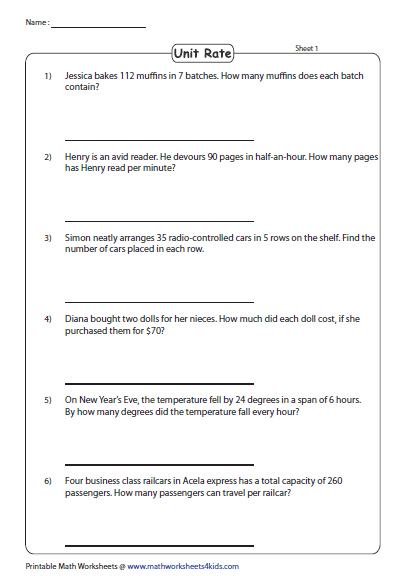
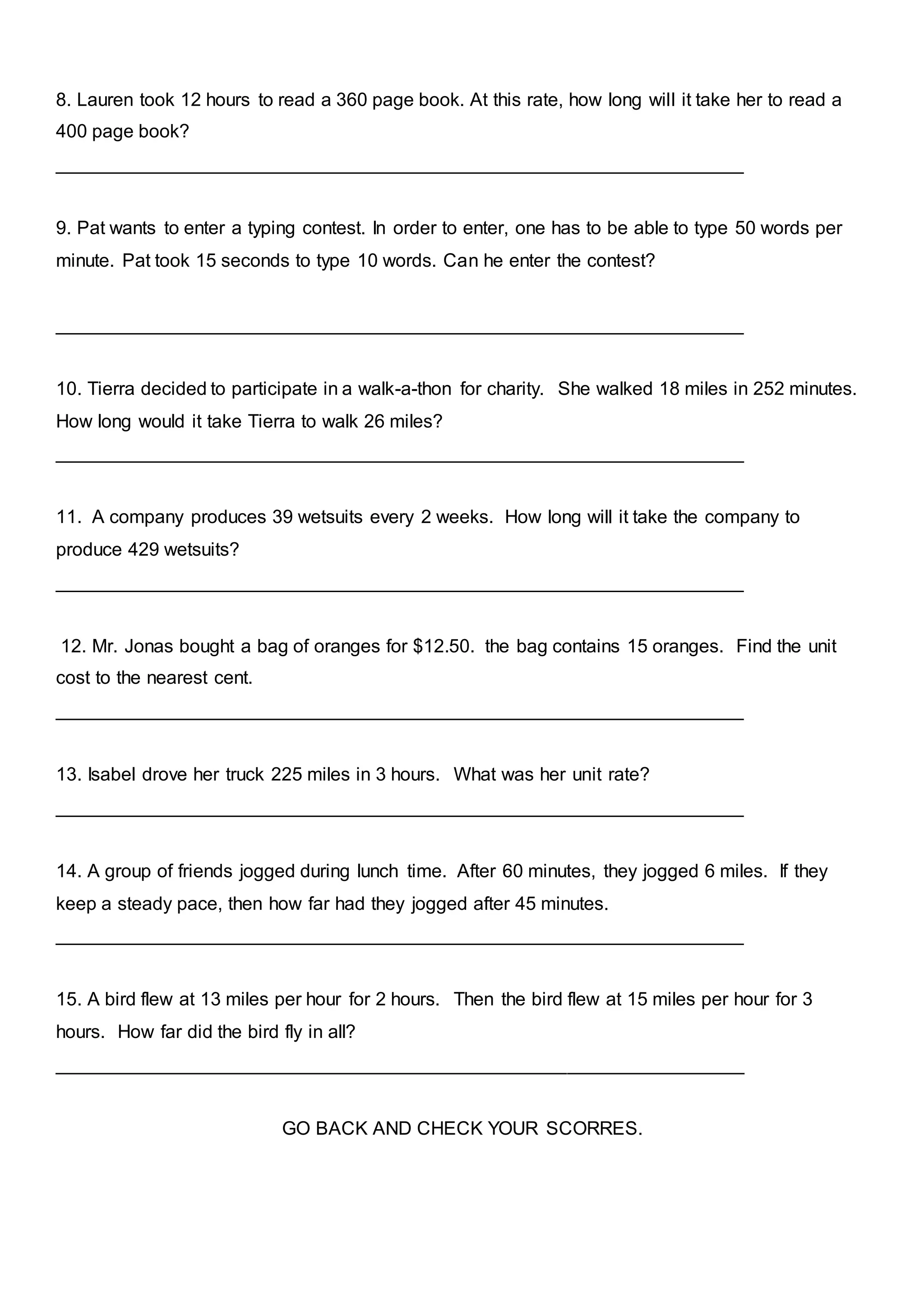
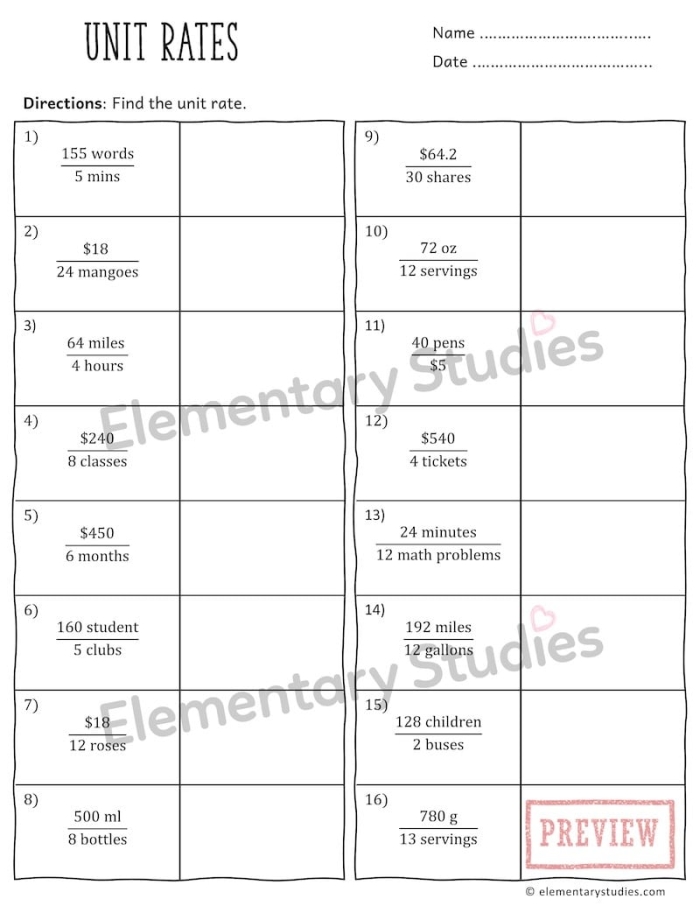
Working through unit rate word problems builds this practical understanding. When a problem states “A car travels 240 miles on 8 gallons of gas,” students must recognize they’re looking for miles per gallon, not gallons per mile. This distinction becomes clearer through repeated practice with varied scenarios.
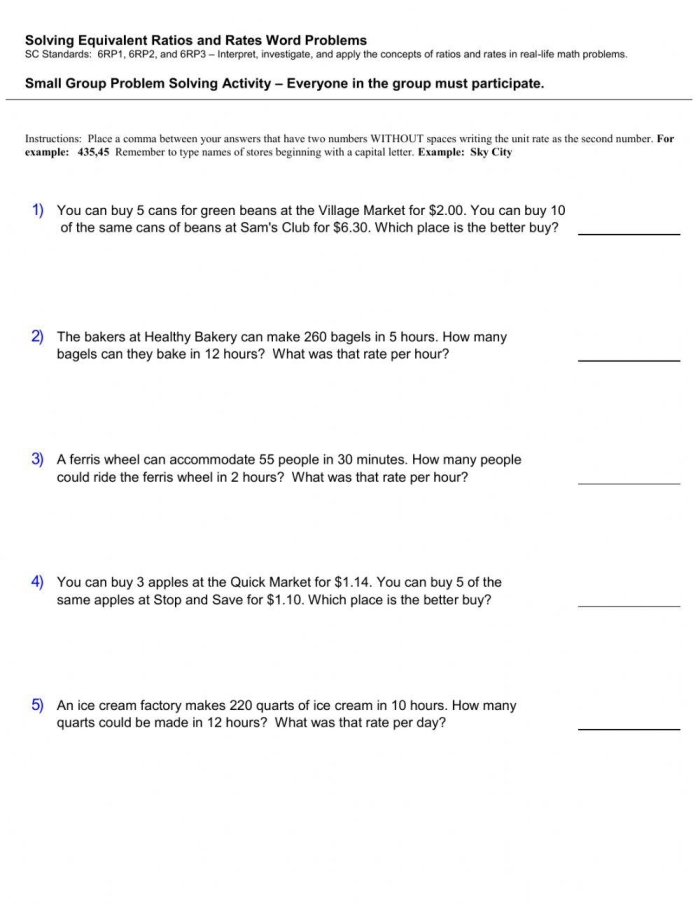
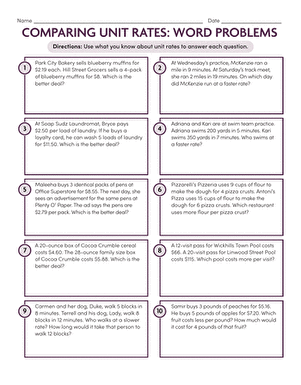
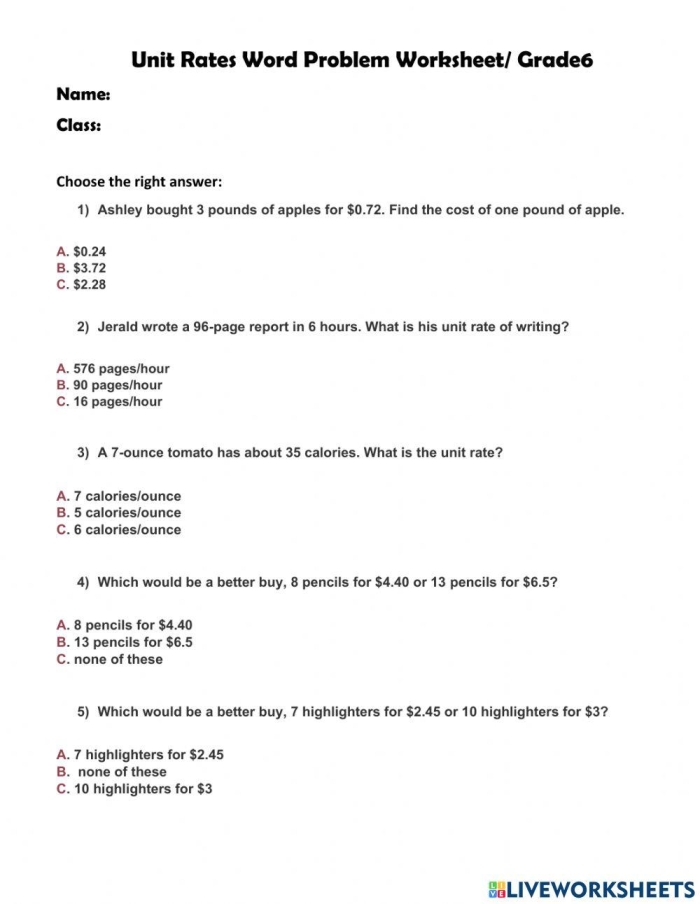
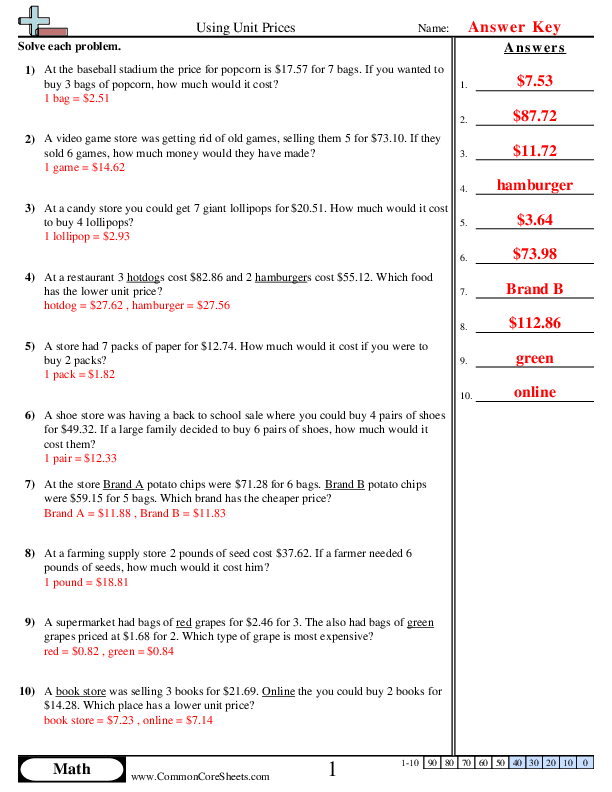
Comparing unit rates is where the real thinking happens. If one store sells 5 notebooks for $4 and another sells 8 notebooks for $6, students need to calculate each unit rate to determine which is the better deal. This comparison skill transfers directly to consumer decisions they’ll make throughout their lives.
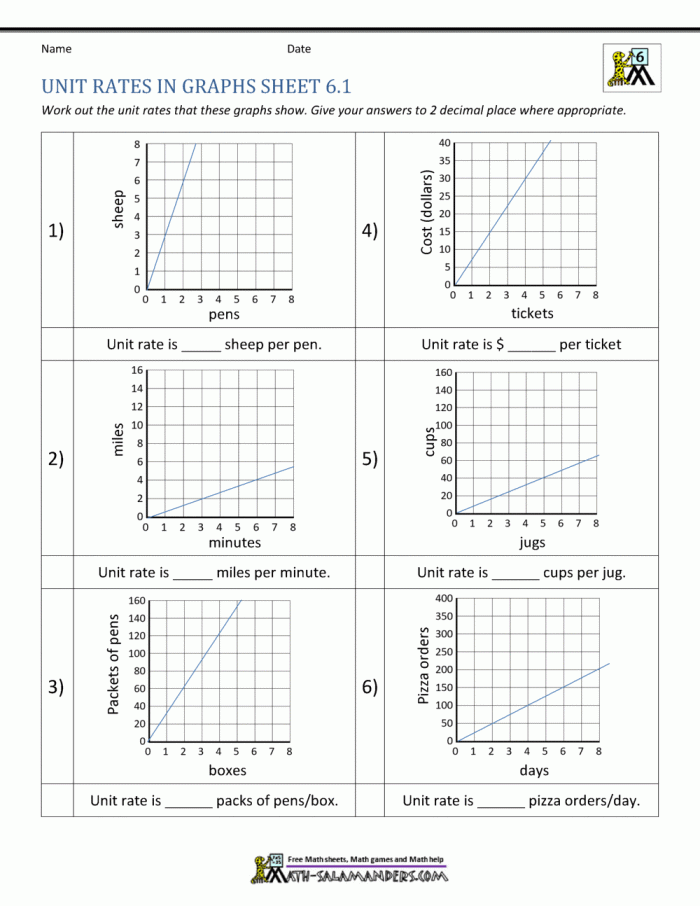
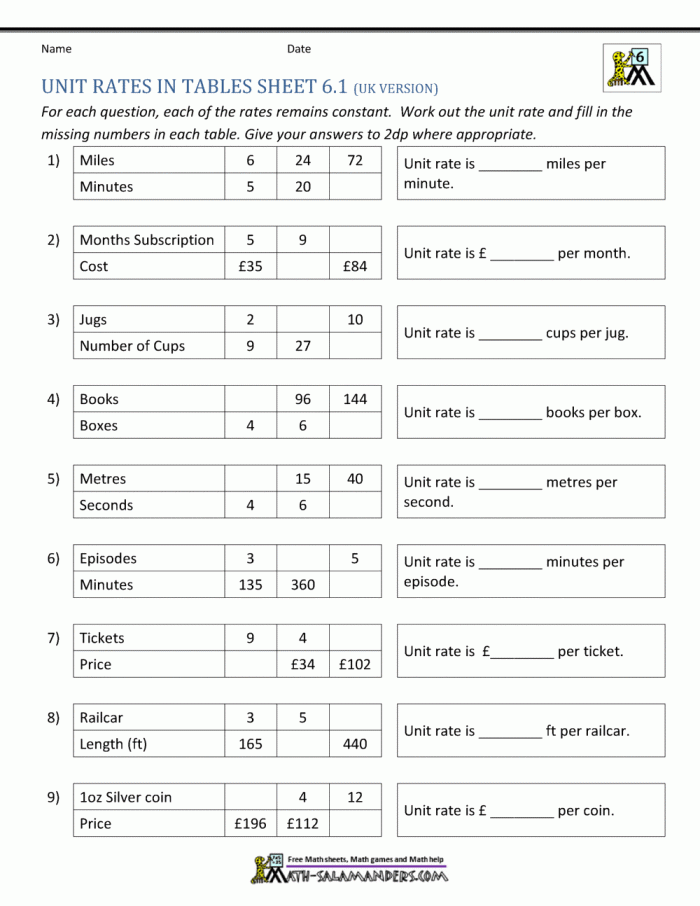
The data and graphing work in sixth grade often pairs with unit rate problems. Students might collect pricing information from different sources, calculate unit rates, and then create graphs showing the comparisons. This integration strengthens both mathematical concepts and helps students see how rates function as data points.
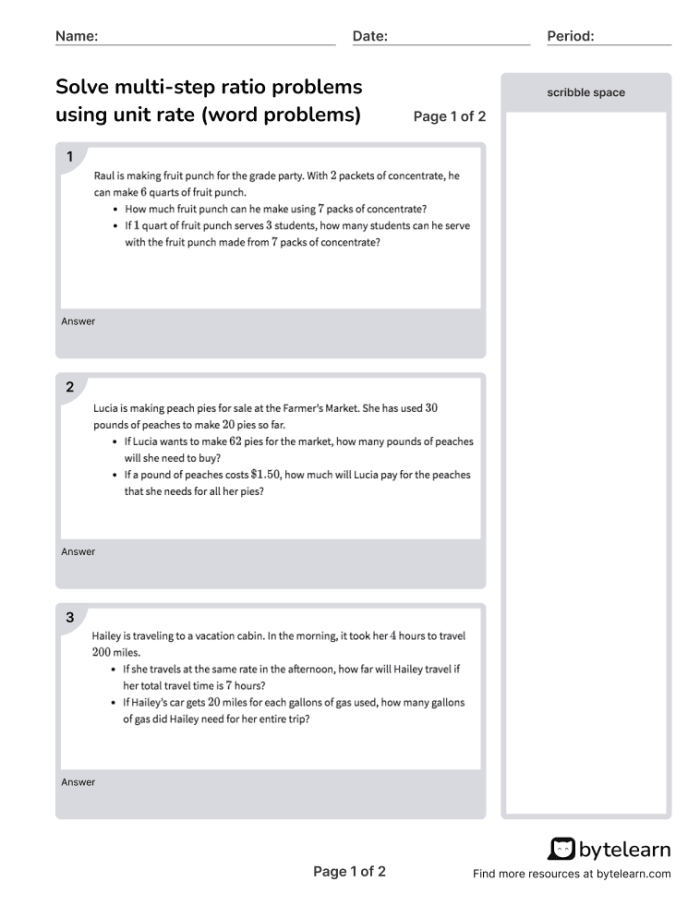
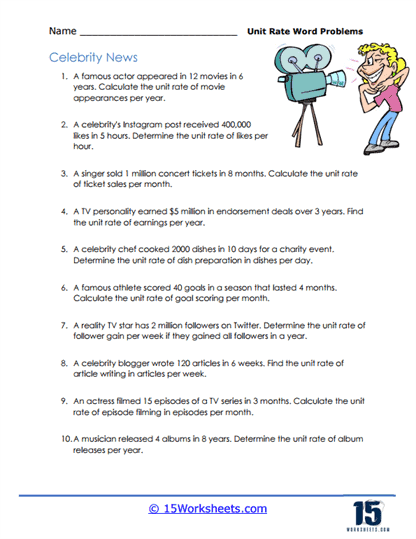
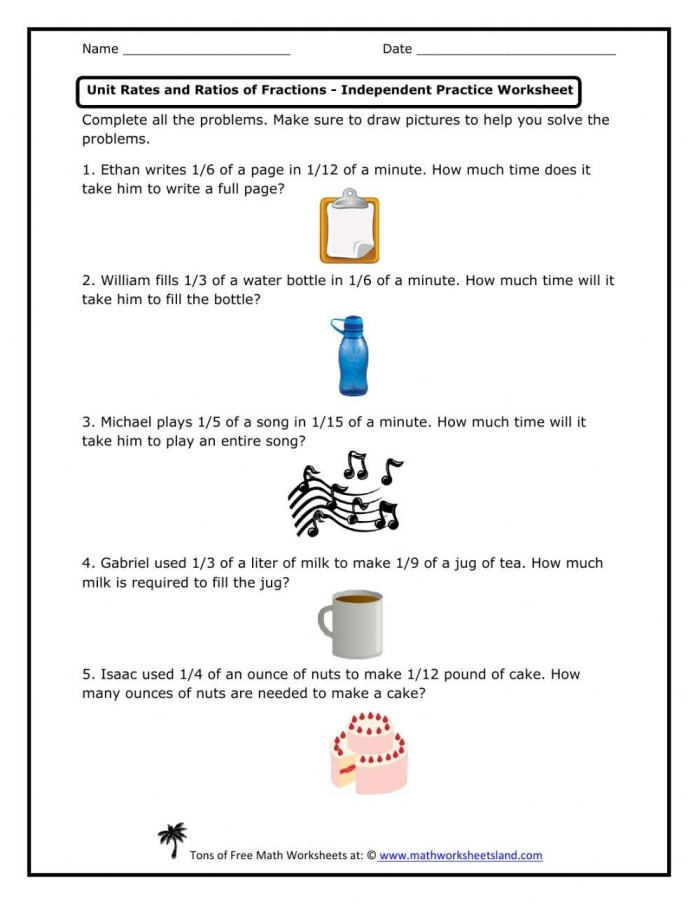
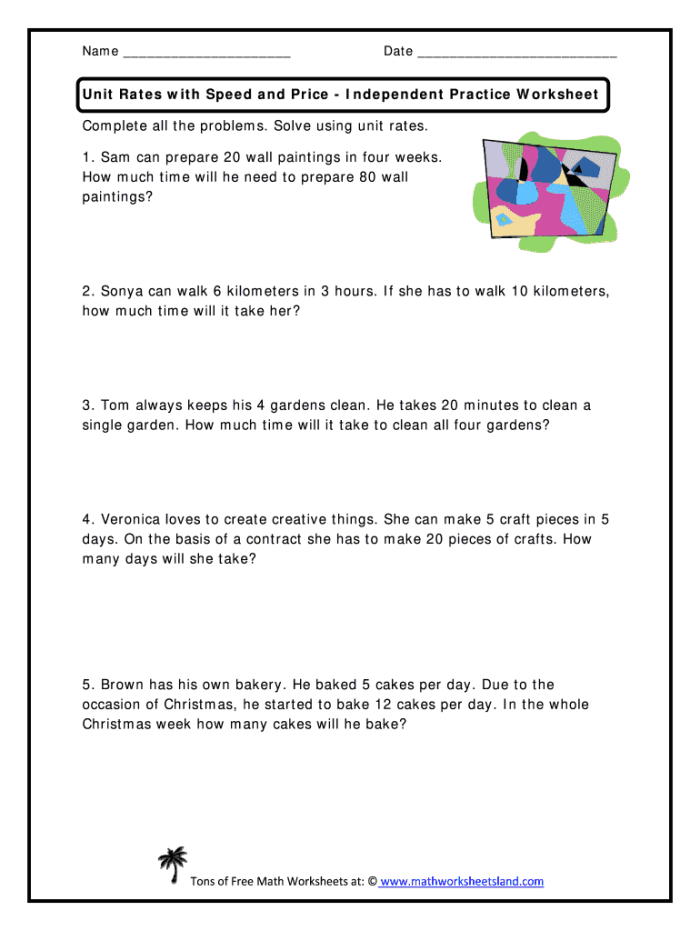
Worksheets that ground unit rates in authentic situations, like comparing recipe ingredient ratios or calculating sports performance metrics, make the concept stick. When students solve problems about things they care about, the abstract becomes concrete and memorable.
Try These Printable Worksheets