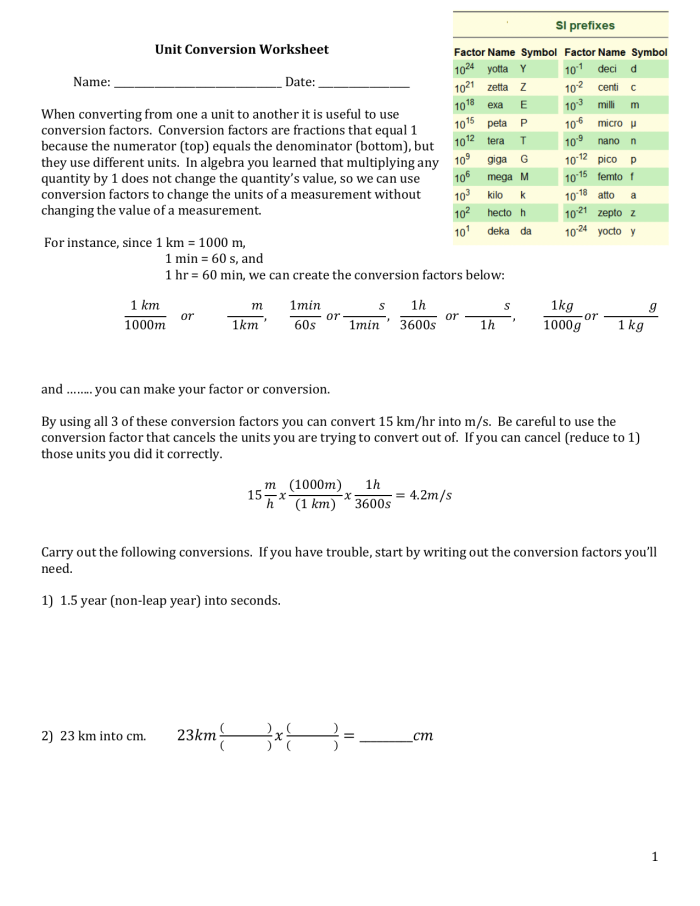
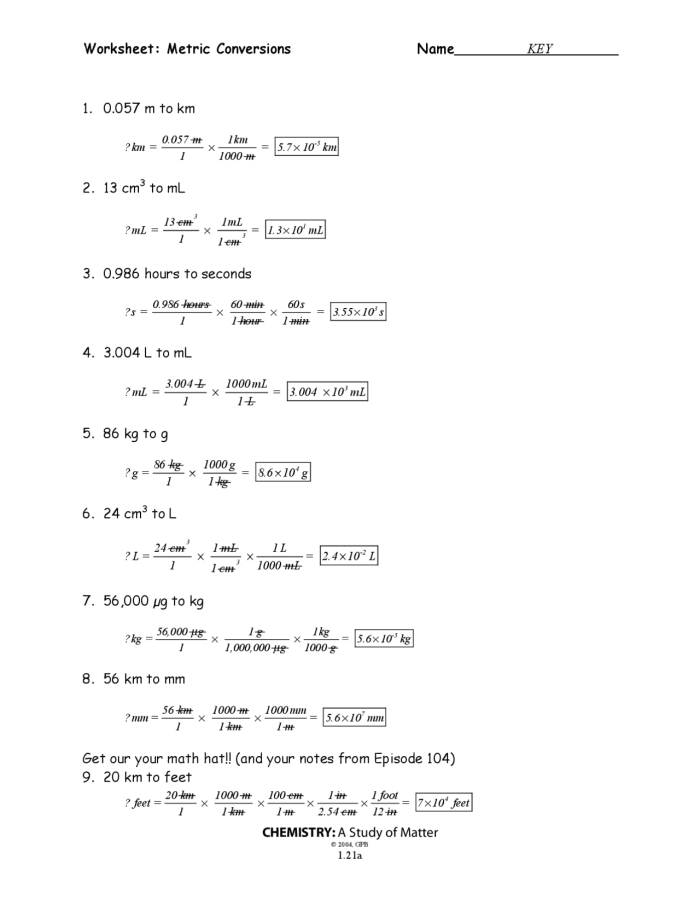
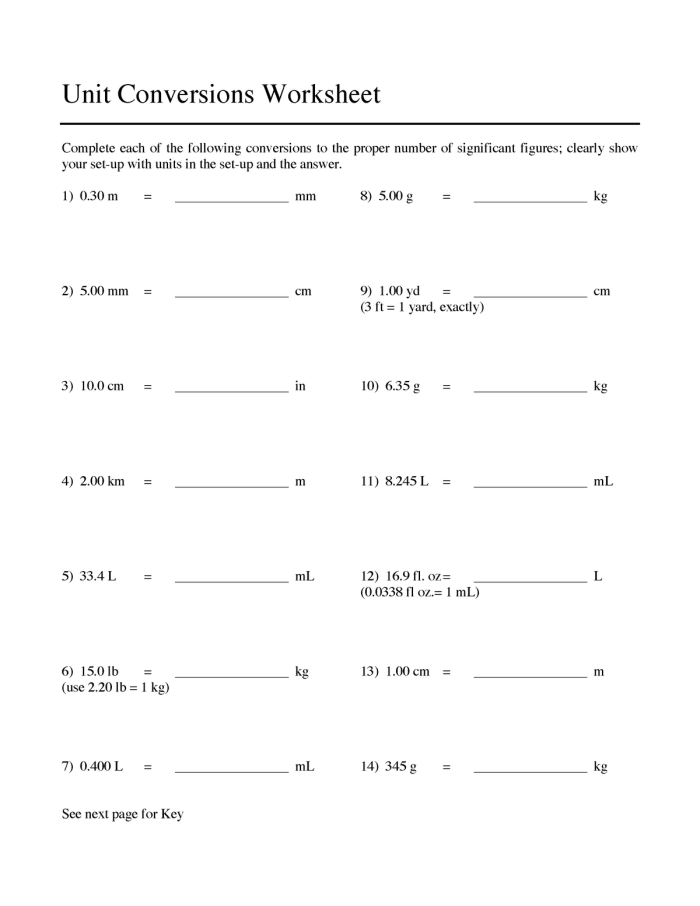
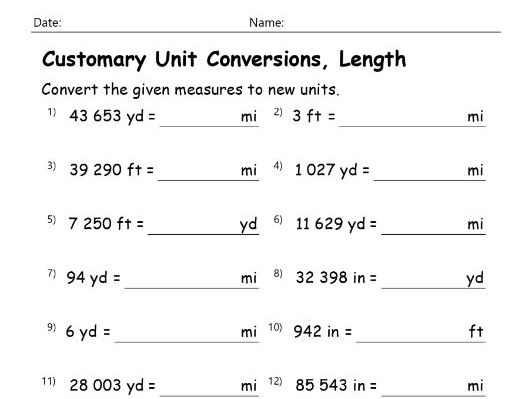
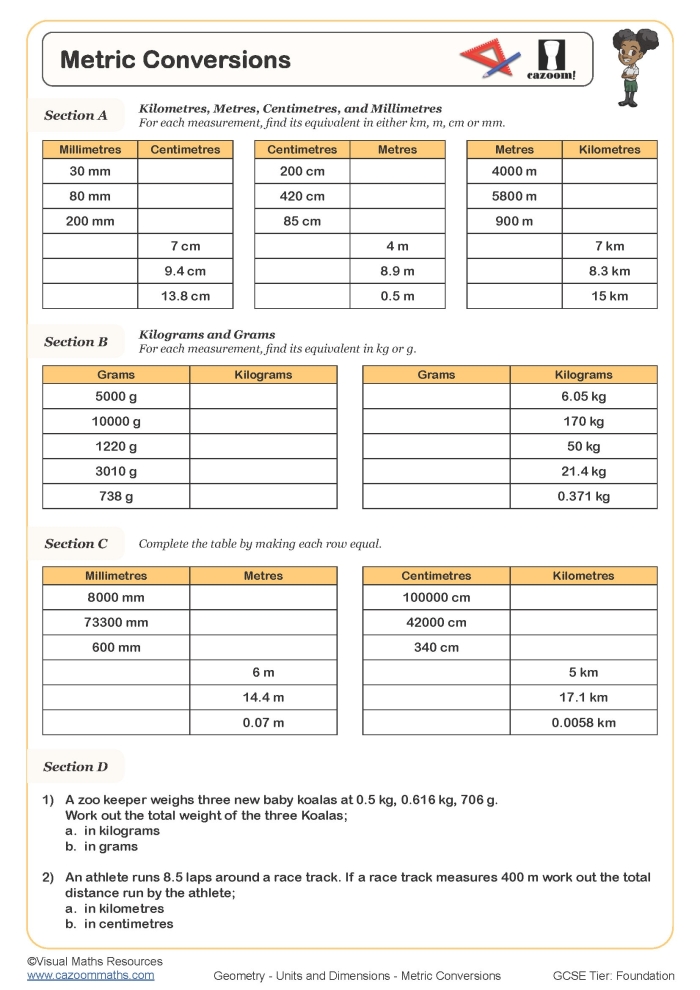
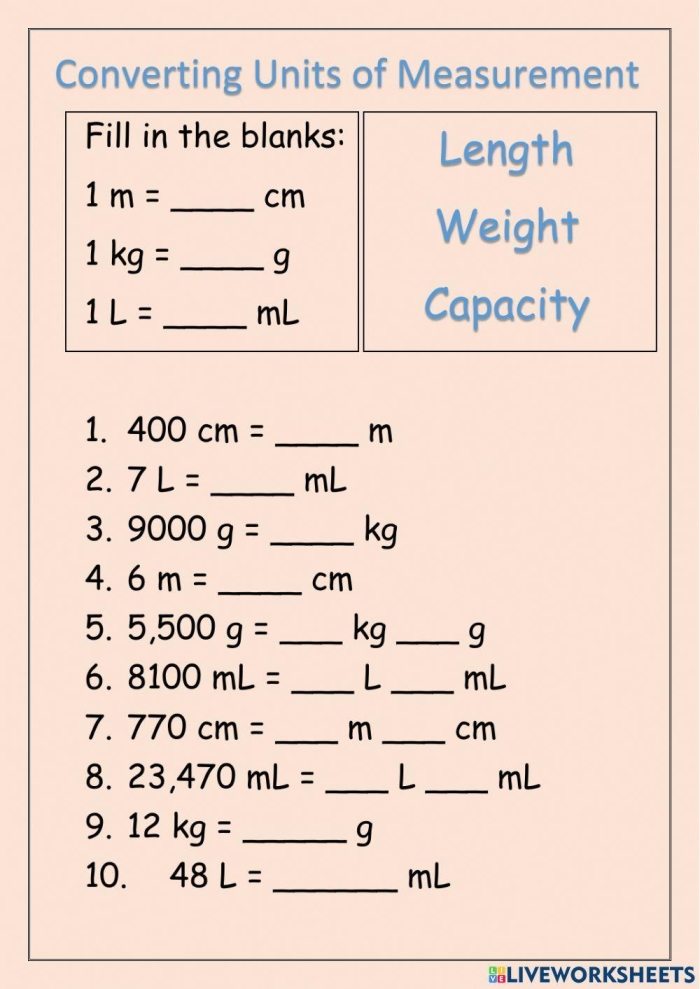
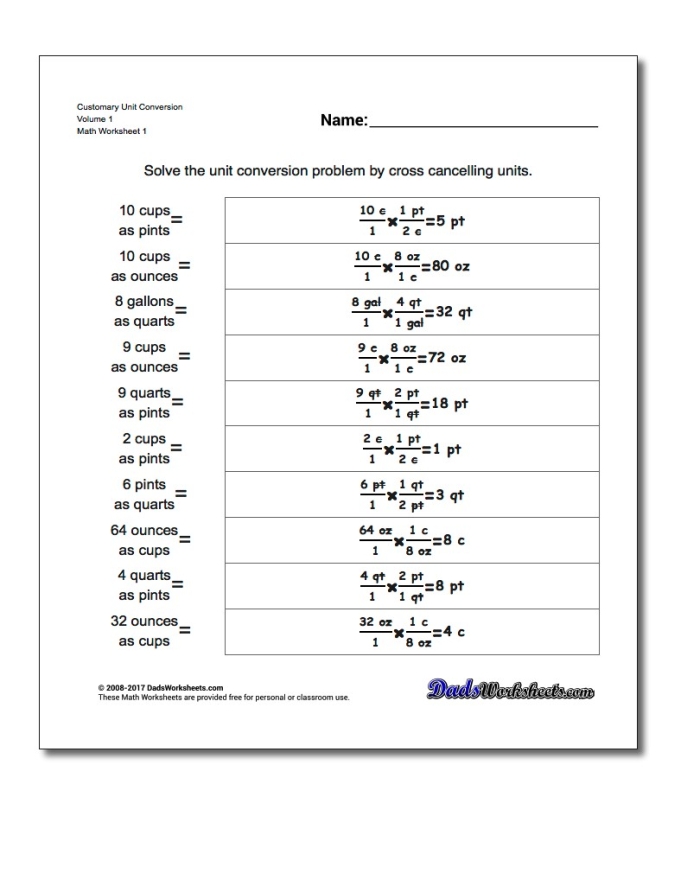
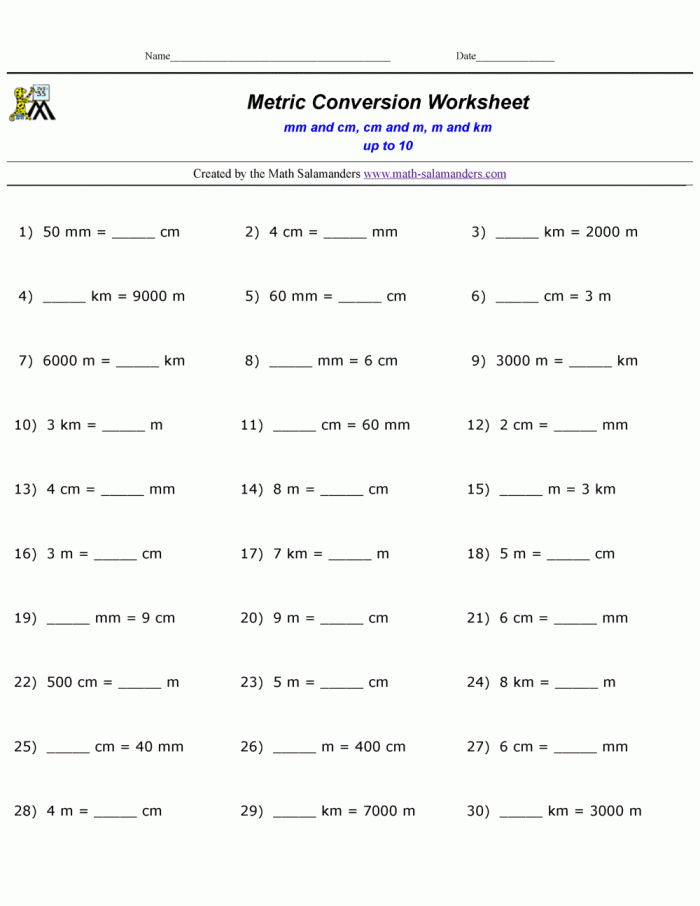
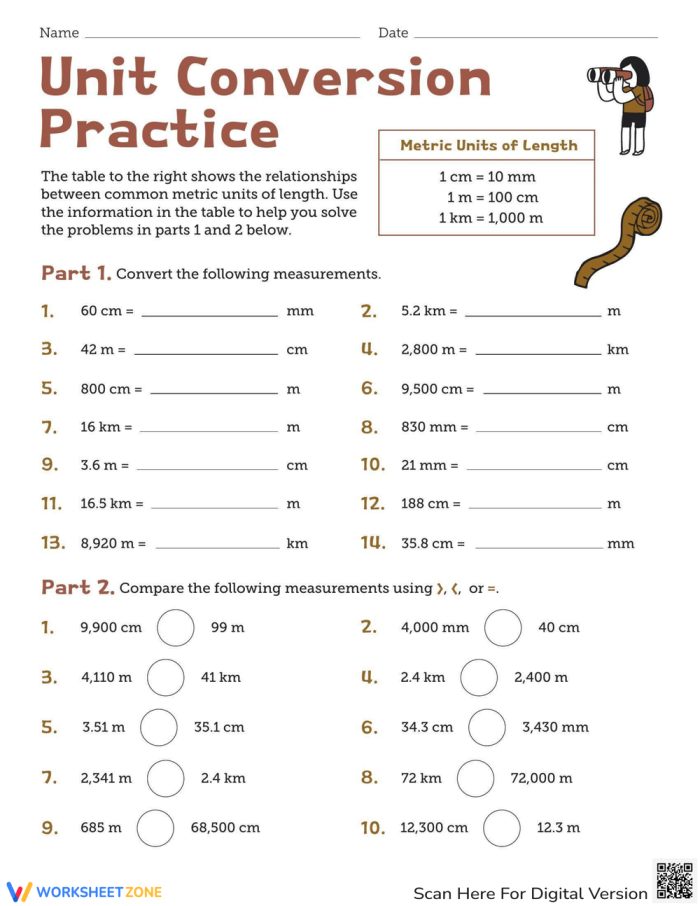
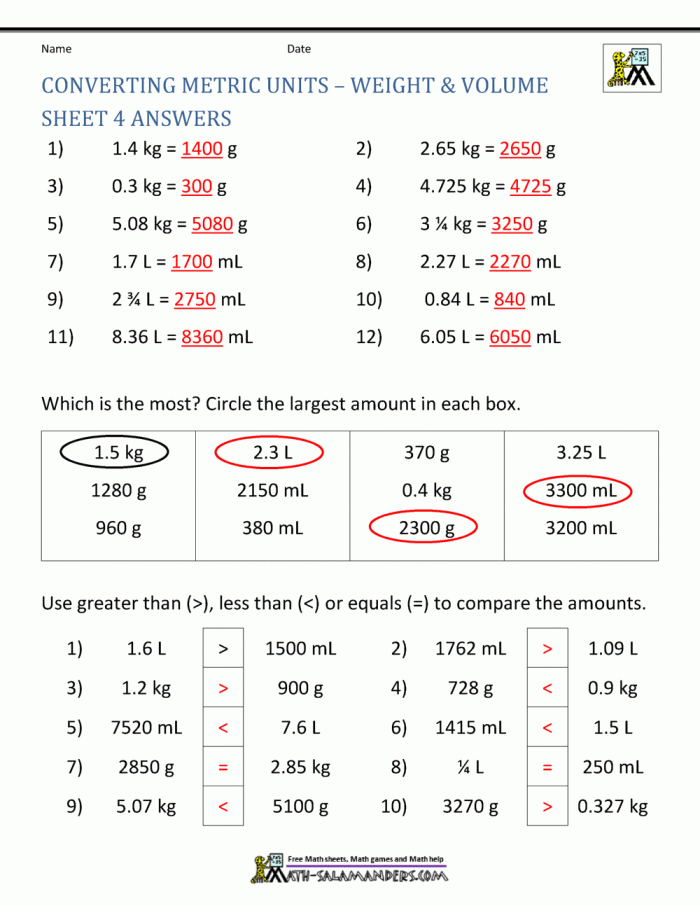
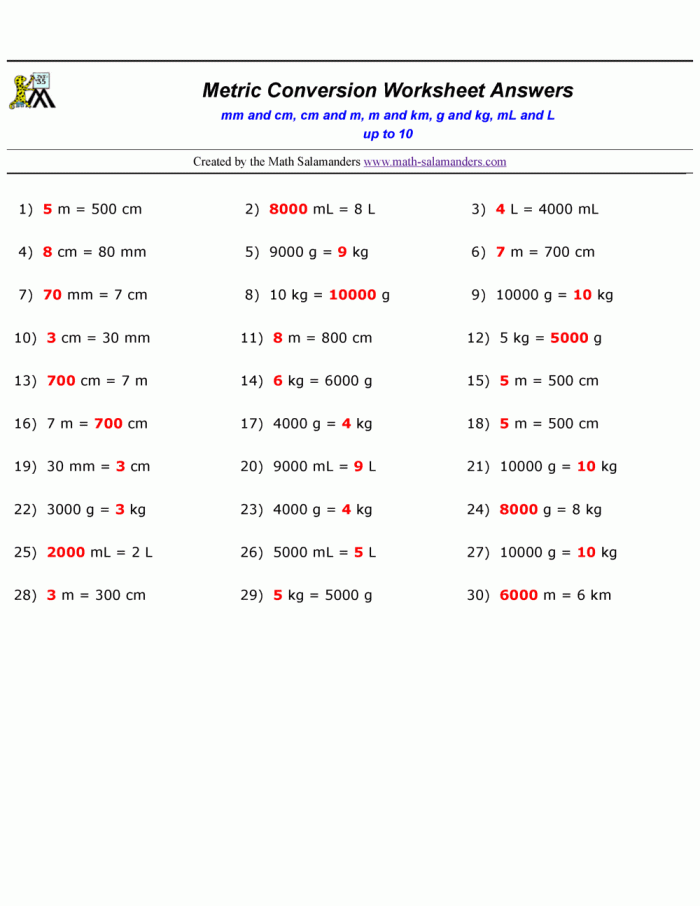
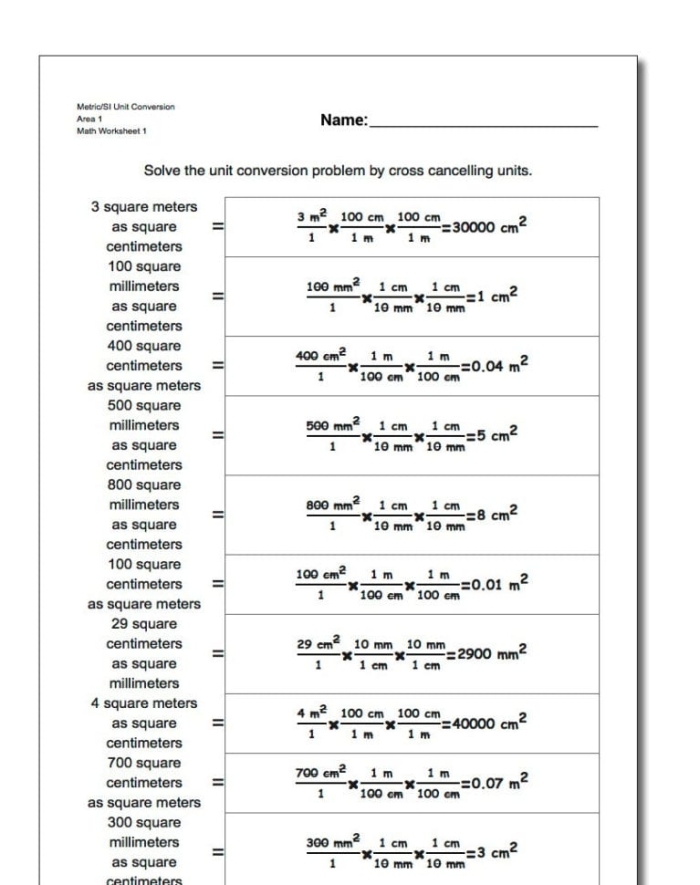
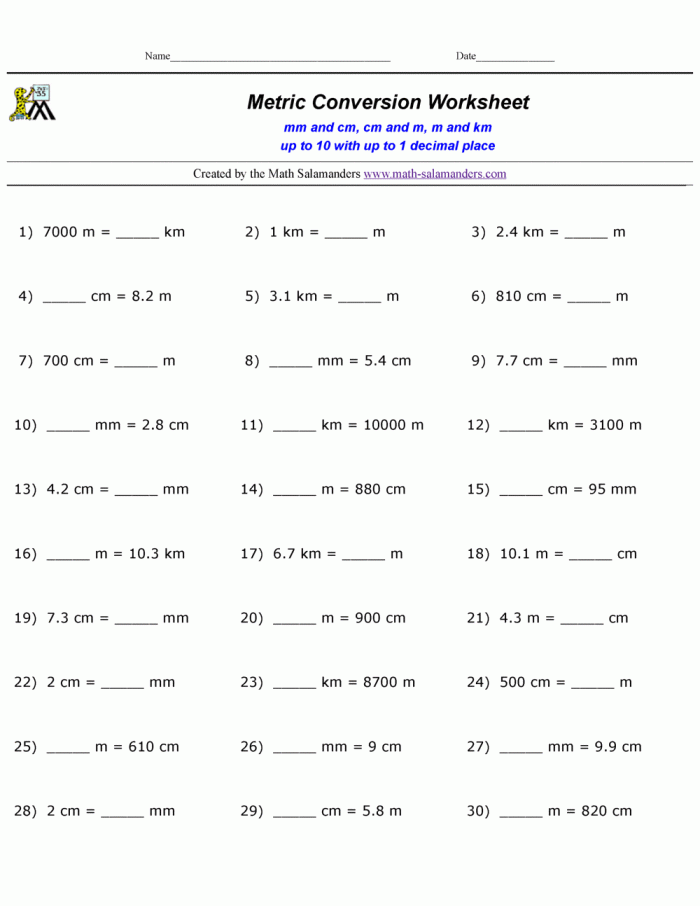
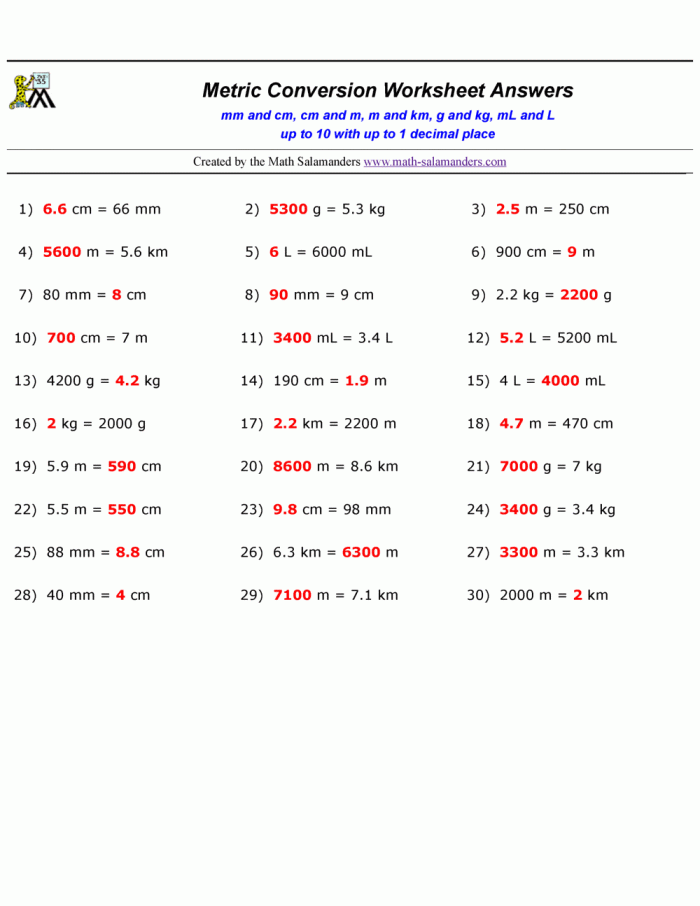
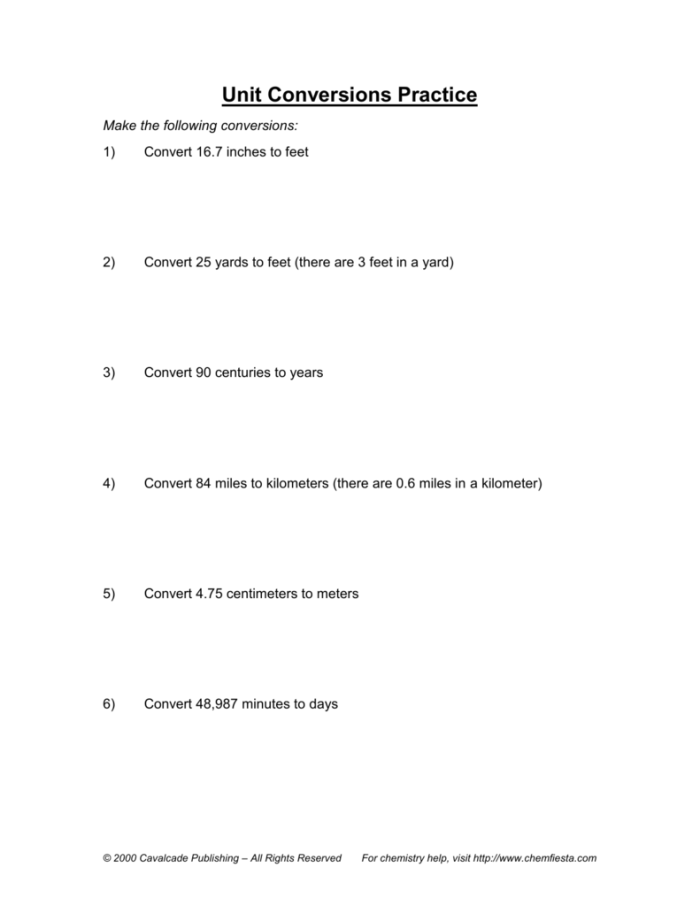
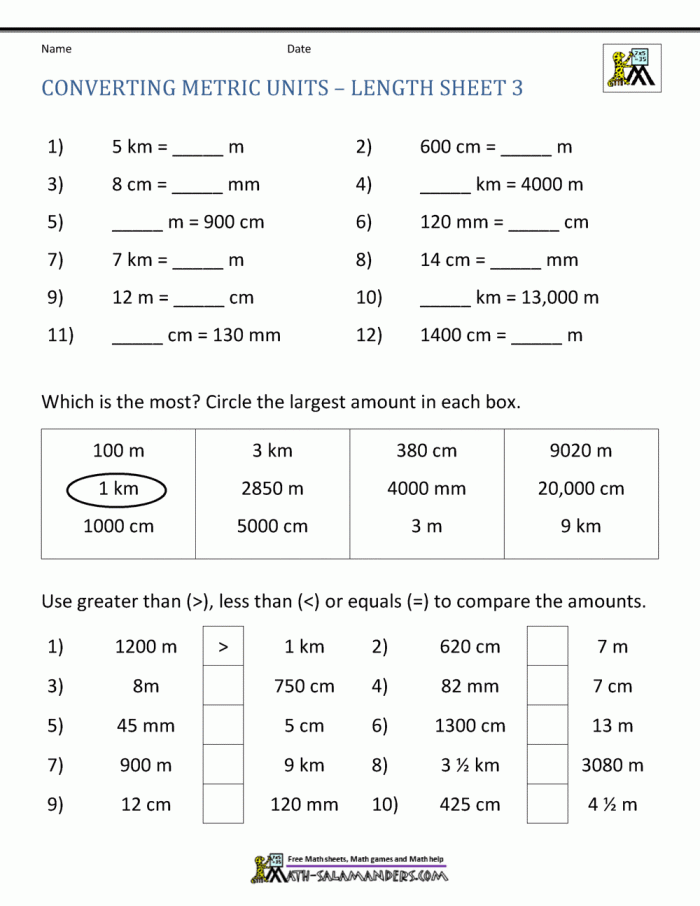
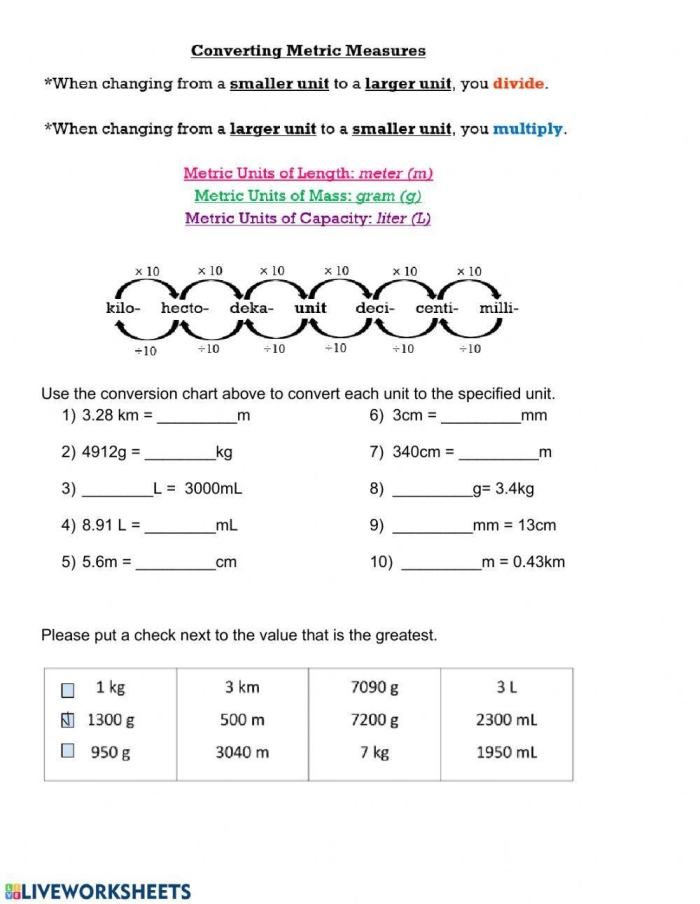
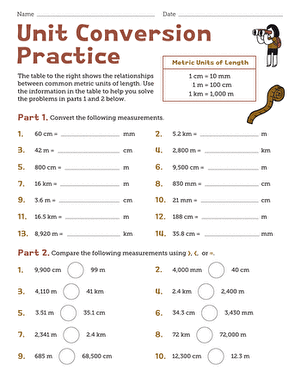
Learning to convert between metric units of length is one of those skills that feels tricky at first but becomes automatic with practice. A metric conversion table transforms what could be a confusing process into a straightforward reference tool that fifth grade students can actually use independently.
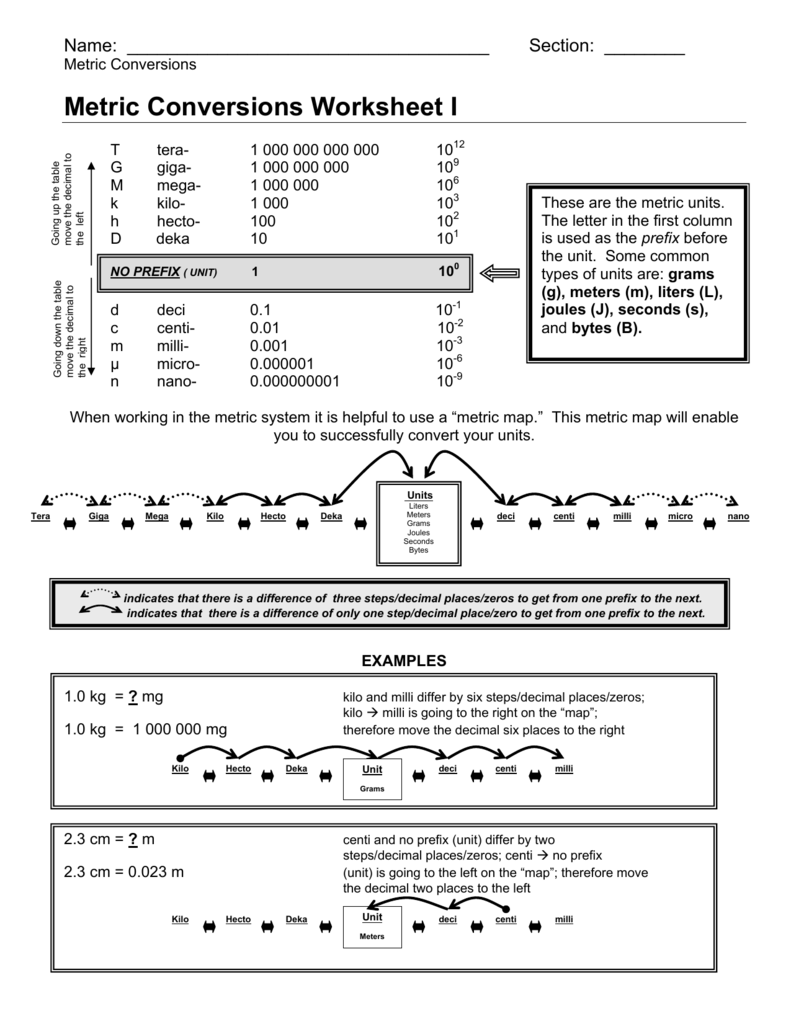
The beauty of using a conversion table lies in how it removes the guesswork. Instead of memorizing that 1 meter equals 100 centimeters or trying to figure out where millimeters fit into the picture, students have the relationships laid out clearly. They can see at a glance that 1 kilometer is 1,000 meters, or that 10 millimeters make 1 centimeter. This visual reference helps cement the relationships between units in a way that pure memorization never does.
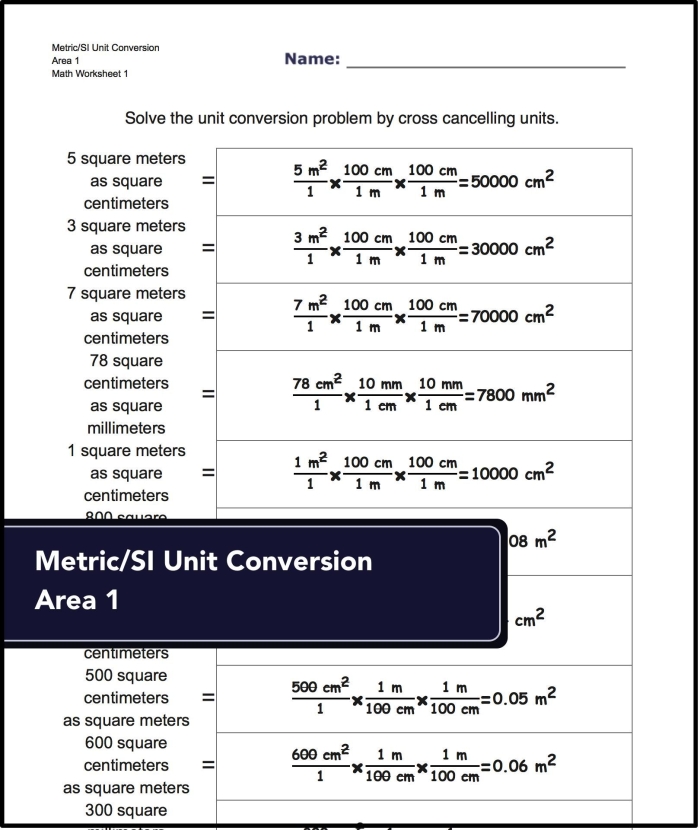
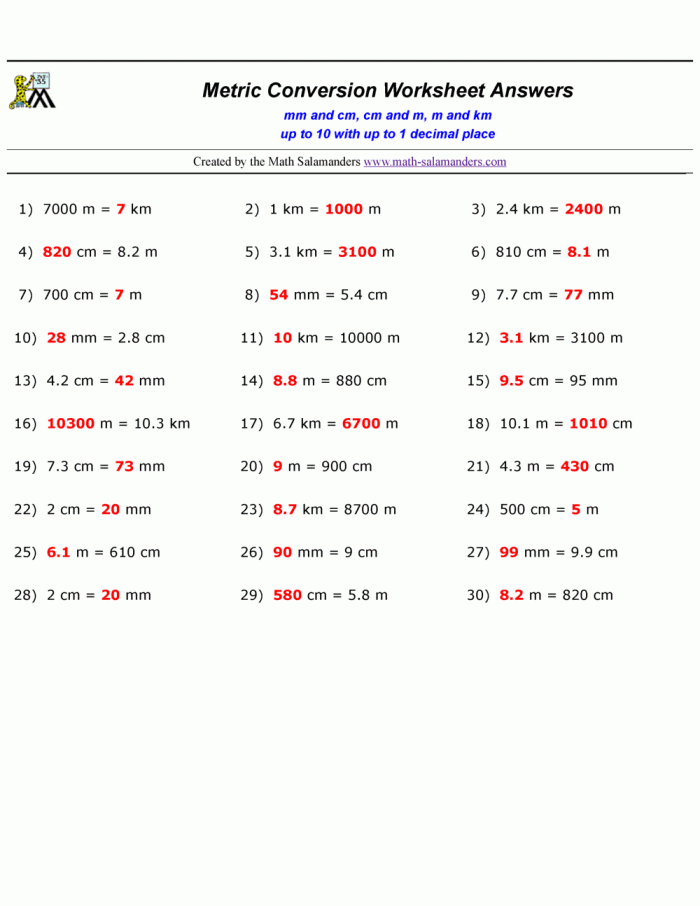
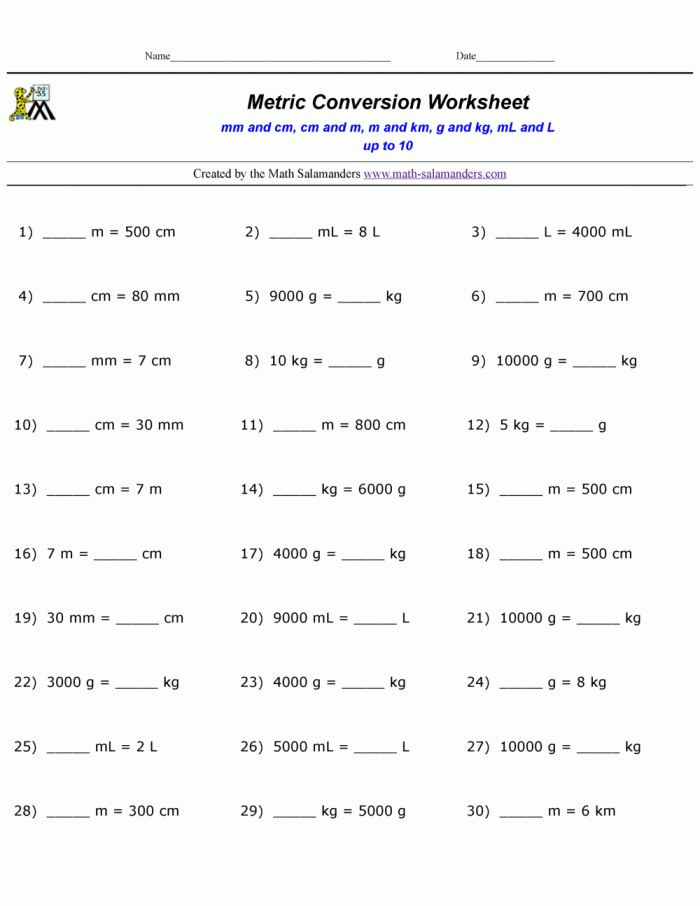
When working through a measurement math worksheet with a conversion table nearby, students develop a systematic approach to problem-solving. They learn to identify what unit they’re starting with, locate it on the table, find the target unit, and apply the conversion. This methodical thinking transfers to other areas of algebra and mathematics. The worksheet format also allows students to practice repeatedly, building confidence with each problem they solve correctly.
Fifth graders benefit from worksheets that combine multiple skills at once. Pairing unit conversion practice with activities like working with decimals in practical contexts helps students see why these conversions matter in real situations. Similarly, incorporating problem-solution reading strategies into math worksheets strengthens both literacy and numeracy skills.
The metric system itself is logical and consistent, which makes it easier to teach than imperial units. Once students grasp the pattern of moving decimal points to convert between units, they can apply that knowledge to any metric length conversion they encounter. A well-designed worksheet with a conversion table removes barriers and lets students focus on understanding the concept rather than struggling to remember arbitrary conversion factors.
Hands-On Worksheet Activities