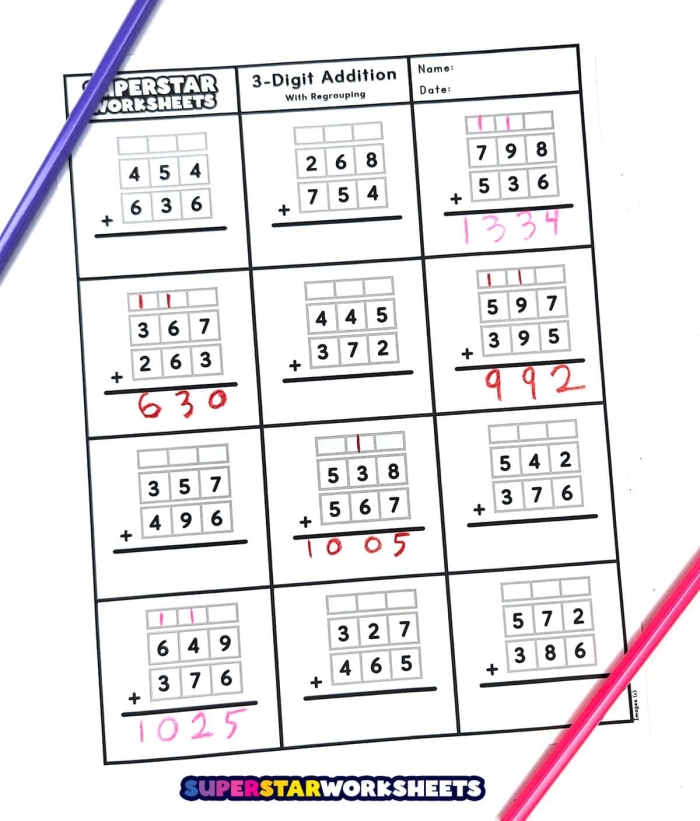
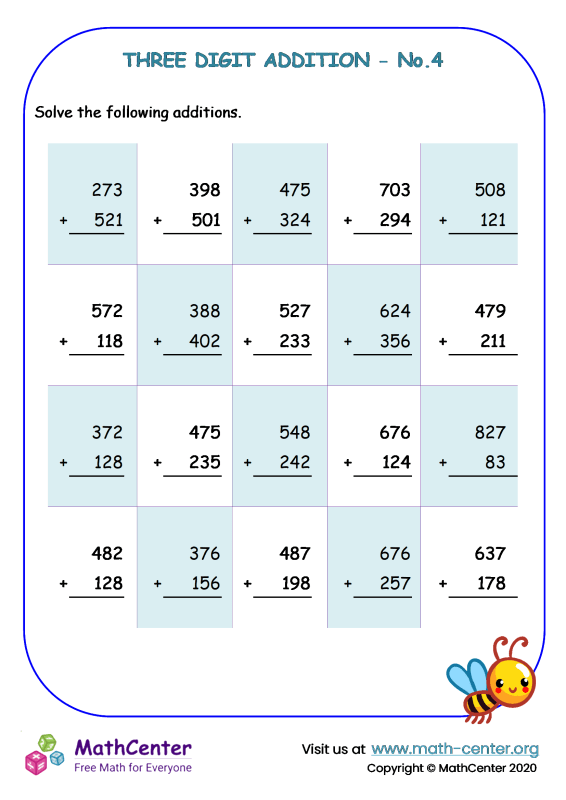
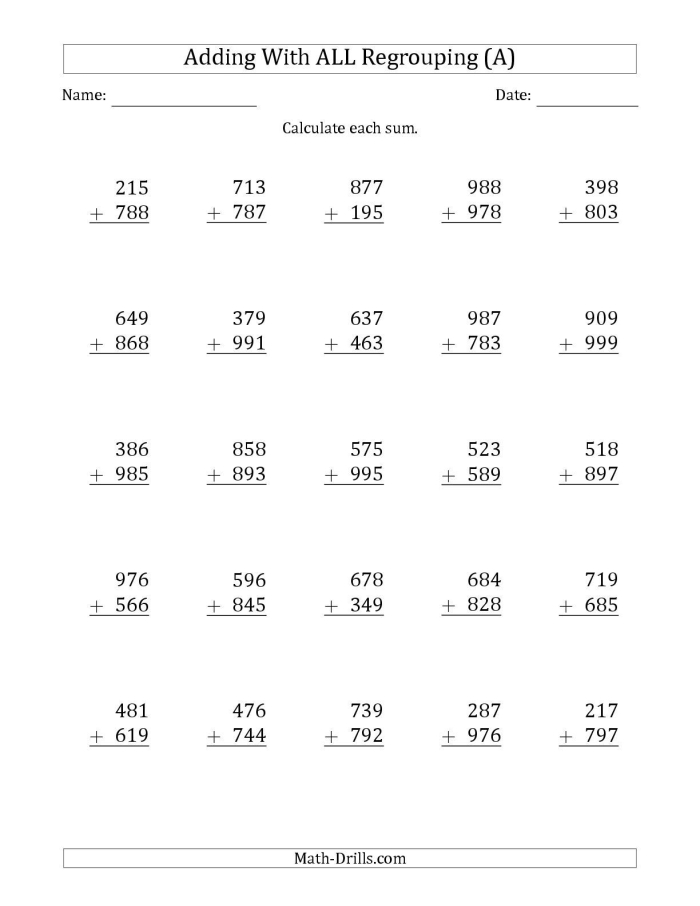
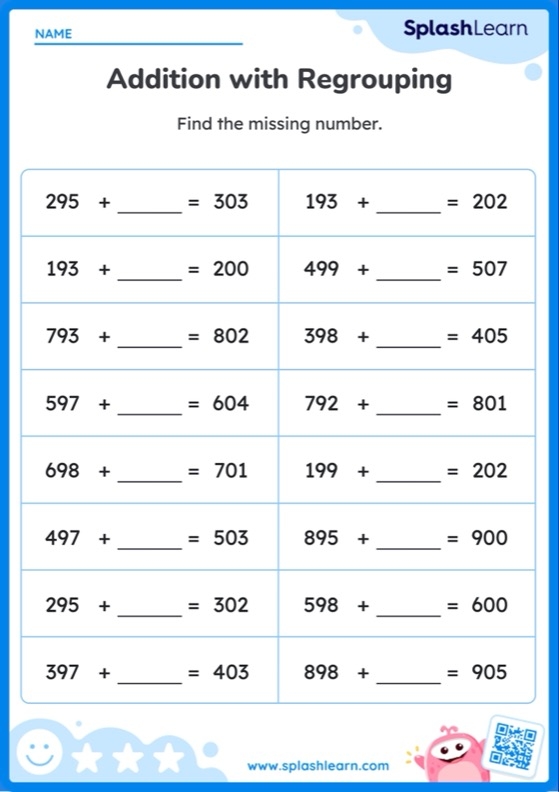
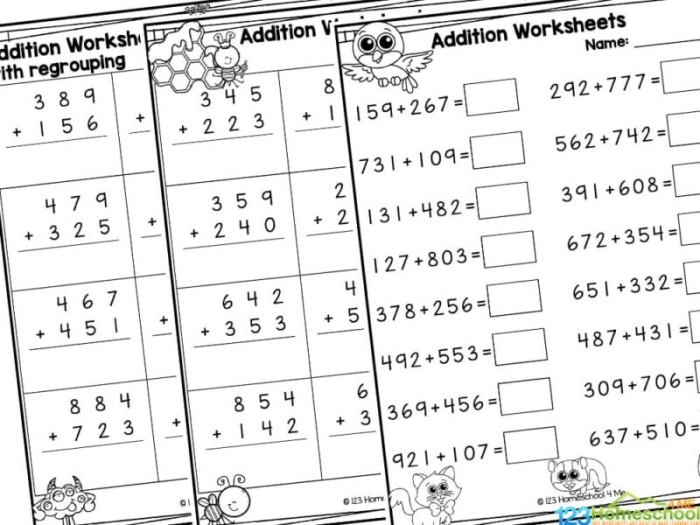
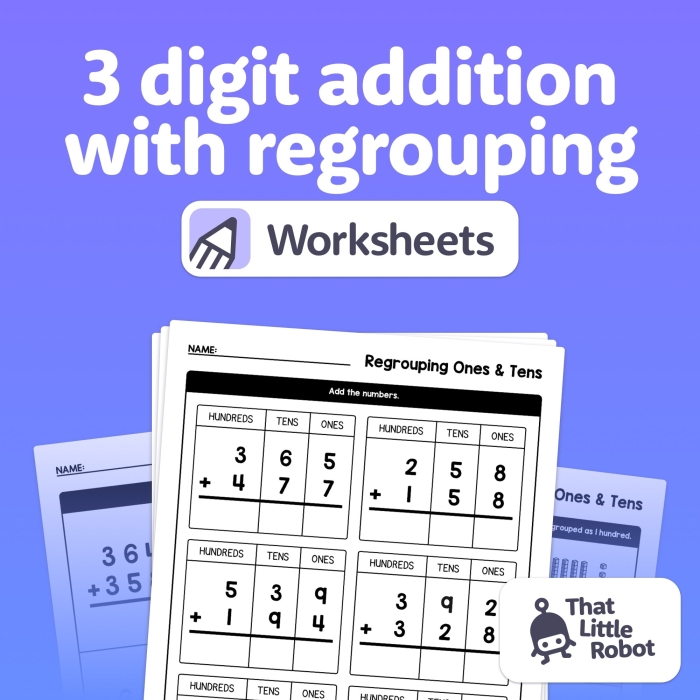
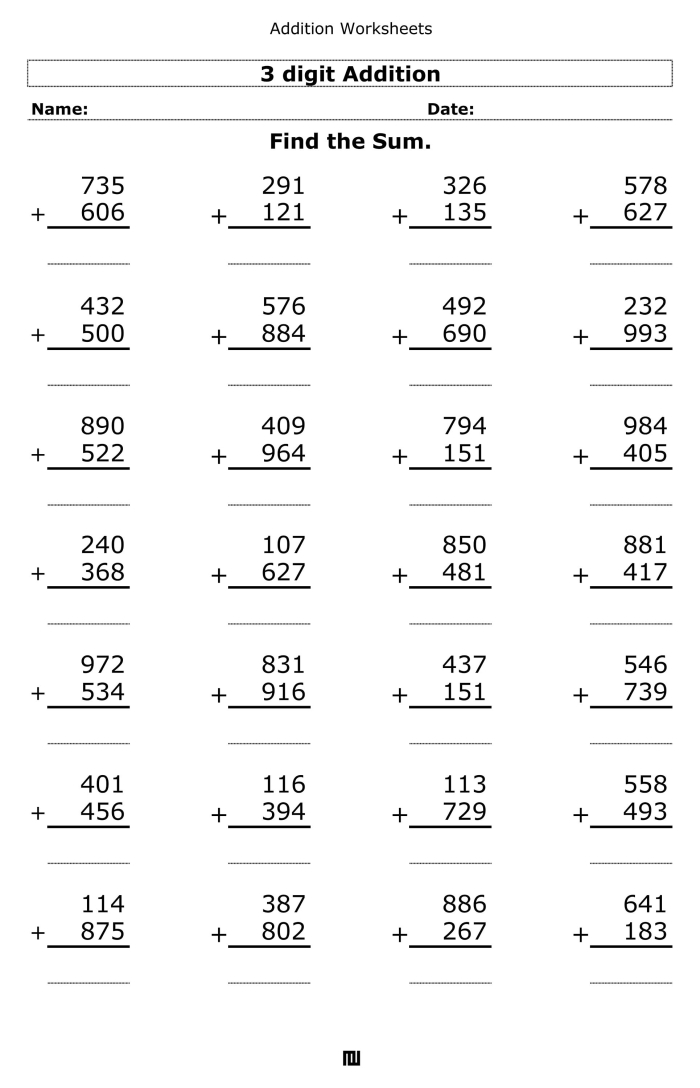
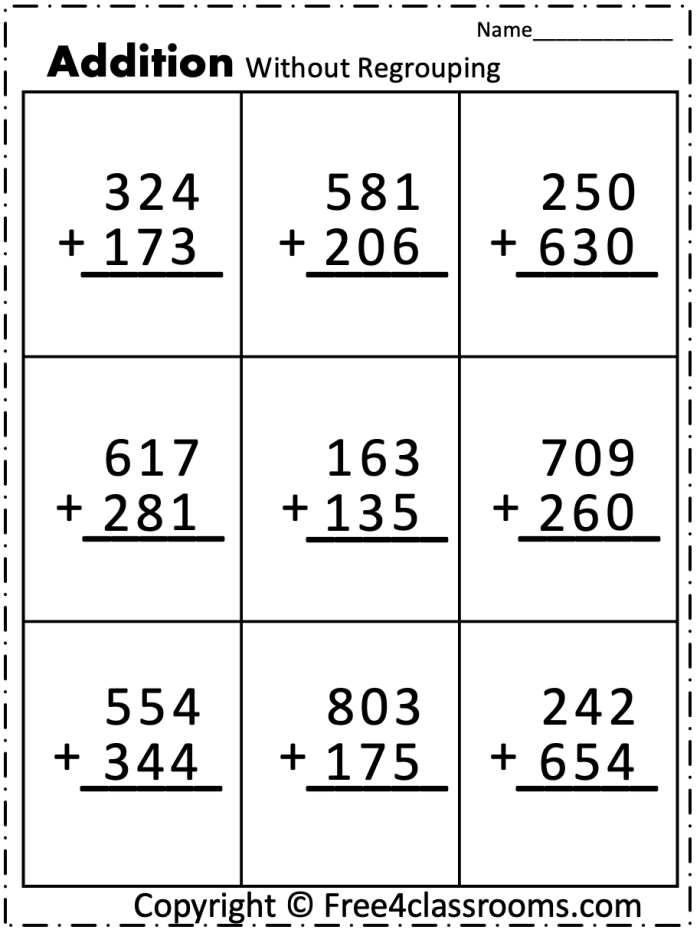
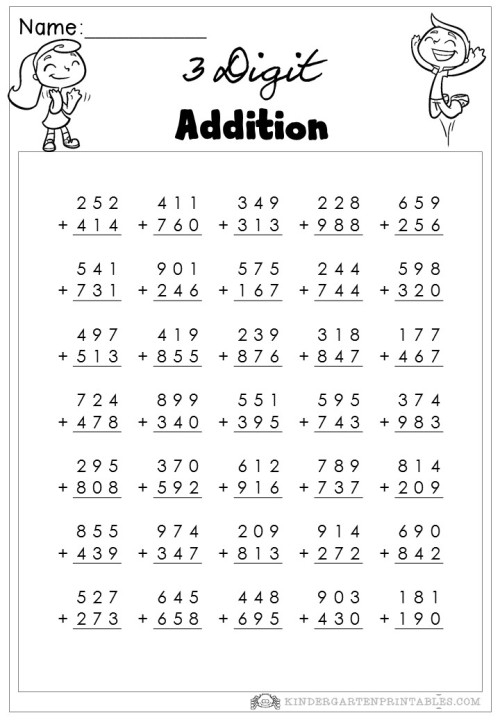
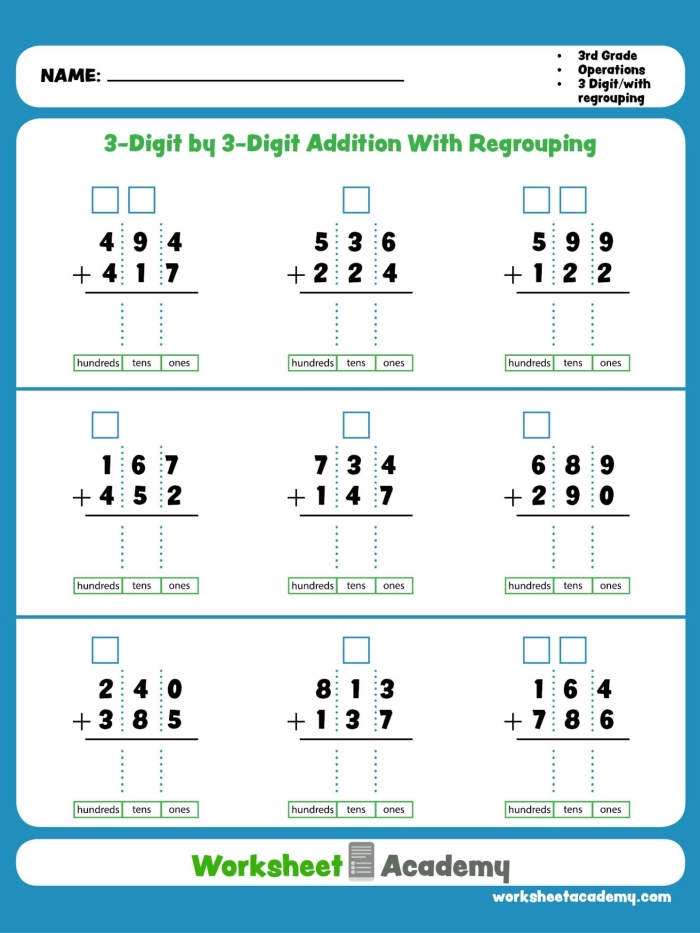
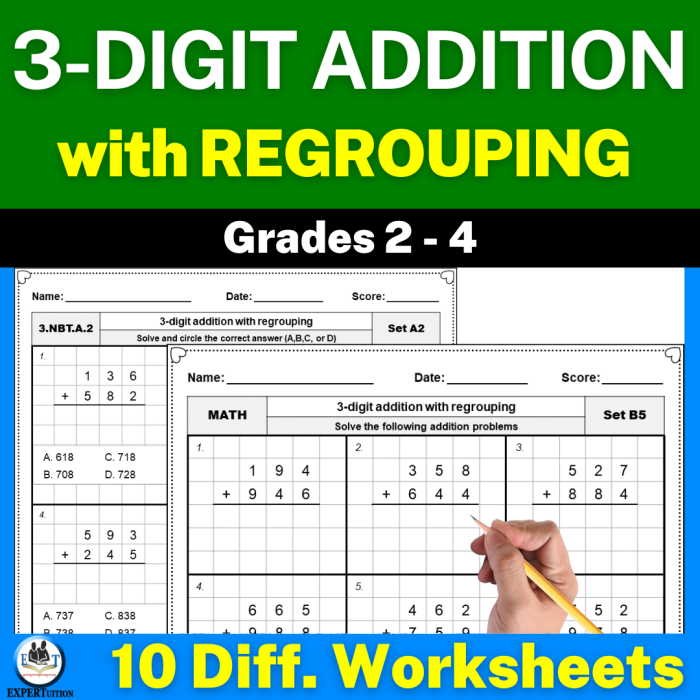
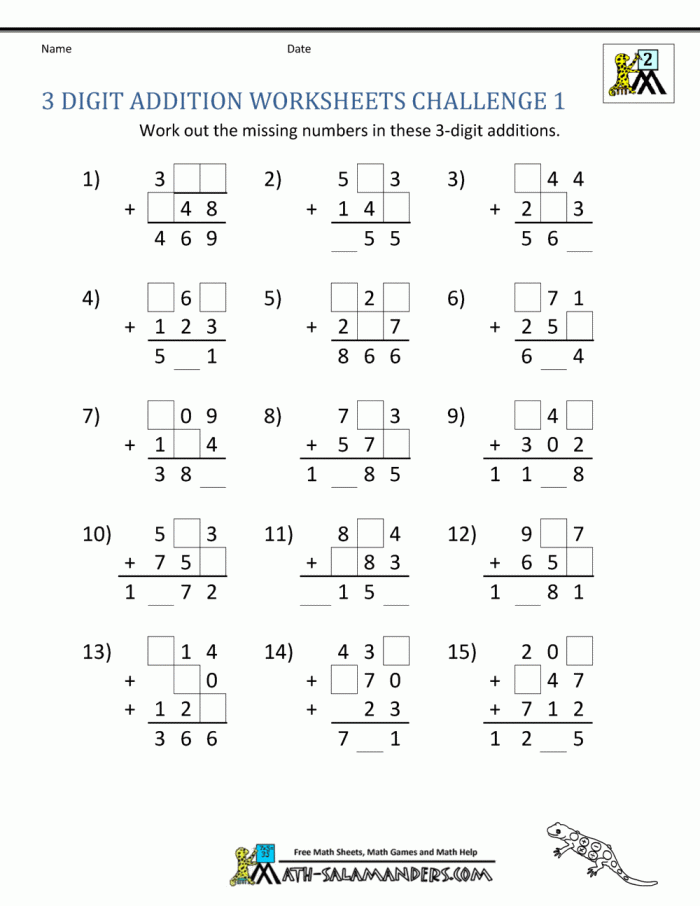
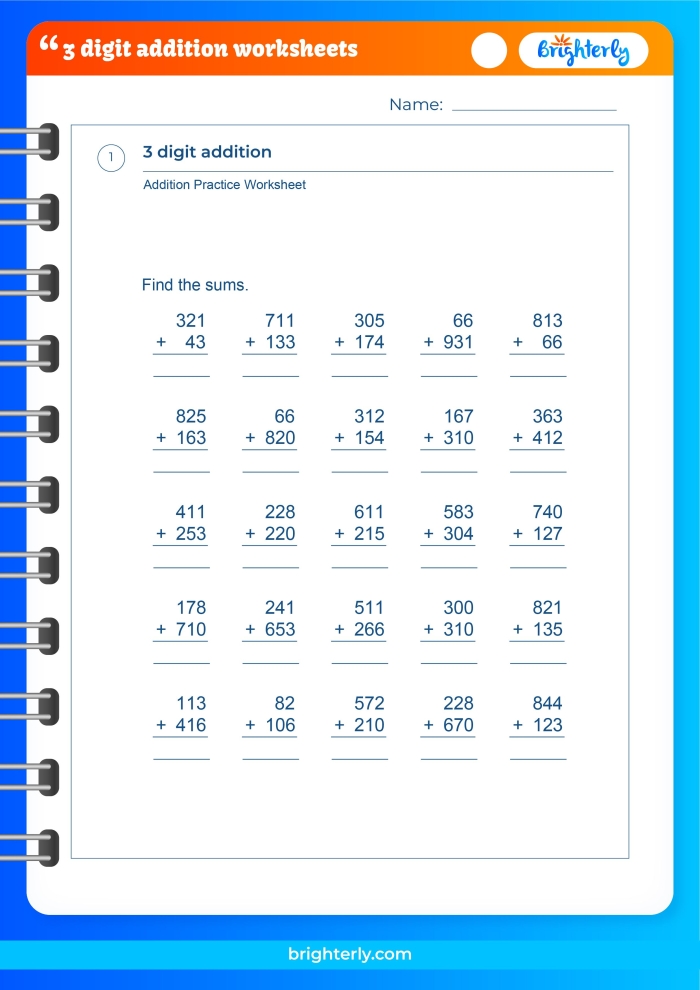
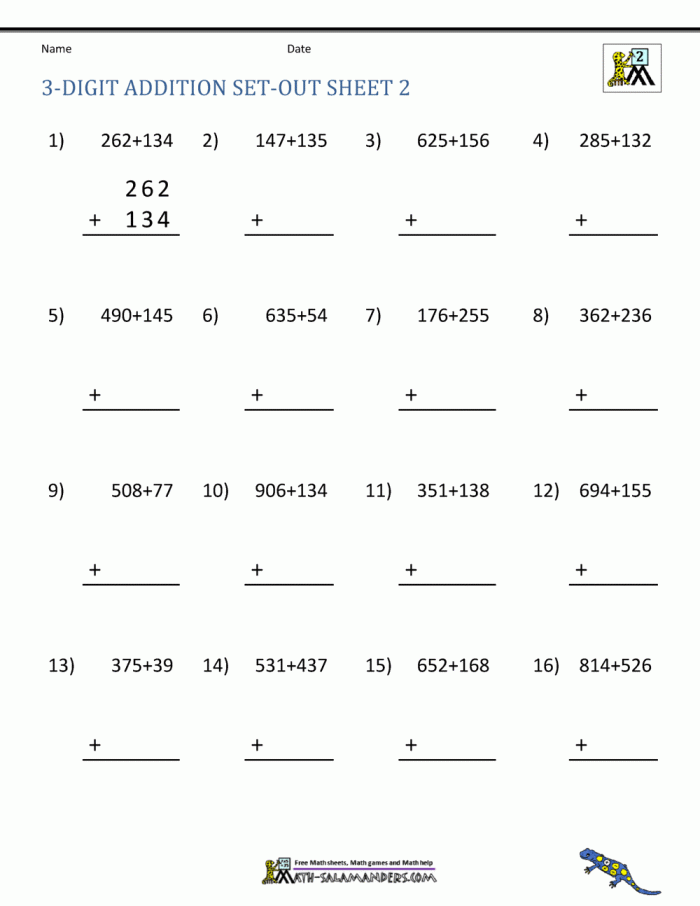
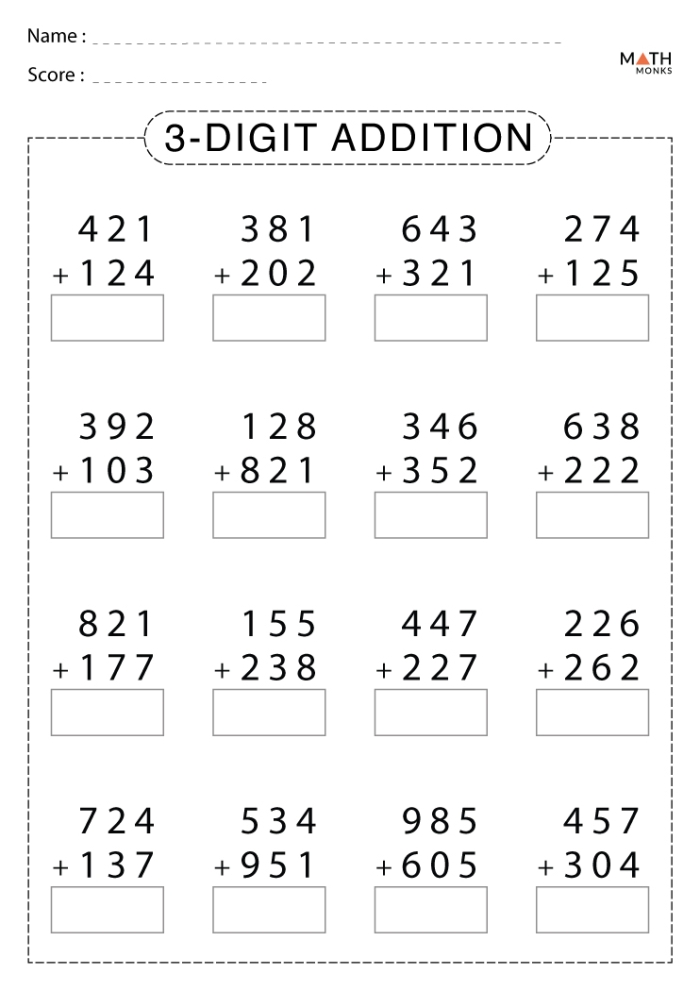
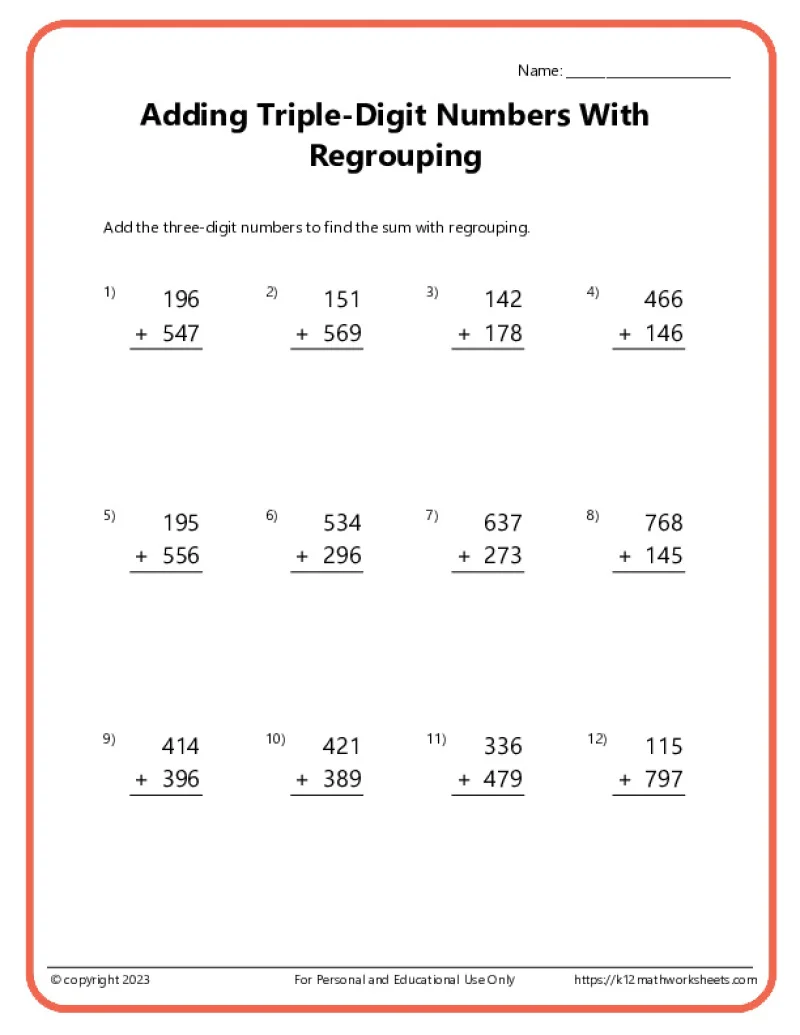
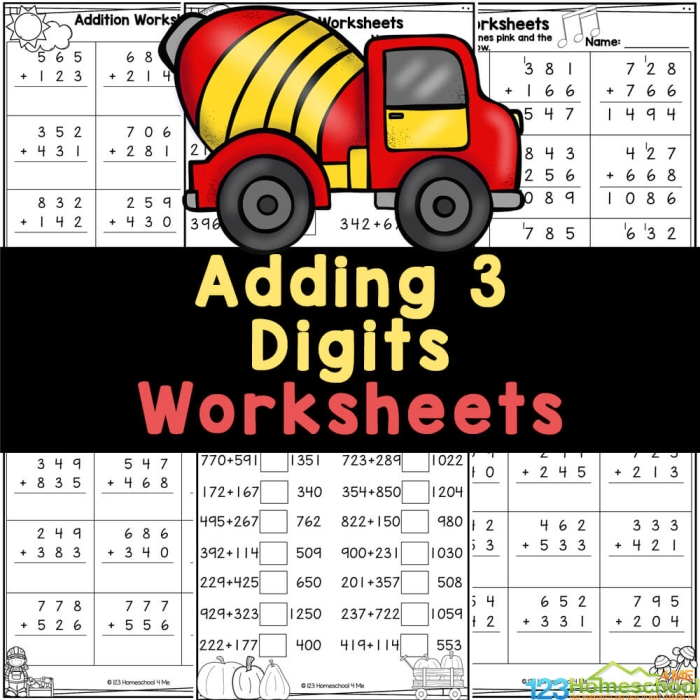
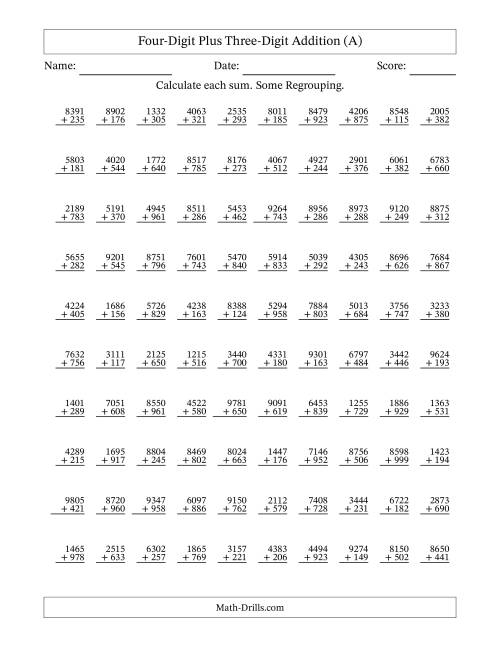
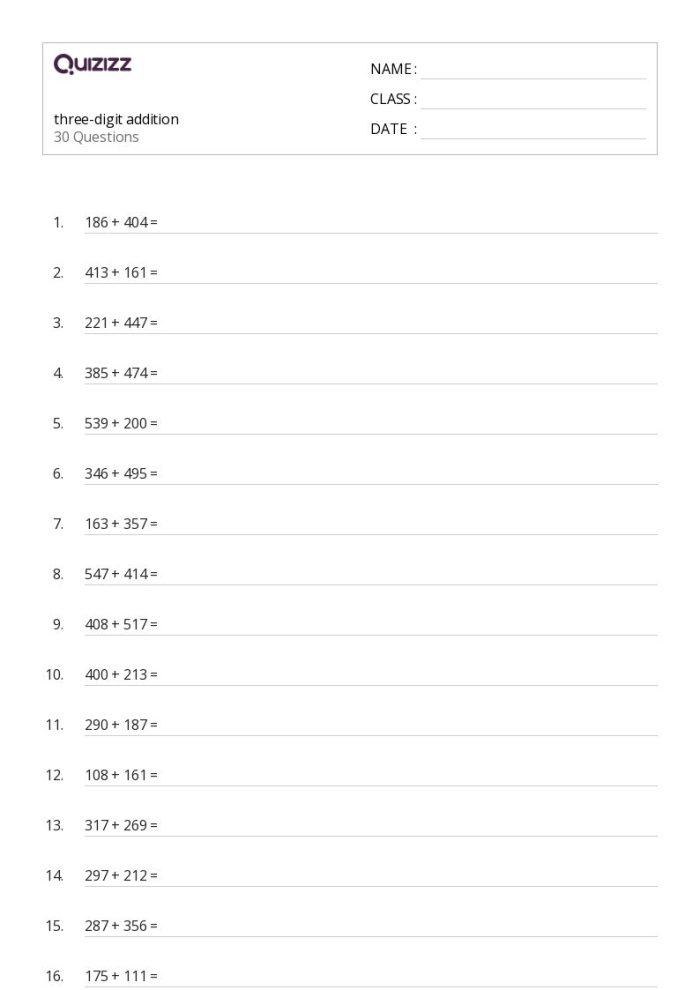
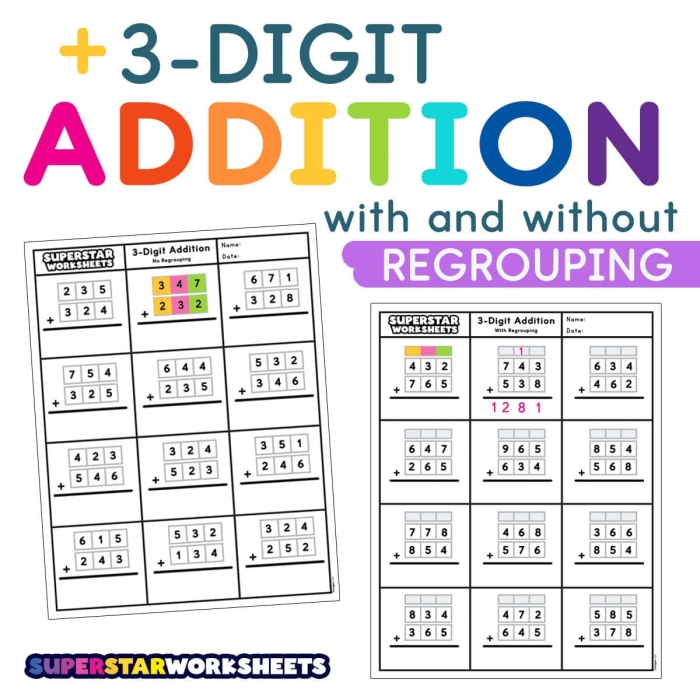
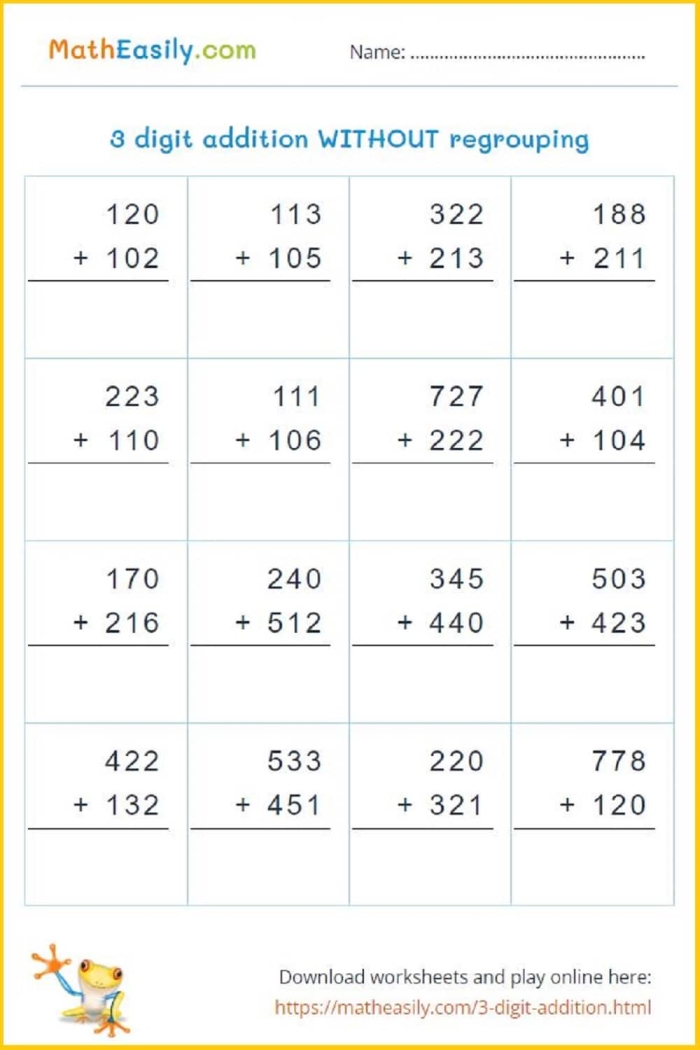
When second graders first encounter three-digit addition, many struggle to keep track of which numbers belong in which columns. A worksheet with 23 practice problems gives kids the repetition they need to build confidence without overwhelming them. The sweet spot of having just over 20 problems means students get enough variety to test their understanding across different number combinations while staying motivated to finish.
Three-digit addition requires children to manage carrying over numbers from the ones place to the tens place, and from the tens place to the hundreds place. This multi-step process is where many second graders hit their first real math challenge. When kids work through three-digit addition problems, they’re not just memorizing facts. They’re learning to organize their thinking and apply a systematic approach to solving larger numbers.
The structure of having exactly 23 problems matters more than it might seem. Too few problems and students don’t get enough practice to internalize the process. Too many and frustration sets in. Twenty-three problems hit that balance point where a child can work through the entire worksheet in one sitting, usually within 20 to 30 minutes depending on their pace and confidence level.
Beyond pure addition skills, worksheets like these help children develop persistence and attention to detail. They learn to line up numbers properly, check their work, and catch their own mistakes. Some students benefit from mixing in other types of practice as well. For instance, pairing addition work with real-world money problems or other contextual practice keeps math from feeling abstract and disconnected from their daily lives.
The goal isn’t just to get through the worksheet. It’s to build the automaticity and confidence that makes larger math concepts feel achievable in the grades ahead.
Boost Skills with These Worksheets